Narcissists are just highly trained monkeys.

organ_grinder_monkey

It seems some people think narcissists are smarter than other people, because their mental and emotional abuse and manipulations appear so calculated and complex, and they seem to always be able to anticipate your actions and reactions. People also think you can’t outsmart a narcissist for the same reason.

While it’s true that outsmarting a narcissist means you always have to anticipate their actions ahead of time (which is difficult for a victim to do), it can be done, especially if the narcissist isn’t very smart. In fact, some of them are pretty stupid. The stupid ones are probably less dangerous, but even the highly manipulative and cunning ones who are experts at gaslighting and other mind games aren’t necessarily all that smart.

They’re more like highly trained monkeys. Some monkeys can perform very complex tasks that make it appear as if they’re incredibly smart. But this is an illusion. The monkey was trained over a long period of time by being taught one simple task at a time, and when one task was mastered, they were taught the next task. String all those simple tasks together, and the monkey looks like they’re performing a complex operation. Another analogy is a child of average intelligence who is multilingual. If the child grew up hearing several languages spoken, they will pick up all the languages and become fluent in them. Of course, language is harder to learn as an adult, so knowing several languages makes you appear highly intelligent, but if the languages were learned in childhood, this isn’t a given.

An even more dramatic example is the bower bird. A male bower bird builds a rather complex structure (the bower) resembling a thatched hut and a surrounding decorative display to attract a female, choosing objects that are all the same color, and arranging them in attractive patterns to impress the opposite sex. It would appear these birds must be creative and intelligent to be able to build a complex bower and a beautiful, color coordinated display, but in actuality they aren’t any more intelligent than other birds. Their behavior is mostly instinctual, although some elements may have been learned. They are probably not really thinking when they build their mating habitat, at least not the same way an architect does when he draws up a blueprint for a new house. Still, most of us probably wouldn’t know how to build a hut as structurally sound as the bower bird’s.

bower_bird
Male bower bird shows off his display of blue objects.

A narcissist can be of quite average intelligence but still seem to be able to anticipate your every move and every word and know exactly what moment to manipulate or gaslight you. This makes them appear cunning and calculating. Most of us associate those traits with high intelligence. But in actuality, all of it’s an elaborate defense mechanism learned when they were very young. Like the highly trained monkey performing a complex task, the narcissist learned all these behaviors over a long period of time, without even being aware of what they were learning. They just did whatever worked (or whatever was rewarded). They don’t think about what they’re doing; they just do it. Like the bower bird’s impressive display, their machinations are instinctual.

When a narcissist finally opens up to you.

can_opener

That’s all you “can” expect.

The case of the missing purse: a dream.

February 1946, Ohio, USA --- Woman in Straitjacket at a Psychiatric Hospital --- Image by © Jerry Cooke/Corbis

February 1946, Ohio, USA — Woman in Straitjacket at a Psychiatric Hospital — Image by © Jerry Cooke/Corbis


Sometimes I feel this crazy.

I just had an especially vivid and detailed dream and posted it over at Psychforums immediately on waking so I didn’t lose the details and “feel” of the dream. I asked people to try to interpret it for me so I’m going to include those responses too.

I just woke up very upset and angry from a very intense and vivid dream. I’ve been trying to figure out what it means because I feel like it’s important but there are parts that just make no sense if the central theme is correct.

It started out wonderfully. I was in some psychiatric hospital program and had a received a great deal of help in it. Later in the dream it seemed I was an inpatient but at the time the dream started I was an outpatient because my son had to drive me there (for some reason I wasn’t driving my own car or maybe he just wanted to drive) to attend some awards dinner where I was going to receive an award. I was incredibly popular among the other patients and I had a bearded psychiatrist (aren’t they all bearded?) that I loved. I felt like he had saved my life.

So my son and I made several trips, first to a cheap chain restaurant (I don’t know why I was eating dinner twice) and then to another store, then finally to the hospital awards dinner, where he dropped me off. I got a lot of hugs and congratulations and support from everyone. I had many friends in the program. I had no idea what sort of award I’d won and none were given out but I was having a great time. At one point two of my friends (both dx’d BPD) pulled me up on the stage to join them in an impromptu song and dance from a musical. I kept along as if I’d been rehearsing for weeks. At one point it became a medley and we broke into the theme from “Hair” (why?!?) and started throwing flowers everywhere and at each other. It was a great deal of fun and I wasn’t at all self-conscious even though I was dressed in a hospital gown (like an inpatient?). I’d never felt freer or happier. I felt love all around me from the audience and the other people on stage.

My son came to get me later but when I got in the car I realized I couldn’t find my purse. As in real life when this has happened, I panicked. My purse is like my life–and I had special medications in there that eased my psychiatric symptoms too (and that had been hard to obtain), as well as my house keys, car keys, credit cards, ID, money, and the zillion other important things women keep in their purses. I didn’t remember having it at all at the hospital function so we first went to the store and the first restaurant to ask if they’d seen it. They hadn’t so we went back to the hospital and asked the woman at the front desk if she had seen it. She said she had to go talk to someone and to wait a few minutes. After a little while, my psychiatrist came out and said they had found it, but couldn’t just give it to me. I would have to pass a “character test,” of the type they sometimes give candidates applying for jobs to make sure they’re honest or aren’t going to steal or lie or whatever.

Missing Purse

I looked at the test, which was about 40 pages long. None of the questions had anything to do with my purse or even with being “honest.” The questions made no sense and I couldn’t think. I was too upset by not having my purse and angry that I had to pass a stupid irrelevant test to get my own property back. I kept getting distracted by other things and couldn’t focus. After about an hour my psychiatrist asked me if I was done yet but I had only answered 4 questions. I was almost in tears by now and told him how upset and hurt I was that he didn’t trust me. He said he didn’t make the rules and could do nothing. He said don’t worry about passing, just answer the questions the best you can. One of the questions was a multiple choice “story problem” like an elementary school math test and the story was about someone with both my first and last name. I was impressed by that and showed everyone around that my name was used on the test letting them know I’m the only person in the country that has my name. I still couldn’t focus and the questions still didn’t make sense. I finally gave up and took the mangled sheets of paper with holes from too much erasing and rewriting to the person who was scoring, a cold woman in charge of testing. I was so angry and upset I ran down a long hallway into the psych unit and saw people there–really crazy people–dressed in straitjackets and lying around on gurneys and in wheelchairs. They were making strange sounds and babbling incoherently and didn’t seem like they knew what was going on. But then I saw one of my friends and told her what happened, then started crying hysterically. I knew the crying was mostly to get attention and sympathy. It was definitely manipulative, but I was extremely angry and upset so it was a way to vent my frustration too. My friend held me and the other people didn’t even seem to notice or care about my OTT behavior, because they were so out of touch with reality or what was going in.

I went off running to look for my psychiatrist to beg him to let me go and take my purse, after all he knew me and I was the recipient of an award. I finally found him and stood there in the doorway of his office in my hospital gown, sobbing but without tears. He looked at me coldly and said there was nothing he could do, it was hospital policy, and they were still working on the results.

Finally he and the woman who did the scoring came out together and told me I’d failed. I screamed at them that they told me I didn’t have to “pass.” They just looked at me. “What am I supposed to do?” I screamed in frustration. They told me I’d have to keep taking the test (and paying $100 each time to take it) until I passed before they could give me back my purse. I told them I didn’t have the time or the money for doing that and they had my car keys too. Again, they just looked coldly at me. They showed no empathy for my situation whatsoever. I felt so betrayed by this psychiatrist who I’d thought cared so much about me.

In frustration and rage, I ran out of the building and found myself in a slum area of a large city. I was running the wrong way. I’d apparently forgot my son was supposed to wait for me but I’d been in there for hours and maybe he’d left. I wasn’t thinking straight. I ran the other way and suddenly was running through a dark garage but that had neon-sparkly floors and walls and there were young gang members in there just hanging out. They looked threatening but I was too enraged to be afraid. I ran right past them and kept running. I jumped into a hole in the ground and found myself in someone’s slum apartment in the projects, cockroaches running everywhere. I kept running through and climbed out the window on the other side and ascended the fire escape. More gang members were sitting around but I kept running. I don’t even know where I was running; I wasn’t thinking at all, but I just had to run.

I woke up feeling incredibly angry and sad at the same time and decided to write all this down before it dissolved away the way dreams tend to do. I have no idea what it all means but I’m getting a few ideas.

My “purse” could have been my false self I’d recently shed in therapy (in the dream) and have had moments without through blogging and even at random times in real life, but that doesn’t explain why my therapist turned out to be such an asshole and betrayed me. It doesn’t explain the ridiculous test I had to take to get it back. I can certainly understand why I would have wanted the purse/false self back though, because although in the hospital I felt happy and free without it, in the real world I felt naked and victimized and crazy.

My psychiatrist could have represented my family, my mother in particular, who I felt betrayed me a long time ago. The slums represented a bleak and impoverished future that I fear so much. I always feel like I’m running frantically–but never sure if it’s toward or away from something.

I’m going to be thinking a lot more about the dream today, but I wanted to write it down while I was still in the dream-feel that follows awakening from such a vivid dream. I feel like this was really important and I need to understand what was really going on.

crazy_quote

Here are the two responses I’ve received so far.

1. What I get from it is that you are wanting a healing and are proud of yourself for recognizing your problem and work toward the healing, but it isn’t coming. You sometimes say you wish you could go to a facility, and your purse can’t afford it(?) Or, like me, sometimes you feel more normal, your true identity which your purse contains (but you can’t quite hold reliably). The trouble or conflict you are having is reaching the emotions (or cognitive acceptance) which you still haven’t, which is the test with your name on it. It perplexes you. You recognize it but can’t understand what it is you’re still controlled by (what you haven’t accepted yet).

I think the running through the ghetto(?) is your fear of an impoverished future without even the healing (if you give up trying because you leave the hospital, throwing away the test, living without your identity)?

There was a new video [Spartanlifecoach] which you might relate to. It is about he lizard, monkey and human parts of the brain and how the human part can become constricted (his theory, I don’t believe this is science.). And, it is unable to process emotions/memories. The monkey part of the brain (amygdala) being more reactive controls us. (Which matches my self-perception.). He says the human part can be exercised and process more easily things that it couldn’t. Maybe like re-parenting. But, he gives examples. And, mentions how it doesn’t have to be an emotional breakdown, just an acceptance “yeah, that happened.” There could simply be things you couldn’t realize. They were out of your view, yet when you realize them they’re relatively simple?

(I think that’s what happened to me a few months ago when I realized I had been projecting my mother at my ex. I thought it was going to be the worst thing I had realized yet — and it immediately turned into “yeah, that is it.” It seemed anti-climactic compared to what I braced myself for.).

Maybe it *is* just a cognitive test that you need to take. Not the emotional breakdowns (which sound like what I call dysphoria, and have come to see as not healthy to my TS. They can be fake, I think, where I’m sucking emotions out of myself for an unproductive purpose. Which sounds like after you threw the test away, and went to another ward where you spoke to a friend and cried, but not genuinely.).

*****

2. First of all the dream is symbolized in splits, the hospital is the same as the slums, the “two friends” are the same as the psychiatrist and the nurse. it is unclear who the son is, it does seem important though that he drove the car. same goes for the hospital and store. The contents of the purse seems to be your identity, on a deeper level a purse seems to be quite an obvious womb symbol.

So the dream goes from narcissistic perception of a family home, being in the phase of being praised and happy about your good looks (Hair, god.) and awesome achievements to this break with the restaurants and the purse and then suddenly your identity is lost and your parents have (found) your identity, but only want to give it to you when you prove to them that you are “honest”.

You have to pay them for giving you (back) your identity, you feel instead of enriching, they impoverish you. so when you cant pass this mysterious honesty thing you give up and land in an inner world with neither the narcissistic sparkle, nor an identity. everything seems impoverished and youre just running aimlessly.

“Soulmates in Hell: Religious Narcissists–Evil in Disguise. “

jesus_cares

I stumbled on a new blog and just read this article. Every word the author says is true. I’ve known so many religious types who use religion as a tool to abuse. These are truly the wolves in sheep’s clothing. Unfortunately, such people’s children are often turned off my the whole idea of God and religion because it becomes so triggering.

Soulmates in Hell: Religious Narcissists–Evil in Disguise
By Larry Giddens

If you have had the unfortunate experience of being in a relationship with a narcissist with religious pretensions, you know how difficult and confusing it can be. The narc spouts scripture and postures as “holy”, and they use religion to create a veneer of “godliness”.

Now, I’ve read various articles on the topic that seem to miss the point, which is, that a religious narcissist will just drive you crazy with their constantly letting you know how much better they are than you, or anyone else, for that matter. There is no situation for which they won’t butt in with some scripture quote, and no conversation that won’t soon turn into a sermon, just to let you know that while you have mundane, everyday concerns like whether you need to buy milk, their mind is on “the things of God”.

The rest of this article can be read here.
http://soulmateinhell.blogspot.com/2015/10/religious-narcissists-evil-in-disguise.html

Forever alone, revisited.

keep_calm_forever_alone

This is going to be another “running naked” post.

I have mixed feelings about being in a relationship. On the one hand, I long for it because I can’t deny that my inability to connect with anyone on a deep emotional level has caused me a lot of sadness and pain.

At the same time I need my solitude, and it’s almost always my preferred state, due to my avoidant personality. I’d much rather do things alone than do them with others. I’m simply too selfish and don’t want to give of myself to anyone else. I think the selfishness stems from fear though. I’m too afraid: I struggle with fears of rejection, abandonment, judgement, engulfment, being hurt, being used, being abused, etc. I have little to no interest in sex, although I can be sexually attracted. (maybe this is TMI, but I prefer my fantasies to the real thing).

So I have a sort of conundrum. I don’t want to grow old and die alone, but at the same time I don’t want to and am afraid to do what it takes to avoid being alone forever. I was married to my malignant narcissist ex for many years, but the marriage was extremely dysfunctional and I was always in the codependent role. Thinking about the marriage’s failure (which was inevitable from Day One) now makes me feel sad, although for a long time I just felt rage (which is why I started my first blog).

I would only consider a relationship with a non-narcissist now (and really, not with any Cluster B), but that’s a problem because I’m simply not attracted to non-disordered people. I never have been.

The other problem is I’m “in love with the idea of being in love.” Like most Cluster B’s, I become limerent easily (though less so than I used to) and get addicted to the whole “high” that infatuated feeling brings. But it never lasts and I know intellectually it’s not real love. It’s a type of addiction that feels as good as a drug, but the crash (and there always is one) is just as bad as coming down from a powerful drug too. I miss that drug-like high of falling in love though.

To rectify this longing, I live the limerent experience out in my mind by developing powerful crushes on people who cannot give me anything in return for a variety of reasons. Oddly enough, this lack of reciprocation is okay with me. I don’t feel like anything is “unrequited” because I deliberately and consciously get attached to a person only in my own mind and prefer not to share my feelings with the person in question. I have an active enough imagination that there is no need to play it out in reality. In fact, I’d probably run away in terror if it became obvious my feelings were returned. I’d get off on the supply that comes with that, of course–but it would send me into panic mode too. It’s very weird. I don’t know if this is just an eccentricity of mine, or if this sort of thing is experienced by others. Having an active imagination does have its benefits. It’s very narcissistic though.

I think unless I can become non-disordered (which is unlikely), that I need to accept the idea of being alone for the rest of my life. On a day to day basis, I’m okay with that, but it’s sometimes so hard when you look around and everyone else in my age group is married or in a relationship, and I have to do everything on my own. You’re treated by society as defective and if you don’t make a good living, it’s hard to even survive. I feel like a freak sometimes. I can’t look at singleness as a permanent lifestyle or I get very sad and afraid. I have to do what they do in AA, and take things one day at a time.

The Vulnerable Dark Triad.

I wrote this article today, but it belongs on both my blogs, so I’m going to be redundant. 😛

How did narcissism get so “popular”? (part one of two)

old_boomers

When I was compiling my lists of songs about narcissism, it didn’t pass my notice how few songs there were prior to the 1980s that focused on it. Oh sure, there have always been a few here and there (Carly Simon’s 1972 hit “You’re So Vain” immediately comes to mind) and there were always those “you/he/she done me wrong” love songs, but songs specifically about narcissism were pretty rare.

I think the reason for this is because it wasn’t until the 1980s that narcissism became so dominant in western (especially American) culture that it became a new virtue–something to aspire to if you wanted to be financially and professionally successful. And it wasn’t until the 1990s that narcissism became recognized as a real problem and websites, blogs and forums about narcissistic abuse began to spring up all over the Internet.

But I think the problem really started long before that, back in the post-WWII days when the Baby Boomers started being born. Of course there are exceptions, but as a generation, the Boomer generation was raised to be grandiose, entitled and lack a collective sense of empathy for others. As the Boomers aged, their collective sense of entitlement bled over into everything they touched–politics, business, and the culture at large. Today this narcissism affects all living generations, but generations older than the Boomers generally frowned on it.

1950s.

boomer_girl

After our WWII victory, America became very hubristic. We had become a superpower to be reckoned with the world over, and American life never seemed better. Life was very different than it had been even a decade earlier, and most newlyweds now had TVs, new kitchens with modern appliances that made a wife’s job much easier and left her more time to spend with her children, and often two cars. Employment was high and jobs paid well compared to the cost of living at the time. Young husbands were able to afford to buy tract homes and new cars on the GI bill, and could afford to support a wife and children. Of course, these were very conformist times too, and “keeping up with the Joneses” was a thing.

Enter the victory babies born in this national mood of optimism following the war: the Baby Boomers. Raised according to Dr. Benjamin Spock’s indulgent philosophy of “feeding on demand” and “Johnny will clean up his room when he feels like cleaning up his room,” Boomer infants and toddlers were pampered, indulged, and trained to be entitled. They were given anything they wanted and discipline tended to be light and consist of trying to “reason” with children. There was an endless array of new toys and snacks marketed to children, and mothers were made to feel like bad parents if they refused to comply with what advertisers told them to buy. The kids caught onto this attitude of entitlement, and if Sally got the new Barbie doll or Eric got the new battery operated toy truck, then Debbie and Paul had to have them too. The culture at the time was child-centered. It was a given that a child’s needs and wants always came before the parents’ and children were constantly told how “special” they were.

As they entered school, young Boomers’ attitude of entitlement and specialness carried over into the classroom. As a generation, they expected to be treated as little gods and goddesses, just as their parents had treated them.

1960s.

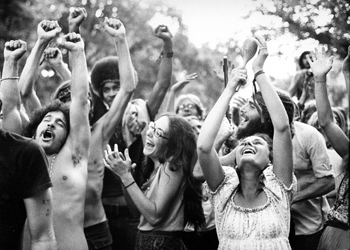
hippies

As the Boomers entered their teens, they began to rebel against the parents who had showered attention and material comforts on them. I believe this rebellion was due to a collective fear of engulfment by overindulgent parents. They were attempting to break away by reacting against the very lifestyle that had given them so much. Of course not every child had overindulgent parents, but teenagers always try to emulate what’s popular or cool. Rebelling against “the Establishment” or the Vietnam War (which also represented the values of their parents) became hip and cool. Adolescent Boomers, having been raised to believe they were unique and special (and most of those middle class and above were able to attend college and were often the first in their family to be able to do so) embraced causes that were anathema to the values of “the old fogies” and at first, really believed their causes were superior to those of their parents. They tuned in, turned on, and dropped out. They experimented with marijuana and LSD. They dressed in hippie clothing and wore their hair long, which horrified “The Establishment.” They listened to rock music, the louder and harder and more offensive to the older generation, the better. They protested the war, attended “love ins” and participated in campus sit-ins, and eventually riots. Young Boomers believed their values were exactly what the world needed, but their attitude was based on entitlement rather than realism. They were idealists who believed the world could be changed by smoking pot and listening to the right sort of music.

Due to the sheer size of the Boomer generation, anything they did got a lot of national attention. Besides the many disapproving and negative news stories about the Vietnam protests, communal living, and recreational drug use, others were also beginning to emulate them. The next-older generation (The Silents), who had been largely ignored as they came of age, tried to seem younger by emulating the Boomers in their dress, tastes, and general lifestyle. The Boomers were never short on collective narcissistic supply (both negative and positive), and this continued to feed their attention-getting behavior.

Parents wondered where they had gone wrong, and why the children they had raised so lovingly had turned so rebellious and so insistent on “doing their own thing.” They wondered why this new generation seemed to hate them so much.

By the end of the 1960s, the “hippie lifestyle,” like everything else the Boomers would ever start, had become a lucrative market. But by the time The Establishment caught on, the Boomers were beginning to move on to other things, including embracing what they had rejected.

The power was still in the hands of the older generation of course, so narcissism had not yet become a noticeable part of the culture (although hubris and conformity definitely still was). By the 1970s, the first signs of a growing narcissistic culture would begin to make themselves felt.

1970s.

disco_ball

Boomers, now entering their 20s, had by now largely abandoned their earlier hippie incarnation for a more subdued “back to the land” movement, in which they opted for whole foods, fresh air, and healthy living. Others began to infiltrate the job market, often with degrees in esoteric subjects. Having children was something to be avoided, as Boomers wanted to prolong their adolescence or make a mark on the world. The Pill and newly legal abortion made all this possible. Around the same time, women began to demand equal rights in society and the workplace. The 70s wave of feminism was very anti-child and pro-career. If you preferred to marry and raise children, you were looked upon as a throwback to the 1950s.

Around the same time, various forms of non-traditional, humanist psychotherapies (EST, Esalen, etc.), grassroots religions, and cults became popular. Collectively known as “the human potential movement,” self-improvement and self-development became a priority for Boomers. Putting your own needs before those of others was not only normal, it was considered healthy. New York Magazine dubbed the 1970s “The Me Decade” for this reason. Couples opted to cohabitate rather than marry(because it was easier to break a commitment), and divorce was becoming very common. Children raised during this time (Generation X) found themselves ignored, treated as second class citizens, or sometimes even abandoned by their self-involved Boomer parents who seemed to put their own needs ahead of theirs.

Around the middle of the 1970s, a new kind of music (disco) became associated with materialism, hedonism, and over the top sexuality. By now, Boomers had done a 180 from their emergence during the 1960s as hippies, and now embraced the crass materialism they had once rejected. They were ready for a President who would encourage their pursuit of luxury and material success.

At the same time, fundamentalist Christianity, which had been “rediscovered” by some Boomers as an outgrowth of the Jesus movement of the 1960s, was becoming increasingly popular, and the new conservatism was using it as a way to attract newly saved Christian voters.

The new narcissism wasn’t lost on Christopher Lasch, who published his book, “The Culture of Narcissism,” in 1979.

1980s.

yuppies

Ronald Reagan popularized trickle-down (or “supply side” economics), which basically meant allowing people to pay less taxes and keep more of what they earned. This played right into the hands of financially successful, entitled Boomers, who didn’t want to share their newfound wealth. The hippies had become the Yuppies–young urban professionals who had to “dress for success,” live to impress, and have the best of everything. Clothing wasn’t acceptable unless it had a designer’s logo on it. Housewares weren’t acceptable unless they were handmade in Outer Mongolia by native women. Food wasn’t acceptable unless it was “nouvelle cuisine.”

Having the perfect body was a priority, and Boomers started going to the gym or even personal trainers to tone and sculpt their bodies, sometimes to the point of unhealthy obsession. Boomers, mostly in their 30s by now, were finally deciding to have families, but children themselves became a status symbol, and getting your child into the “right” preschool or having the “right” designer clothing, or the “right” dance instructor became all-important. It was common for Boomer parents to watch other people’s children closely, to find out what they needed to do to “one up” each other as parents.

In 1987, a popular movie called “Wall Street” was released, in which its most famous quip, “greed is good,” became a national meme. While it was intended as a joke at first, “greed is good” quickly became a new philosophy of life, in which greed was not only good but became a virtue. Greed may have been one of the seven deadly sins, but even Christians made an exception for it, and we even had a Christian president who encouraged as much of it as possible. After all, it was the American way and America was a Christian nation, right?

Please continue reading Part Two of this article. 

*****

For further reading, see my articles:
1. Are Millennials Really the Most Narcissistic Generation Ever?
2. Why is Narcissism so Hot These Days?

Fight with a narcissist? Yeah, right!

Don’t waste your time fighting with a narcissist. You lose even when you win. They will never admit defeat. Read on.

graceformyheart's avatarGrace for my Heart

It’s Narcissist Friday!    

(I am aware that this blog continually attracts new readers.  With somewhere around two hundred posts on narcissism and narcissistic relationships, it can be challenging for anyone to really use this material.  The search function works very well, if you know what to ask for.  Otherwise, we will all have to wait as the blog posts are sorted and categorized in preparation for a new (and exciting!) website.  So for the next few weeks, I want to dig back into the archives to pull out some of the posts that seemed most helpful over the last few years.  Please feel free to comment.)

In my recent post on living with a narcissist, I suggested that you must be prepared to fight.  What I meant was that the conflict doesn’t seem to end.  It isn’t “knock-down, drag-out” fighting as much as it is a constant barrage…

View original post 705 more words

7 common habits of narcissistic pet lovers

Here’s a humorous look at the 7 ways narcissists can be AWESOME pet parents. This listicle from Getleashedmag.com isn’t intended to be taken TOO seriously, but there’s truth here too.

My malignant narcissist ASPD ex, who should be locked away and not allowed to get within 100 feet of any human, is actually the first person I would trust with my kitties should I ever have to leave them for a few days. He despises people (and admits it) but seems to genuinely love animals.

7 Common Habits of Narcissistic Pet Lovers
Wonder if it’s possible to love your pet and be a narcissist? Of course it is!
By Leslie Phelan

Narcissist3-720x340

There is a misconception about narcissists that says they’re way too into themselves to properly love an animal companion, but there’s a special breed of narcissist whose condition includes room for animal love. Sound like you or someone you know? Read on:

Narcissists love two things: themselves, and anything that could be used as extensions of themselves. What better self-extension than a cute and adorable furry thing that will love you back unconditionally?

Do you express love for your pet in a way that might look to others like evidence of an overly narcissistic lean within your personality? Observe yourself (you know you want to); and see if any of these key narcissistic pet lover indicators point at gorgeous little you:

1. Is your appearance everything?
Do you try on three different jacket-hat combos before stepping out, even to the park? Do you color-coordinate the dog’s collar with your scarf?

2. Are you obsessed with your own reflection?
Do you hold your cat in your arms over the bathroom vanity and compare the flecks in your eyeball irises for extended periods? When you walk past windows with your dog on leash, are you always glancing sideways to admire how lovely and magazine-ready you two look?

3. Do you use your pet as a prop to justify yet another selfie?
You know the drill: scoop up the animal, pose pretty, take a few snaps, choose the best one and post it with a caption about the animal, when really it’s to show off how adorable you look WITH said animal. C’mon . . . we’ve all been here. And the pics are priceless.

4. Do you make everything about you?
Do you listen with the intent to respond, more than with the intent to understand? When someone is talking about a cute thing their pet does, are you bursting at the seams to trump their story with a better, cuter, more special story about your own?

pet_selfie

5. Do you bring your pet along, even at less-than-appropriate times?
Most people will agree that it’s the more the merrier when it comes to dogs at parties, but do you ever find yourself purposefully ignoring hints that you maybe shouldn’t bring your pet along?
Of course you want to bring your pet because, well, attention! Plus, you don’t want to rush home if you had to leave your dog behind due to that person’s silly baby with the possible dander allergies. Pfft, the kid’s gotta get used to dog hair sooner or later . . .

6. Are you loud?
Are you constantly standing on a soapbox because you actually think people care about yours and your pets’ diets/favorite shows/the glowing review your yoga instructor gave you? Do you have loud, full conversations with your dog for all to hear? (Bonus points if you do it in another language, or in a sing-song voice.)

7. Is everyone a potential rival?
Do you get jealous if you hear another person in the park compliment someone’s dog before yours? Do you feel like you and your pet are in constant competition with your friends, relatives and their pets? Be honest: is no one safe from your sense of rivalry?

***

This is not a place of judgment; any honest pet owner wont pretend they haven’t teetered on the brink of most of these points a few times. A bit of narcissism can be good, it keeps us caring for ourselves and can make us our best selves! Embrace it, but try not to burn up too much of your energy trying to be the hottest, richest, cleverest, most stylish, most popular and successful person in the world…

Instead, focus on being the most humble, courteous, patient, kind and complimentary person you can be. Or, likewise, just be the person your pet thinks you are – that person is pretty exceptional.

Does excess praise and spoiling create narcissists?

mini_me

Many experts, including Sam Vaknin, think spoiling a child or pouring on excess praise (placing them on a pedestal) is actually a form of child abuse, because it does not mirror the child as who they really are, but as who the parents wish them to be or believe them to be. Children not mirrored appropriately, whether excessively criticized or excessively praised, grow up unable to form a viable true self and are vulnerable to developing disorders of the self, especially NPD.

The following article explains in further detail why excessively praising a child can actually hurt their self esteem, rather than help it develop normally. It also describes the two types of praise–one that builds self esteem because it takes a child’s effort into account (“you worked hard to win that contest” or “you showed a lot of dedication in getting those A’s”) and one that fosters narcissism because it implies inherent superiority over others (“you’re the prettiest girl in school” or “you’re the smartest kid ever”).

Do Parents Nurture Narcissists By Pouring On The Praise?
By Poncie Rush, for NPR.org

When a kid does something amazing, you want to tell her so. You might tell her that she’s very smart. You might tell her that she’s a very special kid. Or you might say that she must have worked really hard.

On the surface, they all sound like the same compliments. But according to Brad Bushman, a communications and psychology professor at Ohio State University, the first two increase the child’s chances of becoming a narcissist. Only the last one raises the child’s self-esteem and keeps her ego in check.

Bushman and a group of collaborators surveyed parents to see how they show warmth and value their child’s accomplishments. They then compared those findings to the children’s levels of self-esteem and narcissism. The results were published Monday in the Proceedings of the National Academy of Sciences.

Of course, self-esteem and narcissism are two very different things. The difference has to do with how you value yourself compared to other people. “Self-esteem basically means you’re a person of worth equal with other people,” Bushman tells Shots. “Narcissism means you think you’re better than other people.”

And not in a good way.

“Narcissism is a somewhat toxic personality trait,” Jean Twenge, author of The Narcissism Epidemic and psychology professor at San Diego State University, tells Shots. Narcissists tend to overestimate their abilities, take too many risks and mess up their relationships, she says. Some people see narcissists hurting the people and society around them, but they hurt themselves, too. “In the long term it tends to lead to failure,” Twenge says.

While narcissists tend to have high self-esteem [my note–this is not true], not all people with high self-esteem are narcissists. Bushman needed to separate the two. So he asked children ages 7 to 12 years old how they felt about statements like “Some kids like the kind of person they are,” or “Kids like me deserve something extra.” The first statement measures self-esteem; the second, narcissism.

Bushman made sure to focus on children between 7 and 12 years old, so that by the time the study finished all of them would be older than 8. “You can’t measure narcissism in children before age 8, because every child is a narcissist,” he says. If you ask younger kids in a classroom if they are good at math or good at baseball, Bushman says all the kids will raise their hands.

Then he surveyed the children’s parents, asking them to respond to statements to determine whether they overvalued their children. For example, “I would not be surprised to learn that my child has extraordinary talents and abilities,” or “Without my child, his/her class would be much less fun.” And he asked how they expressed warmth toward their child by measuring how strongly they agreed with statements like “I let my child know I love him/her.”

child_on_pedestal

When he analyzed the results from the surveys, Bushman found that the more narcissistic children had parents who consistently overvalued their accomplishments. He ran additional tests to make sure that the parents weren’t narcissists, too — after all, it’s possible that the children could be mirroring narcissistic behavior. But statistically, the children of narcissists aren’t more likely to be narcissists themselves.

The research team continued to survey the same group of 565 children and their parents for a year and a half. They watched the children develop, and they could link each child’s tendency toward self-esteem or narcissism back to what the parents had told them six months earlier.

“We’re not just measuring their narcissism at time one; we’re using these measures to predict the behavior a year and a half later,” says Bushman. “Parental warmth doesn’t predict it. Parental narcissism alone doesn’t predict it. But parental overvaluation alone does predict it.”

Bushman is particularly worried about narcissism because both he and other researchers have linked it to aggressive and violent behavior. He thinks it’s partly because narcissists are less likely to feel empathy toward others.

“Empathy involves putting yourselves in other people’s shoes, but narcissists have a very difficult time putting themselves in other people’s shoes,” Bushman says. Plus, he says that narcissists respond poorly when they don’t get special treatment. “Whenever people have this sense of superiority, then they lash out at others in an aggressive way.”

Of course, someone who appears more narcissistic at age 10 isn’t necessarily going to grow up to be a narcissistic adult, let alone aggressive. And the results of this study hinge on a handful of short surveys — no extensive personality testing here.

“There are definitely going to be things that influence the personality after that stage,” says Twenge. “Those [narcissistic] tendencies may start to show up around then, but will continue to be influenced by parenting and environment throughout adolescence.”

But this study has Bushman thinking about the way he praises his own children. “It’s a lot better to say ‘You worked really hard’ than ‘You must be really smart,’ ” he says, “because if you tell the kid that they’re smart and then if they fail they think ‘Oh I’m stupid.’ ” If the praise relates to effort, a child who fails will work harder next time.

Bushman is also trying to cultivate self-esteem in his children, because people with high self-esteem tend to have lower levels of anxiety and depression over time. Based on Bushman’s research, parents can raise their children’s self-esteem just by expressing more warmth.

Both researchers agree that voicing the connection you feel to your children really helps. “If you want to look for a substitute for ‘You’re special,’ just say ‘I love you,’ ” says Twenge. “It’s what you mean, and it’s a much better message.”

Have a child age 8 to 12? Find your own “Parental Overvaluation” score here.

Original article is here.