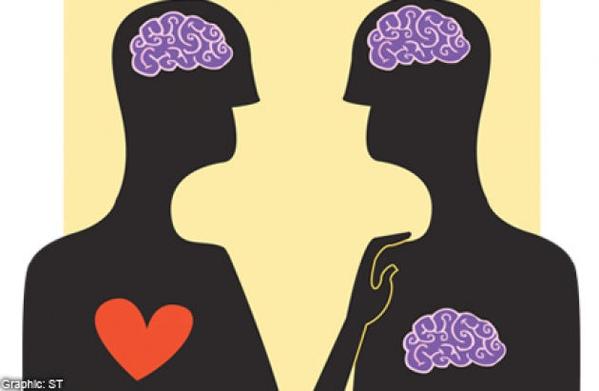
The most effective defense against gaslighting.

bytheirfruits

Narcissists and sociopaths not only try to make you think you are insane, they can literally drive you insane.   They do this most effectively and insidiously through gaslighting, a method of mental manipulation in which you are made to doubt or question reality or told your feelings are invalid.   This occurs on a personal level with narcissistic people and extends today all the way up to the national and political level. It is always extremely damaging.  People who are constantly gaslighted by a narcissist or sociopath often develop PTSD or Complex PTSD (C-PTSD).

Examples of gaslighting in relationships:

“I was joking. Stop being so sensitive.”

“That’s not what I said.” (when they definitely have said it).

“You are imagining things.”

“It never happened.”

Trump gaslights his political rivals, his enemies, and the entire country on a daily basis.   I can’t and won’t attempt to list all the examples, but his Twitter account is a treasure trove of gaslighting if you can stomach it.   Perhaps the most egregious example to date is his recent denial of the Access Hollywood tape where he now denies he ever said he could “grab women by the pussy.”  Another good recent example is Roy Moore (who I believe is as sociopathic as Trump) justifying his pedophilia by comparing himself to Jesus being persecuted — he is pinning the blame on the truth-tellers (projection and blame shifting) and denying reality (gaslighting) at the same time.

When our own reality is questioned or denied, or when actual events are called “fake news” and the free press “the enemy of the people,” it’s not uncommon for us to begin to question the truth itself.   You begin to think that maybe, just maybe, the gaslighter is actually the one telling the truth and you are just nuts (which the gaslighter will happily confirm).

My favorite Bible verse ever is this one, from Matthew 7:15-20 (New Living Translation) because it’s so useful in gaslighting situations.

Beware of false prophets who come disguised as harmless sheep but are really vicious wolves.  You can identify them by their fruit, that is, by the way they act. Can you pick grapes from thornbushes, or figs from thistles?  A good tree produces good fruit, and a bad tree produces bad fruit.  A good tree can’t produce bad fruit, and a bad tree can’t produce good fruit.  So every tree that does not produce good fruit is chopped down and thrown into the fire. Yes, just as you can identify a tree by its fruit, so you can identify people by their actions.

When a gaslighter makes you question the truth or wonder if your honest feelings are invalid, I’ve found this verse stops any doubt I’m having and calls out the abuser for the liar they really are at the same time.   Look at what the person is producing.    If they’re creating nothing but chaos, destruction, fear, and misery, if they’re sowing discord instead of unity,  if they always break their promises,  don’t believe anything they tell you.    They are lying and will never produce any good fruit, no matter what they might want you to believe.

5 reasons why you should never tell a narcissist they’re a narcissist.

Originally posted on July 1, 2015

narcissus

In my dealings with narcissists, it’s sometimes been tempting to tell them to their face that they’re narcissists, thinking maybe it could be the wake up call they need. It’s a nice fantasy to think they might take a look at their obnoxious, abusive, insufferable selves and try to make some changes, but unfortunately that’s just a fantasy. It won’t work, because narcissists cannot feel remorse for their actions or empathy for hurting you. In fact, they may take pleasure from it.

The following reactions are far more likely if you “out” a narcissist to their face:

1. They might rage. Or give you the silent treatment. Or laugh at you. Or deny it. Or abuse you. Or call you names. Or tell you you’re crazy or deluded. Narcissists hate the truth, and if they know you have their number, they feel threatened and will attack like a cornered rattlesnake. It’s in their nature.

2. It might give them twisted narcissistic supply. Some narcissists may actually take a perverse pride in being called narcissistic. Rather than making them feel shame and remorse, telling a narcissist they’re a narcissist may flatter them and inflate their ego even more, which could lead to them becoming even more narcissistic and abusive than they already are.

3. They might project it back onto you. This is surprisingly common. Projection (attributing their own bad behaviors to their victims) is one of the more common red flags of a narcissist, so if you call a narc a narc, don’t be too surprised if they start telling everyone YOU are the narcissist. They might even turn the tables and play the victim (see DARVO).

4. They might learn more to hone their weapon. Taking #2 a step further, some bright narcissists may actually decide to learn more about their disorder–but not to learn how to control it or improve the way they treat people, but rather to educate themselves about abusive narcissistic mindgames they haven’t already tried in order to use them against you. I actually know someone this happened to when she called her ex a narcissist. He started reading every book he could get his hands on about NPD and narcissistic abuse, and systematically started using the information to “prove” his girlfriend had NPD and that he was the real victim (see #3).

5. They might not be a narcissist. There is always a possibility (even if small) that the person you think is a narcissist really isn’t. If you’re not a mental health professional qualified to make a diagnosis based on standardized testing and interviews, your own bias, lack of knowledge, or just plain dislike of a person could be influencing your judgment of them. Perhaps they are having a bad day (or a bad life), or suffer from some other disorder that can mimic narcissism. Even non-disordered people can act like narcissists at times. All of us can. So if you’re certain someone is a narcissist, you may be right, but it’s still best to keep that information to yourself–or only tell your close friends.

HSPs and codependency.

Originally posted on November 8, 2015

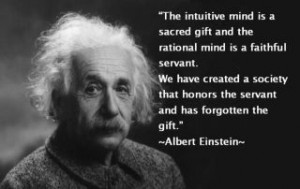
einstein_quote

There’s a lot of discussion on the web about codependency as well as empathy, especially in the narcissistic abuse community. While it’s true people who are codependent to a narcissist also tend to be high in empathy and very sensitive, there seems to be a lot of confusion–people who aren’t too familiar with either term tend to believe empathic people are also always codependent. While codependent people are almost always highly sensitive (which is the quality that attracts their abuser to them and keeps them trapped in a toxic relationship because they believe they can “fix” their narcissist), the reverse is not always the case.

A healthy HSP (highly sensitive person) is simply an emotionally healthy person. They are confident and secure enough with themselves that they can resist the “charms” of an abuser. If a healthy person with high empathy does find themselves being drawn into an abusive relationship with a narcissist, they have the courage and presence of mind to pull themselves out of it and even go No Contact before they fall under the thrall of the abuser and before any damage is done. In fact, having high empathy makes it more likely a person will be able to “see” the red flags before anyone else, giving them a chance to escape and/or avoid the person.

A healthy HSP does not waste time trying to “fix” a narcissist. They know the chance of that happening is about the same as the likelihood they will sprout wings and fly to the moon. If a narcissist is going to change (I’m not one of those people who believes it’s not possible), it must be the desire of the narcissist and they have to work very hard at it, but no one else can “save” them except themselves, and it’s going to be a long, hard road if they decide that’s what they want. A healthy HSP will not allow themselves to fall into a love-bombing trap or be “hoovered” by a narc. Once they realize what they are dealing with, they will cut off any further communication. They know they can’t be nice about it, but must be firm. They may care, but they know they are not going to be the ones doing the fixing, and will be able to move on to a healthier relationship with someone they can actually grow with and who will be able to return their love.

codependency_love

Our society today is also quick to judge those who have high levels of empathy and want to give back to others as being “enablers.” This happens even in the public realm, with the massive cuts in spending to programs that help the most vulnerable people of society and the blanket dismissal by the Powers That Be of those who want to help as “suckers” who are “enabling” the most vulnerable people. I don’t wish to get on a political soapbox but there’s something very wrong with any society that only values how “powerful” you are or how much money you earn. There’s something sick about a society that dismisses its most vulnerable members as “lazy and stupid” or “deserving” of their sad lot. Empathy is a virtue that has become increasingly dismissed as a weakness, but is actually the one thing–maybe the only thing–that could rescue modern society from completely self-destructing. Empathy isn’t a weakness at all–it’s a strength. If you’re a HSP you have this quality and should be proud of it and use it, not hide it away like a shameful thing. The narcissists who run things in the world would like us all to think it’s a shameful thing, but that’s just another lie they tell. It’s needed now more than ever. So, you are not an “enabler” if you want to help others; just be careful who you are helping!

Unfortunately, HSPs have often been abused themselves or have other disorders such as complex PTSD, and they often find themselves targeted by narcissists for abuse. Narcissists are usually attracted to people with high empathy because they know they can get the “understanding” and love they crave and will proceed to feed on the HSP’s emotions much like a vampire feeds on blood. They know it’s hard for such a person to say “no” because they can’t stand to hurt anyone’s feelings, so an HSP person is more likely to stick around and tolerate abuse than someone who is less sensitive.

If you are such a person; if you are very sensitive, cut your losses now! Staying around a narcissist who is actively abusing you is just not worth it, and there’s also a very real danger of being drawn so far into the narcissist’s web of deception and abuse that you could develop Stockholm Syndrome and begin to identify with your abuser. Once this happens, you could even find yourself taking on traits of narcissism yourself and colluding with your abuser. It’s an insidious process but it can and does happen; and it happened to me. Be careful. Your soul is a precious thing and you should not give it freely to anyone until you know that person can be trusted with it. That doesn’t mean you have to become hypervigilant and start seeing demons around every corner, but if your intuition is throwing up a lot of red flags about a particular individual, don’t dismiss them. They could save your life.

In defense of “needy” people.

Many of us complain about certain other people acting too “needy.”  But maybe they’re not the problem; maybe we are.

“Let me be your voice” project – Sleeping with the enemy…

I don’t write a whole lot about sexual abuse — and the story told here may not qualify as what most people would define sexual abuse to be — but still, the woman who wrote this post had something that was precious to her stolen from her, and her boundaries were ruthlessly violated. This post is more explicit than what I usually post, but I think it’s important, because something so precious should be freely given, and boundaries need to be respected. I’m glad this writer ended the relationship because it sounds like her lover thought nothing of taking what wasn’t his, in essence, raping her.  At the very least, he was incredibly obtuse.  It sounds like the writer had a PTSD-like reaction to what happened.  Rape usually does have that effect.

Comments here are disabled. Please comment on the original post.

Also, please follow Cyranny’s Cove.  She has an awesome blog!

Cyranny's avatarCyranny's Cove

As part of my “Let me be your voice” project, once again, I am honored to host the story of a lovely reader who sent me a painful recalling of her past. I wish there were no such stories to share, but since there are… I hope letting it out at last will help and bring relief.

I’d also like to remind you that if you have a story you would like to get off your chest, but just don’t feel comfortable publishing on your own blog, I’ll be more than glad to help by posting it in the Cove, leaving all the credit to you!  Just write to me here.

So here is her story. And I’d like to thank the author for her trust. *Hugs, my dear!*


black_and_white_photos_ntkonlinebusiness_18_large

I decided to talk today, because I kept this story for myself for too long. And I cannot believe I…

View original post 851 more words

My kids escaped cluster B hell.

15001-my-children

I’ve lived a harder life than most people.   All my life, I’ve been surrounded by Cluster B people and many of them had substance abuse issues too (alcoholism and drug addiction are closely correlated with Cluster B personality disorders).

I was raised by a somatic narcissist mother and a covert narcissist/borderline father.   Both were alcoholics.  I never knew my half-brother and sisters, who were not raised by my parents after I was born.   My grandparents all died when I was still young, but from all the accounts I’ve heard, they were also all Cluster B or codependent in a cluster B marriage   In 1986, I married a malignant narcissist/sociopath (also an alcoholic and drug addict) and was the codependent victim in that relationship until just three years ago.    Surrounded by so many cluster B people, it was almost inevitable I would develop a cluster B disorder myself (as well as severe C-PTSD) and so I did.   I almost became an alcoholic myself.   Our extended family is fragmented and shattered, with various factions scattered across almost every part of the United States.  I’m not close to any of them.   Some of them I have never met and probably never will.

Somehow, the family mental illness appears to have skipped over both my children.  My daughter, who is 23, was a difficult teenager, frequently in trouble.  For a few years she hated me and sided with her dad (she was his golden child and he frequently tried to use her as a pawn against me).  Due to her problems in school and at home, she was diagnosed with several things, including Oppositional Defiant Disorder (ODD) which often becomes a cluster B disorder in adulthood.   But she never did and during the last two years, has shown she has a lot of empathy for others and is also finally making some good life choices.    My son, 25 now, never seemed much at risk; he was his father’s scapegoat and a target of bullying as a child (much like I was),  yet he seems to have escaped having even Complex PTSD. His worst problem is he’s very obsessive-compulsive and has anxiety issues (don’t we all?) Of course, they are both young,and sometimes symptoms of BPD or NPD don’t really manifest until later, but as far as I can tell, they both seem free of those disorders.   If either of them does become Cluster B,  it would break my heart because I don’t think I could bring myself to go No Contact with them.   But I don’t think that’s going to happen.

I think a lot of things led to my kids never developing cluster B disorders (or at least not seeming to), not least of which was pure luck.     I think they knew that as disordered as I was and as hobbled as I was as their mother due to my codependent nature, my love for both of them was the real thing.     Although I wasn’t protective enough when they were children; now I find I’m almost overprotective, even though they are adults.   It’s as if I’ve been trying to make things up to them.  I think educating them about NPD (they both know their father has it), narcissism in general, and other cluster B disorders,  and how they affected our family and its dynamics, have helped them to understand why their father and I acted the way we did.

My son may have escaped having these disorders because during his last year of high school (2009 and 2010), he lived for several months with the family of a friend of his, whose mother was a police officer and an excellent mother to her own sons.  This wasn’t a “foster child” situation; it was my son’s choice.   He told me he could no longer tolerate the toxic dynamics at our home and this officer’s family cared about him as if he were one of their own.   Since he was almost ready to graduate I didn’t see a problem with him staying there for awhile, though I did feel hurt and missed him a lot.   I could see that it would benefit him, even as sick as I was at that time.  I knew that this was a good family who would set a good example for my son.

My life has been difficult in almost every way one can imagine, but I feel so grateful that I have a great relationship with both my children now that they are adults.   Both of them recognize their dad as an abuser, and think I was the better parent.  My daughter liked her status as her dad’s favorite, and felt like she was required to “hate” me and now feels bad about that.  I told her not to feel guilty, because what he did to her was also a form of abuse.   As for my son, we’ve always been close.  I feel like these two young people would both be good friends of mine even if they weren’t my own children.   I love them, but I also LIKE them.   I’m so proud of them both.

Sometimes I miss him.

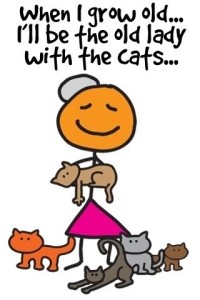
cat_lady

My ex husband was and is a malignant narcissist who actually has an NPD/ASPD (and Bipolar) diagnosis.  He almost destroyed me and my sanity with his constant gaslighting, verbal abuse, projection, lies, insults, mean sarcasm, threats, and refusal to lift a finger around the house or even work for the last few years we were together. He stole from me, ran up my credit cards (ruining my credit rating, which sucks to this day), tried (and almost succeeded) in turning our two children against me, invaded by boundaries, and once even threatened me with murder-suicide after I threatened to leave.  He still badmouths me to everyone he can, telling them how crazy and stupid I am (even though to my face, he always called me the most intelligent person he’d ever known). .

And yet, and yet….

WTF?

Sometimes I miss him.

I miss the way sometimes he could be so sweet and loving (usually when he wanted something).  I miss our long, intellectual conversations about politics, science, God, the universe, art, music, movies, and everything else under the sun.   I miss having a companion who would accompany me no matter what I was doing.   I miss having someone to spend the holidays with.   I even sometimes miss his unfunny jokes (which were often directed against me).

He had a few genuinely nice qualities.  His intelligence made him an interesting conversation partner.  He also loved animals and loved to cook.  I miss his cooking (even though he always overseasoned everything).  But these things weren’t enough to make me want to stay with someone who was so abusive to me and our kids.

I guess what I really miss isn’t him at all, but just that I miss being part of a couple, because I was absolutely miserable almost every moment I spent with him.  I know I will never go back, and have no love left for him, but I do pray for him and don’t hate him, in spite of the evil, horrible things he did to me when we were married and for the several years after the divorce that we stayed together.

I look around and practically everyone of my age is part of a couple. If they aren’t part of a couple, they have extended family or a large circle of close friends, or a fulfilling career.  I have none of those things.  I don’t wallow in self pity over that, but these are the facts.   I am fortunate to have a good relationship with my grown children.   I am fortunate to be fairly healthy and employed.  I don’t hate my life, exactly, but I am lonely.

Although I look young for my age, and am in fairly good shape, I don’t look THAT young.   I feel old, way too old to attract a mate.   I’m self conscious about my rather advanced age, and the toll it’s beginning to take on my appearance.  I wish I could turn back the clock, but I can’t.

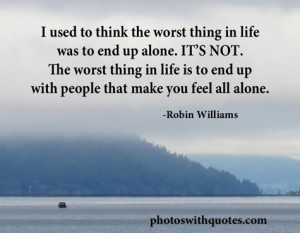
loneliness

The idea of starting over again, with someone new, is just too daunting, and frankly, way too scary.   I still have too many issues connecting with real life people because of the trauma I suffered.  I have no idea where I’d meet someone.   I hear the online dating services can be quite predatory and I don’t want to spend the little money I have on something like that anyway.

I’ve also become set in my ways.  I’m way too selfish to want to change my lifestyle or compromise that in order to adapt to someone else.   I don’t know if I could do that now.  I like my time by myself, doing what I like to do, thinking my own thoughts, not having to take someone else’s wishes or wants or needs into account.   I have cats instead, so I guess that makes me one of those crazy cat ladies.  Well, so be it then.

At the end of the day, I think I just prefer to remain alone.   I’m really not interested in dating, I just sometimes wish I had the companionship that other women my age seem to all have.    I wish there was another person I was growing old with so I wouldn’t have to die alone.

5 Howling Wildernesses

This post has haunted me for months and I was thinking about it again today. Enter the inside of a malignant narcissist’s mind — a vast and bleak howling wilderness — if you dare. This is one of my favorite posts by HG Tudor, who is a brilliant and poetic writer.

HG Tudor's avatarHG Tudor - Knowing The Narcissist - The World's No.1 Resource About Narcissism

Five reasons it cannot work

1. Nothing about the golden period is real

It feels like every day is summer doesn’t it? Warm and wonderful. No rain clouds anywhere, just a cornflower blue sky. Not a cloud to be had. Everything is fantastic. We do everything together. We match on every conceivable level. I like what you like. We laugh at the same things. We enjoy the same books and films. I know what you are about to say. We like to cook together, try new wines and explore interesting places. Whether it is forest or foam, city or village we both enjoy going to these places and do so together. We are soulmates. I do not want anyone but you. You have finally met the person that you have wanted all of your life. You still cannot believe how lucky you are to have found someone like me, someone…

View original post 1,082 more words

Why empaths and narcissists seem to need each other.

narcissist-and-empath
Credit: Let Me Reach with Kim Saeed

The concept of narcissism and HSP (highly sensitive person) or empathic traits coexisting in the same person is a matter that has very little research behind it, but I definitely think there is a strong case to be made for it. Hear me out before you hit the backspace key. I actually think it’s at the core of why empaths and narcissists are so uncannily drawn to each other.

In my article A Match Made in Hell: Narcissists and HSPs, I wrote about the tendency for narcissists and HSPs to form trauma-bonds with each other–that’s really just a fancy way of saying these two seemingly opposite types of people are often attracted to each other and form codependent relationships.

The trauma bond.

The narcissist is both attracted to and envious of the empath’s vulnerability and high empathy. They are attracted to it for a very simple reason:  they need it badly. As children, narcissists failed to be mirrored or loved unconditionally by their parents, and are love-starved, even though they’d rather die than ever admit it.   The empath, in turn, is able to love the narcissist without condition, to the point of allowing themselves to be sucked dry.

Narcissists also envy the empath’s ability to love unconditionally because on some level, usually unconsciously but sometimes consciously, they know they jettisoned their own ability to love and feel empathy a long time ago in order to survive.  Most were highly sensitive children but shamed for it.  Many were bullied.   So they learned to bury their emotions behind an invulnerable facade because continuing to be so vulnerable hurt too much. Empathy may be a gift, and I think most narcissists were born with that gift, but were never shown how to use it and were punished for having it.  It became a curse instead of a blessing, so they sent the gift into exile and shored up a false self to make sure it never saw the light of day again.

Knowing they jettisoned their ability to access their own vulnerability, combined with a continued starvation for unconditional love and acceptance, is what draws narcissists to empaths. They abuse the empath, either consciously or unconsciously, because they hate the fact they need their love so badly, and the empath’s sensitivity also unconsciously reminds them of their own sensitivity that caused them so much pain. It’s a constant reminder of the shame they felt as children for being so sensitive, but they also can’t live without it. So they punish the empath for reminding them of their own “weakness” and making them feel so needy.

The narcissist, in their neediness and simultaneous resentment of being so needy, feeds off the empath like a vampire. If they are malignant, they don’t care that they’re destroying the very person who gives them a reason to live. They may even get some satisfaction in knowing they are punishing them. If the narcissist is not malignant, they may feel some guilt over what they do to  the person who gives them so much love, but be unable to stop doing it. Or more often, they aren’t even aware they are doing it. They just seem like a bottomless well that can’t get enough and keeps on demanding more.

Of course such a relationship is extremely unhealthy, even deadly, for the empath, who will eventually either leave the narcissist or be completely sucked dry or in the worst cases even destroyed. But the empath does gets something important out of the relationship too. They truly believe that through their unconditional love, they are saving the narcissist from him or herself.

Common roots.

Empaths and narcissists often both come from abusive or dysfunctional families. Both started life as highly sensitive children. But at some point they diverged. While the empath embraced their own vulnerability and learned how to use their gift to help others and find joy and authentic connection with others, the narcissist rejected it because it seemed more like a curse and made them feel too much pain. If they were never shown any empathy or were shamed for being too sensitive, it’s understandable why they might have rejected their own empathy and covered it over with a facade of toughness.

Why are empaths drawn to narcissists?

Empaths, like narcissists, often have narcissistic parents, and are unconsciously drawn to those who remind them of their parents or perhaps a sibling or other close family member.  They are naturally drawn to those who seem to need healing, and in embarking on a relationship with a narcissist, they are unconsciously attempting to heal their parent or other family member. This is why empaths so often become codependent to narcissists.

Empaths are able to see through the facade the narcissist presents to the world, to their hidden true self. They can see the hurt, abandoned child that lives inside every narcissist. They truly believe they can “fix” them and transform them into authentic, feeling humans capable of returning what they have been given. Of course, this belief is almost guaranteed to end in disappointment (if the empath is lucky), and possibly much worse. For a narcissist to change and stop the pattern of abuse, the desire to do so must come from inside of them. They must be willing to drop their mask of invulnerability and do the hard work of reclaiming the vulnerability they were born with and gave up a long time ago. The empath can’t make a narcissist want to change. Just because they can see through to the sensitive true self doesn’t mean they will be able to draw him or her out. They can die trying, but it probably won’t work. The unwilling, un-self-aware (or malignant) narcissist is likely to punish them for trying.

Failed empaths?

There may even be a genetic connection between narcissism and those who become empaths. I’ll go out on a limb and even speculate that they might even be the same thing–the narcissist being a “failed empath.  It’s ironic but I definitely think there’s a connection.

But how can that be? Narcissists are incapable of empathy, have problems feeling and expressing deep emotions, and are incapable of loving anyone but themselves. Isn’t that the opposite of being an empath?

Well, yes and no. The explanation is complicated, so I hope you stay with me here.

As I’ve explained before, I think most narcissists began life as highly sensitive people who at an early age suffered trauma due to abuse. This caused them to shut off their too-vulnerable true (authentic) selves from the world and in its place construct an elaborate defense mechanism–the false self–initially meant to protect the vulnerable true self from further harm, which has no defenses at all. Even empaths who are not narcissists have some protective psychological armor, so they did not need to construct a false self to take the place of the true one. Healthy empaths are truly authentic people who feel deeply and are emotionally honest with themselves and others. Narcissists were born with no emotional defenses at all; the false self replaces the true one and appears invulnerable. But this is only an illusion. When you face a narcissist, you will never know who that person really is because all they will show you is the protective mask they have created. They are so terrified of being hurt again that they will attack with vicious ferocity if they think you pose any threat to its flimsy underpinnings. It must be a terrifying way to live.

The high sensitivity of a narcissist is retained in the way they react to personal insults or slights. They overreact when they feel like they are being attacked, ignored, or they perceive their source of narcissistic supply may be in danger. They are paranoid, touchy, and often lack a sense of humor about themselves. They may try to appear as if they don’t care, but if you know narcissism, it’s usually not too hard to see the emotional fragility behind their defenses and acts of false bravado. When it comes to other people, they can seem incredibly insensitive.

Narcissists who aren’t high on the spectrum and become self aware may be able to reclaim emotional empathy toward others, because empathy is a skill that can be learned.  A forum member on the NPD board I read (who has NPD) described something that happened with her husband that warmed my heart.  She said he had hurt her feelings, and she caught herself about to attack him.  She felt her defenses go up, but instead of acting out, she decided to NOT act out and just allow herself to feel the hurt.  Instead of attacking him as she normally would have, she cried.   He put his arms around her and she allowed herself to be held and comforted, to feel vulnerable and cared for.   She said at first she felt awkward and uncomfortable, but the next time it happened, she felt less uncomfortable.  Now allowing herself to be loved is becoming second nature and she says she is starting to feel some tenderness toward him too, and even moments of a new feeling that she thinks is real love, a warm feeling not based on getting supply from him or bolstering her ego.   So I think empathy takes practice.  If you were born with it, you don’t lose it, but it may be hard to access and takes a conscious effort to learn to reclaim and use.

But before a narcissist can really get better and feel empathy toward others, they first need to develop self-compassion (this is NOT the same as self-pity, but is actually empathy for the rejected child-self). They must also be courageous enough to stay in treatment and confront and release the traumatic feelings that lie hidden beneath the mask.

This usually only happens when the narcissist hits rock bottom and suffers a massive loss of supply, sending them into a depression.  At that point they may enter therapy or realize the problems they have are because of themselves.   The problem with this is once things begin to improve or they begin to feel better again, they are likely to leave therapy because the work to get to their authentic self is too painful.    It takes an enormous amount of motivation, courage and positive thinking for a narcissist to stay in therapy long enough to begin to access their true self and embrace their own vulnerability.  It can be done, but it’s not easy.

For malignant narcissists though, things are very different.  Stay with me here because things are about to get complicated.

The connection between malignant narcissism and high sensitivity.
warm_cold_empathy
Warm and cold empathy.

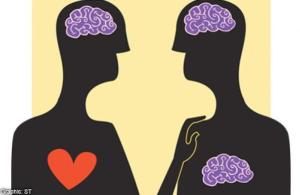
In my research about NPD, there has been a lot of discussion about a concept called “cold” empathy.   Most of us associate narcissism with a lack of empathy, but this isn’t exactly the case. Most narcissists–especially malignant ones–do have empathy, but it’s not emotional or affective empathy; it’s cognitive or “cold” empathy. What this means is that a narcissist KNOWS what you are feeling, and may use what they know you are feeling against you. Cold empathy is “felt” on the cognitive (thinking) level, but not as an emotion, and that is why the narcissist can feel no compunctions about turning your feelings against you in order to punish or hurt you.

An extreme example of this would be the sadistic, psychopathic rapist. The rapist “smells” your fear and uses that against you to become even more sadistic. It *is* empathy, but it’s “cold”–the rapist understands exactly what you are feeling and your fear makes him feel powerful, so he increases the level of torment. He feeds off your fear like a vulture feeds on carrion. You don’t need to tell him you’re afraid; he KNOWS. He just doesn’t care and even derives pleasure from it.

Cold empathy is the twisted mirror image of warm empathy, which non-pathological people are capable of feeling on an emotional, not just a cognitive level. HSPs and empaths have an excess of warm empathy.  Here’s where things get complicated. If a narcissist is also a failed empath, their high sensitivity could morph into a quality that seems almost supernatural and is utterly chilling–a cold, sadistic form of “empathy” where they seem to be able to see into your mind. A non-sensitive person would not be able to detect your emotions without you telling them how you feel, and therefore not have that creepy, unsettling way of “seeing into your soul” that the malignant narcissist does. So, the higher the sensitivity a narcissist has (and the more the “warm” empathy has been shut out or turned “cold”), the more malignant they will be.
narcautism_spectrum
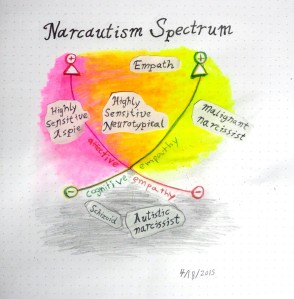
Malignant narcissism is high on the HSP spectrum.
Credit: http://dondepresso.rujic.net/post/116940034025/manic-chart-narcautism-spectrum

This idea was actually illustrated in the humorous-but-true graph (shown above), where initially I wondered why malignant narcissism was showing so high in empathic/HSP traits. But actually it makes perfect sense. An empath who adopts narcissism as a way to cope and whose warm empathy all turns cold will become malignant. A less sensitive person (or a highly sensitive person who still retains some warm empathy) may still become a narcissist, but they won’t become malignant. Of course, at their core, all narcissists are highly sensitive. They just don’t want you to know.

In summary, then, empaths and HSPs can be the most kind and caring people you can ever hope to meet–or the most dangerous. A narcissistic empath is definitely someone you’d want to avoid.

They are two sides of the same coin. The tragedy is that a malignant narcissist can destroy a previously healthy empath, but it doesn’t work the other way around: a non-narcissistic empath can’t change a malignant narcissist into a good person.

*****

Further reading:

Narcissists and Empaths: The Ego Dynamic
The Truth In The Lie Of Narcissistic Love

This brilliant post ponders on the question all of us who have ever been in a narcissistic relationship (or had narcissistic parents) have asked: can a narcissist feel love? This deeply personal post says yes, they can. But they have no idea how to express their love in appropriate ways because everything, especially loving someone, hurts too much. So they hurt the one they love instead so they don’t have to feel all that pain.

You can’t reason with them or plead with them to stop doing what they do, though. Attacking you isn’t something they can control — it’s an automatic reaction, almost like a reflex. Whether or not a narcissist is capable of FEELING love, they don’t know how to EXPRESS it in a loving way, so you’re better off not wasting your own love trying to make a relationship with one work. If you must love a narcissist, do it from a safe distance.