We need a lot more awareness about narcissism and psychopathy.

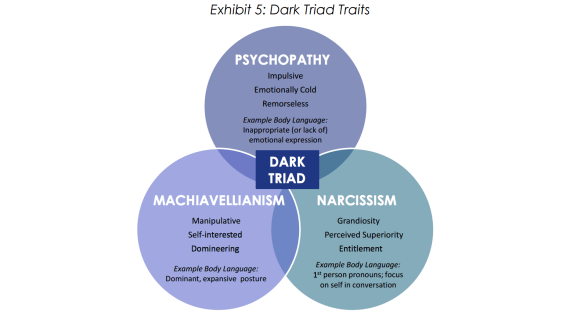
darktriad

Elizabeth Mika is one of the 27 mental health professionals who contributed to the  bestselling book,  The Dangerous Case of Donald Trump.   She is a psychologist who writes about narcissism, psychopathy and authoritarianism (specifically Donald Trump’s authoritarianism) on her Medium blog.  I follow her on Twitter (she’s under @yourauntemma if you want to follow her too) because I never want to miss one of her articles.    The other day, she tweeted this in reference to the many pleas to “remember the Holocaust”:

Unless we teach about the conscience-impairing character defects, like psychopathy & narcissism, shared by genocidal leaders & their followers, these calls for remembrance will remain hollow.

She’s absolutely right.   Even though the Cluster B personality disorders, specifically those in the Dark Triad — Narcissistic Personality Disorder, psychopathy (Antisocial Personality Disorder), and malignant narcissism (a combination of both disorders with paranoid traits)  — are getting a lot more attention than they used to, they still don’t get nearly enough.   There are a few terms formerly confined to the narcissistic abuse community such as  “gaslighting” and “blame shifting” that have recently become household words since Trump took office, but if you try to talk about narcissistic or antisocial personality disorder or malignant narcissism with most people you will still usually get a blank stare, especially if you try to talk about it in regard to the dangers these disorders pose to us all when a world leader is most likely afflicted with one or more of them.

Until — and if — the general public receives education in how these personality disorders work and how to recognize them, people will still fall prey to the phony charm and false promises of a narcissist in their personal lives, staying with friends and family members who are psychologically destroying them.  But even worse than that, people will still believe the lies and promises of con-men like Donald Trump or Adolf Hitler.  They will keep trying to find the goodness that must exist under all the flash and bluster, even though in all likelihood, there is nothing hiding under the mask but a black void of hate and fear.

Hitler rose to power because he promised to “make Germany great again.”  He promised jobs, a thriving economy, and a better life for all Germans, and people believed him, at least at first.  Later, when the deportations and roundups began, and militarized police began knocking on doors late at night, people may have begun to suspect Hitler was dangerous, but they still wanted to believe he was what Germany needed, so they told themselves what he was doing wasn’t really that bad or even was necessary (but well-meaning).   This is called “normalization” and it happens both in countries and in families headed by a malignant narcissist.    When there are too many outrages, people can’t process them normally, and things that were once seen as outrageous or shocking begin to seem normal.   As the dividing line between what is “normal” and what is “not normal” continues to shift, more and more “not normal” behavior is tolerated.   This is how a psychopathic or narcissistic leader conditions average, non-sociopathic people to accept the unthinkable.   It takes time, but eventually even genocide begins to be seen as acceptable or at least doesn’t raise any eyebrows.

hitler

Leaders with malignant narcissism and/or psychopathy tend to be very charismatic and forceful.   They seem extremely confident and this makes people trust them.   They say things like, “I alone can fix it” (this is always a red flag) or “I am all you need.”  They make lofty and unrealistic promises.  They brag about past accomplishments and  exaggerate what they have accomplished (which often wasn’t much).  They take credit for things others have done.  Whenever they are found to be lacking, or when they are called out for their lies and hypocrisy, they will never accept that blame and will either deny their wrongdoing, or blame it on someone else.   They never apologize.

They may seem to care about you, but they don’t, for they have no empathy.   They see everything in black and white.   They are blind to nuance in others.   You are not a person to a narcissistic or psychopathic leader: if you are not useful to them in some way (if you are useful they will shower you with praise — in relationships this is called “love-bombing”),  then you are the enemy.    And when you become an enemy, you are fair game for vengeance.   These people believe in revenge and “getting back at” their perceived enemies.

They speak in superlatives.  What they have done is always the best, the biggest, the most, the greatest.  They had the biggest crowd at their inauguration, they have created the most jobs, and they are the most beloved or respected leader in the entire world or even in all of history.   If their lies or misdeeds are pointed out to them, they become enraged.  Sometimes this rage manifests as self pity, and their self pity is as grandiose as their self-aggrandizement.  When they think they’ve been wronged, no one else has ever been so wronged or so mistreated as they have been!  They turn self pity into another contest of superlatives:  Trump whining to a group of Boy Scouts about how he was the most misunderstood and poorly treated politician in American history!

If they have deemed you an enemy (which doesn’t take a lot — you need only disagree with them to be devalued), you are the worst person on the face of the planet and have no redeeming qualities.  You will be devalued and called hurtful names, and that’s just for starters.    Leaders with malignant narcissism are very paranoid and always suspect others — often their political rivals or people who merely disagree with them, but have no ill intentions — of plotting against them, talking badly about them, or trying to destroy them or take away their power.    They pre-emptively fight back by attempting to discredit, dehumanize, or destroy their rivals or perceived enemies.

These kinds of leaders (who are almost always male) are fixated on toxic masculinity.  They admire and emulate those who they see as “strong.”  Thus, they glorify war, forceful oppression, abuse of power,  police brutality, and total control.   They value authoritarianism much more highly than democracy, which requires cooperation and some semblance of empathy.   They look down on higher values like compassion, humility, forgiveness, or love as “weak” or “feminine.”   They also like to “punch down” — which means enacting draconian policies or shifting blame onto the most  vulnerable or the weakest.   It’s schoolyard bully behavior writ large.  They hate anything they see as soft or vulnerable or “weak” because they are so afraid of their own vulnerabilities.   Deep inside, they have little to no self esteem and hate themselves, though they will not ever admit it and may not even be aware of it.   They puff themselves up to mask their own feelings of worthlessness.

Because these kinds of leaders can initially convince people they are strong and powerful and can fix every problem themselves, and because they seem so confident in their ability to do so, people continue to be duped by them and believe the lies they tell.    They ignore the red flags (which includes making lofty promises and saying “they alone” can fix things), because they have not been educated in what to look for.

malignantnpd

If awareness and education about NPD, malignant narcissism, and psychopathy were more widespread (perhaps it should even be a required part of school curriculums), people would learn how to recognize the red flags and avoid such people in their personal lives — and avoid voting for leaders who have these traits.   As long as people remain ignorant about the red flags of these personality disorders, we will still be vulnerable to electing sociopathic, dangerous leaders and being taken in by dangerous people in our personal lives.   We will still find ourselves under the thrall of people and leaders who see us as nothing but marks.

All that being said, there has been more awareness about this problem since at least the 1990s.   I wrote about the history of narcissism/narcissistic abuse awareness over the decades in this two part post — please give it a read!

How Did Narcissism Get So “Popular”? (part 1) 

How Did Narcissism Get So “Popular”? (part 2)  

So things are better than they’ve ever been, but we still have a long way to go.   If there was enough awareness, we would not be in danger of repeating what happened during the Holocaust.

 

The eerie similarities between the alt-right and Charles Manson’s cult.

charlesmanson

When Charles Manson, the infamous mass murderer who ordered his followers to carry out a series of brutal murders in 1969, died in prison in early November,  I was intrigued by the many comments I read that half-jokingly (but also half-seriously) said that had Manson been free (and still alive) he would have become an icon for the alt-right and possibly even become a de facto alt-right leader.

If you don’t think about it too deeply, the comparison seems preposterous.  After all, Charles Manson was an outcome of the 1960s far left (or at least seemed to be):  an aging LSD-tripping, wild-eyed, long haired musician (I hesitate to call him a hippie because he actually was not) and ex-convict psychopath who headed a commune of long-haired young hippies, most who were girls and most who were runaways (or castaways) from broken homes.   The girls (and the few boys) who lived with him at the Spahn Ranch in the remote California desert worshipped him as if he were a God, and he played the role well.   He had a mesmerizing, almost supernatural effect over his charges, and these lost kids, who weren’t necessarily bad people when they joined his ranch, became so brainwashed they were willing to do anything for him — even commit murder for him.

During their time at the Spahn Ranch, Manson and his disciples (collectively they were known as “The Family”) engaged in sex orgies, dropped LSD together, listened to music, especially the Beatles (Manson believed the words of certain Beatles songs spoke directly to him and were prophetic), and even made music (there is actually an album of music they released). They listened raptly to Manson’s sermons letting them know he was Christ and Satan wrapped in one, and about the coming Helter Skelter, which they were to set off.

mansonfamily

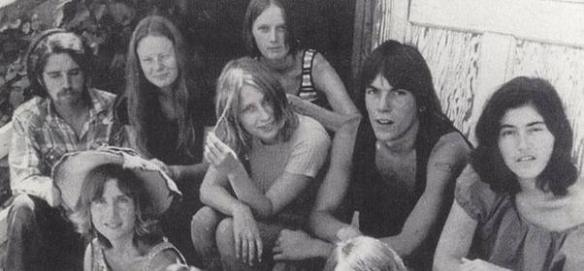
Some members of the Manson Family.

The young women cooked, cleaned and had sex with Manson, and even bore his children, who were also fed drugs and indoctrinated in Manson’s strange religion.  There was nothing Manson could do, no matter how heinous, that wasn’t perfect in their eyes, and his followers defended him and his actions to the death, even after he (and several of the followers) were convicted of first degree murder.   To these kids, Charles Manson was the Messiah.

But Manson’s “Family” was not just a late ’60s hippie commune that went bad.  In fact, Manson himself (who was already a good bit older than the average hippie) held hippies in contempt and looked down on them.   He was irritated by their idealism and obsession with peace, love, and Vietnam.   He could not relate to either their pacifism or their idealism.   He disliked their attitudes that “we are all one,” because Manson did not share their views about race or unity.  He was a racist who hated black people and admired Adolf Hitler so much that he tattooed a swastika on his forehead, and required his “girls” to do the same.   The Family’s entire belief system revolved around a future apocalyptic race war Manson called “Helter Skelter”:

manson-girls

Patricia Krenwinkle, Susan Atkins, and Leslie Van Houten at their murder trial.  They believed they did no wrong.

Per Wikipedia:

Manson had been predicting racial war for some time before he used the term Helter Skelter.  His first use of the term was at a gathering of the Family on New Year’s Eve 1968. This took place at the Family’s base at Myers Ranch, near California’s Death Valley.

In its final form, which was reached by mid-February 1969, the scenario had Manson as not only the war’s ultimate beneficiary but its musical cause. He and the Family would create an album with songs whose messages concerning the war would be as subtle as those he had heard in songs of the Beatles.  More than merely foretell the conflict, this would trigger it; for, in instructing America’s white youth to join the Family, it would draw the young, white female hippies out of San Francisco’s Haight-Ashbury.

Black men, thus deprived of the white women whom the political changes of the 1960s had made sexually available to them, would be without an outlet for their frustrations and would lash out in violent crimes against whites.  A resultant murderous rampage against blacks by frightened whites would then be exploited by militant blacks to provoke an internecine war of near-extermination between racist and non-racist whites over blacks’ treatment. Then the militant blacks would arise to sneakily finish off the few whites they would know to have survived; indeed, they would kill off all non-blacks.

In this holocaust, the members of the enlarged Family would have little to fear; they would wait out the war in a secret city that was underneath Death Valley that they would reach through a hole in the ground. As the only actual remaining whites upon the race war’s true conclusion, they would emerge from underground to rule the now-satisfied blacks, who, as the vision went, would be incapable of running the world. At that point, Manson “would scratch [the black man’s] fuzzy head and kick him in the butt and tell him to go pick the cotton and go be a good nigger.”

The term “Helter Skelter” was from the Beatles song of that name (from their 1968 White Album), which referred to the British amusement-park ride of that name, but was interpreted by Manson as concerned with the race war.

There are a lot of similarities between the attitudes and beliefs of the alt-right and those of the Manson Family, which includes the cult-like worship of morally questionable, even psychopathic leaders.  Trump (and to a lesser extent, Steve Bannon and Roy Moore) are seen as messiahs to those who relate to their message:  heroic, refreshingly (to them) politically incorrect, abusively outspoken (they hear that as “honesty”) avengers and destroyers of the institutions and establishments they believed ruined America.  In Trump, Moore, and Bannon, they see men who sympathize with their racist, sexist, nationalist, anti-establishment, anti-government, and unpopular beliefs.

neonazis

Neo-Nazis in Charlottesville.

Like Manson, Trump also seems to have a cult-like appeal to his supporters.  It seems there is nothing he can say or do that will end their devotion to him.  Trump, possibly speaking the only truth he’s ever told, was right when he said he could shoot someone on 5th Avenue and he would keep his supporters.   They would walk off a cliff if he asked them to.   Manson’s followers were under similar thrall, believing him perfect and right even after he ordered them to commit murders to set off his dreamed of racial Armageddon.

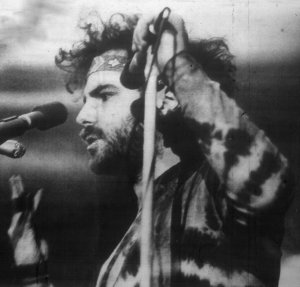
jerryrubin

Jerry Rubin, 1970.

Parallels between the alt-right and 1960s radical far left.

In some ways, the alt-right/white nationalist movement is even similar to the radical/militant 1960s far left movement that spawned groups like The Weathermen and the Yippies.    This far left movement, led by people such as Jerry Rubin (who later became an establishment businessman and 1980s yuppie) and Abbie Hoffman, was a movement that also encouraged anarchy and destruction of the establishment, by violent or militant means if necessary.  The anarchy and destruction encouraged by both groups had opposite goals of course: the radical 1960s far left wished to create a socialist, egalitarian utopia (using militant tactics to achieve that); the alt-right prefers a fascist nationalist dystopia.

Both movements attract(ed) young disaffected men who felt alienated from the society they were raised in.    Both movements also spread their message and inform each other of events using non-traditional, covert means of communication: for the far left radicals, it was “underground” papers, mimeographed flyers, and word of mouth; for alt-rightists, it’s social media like Reddit, 4chan, troll or neo-Nazi sites, and the “deep web.”   The alt-right, unlike the ’60s radicals, are more likely to achieve their nationalist dream, since they actually have a president (and others in power) who share their views.

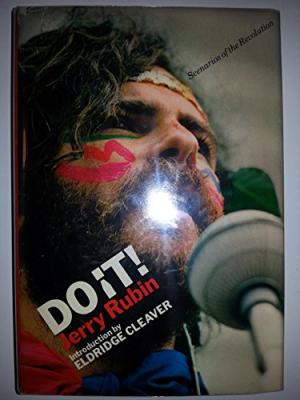
doit

Jerry Rubin’s how-to guide to left wing anarchy (published 1970).

Here’s another article from VICE that draws a similar conclusion about Manson and the alt-right.

What Charles Manson Had in Common with the Alt-Right


Was Betty Broderick actually a victim of narcissistic abuse?

Originally posted on September 27, 2016

thebrodericks
Dan and Betty Broderick at their wedding, 1969

Sometimes the delineation between being a narcissistic abuser and having been a victim of narcissistic abuse is not very clear.    A famous example is Betty Broderick,  the jilted wife who broke into the home of her ex-husband, Dan Broderick, and his new wife, Linda Kolkena, and shot them both to death as they slept.

The entire story is documented in Bella Stumbo’s excellent true crime book, Until The Twelfth of Never, which I read a number of years ago. The story of this tragedy haunted me for weeks, but Dan’s treatment of Betty prior to the murders haunted me even more.  In fact, it downright bugged the bejeezus out of me.

Betty was eventually prosecuted and her appeal for parole was denied.   She will probably spend the rest of her life in prison.

Did Betty murder in cold blood?  Absolutely.   Did she ever admit guilt or show any remorse for her actions? No, she did not.  Was she manipulative and did she show self-centered behaviors?  Yes.  Did she use her children as pawns in her one-woman crusade against her cheating ex husband?  Again, yes.  Was the diagnosis of Narcissistic Personality Disorder she was given by the prosecuting psychiatrist correct?  Very likely. (She was also diagnosed with Histrionic Personality Disorder).

I’m not defending what Betty Broderick did.   She is a pre-meditated murderer who killed in cold blood as her victims slept and showed no remorse for her crime.   She used her children as pawns against her ex in their hostile, drawn out divorce, not thinking or seeming to care about their needs, only her own.   Two of her four children don’t speak to her and one has written a book against her and testified against her in court.

But even taking all this into account, I always had a huge problem not seeing Betty as the real victim, in spite of her heinous crime.   From their marriage in 1969 until 1983, when her husband’s affair (which he had lied to her about) came out in the open (and the shit hit the proverbial fan),  Betty was by all accounts a loyal and faithful wife, very much bound by her strict Catholic religious upbringing (and probably, how she appeared to others).   She was a typical 1950s-early 1960s-style housewife, whose main interests in life seemed to be marriage and family.    She wasn’t a go-getting feminist or a a dissatisfied wife who longed for a career or an outside life; she was perfectly happy taking care of the house and playing second fiddle to her successful attorney husband Dan (who had both a law and medical degree), proud of being seen with him at the many functions he attended, and dutifully raising four children (a fifth one died shortly after birth).   If she really had NPD, perhaps much of her perfect-wife persona was for show or to be well regarded in the community, but Stumbo’s true-crime book described a woman who, if anything, was doing everything she thought she had to do to be a good wife and mother,  who never cheated on her husband or showed any interest in expanding her interests outside their family.   Granted, she was never easy to live with, and could be very demanding, needy, and high maintenance, but I wouldn’t say she was malignant, at least not in the beginning.  If she was a narcissist, she was a covert one with a lot of borderline traits.

I think it was her husband who was a much more grandiose and obvious (if not more malignant) narcissist.   He was charming, overly concerned with his image and status, wildly successful, cold and unfeeling to his wife and children, and seemed to lack any empathy for his wife’s many emotional needs.  She did seem to be the more emotionally unstable of the two of them, but such is often the case with the partner who is being victimized–especially if the abuser has flying monkeys (and Dan had a whole community of them due to his power and reputation).

thebrodericks2
Dan Broderick and Linda Kolkena, circa 1983

When Betty was in her 40s, she had gained some weight (as many women do around that age) and Dan began to show how little he valued his wife and their marriage, now that she was no longer young and beautiful.  He started an affair with an attractive young woman in his office named Linda Kolkena, who he promoted to his personal assistant.  He spent less and less time at home and even took his new assistant on vacation (saying it was a business trip).  Betty suspected something was going on and asked Dan about it.  He lied to her and said there was nothing and she was imagining things (sound familiar)?     Eventually the truth could no longer be hidden and he admitted he’d been having an affair with Linda all along.  But it didn’t stop there.  He also told Betty he had fallen in love with Linda and wanted to marry her, and told Betty coldly that he wanted a divorce.  Shortly after he left her, Linda fell pregnant.  They flaunted their happiness cruelly in front of Betty, who always had self esteem issues.

The divorce was drawn out, dramatic, and ugly.   Betty became increasingly deranged, and showed stalking behaviors and began to involve her children in her one-woman crusade against her cheating ex.   But Dan and Linda also ganged up against Betty and made fun of her, leaving abusive phone messages where they could be heard laughing together and making fun of Betty’s age, weight and intelligence.    Such a thing would certainly make ME see red!  For Betty, an insecure woman whose entire identity had been tied up with being Dan Broderick’s wife and the mother of his children, his cruel and malicious behavior must have been unbearable and something eventually snapped.

Dan was able to convince everyone that Betty was insane–not to mention fat, stupid and old.   He was expert in gaslighting and triangulation, turning most of their friends and even their own children against her.

What Betty did was wrong.  There’s no way around that.    She was spiteful, manipulative, and completely out of control.  She lied in court.   She didn’t seem to have much, if any, empathy for their children (by that point, I would completely understand if she had no empathy for her ex and his new wife, given their shabby treatment of her during the divorce proceedings).

betty-broderick-8
Betty Broderick during the trial.

But I wonder how much she may have been driven to act as she did.   Dan seemed cold-hearted and emotionless from the get-go, almost psychopathic.   For 14 years, Betty put up with this b*stard and obediently played the role of the trophy wife that he wanted.  When she was too old, he unceremoniously dumped her for another woman.

In my opinion, Betty Broderick was a victim of narcissistic abuse who was driven to become a narcissist.  Even if she was already a narcissist, I don’t think she was malignant or that she would have gone to the extremes that she did on that horrible day in 1983 had she not been driven to to the brink of insanity by her arrogant, compassionless, egotistical cheater of a husband.

This case has always fascinated me, in part because I think so much was brushed under the rug during the divorce proceedings and the trial. I always felt a bit of sympathy for her, in spite of her horrible crime. Here’s another article I found in defense of Betty Broderick.  Betty was certainly no angel, but I don’t think Dan Broderick was as good a guy as the press and popular media liked to make him out to be — not even close.

Betty Broderick: Victim or Victimizer

Throwback Thursday: Psychopaths, narcissists, and pets.

Originally posted on November 16, 2014

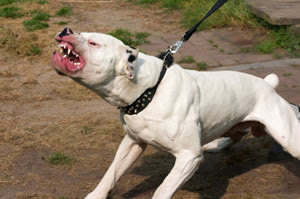
pitbull

There’s been a lot written about the devastating effect psychopaths have on other people, but what about their pets? Do psychopaths even have enough empathy to keep pets?

Unfortunately, yes they do. But for them, pets are a means to an end, a creature that can be exploited in various ways that serve the psychopath, rather than a friend and companion. A pet can be a way to “keep up with the Joneses” (if most of their neighbors and relatives have pets). They have no genuine love for the animals under their care, and often treat them badly or even abuse them. Here is an article I just read last night where the blogger calls out his MN sister about the callous way she puts her cat to sleep because she’s moving, even though there’s nothing wrong with the cat. Later the blogger describes the cruel manner in which the woman’s two beautiful dogs are left outside on a chain even in the searing heat or freezing cold, and are never played with or paid attention to. Eventually, this cold woman tells her brother she will be having her depressed but otherwise healthy golden retriever put down “because he’s old.”

I remember when we lived in a trailer park for about a year, some of our neighbors treated their animals very badly. I don’t know if it was just ignorance (most of the people living in the trailer park were not too well educated) or if we had a surplus of psychopaths living around us, but I remember one poor dog in particular. In fact, this dog was a black lab/Doxie mix who was the sister of my dog, Dexter (who we acquired from a family who lived in another trailer in that park).

Rain or shine, snow or sleet, or on the hottest days of summer, that poor dog was left outside attached to a clanking metal chain in the driveway. The few times I saw anyone interacting with that dog was when the owner, a raging drunk whose wife had called the police on a number of occasions for abusing her, would kick the dog or yell at him. I would have called the police, but was afraid of the repercussions, and also the dog had become so aggressive I knew no one would adopt her and she would have been put down. Maybe that would have been the best thing for her though, but I wasn’t thinking clearly at the time, being embroiled in my own mess with my own psychopath. I did try to interact with the poor dog occasionally, but she would just bare her teeth and growl. I would look at my Dexter, with his sweet, affectionate personality, and think of what his poor sister could have been had she been cared for by loving owners. I have no doubt that owner was a psychopath. Anyone acting that cruel toward his pet is someone without much or any empathy. A person who just dislikes animals would not have a pet at all, not keep one around just to abuse it. The owner probably kept the dog for “protection.” Why else have one?

dogoutside
Is this dog’s owner a psychopath?

In fact, you see that a lot. There are many people who keep a dog, usually an “aggressive” breed such as a Rottweiler or Pitt Bull, as a method of security. No one will try to break into a house or trespass if there is a barking, aggressive dog present. People who keep dogs as a form of security aren’t necessarily psychopathic though. A normal person who keeps a dog for such a reason will still play with the animal and be affectionate toward it when it’s not “on duty.” But if the animal is ignored, or left outside all the time, that’s a different story. Whenever you read or hear a heartbreaking story about a vulnerable animal being neglected or abused, you can bet it’s owner was a psychopath. In fact, pets, being helpless and trusting, often serve the same purpose as a child or vulnerable person: as a scapegoat.

There are other psychopaths who like to brag about how aggressive their dog is. The dog is an extension of themselves, and they take pride in training it to attack or act aggressively toward others, not as a form of security, but as a way to intimidate other people through their dog. Training a dog to be aggressive just to be aggressive is also a form of animal abuse.

Then there are those who, like my MN mother, keep a dog or other animal as a status symbol. They always choose a purebred animal, often a type that is trendy or expensive and makes them appear to be wealthy to others. My mother has a purebred Bichon Freze, a very cute dog, but it’s an extension of herself rather than a companion. She takes it in to a groomer monthly to have its nails done and puts bows on its head. I’m sure if this dog develops health problems, no matter how minor, she will have the dog put to sleep. Several years earlier, she had a purebred toy poodle, and when she got old, callously had her put to sleep, even though she had no health problems other than a little trouble walking due to arthritis. When I questioned her about why she took such drastic action, she just shrugged and told me she didn’t have the time to deal with an ailing animal. I don’t recall her even shedding a tear.

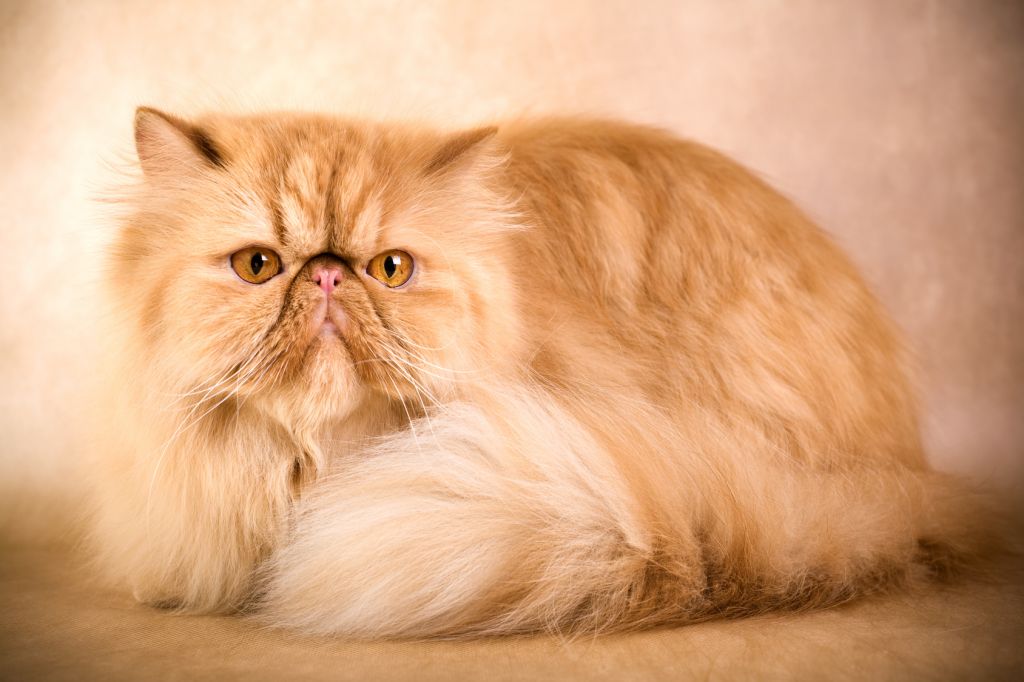
There are purebred animals that have been inbred so much they have health problems. I think anyone who breeds a dog or cat for a certain “look” at the expense of its health is lacking a conscience or empathy, at least toward animals. These people are breeding animals to have a deformity! Imagine breeding humans to have a condition such as Spina Bifida. How is it any different? Persian cats are a perfect example of a cat breed that has been bred to have a pushed in, flat (and in my opinion, ugly) face and as a result they have breathing and other health problems. Some dog and cat breeds, such as the “munchkin” cat or Bassett hound have serious spinal issues or have trouble walking due to their excessively short legs.

persiancat munchkin
Persian and munchkin cats.

Some psychopaths use pets as a way to torment or control their children. They will purchase or acquire an animal for a child, and then if the child misbehaves, hold the threat “I’ll have Fido or Fluffy put to sleep if you do that again” over the kids’ heads. This is mental torture. My N-ex’s mother was a narcissist herself and used this tactic to manipulate him. When Michael was five, his father brought home a white puppy. He loved that dog and spent all his free time with him (he may not have been a narcissist yet, it’s hard to say). One day when he was five, he was coloring with crayons on the hardwood floor, sitting in a patch of sun that came in through the living room window. Buster, the puppy, was sitting next to him watching. There was also a pair of child’s plastic scissors on the floor. As children will do, he left to do something else without putting the crayons and scissors away. But before he came back, Michael’s mother discovered the crayons had melted all over the wooden floor. Surely she couldn’t have really thought the melted red and purple crayons were blood, but when Michael returned to coloring, she pointed to the waxy, melted mess and the scissors and accused him of “cutting the dog.” Buster did have a little red crayon on his fur but was not cut and wasn’t hurt in any way. To punish Michael, his mother announced she was having the puppy put to sleep, in order to “teach him a lesson.” And so she did. So psychopaths will use animals to manipulate, control and torment their children.

Some psychopaths and narcissists will acquire a pet to control other people. My ex, Michael (the grown up version of the little boy in the last paragraph) did this. Now he actually was an animal lover (and always said he preferred animals to people), but he also used them as a way to say “fuck off” to me. I’m an animal lover and have always had pets, but I remember when in 2011, he adopted a dog without asking me how I felt about it. At the time, I already had three cats and Dexter, my dog. The house I live in is small, and there wasn’t room for another dog. For several weeks he had been combing Craigslist looking at puppies. He wasn’t working and was basically freeloading while I paid all the bills. Not only was there not room for another dog, I couldn’t afford one. I begged him to not get any ideas. Michael assured me he was “just looking” and to stop worrying.

Well, lo and behold, one day I came home from work to find a puppy in his arms on the couch. I was angry and told him there was no way I could take care of another pet, and he would have to take it back. He said he wouldn’t. “Too bad, he’s here to stay,” he said.

The puppy was a Jack Russell/Beagle mix and the loudest, most undisciplined, and hyper dog I ever met. Michael refused to train him and a year later this dog was still pooping and peeing in the house. He also tore up everything, and I’d regularly come home from work to find the house in a shambles. Michael never bothered to pick up the mess. He’d just make excuses for his pet, whining “but he’s just a puppy!” even though the dog was a year old. If me or my daughter tried to discipline him, Michael accused us of being cruel. Talk about gaslighting!

destroyinghouse

The dog (who he named Barnaby) also barked constantly and ran away at least 3 times a week. We’d hear Barnaby barking and howling somewhere in the neighborhood but he wouldn’t return for hours, no matter how much we called him. He was a neighborhood nuisance, and three times neighbors called animal control. Still, Michael refused to discipline or train him. That job fell to me and my daughter, but of course we were “cruel” or “hated animals.”

The third time animal control showed up, I told them to please take the dog. I never wanted him in the first place, and I couldn’t control him. I didn’t want to pay a $75 fine to keep him, so away he went. I felt bad about the fact he would probably be put down, but there was nothing else I could do. Michael, of course, was livid, and said “I never realized how much you hated animals.” Of course only HIS needs mattered. He didn’t care that all the training and financial expense of the dog fell on me. He also didn’t care about Barnaby’s needs: he was wel aware that Jack Russells (and Beagles) are extremely active dogs that need to run. It’s in their genes. We were living in a small house with a tiny unfenced yard, and that’s not an appropriate setting for a dog like Barnaby. But like all narcissists, Michael was like a three year old: “I want a dog and I better have one and I don’t care what you think!” Now I love dogs, but in Barnaby’s case, I was never so happy to see the last of that animal. I hope someone with a large fenced yard and time to train him appropriately adopted him.

So yes, psychopaths do keep pets, but they are kept for all the wrong reasons–to control others, to serve as scapegoats or status symbols, to guard property, and generally to serve as extensions of the psychopath. And that’s about it. Psychopaths and narcissists have no genuine love for animals, just as they have none for other people.

Trump’s personality disorder brings out the worst in everyone.

manbaby

I think it’s pretty safe to say Donald Trump has a very malignant case of Narcissistic Personality Disorder and appears to fit all of its psychiatric criteria.    Unfortunately, he’s only the tip of the iceberg, merely a symptom of America’s soul-sickness.

Trump has surrounded himself with a staff of other Dark Triad or Cluster B personality-disordered types.   Congress and the Senate are also populated by people who appear to have no conscience or empathy, and only feel entitled to take from others to enrich themselves.    Many of them appear to have antisocial or psychopathic personalities.

Narcissists like Trump become codependent and simpering in the hands of psychopaths, because of their emotional neediness.   Vladimir Putin appears to using him to achieve his own nefarious ends of world domination or at least the destruction of western democracy. Trump, being a narcissist and therefore far more emotionally fragile than Putin, doesn’t realize he’s only being used and exploited.

I could go for pages speculating about the psychology of Trump, his enablers, and those who are using him for their own ends (and many have), and I feel pretty confident saying that almost his entire administration is made up of sociopathic and codependent types, the latter of which have mostly already left or been fired (Reince Preibus and Sean Spicer seemed more codependent to me than personality-disordered themselves).

I don’t see any obvious Borderlines in the Trump administration, although Trump himself appears to have a few Borderline or Histrionic traits.    As far as I can tell, Trump is the only obvious case of NPD.   The rest seem more like people with ASPD or psychopathy to me, seemingly emotionless and willing to use and enable Trump for their own ends.

How Trump brings out the worst in everyone.

Authoritarianism and racism are highly correlated with antisocial and narcissistic personalities, and we saw the worst of society become violent at the KKK rally and protest in Charlottesville, Virginia today.    The undercurrent of hatred in this country runs deep, and our election of a black president in 2008 and 2012 did nothing to quell it — if anything, the hatred and racism that were always lurking beneath the surface became even deeper and more toxic than at any time since the Jim Crow days.

America is a sick country and only a sick country would elect a malignant narcissist for its president and psychopathic or antisocial people for high political positions.    Trump isn’t the problem, since the problem would still be there whether or not he was president.   He is the ugly symptom, and is now bringing all the darkness out in the open.   We are finally seeing how deep this cancer runs and hoping against hope it hasn’t reached Stage Four.

In some ways this is a good thing, since now we can see exactly how sick our nation has become and how deep and dark the divisions between us really are.   But Trump also has a way of bringing out the worst traits in everyone he comes in contact with, even indirectly — in his administration, in his supporters, in his enemies, and in his opponents.  Even though I’ve never met the man, whenever he’s on TV I feel as if all the oxygen has been sucked out the room.  He’s everywhere.  You can’t get away from him.

Trump enables his cabinet members and sycophants in their lack of empathy, lack of conscience, and crass greed and selfishness.  They use him for their own ends and they know he will never call them out if they just keep on flattering him and giving him the praise he wants.

Trump brings out the worst in his staff.   He causes drama and chaos whenever his bottomless need for admiration and approval isn’t met — he will attack, devalue or discard whoever he believes isn’t giving him the approval he craves, even those who could benefit him.     He always has a scapegoat, always — even among those who have been loyal to him, like Mitch McConnell or Jeff Sessions.   Never in my life have I seen a White House so filled with drama and discord.   Even the Nixon administration at the height of Watergate seemed like a sanctuary of sanity in comparison.  Trump brings out the very worst in his staff, while anyone with a semblance of a conscience or a soul left has already resigned or been fired.

Trump brings out the worst in his supporters.  He enables them to display their authoritarianism, racism, hatred, and ignorance — even to the point of violence, as we see happening today in Charlottesville.   On social media, the rhetoric of his supporters has become increasingly hate-filled and ugly, to the point of threatening non-supporters with terrorism and even civil war against them.    Trump appears complicit in all this, and acts  as if it isn’t happening.

Trump brings out the worst in his non-supporters.   Many people are suffering from PTSD or even C-PTSD that has been retriggered by his constant gaslighting, projection, threats,  need for revenge, and denial of the truth.   Depression, despair, feelings of dissociation and unreality, and dread are problems for many Americans right now, and therapists even have a name for it:  Trump Traumatic Stress Disorder (TTSD).   Anger is also being triggered in his non-supporters, though not in quite the same way as in his supporters.   Righteous anger differs from hatred, and it may be the only good thing he’s bringing about.   He’s forcing his opponents to expose the truth about what has happened in our country over the past few decades and demanding that we change course — drastically, if necessary.

I was involved in a discussion on Twitter about Trump’s fragile ego, and we agreed that he seems to be a collapsed narcissist, who knows it’s only a matter of time before the whole house of cards comes toppling down and he’s exposed, even to many of his supporters, as the criminal and fraud he really is.   As he grows more desperate, he increases the volume on his endless demands for admiration and approval, holding more hatred-enabling rallies and even threatening nuclear war over a perceived insult from North Korea’s equally unhinged leader.   That’s how bottomless Trump’s emotional void is:  that he would be willing to send millions of people to their deaths — even the entire planet — just to save his fragile ego.  It doesn’t help that many far-right religious leaders are stroking his ego even more by telling him he’s been anointed by God.

We can never begin to think of what he’s doing is normal, because it’s anything but.

trump_2

That’s the sound of your soul being sucked into oblivion. 

****

Further reading:

The Soul-Sucking, Attention-Eating Black Hole of the Trump Presidency.

Donald Trump & Ayn Rand

Really good article about Ayn Rand (who many hardline Republicans seem to emulate, including many in Trump’s cabinet), Donald Trump, narcissism, and psychopathy. Was Rand a psychopath? Many people think she was, but there’s just as good an argument made by the author of this article (who is a psychopath) that she was really a narcissist. In my opinion, she was both.   As for Trump, he’s clearly a narcissist, but he’s so high on the spectrum his behavior and actions seem sociopathic (a word I prefer to use over psychopathy in most cases, because it’s a behavior pattern associated with malignant or high-spectrum NPD — while psychopathy is a condition one is born with and is not caused by early trauma).   In any case, lack of empathy is a feature of both narcissists (especially those as high on the spectrum as Donald Trump) and psychopathy.   You can think of psychopathy as “bad seed syndrome,” except a psychopath can actively choose to do good things or even be altruistic, if it suits them to do so.

Comments here are disabled; please leave comments under the original post.

nowve666's avatarCLUSTER B

—Psychopaths or Narcissists?

trumpaynOn November 8th of this year, the “unthinkable” happened. Donald Trump was elected president. Although his campaign sounded more populist that free-market fundamentalist, his choices for cabinet tell a different story. Liberals and progressives and just plain poor people are deeply concerned about the future. Alternet has an article whose title spells it out: It’s Ayn Rand’s America Now: Republicans Have Stripped the Country of Its Last Shred of Morality. Now Trump is hardly the ideal of Objectivists or Libertarians. He doesn’t embrace freedom for the individual, not with his “pro life” and anti-immigrant stance; certainly not with his intention to punish anyone who burns the flag. But the Republican Party representing the 1%, may well make the country Ayn Rand’s America.

aynaspsychoMany enemies of Ayn Rand’s philosophy (and there are many) like to call her a “psychopath.” Of course, many of these same people call…

View original post 1,205 more words

Subtypes of ASPD.

heresjohnny

I never knew that Antisocial Personality Disorder had different subtypes, but it does make sense that it would.     These are Millon’s ten subtypes of ASPD (antisocial personality disorder).   Theodore Millon was a psychologist who specialized in personality disorders and subdivided them into various subtypes.   (In a future article, I’ll write a post about his Borderline Personality Disorder divisions.)

This was a post I found on Psychforums (in the ASPD forum).  I don’t know who wrote it, so I can’t give credit to the original source, only a link to where I found it.

In the post I found, the the term “psychopath” is used, but I think these types more properly describe people with ASPD, most who are sociopaths (an acquired condition due to trauma that may also involve brain dysfunction), not psychopaths (a condition of the brain you are born with that has nothing or little to do with early trauma).   There are also pro-social psychopaths (though all psychopaths lack a conscience), and none of these types seem very pro-social to me.  So even though many psychopaths may fit these subtypes, I think it’s misleading so I took out the term “psychopath” in the subheads.

Unprincipled 

Activities kept near or at the boundaries of the law; stereotyped social roles; con man, charlatan, fast-talking used car salesman.Expansive fantasies and exaggerated sense of self-importance.Willing to take advantage of and humiliate those who leave themselves open to deceit.

May cultivate persuasiveness or charm as a means of getting others to lower their guard, but sees all prosocial behaviour as ultimately self-serving.

Contemptuous of “the system”; working “the system” to avoid punishment seen as just “part of the game“.

Covetous 

Sees self as wrongfully deprived of life’s necessities, leading to envy and resentment.

Compensates by taking what he or she is entitled to as a means of revenging wrong and restoring “karmic balance” in life.

Sees self as a victim of external forces, misunderstood by others and by society.

Manipulates others as a meaning of proving own superiority, as well as avenging attributions of worthlessness.

Smug and contemptuous toward victims, who may be viewed as pawns in the larger game.

Prone to ostentatious displays of conspicuous consumption.

Risk-Taking 

Chronic underarousal leads to risk-taking as means of “feeling alive”.

Fails to realize the consequences of risk-taking; believes that social rules are unnecessarily confining of own sense of adventure.

Eschews normal desire for safety as evidence of cowardice.

Proves own mettle as a means of proving self-esteem and worthiness to self and others.

Disingenuous 

Superficial sociability (or even seductiveness) hides an impulsive, moody and resentful core.

Emotionally labile, prone to excitement-seeking, stimulus-dependant behaviour, lacking in forethought, with a high potential for painful consequences.

Rationalizes and projects blame onto others when attempts to solicit attention go awry.

Spineless

Aggression not intrinsically rewarding; psychopathic acts intended to others that the psychopath is not weak.

Has first-strike mentality; strikes whenever own fearfulness peaks (perhaps in episodes of panic), regardless of objective degree of threat.

Experiences fantasies of vulnerability; sees others as sadistic or exploiting.  [my note–I’m not sure what “fantasies of vulnerability” would refer to]

Abrasive 

Prefers to be overtly contentious, confrontational, antagonistic rather than indirectly manipulative.

Expects hostility from others, and pre-empts insults with own abrasiveness.

Prefers to escalate arguments; experiences pleasure by frustrating others, making them back down.

Inherently oppositional to any form of emotional control; seeks to break constraints simply because they exist.

Tyrannical 

Realizes pleasure through total control of others.

Employs violence instrumentally, to force perceived opponents to cower or submit.

Projects image of power or brutality; supports self-image of power and superiority by inflicting pain and suffering, if not power.

Explosive 

Low frustration threshold, resulting in episodes of uncontrollable rage and violent attack.

Episodes may be instantaneous reaction to frustration or perceived insult, and thus may be perceived by others as random and unprovoked.

Malevolent

Hateful, destructive defiance of values of social life.

inherently distrustful, ruthless, cold-blooded, revengeful, punitive.

Malignant 

Often isolated, paranoid, with ruminative fantasies of power and revenge.

Sees others as inherently persecutory or treacherous.

Uses hostility as a means of armoring self, forcin adversaries to take issue and withdraw.

http://www.psychforums.com/antisocial-personality/topic95961.html

Reparenting a Psychopath: is it possible?

I’m skeptical about this, and there are VERY few therapists even trained in this, but if it could work, it would be a great (and very expensive!) way to rehabilitate hardened criminals and deter crime. The speaker in this video (Dr. David Bernstein) is riveting.  One thing’s for sure–you’d have to have nerves of steel to make a career out of this.

The only “easy” thing about the patients Dr. Bernstein treats are that they’re not difficult to get into therapy, since these are forensic patients who are already in prison.   They can’t quit when things get uncomfortable.   Such is not the case with most NPDs, who usually aren’t in prison and don’t often seek out therapy for themselves.

How does malignant narcissism differ from NPD?

demonic

There’s a lot of talk about the narcissistic spectrum — the idea that narcissism runs on a spectrum from “normal” narcissism (healthy self esteem) all the way through malignant narcissism at the top. Somewhere in the middle, “normal” or “healthy” narcissism shades into Narcissistic Personality Disorder (NPD).

While I do think narcissism runs on a spectrum, I don’t think “healthy” narcissism has much, if anything, to do with pathological narcissism. Healthy narcissism is what makes us stand up for ourselves when we are being attacked. Healthy narcissism is what makes us feel proud of ourselves when we’ve accomplished something good. Healthy narcissism is what makes us want to look our best when we’re going on a date.

People who are narcissists, on the other hand, have little to no self-esteem. They either hate who they really are, or they don’t know who they really are, so they develop a false self to stand in for their real one. The false self can only survive by feeding off the reactions of others (narcissistic supply). That’s why narcissists can be so manipulative and dangerous. Since they are usually in their “false self,” and can’t risk exposure of their vulnerable real one, they will go to extreme measures to keep their false self intact, which includes projecting any bad traits onto others, denial, lying, gaslighting, and other tactics meant to deflect attention away from any flaws and transfer them onto others.

To a narcissist, you are not a real person, since a false self can’t acknowledge your humanity, only your usefulness to them. Like an infant who hasn’t yet realized they are a separate entity from their mother, your only purpose is to serve them and keep them alive. Narcissists, like babies, are emotionally unable to recognize that you are a human being who has needs and desires of your own.

You can be a pathological narcissist without being a malignant one, though. Malignant narcissism isn’t a person with NPD who is “more” narcissistic; it’s a person who has both Narcissistic and Antisocial Personality Disorder (ASPD)or an NPD with ASPD or sociopathic/psychopathic traits. Malignant narcissists are very dangerous because they combine the traits of narcissism with the traits of a sociopath or psychopath.

From Wikipedia:

The APA’s Diagnostic and Statistical Manual of Mental Disorders, fourth edition, text revision (DSM IV-TR), defines antisocial personality disorder (Cluster B):[19]

A) A pervasive pattern of disregard for and violation of the rights of others, occurring since age 15 years, as indicated by three or more of the following:
–failure to conform to social norms with respect to lawful behaviors as indicated by repeatedly performing acts that are grounds for arrest;
–deception, as indicated by repeatedly lying, use of aliases, or conning others for personal profit or pleasure;
–impulsivity or failure to plan ahead;
–irritability and aggressiveness, as indicated by repeated physical fights or assaults;
–reckless disregard for safety of self or others;
–consistent irresponsibility, as indicated by repeated failure to sustain consistent work behavior or honor financial obligations;
–lack of remorse, as indicated by being indifferent to or rationalizing having hurt, mistreated, or stolen from another.
C) There is evidence of conduct disorder with onset before age 15 years.
D) The occurrence of antisocial behavior is not exclusively during the course of schizophrenia or a manic episode.
Antisocial Personality Disorder (ASPD) falls under the dramatic/erratic cluster of personality disorders, the so-called “Cluster B.”

I probably don’t need to define NPD here, since so much of this blog is about that.  While several of the traits of NPD and ASPD overlap (lack of empathy, aggression, and dishonesty), there are some differences too.   Conscience isn’t entirely lacking in a narcissist (though empathy, which is different from conscience, probably is).  In fact, some narcissists are overly concerned with “right” and “wrong” (of course, they’re always right) and never do anything remotely illegal and may seem concerned about “morals.”   That’s why so many of them are so judgmental and they can so commonly be found in churches and the helping professions.   Narcissists are also over-sensitive to criticism and care very much what others think of them, since the mask they wear requires the approval or at least attention of others.   People with ASPD and psychopaths (the latter are merely people who were probably born without a conscience or the ability to feel empathy) have no need for narcissistic supply from others since they aren’t wearing a mask.     They just want to do what they want to do and don’t care what you think of them.   They are not what anyone would call “sensitive” but most narcissists are incredibly sensitive (about themselves).   Unlike narcissists, who have strong emotions which are hidden due to shame, people with ASPD seem to not have any emotions, or their emotions seem limited to anger or boredom.    People with ASPD are also much more impulsive than narcissists, and don’t plan their actions ahead of time.  They act on whim, according to whatever strikes their fancy at the time.   They are also much more likely than people with NPD to break the law and be incarcerated (so there are a lot more narcissists walking around than antisocial people, which makes them more dangerous).

Malignant narcissists are a deadly combination of antisocial and narcissistic traits.   Because they are still narcissists, they are oversensitive to criticism, but unlike garden-variety narcissists, they have no conscience or sense of right from wrong.  Or if they do, they don’t care.  They are sadistic and enjoy the suffering they cause others.   They go out of their way to hurt others, because hurting others makes them feel good.    If you cause a malignant narcissist to suffer narcissistic injury, they will react in very antisocial ways.  They are spiteful and seek revenge when they are hurt.  They also tend to be extremely paranoid and act out against others pre-emptively to prevent injury.  A garden variety narcissist, when injured, may annoy you to death, demand reassurance, project, gaslight, or disappear, but won’t deliberately seek revenge just to hurt you.   They are broken people desperately trying to keep their false self intact but are almost always unaware of this.  They may be paranoid, but not to the point of pre-emptive attacks to avoid narcissistic injury.   Malignant narcissists also like to create chaos and tend to thrive in chaotic environments, where other people (including non-malignant NPDs) would just fall apart.  They may not be criminals or do anything against the law, but they like to cause upheaval, chaos and suffering.

Non-malignant narcissists are manipulative and dangerous too, but they don’t go out of their way to hurt others.   They are probably unaware of the pain they cause other people, and just think they are always right and that others are just extensions of themselves.   They may truly believe they are doing the right thing, truly believe you are at fault, or truly believe the person they are victimizing is really victimizing them.   Some non-malignant narcissists, if they ever become aware of the harm they cause to others, suffer from feelings of guilt and shame and even remorse.    Not so with malignant narcissists, who are usually fully aware of the pain they cause to others and derive sadistic pleasure from it.

Malignant narcissists, outside of an act of God, probably can never get any better.  They will never voluntarily enter therapy because they don’t think they have a problem; it’s everyone else who has the problem and deserves their wrath.   If there are evil people in the world, people with malignant narcissism would fit the bill better than anyone else.  Non-malignant narcissists may be extremely disordered, but they aren’t evil.  They may have moments of humanity and even emotional empathy.  They may be very difficult to cure (NPD is probably the most difficult personality disorder to cure outside of ASPD) but sometimes they voluntarily enter therapy, especially after a great loss.  A malignant narcissist would never be caught dead in a therapist’s office.

Gang-stalking: is it real or just a conspiracy theory?

gang_stalking

I’ve been seeing a lot lately about a phenomenon called gang-stalking (sometimes referred to as “community terrorism”).   Gang-stalking means one person is targeted by Dark Triad people (psychopaths, sociopaths and malignant narcissists and their flying monkeys, most who don’t even personally know you) for nefarious reasons that are never specified but who want you to know you are being watched.  The stalkers seem to have an uncanny, almost supernatural way of infiltrating and ruining every area of your life, even when logic would dictate some situations simply wouldn’t be possible (such as pre-emptively knowing exactly where you will be 24/7 in order to harass you).   The goal is to drive you (the “Targeted Individual,” or “TI”) insane or to suicide–or have you incarcerated in a prison or mental institution–or even killed.   Here are two articles about it.  You can Google “gang-stalking” and find hundreds more.

https://taknbsorbemwon5.wordpress.com/2014/04/14/suspect-gang-stalking-when/

https://www.newswithviews.com/Stuter/stuter78.htm

Here’s a well written, sometimes humorous, but VERY long, article by an individual who may have been gang-stalked (or maybe not), but at least has the ability to use critical thinking, something that seems to be in short supply in these post- 9/11 days where everyone, from the benign looking cashier at the grocery store to your kid’s teacher, becomes a potential terrorist:

http://in2worlds.net/gangstalking-and-targeted-individuals

I don’t know whether to believe it or not.   Of course it’s a fact that high spectrum malignant narcissists and psychopaths/sociopaths can and do recruit flying monkeys to destroy your reputation and your life.   I’ve seen it happen to others and I’ve experienced it.   But where does their power over you end?    I don’t see how it’s possible, for example, to be treated rudely in stores or given bad or dishonest service by complete strangers or how your abuser(s) would have managed to influence them ahead of time.   How would it be possible to be “black-listed” for every job you apply for if you don’t have a criminal record (unless they are somehow able to create a fake criminal background for you)?  How could they cause random people on the street to give each other knowing looks whenever you pass by, or shout abusive things at you?  How could your abuser cause you to get the “evil eye” from strangers sitting across you on a bus or deliberately have people move into the apartment over yours who blast their music and fight all night with the sole intention to cause you to suffer sleep deprivation and drive you slowly insane?

Some people suggest a demonic, supernatural influence.  They say this exists because the world is being taken over by evil and is under Satan’s dominion.   Although I’m a Christian, I can’t accept this.   I’m a skeptic by nature.    Not because I don’t want to believe it and am in denial, but because I think there are better, more scientific and reasonable explanations for the seeming increase of horrible human behavior.   Actually I don’t think things are any worse than they ever were.  I think there are just more people on the planet and there’s the Internet and mass media and the mass panic that always ensues following a breaking news story that gives rise to all sorts of conspiracy theories.

Things were actually far worse a hundred years ago than they are now.  Abuse of all kinds wasn’t publicized and called out the way it is now.  Neither was bullying.  Back then, if you were abused (or bullied), that was just your lot in life and you were just supposed to suck it up because that was your birthright as a child, a woman, or a person of color.   What we call abuse today was considered normal.   What we would throw a parent in prison for today was just “discipline” back then, and a parent had the right to treat a child however they saw fit, even beating them daily or sending them to beg on the streets.  Or sending them to work 12 hours a day in a factory, as child-labor laws didn’t exist.  No one tried to protect you from bullies either.  There were no laws against harassment, sexual or otherwise.    In the old days, if you were bullied you’d be told to “fight back” or “stop being a sissy” if you were a boy.  If sexually abused, you just didn’t talk about it because “nice” people didn’t talk about those things.    If you did try to call out someone for harassing you (and you were a woman) you’d be blamed for dressing “provocatively” or something.   It seems like there’s more bad news today because there’s just more news.    Good news doesn’t sell so you don’t hear about it as often as bad news.    I also think where there’s overpopulation, problems develop, and there are definitely too many people in the world.   Things like cyber-bullying and identity theft didn’t exist because (duh!) there was no Internet to make those things possible. But things like slavery and public hangings did exist and no one batted an eyelash.

I don’t know about gang-stalking.  It smacks of conspiracy theory to me, but I could be wrong.  I do know that evil people can and do recruit flying monkeys and can and do target certain individuals.  It happens in dysfunctional families all the time.  Scapegoating is not a myth, it’s a fact.   But the whole idea of them having so much power that EVERY sphere of your existence is influenced, that where no matter what you do or where you go or who you turn to, trouble will follow you and there is no escape and you are just screwed?  I don’t know about that.

What are your opinions about gang-stalking? Do you believe it or think it’s an overblown conspiracy theory, like the belief that Illuminati is taking over everything? *   If you know you’ve been gang-stalked, I’m not trying to say you’re just being paranoid.  I’m not saying it doesn’t exist, but I am highly skeptical.

* I’ve  come to the conclusion that all the convincing Illuminati symbolism going on in music videos, films and TV is actually a tease intended to play off our paranoia.    These industries see people freaking out about “Illuminati symbolism” and play on that, creating more of it on purpose just to get attention (and hence sell more product).

*****

ETA:  It occurred to me that since most alleged incidents of gang-stalking appeared following the passing of the Patriot Act, which gave anyone permission to spy on and report anyone else if they suspected them of being “un-American” (this could means having left wing politics, being of Middle Eastern descent, being atheist, or just being “different” in some way), that gang-stalking could be a result of this.  I hear police departments refuse to get involved and have been instructed to ignore claims of gang-stalking.    Maybe some sociopathic or antisocial people abuse this “right” and report anyone who they dislike as being involved in “un-American” activities, and government funds are used to harass the target in order to silence them.   I do realize how conspiracy-theory-ish this sounds, but it’s a possibility.