My daughter’s sociopathic ex isn’t done with her yet.

audacity
Credit: Universal Republic Records.

Remember Paul, the psychopath who gave such a great impression but was actually a crackhead who was abusing my daughter while she was living with him? The one who gaslighted her and told me horrible lies about her smoking meth and shooting heroin (when she wasn’t doing any such thing) during their short relationship over November and December? The one who actually turned me into his flying monkey until I realized what this character was really up to?

Well, guess what. My daughter got a summons to appear in court about the “door she broke” (when he slammed her into it when she tried to leave) and the “money she stole” (the settlement money my DAUGHTER got for her car accident that I was foolish and trusting enough to let HIM hold onto for her because I didn’t trust HER).

I would laugh if it wasn’t so crazymaking for both of us. What a loser.

Sociopath vs. psychopath: is there a difference?

psychopathy

I’ve been using the terms psychopath and sociopath interchangeably on this blog, even though I’m aware there are differences between the two. I was curious enough to Google what the difference is, and came across an article in Psychology Today that explains how they are alike–and how they differ.

How to Tell a Sociopath from a Psychopath
By Dr. Scott Bonn

Many forensic psychologists, psychiatrists and criminologists use the terms sociopathy and psychopathy interchangeably. Leading experts disagree on whether there are meaningful differences between the two conditions. I contend that there are clear and significant distinctions between them.

The fifth edition of the Diagnostic and Statistical Manual of Mental Disorders (DSM-5), released by the American Psychiatric Association in 2013, lists both sociopathy and psychopathy under the heading of Antisocial Personality Disorders (ASPD). These disorders share many common behavioral traits which lead to the confusion between them. Key traits that sociopaths and psychopaths share include:

A disregard for laws and social mores
A disregard for the rights of others
A failure to feel remorse or guilt
A tendency to display violent behavior
In addition to their commonalities, sociopaths and psychopaths also have their own unique behavioral characteristics, as well.

Sociopaths tend to be nervous and easily agitated. They are volatile and prone to emotional outbursts, including fits of rage. They are likely to be uneducated and live on the fringes of society, unable to hold down a steady job or stay in one place for very long. It is difficult but not impossible for sociopaths to form attachments with others. Many sociopaths are able to form an attachment to a particular individual or group, although they have no regard for society in general or its rules. In the eyes of others, sociopaths will appear to be very disturbed. Any crimes committed by a sociopath, including murder, will tend to be haphazard, disorganized and spontaneous rather than planned.

Psychopaths, on the other hand, are unable to form emotional attachments or feel real empathy with others, although they often have disarming or even charming personalities. Psychopaths are very manipulative and can easily gain people’s trust. They learn to mimic emotions, despite their inability to actually feel them, and will appear normal to unsuspecting people. Psychopaths are often well educated and hold steady jobs. Some are so good at manipulation and mimicry that they have families and other long-term relationships without those around them ever suspecting their true nature.

When committing crimes, psychopaths carefully plan out every detail in advance and often have contingency plans in place. Unlike their sociopathic counterparts, psychopathic criminals are cool, calm, and meticulous. Their crimes, whether violent or non-violent, will be highly organized and generally offer few clues for authorities to pursue. Intelligent psychopaths make excellent white-collar criminals and “con artists” due to their calm and charismatic natures.

The cause of psychopathy is different than the cause of sociopathy (1). It is believed that psychopathy is the result of “nature” (genetics) while sociopathy is the result of “nurture” (environment). Psychopathy is related to a physiological defect that results in the underdevelopment of the part of the brain responsible for impulse control and emotions. Sociopathy, on the other hand, is more likely the product of childhood trauma and physical/emotional abuse. Because sociopathy appears to be learned rather than innate, sociopaths are capable of empathy in certain limited circumstances but not in others, and with a few individuals but not others.

Psychopathy is the most dangerous of all antisocial personality disorders because of the way psychopaths dissociate emotionally from their actions, regardless of how terible they may be. Many prolific and notorious serial killers, including the late Ted Bundy and John Wayne Gacy, and Dennis Rader (“Bind, Torture, Kill” or BTK) are unremorseful psychopaths. Psychopathic killers view their innocent victims as inhuman objects to be tormented and violated for their amusement.

Contrary to popular mythology, most serial killers are not mentally ill or “evil” geniuses. See my related article: http://www.psychologytoday.com/blog/wicked-deeds/201406/serial-killer-myth-1-theyre-mentally-ill-or-evil-geniuses

tedbundy ed_gein
Although both were deadly serial killers, Ted Bundy was a psychopath who gave a good impression and knew how not to get caught; Ed Gein was most likely a sociopath who acted more impulsively, was more disorganized and didn’t give a very good first impression. Though both men’s crimes were equally heinous, Bundy’s eyes seem “colder” than Gein’s.

Although the traits of a psychopath more closely resemble those of a person with Narcissistic Personality Disorder (NPD) than those of the more impulsive, disorganized sociopath, both are actually described here as variations of ASPD, not NPD. Once again, if ASPD is really “NPD on crack” then it follows that NPD and ASPD are both on the same spectrum, with ASPD (and psychopathy/sociopathy) at the top of the spectrum. If this is in fact the case, people with NPD, even malignant narcissists, may border on psychopathy, but would not actually qualify as true psychopaths.

Here’s a little graph I devised to illustrate where all the Cluster B disorders may fall on a spectrum. These are just my guesses and are not based on psychological research, just my instinct and gut feelings.

psychopathy_graph
Click image to enlarge.

When the devil comes to call

satan

This is a fictional account of a hypothetical visit from Satan, the entity who knows more than anyone else what exactly makes psychopaths tick. I found it on the excellent blog Country of Liars. The blogger, like many victims of psychopathic abuse, comes from a family of psychopaths, and here the Devil makes a house call and explains a few things! It’s a good story, and it had me on the edge of my seat!

Read the story here.

Psychopaths should register themselves

courtgavel

Convicted sex offenders are required to “register” themselves to protect potential victims. I think there should be a new law that also requires psychopathic individuals and malignant narcissists to register themselves for the monsters they are. Of course, identifying them all would be tricky (and maybe impossible), but we could start by requiring all suspected psychopaths and narcissists to take the Psychopathy Checklist developed by Dr. Robert Hare. The Checklist has been used with a great deal of success in identifying which criminals are psychopathic, and has been used to make sentencing decisions in murder cases.

Even if only a small portion of these characters were identified and registered, it would save a lot of people from becoming victimized.

Internet trolls are psychopaths

internet-troll

There’s a very interesting website I found called SociopathWorld. Little if no distinction is made there between sociopaths (more likely to have APD and be impulsive) and psychopaths (NPD and more likely to plan out their actions). Most of the activity on the board is by and for the character-disordered, and includes blog posts by psychopaths and sociopaths, both prose and poetry. It’s interesting because it allows the rest of us to have a peek inside their heads. The experience of “getting inside their heads” seems very surreal to those of us who don’t think the way they do. It’s like a visit to another planet.

But even more interesting is the comments. One of the posts was by a non-psychopath talking about her psychopathic child. She was out of her mind with worry and grief over his actions.

Bad place to make a post like that. Almost all the responses either ignored her and kept on bantering about inconsequential things that were already being discussed, or if they addressed the issue she raised, were snarky “inside jokes” about the post or unsympathetic one-line replies.

That got me thinking about Internet trolls and bullies. Forums in particular are swarming with them (I’m not sure why trolls seem so attracted to forums over blogs), and that’s why moderators are needed, to weed out the worst posts and ban them from the forum.

I used to be very active on a political forum, but after several years the moderator quit and was never replaced, and when I went back recently, the forum was overrun by trolls and bullies. Most of the regular posters had left, and the few that stuck around were attacked left and right by the trolls. It’s sad what happened to that site, because at one time it was filled with intelligent and thoughtful people. Obviously most of them were run off a long time ago.

Some websites have a lot more bullies and trolls than others, and a lot of it has to do with the way the forum or site is moderated, and sometimes the subject matter has a lot to do with it too.

There are a few ways you can identify a troll or Internet bully, and I think almost all of these people are psychopaths:

— They rarely post anything original; mostly they just reply to or about someone else’s.
— Their posts are almost always very short.
— Their posts are snarky and filled with “jokes” meant to put a certain poster or their ideas down, or sometimes inside jokes when there is a swarm of bullies present who are on the same page against the non-troll.
— Trying to reason with them never works.
— If they are banned, they may come back under a different handle.
— Never PM or email them your concerns–they can use this against you and suddenly you may find your private message to them posted publicly elsewhere or being made fun of. This has happened to me.
— If you report them, be sure the moderator or admin is not on the side of the bullies; if they allow the presence of the trolls and bullies, that’s a red flag.
— Just like in real life, they will often gang up on a poster who appears to be vulnerable or have a differing opinion.
— They will take offense easily if you criticize them and usually fire back an insult at you.
— They are huge fans of humorous or snarky memes, gifs and photos, and will use these as a distraction away from the topic supposedly being discussed.
— They often go off topic and discuss irrelevant (and usually trivial) things among themselves.
— They gossip openly about past posters.
— They may respond to your comments with a “reaction gif” or meme instead of a real response.
— Some trolls come out of nowhere and make incendiary comments designed to upset the community or individual posters. These trolls are often banned or leave of their own accord.

All these tactics are meant to put the honest posters down, drive them away, or belittle them. Beware of any website where you see these tactics being used. Most of these people are psychopathic or narcissistic.
trolls

“Don’t feed the trolls” is excellent advice, if you must deal with them. Don’t respond to anything they say, or better yet, block them if you have that option.

The spectrums of autism and narcissism

einsteintedbundy
Einstein is known to have been autistic, and Ted Bundy was a malignant narcissist of the worst kind.

Most people today are aware that autism runs on a spectrum, but many people do not know that narcissism (psychopathy) also can be found on a spectrum, running from mild to the most severe just like autism.

In autism, the spectrum looks like this:

Severe autism: The patient seems profoundly retarded–may not even be able to dress themselves, eat, or go to the bathroom without assistance–but may have a special ability, such as having a photographic memory of dates, or baseball scores, or a talent for art or music. Here you will find the “idiot savant” phenomenon, which I think is really just that the autistic person has focused ALL their intelligence into one or two narrow interests. As is true of all people with autism, they do not “connect” with caregivers the way neurotypicals do, and avoid physical touch or interpersonal contact, even from infancy.

Moderate autism: The patient can function and may be attracted to repetitive tasks and routines, and becomes easily upset if their routine is disrupted. They may engage in repetitive actions such as headbanging or echolalia, but is able to learn if given special instruction to suit their unique learning needs and can possibly be mainstreamed into regular education later. They may focus all their energy and intelligence on the things that interest them to the expense of anything else, but they can be very knowledgeable about the things they like. Keep in mind, people with moderate or severe autism are NOT retarded, but for whatever reason have shut themselves off from the world and from social interaction.

Mild (high functioning) autism; sometimes known as Aspergers Syndrome: Aspies function more or less normally in most things, and don’t usually need to be placed in special education programs, but they are likely to be very awkward socially. This can range from completely avoiding contact with others, to odd behaviors like one-sided conversation where there is no awareness the other person may have lost interest, interrupting the other person, or just having an odd, formal or pedantic way of speaking. The reason for this is Aspies cannot read social cues the way neurotypicals can, and as a result are likely to be shunned by their peers and bullied. Most Aspies however, are very intelligent, and many of not most “nerds” are actually high functioning autistics. They can be successful if they are encouraged to develop skills and knowledge in whatever interests them and can find a career that doesn’t require a lot of social contact. Cognitive behavioral therapy can help them improve their social skills even though being able to read social cues will always elude them. Albert Einstein was an extremely high functioning person with autism, but he didn’t learn to speak until he was three years old and his teachers and parents thought he was retarded.

In Narcissism, the spectrum looks like this:

Mild narcissism: People who are mildly narcissistic should probably not be considered psychopaths. They may not even fit the criteria for NPD. Many people with Cluster B personality disorders such as Borderline personality disorder, can be quite narcissistic but because they have the capacity to feel some remorse and empathy, they’re not true Narcissists, but they have enough N traits to belong on the low end of the spectrum. In some cases, however, they can become psychopathic.

Moderate narcissism (NPD): People with moderate NPD can be psychopathic. They are dangerous lovers, friends, and family members who care very little about others, although there may be occasional times they can feel remorse (usually this “remorse” is more because they got in trouble, not true concern about the person they have hurt). Unlike those with Antisocial Personality Disorder (sociopathy), Narcissists are unlikely to engage in criminal behavior, or at least not the sort of heinous crimes that will land them in prison. However, they are immoral and their actions may border on the illegal or they may commit a crime if they think they can get away with it. But because they want to maintain a squeaky clean image and gain others’ trust, they may avoid committing crimes altogether.

Malignant Narcissism (psychopathy): These are the true psychopaths, who think nothing of using, abusing, and hurting those close to them. They are expert liars and manipulators, and not only do not feel shame and remorse, they may also have sadistic impulses and actually enjoy watching their victims suffer (moderate narcissists just don’t care). These are extremely dangerous people but because they are also attractive and charming (at first) they are good at getting others to do their bidding before completely destroying them. Victims of the MN can suffer all sorts of severe mental disorders such as major depression, C-PTSD and may even attempt or commit suicide. My ex-husband falls into this category.

Psychopath or Sociopath?
There is some confusion (and it confused me for awhile too) as to what the difference between a sociopath and a psychopath is. They are very similar, but a sociopath is basically someone with Antisocial Personality Disorder rather than narcissism. APDs can be very narcissistic, and they are similar to Narcs in other ways too, especially in their lack of a conscience. Like narcissists, they show little to no remorse.

The person with APD is much more impulsive and not as skilled or savvy in planning out their actions. They do not think before they act. Hence they are far more likely to break the law and be in prison than a person with NPD.
You will find NPDs in the top echelons of business, government, and religious organizations and they all too often weild great power, which further boosts their already inflated self-image. APDs will rarely if ever reach the top of these “respectable” professions because they are too impulsive and lack the self-discipline to attain those levels. Many if not most people with APD are in prison or have at least had some trouble with the law. There has been some speculation that while the person with NPD knows the difference between right and wrong but just doesn’t care, the person with APD may have trouble distinguishing right from wrong. Does that mean if they could learn the difference, they would become narcissists instead?

Serial Killers.
Serial killers may be either sociopathic (APD) or psychopathic (Malignant Narcissists). Narcissistic killers are far less likely to be caught than sociopathic killers.

Ted Bundy presented a very good impression to his victims (even working in a rape crisis center) and was good looking and well educated. He had a law degree and a charming, trustworthy demeanor. He also planned his crimes in a manner where it was difficult for him to be caught for a long time, and even after he was caught and sentenced, passed himself off as an expert in serial murder, and before his death, his theories were actually used by police and forensic specialists to help identify and profile other killers of this type. Ted Bundy was a narcissist and a psychopath.

Ed Gein was a sicko who didn’t take care of his appearance, didn’t make a good impression, lived in a filthy hovel filled with body parts, and did not plan his crimes in a very organized manner. He basically acted on impulse. When he was overwhelmed by the urge to kill and cannibalize again, he would just go out and do it. Of course, like Bundy, he didn’t feel remorse and even took pleasure from the torment and horror he caused in his victims, but his actions were impulsive and strictly done to fulfill an immediate need. Ed Gein was a sociopath who probably had APD.

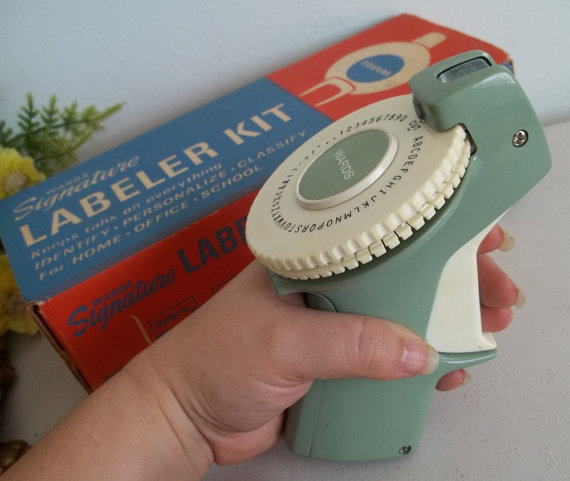
Survivor hypervigilance and the danger of false labeling

labelkit

Earlier today I wrote that I thought my daughter may have NPD because she had taken my phone when she lost hers, and seemed uncaring that I had no way of contacting her or anyone else. About an hour ago, she returned with my phone, and seemed very apologetic and remorseful.

Granted, my daughter does have some narcissistic traits, but she is also Borderline, and most Borderlines do have some narcissistic behaviors–after all, they’re still in the Cluster B group of personality disorders (Cluster B disorders are those characterized by excessive dramatic behavior and/or lack empathy). But she’s not a Narcissist. She does have a conscience and can show empathy, and she’s also self-critical, something true Narcs are not.

My point here is this. I think we survivors have a problem with lack of trust. Having been hurt too often by those with malevolent character, sometimes even by our own parents, we tend to be hypervigilant and quick to label people as NPD if they show even the slightest self-centered behaviors. Since we all can be self-centered and narcissistic at times, then we can falsely pin the NPD label on almost anyone.

Hypervigilance and paranoia is a huge problem for survivors. We have learned not to trust anyone, or even trust our own instincts (since all too often we seem to be attracted to those who are narcissists). Many if not most of us suffer from C-PTSD (PTSD resulting from having been the victim in an abusive relationship). We are quick to jump to conclusions and overreact to behaviors that trigger us, even if no malevolent intent is involved, and even imagining narcissistic behavior where none actually exists. This can cause misunderstandings and result in an inability to become close to anyone and sometimes even make it impossible for us to allow anyone to be our friend. We don’t believe anyone has our best interests at heart.

Here I am going to attempt to describe some behaviors that really are narcissistic, and also differentiate other disorders that may be mistaken for NPD. This list is not exhaustive; there are many other symptoms of NPD I may have neglected to list, but here are the ones I am most familiar with from my own relationships with narcissists. For convenience, I am using the masculine pronoun, but of course all of these could apply to females as well.

How to Spot a Narcissist.

1. Does he come on strong in the beginning, love-bombing you with gifts and words, giving you his undivided attention, but does he also try to rush the relationship toward commitment? If he does, he wants the “courtship” phase over with quickly, because once he knows you’re his, he can revert to his true narcissistic self and you become his narcissistic supply. A huge red flag is if he talks about past relationships in a way where he paints himself as blameless and the ex as a blackhearted villain.

2. Is his “teasing” sadistic and cruel? Does he keep doing it after you’ve told him to stop, and even after you’re no longer laughing?

3. Does he like to put you down in front of others, and then call you “too sensitive” or “lacking a sense of humor” if you rightfully object?

4. Does he play mind games? These can include any of the following: gaslighting (trying to make you believe you are crazy or are losing your memory by denying actual incidents you have called to his attention); triangulating (creating drama between two other people by telling each person lies about the other one–example: he tells a friend of yours you were saying bad things about them even though you were not, and then tells you your friend said they really don’t like you). This is crazymaking stuff.

5. Does he lie even when there’s no reason to lie? Does he deny any wrongdoing even when the evidence is in his face?

6. If he cannot deny the wrongdoing, does he make excuses as to why it wasn’t wrong? True narcissists can never apologize.

7. Does he have one or more “flying monkeys” (people he has won over to his side in his campaign against you)? If he can get other people to side with him (sometimes other family members) and ALL of them are saying YOU’RE the crazy one, that’s the cruelest form of bullying and gaslighting imaginable. RUN! Narcs are very glib and have a lot of charm, and it’s easy for them to make others believe YOU are the one with the problem, and they are just blameless victims. If they’ve read up on narcissism, they may even say YOU are the narcissist.

8. He has a black and white view of the world. If you’re the least bit critical, he concludes you’re against him. If you’re not 100% in agreement, that’s reason to attack.

9. Is he condescending, sarcastic, talks down to you, or otherwise make you feel belittled and diminished, especially when others are present?

10. Does he bring up your most personal matters in front of others, in an effort to embarrass you?

11. Does he trash you behind your back, and then deny he ever said anything (perhaps “gaslighting”–telling you you are imagining things?)

12. Does he steal from you, and then deny it?

13. Does he make you engage in behaviors that are illegal or go against your morals?

14. Does he seem to never have anything nice to say about anything or anyone? Narcissists are excessively negative, unless they are in the “love bombing” phase (when they’re trying to woo you, or when they feel there’s a threat you may leave and they may be deprived of their “narcissistic supply”)

15. Not all, but many narcissists have co-existing addictions to alcohol, drugs, or gambling. This can be a red flag, but not all Narcs have substance abuse problems (and certainly not all those with addictions are Narcs).

16. Does he act entitled, expecting to be given things and treated in a special way, without doing anything to deserve the special treatment, and never giving anything back in return?

17. Does he lack empathy or become upset or enraged of he believes someone else is getting more (attention, material goods, love, etc.) than he is?

18. Does he seem to be nice to everyone but you? Narcs are chamelions who can change masks at the drop of a hat.

19. Do you ever get the odd feeling there is “nothing there” or even get a sense of evil from the person? I saw this black void in both my mother and my ex husband, and it scared the daylights out of me both times. If you get this sense, or see the solid black eyes, RUN as fast as you can. People who are HSPs or empaths are more likely to “see through” a psychopath this way, and HSPs are also most at danger of becoming their victims, not just because of their vulnerability, but also because the narcissist envies and hates the quality of high sensitivity because of the potential it has to “out” them for what they really are, and that terrifies them.*

20. Does he blame-shift, that is, projecting things that go wrong onto you? For example, if he loses his wallet, he finds a way to blame you for it. If your kid becomes sick, it’s because you were “careless” in allowing them to be exposed to others who were sick.

21. Does he project his own character flaws onto you? For example, telling you (and anyone else he wants on his side) that YOU are selfish and lack empathy? My ex actually did this to me, making ME the narcissist. It’s enough to make you batshit crazy.

22. They overreact and are hypersensitive to insults. The poor things are so easily hurt *bring out the tiny violins* Actually, for them it’s just hurt pride. Insult their pride and they’re likely to fly into a narcissistic rage.

23. They have no respect for boundaries. They’ll rummage through your personal belongings, invade your space, blast their music (and get mad at YOU if you ask them to turn it down), talk loudly when you are trying to sleep, and generally just be in your face all the time.

24. Finally, is your psychopath attracted to “dark” or “evil” things? I noticed my NPD ex-husband liked a lot of things that gave me the heebie jeebies: images of demons, zombies, vampires, slasher movies, and he was also attracted to the occult. His taste in music was also very dark: he listened to a lot of death metal. I’m not judgmental about music and can appreciate all genres (even if it’s not something I would listen to), but much of the music he listened to just gave me bad vibes. Granted, some narcissists are “paragons of virtue” and they can often be found in churches, schools, and unfortunately, government. Our current government and the top echelons of large corporations are filled with narcissists, and this is why the United States is in such sorry shape today. Be that as it may, many people with NPD are attracted to the dark underbelly of things.

There are other behaviors typical of NPDs and psychopaths, but the ones I listed are the ones my psychopaths used most frequently in my victimization. After being subjected to these crazymaking behaviors for so long, it’s not surprising survivors can become hypervigilant and automatically label any triggering behavior from anyone as being psychopathic. We have to be careful not to jump to conclusions.

Look for Patterns.

It helps to look for a pattern–if the behavior happens over and over again, and is combined with other narcissistic behaviors I have listed, that’s a red flag. If it’s an isolated incident, and it isn’t part of a regular pattern, chances are that person is not narcissistic. It’s hard for a survivor of abuse to give anyone the benefit of the doubt, but observation before judging is important to avoid the problem of false labeling and possibly rejecting a person who may actually be good for us.

Other disorders that can mimic Narcissism and Psychopathy.

Antisocial Personality Disorder (sociopathy): This is similar to NPD/psychopathy, except the person with APD is far more likely to engage in criminal behavior (narcissists like to maintain their blameless image, although they may break the law too in more subtle ways), and although they too show no remorse or empathy, their behavior tends to be more impulsive and there is some evidence that people with APD have difficulty telling the difference between right and wrong.

Borderline Personality Disorder: These are people whose personalities have never “come together.” Like the narcissist they can be very charming and attractive at first, but they tend to be emotionally intense and overreact to everything, especially slights. Borderlines are the true “drama queens.” Their relationships are unstable and stormy, and they are high-maintenance and very demanding. Many people with BPD have issues with addiction. They are likely to have narcissistic traits, but unlike someone with NPD, they are capable of empathy and remorse. They act impulsively, think later.

Obsessive Compulsive Disorder (OCD): Some people with OCD are very controlling and get very upset if their routines or rituals are disrupted. People with severe OCD can seem unempathic and self centered, but they act the way they do because of the overwhelming anxiety that underlies their control freak appearance.

Schizoid Personality Disorder: People with this disorder are not narcissistic or psychopathic, but are asocial and live very much inside their own heads. Their behavior may be odd or eccentric. They seem to lack empathy, but are really just not very aware of what other people may be feeling or how their odd or aloof behavior may upset those close to them.

Aspergers/autism: People on the autism spectrum, like the schizoid personity type, are likely to be asocial and keep to themselves–or when forced to socialize, their behavior can seem awkward. Because they cannot read social cues, they may say or do hurtful or inappropriate things, which can make them seem narcissistic. But if their hurtful behavior is called out to them, most of these people do feel shame and remorse.

* My next article will be about HSPs and why they’re so often targeted and bullied by psychopaths,