A match made in hell: Narcissists and HSPs

bullies

Two of the hottest psychological topics on the Internet right now address two personality types that are virtually on opposite ends of the behavioral spectrum: narcissism/psychopathy (or more specifically, NPD), and HSPs (highly sensitive people). I think there’s some significance to this. For reasons no one seems to understand, Highly Sensitive People seem to be thrown together with Narcissists more than you would expect by chance alone.

Neither personality type is especially common: people with Malignant Narcissism (NPD) comprise approximately 4% of the population in the United States; HSPs comprise about 20% making them somewhat more common–though they may seem less common than they really are because they’re often hiding in the shadows and rarely call attention to themselves. Many HSP persons have learned to stuff their sensitivity and emotions because (besides having been shamed for it), high sensitivity doesn’t work very well in the narcissistic and materialistic society we are currently living in–a society where qualities like aggression, social gregariousness, bluntness, impatience, and indifference to the suffering of others are far more valued than qualities like civility, deference, intuition, shyness, and empathy. Aggression and gregariousness are especially valued in the worlds of business and politics. Face it, you’re not going to find a great job (or any job at all) if you call attention to the second group of qualities and may well be regarded as weak and ineffective. Politicians who appear too empathetic, tolerant, gentle, or soft spoken rarely win elections. That’s why liberals keep losing elections. It’s my observation that those with more liberal ideologies are usually better educated, but also by nature are more empathetic and care more about the plight of the less fortunate. Let’s face it: narcissism wins elections, and that’s why the country’s in such a huge mess.

But this isn’t about politics, and I don’t care what your ideology is. I don’t want to stereotype political ideologies based on personality, because there are conservatives who are also sensitive, and liberals who are anything but. I’m referring more to the people in powerful political positions, not the people who vote for them.

Highly Sensitive People have a number of characteristics that make them vulnerable, especially to people with NPD, and all too often HSPs find themselves either being raised by psychopaths, or married or otherwise in serious relationships or friendships with them.

You may be an HSP if…

1. You were bullied in school; the bullying may have become a pattern throughout your entire schooling. Maybe even as an adult, people like to “mess with you” to see if they can get a rise out of you.
2. You had imaginary friends or spent a lot of time in “imaginary worlds” of your own making, or you were often accused of daydreaming by your teachers.
3. As a child and perhaps later into life you cried easily and often. You may have been a “difficult” or sickly baby or toddler. HSPs do seem more prone to serious allergies and childhood illnesses more than other people.
4. You never were “popular” but prefer to have deep friendships with one or two like-minded people who may also be HSPs.
5. You dislike crowds and may not really like parties or other large social gatherings.
6. You’re a deep thinker and enjoy reading and studying about whatever interests you
7. You may prefer to spend time alone over social activities
8. Family is important to you, insofar as you have a workable relationship with your family.
9. You are very easily hurt and sometimes can’t let a cruel joke or comment roll off your back the way others can
10. You dislike negative or chaotic environments because you feel like you can pick up on the negative emotions of others around you.
11. Your own family may not understand you, thinking of you as a black sheep or a failure. They may even reject or bully you if there are Narcs in your family who have chosen you as the family scapegoat.
12. You feel overwhelmed easily when you’re forced to deal with others, especially negative people.
13. You may feel you relate better to animals than to people and that they even understand you better than most people.
14. If bullied or scapegoated by Narcs, you may approach life with a hypervigilance that may border on paranoia.
15. Because of your giving, empathetic nature, you find yourself attracted to those who abuse you or use you.
16. You put the needs of others before your own, and may sabotage your own happiness or success in the process.
17. You get very upset when you hear or read news stories about children, animals or adults who have been abused or killed.
18. You may have decided to stay away from reading or listening to the news because so much of it is negative and upsets you.
19. You may have reached the point where you feel no one can be trusted (but it’s in your nature to still want to trust others and give them the benefit of the doubt).
20. You are prone to deep depressions and feelings of despair (sometimes this manifests as irritability and grouchiness), sometimes these depressions are not explainable by any personal situation; you also have the ability to feel the heights of pure joy when you feel in balance with the world around you or with those who truly care for you and love you unconditionally.
21. You may be attracted to the performing or visual arts, or to poetry or creative writing.You may well have a talent in these endeavors. You also may have a strong interest in spiritual and metaphysical matters.
22. You may have an intuition so strong it borders on psychic ability–you may be able to “read” the emotions of people you have never even met before, or even deduce what type of situation they are facing in their lives.
23. You may feel you can detect the presence of the supernatural
24. You may feel strongly you do not fit in the world very well and that you have poor survival instincts.
25. Most importantly, when dealing with a narcissist, you may have the ability to hone in on their true nature, and see how horrifying it really is, both to the Narc and to others.

I want to extrapolate more on #25, because it’s at the core of why Narcissists (the natural bullies of the world) are so attracted to HSPs (the natural empaths) and why they so often wind up in their unholy psychological death dance together.

It’s a Love/Hate dichotomy.

Narcissists have a love/hate relationship with the HSP. What the narcissist sees in the HSP is a person who wants to trust, is easily manipulated (because they always like to give the benefit of the doubt), easily taken advantage of, and shows their hurt when wronged. They see a person who has insight into why other people tick, and are self-aware and introspective. More than other people, they can easily be coerced into blaming themselves if things go wrong because they can be shamed or embarrassed so easily. They are unlikely to attack the narcissist (at least at first) and they crave love and acceptance.

What the HSP sees in the Narcissist is a person who seems strong and in control of things; at first this may make the HSP feel safe and validated when the Narcissist is love bombing them to woo them into a relationship. Since Narcissists are usually quite aggressive when trying to rope in the HSP into commitment, making all sort of promises to the HSP that sound wonderful at the time. Soon, the HSP falls in love with the Narc and the match from hell is conceived.

The dynamics in a family with an HSP child raised by a narcissistic parent are different, because no love-bombing phase is required (except when the child is an adult and threatens to leave or go No Contact with the Narc parent). Shortly after a HSP child is born, the Narc parent quickly realizes this child is vulnerable and can be used as their narcissistic supply to boost themselves up at the expense of that child. Often, the Narc parent will coerce other family members (often siblings of the HSP) to act as “flying monkeys” in the bullying of that child. Unfortunately, such children are so sensitive they are often bullied at school as well, and the child may feel there is no safe place of their own. As a result, they may turn inward, creating imaginary friends or worlds in which they can escape. My mother hated it when I went inside my head into my imaginary worlds, and punished me for acting “spooky.” I couldn’t help it though: it was the only “place” where she could not get to me.

Narcissists live in terror of being exposed.

Narcs hone in on high sensitivity and are both attracted to it and despise it. The vulnerability of an HSP and the Narc’s ability to bully them temporarily makes them feel better about themselves (the only way they can feel good about themselves is by putting others down because they know they have no “true self”–more on this later), but they also hate it and envy it, because it’s this very quality of high sensitivity and empathy they know they do not possess, and worse yet, they know it’s possible the HSP could one day use that quality to expose the narcissist. Narcissists do not feel anxiety the way most people do, but the prospect of being “outed” one day for the monsters they actually are behind their mask of normality and sanity is incredibly terrifying to them.

But why is the psychopathic narcissist living in such terror of being exposed? After all, they think they’re better than everyone else, so why would it bother them?

The answer is horrifying. If they are exposed or “outed,” they are forced to look into the mirror–and what looks back at them in that mirror is not a monster, not an ideal self, not a demon, but something worse: a black, endless void of nothingness. There is nothing there, under the mask they wear. In effect, the masks they wear are what they have become, because inside they don’t exist. And yes they are evil. Evil isn’t badness; it isn’t the opposite of good. Evil is the opposite of somethingness; evil is pure black nothingness. In their desperate attempts to fill the void, they take on superficial behaviors and attitudes they think they “should” show the world–but they are fake. There is no real self there. Ergo, everything they think they are and everything they say is a lie. They are the People of the lie.

Are Narcissists born that way, were they made that way, or did they choose their path?

I don’t believe psychopathic narcissists were born this way. I don’t believe in “bad seeds,” like the demon child Damien in “The Omen.” In fact, I think all children start out as blank slates with the potential to become good (or bad). I think Narcs often have abusive or neglectful parents who fail to mirror the child in a positive way when they are very young, and as a result, not being able to mirror the parent in return, they don’t develop a true self and spend their lives trying to mirror the people they come in contact with and HSPs make this mirroring easier for them. Unfortunately by this point it’s far too late for them to internalize the mirroring of the other person, and so it never infiltrates beyond the surface. This explains why the Narc will act like they are the most understanding and caring person in the world when the HSP first meets them, but since they never internalized the behavior, it’s not really part of them and they quickly move on to abusing the HSP because deep inside they envy and hate the same behaviors they have so recently “mirrored.” Narcs cannot be helped in traditional therapy because in order to reach them, there has to be a self there to be reached, but Narcs have lost their true self, or it’s become so deeply buried it can never be accessed in any normal way, if ever.

There’s another way a person can become a psychopath. Some people cross a line at some point in life, a line where they seriously violate some inner (but maybe not fully developed) moral code. For example, in “People of the Lie,” Dr. Peck talks about a man who almost became evil. The man, who was by all accounts a good man, a devoted husband and father, suffered terrible panic attacks when crossing certain bridges as a requirement of his job. To help alleviate his anxiety attacks, the man made a deal with the Devil: he told the Devil if he could make it across the bridge without a panic attack, then he’d give the Devil permission to allow something terrible to happen to his son. The man said he didn’t really believe in the Devil, so he knew nothing would actually happen and therefore really wasn’t that bad a thing. But it’s still a deal with the devil, and Peck was horrified. The fact the man felt remorse and shame (and confessed his “sin” to Dr. Peck) saved him from crossing the line into becoming evil himself.

We have all heard stories of group violence, situations where people who otherwise would never partake in violent crime by themselves, enthusiastically take part in looting, mass violence and killing when part of a large group. In a way these people have also sold out to evil and have crossed a moral line. Soldiers in wars are obliged to kill innocent victims, sometimes women and children, and the deep guilt and shame they feel after doing something so alien to their own moral code could be a big reason why so many of them become mentally ill or suffer from the more severe forms of PTSD.

As an HSP (and also Aspie) child raised by a Narcissist mother, I was at a huge disadvantage. I suffered the whole gamut of psychic insults visited on the hypersensitive: bullied in school, bullied at home (and sometimes filled the role of the Golden Child too, since I was an “only”), and bullied by most of my serious boyfriends and finally my ex-husband.

Into the void.

blackhole

I could see “through” my mother at an early age, and knew her occasional professions of “love” were utter bullshit. When I was about 6, I remember a very vivid dream that she came into my room, and instead of a loving face, all I could see was solid black eyes–the kind of demon eyes seen in horror movies, coupled with a sneer so full of hate that I felt like I turned to ice inside. Even after I awoke, I couldn’t shake the feeling that my mother was evil, and I acted especially “spooky” that day, something my mother hated and punished me for, because she knew my “spooky” moods meant she knew that I knew what she really was, and it scared her to death.
I had the same experience with my husband years later–same sneer, same opaque black eyes.

It sounds crazy I know, but I have no doubt I actually saw this–and know that what I saw was what they really were. The blackness in their eyes was not a manifestation of a demon inside them–it was a mirror that reflected back the nothingness inside. An endless, black hole where nothing can enter, nothing can be reflected back, and nothing can escape, not even the light of truth. Around a narcissist, just as around a real black hole, all reality becomes distorted and eventually sucked into its depths to become something…else.

If psychopathic narcissists were ever confronted with what they really are–a fake “person” without a true self–I believe it would drive them insane or even to suicide. They would not be able to face the horror of knowing in a sense they really are dead. They are vampires who must stay alive by sucking the lifeblood from the living. HSPs, by feeling everything as deeply as they do, and having the ability to tap into the life force and zero in on the inexplicable like a psychic laser beam, are extremely “alive” and thereby more powerful than the narcissist. The malignant narcissist hates that. He wants those abilities and powers for himself–so badly he is willing to destroy those qualities in those who have them, even slowly killing people they observe possess these coveted qualities they both envy and know may expose and destroy them.

It’s also why narcissists in positions of power (and they are all too often in positions of great power) denigrate, hate, and fear scientific research, critical thinking, the arts, and spirituality (as opposed to dogmatic religion). These are things that, just like the HSP’s intuitive powers, can hone in on Truth and expose the lies narcissists like to tell to keep their subjects under their control.

Can Narcissists ever be cured?

Probably not, because they either no longer possess a true self (and in a real sense are really soulless) or it’s so deeply buried and obscured it can never be accessed and brought to light. If there is a self there, I suspect it’s greatly diminished or nearly destroyed. It may sound woowoo, but I believe in the chakra system–those 7 points of concentrated energy that run down the spine and that correspond closely with the physical endocrine system. Most if not all of us suffer from imbalanced chakras or chakras that are weak (or too strong), but I think in the psychopath, while their chakras exist (if they didn’t they would be dead), they are almost nonfunctional and disconnected from each other instead of working together the way they should. I also think if you could see the aura of a psychopath it would be thin and dark, probably almost black.

But even the most evil psychopath is not entirely hopeless. We are all children of God or a Higher Power (or however you choose to understand him), and as long as their is life, there is hope. I believe even the most psychopathic, narcissistic soul-murderer has rare moments of truth and clarity, where they become aware of what they really are, and feel great shame and horror when they do. Unfortunately these moments of clarity are so frightening and painful for them that they almost always escape back into their narcissistic ways and deny the truth. If they are to ever be helped, it must be during these rare moments of clarity, and only God can help them, and only if they are willing to submit to His power. We can pray for the psychopaths, but we can never change them. They must make the decision to change on their own, and unfortunately that isn’t something we can count on happening very often.

The psychopathic narcissist is really a pretty weak and pathetic character, and as easy as it is for us to hate them, we can also pity them for the lost souls they really are.

ETA: Please see my latest article, “My Son’s Father Turned from a Loving Dad into a Monster” for the story of how my highly sensitive son became his malignant narcissist’s father’s scapegoat once his father realized my son could “see through” his mask.

Waking up from the nightmare

Woman Looking at Reflection

So after 28 years of narcissistic abuse I finally felt free. Before, even though there were periods where we hadn’t lived together, I never felt completely free of Michael’s toxic influence. But my daughter Molly and I were quite literally survivors and both of us had psychic wounds that ran deep and would take years to heal, if they could ever be healed at all.

My job (which I still have) doesn’t provide health insurance so I couldn’t afford to pay for a trauma therapist, but I started reading everything I could about NPD and PTSD/C-PTSD (the type of PTSD that’s associated with abuse). Molly still didn’t want to go to therapy but was still getting her meds for Bipolar and she was in a fairly stable relationship and was no longer getting into trouble the way she used to. She was also beginning to understand why I did some of the things I did and acted the way I had, and I learned she too had a lot of anger toward Michael.

But things were not perfect between us either and we did continue to argue from time to time, and when she was angry, she liked to bring up the fact I had given up custody of her to DSS even though at other times she says she understood it was the only thing I could do at the time and it did save her life. So I don’t let those occasional attacks bother me too much. I know it’s manipulation. Sometimes I think she may have NPD herself, but she does have a conscience and empathy so more likely she just has narcissistic traits which are common people with Borderline PD.

So in March I had to go to court and testify against Michael in order to obtain a permanent restraining order (the one that was issued at the magistrate was good for only 1 month). I was working with an organization that helps abused women and their families, and they counseled me on what to say in court. It was ridiculous I had to jump through all these hoops just to obtain a piece of paper to keep a man I wasn’t married to anyway away from me and my property, but it was what it was.

I knew I had a good case and no reason to be worried but I was still terrified of having to face him in court. Michael is very glib and has a lot of charm when he wants something. He can make himself sound like a victim and make the other person sound like the devil himself. He managed to be surviving pretty well in the men’s shelter, although he told Molly when he saw her how much he hated it and wanted to come back. He also made her go buy him things, which she would do. She felt guilty and caught in the middle between the two of us. It wasn’t fair to her.

Ethan came to visit in early March (on his way from Illinois to his new apartment in Florida–he graduated college in January and is is seeking work in film editing or something related). He wanted to make sure Michael was not going to show up. I assured him he wouldn’t. We had a fantastic time, but he said when he tried to call his father, Michael didn’t want to see him. For some reason he thinks Ethan was the one who convince me to kick him out of the house. No matter how much he’s told Ethan had nothing to do with it, he still blames him for brainwashing me. Huh? Talk about blame-shifting.

I had to write everything I wanted to say in court because I knew my mind would go blank when I had to get up at the stand and talk about why the restraining order should be extended. The big day was in mid-March. Several other cases were heard first and I avoided looking behind me because I knew he was there. I could feel his eyes burning holes into my neck. Finally I was called to the stand and presented my case. I didn’t cry (because it’s really hard for me to cry anymore) but I was trembling and my voice was shaking from fear. The judge had to keep asking me to speak up. I studied her expression but it gave nothing away.

writing

Michael was called up after me and gave a ridiculous story about how Molly had hit him first and he gave her a black eye in self defense (which is total BS because he didn’t have one mark on him). He gave some other lame
“reasons” why he needed to move back but since he really didn’t have a good reason, they didn’t fly with the judge. In fact, he was almost laughable and seeing the manipulation from more of a distance now, he seemed so transparent. Although I hated him, I almost felt sorry for him.

I won my case and the restraining order was extended for one year. The counselor from the women’s organization that had been working with me gave me a validating hug. I went home feeling lighter than I had in a long, long time.

Michael wasn’t done with me yet, but since I was no longer supplying his narcissistic goodies, his attempts at revenge were rather lame. He did things like trashing me on Facebook, saying what a horrible wife and mother I was and how he wished he never met me. He threatened suicide over and over again. I was kind of embarrassed for him, but because of it I stopped using Facebook, which I wasn’t using much anymore anyway because my mother and other family members had found me there (even though I had changed my first name a little to throw them off).

I had to adjust to my new life. For several months I just tried to take things easy, not get involved in too many new things. I read a lot of books, mostly about NPD, malignant narcissism and personality disorders in general. I read a lot of other books too, and started researching all these disorders online and reading a lot of blogs and forums.

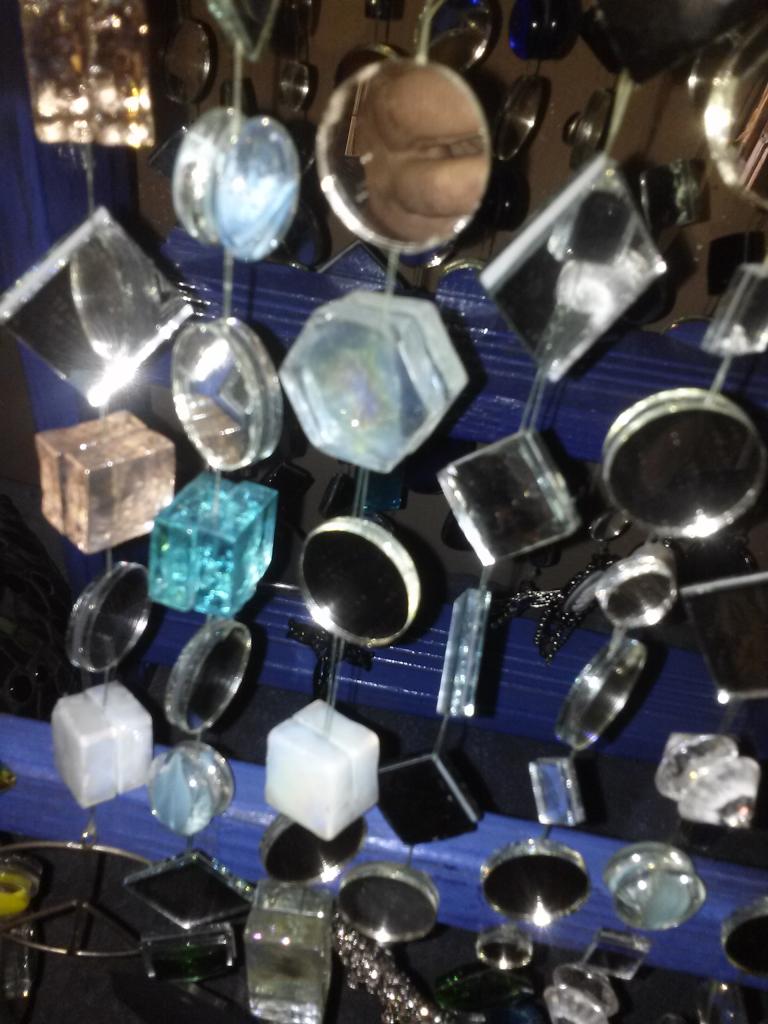
I started making glass, mirror and ceramic suncatchers on weekends and have tried to sell some of them. Mostly I just make them for pleasure though. They also make great gifts. I have several of them on my porch and I love watching the way they catch the light and send colored prisms everywhere.

suncatcher10

But writing has always been the one thing I know I’m best at, yet somehow I couldn’t bring myself to write anything beyond a forum post. It just seemed like too much work, and I was afraid I’d forgotten how. I feared I was no longer as smart as I used to be. I didn’t realize at first these numb and dumb feelings were symptomatic of C-PTSD. I knew if I ever did write again it would be to tell my story, but I had no idea where to begin. It all just seemed overwhelming. I thought about blogging but I was afraid it would be complicated and technical, and I still didn’t know what to write about or where to begin.

I re-read M. Scott Peck’s book “People of the Lie,” which I have reviewed in this blog, and realized Michael was not just narcissistic, but was truly evil. Despite it’s medieval connotations, I believe evil and evil people really do exist, and I was very lucky that I survived and both children survived. While most evil people don’t usually murder (they want to maintain their benign appearance), they are murderous and often drive others to suicide or self-destruction. They lie about everything.

I joined a gym and got back in shape. My job is also physical and that keeps me in shape too. I started liking what I saw in the mirror again. I also started meditating, something I started back in the ’90s and then stopped.

About a month ago I revisited the idea of blogging, inspired by some blogs I had seen by other survivors through my readings. On a whim I decided to start one. There’s been no looking back. At first it was meant to be self-therapy, a sort of online journaling, but now it’s turning into so much more and a few people have even said they feel inspired and it’s helping them too. And that makes me feel good. It makes me feel like I still have a purpose in this world and am not just marking time until I die. I want to think that everything that happened to me happened for a reason and that something good can come out of this.

I still have a long way to go, and as soon as I can I want to start seeing a trauma therapist. In the meantime life isn’t unbearable anymore. It’s getting better.

About a month ago Michael was kicked out of the apartment an organization called OctoberRoad was providing for its mental patients. My daughter allowed him to live in her car. He left the windows open during a rainstorm one night and the car was nearly destroyed. She took the car keys away and she hasn’t heard from Michael since, which is very odd, since he would call her up to 10 times a day to demand things.

She has no idea where he is. We think he may have killed himself. She wouldn’t have been notified because she had his wallet in her car and there’d be no way anyone could identify him.

Michael was having his mail sent to the house, which I did allow. After three previous rejections, Michael’s SSI finally came through — and that includes several years of back payments, so he is getting a check for about $30K.

If he is dead, how ironic that it happened just as he finally had a means to be independent and no longer had anyone he could use and abuse. Maybe that was the only reason he stuck around so long–as long as he could use up and destroy others. With that opportunity taken away, and with no real self to fall back on, there was no longer any reason for him to live. Or maybe he was finally forced to look in the mirror and all he could see was an endless black void, and that was just too much to handle. What he has been reduced to is just a shell of what he used to be, but was there ever really anything there?

Seven more years of NPD hell.

Gaslight-2

After Heather tossed Michael to the curb, and Molly returned to our new Section 8 apartment, Michael asked if he could move back in. At first I was resolute and said No (surprisingly he seemed to accept this), but he did have a job and managed to secure a place to stay for a few months–first in a basement room of where he worked (their business was conducted in a huge Victorian house) and later as someone else’s roommate.

Molly was having serious issues at school, and oftentimes didn’t even attend. Several times I was called from my job as a convenience store assistant manager to come pick her up because she was in some sort of trouble again (fighting, stealing a pair of expensive boots, acting “high” at school, etc.) When she was there, she hated it. Since I had to open the store by 6 I had to leave my house before 5 am and there was no way I could remain home to make sure she made the bus. Ethan tried but most of the time couldn’t even get her up (he was very good about getting himself up and to school). The school informed me if I couldn’t get her to school, that I could be charged with neglect and willfully keeping her out of school. It didn’t matter that I had to work and that I had no one else to keep an eye on her. Well, as it turned out, I was fired from my job primarily because of my poor attendance due to disruptions and early leaves caused by Molly, so that sort of solved the problem except she still wouldn’t get up most of the time, even if she was home.

When she was home (which wasn’t often), she was surly and snappish and spent most of her time on MySpace, which was still popular at the time. It was 2007 and she was about 15 by now. For three months she managed to keep her activities a secret from me but eventually I found out she was seeing an older man she met on MySpace (he was 23) who had a jail record for selling drugs. I had given up trying to control what she did. She convinced me not to have him arrested by saying she would kill herself, so I did nothing and prayed for the best. I knew they were doing drugs and kept begging her to stay clean to no avail. She had Medicaid, but refused to see a therapist, although she did agree to go in to be evaluated for medications and that’s when she was diagnosed with Bipolar Disorder and Borderline Personality Disorder. Countless times the school called meetings to discuss what to do about her attendance and behavior and I begged them to put her into a special program they had for kids with emotional problems but they said she would have to wait until the following school year.

One day Michael showed up at the door and informed me his last roommate had kicked him out again. He told me he’d been drunk and after he was booted out, he tried to kill himself by running his car into a telephone pole. The pole and the car were totalled, but Michael was fine. He started crying when I still said he couldn’t move back in and started the manipulations, convincing me it would be in my benefit to have him there because he would make sure Molly went to school AND he would help me with the bills. Since Molly was more likely to listen to him than to me (and begged me to let him move back in), I conceded, telling him he would have to find another place to live in three months. Well, that three months turned into almost seven years.

At first things seemed fine. Michael stayed sober, was working, and actually did contribute most of his paychecks to household expenses. Molly’s behavior improved a little–at first. She was still with the older guy but was more cooperative when she was home. However I noticed that she was in her room a lot with Michael with the door locked, or sometimes Ben (her boyfriend) was in there with them. If I tried to interrupt them or ask what they were doing, I got screamed at and told to mind my own business. I tried to listen to what was going on in there–it didn’t sound sexual (which worried me) but it did sound suspicious. One day I found a crack pipe on the floor of her room and questioned her about it. She said it was Ben’s and assured me she wasn’t smoking crack or any other hard drugs. Often I smelled pot smoke coming out from the room so I knew they were smoking pot together a lot. I didn’t think pot was so bad, but couldn’t believe her father would be so irresponsible as to smoke it with his under-age daughter.

crackpipe

I tried to talk to Michael about this, but he refused to listen, at first denying they were smoking anything, and then when he couldn’t do that anymore, telling me I had no right to tell him what to do since I had “gotten him the felony” (this was a refrain I would hear over and over again for the next seven years–he always used it as an excuse to do whatever the hell he wanted). So the three of them continued to get high in her room, leaving me out of everything and treating me rudely when they did talk to me. I was being gaslighted and triangulated against again, although this time, Ethan kept to himself and didn’t get involved in our drama. He busied himself on the computer and refused to participate in any arguments. Good for him!

In 2008 Molly broke up with Ben, but her drug problems had become more severe and I was at my wit’s end. One day I was home and Molly was out on the second-floor deck talking on her phone. I had to pick up a few things at the store and let her know I’d be right back. Twenty minutes later, I came home to find an ambulance in our driveway. My heart pounding, I ran into the house and found out Molly had been straddling the deck and had fallen off onto the ground (she was high). She was taken to the ER and it turned out she had fractured one of her lower vertebrae. She wasn’t too seriously injured but she could have been (and she’s had back problems ever since).

It turned out the be a blessing in disguise because finally, after begging for Molly to go to rehab for so long (and the school would do nothing to help), she was court-ordered to go. The one catch was that the only way Medicaid would pay for her treatment (I couldn’t afford health insurance for her through my job), was if I allowed the state to take custody of her. It was a painful decision but she was 16 and almost an adult anyway. It didn’t mean she couldn’t come home to live with me again. What choice did I have?

Molly was irate that I “gave up custody” of her and at first couldn’t understand why I would do such a thing. (Later on she came to understand and told me I saved her life by doing that).

The rehab was a six month live-in program, and Michael and I were allowed to go see her, although it was required a social worker was always present. The visits were awkward and forced, but she did seem to be improving (even though she hated it). She started gaining weight back and didn’t look so pasty anymore. Finally I felt like I didn’t have to worry so much about her.

Without Molly at home, Michael and I started to get along better, until he got fired from his job. At first he seemed to be looking for another one, but soon it became apparent he was spending most of his time in chat rooms and on political websites. I questioned him and he said no one was hiring. I offered to take him around to look but he always found some excuse. He sweet talked me into buying pot for him, even though I couldn’t afford it.

Meanwhile, Molly graduated from her program and went to live in a group home for teen girls with substance abuse issues. She liked the home and made some friends there (she is still friends with two of the girls), but since she wasn’t being supervised as closely, was able to obtain and use drugs. Pain pills were her drug of choice (but anything would do in a pinch, including alcohol), and one day she was so high she was taken to another residential treatment program in Tennessee. She called me crying, and wouldn’t tell me where they were taking her at first, but that she wanted to kill herself. The program turned out to be a sort of boot camp, where the kids lived in a rustic setting where they had to build their own fires for warmth and live in a cabin even in the cold months. But there was hiking and horseback riding. It was supposed to build character. I hoped it would. She hated every minute of it but on her 18th birthday would be allowed to return home.

When Ethan was nearly 18 he told me he was gay. I assured him I wasn’t upset and kind of suspected out that he was. He started to show more confidence and become more social. But at home he was testy and impatient with both Michael and myself. He hated all the arguing and was out more often. He made friends with a female police officer who worked at his school. He couldn’t take being in the house anymore with all the drama, and moved in with the policewoman for a few more months until he could find another place to live.

leavinghome

Ethan came back home after his 18th birthday but not for long. In mid-2010 he told me he had met someone online and would be moving to Illinois to stay with him. The guy he met turned out to be a supportive and mature person and they are still good friends today although they’re not together anymore. Of course I worried at first but there was nothing I could do. He was 18 and could do what he wanted, but it was actually the best thing for him.

In early 2011, it came to the attention of the landlord Michael was living with me, and he informed Section 8. I was told to move out by the end of the month. We had very little money and had to move into a trailer in a crappy trailer park that was rife with drug and gang activity (two years ago, someone was found shot to death outside one of the trailers). The toilet in one of the bathrooms was literally falling through the floor and the tub in the other bathroom didn’t work. The rooms were tiny and the walls paper thin. The kitchen wasn’t too bad though and even had a dishwasher, although it broke shortly after we moved in. I sold most of my belongings at a huge yard sale to raise funds for the move.

It was becoming apparent Michael was no longer going to work. He had developed diabetes and complained about the food I bought–I got food stamps, but I still couldn’t afford to buy much red meat and he said he needed it to control his diabetes. He became insulin dependent but had no medical insurance so he had to go to the free clinic to get his doses. He also saw a psychiatrist who had diagnosed him with Bipolar and PTSD (!?!) and prescribed him medication, including Klonopin, which he started to sell for cash. At the end of 2011 he applied for Disability (SSI) and so now had a handy excuse not to look for a job–since he was disabled, he wouldn’t get SSI if he was working (this turned out to be false if he worked part time but I didn’t know that).

??????????????????????????????????????????????????????????????????????????????????????????????????????????????????????????????????????

In April 2011 Molly turned 18 and returned home. For awhile she seemed a lot better. Even though altogether Molly had probably only finished one and a half years of high school, she managed to get a GED in just one month because she is very intelligent. She started looking for a job and was hired almost right away, but she never seemed to be able to keep a job for long after that, even though she always found one quickly. She refused to attend college, even though if she had, she would have been able to get government benefits for housing and school until she was 26, as well as continued Medicaid. But she hated all the jobs she had and almost always wound up being fired for getting too involved in interpersonal drama. She told me the more I talked to her about college, the more she didn’t want to go. I left her alone after that.

She had a string of boyfriends who were no good for her, although none were as bad as Ben had been, and the most recent one was clean and sober although his future prospects weren’t that good because he only had a high school education and no ambition. He worked as an auto mechanic but only doing oil changes and inspections and didn’t seem to interested in advancing. When they were together he spent most of their time playing video games, with Molly watching.

At the end of 2012, we moved again, this time to a real house. We lucked out–it was another duplex with two bedrooms and in a nice neighborhood. It was an older house with a lot of character and the original Arts and Crafts windows, and I had fun decorating it and painting it (although I never had much furniture). Michael slept in the living room; Molly and I took the two bedrooms. Michael was becoming unbearably annoying, constantly whining about how sick he was because I wouldn’t buy decent food for him, and watching political shows on TV and whining about how much he hated Republicans (I didn’t care for them much either but his constant bellyaching was irritating and he did nothing to help himself). I told him if he wanted better food he would have to get a job. Of course he refused (“but I’m disabled!”) and every day I’d come home after a long day at work to find him passed out on the couch or ranting about politics on Huffington Post. He never bothered to pick anything up and smoked like a chimney–both pot and tobacco. The living room was a mess, and Molly and I always wound up having to clean it. He never washed the many dishes he used, and they’d be all over the place. Living with him was almost unbearable and I was starting to really hate him. When he was high he acted stupid and oblivious to everything (and was loud); when he wasn’t high he was mean and sarcastic, calling both me and his daughter horrible names. He was so ungrateful, never apologized for anything, and just did whatever the hell he wanted. He made Molly or me go pick up his pot for him (I refused to do it after awhile) and complained about everything. He bought lottery tickets or pot from the money he got from the illegal sale of his psychiatric meds (lottery tickets were another thing I refused to foot the bill for). He ordered us around and stole money from me several times, although he never would admit it and tell me I (or Molly) was imagining things. He acted so entitled. Even Molly was becoming sick of him and we started to become closer.

In early 2013, Michael decided he wanted a dog. We already had one (and also 4 cats), and had said I absolutely could not afford another pet nor did we have the space. But telling Michael no about anything was futile. He always had to have his way. So one day I came home to find him holding a puppy. I told him to get rid of it and he refused, resorting to his old “you’re just an animal hater” guilt tactic. He said if I got rid of the dog, he would kill himself. I let him keep the dog.

I love dogs, but I couldn’t stand this dog. He was a jack russel/Beagle mix, cute but the most hyper dog I ever met. Michael refused to control him or discipline him and the dog pooped and peed all over the rugs, chewed on the furniture and everything else he could, and constantly ran off and would bark uncontrollably. When I complained to Michael about it, he would make excuses like “but he’s just a puppy!” He’d say this even though when the dog was over a year old. Molly and I had no luck training him, but her most current boyfriend was able to get him to stop pooping in the house. However, he continued to run off, and many nights I’d hear him barking somewhere in the neighborhood. Three times neighbors called animal control and the third time, I told them to please just take him away. If it happened again, I would have been fined. Normally I would have felt terrible having a dog taken to the pound (because I have always loved animals) but with this dog I didn’t feel at all guilty. It’s not like I had ever agreed to adopt the dog in the first place.

destroyinghouse

Michael was livid and wouldn’t speak to me for days. He was becoming angrier and more unpleasant and sometimes he just acted downright insane. I think some of the “insanity” was fabricated so he could continue to get all the free meds and also it would help him get his SSI sooner, or so he thought. Just about everything out of his mouth was sarcastic, angry and intended to offend. Half the time he made no sense. He seemed to hate everyone and everything, especially his daughter and ex-wife who were keeping him from being homeless and sacrificing so much for him. He kept saying I needed to be more patient because he was sick with diabetes and had mental problems. He never, ever apologized. I’ve never been a mean person but I didn’t like the person I was becoming around him. I was turning into the bitch he always said I was. I no longer even tried to be nice, and tried to be away from the house as much as possible. When I was home I went in my room and locked the door to get away from him. I had no idea how to get rid of him because he threatened suicide every time I did and I knew if he killed himself my daughter would be devastated. I was afraid how it would affect her. Michael always reminded me of this too, and even threatened to kill himself in her room and warned me how that would really fuck her up. Oh, he was evil alright. He never thought of anyone but himself.

One day in February 2014 I got a phone call at work from Molly telling me to meet her and her boyfriend at the police station. She explained that Michael had lost his temper and beat her up. That was the last straw for me. I no longer cared about his excuses, I wanted him out. The police officer there told us to go to the magistrate’s office if I wanted to press charges and file a restraining order. I did but Molly started feeling bad for him (even though she had her eye blacked and had other bruises on her) and refused to press charges herself.

We arranged to go home and pretend we had all gone to the mall. Later that evening, the police came and took Michael off in handcuffs. He was released the next day but didn’t dare come back. Finally I was free! But I had a lot of work ahead of me.

I’ll write a post later (it won’t be anywhere near as long as this one!) describing what the aftermath of his abuse has been like, and the steps I’m trying to take to recover from years of being under his control.

Book Review: People of the Lie: The Hope for Healing Human Evil, by M. Scott Peck, MD

peopleofthelie

When “People of the Lie” was first published in 1983, the word “evil” wasn’t in the popular lexicon. We were still a nation experimenting with various alternative lifestyles and there was still a lot of philosophical holdover from the “do your own thing” mindset of the 1960s. The religious right, primarily the Moral Majority had been influencing things for several years by this time (hence why Reagan was popular enough to get elected in 1980), but their power was still mainly under the radar and it just wasn’t PC to talk about things like “evil” with its medieval religious connotations. Even today, the word isn’t exactly politically correct, although it’s been bandied about a lot more in recent years, from the religious right to political pundits on both sides of the political spectrum. In addition, comments on social media such as Youtube, Facebook and Twitter often turn into religious arguments and the word “evil” is tossed about like confetti at a parade. Hence the word has lost some of its original power and Dark Ages overtones, but has become more acceptable in public discourse.

At the time of its publication, “People of the Lie” was a groundbreaking work by a respected psychiatrist who was no newcomer to the world of self help books, and it was the first comprehensive book written about what is now recognized by most people as the malignant narcissist, or person with severe narcissistic personality disorder. (People with Antisocial Personality Disorder, while more often criminals than those with NPD, are actually less “evil” due to the fact they actually cannot tell the difference between right and wrong, while a MN can, but doesn’t give a rat’s ass how they hurt others). It’s still a popular book today, and has passed the test of time due to its readability and fascinating case histories of “evil people” (more on this in a minute) and somehow manages to convey a scholarly feel without becoming dry, unreadable, or overly religious.

The book isn’t perfect. The subtitle “the Hope for Healing Human Evil” is a bit misleading, as there’s very little about actually curing the character disorders associated with it, and Dr. Peck frequently mentions how “hopeless” a task it is, given that malignant narcissists really cannot ever change. In one of the central case histories, the story of “Charlene,” Peck continually talks about his frustration in treating her as his patient and his inability to change her, and finally regrets not having “nurtured her like a parent,” actually saying he should have “taken her on his lap and stroked her like an infant,” (wtf?!) This comes off as really creepy and unethical, not to mention possibly illegal. As for Charlene, whether she’s actually evil isn’t too clear, as she never does anything much worse than simply being incredibly annoying. She’s clearly infatuated with Dr. Peck and unable to handle it; she shows stalking behaviors and likes to “play” with him but never does anything worse than just be annoying (indeed, this is how some MN’s who are not criminals break down their “marks” so who knows?) Her reaction to him could be simple transference of a patient to a therapist with nothing really evil about it at all. Peck’s countertransference toward Charlene in some ways seems more pathological than Charlene’s irritating behavior.

Several other cases describe disturbed and unhealthily codependent people (like the weak and dependent Harley dominated by his mean wife Sarah–these two actually seem quite happy in their unholy symbiosis). Sarah may or may not be “evil,” but clearly has narcissistic and sadistic traits and loves to torment poor Harley, who whines to Dr. Peck but seems to do little else to stop it. Peck speculates that a weak or pathologically dependent person like Harley, who can be so easily dominated, may be a bit evil themselves, which is why they “collude” with their abuser in the first place. There may be some validity to this claim, but I certainly don’t believe all abused people are colluding with their abuser or “asking for it.” That’s just blaming the victim, something that’s become increasingly common today.

I think (and others seem to agree on this) the most evil people in the book are the parents who gave their depressed son his older brother’s suicide weapon (THE gun, not just a gun like it) for his birthday. WTF?!? Anyone who would do such a thing to their own child is seriously deranged.

The cases, while all riveting and drawing you in like mini novels (or bad soaps?), don’t really give the reader a clear view of what evil actually is, and certainly not how it should be addressed. Dr. Peck seems at a loss as to what to do, and his last chapter on exorcism is a little over the top although fascinating to read. Peck believes exorcism can be performed effectively by psychiatrists who are well couched in the techniques (basically a classic rite as was seen in the 1973 movie The Exorcist) who also have a strong relationship to God (not necessarily of the born again Christian variety) and a strong enough character to resist the actions and manipulations of evil spirits or demons as they begin to resist the exorcism.

One of the best chapters of the book was the chapter on group evil (describing in the Mai Lai massacres in Vietnam during the ’60s. Peck explains how a group of people, not necessarily at all evil themselves, can be drawn into performing heinous crimes as a group. This is a well known theory–crowds will often behave in ways individuals within that crowd never would, especially if coerced by narcissistic or evil leaders. This is exactly what happened in Germany and Europe under Hitler in WW2 and probably what happened with Mai Lai as well.

I’ve had my copy of POTL for many years, and have read it or parts of it many times over. I still find it useful and was able to identify my mother as an evil person based on what I read. For all its faults, POTL is a must read for anyone interested in malignant narcissism or involved with a person with this character disorder, even if just for its historical perspective on this disorder that has become increasingly prevalent in the pathologically narcissistic and compassion-deficient modern world we are living in today.

Peck is himself a born again Christian, and even though there are definite religious overtones in POTL, he doesn’t bash you over the head with his beliefs, or overwhelm the reader with biblical references. I respect Peck’s religious beliefs, as I respect all religious beliefs, and although I may not agree with all of them and the book comes off at times a bit judgmental, I appreciate the fact he retains primarily the psychiatric and scientific, rather than the religious, perspective in this book. It’s a fascinating way to look at the problem of evil, which I definitely believe exists and is a powerful force, even though I’m not sure it’s driven by an entity called “Satan,” evil spirits, or just a manifestation of the primitive reptilian brain of those who are missing the higher parts of the brain that allow them to develop a conscience and true feelings of love for their fellow humans.

“People of the Lie” is much better than Peck’s later work on the subject of human evil, “Glimpses of the Devil,” his 2005 expansion on the subject, which goes into greater detail on the two exorcisms Peck performed and described briefly in POTL, but has far more blatant Christian overtones and is frankly a creepy and disturbing read and not as comprehensive and scientific as POTL. Still worth a read if you’re into that sort of thing.

Click here to purchase “People of the Lie” from Amazon.

This song pretty much nails it.

Here’s a song from the ’90s that nails the evil mindset of the malignant narcissist.

This is my first post in my first blog. Allow me to introduce myself.

Hello world. This is my very first blog. I’m not sure what the hell I’m doing yet or how the heck this thing (WordPress) works. I’m learning so please be patient with me. Continue reading