Book Review: “The Sociopath Next Door” by Martha Stout

sociopath_next_door

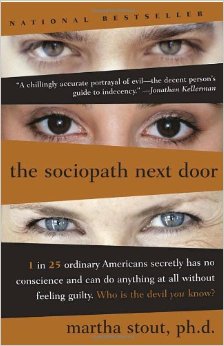
Dr. Martha Stout’s excellent “The Sociopath Next Door: The Ruthless versus The Rest of Us” is an easy to read, well researched and often entertaining study of the psychology of evil. In some ways similar to M. Scott Peck’s “People of the Lie,” but without the religious overtones, Stout chillingly describes the “ice people”–the sociopaths that walk among us.

As many as 4%–one in 25 Americans–is without a conscience or the capacity to feel empathy for others. Stout doesn’t make a distinction between sociopathy and psychopathy, and in this book she is referring to those people who meet the diagnostic criteria for Antisocial Personality Disorder (ASPD), not Narcissistic Personality Disorder. In fact, narcissism as a disorder is rarely mentioned, although she does acknowledge that all sociopaths are narcissistic.

Stout includes many case studies of how sociopathy can manifest in individuals. Contrary to popular notion, not all people with ASPD (sociopathy) are in prison or even criminals. Antisocial behavior is found as often in boardrooms as in prisons, and sometimes more so. For sociopaths who grew up in well heeled families and were able to get a good education, their antisocial traits are likely to manifest in “socially acceptable” ways. For example, a CEO who needlessly downsizes to increase his own bloated income, ruthlessly firing hundreds of employees without caring about the hardship those fired employees now face, is as conscienceless and unempathic as a cold blooded murderer.

A sociopath can be the gossipy woman next door who tells malicious lies about all the other neighbors, it can be the company president who embezzles and defrauds, or it can be the vicious serial killer who preys after college students.

Stout talks a lot about conscience, that quality that separates the antisocial from everyone else. It’s the lack of this trait that makes people evil. She offers a number of reasons why someone may lack a conscience–they may have suffered horrible abuse or neglect as young children (she discusses the sad plight of Romanian children who were adopted by American parents and many of these kids were found to have an underdeveloped conscience), they may not have been taught prosocial values, or they may be deficient in the parts of the brain where the conscience develops in normal children.

I definitely recommend “The Sociopath Next Door” to anyone who has been a victim of or had to deal with a sociopath, whether at home, work, school, or in a relationship. I’m going to extend the term “sociopath” here to include narcissists and psychopaths because they too lack empathy and a conscience. Really, this book should be read by everyone, because all of us have had to deal with ruthless “ice people” who just don’t care about anyone but themselves.

Narcissists with Aspergers?

lonely_guy

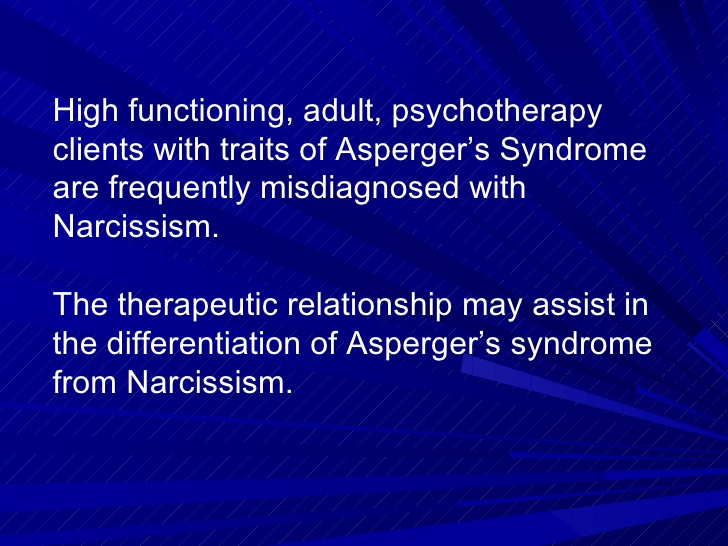
There’s been much written about the relationship between Aspergers syndrome and narcissism, mostly about the way they are often confused with each other (or misdiagnosed as the other disorder) due to the belief that people with Aspergers lack empathy (which is not true). I wrote about this false belief in my article, “People with Autism Do Not Lack Empathy!”

People with Aspergers may SEEM unempathic, because they are not always very good at expressing emotions or knowing how to react when other people share their emotions with them. But an Aspie’s lack of appropriate social reaction to the emotions of others doesn’t mean they can’t FEEL the emotions around them. In fact, some may feel other’s emotions MORE keenly than neurotypicals, and they can be easily overwhelmed, which may cause them to withdraw from the situation and partly account for why they may seem less engaged emotionally or uncaring about the feelings of others.

aspie_misdiagnosis

Narcissism as an Autism Spectrum Disorder?

question2

Psychology Today had an interesting article comparing narcissism to high functioning autism (Aspergers) and at least one psychologist thinks they may be the same disorder!:

Khalid A. Mansour (the British Arab psychiatrist), has proposed in an article in the Pan Arab Journal of Psychiatry (link is external) that narcissistic personality may merit classification as an autistic spectrum disorder.

Dr. Mansour writes, “There is now significant level of agreement that emotional processing problems like: lack of empathy, poor self-awareness, self-centredness, poor reciprocation of emotion, poor ability to maintain emotional relationships, anxiety and anger outbursts are more or less central features of autism (10, 50,51).”

Interesting. When I first read the above paragraph, I though Dr. Mansour was writing about severe narcissism. His description fits both narcissism and autistic spectrum disorders. Hmmm.

Dr. Mansour similarly quotes from the ICM-10 listing these features of autism:

–Self-centeredness; inappropriate to developmental level and cultural expectations
–Poor self-awareness, poor ability to develop remorse or learn from mistakes
–Poor empathy or appreciation of others feelings
–Poor ability to reciprocate emotions.
–Hostile dependency on safe relations.
–Failure to develop emotional relationships appropriate to developmental level and social norms
–Treating people as objects or preferring objects over them
Again, this list certainly sounds a lot like narcissism.

Dr. Monsour concludes: “… it is noticeable that people with NPD, do not show a major degree of functioning problems in stress free environment or when they are supported (except that they are perceived as “not pleasant characters” to deal with). However under stress and without support they can become quite dysfunctional in a way not far from what we usually see in Asperger’s syndrome. “

I don’t buy it. This is the opinion of one psychiatrist. While it’s true that on the surface these two disorders may appear similar, the mechanism behind the behaviors are vastly different–in fact, almost the opposite. For the narcissist, their lack of empathy and failure to engage the emotions of others is due to their inability to feel the emotions of those around them, but they can FAKE empathy fairly well, even if they choose not to. If they are trying to obtain supply, they can be pretty good at it. Their social skills are not the problem–their inability to feel other’s emotions are. They are like actors in a play. In contrast, a person with Aspergers or high functioning autism DOES feel the emotions of others around them strongly, but lacks the social skills necessary to be able to convey this to others effectively. Unlike the narcissist, people with Aspergers are very bad actors.

But the question was, can Aspergers and narcissism occur together?

aspie_narcissist

But we’re talking here about comorbidity. The question I’ve raised is whether Aspergers and Narcissism can be comorbid with each other–that is, can someone have BOTH disorders?

The answer appears to be yes. I found this on Yahoo Answers, from a man who claims to be both a high functioning autistic AND a sociopath:

[…] people with Asperger’s can be sociopaths and or narcissists as well. “CO-MORBID” is the medical term used to describe a disability or group of disabilities that exist another disability in a single individual at the same time. It is possible to be autistic and have cerebral palsy or have aspergers and diabetes. Likewise it is also possible to have both Aspergers and mental disorders including sociopath and narcissism. Asperger’s does not exist in a bubble that protects it from co-morbid disabilities and mental defects.

I have High Functioning Autism and I also have antisocial tendencies I must always keep properly managed. I see my psychiatrist regularly. I take my medications as needed and I have trained myself to always be mindful of my darker instincts to insure they do not express themselves in disastrous ways. I have high functioniong autism but; thanks to early intervention by family, doctors and others I was made keenly aware of my antisocial ways and taught how to manage them in ways that kept everyone safe. It is the single most difficult thing I do in life to keep my antisocial ways well managed but; having seen the monster I become when enraged is motivation enough to keep me always vigilant.

There’s no reason why the disorders couldn’t exist together. Personally, I’ve never known anyone with both disorders, but that doesn’t mean they don’t exist. Using a fictional example, I’m going to speculate here what the behavior of a narcissist with Aspergers might be like.

The Case of Mark F.

Depressed Forty Year Old Man Drinking Alone

Mark F. always had trouble making friends. In grammar school he was bullied due to his inability to fit in with others or show empathy. He was socially awkward and never seemed to know the right thing to do or say. Mark not only was unable to show appropriate reactions in social situations, but rather than suffer in silence and wonder why others didn’t understand or like him (as most Aspies do), he didn’t care about the feelings of those around him. He was easily hurt by the bullying, but reacted in rage due to these narcissistic injuries to himself. He’d lash out at those who injured him and didn’t care if he hurt someone else.

As Mark grew older, he had difficulty keeping a job, not only because of his inappropriate, almost schizoid affect that was very offputting to those around him, but also because he deliberately caused pain to others with his frequent insensitive insults. Due to his Aspergers, Mark lacked the social skills to be able to effectively use the more subtle narcissistic “tools” such as gaslighting or triangulation against others, but he was very good at blame-shifting and projecting his character defects onto those around him. Lacking the social skills to know what behaviors were appropriate, he’d “go off” on those in authority, and was frequently fired from his jobs for insubordination, gossiping openly about his coworkers, missing work due to debilitating hangovers (more about this in the next paragraph), and starting fights.

Mark never married. Though good looking, due to his poor social skills and openly hostile attitude (he was unable to mask his anger, resentment and envy of others), his dates never developed into relationships. No woman would stay with him longer than a few weeks. He had no friends and resorted to frequent drinking to cope with his loneliness.

As you might imagine, Mark was miserable. He constantly felt victimized. He was frequently depressed and wondered why he couldn’t get others to cooperate with his need to use them for supply. In his frustration and envy of all those around him for their “better social skills,” Mark tried to self-medicate by drinking heavily and his frequent drunkenness only served to exacerbate his rages and cause his work attendance to be poor.

Having both disorders would be a recipe for extreme misery. Mark’s behavior is just one way narcissism comorbid with Aspergers could manifest itself. An effective narcissist must possess good social skills to be able to charm others into trusting them and to use their “bag of tricks” in an effective way, and therefore an Aspie with narcissism wouldn’t be particularly dangerous, just very unlikeable. Therefore, I don’t think it would be probable that an Aspie could be a “malignant narcissist” but they certainly could be suffering from NPD. A person with both disorders would have zero charm and therefore not have many opportunities to use others the way a narcissist with good social skills could. My feeling is substance abuse would be a huge problem for such a person, in their attempt to make life more bearable. For those not resorting to substance abuse or alcoholism, severe depression or even suicidal ideation could result.

Psychopathic malignant narcissists are real-life body snatchers.

spider_fly

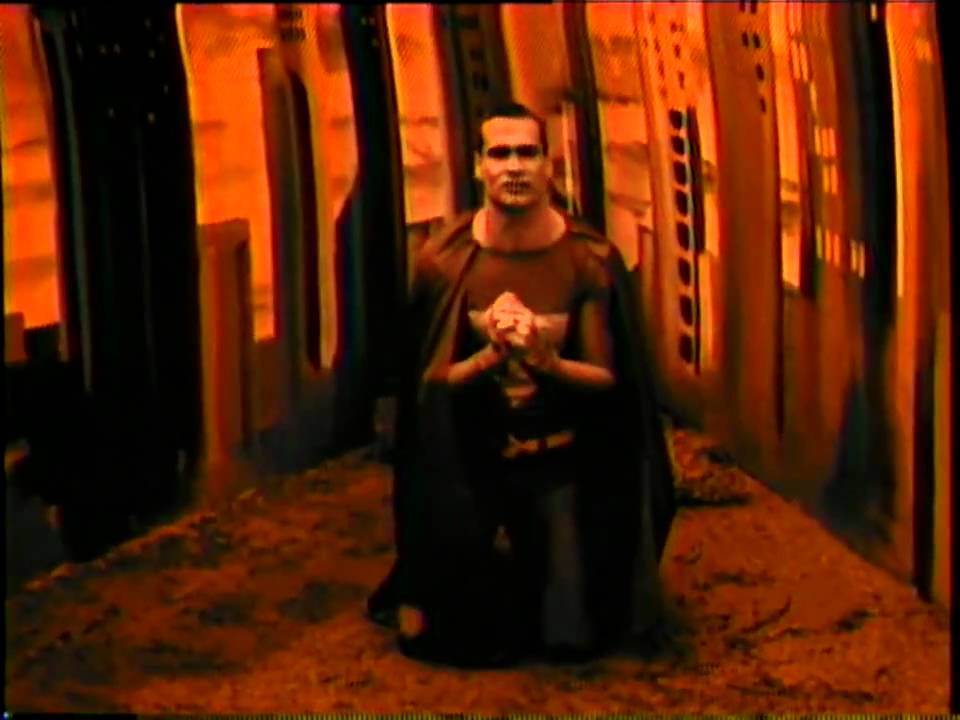
In the late 1990s, poet, musician and activist Henry Rollins recorded his alternative rock hit “Liar,” which probably describes the evil of the psychopath/malignant narcissist more eloquently than any other song I’ve heard about narcissism. I posted about it here.

The lyrics describe what these human bags of dogsh*t do so well I’m going to pick the song apart by sections and talk about the way malignant narcissists and psychopaths attempt to destroy your soul and turn you into one of them.

You think you’re gonna to live your life alone
In darkness
And seclusion
Yeah I know
You’ve been out there
Tried to mix with those animals
And it just left you full of humiliated confusion
So you stagger back home
And wait for nothing
But the solitary refinement of your room spits you back out onto the street
And now you’re desperate
And in need of human contact

A potential victim is at their most vulnerable to narcissistic abuse when they have been abandoned, hurt or are down on their luck. A malignant narcissist, using “cold empathy,” knows exactly what you’re thinking, and knows how lonely you are and how much you’ve been hurt by past abuse. They smell vulnerability like a wolf smells blood and will make a beeline toward you.

And then
You meet me
And you whole world changes
Because everything I say is everything you’ve ever wanted to hear
So you drop all your defenses and you drop all your fears
And you trust me completely
I’m perfect
In every way
Cause I make you feel so strong and so powerful inside
You feel so lucky

When you meet the psychopathic narcissist, he or she will pretend to understand you and be sympathetic. If the narc is a good actor, you may be duped into thinking this is the most empathetic, understanding person you have ever met. You cannot resist their charms and attention and you trust them enough to tell them your darkest and most intimate secrets. Make no mistake–they will use this against you. This love bombing phase is really just the narc’s way of finding out where your buttons are and knowing where to hit you later on where it’s going to hurt the most.

henry_rollins1

But your ego obscures reality
And you never bother to wonder why
Things are going so well

Bingo. The malignant POS is lying to you and thinks you’re a blithering idiot for believing their lies. “Things going well” is just temporary. They are fattening you up for the kill like a Thanksgiving turkey. Gobble, gobble!

You wanna know why?
Cause I’m a liar
Yeah I’m a liar
I’ll tear your mind out
I’ll burn your soul
I’ll turn you into me
Cause I’m a liar, a liar
A liar, a liar

They tear your mind out by cruelly playing with your head using the whole bag of narcissist tricks: gaslighting, projecting, lying, projecting their faults onto you, triangulating, hoovering, blame-shifting, invading your mental, emotional and physical boundaries and generally making you doubt your own reality. Constant gaslighting in particular can drive a person to think they’re insane, and it’s possible that actual insanity could be the end result.

In your weakened emotional and mental state, you may suffer Stockholm Syndrome and begin to identify with your abuser. You may begin to do things that go against your morals and ethics in order to please them. They may force you to engage in illegal or immoral acts, and because you dare not disobey them and you doubt your own reality, you will go along with what they want.

Many victims of abuse have been arrested for heinous acts they were coerced into by their abuser. Going against one’s own morals eventually will turn a person evil. See my post Stephen’s Story (“The Choice”) for a description of how a victimized person can turn evil when attempting to pacify evil people. M. Scott Peck also described this phenomenon in his book, “People of the Lie.”

henry_rollins2

I’ll hide behind a smile
And understanding eyes
And I’ll tell you things that you already know
So you can say
I really identify with you, so much
And all the time that you’re needing me
Is just the time that I’m bleeding you

Malignant narcissists don’t really have any of their own thoughts or feelings. They learn to feign emotion. What you think of as empathy and understanding is really just the narcissist reflecting back to you what you want to hear. They are very good at knowing exactly what you are thinking and what you want. They can parrot things you have already told them in a different way so you think what they said is insightful and original. It isn’t. It’s just a paraphrasing of what you have already told them or what they have figured out about you.

Don’t you get it yet?

They hold you in contempt for your stupidity for believing them. Of course you are not stupid, and are understandably confused, but they are contemptuous of the trust you have handed over to them. They will work on destroying it and at the same time, destroy your trust in others, by using them as flying monkeys against you. Eventually you will trust no one and when this happens, you may do anything to earn back their “love,” even things you are morally against. There are so many victims of abuse who have done things for their psychopathic lovers like lie on tax returns, steal for them, buy drugs for them, and even kill for them. In most “killer couple” partnerships, one of the couple (usually the woman but not always) is a long-term victim of a psychopath and has become evil by association.

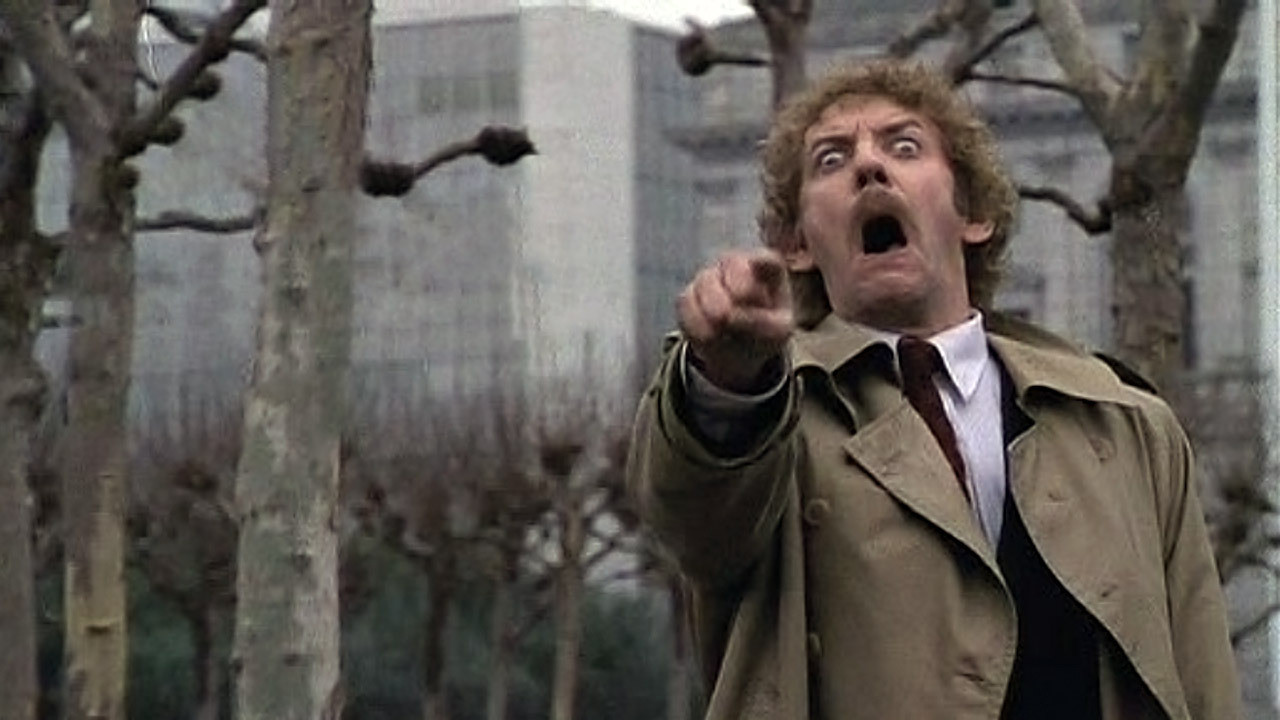
In 1978, there was science fiction/horror movie called “Invasion of the Body Snatchers.” It became a huge hit. Malignant narcissists and psychopaths are real life body snatchers. Your continued association with one of these creatures is dangerous because they can infect you with their evil and your soul can be lost, just like the harpie-like body snatchers that retained only their human physique in the movie.

body_snatcher

I’ll come to you like an affliction
And I’ll leave you like an addiction
You’ll never forget me
You wanna know why?

A relationship with a psychopathic malignant narcissist is an affliction, even if at first it feels like the greatest thing ever. Even after they have nearly destroyed you with their abuse, you may still believe you need your narcissist and feel lost without them. That’s the way they want you–helpless and adrift. That’s because having you that way makes it easier for them to hoover you back in later on with love bombing and fake apologies, or if they are very sadistic and have no intention of returning, it makes them happy to see you alone and miserable without them.

Cause I’m a liar
Yeah I’m a liar
I’ll rip your mind out
I’ll burn your soul
I’ll turn you into me
Cause I’m a liar, a liar
Liar, liar, liar, liar

I don’t know why I feel the need to lie
And cause you so much pain
Maybe it’s something inside
Maybe it’s something I can’t explain
Cause all I do
Is mess you up and lie to you
I’m a liar
Oh, I am a liar

They may know there’s something very wrong with their minds and souls, but they don’t care. They know they’re messing with your mind but again, they don’t care.

If you’ll give me one more chance
I swear that I will never lie to you again
Because now I see the destructive power of a lie
They’re stronger than truth
I can’t believe I ever hurt you
I swear
I will never to you lie again, please
Just give me one more chance
I will never lie to you again
I swear
That I will never tell a lie
I will never tell a lie
No, no

henry_rollins4

The psychopathic malignant narc is using fake apologies, lies and love bombing in their attempt to hoover you, their mark, back in for more abuse.

Ha ha ha ha ha hah haa haa haa haaa
Sucker
Sucker!
Oh, sucker
I am a liar
Yeah, I am a liar
Yeah I like it
I feel good
Ohh I am a liar
Yeah
I lie
I lie
I lie
Oh, I lie
Oh I lie
I lie
Yeah
Ohhh I’m a liar
I lie
Yeah
I like it
I feel good
I’ll lie again
And again
I’ll lie again and again
And I’ll keep lying

henry_rollins3

They love doing what they do because it makes them feel powerful and in control. Their “fix” of abusing you makes them feel good. There is no intention on their part to change because it’s you who suffers, not them.

I promise.

Probably the only promise they’ll ever keep.

Robert Durst disgusting excuse

I agree with Gale how outrageous this is. This man is a psychopathic murderer who is using ASPERGERS as an excuse to get away with his heinous acts. Not only is he a raging liar, by using Aspergers as his excuse, he is giving that disorder a bad reputation (it’s already bad enough that Aspies have are erroneously accused of having no empathy just because we don’t always express it as well as a neurotypical). Of course there will be those who will believe him. This murderer is no Aspie–he is a raging, dangerous, evil PSYCHOPATH.

Gale A. Molinari's avatargalesmind

robert-durst-allegedly-exposes

Last night I was appalled to see that this murderer’s lawyer is going to use the same excuse that got this murder off last time. ASPERGERS! This is really outrageous.

http://www.cbsnews.com/news/48-hours-presents-robert-durst-the-bizarre-saga/

http://wrongplanet.net/robert-durst-and-murder-in-galveston-texas/

Robert Durst is about to get away with more murders. Using the badly understood condition known as Aspergers. This is a terrible precedent to set. How is the fact that he has Aspergers affect the fact that he murdered a man, cut him in pieces and tossed him in the water. Then he went on the lam. Now with this new arrest his lawyer is claiming the producers of the program where he admits while talking to himself and miked that he “killed them all”.  He has withdrawn cash in small bills, put them in several envelopes ready to mail. He had his passport and other documents and was reported to be planning to flee to Cuba.

These…

View original post 127 more words

Video: A Brief History of Psychopaths and Antisocials

Sam Vaknin posted a new video yesterday, “The Morally Insane Psychopath: A Brief History of Psychopaths and Antisocials.” I decided to repost it on this blog because it’s such a fascinating subject that isn’t widely known or easy to find information about in one place. I never really looked into the history of the field of psychopathy and narcissism before, and whether or not you agree with Sam and his views about narcissism (or are on the fence like I am), Mr. Vaknin does have encyclopedic knowledge about this field of psychology.

So much has changed!

Sam looks like he’s lost weight.

My daughter’s sociopathic ex isn’t done with her yet.

audacity
Credit: Universal Republic Records.

Remember Paul, the psychopath who gave such a great impression but was actually a crackhead who was abusing my daughter while she was living with him? The one who gaslighted her and told me horrible lies about her smoking meth and shooting heroin (when she wasn’t doing any such thing) during their short relationship over November and December? The one who actually turned me into his flying monkey until I realized what this character was really up to?

Well, guess what. My daughter got a summons to appear in court about the “door she broke” (when he slammed her into it when she tried to leave) and the “money she stole” (the settlement money my DAUGHTER got for her car accident that I was foolish and trusting enough to let HIM hold onto for her because I didn’t trust HER).

I would laugh if it wasn’t so crazymaking for both of us. What a loser.

Sociopath vs. psychopath: is there a difference?

psychopathy

I’ve been using the terms psychopath and sociopath interchangeably on this blog, even though I’m aware there are differences between the two. I was curious enough to Google what the difference is, and came across an article in Psychology Today that explains how they are alike–and how they differ.

How to Tell a Sociopath from a Psychopath
By Dr. Scott Bonn

Many forensic psychologists, psychiatrists and criminologists use the terms sociopathy and psychopathy interchangeably. Leading experts disagree on whether there are meaningful differences between the two conditions. I contend that there are clear and significant distinctions between them.

The fifth edition of the Diagnostic and Statistical Manual of Mental Disorders (DSM-5), released by the American Psychiatric Association in 2013, lists both sociopathy and psychopathy under the heading of Antisocial Personality Disorders (ASPD). These disorders share many common behavioral traits which lead to the confusion between them. Key traits that sociopaths and psychopaths share include:

A disregard for laws and social mores
A disregard for the rights of others
A failure to feel remorse or guilt
A tendency to display violent behavior
In addition to their commonalities, sociopaths and psychopaths also have their own unique behavioral characteristics, as well.

Sociopaths tend to be nervous and easily agitated. They are volatile and prone to emotional outbursts, including fits of rage. They are likely to be uneducated and live on the fringes of society, unable to hold down a steady job or stay in one place for very long. It is difficult but not impossible for sociopaths to form attachments with others. Many sociopaths are able to form an attachment to a particular individual or group, although they have no regard for society in general or its rules. In the eyes of others, sociopaths will appear to be very disturbed. Any crimes committed by a sociopath, including murder, will tend to be haphazard, disorganized and spontaneous rather than planned.

Psychopaths, on the other hand, are unable to form emotional attachments or feel real empathy with others, although they often have disarming or even charming personalities. Psychopaths are very manipulative and can easily gain people’s trust. They learn to mimic emotions, despite their inability to actually feel them, and will appear normal to unsuspecting people. Psychopaths are often well educated and hold steady jobs. Some are so good at manipulation and mimicry that they have families and other long-term relationships without those around them ever suspecting their true nature.

When committing crimes, psychopaths carefully plan out every detail in advance and often have contingency plans in place. Unlike their sociopathic counterparts, psychopathic criminals are cool, calm, and meticulous. Their crimes, whether violent or non-violent, will be highly organized and generally offer few clues for authorities to pursue. Intelligent psychopaths make excellent white-collar criminals and “con artists” due to their calm and charismatic natures.

The cause of psychopathy is different than the cause of sociopathy (1). It is believed that psychopathy is the result of “nature” (genetics) while sociopathy is the result of “nurture” (environment). Psychopathy is related to a physiological defect that results in the underdevelopment of the part of the brain responsible for impulse control and emotions. Sociopathy, on the other hand, is more likely the product of childhood trauma and physical/emotional abuse. Because sociopathy appears to be learned rather than innate, sociopaths are capable of empathy in certain limited circumstances but not in others, and with a few individuals but not others.

Psychopathy is the most dangerous of all antisocial personality disorders because of the way psychopaths dissociate emotionally from their actions, regardless of how terible they may be. Many prolific and notorious serial killers, including the late Ted Bundy and John Wayne Gacy, and Dennis Rader (“Bind, Torture, Kill” or BTK) are unremorseful psychopaths. Psychopathic killers view their innocent victims as inhuman objects to be tormented and violated for their amusement.

Contrary to popular mythology, most serial killers are not mentally ill or “evil” geniuses. See my related article: http://www.psychologytoday.com/blog/wicked-deeds/201406/serial-killer-myth-1-theyre-mentally-ill-or-evil-geniuses

tedbundy ed_gein
Although both were deadly serial killers, Ted Bundy was a psychopath who gave a good impression and knew how not to get caught; Ed Gein was most likely a sociopath who acted more impulsively, was more disorganized and didn’t give a very good first impression. Though both men’s crimes were equally heinous, Bundy’s eyes seem “colder” than Gein’s.

Although the traits of a psychopath more closely resemble those of a person with Narcissistic Personality Disorder (NPD) than those of the more impulsive, disorganized sociopath, both are actually described here as variations of ASPD, not NPD. Once again, if ASPD is really “NPD on crack” then it follows that NPD and ASPD are both on the same spectrum, with ASPD (and psychopathy/sociopathy) at the top of the spectrum. If this is in fact the case, people with NPD, even malignant narcissists, may border on psychopathy, but would not actually qualify as true psychopaths.

Here’s a little graph I devised to illustrate where all the Cluster B disorders may fall on a spectrum. These are just my guesses and are not based on psychological research, just my instinct and gut feelings.

psychopathy_graph
Click image to enlarge.

Is antisocial personality disorder really NPD on crack?

I have to admit I’ve been confused by the distinctions between the Cluster B personality disorders, especially those of NPD and ASPD. There seems to be little distinction in most literature between NPD and ASPD (antisocial personality disorder) with most experts saying the difference is just a matter of degree, with ASPD (psychopathy or sociopathy) being higher on the spectrum than NPD.

Let’s turn to the Bible of mental disorders for some clarification. These are from the DSM IV-TR, but have apparently been updated, because these descriptions are all labeled obsolete. But for our purposes, I’ll stick with these criteria.

Diagnostic criteria for 301.81 Narcissistic Personality Disorder

Handsome narcissistic young man looking in a mirror

A pervasive pattern of grandiosity (in fantasy or behavior), need for admiration, and lack of empathy, beginning by early adulthood and present in a variety of contexts, as indicated by five (or more) of the following:

(1) has a grandiose sense of self-importance (e.g., exaggerates achievements and talents, expects to be recognized as superior without commensurate achievements)

(2) is preoccupied with fantasies of unlimited success, power, brilliance, beauty, or ideal love

(3) believes that he or she is “special” and unique and can only be understood by, or should associate with, other special or high-status people (or institutions)

(4) requires excessive admiration

(5) has a sense of entitlement, i.e., unreasonable expectations of especially favorable treatment or automatic compliance with his or her expectations

(6) is interpersonally exploitative, i.e., takes advantage of others to achieve his or her own ends

(7) lacks empathy: is unwilling to recognize or identify with the feelings and needs of others

(8) is often envious of others or believes that others are envious of him or her

(9) shows arrogant, haughty behaviors or attitudes

Diagnostic criteria for 301.7 Antisocial Personality Disorder

antisocial_personality

A. There is a pervasive pattern of disregard for and violation of the rights of others occurring since age 15 years, as indicated by three (or more) of the following:

(1) failure to conform to social norms with respect to lawful behaviors as indicated by repeatedly performing acts that are grounds for arrest
(2) deceitfulness, as indicated by repeated lying, use of aliases, or conning others for personal profit or pleasure
(3) impulsivity or failure to plan ahead
(4) irritability and aggressiveness, as indicated by repeated physical fights or assaults
(5) reckless disregard for safety of self or others
(6) consistent irresponsibility, as indicated by repeated failure to sustain consistent work behavior or honor financial obligations
(7) lack of remorse, as indicated by being indifferent to or rationalizing having hurt, mistreated, or stolen from another

B. The individual is at least age 18 years.

C. There is evidence of Conduct Disorder with onset before age 15 years.

D. The occurrence of antisocial behavior is not exclusively during the course ofSchizophrenia or a Manic Episode.

Just for comparison’s sake, let’s include the (obsolete) criteria for the other two Cluster B disorders: BPD (Borderline Personality Disorder) and HPD (Histrionic Personality Disorder):

Diagnostic criteria for 301.83 Borderline Personality Disorder

borderline

A pervasive pattern of instability of interpersonal relationships, self-image, and affects, and marked impulsivity beginning by early adulthood and present in a variety of contexts, as indicated by five (or more) of the following:

(1) frantic efforts to avoid real or imagined abandonment.
Note: Do not include suicidal or self-mutilating behavior covered in Criterion 5.

(2) a pattern of unstable and intense interpersonal relationships characterized by alternating between extremes of idealization and devaluation

(3) identity disturbance: markedly and persistently unstable self-image or sense of self

(4) impulsivity in at least two areas that are potentially self-damaging (e.g., spending, sex, Substance Abuse, reckless driving, binge eating).
Note: Do not include suicidal or self-mutilating behavior covered in Criterion 5.

(5) recurrent suicidal behavior, gestures, or threats, or self-mutilating behavior

(6) affective instability due to a marked reactivity of mood (e.g., intense episodic dysphoria, irritability, or anxiety usually lasting a few hours and only rarely more than a few days)

(7) chronic feelings of emptiness

(8) inappropriate, intense anger or difficulty controlling anger (e.g., frequent displays of temper, constant anger, recurrent physical fights)

(9) transient, stress-related paranoid ideation or severe dissociative symptoms

Diagnostic criteria for 301.50 Histrionic Personality Disorder

histrionic_personality

A pervasive pattern of excessive emotionality and attention seeking, beginning by early adulthood and present in a variety of contexts, as indicated by five (or more) of the following:

(1) is uncomfortable in situations in which he or she is not the center of attention

(2) interaction with others is often characterized by inappropriate sexually seductive or provocative behavior

(3) displays rapidly shifting and shallow expression of emotions

(4) consistently uses physical appearance to draw attention to self

(5) has a style of speech that is excessively impressionistic and lacking in detail

(6) shows self-dramatization, theatricality, and exaggerated expression of emotion

(7) is suggestible, i.e., easily influenced by others or circumstances

(8) considers relationships to be more intimate than they actually are

It does seem that ASPD is more linked to criminality than NPD, most likely due to poor impulse control, which isn’t a problem in people with NPD. People with ASPD are more willing to break the law and are more likely to be in prison. They are less likely to be concerned with image or consequences of their actions (most people with NPD want to maintain their sqeaky clean image which means staying out of prison). Antisocials also seem more prone to violent behavior.

The DSM criteria for ASPD seem to describe psychopathy/sociopathy. Most narcissists are probably not psychopaths, but are on the same spectrum. Does this mean that ASPD and NPD should really be considered the same disorder, with ASPD higher on the psychopathy spectrum?

BPD is more clearly distinguishable from ASPD and NPD because a person suffering from this disorder does have a conscience and can feel empathy and remorse, but like someone with ASPD they have problems with impulse control. Also, their motives for doing what they do are different: they fear abandonment, while people with ASPD and NPD fear their true self being exposed.

HPD seems very similar to the somatic form of narcissism and includes many narcissistic traits. However, it seems that someone with HPD would be more prone to drama, neediness and tantrum throwing (although these traits aren’t unknown in narcissists). Like BPD, the motives for the sufferer’s behavior seem based on insecurity and fear of abandonment rather than the need to maintain a false front.

NPD and ASPD are more common in males than females, and HPD and BPD are more common in females than males. Does gender determine what disorder a child is more likely to develop later in life? Are BPD and HPD really the “female” forms of the other two disorders?

ASPD almost seems like an exaggeration of typically male traits–aggressiveness, lack of emotion (except rage), and risk taking; whilst HPD seems like an exaggeration of typically female traits — excessive emotionality, preoccupation with beauty/sexiness, and excessive neediness. BPD and NPD are somewhere in between these two and can include elements of both: ASPD –> NPD –> BPD –> HPD

The fact that the American Psychiatric Association keeps changing their criteria just makes things even more confusing.

When the devil comes to call

satan

This is a fictional account of a hypothetical visit from Satan, the entity who knows more than anyone else what exactly makes psychopaths tick. I found it on the excellent blog Country of Liars. The blogger, like many victims of psychopathic abuse, comes from a family of psychopaths, and here the Devil makes a house call and explains a few things! It’s a good story, and it had me on the edge of my seat!

Read the story here.

Psychopaths should register themselves

courtgavel

Convicted sex offenders are required to “register” themselves to protect potential victims. I think there should be a new law that also requires psychopathic individuals and malignant narcissists to register themselves for the monsters they are. Of course, identifying them all would be tricky (and maybe impossible), but we could start by requiring all suspected psychopaths and narcissists to take the Psychopathy Checklist developed by Dr. Robert Hare. The Checklist has been used with a great deal of success in identifying which criminals are psychopathic, and has been used to make sentencing decisions in murder cases.

Even if only a small portion of these characters were identified and registered, it would save a lot of people from becoming victimized.