Lucky Otters Haven

Ruminations, ramblings, and rants about narcissism and trauma, politics, human nature, religion, pop culture, writing, and almost everything else

Lucky Otters Haven

“Will the real victim please stand up?”

Some narcissists (especially if they’e covert) pretend to be victims of narcissistic abuse. How do you know, when someone tells you they have been abused, if they are telling the truth, or if they are just trying to manipulate you and get your sympathy so they can use and abuse you themselves later?  It can be hard to tell. This article explains the telltale signs of an impostor and how their behavior differs from that of a real victim.

Comments have been disabled; please leave comments under the original post.

Will The Real Victim Please Stand Up?

Reblog from After Narcissistic Abuse

true-vs-false-victim

It’s NOT EASY using the V word.

Personally, I don’t LIKE it. It’s not a word I’ve used to describe myself through very many situations in my life, because I am the kind of person who takes responsibility for things that happen to me. While, I certainly had choices and consequences (thus responsibility) in my relationship with a narcissist as an adult – it is the only experience I think the V label accurately describes and depicts.

I was caught unaware. I was told things that weren’t true. By relying on those things, I made decisions that put me in harms way. I was sold a bill of goods and promises by a person who was well aware that they had no intention of ever delivering on those promises nor being capable of being a good person towards me, so that he could use me for things that benefited one person in the “relationship”: THE NARCISSIST.

This being said, I don’t throw this word “Victim” around LIGHTLY. I think that the topic of FALSE VICTIM claims by narcissists should be evaluated with a more discerning eye when considering the damage and injustice done by a narcissist to the lives that their false allegations destroy.

Let’s examine the traits of a well-trained pathological liar, a narcissist; with a history of duping others and manipulating to avoid responsibility vs a credible, honest, albeit “emotional” target of the narcissist.

False Victim vs. True Victim

1.  Flat Affect.

A FALSE VICTIM isn’t emotionally vibrant and attached to the events which they are sharing that were abusive. They appear as if they’ve just gotten back from a calming vacation. Very smooth. Cool. Detached.

Whereas, a TRUE VICTIM will appear FRAZZLED, RUFFLED and SPENT. They’ll cry hysterically, appear jumpy, nervous and afraid. They’ll space out then come back to the conversation with shocking emotion. They have an urgency with their speech and inflection and it will be PEPPERED with emotions that are all over the place. There are instances of true victims of narcissists who are completely detached and disengaged; hopelessly depressed with a flat affect from the abuse. There will still be evidence of victimization in that “spaced out” appearance not like the cold, cool demeanor of a lying narcissist.

TRUE VICTIMS experience the grieving process. Shock. Denial. Anger. moving all the way through acceptance. Whereas a FALSE VICTIM will appear to get over the emotions of the experience rather quickly. They don’t appear to dwell, (ruminate / obsess) over the “abusive” experiences.

Read the rest of the warning signs in the original post.

The Dangers Of Self Diagnosis

Good article about why we shouldn’t try to self diagnose. I am VERY guilty of this.

Comments here are disabled; please comment under the original post.

Rayne's avatarJourney Toward Healing

Result: 66/80
Probable diagnosis of PTSD

That’s the result from an online test that I took last night.

It started when a blogger friend wanted some advice on a post she had written. So I gave my thoughts on the situation. She was worried that maybe it was post traumatic stress (which, until this afternoon, I thought was the same thing as PTSD), so I suggested that she search for the DSM criteria on it. She came back to me and it turns out that she didn’t ‘qualify’ for the diagnosis.

By now I was curious too, and decided to also take the test. “Just for fun”. As I was reading the questions and working my way through them, I felt this chill run down my spine. Those questions struck a major chord with what I have been experiencing lately. And the high score I got at the end…

View original post 758 more words

There should be no “shame” in having a Cluster B diagnosis.

noshame

Yes, another potentially controversial post.  Please hear me out before judging.

There are some (actually, many) people in the blogosphere who believe that people with disorders like Borderline or Narcissistic Personality Disorder made some kind of conscious choice to have their disorder.   With unusual exceptions (which I’ve discussed in others posts), I think this is wrong.

Bad seeds?

People with Cluster B disorders, in spite of what you probably read or heard, aren’t inherently evil or “bad seeds.”   Certainly, some become evil, because they’ve been programmed for a psychological need to obtain narcissistic supply in order to feel like they exist.  In order to get that supply, they became abusive and manipulative.   People addicted to drugs or alcohol are also abusive and manipulative, in order to get their chemical fix.

People with psychopathy may have been born without the brain capacity to feel empathy or have a conscience, but I don’t think Psychopathy should even be categorized as a Cluster B disorder at all, since it seems to have its roots more in brain chemistry than in early trauma.   Plenty of psychopaths came from normal, loving families.  The jury’s out as to whether Antisocial Personality Disorder is the same thing as psychopathy.  I think they may coincide often and their symptoms are similar, but I’m not at all sure they’re the same thing.    I don’t know a whole lot about ASPD, but I think it, too, usually has its roots in trauma as a child.   I know almost nothing about its treatability, but it’s my understanding it’s very difficult to treat, even more so than NPD.    But I digress:  talking about ASPD or psychopathy is not the point of this post.

Another blogger who commented on a post of mine today mentioned that she may have undiagnosed, recovered BPD.   I sensed from the tone of her admission that this might be something she’s  ashamed to admit.   I wondered why.   BPD, like NPD, has a terrible stigma, although in its favor, there’s a movement in the BPD community to reduce its stigma as “evil” and “incurable.”    Their efforts seem to be working, because BPD is seen today as being less of a “mark of the beast” than NPD is, although the stigma certainly still exists.

Why no anti-stigma movement for NPD?

I’m not sure why there is no grass-roots movement among narcissists to change the stigma against NPD, but from everything I’ve read from self-aware narcissists (and you’d be surprised how many of them there are online), they’re either: (a) proud that they are narcissists and wear the “evil” stigma like a badge of honor (these tend to be malignant, overt narcissists with antisocial or sociopathic traits), or (b) *this is a shocker* so ashamed of their narcissism that although they hate the stigma, they seem resigned to it and and seem to hang their heads in shame, quietly accepting how “bad” they are.  “I deserve it,” they say.   It may seem hard to believe, but some of them even defend the narc-haters.  Remember we are talking about self-aware narcissists.  Most narcs never get to that point.   Their grandiosity keeps them from having enough insight to do that.

Ego-dystonic vs. ego-syntonic.

Because people with BPD are almost always ego-dystonic about their disorder (they aren’t happy with themselves), and because generally BPD doesn’t lend itself to self-delusions  (in other words, having a false self) the way NPD does, BPD has a higher cure rate than NPD,  which also helps reduce its stigma.    NPD is usually more ego-syntonic, but not always.  Narcissists who are ego-dystonic (usually covert narcissists) tend to be frustrated, lonely, and depressed, and although they can be highly manipulative, entitled acting, and lack empathy, they lack the grandiosity and false pride that keeps them stuck in the delusion that their narcissism has worked for them.

I don’t see a whole lot of difference between BPD and C-PTSD.  Actually, BPD is like C-PTSD on steroids.  I’ve written about this subject before–the symptoms of both are nearly identical, and both Borderlines and people with C-PTSD are very prone to become codependent to malignant or overt narcissists.   They are also prone to self-harm, wild mood swings, and are sometimes suicide risks.  People with C-PTSD–especially women–often get slapped with the stigmatizing BPD label simply because the DSM doesn’t recognize C-PTSD as a legitimate disorder (and PTSD, while similar, applies more to those who suffered a single, intense trauma rather than the victims of chronic, long term abuse starting in childhood, so the treatments for someone with PTSD would be different).

Moving back to narcissism…

Many people believe NPD cannot be successfully treated, much less cured.   I admit I’m skeptical about its curability, though I do know there have been a few cases where it’s happened.   I also know there are narcissists who are ego-dystonic and unhappy with what they’ve become, once they realize they are narcissists.   I don’t think the adage that “if you think you have NPD, then you don’t” is necessarily true.    I have met a few here and on forums who desperately want to change their behaviors, usually because they’ve realized that they’ve missed out on things like knowing how to love and receive love, or having a healthy relationship with their spouse or children.   They want to know what love and vulnerability in a relationship feels like.  They want to know what real joy and empathy feels like.   They forgot how.   They’ve come to realize their lives are empty and shallow, and they are constantly under the stress of always having to act a part in a play.   They forgot who they were a long time ago.   Most narcissists did not have happy childhoods and most had parents who either abused or spoiled them (spoiling is a form of abuse because it fails to mirror who the child actually is, so the “love” they get is conditional).

As a mental illness.

I’m in no way defending narcissists or the way they act.   But as a cluster B disorder,  it started as a defense mechanism to cope with unbearable pain and feelings of emptiness. Many people believe narcissists love themselves, but nothing could be further from the truth.  They only love their false self.  Scratch any narcissist and you find a person who doesn’t even know who they are.  BPD is much the same that way, except Borderlines don’t have a functional or strong false self.    I’m not suggesting sympathizing with active, unrepentant narcissists or condoning their toxic behaviors. I’m not suggesting staying with one either!   But I think the stigma against NPD has hurt those people with the disorder who sincerely want to change.  These people do exist!  I don’t think they’re lying when they say they want to become non-narcissists–why would they? What would be their motive in doing so?   Much as with people with BPD, therapists refuse to treat them, insurance won’t cover them, and they are frequently demonized as non-human creatures or worse.

Maybe the treatment rate for NPD is so abysmal because they are given up on so easily by therapists who lose patience with someone who doesn’t show immediate improvement or acts aggressively or in a confrontational way.    NPD is a very difficult disorder to treat, but that doesn’t mean it isn’t possible.  Even if a narcissist can’t be cured, CBT and other mindfulness therapies have had good results on some narcissists who really want to change the way they treat others and have more mutually fulfilling relationships.  DBT (dialectical behavioral training), a mindfulness therapy similar to CBT traditionally used on people with BPD, has also been shown to be effective on some people with NPD.

As a Borderline myself (my therapist thinks I’m recovered, but I’m not at all sure about that), and having personally experienced the stigma against Cluster B, I have a great deal of empathy for anyone with a Cluster B disorder who is self aware and genuinely sorry about the way they’ve treated others or the choices they’ve made, and who sincerely wants to do the hard work needed to make changes in themselves.   People with Cluster B disorders didn’t choose to become that way; like people with C-PTSD, they have a mental illness caused by trauma and C-PTSD is almost always at the core of any cluster B disorder.

While it’s true that some will never get to the point of self awareness or even if they do, may not be interested in finding new and better ways of relating to others and the world, there are many who do, and we shouldn’t judge them or hate them just because of their stigmatic diagnosis (and the diagnosis could be wrong anyway!).  That’s why I don’t run a “narc free” blog.  I allow people with Cluster B diagnoses–including NPD–to post comments on this blog and share their experiences along with others who do not have those disorders and were abused by people who do.  As long as they don’t attempt to upset or trigger non-Cluster B abuse victims and remain civil and add to the conversation, they are always welcome here.

My DD calls me a narcissist, but is it her or me, of both of us?

momanddaughter_argue

From a text conversation I had with DD this morning:

Me: Do you want to go to the pool today?

DD: I will lyk (let you know) in a few, I’m trying to find a way to cough up $50+ for Weston’s (best friend’s 2 year old son) birthday present ugggh

Me:  Cool, but you do remember you forgot to even get me a card or anything on Mothers Day

DD:  Wow, it’s always all about you isn’t it.  You can be such a selfish c__t.

Me: Really? You are the one being a you know what.  And you know how I feel about that word.  Your father always liked to call me that.  I am sorry you are depressed or whatever but I would like an apology.  I am tired of you treating me like crap.

DD: WTF are you talking about?  I’m trying to sleep for a few and I care about that child,  hence why I am getting him something nice for his birthday but since your selfish ways won’t permit me to get him anything nice I’ll spend the rest of my money on YOU so stop worrying.

Me: Just read my last message.  I hate how you talk to me. 

DD: Honestly, you are too self absorbed to realize that I care about that child and want to spend money on him but since your selfish ways exactly what I just said are getting in the way of me doing that, don’t you worry I’m not going to buy him a damn thing, instead I’ll buy you everything!  That was pretty much what I just said 3 minutes ago so I know how I sound, I am always nice to you and you just have to call me up telling me not to spend money on a two year old because how dare I not get something for you, God forbid. Don’t talk to me the rest of the day, I am not in the mood for you. 

Me: Don’t be ridiculous.  You didn’t spend one penny on a gift for me but went all out for your dad on his birthday, getting him 20 things, and guess what. I have feelings and that hurts…it’s called having feelings and not being selfish.  It’s like I mean nothing to you.  Sorry you’re in one of your bitch-moods.   I still want to go to the pool with you today. 

DD: Money is a really important issue in your life, isn’t it.  Actually that’s a dumb question because I know it’s pretty much your whole life.  So I am so so so so so so sorry about not spending thousands of dollars on you, God forbid that you never pay me back that $5000 [for the record, she never loaned me $5,000]  but I’ not going to bring that up am I?

Me: You just did, and you and I both know you never loaned me that sum of money. 

DD: Whatever. I haven’t slept, I’ve been stressed, I have no money ever, I have a job I hate, I hate my life and you want to call me at 7 in the morning and say we’re going to be late to the pool and they don’t open til 10.   I probably will not be joining you today we can go another day nut I do not want to see you today to be honest.  Doesn’t mean I don’t love you, just means I don’t like you right now. I stayed up all night now I need to get some sleep

Me: (replying to an earlier message–I had not got her last text yet):   Why are you being so mean? Go back to sleep.

DD: I’m going to sleep.  I forgot it was Fathers Day too. Now both my self absorbed parents are mad at me now because I haven’t bought them a gift. So excuse me for not spending money on you, too bad, bye.

Me: Even if you had only made a Mothers Day card-it’s not about the money, like I keep telling you, it’s the thought.   Anyway, I think when you get up later you should apologize because you were really mean to me and hurt my feelings. 

DD: I think you should apologize for waking me up, keeping me on the phone to argue, and self diagnosing me when you’re not a licensed therapist [where did I diagnose her in this convo?] so please keep your opinions to yourself.  You’re not getting an apology, I always apologize, this is your turn.  So this is the last time I’m going to tell you.  I am not going to answer any more from you so please do not text me again. 

Me: I am texting again because I still want  to take you to the pool. I will be there at 12:30. I also want to say this for you to think about.  If I consistently always forgot your birthday  but always remembered everyone else’s, don’t tell me you wouldn’t be hurt, I know you would.  You need to grow some empathy.  And I was not diagnosing you, where do you see a diagnosis?   But I did see that you called me “self absorbed” which is kind of a diagnosis, isn’t it?   I just wanted you to know that I feel like I’m unimportant to you, so it isn’t about the money at all.  You know I’m not the materialistic type.

There were no more replies after this.

Reading this back over, I think both of us were acting like narcissists.

DD was using the old tactic of “all or nothing” (a form of splitting), eg, “you complain that I didn’t get you a gift–even a cheap $1 gift–so that means you’re materialistic and only care about money.”     Also she was the one who started the name calling by calling me a c__t (knowing how I feel about that word).   She also lied (telling me she loaned me $5000 when it was only $1000 and I paid most of that back). It’s true–she did completely forget about Mother’s Day (claiming she was broke), but still went out and spent $100 for her father on his birthday which was the same week.   It’s not the money that was spent, it was that I felt like he was important to her and I was not (and maybe that’s partly true).     She was also projecting her own self centeredness onto me (although I think we were both being pretty self centered).  Of course, she has heard a lot from her father (my MN ex) too, about my alleged narcissism.  Then she lied a second time, accusing me of diagnosing her when in fact I was not.

In her favor, I know she’s been depressed lately and she’s quick to anger when depressed, but sometimes when she’s like this I feel like I’m walking on eggshells.  It was early and I probably got her up when she was half asleep.

On my side, I did use guilt-tripping on her and kept belaboring the same issue even after she said she wanted to go back to sleep.

In conclusion, I don’t think either of us approached this argument in a healthy or mature way.   For the record, she has also been diagnosed with BPD and PTSD, and she is symptomatic a lot.  Put two Borderlines together (even when one is recovering) and there’s always going to be drama because all kinds of stuff gets triggered.   But I’m never prepared for it when it happens.   I feel kind of horrible now, but should I apologize to her anyway even though she was at least half wrong?

Anyway, this is the beauty of text messaging.  You can go back over a conversation later and analyze it in a way you can never do with a spoken conversation.

No, you’re NOT being judged and watched constantly.

Lenora Thompson, who writes a blog for Psychcentral, wrote this post that I’d like to share.    I think most of us who were narcissistic abuse victims are hypervigilant and even paranoid–always looking over our shoulder for the next attack.  We assume everyone is watching and judging us all the time, but they’re not.  We’ve just been programmed to think they are because we were surrounded by narcissists during our formative years who did.


No, You’re *Not* Being Watched and Judged Constantly

3550755709_d8be7ba08b_zWhen you’ve been surrounded by narcissists all your life, naturally you assume everyone thinks like them. Judges you like them. Hey! It’s self-protection. But they don’t, you know.

Holocaust survivor, neurologist and psychiatrist Viktor Frankl is renowned for saying, “An abnormal reaction to an abnormal situation is normal behavior.”

Being constantly watched is abnormal. Being chronically judged for anything and everything is abnormal. Hell, narcissism is abnormal, hence the name of this blog: Narcissism Meets Normalcy.

Unfortunately, abnormalcy breeds abnormalcy. It’s abnormal to be hyper-vigilant, but we developed it for self-preservation. Thus it’s normal…for us.

It’s abnormal to constantly self-criticize. But we learned to self-criticize, to anticipate every possible criticism that might be hurled our way. We learned to practice clairvoyance (thinking with the narcissist’s brain.) It was simply less painful than being blind-sided. Thus it’s normal…for us.

Read the rest of this article here.

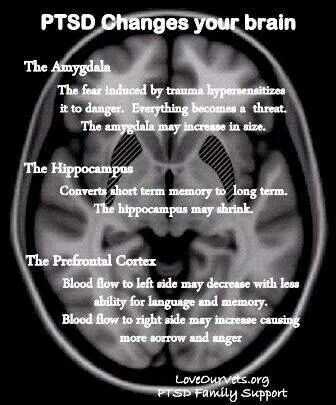
PTSD is a real physical injury.

ptsd_info_1

ptsd_info_2

Guest Post #11: Life with Complex PTSD

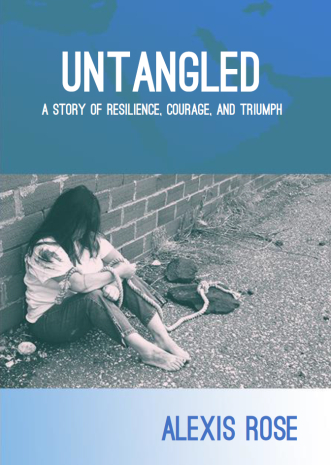
Alexis Rose has a blog about Complex PTSD (C-PTSD) called A Tribe Untangled.  Her C-PTSD was brought about by a family tragedy (a terrible accident that befell her young daughter, something every loving parent fears with every fiber of their being) and it opened up a Pandora’s box of long repressed years of abuse and torture. Alexis Rose also has written a book, Untangled: A Story of Resilience, Courage and Triumph.
coverimage

From her Book information page:

Recalling her life, the author takes us on a journey of unimaginable abuse with continued explicit threats that eventually led to her being sent overseas on an impossible mission.  She repressed the memories of her past until a family tragedy forced her to face what her life had been. A history of abuse, torture, and threats to maintain her silence or be killed could no longer be denied.

This is the story of facing the truth and risking the consequences of breaking the silence. The author learns to accept the effects of the trauma that echo through her daily life as PTSD.

Through years of self-exploration, she learns to live her life fearlessly, with eyes wide open. Ultimately this book is about resilience; hope for victims who have suffered trauma and for the people who support them.

Alexis is an experienced speaker on the topics of living with courage and resilience in the face of Post-traumatic Stress Disorder. She has also presented multiple interactive workshops titled, Using One’s Innate Creativity (writing and drawing) as a Tool for Healing and Personal Growth.

For more information about Untangled, A Story of Resilience, Courage, and Triumph, to request a book signing, or to ask Alexis to speak to your group or lead a workshop, email alexis@atribeuntangled.com.

Alexis has been kind enough to write a guest post for this blog, which when I read it brought me to tears because I could relate so much to so much of what she wrote.   She is one strong woman.  Here is her wonderful post.  Please follow her blog: https://atribeuntangled.com/

Life with Complex PTSD

strong_quote

I was diagnosed with complex post-traumatic stress disorder about eight years ago, after a family tragedy. My daughter was hit by a van at 30 miles an hour as she was crossing the street on her way to school.

The year following Aria’s accident I was busy with tending to her health, taking her to appointments, trying to work full time, and keep our house hold running as normal as possible. And at the same time, I kept having these experiences that were making me feel crazy. I had worked so hard to keep my life, my family and their world so protected that the instant Aria got hit, my controlled snow globe world came crashing down. In fact when my son and I were talking the day of the accident, he looked at me and innocently said, “things will never be the same again.”  Extremely prophetic words, that at the time myself nor my family had any idea what they would come to mean.

I was becoming anxious. I started losing time, I was called into meetings at work because my performance was terribly erratic. I was physically sick all the time, and kept having these bizarre memories leaving me feeling crazy.  I knew something was seriously wrong with me so I made a call to a psychologist who agreed to see me the next day.

When I started working with my first therapist, I was so anxious to tell her everything all at once so I could just feel better and get back to work. I didn’t understand that I was having flashbacks, or that I was living in a constant state of crisis. I was writing her letters from a dissociated state which made no sense to me when she would read them aloud. I would lock myself in my room for hours for fear that I was going to hurt myself and I didn’t want to be around my family.

My first therapist diagnosed me correctly but neglected to start my therapeutic process by teaching me any kind of safety or distress tolerance tools.  I was out of control, thinking I was losing my mind, feeling like I had failed my family, and spiraling down a very slippery slope. She did the best she could but was way over her head and within nine months of seeing her, I knew intuitively that I had to find another therapist. I have been working with my current therapist for seven years.

When I first started seeing my therapist I was dissociated most of the time. I was in crisis, I was anxious, confused, and convinced I was going crazy. After a couple of sessions, it became apparent to him that we had to get some safety plans in place. Once that was in place we could begin the process of working on and processing my trauma.

I (sort-of) started to come to terms with the idea that my erupting memories were in fact true. I was so overwhelmed by my memories and what we would process during session that I would remember, forget, remember, forget; until I started to turn a corner and forget how to forget. That’s when I found I could really start taking the baby-steps towards health.

Not only was my therapy about processing the memories, I also had to start accepting that there were some pretty intense effects of the trauma and that influenced how I saw and reacted to the world.  I knew I had some pretty deep-rooted trust issues. I also had large, thick, almost impenetrable walls holding back any feeling or emotions that I was willing to let the world see. I also began to understand that because of my trauma I had a pretty significant attachment issues, which for me, has been one of the hardest things to learn and accept. For some reason the attachment issue fed into my very low self-esteem and it’s something I still work on.

I also had to face down how my trauma effected my relationships with my family, friends, parenting style and career. In the midst of dealing and coping with the trauma, there were a lot of AHA moments, when I saw how my behavior and ways of coping with life, had been a direct result of my trauma and not because I was a bad person.

Eight years later and one of the biggest reasons I write is because my PTSD symptoms still have a pretty good choke-hold on me. As with many mental illnesses PTSD can be invisible on the outside. I had always been the master of wearing many masks, and deflecting any conversation away from me, all with a supportive smile for everyone else. But when I couldn’t hide my illness any longer my friends began to ask me, what does it feel like inside. I couldn’t really explain it, so I wrote a poem and shared it with my friends and family. I found that by writing I found a way to share with others and begin to understand what PTSD means for me, and find a way to cope with my fear that I would be plagued by the symptoms forever.

My symptoms include (not limited too) flashbacks, concentration issues, becoming overwhelmed and my brain shutting down, not being able to make choices, anxiety/depression, and sensitive to the triggers that start the whole shebang of symptoms. We use the term, triggers, triggers everywhere. The wind can blow a certain way, or fireworks, or a car back-firing, even the moon can bring on flashbacks.

Unfortunately, my symptoms have left me with the inability to work. I went from having a wonderful career with the fringe benefits that provided me with some comfort for the future and the ability to provide for my family. I’m only able to work about 2 hours a day…on a good day.

It seems as if my symptoms (depending on the time of year) can start a chain reaction, so I needed to learn to work within my deficits. This isn’t easy or comfortable for me and because I’m still pretty new at learning how to work within my symptoms, I can find myself becoming frustrated and angry at my PTSD! Actually most days, if I’m going to be honest I am VERY angry at my PTSD. But then I settle down and think about what I want for my life and try to rest and reset.

The inability to concentrate can be over-whelming for me. I know what I want to do, what I want my brain to do but I simply am unable to do it. Making choice at the grocery store, or a restaurant can be so uncomfortable that I will just simply lose my interest in eating and shut down. Sometimes as night approaches it feels overwhelming because I know that its highly likely that sometime during the night I will have nightmares. Even practicing good sleep hygiene listening to podcasts, all the tricks can’t stop the nightmares sometimes and it gets overwhelming. And sometimes I’m overwhelmed because I’m a survivor of trauma and have PTSD and that’s just the way it is, even though I wish it was different.

Writing gave me the courage I needed to address the pain I was feeling. I would write even when I thought I had nothing to write about. At first, I strictly used it for bilateral stimulation. I would write and send what I wrote off to my therapist. I started to find that I was able to write down what I couldn’t say aloud.  It provided distance from having to use my voice at first, but then I found it actually gave me a voice.

What I hope to convey as I move forward: Try to remember to notice those perfect moments. Celebrate each step on the path towards health, know that it is a long and never linear process, and that it really is just one foot in front of the other, you need to do a lot of resting, a lot of just sitting and metabolizing.  And even though healing can feel like be a lonely process, through a blogging community and other support systems, we realize that we are not alone.

I’ve been hurt, I’ve been threatened, I’ve been abandoned, but I wasn’t going to let the effects of what happened to me keep me from trying to have the life I wanted. I never lose sight of my goals. They are to live with my past, live in the truth, and recognize and relish in the feelings of internal contentment. Some days those goals seem as far away as the furthest star, and other days I can see them just through the clutter, almost there. I still need a lot of therapy to manage my symptoms, and I may need a lot of assistance for the day-to day grind, but I’m motivated to keep moving forward, spurred on by the hope for a better life. A life where I am living, not just surviving.

http://atribeuntangled.com

Diagnosis: Complex PTSD

your brain on CPTSD

My therapist finally spilled the beans (at my insistence) and thinks PTSD or complex PTSD is the closest fit for what I actually have.   BPD may have fit once, but he doesn’t think it does any longer, if it ever did.   He said a lot of those “borderline” symptoms may really have been PTSD.   He also doesn’t think I fit the criteria for any other personality disorder.    Also I would not be responding to therapy as well (or as quickly) if I had an actual personality disorder.

This is wonderful.   Complex PTSD is a non-stigmatizing label that acknowledges that damage was done to YOU,  and you are just reacting normally to the abnormal.   Personality disorders imply that the problem is in the person and BPD is one of the most stigmatizing labels of all.

I’ve grown quite attached to my BPD label though, and I’m not quite ready to give it up yet. So I’ll still keep BPD under “Read About My Crazy” since I actually was diagnosed with it twice.  Maybe it was an erroneous diagnosis or maybe not,  but being a “borderline” has become so much a part of my identity I’m going to keep it for now.  I’m just overjoyed that my therapist does NOT think I have it and also that he’s aware of narcissistic abuse and the ways it can really f**k with your mind.

He says it’s fairly common for people with PTSD/C-PTSD to try to self-diagnose and it’s normal to be confused, as I have been very much so.

Feeling Overwhelmed: it’s a PTSD thing

I think this is something a lot of us can relate to, especially those of us with PTSD and complex PTSD. I know I sure can, and there have been times where writing a new post seems like moving a mountain and I just can’t do it. Welcome back, Linda Lee!

Linda Lee @LadyQuixote's avatarA Blog About Surviving Trauma

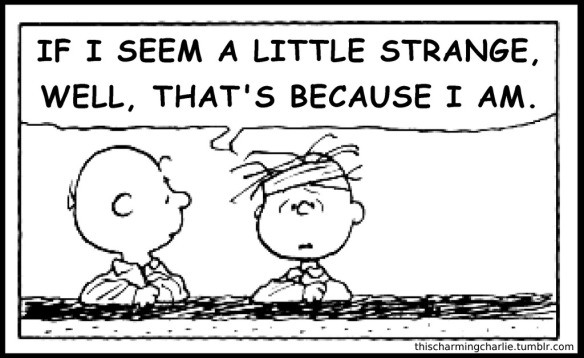
3i1_this_charming_charlie_tumblr_584Image from This Charming Charlie on Tumblr.

TWO WEEKS AGO, when I started this brand new blog, I had big ideas for my first post. I was thrilled that the name I wanted — A Blog About Healing From PTSD — was available. I picked out the theme, loaded a header picture, wrote my description page, and got all the settings the way I like them.

But when I started to write my first post, I froze.

No, my problem isn’t writer’s block. I’m not depressed, not anxious, not sick, and I’m certainly not too busy to find the time to write. My reason for waiting two weeks before writing my first post is something that happens to me a lot, in all kinds of situations. It’s maddening, it’s debilitating, and most people don’t seem to understand it at all.

My problem: I AM OVERWHELMED.

When I’m overwhelmed, the simplest…

View original post 534 more words

Shouting at cars

I can relate to the “exaggerated startle response” and always being told by everyone to “relax” and “chill out” that this blogger describes. People suffering from PTSD and C-PTSD have to deal with the impatience of other people who don’t understand what it’s like to walk through life feeling like you might get ambushed any second.  You feel constantly in danger and become hypervigilant about everything. It’s not like we want to be like this, you know!