Emotional vs. “cold” narcissists.

histrionic_personality

Narcissists can be divided many different ways–covert vs. overt; somatic vs. cerebral; malignant vs. “benign,” etc. They can be divided another way too. Narcissists are either extremely emotional…or cold as machines. Underneath their mask, they’re all hypersensitive though, even if they hide behind a stone cold exterior. Malignant narcs are the HSPs who went bad. Somatic narcissists are probably more likely to be hyper-emotional, similar to people with HPD; and cerebrals more often the “cold, calculating” type, though not always.

cerebral_narc

I’d venture to guess emotional, dramatic narcs have HPD or BPD traits (borderlines can’t regulate their emotions) while the colder types have ASPD or Schizoid traits. Avoidant PD traits could go either way.

I wonder if any studies have been done to determine which MBTI types narcissists are most likely to be. I’d guess the emotional ones are probably INFJ and the second type INTJ. I don’t think most narcissists are that extroverted, even if their mask includes extroversion and sociability. Narcs really don’t like people and are too self-involved to be anything other than introverted, in spite of any outgoing front.

This means there isn’t a whole lot of difference between an emotional narcissist and an unemotional one, except for the thinking vs. feeling aspect. But even when they don’t show it, all narcissists are emotional and easily hurt when it comes to themselves. None of them feel much for others.

Comparing covert narcissism and BPD

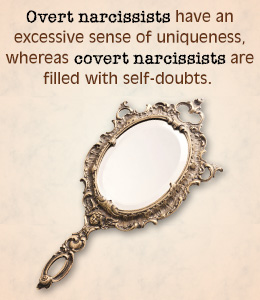
covert_narcissism2

I read an excellent article (thank to Natasha!) last night about covert narcissism, which is not currently recognized by the DSM, although it’s been considered as a provisional diagnosis.

Covert (vulnerable) narcissists are essentially low-functioning narcissists who present a shy, avoidant, humble, or caring image but they also constantly struggle with feelings of inferiority, emptiness, and self hatred. Like overt narcissists, they are hypersensitive to criticism but don’t hide it as well. They can become quite parasitic, relying on the support of others, either financially, emotionally or otherwise–but never giving back, even if they try to make a show of how “giving” they are. From what I’ve read in this article, it seems that the symptoms of covert narcissism, a subtype of NPD, are remarkably similar to those of BPD, with a few glaring differences:

— The covert narcissist suffers from more pathological envy than a person with BPD. The envy stems from a hidden sense of entitlement or superiority to others that belies their false humility and actual low self esteem. BPD is not characterized by a sense of entitlement. In a way they are wearing a double mask or have two false selves: the grandiose false self (that cloaks the emptiness they really feel) which is cloaked by false humility and shame. A covert narcissist may constantly be apologizing, but they don’t really mean it.

— A covert narcissist is more likely than a borderline to seek out friends who they perceive as “beneath” them so they can feel superior in comparison. This also stands out from an overt narcissist, who will seek out anyone who can provide them with supply (and likes to be associated with those they look up to). Covert narcissists avoid people they perceive as superior or having more than they do, which is most people.

— The covert narcissist has Avoidant (or introverted) features not associated with the DSM-recognized symptoms of BPD (although it’s possible for a borderline to be introverted and socially phobic, or for Avoidant PD and BPD to be comorbid with each other, as they are for me). Covert narcissists are more socially awkward than borderlines and can seem very similar on the surface to someone with Aspergers or Social Phobia. But behind the avoidant or socially awkward traits is a fear of being discovered and a hidden feeling of superiority to other people, unlike someone with Aspergers who simply finds relating to people exhausting or uncomfortable or a person with Social Phobia, who finds relating to others terrifying.

— They have no empathy. Any “empathy” they show is false, intended to get supply by bolstering their image as a “nice” person. Borderlines usually have at least a rudimentary ability to experience empathy.

— Like a classic narcissist, a covert narcissist lives in fear of their own emptiness being exposed, while someone with BPD lives in fear of being abandoned.

— Borderlines are more likely to be suicidal or self-harm than a covert narcissist, who may do self destructive things or threaten suicide for attention (supply) but will rarely make a serious attempt.

— Borderlines are more impulsive.

http://www.researchgate.net/publication/275665641_Narcissistic_Personality_Disorder_Diagnostic_and_Clinical_Challenges

This is also a very good article comparing covert NPD with overt (classic, grandiose) NPD: http://narcissisticbehavior.net/revealing-the-two-faces-of-narcissism-overt-and-covert-narcissism/

Some people believe covert narcissists are actually more malignant than classic narcissists, because their agenda is so hidden (covert) and they can seem like such nice, humble people. Although they are harder to detect, I think they really want people to see them as “nice” even though their motives are entirely selfish. I think the reason some narcissists become covert is because early in childhood they learned that acting grandiose or entitled was too dangerous (they were likely to be punished for it) so they cloaked their grandiosity behind false humility and shame. This is why they often feel victimized by everyone but at the same time feel entitled to be treated as if they are special and separate themselves from others, who they see as morally inferior (but actually feel inferior to–yes, it’s very confusing!) At the same time, a covert narcissist is more likely to seek therapy than a classic narcissist because their lives are so unsatisfying and limited–and for the same reason also more likely to be cured if they commit themselves to getting better. In this way they don’t differ too much from people with BPD.

A person with NPD can also switch back and forth between the covert and overt subtypes. When things are going well and supply is abundant, a covert narcissist may become grandiose and aggressive, and a normally grandiose narcissist can become much more covert when their supply is running low or has been removed.

23 signs you’re secretly a narcissist masquerading as a “sensitive introvert”

covert_narcissism

Ruji posted a link to this article from Scientific American and I thought it was so interesting it deserves a blog post of its own. (It’s also quite funny.)

Ever known anyone like this? Of course you have. He’s the nerdy bookworm you know who always talks (proudly) about what an introvert, INFP, or HSP he is, but always changes the subject when you have a problem you want to talk about or is suddenly “too busy” when you need help moving.

She’s your long-suffering, martyred mother who constantly whines about how much she does for you and how unappreciated she is.

She’s your quiet coworker who cries at the drop of a hat but complains loudly when others are given credit, rewards or praise and she isn’t.

He’s the sensitive songwriting hipster who writes confessional ballads about heartbreak and rejection but treats his girlfriend like a piece of furniture or sometimes a punching bag.

All narcissists are highly sensitive about themselves and cannot tolerate criticism, rejection, or being ignored. They are all very easily hurt and cannot laugh at themselves. But all narcissists–whether covert or grandiose/aggressive (the more traditional type recognized by the DSM)–lack empathy, which means they are highly insensitive to the needs of anyone else. The difference between an grandiose/aggressive (traditional) narcissist and a covert one is a matter of, well, grandiosity and aggressive behavior. An aggressive or grandiose narcissist believes they are special, unique, better than everyone else and demand to be treated as such (and will rage and attack if they are not), while a covert narcissist believes they are beneath contempt and expect everyone to give their problems #1 priority (and are more likely to sulk and whine than overtly attack). But make no mistake–both types of narcissists are emotional vampires because both think they are the most important human beings on the planet and manipulate and abuse others to get what they want, even though one advertises their emotional vulnerability and low self-esteem and the other masks it behind a facade of stoic invulnerability. Covert narcissism has been referred to elsewhere as “vulnerable narcissism.”

Reading this, a question formed in my mind. The items on the test for covert narcissism seem suspiciously similar to many of the characteristics of BPD (except for the introversion, but borderlines can be introverted too). In reading about covert narcissism and BPD in general, there doesn’t seem to be a lot of difference. Covert narcissism is not recognized as a disorder by the DSM but BPD is. Are covert narcissism and BPD the same thing? I seem to have a lot of these traits. Guess I’ll have to take the test at the end of this article.

23 Signs You’re Secretly a Narcissist Masquerading as a Sensitive Introvert.
By Scott Barry Kaufman

If I see one more listicle about introversion, I’m going to cry.

It started out with the fairly reasonable “31 Unmistakable Signs That You’re An Introvert.” Sure, many of the items on the list offered an exaggerated version of introversion, but there were some real gems that had a large grain of truth. Like this one:

covert_narcissist

But then this happened:

22 Signs Your Dog’s An Introvert

“He often wears headphones with no music playing, in the hopes no one will try and talk to him.”

You’d think that’d be enough for a lifetime of listicles. But no… they kept coming, mixing together many different traits under the general umbrella “introversion.” For instance, some lists include shyness-related behaviors, but it’s well documented that shyness is not the same thing as introversion. Shyness is more related to being anxious and neurotic. There are plenty of introverts who prefer alone time but really aren’t anxious or shy when interacting with other people.

Another common misconception perpetuated by these listicles is that introversion and sensory processing sensitivity are the same thing. From “23 Signs You’re Secretly An Introvert”:

“While extroverts tend to get bored easily when they don’t have enough to do, introverts have the opposite problem — they get easily distracted and overwhelmed in environments with an excess of stimulation.”

Actually, sensory processing sensitivity is not the same thing as introversion. There are plenty of socially introverted folks who can deal with loud sounds and bright lights, even though they may get emotionally drained from too many superficial social interactions. Vice versa, there are plenty of socially extroverted individuals who get overstimulated by sensory input. A number of studies support that idea that sensory processing sensitivity is much more strongly linked to anxiety (neuroticism) and openness to experience than introversion.

But when I saw this listicle, I just about flipped my lid:

7 Signs Kanye West Is Secretly An Introvert

Really? Let’s clarify something here: Narcissism is definitely not the same thing as introversion.

Have you ever met someone who constantly tells you how “sensitive” and “introverted” they are, but all you actually see is selfishness and egocentricity? I’m sure you have, because these people exist in spades.

When most people think of narcissism, they think of the public face of narcissism: extroversion, aggression, self-assuredness, grandiosity, vanity, and the need to be admired by others (see “How to Spot a Narcissist”). But as far back as 1938, Harvard psychologist Henry Murray noticed another breed of narcissist among his undergraduates: the covert narcissist. While the “overt” narcissists tended to be aggressive, self-aggrandizing, exploitative, and have extreme delusions of grandeur and a need for attention, “covert” narcissists were more prone to feelings of neglect or belittlement, hypersensitivity, anxiety, and delusions of persecution.

In the 90s, psychologist Paul Wink analyzed a variety of narcissism scales and confirmed that there are indeed two distinct faces of narcissism, which they labeled “Grandiosity-Exhibitonism” and “Vulnerability-Sensitivity”. He found that both shades of narcissism shared a common core of conceit, arrogance, and the tendency to give in to one’s own needs and disregard others. But that’s where the similarities ended.

While Grandiosity-Exhibitionism was associated with extraversion, aggressiveness, self-assuredness, and the need to be admired by others, Vulnerability-Sensitivity was associated with introversion, hypersensitivity, defensiveness, anxiety, and vulnerability. Further research by Jonathan Cheek and Jennifer Odessa Grimes at Wellesley College found a moderate correlation between covert narcissism and the Highly Sensitive Person Scale developed by Elaine Aron.

In other words, while introversion, sensitivity, and narcissism are all partially separate traits, hypersensitive covert narcissists are more likely to report that they are introverted and sensitive.

Are You a Covert Narcissist?

By this point, you’re probably wondering if you’re secretly a hypersensitive covert narcissist masquerading as a sensitive introvert. Without further ado, here are 23 items that will allow you to gain greater insight into your personality. In a recent study conducted on a group of 420 undergraduates, Jonathan Cheek and colleagues found that higher scorers on this “Maladaptive Covert Narcissism Scale” tended to also score higher on tests of entitlement, shame, and neuroticism, and tended to display lower levels of self esteem, extraversion, agreeableness, and conscientiousness. In contrast, maladaptive overt narcissism wasn’t related to shame, self esteem, or neuroticism, even though overt narcissists reported feeling just as entitled as covert narcissists. It seems if you have to be a narcissist, it’s better to be an overt narcissist than a covert narcissist!

So here’s the test. Be honest with yourself!

Take the test and read the rest of the article here:
http://blogs.scientificamerican.com/beautiful-minds/23-signs-youe28099re-secretly-a-narcissist-masquerading-as-a-sensitive-introvert/

Extroverts vs. Introverts.

extroverts_chart
Click on chart to enlarge.

I think I fall somewhere between “shy” and “introvert.” The “obnoxious” category seems to refer to most narcissists. Whew, guess that clears me.

The reason we became adult victims: what can be done?

victim_badge

The other day, I posted an article about the insidious way narcissistic parents can turn scapegoated children into lifelong victims. I was thinking more about this matter today (because I was feeling victimized at work) and I think I understand what happened to us to make us such easy targets for victimization and why we are usually shown so little respect by others.

First, there is nothing wrong with you. You are not mentally deficient, defective, worthless, or unlikeable. You deserve respect as much as anyone else does. You are no less valuable than anyone else. Later in this article I’ll explain what it is about us that makes us get treated like this so often and why.

There are ways to tell if you’re an adult victim. The abuse we get is more insidious than the treatment we got from our parents or childhood peers. As adults, we are not likely to be straight-up bullied the way children and teenagers are because most adults have learned it’s not okay to bully others. Instead, the abuse manifests as a lack of respect and being treated as if we don’t exist or don’t matter.

How to tell if you’re a victimized adult.

depressed_woman

1. You find it difficult to make friends.

2. You are always overlooked for promotions or raises in the workplace, no matter how well you do your job. You may also be overlooked for special privileges when they are given out. If you ask why, no one ever seems to know how to answer you.

3. People leave you out of social events like parties or casual get-togethers.

4. If you were a scapegoated child (and most likely you were if you are victimized as an adult), even your FOO (family of origin) probably leaves you out of family events such as weddings, births, and reunions. You were probably disowned or written out of the will. You are the “black sheep” of your narcissistic family.

5. People talk over you or act like you are not there.

6. If you speak, people act like they didn’t hear you or ignore what you just said.

7. You are treated like a piece of furniture. People tend to physically push you aside, invade your personal space, or act like you are in the way. In a small group of people, they may shift their positions so you become shunted to the side or back so you don’t have a place in the circle. It isn’t really hostile; it’s as if they literally don’t see you.

8. People tend to treat you in a condescending manner, as if you are mentally defective.

9. People like to “mess” with you or make jokes at your expense.

10. In a work environment, even your co-workers may be more critical of you than they would be with others–even if your work is fine. You may notice people try to boss you around who have no real right to.

11. People may treat you as if you annoy them.

It is not your imagination that you are treated this way. You are not just being paranoid or over-sensitive (though people will tell you this). You really are being treated like this, and it’s because as children, we were trained that we were nothing and that we did not matter. We internalize these messages and carry an attitude of being undeserving of fair treatment into adulthood. People treat us the way we regard ourselves. If we think we are nothing, we will be treated like we are nothing, even by non-narcissists.

How being an adult victim can further damage us.

sad_and_lonely

Being scapegoated by narcissistic parents is child abuse, and is thoroughly evil. It can destroy a person for a lifetime. The victimization we continue to get as adults is also very damaging, and exacerbates our already dismal self esteem. Here are the ways being a victimized adult can make you feel.

1. You feel like you have no place in the world.

2. You feel unloved by everyone.

3. You believe you have no value.

4. You feel isolated and apart from the normal world.

5. You fear you may actually be stupid, incompetent or annoying.

6. You are prone to deep depressions and extreme anxiety, especially when having to deal with other people.

7. You feel envious of others for being treated with more respect than you are.

8. You feel envious of others for having loving families who care about them.

9. You feel envious of others for having friends and an active social life.

10. You feel like you are constantly having to apologize.

11. You feel like life is unfair and the world is a hostile and unfriendly place.

12. In many situations you feel like you’re on the outside looking in.

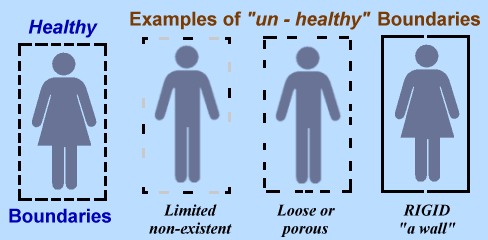
It comes down to boundaries. As adult victims, we don’t have any, or have very weak boundaries. We never established boundaries when we were young because we were (1) never trained to do so; and (2) because our early boundaries were constantly being violated.

People can sense when a person has very weak or non-existent boundaries. That’s why we continue to attract narcissists as friends, lovers and spouses. Narcissists know easy prey when they see it.

Why personal boundaries are so important.

do_not_cross

Even among non-narcissistic people people, we are seen as prey because we appear to lack boundaries. Even near-strangers are constantly stepping over the line and treating us with disrespect, even if their behavior isn’t outright abusive. It’s as if most people have an invisible line drawn around them that must not be crossed. People “see” this line–or sense it–and will respect it. But if you never established boundaries or they were destroyed by your narcissistic family, there is no invisible line drawn around you, and people will constantly step over it, because they believe it’s okay for them to do so.

The solution seems easy enough–just establish some boundaries and tell people when they are violating them. But this is much easier said than done. Most of us have such low self esteem we are terrified of letting others know it is not okay to treat you this way. We are terrified of being criticized or told we are just being “too sensitive” or paranoid. We see other people standing up to those who violate their boundaries without repercussions, but we fear that if WE do it, we will be attacked or criticized, because we were trained to believe this.

unhealthy_boundaries

The sad news is that it isn’t incorrect to believe you will be attacked or criticized or told you are overreacting if you try to stand up for yourself. That’s because people don’t like change. If people have become used to you as a mousy, fearful person with no personal boundaries, they are not going to like it much should you suddenly point out that you have some. But it doesn’t mean you are worthless and it also doesn’t mean you must forever continue to submit to this kind of treatment.

In any group, there is usually one scapegoated (or disrespected) person, and that person is the one who is seen as having the weakest boundaries (and is probably also the most sensitive, which is why we were chosen by our families to be scapegoats in the first place). Unfortunately the human condition dictates that even for normal (non-narcissistic) people, there is going to be a pecking order. This system can be observed in most animals and even some birds, like chickens. People–and animals–feel more comfortable when there is one person around they can pile on. If you suddenly announce they may not pile on you anymore, they are not going to be happy about it and will probably take out their frustration on you. It isn’t fair, but it seems to be in our human nature.

Can anything be done?

boundaries_quote

Yes, but it may be necessary for you to start over in a new place or a new job if this is happening to you. You will need to make it clear from the very beginning that you are to be treated with respect. This means the very first time you observe one of the above behaviors directed toward you, you must nip that in the bud and let the person know it is not okay to treat you like this. Doing this will be one of the hardest things you will ever have to do, because we are so afraid to speak up for ourselves. But if we have not been established yet as a victim or at the bottom of the pecking order, letting others know (nicely, of course) that we will not tolerate this sort of behavior should help. Once your boundaries are made clear to others, you will be treated more like a human being and less like a worthless piece of furniture.

If you cannot start over (and many of us can’t, because our lifetime problems with boundaries and self esteem have made it impossible for us to be able to earn the kind of living that would enable us to move elsewhere or leave a job), then you will need to go ahead and try to speak up for yourself anyway, and risk the fallout. If you find this impossible to do, then you will need to find a support system or a group that does not know you the way you are. You can join a church group, attend group therapy, or take a class. Or you can find supportive people online. For those of us who are introverted, like myself, this may be the most effective way to have a voice and be treated the way you want to be treated: like a human being worthy of respect.
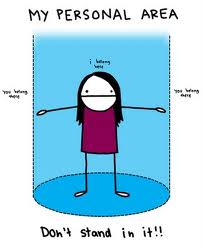
my_personal_area

Keep telling yourself every day that you are not worthless or defective, because you are not. There is nothing wrong with you! Your only problem is that the family that raised you did not respect or love you the way they should have–not because you aren’t deserving of love or respect because every child is–but because as narcissists, they could not. You served a role for them as the family scapegoat.

A good therapist–or keeping a journal or a blog–can be a good way to help you deal with your past, the family that destroyed your sense of self esteem and boundaries, and help you overcome your fears and begin to act more like a person who is to be treated like everyone else.

You are worth it.
Introversion

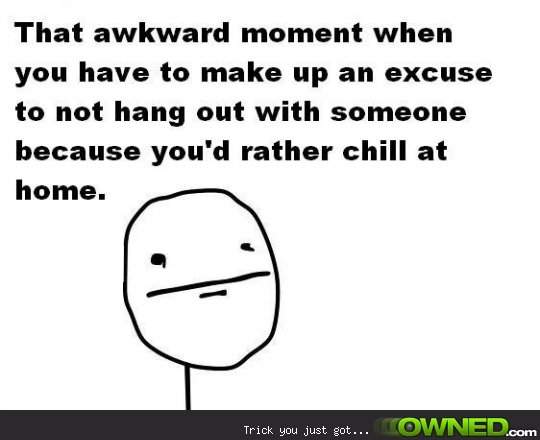
As an INFJ with both Aspergers and Avoidant Personality Disorder I can sure relate to this!

that_awkward_moment

My crazy fantasies.

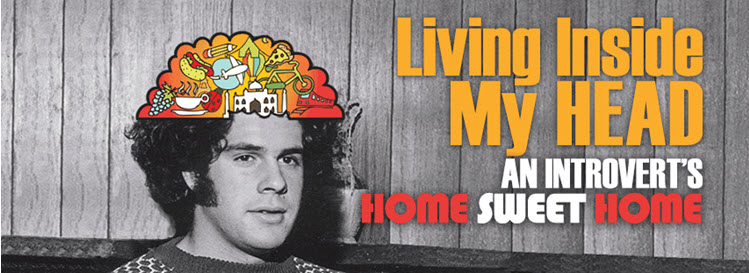
introvert_head

I have some crazy fantasies. As an INFJ Aspie with an extremely vivid imagination, for me these fantasies can be almost as real as reality itself, and that is really pretty cool. Some people, usually neurotypical extroverts, think it’s unhealthy to live inside my head so much. I disagree. If I enjoy these thoughts and they don’t interfere with day to day functioning, how is it unhealthy?

I won’t go into the details of my fantasy life but there are times I think there’s something wrong with me for having the kinds of thoughts I do and deriving so much pleasure from them.

anotherworld

I was telling a friend on FB tonight about the details of one fantasy. She doesn’t think I’m crazy but pretty normal. I just had to bounce this off someone else as a sort of reality check. I need to do that from time to time, just to make sure I’m not insane.

I think most of us, especially if we’re introverted, have our secret life we don’t want to talk about. It’s like having our own personal movie that we write, direct, cast and star in. These personal movies can make a rather humdrum, often irritating and sometimes depressing life seem more full and interesting.

The other great thing about having such an active inner fantasy life is it sometimes jumpstarts creative ideas, which can be transformed into actual, tangible things that can be shared with the whole world.

Switching gears.

switching_gears
God, I hate it when I am forced to change my evening plans, which means blogging until I can barely keep my eyes open and sleep takes over.

I don’t like sudden changes of plans or disruptions of my Aspie routines that force me to switch gears or have to engage with others when I don’t want to. If I were a car, I’d have a faulty transmission.

I wasn’t able to get home until well after midnight and I had no energy to write anything except this.

I resent the feeling that tonight was wasted, and I feel guilty about feeling that way. Obviously I’m just framing things all wrong.

Why can’t I just be left alone with my words and my music?

15 things that introverts will never tell you.

As a person with Aspergers, I can so relate to everything in this article, so I’m sharing it.

Not all introverts are Aspies but almost all Aspies are introverts. We’re not neurotypicals, so people need to get over it. I embrace my INFJ-ness.

15 Things That Introverts will Never Tell You

introvert

Introverts catch a lot of shit for being introverted. The whole world seems so enamored by extroverts – the people we know who just want to be around people all the time. While we introverts might not want that, it doesn’t mean we’re depressed or suicidal or anything wacky like that. There are some things you should know about us.

1. Small talk sucks.
We’re just not very good at it. We’re typically the big-thinking types. We like big ideas and theories. Small talk is uncomfortable. We don’t care about the weather or how your cat has been doing.

2. Being alone is fine.
Seriously, we’re doing okay, even if we hole up in our houses for a while. We don’t need other people for stimulation. We find that ourselves.

3. We aren’t rude or uptight.
We might seem like that at first, but get to know us. We’re still a fun bunch of friends, we just don’t always acclimate to unfamiliar settings and people so quickly.

4. Sometimes, we swing both ways.
We might be introverts, but sometimes we are just so the life of the party. We do this willingly when we’re up to it, but we can’t always keep that kind of energy going. If we throw a party, great! But give us some time to recover.

5. We have friends. And they like us! Probably.
People hear the word ‘introvert’ and think of the goth kid sitting alone at the food court. That’s a whole different thing entirely. We love having friends, and our friends love having us! We put in a conscious effort for people we think are worth it.

6. When with the right people, we feel safe.
Having the right people in our lives is amazing. we really give our best selves to the best people. We shine in the right company. But sometimes it takes a while to find those people.

7. We like to write things out.
Writing is easier than talking for us sometimes. Email is the best because it helps us get the thoughts out of our heads without being interrupted. Thinking about giving us a call? Try a text or email instead.

8. We’re super productive.
Sometimes at least. Usually in our alone time, we’re able to really rock and roll on projects that we need to finish. The solitude helps us, as we tend to be a bit more distractible than most.

9. If we don’t like you, you won’t know it.
It’s the truth of the matter. We hate conflict. So even if we don’t like you, we’ll still be nice. It’s a lot easier than being real with you. Especially if your feelings are inconsequential enough that confronting you on your bullshit isn’t even worth the time. Sorry. Well, not sorry.

10. Networking events suck.
Seriously. Is there a mailing list we need to opt out of? There are few things more uncomfortable than a networking party. Except maybe a dentist’s networking party that we’ve just been accidentally invited to.

11. We don’t like crowds.
Though I find that after a few beers, I can tolerate it. Introverts tend to get overstimulated easily, so big crowds aare tough to deal with.

12. Sorry, we probably weren’t listening to your story.
We care deeply about our friends, but people outside of that circle will have a tough time maintaining our attention. It’s not that we have ADD or anything like that, we just don’t really care about you. On the plus side, we won’t judge you, so feel free to tell us all the fucked up things you said to your ex.

13. Don’t make a fuss out of our birthdays.
For the longest time, I had a great deal of difficulty understanding why I hated my birthday so much. Everyone I ever knew would come out and party with me! But then I realized: that’s the problem! We don’t need to make a fuss out of our birthdays, so please don’t do it to us.

14. We don’t want to make a fuss out of your birthday.
We can quietly honor the annual birthday, right?

15. If we’ve chosen to be friends with you, appreciate it.
We value our alone time. If we see you often, it means that we really love you. Just don’t get too bummed out when we don’t hang for a week at a time sometimes.

Read more at http://higherperspective.com/2015/01/introverts.html#BtyOb4UjX41gG34c.99

The chatterbox and the hermit.

shy_and_outgoing__by_cammy_senpai-d6ejdec
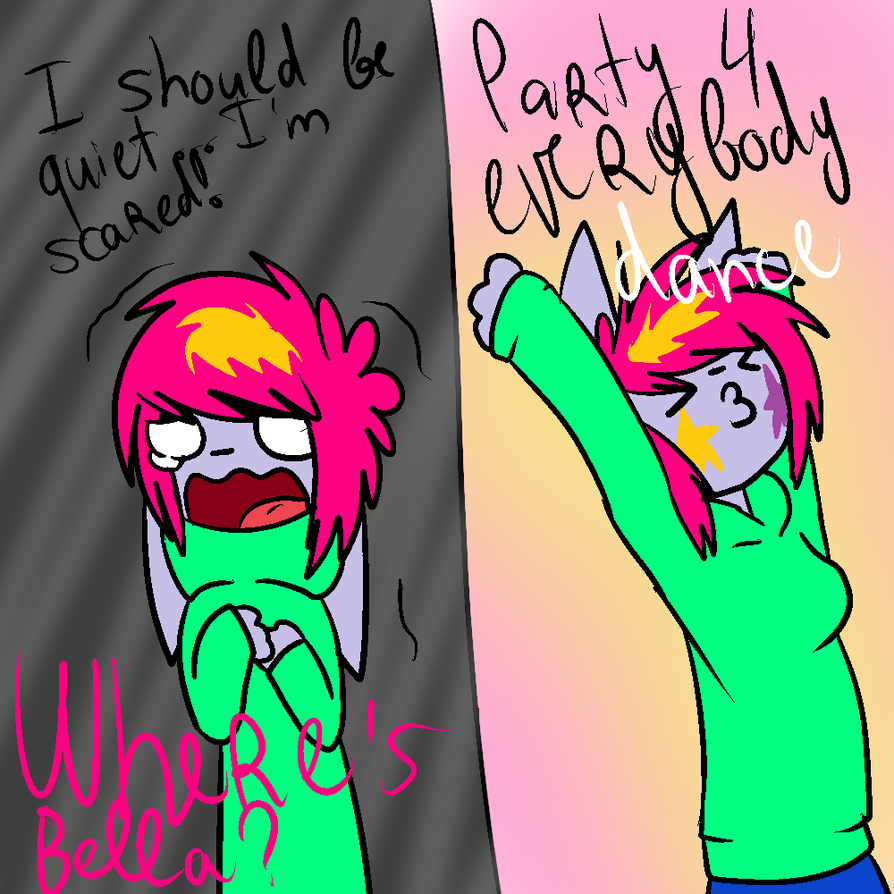
“Shy and Outgoing” by Cammy Senpai, Deviantart

I’m two different people.

Most of you already know what I’m like online. I made a vow to be completely honest and hold back nothing (within reason) and so I am doing. This has been a wonderful thing for me because it has given me courage (and takes courage!)

But I’ve always been outgoing online. I talk about the things that concern me, my feelings about them, my relationships, my mostly painful and sordid past. I tell you if I’m happy, sad or mad and I tell you why. I actively seek out friendships and post on other people’s blogs (when I can find the time since I’m always on this blog). I’ve become active on social media too, something I never thought I’d be. If anything, I’m probably a little too confessional!
On the web, I’m comfortable being completely myself and do not suffer from the shyness, shame or self-consciousness that plagues me IRL.

In the real world (which I prefer to call the physical world, because online life is every bit as real as any other form of interaction), I’m the opposite of the above. I suffer from both Aspergers (which I was most likely born with) and Avoidant Personality Disorder, brought on by abuse and always feeling off balance because of my MN mother and my enabling, alcoholic father, not to mention being a frequent target for school bullies.

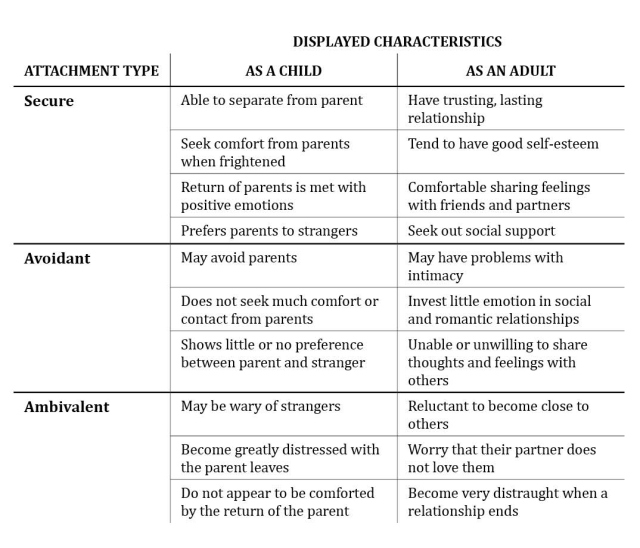
attachment-types
From “What’s In It For Me?” on Zombie Shuffle’s blog.

In the physical world, I’m a very different person than the one you know online. Although I have the same emotions (which I talk about here), I don’t discuss them openly or even at all. I have few friends, am not close with anyone in my family other than my children, and prefer the company of myself, my books, or my pets to that of other people. Lots of noise and large groups of chattering people are very triggering to me, and I find myself tensing up and retreating if possible.

Most people know very little about me. I don’t say much, I rarely initiate conversation, and am very shy. Some people think I am cold and aloof; others think I am just stupid. I’m neither, but my avoidant personality makes me seem unfriendly or insecure. My Aspergers makes me seem awkward which exacerbates my problems relating to people.

I am terrified of intimacy and romantic relationships. After a long, abusive marriage and 7 more years of hell living with him after we divorced, I think I’ve had enough. I don’t trust men enough or trust my own judgment enough to dare take the plunge again into a new relationship. I also feel like my age is a problem, even though I look far younger than I am. I haven’t had sex in 9 years and really, that’s not a problem for me. I like the idea of having a relationship again (who really wants to die alone?), but I don’t know if I could cope with the reality of one. That doesn’t mean it won’t ever happen though. It just scares the living daylights out of me.

I can’t stand talking on the phone and a ringing phone is very triggering for me: I always expect to hear bad news. I know it’s just my hypervigilance, but I can’t help my reaction whenever the phone rings. As far as talking on the phone, it’s just awkward because I can’t pick up nuances in speech (due to my Aspergers) which is made worse by the fact I can’t see their facial expressions or body language. I try to end phone conversations as quickly as possible, which makes people think I’m unfriendly or don’t want to talk to them.

I don’t connect well IRL with most people, although I do get along with most. I’m not hard to get along with, just hard to get to know.

Blogging has enabled me to open up and be the self I want to be. It’s enhanced my self esteem and my creativity. Being courageous enough to post the sort of things I post gives me even more courage. Journaling online to complete strangers has helped me understand a lot of things I never used to understand and it’s even helping me develop more empathy.

But this isn’t the Matrix and I can’t live inside my online world all the time. I do think, however, that my increased self esteem and self awareness will soon translate into my relations with the real world. In fact, I’ve been told I seem more relaxed, happier, and more confident than I used to be, even though my extreme reservedness remains. I smile and laugh more. Most people do seem to like me, even though they can’t get to know me well. They have no idea the shy, mysterious, taciturn woman who tends to clam up in social situations or avoid them altogether actually runs a blog where she talks about the most personal issues it’s possible to talk about.