How my ex became a malignant narcissist.

Martin-Luther-King-Good-vs-Evil

I’ve talked about several of my own family members and how narcissism has infected other family members with NPD and/or made them victims, but I haven’t focused too much on how my ex husband Michael, as malignant as they come, got that way.

So I am doing that now.

Michael, like most narcissists, wasn’t born that way. He was the only child of a machinist who was rarely home and when he was, stayed in the background, believing raising a child was “woman’s work.” The household was blue collar but back in the early ’60s, blue collar didn’t mean poor. A working class man could adequately support his family, buy a home, have two cars, and his wife didn’t have to work to help make ends meet.

From all accounts, Michael’s father loved him in his rough-around-the-edges macho way, but he spent hours every day in bars or at the pool hall after work to avoid his nagging, manipulating, self-centered, never-satisfied wife, Helen, who was a dangerous malignant narcissist and probably psychopathic.

Michael was a sweet, obedient child and a good student. He always tried to please his mother, making her things at school, picking flowers to bring home to her, and always, always trying to hug her. He was very physically affectionate, desperately trying to elicit love from a woman who didn’t have any to give. He told me his childish hugs were met with an unyielding stiffness and sometimes she would even push him away.

sad_little_boy

I remember during our engagement, during a dinner following a wedding rehearsal, Helen was almost bragging at the dinner table about how she never would have gotten pregnant at all if “Neil hadn’t got me drunk.” The woman swears she never had sex during their marriage and the only time she did was because her husband got her drunk. (She did have sex once in 1965, got pregnant and miscarried, or so she says). She liked to show off Michael’s baby pictures as if he was some kind of doll, but I don’t think she ever had any real love for him. He was her toy and her possession. She dressed him up like Little Lord Fontleroy and made him wear a Safari Suit to his 8th grade graduation.

Michael’s early photos show a child with a sad expression, although he was always smiling. But there was sadness and fear there. I was reminded of a picture of my mother taken when she was two–and she was wearing a similar sad and dejected expression, looking close to tears. She had been sitting on an oversized chair, her little feet in brown high top shoes, and clutching a teddy bear. Narcissists are sad little children before they turn to narcissism as a defense mechanism. They are never born this way. It is something that is done to them (although they have some part in having made the choice to become narcissists).

When Michael was five years old, his father brought him home a small white puppy, who was named Buster. Michael loved that dog, and spent all his time playing with him when he wasn’t at school. Buster would sit on the floor next to Michael while he played with his toys or drew in his coloring books with crayons.

One summer day, Michael and Buster were sitting in the middle of the hardwood floor in the living room, in a patch of sun that came in through the picture window. Michael got up to go do something else, maybe go to the bathroom, and left his crayons on the floor in the patch of sunlight. Some purple and red crayons melted in the sun and the dog Buster somehow got some red wax on his white fur. There was also a pair of child’s plastic scissors nearby.

boy_and_dog

While Michael was gone, Helen came into the room and saw the waxy mess and the red crayon on the dog. She marched off to find Michael and dragged him into the room.
“See what you did, you stupid child. That dog is bleeding.” She pointed to the plastic scissors.
“See, you cut him. Well, that does it. Buster must be put to sleep.”
Michael started to cry. “But he’s not tired.”
Helen flew into a rage. “I don’t mean it that way. We are taking him to the pound where he will be destroyed. You are not capable of caring for a dog. Look what you did to him.”
Michael tried to appeal to his father, but his father, tired from work, and an enabler to Helen, just said, “I’m sorry, son, but we have to do what your mother says.”
Michael never forgot this and was never able to forgive his mother for this. He thinks this was the point at which he started to hate her and stopped trying to appeal to her love. He stopped making her things and bringing her gifts.

Helen never allowed Michael to stay home from school, not matter how sick he was. Once he had scarlet fever and was sent to school anyway. The school nurses, concerned, called Helen and asked her why she would send a child sick enough to be in the hospital to class.
Instead of apologizing and getting Michael the medical care he needed, she attacked him, blaming him for “getting her into trouble with the school.”
Any time anything went wrong, it was always Michael’s fault.

When Michael was about 11 or 12, there was a huge custody dispute over an older daughter from his father’s first marriage. The father went to court to try to win custody and lost. During this time, Michael was sent to live with neighbors, to “keep him out of the way.” He felt rejected by his own parents in favor of his father’s daughter from an earlier marriage.

Helen was a pious churchgoer, involved in every activity, but was not well liked by the other women. She was known as a troublemaker and had no real friends. But she loved to tell everyone how “everyone loves me” and “they all listen to me.” In actuality she was doing nothing but spreading gossip and lies about the other women in her church groups. The old Saturday Night Live character “The Church Lady” could have been Michael’s mother. She even looked like that character.

church_lady
Dana Carvey as “The Church Lady.”

She also got involved in Michael’s school, and got the same reputation there as a troublemaker. This reflected badly on Michael, who was embarrassed by his mother’s antics and his friends’ dislike of her. She was always interfering in things that were none of her business and stirring up drama, playing divide and conquer games between other women and breaking up their friendships through her malicious lies and triangulation.

Michael hated his mother by now and tried to avoid her, but did not become a narcissist until he was almost 13.

It happened in January 1973. His father had not been in good health for some time, and suffered from atheriosclerosis, hardening of the arteries. He was only 57 when he suffered a massive stroke and died suddenly at home.

Michael went into the bathroom to get ready for school and found his father’s dead body lying on the cold ceramic tiles of the bathroom floor. He screamed and tried to revive him, but the man was already cold and wouldn’t wake up. He had been dead for several hours already.

Crying hysterically, he found his mother in her bedroom, fast asleep. He started shaking her and yelling at her to wake up.
She finally did, and was annoyed to find Michael crying at her bedside and pointing to the hallway toward the bathroom.
“Mom, I think Dad’s dead.” he sobbed.
“Don’t be ridiculous.” She marched off to follow him into the bathroom.
She stood at the doorway and looked at her dead husband on the floor, grimaced, and then turned on her heel and said to her son, “Well, I have no idea what to do about this. You take care of it.” Not one shred of empathy, grief or compassion was shown. This was her own husband, and she acted as if he was a bag of trash that needed to be taken outside.

bathroom

Michael changed after that. He went through the motions of doing what is done when a family member dies, calling all the relatives himself, arranging the funeral, and all that goes with that, but inside he wasn’t the same.

After his father was buried (and his mother put on a huge show at the funeral of crying louder and more hysterically than anyone else present), Michael began to drink and get into trouble. His grades remained acceptable, but he began to show a lot of narcissistic behaviors and started to use people for his own advantage. He went into the city on the weekends and sold his body to older men for money. He thinks he killed a guy once by pushing him into a glass table, but if he did kill him he was never caught.

The malignant behavior soon became ingrained and for Michael, there was no turning back. He’d given up on life and turned to narcissism to protect himself against further injury from those who were supposed to love him. As the years progressed he became a skilled manipulator and con artist, expert at gaslighting, lying, projection of his own defects onto others, and triangulating. This was exacerbated by intermittent drug abuse and alcoholism. The rest of his progression into full-blown malignant narcissism is described in my posts about our marriage under “My Story,” which appear in the header.

Michael had turned into his enemy: his mother. At the same time, he projected his hatred of his mother onto all women he became close to. In the process, this once-brilliant man eventually burned all his bridges, both romantically and professionally. Today he is a burned out shell of a human being, now living at the Salvation Army subsisting on handouts and disability payments. He’s a “needy” narcissist, mooching and freeloading off others, and taking, taking, taking in a pathetic effort to procure the maternal love he never received as a child. He still blames “society” and other people for “making him homeless and unemployable.”

Even his children want little to do with him. He has lost everything. But he made his own choices so I can’t feel too badly for him.

The man you love to hate…or hate to love.

samvak2

For victims of narcissistic abuse, Sam Vaknin is the man you love to hate–or the man you hate to love. He’s a controversial figure in the field of narcissism. He has ardent fans within the community as well as seething haters. Just taking a quick scan of the comments under his many Youtube videos will give you an idea of just how polarizing Sam Vaknin really is.

Vaknin, self-professed malignant narcissist and possible borderline psychopath, is in the unlikely and highly ironic position of being a guru and hero for countless victims of narcissistic abuse, and remains one of the most famous voices on the subject.

Until narcissism became a thing a few years ago and blogs by survivors of narcissistic abuse began to proliferate like wildfire, Vaknin was one of the only voices on the Internet who delved deeply into the subject of narcissism and its effects on victims, outside of mental health professionals and psychologists–and not even many of them paid much attention to the problem of narcissistic abuse. Sam was a voice in the wilderness and offered hope to many who felt they had no hope at all. And yet Sam was exactly the kind of person they were trying to get away from.

Sam is a conundrum. If he’s a malignant narcissist who is also a self-professed misanthrope and psychopath, why on God’s green earth does he feel the need to write self help books for victims of abuse and run forums and discussion groups for them? Why does he warn us against people like himself?

When I first found out about Sam Vaknin, there was no way I thought he could be a real narcissist. I was already aware of his books and already knew he was a self professed narcissist, but other than that, knew very little about him. Later on, after watching “I, Psychopath,” I decided he was a narcissist wannabe who more likely had Borderline personality disorder (BPD) with some narcissistic and schizoid traits, and I wrote this article stating my case.

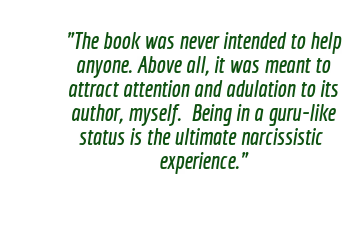
Sam found this article and apparently really liked it, because he disseminated it all over social media. It wasn’t particularly complimentary. I nearly accused him of being a huge fraud, and yet Sam began to visit this blog and share some of the other posts I wrote about him. I read in one of his interviews, that Sam loves to be hated and feared. He doesn’t like to be liked or thought well of. He hates to be loved. But he does like to be thought of as a guru and an expert. Maybe he liked the fact I was critical of him in that post, although I did say some nice things too. Whatever the reasons for his approval and attention, I was inadvertently feeding his narcissistic supply and in return, he was helping give my new blog much needed visibility. This quickly became a mutually beneficial arrangement (though due to his being much more famous than me, I’m sure I benefited more than he did).

Going back to the film “I, Psychopath,” Vaknin’s behavior toward the filmmaker and others, including his submissive, endlessly patient, high-empathy wife Lidija, was as whiney, argumentative and petulant as a three year old who needs a nap or maybe a spanking. He seemed impossible to please. Ian Walker (the filmmaker) who was also in the film, seemed to be losing his mind and it was clear there was no love lost between them. I wasn’t sure how much of Sam’s childish and explosive behavior was an act for the camera to appear more narcissistic than he actually was, but when Walker secretly filmed Vaknin at one point to prove it wasn’t just an act, Sam’s behavior remained just as abusive.

samvak3

Walker, for his part, seemed to have bit off far more than he could chew in making this film, and seemed nearly destroyed by Vaknin’s abuse. (I read it took him two years to recover from the experience). But to be fair, Walker had chosen to make this film about a self professed malignant narcissist and possible psychopath, so what did he expect? Candy and roses?

Vaknin became petulant when one of the psychological tests he took (the one that scored in all known personality disorders) had him scoring higher in schizoid and avoidant traits than narcissistic ones. In fact, his N score wasn’t really all that high. Other tests he was given gave him much higher scores, and Robert Hare’s Psychopathy Checklist (the test that’s given to criminals to make sentencing and judging decisions in courts of law) gave Vaknin a whopping score of 18 in psychopathy, which is extremely high, even for conscienceless criminals.

An intelligent man like Sam, of course, could be faking the answers. Having a lot of knowledge of personality disorders and general psychology, he could have answered the questions in the manner a psychopath would have answered them to get the results he wanted.

The brain scans were more telling. He was definitely missing some essential connections that people with a conscience possess. But I still didn’t buy it. I didn’t believe he was a psychopath and if he was a narcissist at all, he was a very weak one.

Sam seemed to be all over the place, but his behavior in the film, while mostly unpleasant, still didn’t scream “narcissist.” I was initially confused by him–and then I was fascinated, and finally mesmerized. Even though I had never met the man or spoken to him, I was falling under his spell, which I hear is legendary. This could prove he is dangerous.

Many narcissists can be quite charming, and Sam, for all his toolish and childish behavior, certainly could turn on the charm. He was intelligent, incredibly so, and sometimes funny. He was self aware and quick to admit how much of a bastard he was. Sometimes he was nice. He was always brutally honest, something most narcissists are not. He was definitely unpredictable and moody. He wasn’t someone I’d want to spend much time alone with, and part of me wanted to protect his sweet little wife Lidija from her unstable husband, whatever his psychological problem was. He was a ticking time bomb, and although he has never been physically abusive, he was clearly verbally abusive and the poor woman seemed to have “settled” for a disordered man who could never really return the love she constantly showered on him, as much as he sometimes appeared to try.

In the film, she said she wanted to have a baby with him but knew it probably wouldn’t happen (partly due to her age but also because they have barely any sex life. Sam is not interested in sex. He lives inside his head). What a sterile, joyless life any normally wired woman would have to endure to be married to him. But Lidija, in her codependent way, seems happy and satisfied. It’s very dysfunctional but apparently works for both of them. She’s his constant supply and she’s more than happy to fulfill that role, or says she is.

So, moving on…I think it’s a very good thing that they never had children. I read somewhere (I can’t find the link now) they mutually decided not to reproduce, in order to protect any potential child from either becoming NPD or a victim of its effects, which to my way of thinking shows a side of Sam that does not want to inflict his disorder on a child–so does that mean he has some semblance of a conscience? In another video, I saw how impatient Sam seemed toward some children playing nearby. “Why can’t they just be born adults?” he said. Clearly Sam would not be an ideal father to a child.

It didn’t take long for Sam’s brilliant but disordered mind became my latest Aspie obsession (we do get obsessed over things). I wanted to find out what really made Sam Vaknin tick. I wanted to get inside Sam’s mind and feel what it felt like to be him, and maybe that would give me some answers in solving the puzzle of him. By now, having read more of his writings and seen his interviews, I was becoming convinced that Sam was really a narcissist, but probably not a malignant one.

I read everything I could about him. Interviews, articles, his own stuff. I read blog posts and articles by both his fans and his haters. I watched his videos. I read the comments under them. I read his personal journals and poetry, which are publicly available on his website

Sam’s poetry and personal journals show a side of him that cannot be detected in his almost robot-like Youtube videos where his face is nearly devoid of expression or emotion. It’s my belief this intellectual automaton he wants everyone to believe is the real him is a mask he wears to fool everyone into thinking he is just a walking, talking brain with no emotions, a person who cannot feel anything, a person with no vulnerabilities. I believe these creative writings are the only windows we have into Sam’s true character–his lost self.

Sam’s emotionality can’t be directly detected in “Malignant Self-Love,” although he does write with passion and there’s an odd underlying mood of darkness and pain I’m picking up that I don’t get from watching his videos. I can’t explain why I feel this underlying anger and pain emanating from the pages because it’s not really present in the words themselves. He’s a powerful writer and it just comes through, whether he intended it to or not. Other people have said the same thing about this book.

It’s taking me longer to read than I anticipated, partly due to its length, but also because I’m finding I need to put it down from time to time, because the rage and hurt I can detect that underlies his intellectual, scholarly prose can make me feel depressed. I feel like I’m being drawn against my will into a dark night of the soul. It’s nothing I can put my finger on, just a mood of bottomless sadness and hopelessness that filters through his words. I haven’t reviewed his book yet but I will say this. In spite of his having written “Malignant Self Love” primarily to obtain narcissistic supply for himself, it’s actually one of the most insightful books on narcissism I’ve ever read. Who better than a narcissist to be able to write about what the disorder feels like and what really causes it? But if you’re sensitive at all, it’s not a fun book to read.

samvakquote

Sam has said even in his videos that he often feels sad and depressed. There are flashes of humanity occasionally too. In one of them he is being questioned about something he did to another boy when they were about 12. He had tried to brainwash this other boy, and the boy was so damaged by the psychological abuse that he had to be hospitalized. When the interviewer asked if Sam felt any remorse, he replied he knew it was wrong on an intellectual level but couldn’t feel any remorse or shame. But his face told another story. For just a moment, Sam’s face changed. It seemed to clench and then softened and he looked away quickly from the interviewer, as if he didn’t want his humanity to be seen. I saw him grimace a little, as if remembering this was causing him a jolt of pain.

His journals and poetry are where I believe is Sam’s true self really comes out. Creative writing is the only form of expression it has. Even with all the honesty and insight he has into his disorder (and what I believe a strong desire to be rid of it too) his true self is eternally dissociated from the hostile, volatile, intellectual mask of protection he shows to the world. I no longer have any doubt Sam is a narcissist on the higher end of the spectrum, if not malignant, but even for such an insightful intelligent narcissist as Sam, a cure is probably not going to happen.

Sam’s journals, short fiction, and poetry are so filled with sadness, rage, hopelessnes and pain it takes my breath away. It’s almost too painful to read them. His writing, as emotional as his videos are intellectual, makes you feel like you’ve been punched several times in the gut. People have accused him of being a fake, but there’s nothing fake in the raw emotion he is able to express in his creative writing and journals. No one could fake that.

His words tell what it really feels like to have NPD–from the inside of a sufferer who really does suffer and at the same time is all too aware of it. And it’s pure hell, worse than anything you can imagine. Knowing you can never escape, wanting to be human but not knowing how. Knowing you can never give or receive love like a normal person. That you long to be good but don’t know how. That you feel superior and worthless at the same time. That you want to be hated and feared because deep inside you feel like you don’t deserve any love because of what was done to you by your mother as a child. That you hate and envy others for what you want but can’t have. It’s like being possessed. Maybe it is being possessed. Maybe when one chooses to become a narcissist (Vaknin said he chose to become one at a very young age to protect himself from further hurt) you are drawn into darkness, and once you’ve entered you can’t ever escape.

abused

I read an interview where he admitted he has memories of himself as a very young child, and these are indicative of a person who may have been an empath had he not been subjected to horrific abuse. I think Sam is actually a deeply emotional man with very sensitive feelings but these are unfortunately limited to just himself. Any ability he once had to feel empathy and love for others was cut off like a leg that was amputated for no good reason other than his mother’s malignant envy of him. Sam’s overreaction to a slight on this blog proved to me just how sensitive he actually is. It’s tragic that sensitivity was not allowed to develop into empathy for others. Here is an excerpt from that interview (because I found it posted on another blog with no link, I don’t know where it came from or who was interviewing him):

Q: So can you remember not being a narcissist?

A: That is a really good question. I do remember a period before I became a narcissist, that must have been around age 3 or 4, I do remember forming my narcissism as a conscious effort. I remember I’ve been diagnosed with 180+ IQ, very high, which allowed me to achieve results which were not age-appropriate, advanced. Also my memories are unusual for a child of three, I remember as a child of ¾ inventing the narratives, the stories that became my narcissism later. Inventing the stories of my omniscience, how I knew everything, and inventing fictitious figments of me that are very powerful. Telling myself I would not feel pain if I told myself not to. I remember assembling it like Lego. Before that, I remember being a spoiled child, admired and loved because I was achieving things that were not typical for a child, the entire neighborhood was there first, then the whole nation. So I became a spoiled brat. Later I was subjected to horrific physical abuse up until the age of 16. The answer to the question is yes – I remember the exact moment where I decided to be a narcissist.


Q: So you remember the empathic abilities you have lost in this process?

A: No, I was too young to develop real empathy.


Q: A little compassion, do you remember that at least?

A: I remember being compassionate, that I cried when my mother was sad, that I was a good-hearted kid, I used to give away my things, tried to understand other peoples emotions. But these are just flickers of memory, they have receded so fare. It’s like the shades on the wall of Plato’s cave. I do not relive them, do not have access to them. I just know of them.

Sam is a paradox, an enigma, a person too complicated for anyone to ever be able to really understand, and he is just as flummoxed by his complexities as those who try to understand him. I believe he’s a good person trapped forever in a disordered mind that betrays him and makes him lash out at a world that never gave him a chance to become fully human. Having so much insight just makes it all so much harder.

Do I think he’s dangerous? Yes, without a doubt. Even if he doesn’t want to, he can draw you into his illness. He can infect you with his misery and darkness. I don’t think it was necessarily Sam’s abuse of Ian Walker that made him feel the need to symbolically wash himself clean at the end of the film and that changed him for the worse for two years hence. After all, Walker chose to make that film and knew what he was getting into. I think it was the darkness that surrounds Sam that infected Walker and threatened to engulf him. Sam has to live with that every day of his life and can’t free himself from it like Walker can.

When I think about Sam Vaknin, I’m reminded of “Demons” by Imagine Dragons. The protagonist is warning us of his malignancy.

Sam is warning us too. That’s why I don’t think he should be demonized and dismissed as a fraud or someone with malignant intentions, even if they’re primarily self-serving and intended to procure narcissistic supply for himself. There’s a good core in Sam that wants to separate himself from the rest of humanity. That’s why he went into exile by moving to Macedonia and lives a life as a near recluse. He knows what he has become and I think he hates it. But he’s helping people. People look up to him for advice about how to deal with their abusers, and the advice he gives is good. So does it really matter if his primary motives are selfish? I don’t think it does. Just don’t get too close.

Infected by evil: putting the pieces together

evilpeople2

This is one of the most difficult posts I have ever had to write, but I can’t rest until I do. Because everything is making sense to me now.

In having several long talks with Paul, Molly’s ex, I am ever more convinced than ever my ex-husband Michael was a monster, someone who wasn’t even human. He has told me some incredible things that happened during the short time he lived there in his house. He is convinced as I am that Michael is a monster.

And I am realizing that everything that’s happened lately was preparing me for a mindblowing and chilling realization, and now everything that’s happened is making a lot more sense. God really does work in strange and mysterious ways. I must have been ready for God to be revealing the truth to me the way he is now. Not so much before. I could not have emotionally handled knowing the truth.

In going back in my mind over my marriage and in particular what has happened to my daughter starting about ten years ago, when she was about 12, I realized the timing of things has been uncanny, with a lot of foreshadowing and signs that gave me bits of whatever truths I could handle at the time. Now all the truth is finally being revealed.

My ex is a monster, evil to the core. He is one of the most evil human beings I have ever met, and I hesitate to even call him human. It’s not hatred of him making me say these things; in fact I feel quite sorry for him. It’s just a truth: he is one of the most malignant narcissists and evil psychopaths I have ever known.

I mentioned in an early post how I saw the opaque, black alienlike eyes on him once when he was angry and drunk. What I failed to mention was that I saw those eyes while we were having sex. And they were accompanied by an expression I can only describe as hatred so profound it sent chills throughout my body. I felt violated and pushed him off me, and made some excuse. I was chilled to the bone.

I was never able to have sex with him again after seeing those eyes. I knew what I saw was real. I knew if I had ever sex with him again I could be infected with his evil.

johann_heinrich
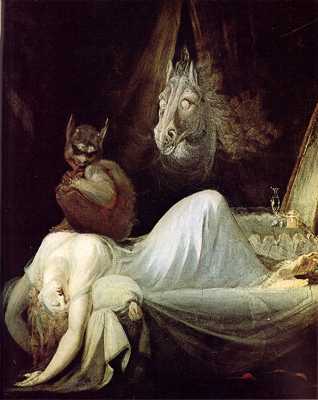
“The Nightmare” by Johann Heinrich, 1783

Around the same time (and I think I talked about this too once), my father talked to him on the phone, and told me later he swore he heard a gutteral, inhuman voice coming from my ex. It only lasted a second, but I totally believe it was not his imagination. There is nothing wrong with my father’s mind. What he heard was real, even though I never heard it myself. But I had seen those eyes. It was all coming from the same place–a core of pure evil and malevolence.

Shortly after this, in about 2005, we divorced. Lack of sexual relations was only one of the reasons. In fact, it wasn’t even the primary reason. I just knew this was someone who hated me and who could not be trusted and was dangerous to our children and to me.

I did not go No Contact with him. I had never heard of No Contact back then. I was very emotionally and mentally weak and beaten down, and only a step away from developing Stockholm Syndrome, which would have fully put me under his thrall and turned me evil too. I was afraid of him because he was so spiteful and I felt powerless against it.

My daughter Molly, just 12 at the time, did not want to live with me. She had always felt closer to her father, who used her as his sounding board and treated her more like a buddy than a parent. Up until this time, she was the perfect child–straight A’s, lots of friends, extracurricular activities, did her homework, helpful around the house, very empathic, loved animals, athletic. Her father always favored her over his son, who was treated as his scapegoat and was much closer to me. Molly was his golden child. I had no idea at the time of the extent of his evil and how it would infect his daughter. I didn’t want Molly to hate me so during the custody hearings, it was agreed Ethan would live with me and Molly would stay with her father, with unlimited visitation on both sides. Essentially we both had joint custody and decided to let the kids live with the parent they chose.

I know now I should have been stronger and fought for her to live with me, as much as she preferred her father. If I had, Molly may have not developed the very serious and dangerous problems she has now. She may not have developed NPD of the malignant variety or addiction to the worst drug on the planet today–methamphetamine. But I was so afraid of her hating me and at the time, I didn’t see the danger of her living with him. He had a new girlfriend who seemed stable and very friendly and seemed to like Molly very much. Oh, there was so much I didn’t know back then.

My son never liked going over to their place. He said the atmosphere there was creepy, the house was old and rundown (it was), and it smelled (they had 8 dogs), and the girlfriend (let’s call her Heather) was very much involved in the occult. He said she had weird symbols everywhere like pentagrams and gargoyle-like figurines. He was telling the truth. Once when I had to go there to pick the kids up, I noticed a wall hanging depicting two demon lovers hanging over their bed.

Around this time, my father sent me M. Scott Peck’s book “People of the Lie,” with a note attached. In the note he explained he never had believed in evil or evil people before, but after having read the book, he recognized my ex, Michael, as a Person of the Lie. He told me to be very careful about allowing Ethan and Molly near him, and to watch out for myself as well.

I read the book with fascination, and definitely recognized Michael as evil, but was not yet ready to internalize these lessons, and was still in denial and very much under Michael’s thrall, so I did nothing about it at the time. I made excuses to myself that maybe he really wasn’t that evil, but in my heart I knew he was.

A seed had been planted though–A seed that would flower and bloom and grow into a mental clarity that has brought me courage–courage to kick him to the curb a year ago, courage to start this blog, courage to face the truth even at its most ugly and disgusting, and a willingness to fight against the scourge of malignant narcissism in my family and in general. I now know, through writing in this journal, exactly how the mechanics of evil have worked in my family. Had I been able to internalize what I had read in that book in 2005, I may have been able to keep Molly from experiencing what was about to happen to her. Make no mistake: codependence and fear are as deadly as narcissism itself.

Heather (my ex’s girlfriend) was addicted to pain pills and (I found out later after it was too late) often took my 12 year old daughter to parties where there were hard drugs and alcohol present. She allowed Molly to try pain pills. Ethan had stopped going there and Molly never told me about this so I had no idea what was really going on. I was probably also in denial. My ex was usually so drunk he couldn’t drive Molly to school. I remember Molly being upset by that–at the time she still loved school and learning. But there were no school buses out there where they lived in Leicester, NC, which is a remote and rural outpost of Asheville. So her attendance and grades suffered, through no fault of her own.

house

My ex, through Heather, began to dabble heavily into the occult and bought himself sets of Tarot cards and taught himself to do readings. Sometimes they held seances in their home and sometimes Molly participated, though it didn’t really interest her much.

But when I saw Molly she was still the sweet, studious girl I always knew. She seemed a little resentful at being in my company though. There was also something far away about her look, like she was deep in thought about something. I chalked it up to preteen angst and moodiness and didn’t worry about it much.

A few months after Molly turned 12 (I can’t remember the date, but it was sometime in the late summer), something happened that changed Molly’s entire personality. She crossed a line over into evil. I have written articles before about how a good person can become evil: they can be found here and here. Though normally a choice is made where the person crosses a line into evil, sometimes the transformation is not through a conscious choice, as in the example of some war veterans forced to commit atrocities against their will. They return from war having lost their ability to feel empathy and love. In Molly’s case, it was also not a conscious choice, but something done to her by her own father, a dangerous malignant narcissist and psychopath.

All children becoming adolescents go through a rebellious phase, which is a normal part of growing up and separating from one’s parents, but it’s nearly always a gradual process and eventually abates as the child finally becomes independent or moves out of the home. But for Molly it was different. She literally turned into a different person overnight, like Jekyll and Hyde.

On that fateful night in late July or August 2005, Molly was raped by her father. She thinks it may have happened twice that night but she is not sure. She may have blocked out most of it, was drugged beforehand, or she has so much shame that she cannot talk about it.

maninroom

I never knew about this until this past Christmas night. All I had heard before was that Heather had kicked Michael out of the house that night, because she found Molly and Michael sleeping in the same bed. As bad as Heather was, at least she had the decency to get rid of him.

Molly had to come home with me, but her personality had changed drastically. From that time on, she was in constant trouble at school, did drugs, and was sexually promiscuous. Her grades went from As to Fs. Her behavior got increasingly worse over the years and didn’t improve as she reached her 20s. Today she is a hardcore drug addict and a malignant narcissist herself.

An investigation had been done by social services but was inconclusive because Molly couldn’t remember what had happened or if anything had happened at all. There was no indication of sperm present but that doesn’t mean she wasn’t raped or molested.

The truth came out on Christmas night after she had a few drinks and sometimes that can act as a truth serum.
Molly had begun to cry, sobbing, “I’m a terrible person. I make everyone so unhappy. I cause you and Mommy and my friends so much misery and pain. But I keep doing it. I don’t know how to stop!” Tears flooded her face. I didn’t know it at the time, but she was facing her lost self and emptiness without the masks on. As Sam Vaknin explains, a narcissist without their masks or has lost their narcissistic supply falls to pieces.
Paul and I went over and held her and told her she was not a bad person, just a person with a lot of problems and a bad drug addiction. We told her we loved her and everything would be okay. She kept crying, and then blurted out, “My father made me like this. He made me bad.” She sounded like a tiny girl. She sounded like her lost true self.
“What do you mean?” I asked, terrified to hear the answer.
She wiped her eyes angrily and said, “the night he raped me.”
“He raped you?”
“Remember when Heather found him in bed with me? He wasn’t sleeping. He raped me. I saw his eyes. They were black. He looked like the devil. I couldn’t look away. I was scared but I couldn’t look away. I felt like I was under some kind of spell.”
I stared at her, dumbfounded, my heart pounding like a hammer in my chest. I couldn’t form words. I could barely breathe. Paul told me I looked like I saw a ghost.
Molly continued, “That’s when I went bad. Something happened to me. I don’t want to be like this. I hurt everyone. I lie to everybody. But I can’t change.”
This didn’t last long. Soon she was asleep and the next day, the drama started where she and Paul fought and she went off in a van with her methhead friends.

Last I heard she’s living in a meth cooker’s house. I have no idea where it is. I don’t have a way to contact her. I have had to let her go. I have to, for my own sanity. She can’t live with me anymore. I can’t help her anymore. I am praying constantly for her salvation from the disease of malignant narcissism her own father infected her with when he raped her nearly ten years ago.

And yet, I have faith somehow everything will work out. I think…THINK…I have the courage now to face anything that happens.

I don’t think Molly is 100% evil like her father because she had that moment of clarity on Christmas (I have never seen Michael be anything but evil or under the guise of a mask). She’s had other moments that give me glimpses of the brilliant, empathic, sensitive girl she used to be. I know deep in her soul she is screaming for help. I hope she gets it. I hope she’s one of the very few narcissists who can get better. The fact she’s still young is to her benefit. Getting off drugs will make it easier for her.

She may not have hit her bottom yet. Once she gets as low as she can go (with God’s grace avoiding death), she may be ready to rid herself of the chemicals that obscure what she has become from herself. It’s going to be a hard road for her to face, a hard road for everyone. But I can’t give up hope yet. She is my daughter.

The most evil man I have ever seen

Here’s another addition to my Museum of Narcissists:

This devastating documentary (from 2000) about Melvin Just, a psychopathic sexual abuser who systematically destroyed all his daughters and his 3 stepdaughters (and killed a nurse but was never charged) paints a graphic picture of highly malignant narcissist who seems as thoroughly evil as the devil himself. His wife, dying of lung cancer during the time of filming, appears to be a malignant narcissist herself, not much better than her husband. She may have been under his thrall so long (and was such an enabler) she became evil herself. Psychopathy is contagious.

The pitiful daughters and stepdaughters are shells of what they could have been; they all are addicted to drugs or alcohol and appear to be living in grinding poverty. They all seem like they’ve died inside–their cynical laughter and hard attitudes cover scars so deep they can probably never heal. These are all wasted lives. One of the older daughters, Ann, was highly intelligent and read a lot, including books about famous psychopaths. She made the connection and identified her father as a monster just like the killers she read about. But even though she seems less damaged than her sisters, she suffers from depression and suicidal ideation and has tried to attempt suicide several times.

Melvin Just is one of the most evil people I’ve ever seen. During his interviews he shows absolutely no remorse for his heinous actions and keeps denying any wrongdoing. He also has the opaque, dead, black eyes that very malignant people are known for. It’s hard to look at him even in video without feeling like his evil could somehow infect you.

The way the daughters react to his funeral at the end is both hilarious and heartbreaking at the same time. These are incredibly tortured women.

Narcissism is a family disease

abused


Children of narcissistic parents are always deeply damaged people. Because it’s a genetically inherited disorder (at least to some degree) but also because narcissism is a defense mechanism to protect and isolate oneself from abuse, many victims of narcissistic abuse become narcissists themselves. Those who do not become narcissists suffer from all manner of mental disorders, especially PTSD, avoidant personality disorder, schizoid and schizotypal personality disorder, depression and bipolar disorder, the whole gamut of anxiety and dissociative neuroses, and even psychoses like schizophrenia. And it’s entirely possible to be a narcissist and ALSO suffer from those other disorders. Being a child of a narcissist is the ultimate mind-fuck. There is no way to escape its effects, unless you are removed from the disordered FOO at an early age and adopted and raised by loving parents. Even then, the child will be scarred (“Child of Rage” Beth Thomas is a good example of a child who was severely abused and adopted by a loving family at age one and a half, but still needed years of therapy to overcome the damage that was done to her.)

I see signs of this happening in my daughter due to her MN father’s psychological mind games and mental abuse, but I don’t think it’s deeply entrenched in her because she also suffers from guilt and remorse and does have empathy or at least seems to, so I may be wrong. I hope I am. I still see signs of the sweet child she was, and her currently relationship seems to be bringing that out in her more and more often; she told me sincerely she wants to change her behavior and stop doing things that sabotage herself and hurt others.

Sam was an abused child, the oldest son of a malignantly narcissistic, thoroughly evil mother. He is an ACON, like we are. This is an interview he gave to a writer for Psychology Today, in which he describes what his childhood is like. It’s an excerpt from this journal entry from his website.

Interview granted to Elizabeth Svoboda of Psychology Today

Q. Could you briefly describe your relationship with your parents growing up? What were some of the high and low points?

A. My mother was by far the dominant presence in my life. She treated me as an extension of herself. Through me she sought to settle “open scores” with an indifferent world who failed to appreciate her gifts and to provide her with the opportunities that she so richly deserved. My role was to realise her unfulfilled dreams, wishes, and fantasies. I thus became a child prodigy.

But this was a vicious circle. The more successful I was, the more insidious envy I inspired in her and the more she attempted to subvert me and my accomplishments. Moreover, she resented my newfound personal autonomy. Smothering and doting turned into undisguised contempt and hatred and these fast deteriorated into life-threatening physical and psychological abuse.

Apart from savage beatings, she hit me where it hurt most: tore my poems, shredded my library books, invaded my privacy, humiliated me in front of peers and neighbours. Instead of being her prized possession, I now came to represent the much despised “establishment”. To avoid this disorienting predicament, I made myself into a juvenile delinquent, a gang member, a truant, a rebel with one cause: to regain my mother’s attention. But to no avail.

I hate the words “physical abuse”. It is such a clinical term. My mother used to burrow her fingernails into the soft, inner part of my arm, the “back” of my elbow and drag them, well inside the flesh and veins and everything. You can’t imagine the blood and the pain. She hit me with belts and buckles and sticks and heels and shoes and sandals and thrust my skull into sharp angles until it cracked. When I was four she threw a massive metal vase at me. It missed me and shattered a wall sized cupboard. To very small pieces. She did this for 14 years. Every day. Since the age of four.

She tore my books and threw them out the window of our fourth floor apartment. She shredded everything I wrote, consistently, relentlessly.

She cursed and humiliated me 10-15 times an hour, every hour, every day, every month, for 14 years. She called me “my little Eichmann” after a well known Nazi mass murderer. She convinced me that I am ugly (I am not. I am considered very good looking and attractive. Other women tell me so and I don’t believe them). She invented my personality disorder, meticulously, systematically. She tortured all my brothers as well. She hated it when I cracked jokes. She made my father do all these things to me as well. This is not clinical, this is my life. Or, rather, was. I inherited her ferocious cruelty, her lack of empathy, some of her obsessions and compulsions and her feet. Why I am mentioning the latter – in some other post.

I never felt anger. I felt fear, most of the time. A dull, pervasive, permanent sensation, like an aching tooth. And I tried to get away. I looked for other parents to adopt me. I toured the country looking for a foster home, only to come back humiliated with my dusty backpack. I volunteered to join the army a year before my time. At 17 I felt free. It is a sad “tribute” to my childhood that the happiest period in my life was in jail. The peaceful, most serene, clearest period. It has all been downhill since my release.

But, above all, I felt shame and pity. I was ashamed of my parents: primitive freaks, lost, frightened, incompetent. I could smell their inadequacy. It wasn’t like this at the beginning. I was proud of my father, a construction worker turned site manager, a self-made man who self-destructed later in his life. But this pride eroded, metamorphosed into a malignant form of awe of a depressive tyrant. Much later I understood how socially inept he was, disliked by authority figures, a morbid hypochondriac with narcissistic disdain for others. Father-hate became self-hate the more I realized how much like my father I am despite all my pretensions and grandiose illusions: schizoid-asocial, hated by authority figures, depressive, self-destructive, a defeatist.

But above all I kept asking myself:

WHY?

Why did they do it? Why for so long? Why so thoroughly?

I said to myself that I must have frightened them. A firstborn, a “genius” (IQ-wise), a freak of nature, frustrating, overly-independent, unchildlike Martian. The natural repulsion they must have felt having given birth to an alien, to a monstrosity.

Or that my birth fouled their plans somehow. My mother was just becoming a stage actress in her fertile, narcissistic, imagination (actually, she worked as a lowly salesperson in a tiny shoe shop). My father was saving money for one of an endless string of houses he built, sold and rebuilt. I was in the way. My birth was probably an accident. Not much later, my mother aborted my could-have-been-brother. The certificate describes how difficult the economic situation is with the one born child (that’s me).

Or that I deserve to be punished that way because I was naturally agitating, disruptive, bad, corrupt, vile, mean, cunning and what else.

Or that they were both mentally ill (and they were) and what was to be expected of them anyhow.

And the other question:

WAS IT REALLY ABUSE?

Isn’t “abuse” our invention, a figment of our febrile imagination when we embark upon an effort to explain that which cannot be explained (our life)?

Isn’t this a “false memory”, a “narrative”, a “fable”, a “construct”, a “tale”?

Everyone in our neighbourhood hit their children. So what? And our parents’ parents hit their children as well and most of them (our parents) came out normal. My father’s father used to wake him up and dispatch him through hostile Arab neighbourhoods in the dangerous city they lived in to buy for him his daily ration of alcohol. My mother’s mother went to bed one night and refused to get out of it until she died, 20 odd years later. I could see these behaviours replicated and handed down the generations.

So, WHERE was the abuse? The culture I grew in condoned frequent beatings.

It was a sign of stern, right, upbringing. What was different with US?

I think it was the hate in my mother’s eyes.

You can read about the daily reality in our home:
Nothing is Happening at Home
http://gorgelink.org/vaknin/wronghome-en.html

Q. Once you became an adult, how did your relationship with your parents change? What are some of the unique difficulties of being an adult child of narcissistic parents? Feel free to give examples or describe specific situations you found yourself in.

A. Adult children of narcissists adopt one of two solutions: entanglement or detachment. I chose the latter. I haven’t seen my parents since 1996 (Actually, since I left the army in 1982). I avoid the encounter because it is bound to stir up a nest of emotional hornets which I am not sure I could cope with effectively. I also refuse to subject myself to repeated abuse, however subtle, surreptitious, and ambient. Absenteeism is my way of neutralizing my parents’ weapons.

But the vast majority of grown up offspring of narcissists find themselves enmeshed in unhealthy permutations of their childhood, caught in an exhausting dance macabre, developing special semiotic vocabularies to decipher the convoluted exchanges that pass for communication in their families. They compulsively revisit unresolved conflicts and re-enact painful scenes in the forlorn hope that, this time around, the resolution would be favorable and benign.

Such entanglement only serves to exacerbate the corrosive give-and-take that constitutes the child-parent relationship in the narcissist’s family. Such recurrent friction, unwelcome but irresistible, deepens and entrenches the grudges and enmity that both parties accumulate in sort of a bookkeeping of hurt and counter-hurt.

Q. What effects do you think your parents’ personality problems had on you–as a child and as an adult?

A. I owe my multiple personality disorders – narcissistic, borderline, masochistic – and my depression to their unhealthy upbringing and to the nightmarish atmosphere that they have instilled in our home. I owe them every single self-destructive and self-defeating act I have since committed (quite a few). I inherited from them and via their flawed version of socialization my paranoid delusions, my antisocial behavior, my misanthropy, my a-sexuality.

I am fully accountable for my conduct. My parents cannot be held responsible for my choices at the age of 46. But that I react the way I do, that I am the sad vessel that I am, is their doing, no doubt.

Q. When we become adults, what are our responsibilities to parents who have personality problems? Do you think we’re obligated to put up with them as a kind of payback for everything they gave us when we were young, or are we justified in cutting them off if the situation gets too intractable?

A. Our first and foremost obligation is to ourselves and to our welfare – as well as to our loved ones. People with personality disorders are disruptive in the extreme. They pose a clear and present danger both to themselves and to others. They are an emotional liability and a time bomb. They are a riddle we, their progeny, can never hope to resolve and they constitute living proof that not only were we not loved as children but are unloveable as adults.

Why would one saddle oneself with such debilitating constraints on one’s ability to feel, to experience, to dare, and to soar to one’s fullest potential? Narcissistic parents are an albatross around their children’s necks because they are incapable of truly, fully, and unconditionally loving.

Q. Now that your parents are no longer part of your life, have you compensated by putting together your own “adopted family,” so to speak, of people you care about and that care about you? If so, could you talk a little bit about what effect doing this has had on your well-being?

A. In my late teens and early twenties I was still making the mistake of looking for a surrogate family. Soon enough, I have discovered that I cannot but import into these new relationships all the pathologies that characterized my family of origin. Ever since then I am careful not to get involved with family structures. I haven’t even created my own family. I am married (for the second time) but am repulsed by the idea of having to parent children. In general, I am trying to avoid relationships with an emotional component.

further reading: The Narcissist is Looking for a Family
http://samvak.tripod.com/narcissistnofamily.html

Q. How can we try to manage difficult parents’ behavior, if at all—or at least, minimize its impact on us? Q. What advice would you give others who find themselves in a similar situation with their parents? What were some of the strategies that worked for you?

A. At the risk of sounding repetitive: disengage to the best of your ability. Make it a point to limit your encounters with these sad reminders of your childhood to the bare minimum. Delegate obligations to third parties, to professionals, to other members of the family. Hire nurses, accountants, and lawyers if you can afford it. Place them in a senior home. Move to another state. The more distance you put between yourself and your personality disordered abuser-parents and their radioactive influence, the better you are bound to feel: liberated, decisive, empowered, calmer, in control, clear about yourself and your goals.

These points are crucial:

Do not allow your parents to manage your life any longer

Do not allow them to interfere with your new family: your wife and children

Do not allow them to turn you into a servant, instantaneously and obsequiously at their beck and call

Do not become their source of funding

Do not become their exclusive or most important source of narcissistic supply (attention, adulation, admiration)

Do not show them that they can hurt you or that you are afraid of them or that they have any kind of power over you

Be ostentatiously autonomous and independent-minded in their presence

Do not succumb to emotional blackmail or emotional incest

Punish them by disengaging every time they transgress. Condition them not to misbehave, not to abuse you.

Identify the most common strategies of fostering unhealthy (trauma) bonding and the most prevalent control mechanisms:

Guilt-driven (“I sacrificed my life for you…”)

Codependent (“I need you, I cannot cope without you…”)

Goal-driven (“We have a common goal which we can and must achieve”)

Shared psychosis or emotional incest (“You and I are united against the whole world, or at least against your monstrous, no-good father …”, “You are my one and only true love and passion”)

Explicit (“If you do not adhere to my principles, beliefs, ideology, religion, values, if you do not obey my instructions – I will punish you”).

Narcissists and cleanliness

joancrawfordwirehangers

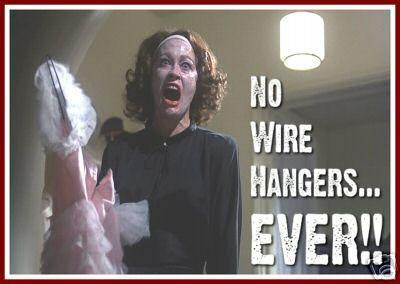
I read an interesting post about Joan Crawford over at Five Hundred Pound Peep’s blog. Crawford was definitely a histrionic malignant narcissist even though most sources say she had BPD (another Cluster B disorder that can mimic and is easily confused with the histrionic form of narcissism). The issue of Crawford’s obsession with cleanliness and order was raised.

There seem to be two kinds of narcissists: those, like my ex, who are complete slobs who refuse to lift a finger around the house and expect everyone else to pick up their mess for them; and those, like my MN mother (and Crawford), who are obsessed with cleanliness and order.

I’m going to talk about the second type.

My mother’s house was like a museum–it was all for show. Even magazines on the coffee table were forbidden because it was “clutter.” Family photos were consigned to bedrooms only because she felt they looked “tacky” in public rooms. She vacuumed, scrubbed, polished and dusted every day, in addition to hiring a weekly housekeeper to keep things spruced up. She invaded boundaries too–every day she came into my room (without knocking of course), and would start straightening up and criticizing my teenage sloppiness. She’d go into my closet and rearrange my clothes, making it hard for me to find what I was looking for (because I had everything in an order that made sense to me). When cooking, she’d wash dishes while she cooked, so there were no dishes inthe sink after dinner (actually, I picked up this habit from her and do it myself).

My mother loved beige, white and eggshell. Everything in the house was in those boring colors, with no bright spots of color to liven things up. I read somewhere once that beige is the devil’s color, not black. I think that person was onto something. I hate beige. It’s the most boring color on the planet. Is it even a color at all?

The glass tables in the living room with their chrome legs and edges were spotless and free of any clutter: what was the point of having tables at all if you weren’t going to put anything on them? The television was tucked inside a cabinet because a visible TV in the living room was gauche and low class and offended my mother’s upper class pretensions.

Even our Christmas tree (after my parents divorced) would be decorated in white lights only, with red and silver balls and bows–no other colors or shapes allowed. She always hated the colored lights, tinsel, and varied ornaments my father bought for our tree when they were still married. Me? I happen to love lots of colored lights. Tacky or not, they seem much more homey and Christmassy to me than the all-white lights you see in offices and banks. Another thing she did after their divorce was refuse to hang any ornaments I had made at school, because again, they were too tacky. My father, though certainly far from perfect, always took pride in my childish little creations, and proudly hung them from our tree, while my mother held her nose in distaste.

whitelights

When company came over, she became an obsessive basketcase, zooming through the house with the vacuum and duster, and woe to you if you didn’t match her level of obsession and jump in and help out.

But of course, it was all for show, intended to impress. Narcissistic cleanliness is another way they can control everyone around them. I also think it’s an unconscious attempt to hide the “dirtiness” inside them. That’s why they’re so obsessed with it and rage whenever they see dirt or disorder.

I’ve also noticed how many of them (especially women, but some men too) are obsessed with bodily functions. I’ll warn you right now we’re getting into the ick factor here, but I’ll try to spare you too much detail.

I’m acquainted with a narcissistic woman who told me she douches every day. Not just after intercourse or after her period, but every freaking day. I mentioned to her how unhealthy that is and how it can rob her vagina of healthy bacteria that prevents infection, but predictably, she looked at me like I was crazy and said I didn’t know what I was talking about.

I know other narcissists (both men and women) who are obsessed with keeping their bowels clean. They are big fans of enemas, cleansing drinks, diuretics, fasting, and laxatives. They obsess over these things and even talk about their rituals in public, with no sign of embarrassment. If you know someone who goes in for colonic irrigation sessions on a regular basis, and then talks about it to everyone as if they were discussing the weather, it’s a good bet they’re a narcissist. I had a narcissist boss once who made his colon cleansing sessions a regular topic of conversation and would describe the process in the most intricate, intimate detail, even in front of customers. He didn’t care who heard and seemed to want everyone to know about it. The ick factor was off the charts with that one. It made me want to throw up.

Cascade Treatment

They’re also obsessed with their children’s bowel functions. This is a little embarrassing but I’ll talk about it anyway because it’s so typical of the type of abuse (and it is a form of abuse) some children of narcs are forced to put up with.

When I was a child, my mother obsessed over whether I had a daily BM. If I skipped a day, out came the big rust-red rubber enema bag with its snakelike black hose. It was an adult sized contraption and not meant for children, but she’d fill that unholy thing up all the way with soapy water and make me lie down on the bathroom floor on a towel while she shoved that thing into me.

Of course it was extremely painful and my small body wasn’t equipped to hold all that water. If I cried or had an accident, she’d get mad and shove that medieval instrument of torture up me even more and hold my butt cheeks together with her cold hands, her long sharp nails digging into my tender buttocks like thorns from Hell.

It was much worse than the yardstick or any other punishment ever inflicted on me. I developed terrible constipation due to my terror of that thing, but of course that just made the enemas even more necessary and frequent. When it wasn’t in use, that evil device hung on the back of the bathroom door, facing the toilet, like a constant threat of what would happen if I didn’t produce.

You see, I wasn’t a real person, but merely an extension of my mother’s mask of narcissistic perfection, her little baby doll she could do whatever she wanted to with, her mini-me. Like an infant, she couldn’t seem to tell where she ended and I began. She obsessed over my hair, my clothes, my weight. She dressed us in mother/daughter matching outfits. In the morning before school she made me sit at her dresser while she took a hard bristled brush to my fine hair that tended to tangle and form knots. If she couldn’t undo a tangle, she’d angrily yank it out, making me scream in pain while my scalp felt like it was on fire.

matchingoutfits
Mother-daughter outfits like these were the rage in the ’60s, but were tailor-made (pun intended) for mothers like mine who wanted to make their daughters into their own image.

When I was five, she decided she wanted my fine, straight hair to be curly. So she gave me a home permanent and while rinsing my hair under the kitchen faucet with a glass milk bottle, the bottle accidentally slipped from her soapy hands and broke. A shard of glass buried itself into my forehead, and I had to get stitches. She didn’t try to perm my hair again after that but always complained about how flat it was and insisted on keeping it short.

I never got to choose my own clothes until my teens. Until I started going to Catholic school and had to wear a uniform, she’d lay out the clothing she had chosen for me to wear the night before. Most of the time it was some frilly frock I hated. But if I complained, I was immediately silenced. I wasn’t allowed to be myself, have opinions, or an identity of my own. All she cared about was the image I presented to make her look better in her own mind.

As a teenager, I rebelled by wearing the sloppiest, grungiest clothes I could find, refusing to have my hair cut and styled (even though I really don’t have the type of hair that looks best when it’s too long because it’s so thin), and even gaining weight on purpose just to spite her. I wore a lot of black even though it wouldn’t be fashionable for another few years (I probably would have been a Goth kid had I been a few years younger) because my mother hated black. Part of this was normal teenage rebellion (and in the ’70’s, dressing in unisex, sloppy clothes such as workshirts hanging over beat up jeans was the fashion) but for me it was also a way to say “fuck you” to my mother’s obsession with image at the expense of my growth as an individual.

Obsessive housekeeping and obsession with their own and their children’s bodily functions is another way narcissists can exert control and dominance, as well as a desperate and sad unconscious attempt to hide or try to “clean out” their own spiritual filthiness.

Can a psychopath ever be cured?

beththomas1

I watched a fascinating documentary, about a 6 year old girl (Beth Thomas) who had been severely sexually abused and neglected and was diagnosed with Reactive Attachment Disorder, a precursor of psychopathy. The little girl is remarkably callous when she speaks about wanting to kill her younger brother and her adoptive parents and shows little emotion. However, because she is only six, she is also honest and candid. She is shown a few years later and has become a normal, loving child.

Psychopaths generally cannot be cured, but in some cases like little Beth’s, early intervention combined with removing a young child from an abusive home can reverse the course of psychopathy before it’s too late. Today, Beth Thomas is in her 30’s and is a registered nurse who works with her adoptive mother, Nancy Thomas in her company Families By Design, which promotes Attachment Therapy to improve the parent-child relationship.
From all accounts Beth shows no signs of narcissism or psychopathy. This is what she looks like today:

beththomas2

Seven more years of NPD hell.

Gaslight-2

After Heather tossed Michael to the curb, and Molly returned to our new Section 8 apartment, Michael asked if he could move back in. At first I was resolute and said No (surprisingly he seemed to accept this), but he did have a job and managed to secure a place to stay for a few months–first in a basement room of where he worked (their business was conducted in a huge Victorian house) and later as someone else’s roommate.

Molly was having serious issues at school, and oftentimes didn’t even attend. Several times I was called from my job as a convenience store assistant manager to come pick her up because she was in some sort of trouble again (fighting, stealing a pair of expensive boots, acting “high” at school, etc.) When she was there, she hated it. Since I had to open the store by 6 I had to leave my house before 5 am and there was no way I could remain home to make sure she made the bus. Ethan tried but most of the time couldn’t even get her up (he was very good about getting himself up and to school). The school informed me if I couldn’t get her to school, that I could be charged with neglect and willfully keeping her out of school. It didn’t matter that I had to work and that I had no one else to keep an eye on her. Well, as it turned out, I was fired from my job primarily because of my poor attendance due to disruptions and early leaves caused by Molly, so that sort of solved the problem except she still wouldn’t get up most of the time, even if she was home.

When she was home (which wasn’t often), she was surly and snappish and spent most of her time on MySpace, which was still popular at the time. It was 2007 and she was about 15 by now. For three months she managed to keep her activities a secret from me but eventually I found out she was seeing an older man she met on MySpace (he was 23) who had a jail record for selling drugs. I had given up trying to control what she did. She convinced me not to have him arrested by saying she would kill herself, so I did nothing and prayed for the best. I knew they were doing drugs and kept begging her to stay clean to no avail. She had Medicaid, but refused to see a therapist, although she did agree to go in to be evaluated for medications and that’s when she was diagnosed with Bipolar Disorder and Borderline Personality Disorder. Countless times the school called meetings to discuss what to do about her attendance and behavior and I begged them to put her into a special program they had for kids with emotional problems but they said she would have to wait until the following school year.

One day Michael showed up at the door and informed me his last roommate had kicked him out again. He told me he’d been drunk and after he was booted out, he tried to kill himself by running his car into a telephone pole. The pole and the car were totalled, but Michael was fine. He started crying when I still said he couldn’t move back in and started the manipulations, convincing me it would be in my benefit to have him there because he would make sure Molly went to school AND he would help me with the bills. Since Molly was more likely to listen to him than to me (and begged me to let him move back in), I conceded, telling him he would have to find another place to live in three months. Well, that three months turned into almost seven years.

At first things seemed fine. Michael stayed sober, was working, and actually did contribute most of his paychecks to household expenses. Molly’s behavior improved a little–at first. She was still with the older guy but was more cooperative when she was home. However I noticed that she was in her room a lot with Michael with the door locked, or sometimes Ben (her boyfriend) was in there with them. If I tried to interrupt them or ask what they were doing, I got screamed at and told to mind my own business. I tried to listen to what was going on in there–it didn’t sound sexual (which worried me) but it did sound suspicious. One day I found a crack pipe on the floor of her room and questioned her about it. She said it was Ben’s and assured me she wasn’t smoking crack or any other hard drugs. Often I smelled pot smoke coming out from the room so I knew they were smoking pot together a lot. I didn’t think pot was so bad, but couldn’t believe her father would be so irresponsible as to smoke it with his under-age daughter.

crackpipe

I tried to talk to Michael about this, but he refused to listen, at first denying they were smoking anything, and then when he couldn’t do that anymore, telling me I had no right to tell him what to do since I had “gotten him the felony” (this was a refrain I would hear over and over again for the next seven years–he always used it as an excuse to do whatever the hell he wanted). So the three of them continued to get high in her room, leaving me out of everything and treating me rudely when they did talk to me. I was being gaslighted and triangulated against again, although this time, Ethan kept to himself and didn’t get involved in our drama. He busied himself on the computer and refused to participate in any arguments. Good for him!

In 2008 Molly broke up with Ben, but her drug problems had become more severe and I was at my wit’s end. One day I was home and Molly was out on the second-floor deck talking on her phone. I had to pick up a few things at the store and let her know I’d be right back. Twenty minutes later, I came home to find an ambulance in our driveway. My heart pounding, I ran into the house and found out Molly had been straddling the deck and had fallen off onto the ground (she was high). She was taken to the ER and it turned out she had fractured one of her lower vertebrae. She wasn’t too seriously injured but she could have been (and she’s had back problems ever since).

It turned out the be a blessing in disguise because finally, after begging for Molly to go to rehab for so long (and the school would do nothing to help), she was court-ordered to go. The one catch was that the only way Medicaid would pay for her treatment (I couldn’t afford health insurance for her through my job), was if I allowed the state to take custody of her. It was a painful decision but she was 16 and almost an adult anyway. It didn’t mean she couldn’t come home to live with me again. What choice did I have?

Molly was irate that I “gave up custody” of her and at first couldn’t understand why I would do such a thing. (Later on she came to understand and told me I saved her life by doing that).

The rehab was a six month live-in program, and Michael and I were allowed to go see her, although it was required a social worker was always present. The visits were awkward and forced, but she did seem to be improving (even though she hated it). She started gaining weight back and didn’t look so pasty anymore. Finally I felt like I didn’t have to worry so much about her.

Without Molly at home, Michael and I started to get along better, until he got fired from his job. At first he seemed to be looking for another one, but soon it became apparent he was spending most of his time in chat rooms and on political websites. I questioned him and he said no one was hiring. I offered to take him around to look but he always found some excuse. He sweet talked me into buying pot for him, even though I couldn’t afford it.

Meanwhile, Molly graduated from her program and went to live in a group home for teen girls with substance abuse issues. She liked the home and made some friends there (she is still friends with two of the girls), but since she wasn’t being supervised as closely, was able to obtain and use drugs. Pain pills were her drug of choice (but anything would do in a pinch, including alcohol), and one day she was so high she was taken to another residential treatment program in Tennessee. She called me crying, and wouldn’t tell me where they were taking her at first, but that she wanted to kill herself. The program turned out to be a sort of boot camp, where the kids lived in a rustic setting where they had to build their own fires for warmth and live in a cabin even in the cold months. But there was hiking and horseback riding. It was supposed to build character. I hoped it would. She hated every minute of it but on her 18th birthday would be allowed to return home.

When Ethan was nearly 18 he told me he was gay. I assured him I wasn’t upset and kind of suspected out that he was. He started to show more confidence and become more social. But at home he was testy and impatient with both Michael and myself. He hated all the arguing and was out more often. He made friends with a female police officer who worked at his school. He couldn’t take being in the house anymore with all the drama, and moved in with the policewoman for a few more months until he could find another place to live.

leavinghome

Ethan came back home after his 18th birthday but not for long. In mid-2010 he told me he had met someone online and would be moving to Illinois to stay with him. The guy he met turned out to be a supportive and mature person and they are still good friends today although they’re not together anymore. Of course I worried at first but there was nothing I could do. He was 18 and could do what he wanted, but it was actually the best thing for him.

In early 2011, it came to the attention of the landlord Michael was living with me, and he informed Section 8. I was told to move out by the end of the month. We had very little money and had to move into a trailer in a crappy trailer park that was rife with drug and gang activity (two years ago, someone was found shot to death outside one of the trailers). The toilet in one of the bathrooms was literally falling through the floor and the tub in the other bathroom didn’t work. The rooms were tiny and the walls paper thin. The kitchen wasn’t too bad though and even had a dishwasher, although it broke shortly after we moved in. I sold most of my belongings at a huge yard sale to raise funds for the move.

It was becoming apparent Michael was no longer going to work. He had developed diabetes and complained about the food I bought–I got food stamps, but I still couldn’t afford to buy much red meat and he said he needed it to control his diabetes. He became insulin dependent but had no medical insurance so he had to go to the free clinic to get his doses. He also saw a psychiatrist who had diagnosed him with Bipolar and PTSD (!?!) and prescribed him medication, including Klonopin, which he started to sell for cash. At the end of 2011 he applied for Disability (SSI) and so now had a handy excuse not to look for a job–since he was disabled, he wouldn’t get SSI if he was working (this turned out to be false if he worked part time but I didn’t know that).

??????????????????????????????????????????????????????????????????????????????????????????????????????????????????????????????????????

In April 2011 Molly turned 18 and returned home. For awhile she seemed a lot better. Even though altogether Molly had probably only finished one and a half years of high school, she managed to get a GED in just one month because she is very intelligent. She started looking for a job and was hired almost right away, but she never seemed to be able to keep a job for long after that, even though she always found one quickly. She refused to attend college, even though if she had, she would have been able to get government benefits for housing and school until she was 26, as well as continued Medicaid. But she hated all the jobs she had and almost always wound up being fired for getting too involved in interpersonal drama. She told me the more I talked to her about college, the more she didn’t want to go. I left her alone after that.

She had a string of boyfriends who were no good for her, although none were as bad as Ben had been, and the most recent one was clean and sober although his future prospects weren’t that good because he only had a high school education and no ambition. He worked as an auto mechanic but only doing oil changes and inspections and didn’t seem to interested in advancing. When they were together he spent most of their time playing video games, with Molly watching.

At the end of 2012, we moved again, this time to a real house. We lucked out–it was another duplex with two bedrooms and in a nice neighborhood. It was an older house with a lot of character and the original Arts and Crafts windows, and I had fun decorating it and painting it (although I never had much furniture). Michael slept in the living room; Molly and I took the two bedrooms. Michael was becoming unbearably annoying, constantly whining about how sick he was because I wouldn’t buy decent food for him, and watching political shows on TV and whining about how much he hated Republicans (I didn’t care for them much either but his constant bellyaching was irritating and he did nothing to help himself). I told him if he wanted better food he would have to get a job. Of course he refused (“but I’m disabled!”) and every day I’d come home after a long day at work to find him passed out on the couch or ranting about politics on Huffington Post. He never bothered to pick anything up and smoked like a chimney–both pot and tobacco. The living room was a mess, and Molly and I always wound up having to clean it. He never washed the many dishes he used, and they’d be all over the place. Living with him was almost unbearable and I was starting to really hate him. When he was high he acted stupid and oblivious to everything (and was loud); when he wasn’t high he was mean and sarcastic, calling both me and his daughter horrible names. He was so ungrateful, never apologized for anything, and just did whatever the hell he wanted. He made Molly or me go pick up his pot for him (I refused to do it after awhile) and complained about everything. He bought lottery tickets or pot from the money he got from the illegal sale of his psychiatric meds (lottery tickets were another thing I refused to foot the bill for). He ordered us around and stole money from me several times, although he never would admit it and tell me I (or Molly) was imagining things. He acted so entitled. Even Molly was becoming sick of him and we started to become closer.

In early 2013, Michael decided he wanted a dog. We already had one (and also 4 cats), and had said I absolutely could not afford another pet nor did we have the space. But telling Michael no about anything was futile. He always had to have his way. So one day I came home to find him holding a puppy. I told him to get rid of it and he refused, resorting to his old “you’re just an animal hater” guilt tactic. He said if I got rid of the dog, he would kill himself. I let him keep the dog.

I love dogs, but I couldn’t stand this dog. He was a jack russel/Beagle mix, cute but the most hyper dog I ever met. Michael refused to control him or discipline him and the dog pooped and peed all over the rugs, chewed on the furniture and everything else he could, and constantly ran off and would bark uncontrollably. When I complained to Michael about it, he would make excuses like “but he’s just a puppy!” He’d say this even though when the dog was over a year old. Molly and I had no luck training him, but her most current boyfriend was able to get him to stop pooping in the house. However, he continued to run off, and many nights I’d hear him barking somewhere in the neighborhood. Three times neighbors called animal control and the third time, I told them to please just take him away. If it happened again, I would have been fined. Normally I would have felt terrible having a dog taken to the pound (because I have always loved animals) but with this dog I didn’t feel at all guilty. It’s not like I had ever agreed to adopt the dog in the first place.

destroyinghouse

Michael was livid and wouldn’t speak to me for days. He was becoming angrier and more unpleasant and sometimes he just acted downright insane. I think some of the “insanity” was fabricated so he could continue to get all the free meds and also it would help him get his SSI sooner, or so he thought. Just about everything out of his mouth was sarcastic, angry and intended to offend. Half the time he made no sense. He seemed to hate everyone and everything, especially his daughter and ex-wife who were keeping him from being homeless and sacrificing so much for him. He kept saying I needed to be more patient because he was sick with diabetes and had mental problems. He never, ever apologized. I’ve never been a mean person but I didn’t like the person I was becoming around him. I was turning into the bitch he always said I was. I no longer even tried to be nice, and tried to be away from the house as much as possible. When I was home I went in my room and locked the door to get away from him. I had no idea how to get rid of him because he threatened suicide every time I did and I knew if he killed himself my daughter would be devastated. I was afraid how it would affect her. Michael always reminded me of this too, and even threatened to kill himself in her room and warned me how that would really fuck her up. Oh, he was evil alright. He never thought of anyone but himself.

One day in February 2014 I got a phone call at work from Molly telling me to meet her and her boyfriend at the police station. She explained that Michael had lost his temper and beat her up. That was the last straw for me. I no longer cared about his excuses, I wanted him out. The police officer there told us to go to the magistrate’s office if I wanted to press charges and file a restraining order. I did but Molly started feeling bad for him (even though she had her eye blacked and had other bruises on her) and refused to press charges herself.

We arranged to go home and pretend we had all gone to the mall. Later that evening, the police came and took Michael off in handcuffs. He was released the next day but didn’t dare come back. Finally I was free! But I had a lot of work ahead of me.

I’ll write a post later (it won’t be anywhere near as long as this one!) describing what the aftermath of his abuse has been like, and the steps I’m trying to take to recover from years of being under his control.

Held hostage: living with the enemy

trapped

Finally, I’m getting around to posting this last part of my story. It will be in two parts, because it’s going to be so long.

After Michael kicked me out of our home in 2003 (which by that time was in foreclosure), I had no job, no place to go, and no friends or family who would take me in. Michael told me I couldn’t take the children with me, and since I had no place to go, it was obvious that for the time being they would have to stay with him.

I had just been released from the psychiatric center for Major Depression and severe PTSD, and I still wasn’t all there. I was medicated too, so that numbed my emotions even more. So I didn’t try to fight his demands, even though I could have. I could have gone to the local chapter of Helpmate, an organization that helps battered women. Even though I wasn’t battered physically (usually, unless he was drunk), the type of abuse I had just suffered was even worse because it was so insidious and soul destroying.

As for the children, I didn’t think there was anything I could do. I had no place to go, and couldn’t them with me to wherever I’d have to stay.

I had 30 days to leave. I wanted to leave right then and there, but my daughter’s 10th birthday was coming up so I wanted to stay around for that. But the next two weeks were torture. Michael and his flying monkey Rachel amped up the volume to full blast on their mind games and gaslighting, and the shitty car I had access to was taken away from me so I couldn’t leave until they wanted me to. Rachel took away my car keys. If I needed something, I had to ask for it. I was a prisoner in my own home. I’m convinced they wanted to keep me around just to torment me.

My daughter’s birthday was miserable. Molly was depressed. Michael and Rachel used her to triangulate against me and my son, who was also treated horribly. I think a part of Molly hated being in this role, but she knew she didn’t have a choice if she didn’t want to become a target herself. It was an awful thing to do to a child.

I left the next day. I had $1,000 in my pocket and the old car. Michael and Rachel didn’t say goodbye. Ethan wept quietly in his room. Molly said goodbye but didn’t hug me. Paul was the nicest. He came over to the car window as I was pulling out of the driveway and whispered “you don’t deserve this.” I don’t know if I was imagining things or not, but I thought he had tears in his eyes. Paul was a nice guy, but was very weak willed and as much under Rachel’s control as I was. The only difference was he wasn’t a target. He had pretty much kept to himself the whole time they lived with us, staying out of the hate campaign but not fighting against it either.

So I drove 11 hours to New Jersey, where an old friend was letting me stay with her for a week. Somewhere in Pennsylvania, I became fatigued and had to find a motel to stay in for the night. In my room, I thought about the gravity of what had just happened. I thought about my children and wondered if I’d ever see them again. I thought about how emotionally damaged they both were by Michael’s mindgames. I thought about Ethan’s love of Twix bars and his silly grin and hair that stood straight up when he got up in the morning. I thought about how sweet Molly could sometimes be and the way she still slept with her threadbare puppy at night. I thought about the way they both ate cereal straight out of the box. And for the first time in many months, I cried.

car

But I had to keep going, somehow. The next day I met my friend in New Jersey and accompanied her on her pet sitting job. I helped her with the animals. The animals were therapeutic for me, and I felt almost happy when I watched them or stroked their fur. I felt like they understood me and what I was going through. I would have liked to stay with my friend longer, but it wasn’t possible, and after a week I drove back to North Carolina, and crashed with another old friend for about a month. Things didn’t work out too well and the friend resented my having so much “stuff” (I had only brought 4 bags out of the car) and finally told me it was too crowded (it was a one bedroom apartment) and I would have to go.

I was almost out of money. In the nick of time, I found a job in a gas station and moved into the local women’s homeless shelter. The shelter actually wasn’t too bad. It was midsummer and there was no air conditioning (and I had a sore tooth that later had to be pulled but the pain kept me up at night), but the rooms were okay, and I only had to share my room with one other woman, a crackhead in her 60s. We didn’t get along. So I stayed out most of the time, if not working, then just going to the library, walking around the mall, or driving around. A few times I went to church to pray. I didn’t have the money or energy to do anything else. There was no room in the room for any of my stuff, so I kept everything in the car. I had to bring up my change of clothes from the car every night and lay it on the bed for the next day.

During this time I had several conversations with my parents. My mother feigned sympathy but offered no help. She kept asking me “what are you going to do about the children?” or saying things like “A good mother would keep her children with her.” Oh, the hypocrisy was stunning–these words coming from a woman who had given up her own two daughters for a man. She knew I could do nothing and had no place to take them. I think she was deliberately taunting me by bringing it up all the time and making me feel like a horrible mother.

It was my father who finally came through. In spite of his drunkenness and physical punishments of me as a child, I don’t think he was psychopathic. Under all that anger, I think he cared about me and the children. But he was deep down a weak man who always allowed himself to be manipulated by narcissistic women. The first time I had asked for his help, his wife (a narcissist who controls all their funds) said no. She told me I was an adult and had to pull myself up by my bootstraps and shouldn’t be asking them for help. I never felt so unsupported. No one cared!

As a requirement for staying in the shelter, I was seeing a counselor, who asked me if my parents would help me pay for a small place I could take the kids. I told her they would not, but she took it upon herself to call my father anyway. Somehow hearing a professional voice instead of mine convinced him, and his wife grudgingly agreed to help me pay for an apartment on a month to month basis.

So I moved into a cute one bedroom. During this time, the kids had been living with Michael, and because our home had been foreclosed on, they had all moved to a rented house in town. I found out my poor son Ethan was required to do all the work and made to sleep in the basement. He didn’t get one of the bedrooms, though everyone else did (even though the two girls had to share). Ethan was constantly taunted about being gay (even though he was years from coming out). When he fell down on his bike one day, Rachel just stood and laughed at him. This shattered my heart.

The kids moved in with me. Ethan was thrilled, even though he had to sleep in the living room (Molly and I shared the only bedroom). At nearly 14, he was developing a love of computers and spent hours playing with the boxy old desktop I had picked up at Goodwill. We had no Internet (I couldn’t afford it, or cable either) but he had loads of games he would play and he opened up Word to write poetry and song lyrics. He was a quiet and well behaved kid, who also loved to ride his bike and sit outside on the tiny deck, watching nature. He was fascinated by weather, and set up a little homemade weather station outside he had put together with a kit.

computergeek

Molly was sullen and clearly didn’t like being with me anymore. She thought I was boring. Molly was then and still is addicted to chaos and all too often, the wrong kind of excitement. She can be a drama queen. She may be borderline or God forbid, even narcissistic, but she, like me, has been diagnosed with severe PTSD.

It was 2004 and Molly was 11, turning into a physically beautiful girl, but preteen angst mixed in with hatred for me, fueled by the brainwashing she had received. Our time together was awkward and forced. When I’d tell her to do something, she’d refuse or make a sarcastic remark, usually repeating something Michael and Rachel had said about me. Most of these things were lies. The worst was when she told me Michael and Rachel had told her the reason I left was because “your mother is selfish and doesn’t love you anymore.” I was stunned by this incredible lie. I told Molly it wasn’t true at all, and I loved her very much and she shouldn’t listen to them, but I don’t think she was convinced. To this day, there’s a rift in our relationship due to their gaslighting and triangulation that made her believe I didn’t love her. It’s gotten better and she does realize now she was lied to and manipulated. But the wounds haven’t completely healed and it’s still having repercussions in our relationship and her behavior today. She is also showing disturbing early signs of being narcissistic. But more on that later.

I wasn’t thinking straight and was making terrible choices. I got back together with the man who had gotten Michael and I in trouble for the marijuana 3 years earlier. This was a huge mistake, as he tried to take over and criticized how I was raising my children, who he thought were spoiled. They both couldn’t stand him, and after a few months, I decided I couldn’t either, and gave him the leave ho. He continued to call me for a couple of years after that, but after a while, I just started hanging up on him. Finally he gave up.

In the meantime, Michael was trying to worm his way back into our lives. Rachel and Paul had thrown HIM out of the house, and he started love bombing me and the kids, acting all simpering and apologetic, even saying he was sorry for everything he put me through. He bribed me to let him live in our tiny one bedroom by promising to be a better dad, and cooking dinner every night. He also had a job and offered to help me pay the bills. Mainly because Molly did seem much happier with him around (and I believed his empty promises) I stupidly conceded.

Michael didn’t become abusive this time, but he became loud. He was never a quiet person, but he was smoking pot constantly and when he was high, his voice became loud and he blasted his horrible music. The downstairs neighbors, who were elderly, complained the the landlord several times, and we were finally asked to leave.

Luckily I had a better place to go with the children, and the timing was perfect. The apartment we were living in had been a month to month arrangement, and my father had told me he could no longer afford the rent payments (actually his wife just didn’t want to foot the bill anymore). I didn’t earn enough at my job at the gas station to pay the whole rent, so we had to leave anyway.

I had been working with an organization called Interlace, which works with single mothers and children who have been victims of abuse. They’re a fantastic organization, and they provide free housing on an 18 month basis. The only thing they required was covering the utility bill, being available for weekly home visits and attending monthly group meetings. The group meetings were fun. Dinner was always served, and after the meeting, there was usually some group activity, usually involving arts and crafts, that both mothers and their kids participated in. They also sponsored group picnics and other events.

So we moved into a clean, well kept 3 bedroom/2 bathroom apartment with more storage space than I’d ever had in my life. There were two levels and there was even a tiny room (really an oversized closet) under the stairs that the kids had a lot of fun redecorating into a little private domain complete with large pillows, stuffed animals (both kids still loved their fluffies) and an old black and white TV that actually worked.

There were rules too. The most important one was no overnight visitors, even family members. That didn’t stop Michael from trying to manipulate and sweet talk his way in. He convinced the kids (even Ethan) that we were better together as a real family and they needed a dad. I told him it wasn’t allowed but he promised to be quiet and never answer the phone or the door. I was so broken down and afraid of him I broke the rules and said yes. Every day I was terrified we’d be discovered (we could have been thrown out), but we never were. Fortunately the weekly home visits were scheduled ahead of time, so I always made sure he was out when the counselor came over. No one suspected a thing, and the neighbors didn’t care.

But Michael didn’t stay long. After a few months, he started acting cranky again, and he was out a lot more. I didn’t mind his absence, but Molly did. She was still sullen and snippy and her grades dropped from A’s to mostly C’s and D’s. She acted like she didn’t care about anything.

It turned out he had a girlfriend. She had her own apartment and asked Michael to move in with him. Strangely, I was jealous. Or maybe just resentful because I felt I’d been duped and used. After all the hell he put me through, he actually dared to leave me? But overall, I was relieved–until one day Molly told me she wanted to live with him and not me.

Molly had been spending a lot of time with Michael and his new girlfriend (I’ll call her Heather) and always seemed in a much better mood after she had been with them. She spent less and less time at home, and there came a point where I hardly ever saw her anymore. Michael and Molly both told me Heather was a much happier and more positive person than I was, and they both preferred her company to mine. Later it turned out she was a drug addict; that probably explains the “happiness.”

Molly said if I didn’t allow her to live with them, she would hate me forever. Oh, she was good at manipulating her mom–she had learned from the best. She actually cried and said if I made her stay she’d be so miserable she might kill herself. I didn’t know what to do or say, so I allowed it.

punkgirl

Finally, in early 2006, the divorce came through. I had agreed to joint custody, not wanting to anger Michael and fearing what he might do if I “took his kids away from him.” I also didn’t want Molly to hate me by not allowing at least partial custody. So although technically we both had joint custody, the kids were allowed to choose. Ethan remained with me and occasionally visited Michael and Heather (when they wanted him around, which wasn’t often–he got on their nerves), and Molly of course got to live with them.

If I had any idea of what was actually going on in their home (I was so naive and trusting back then), I would have grabbed my daughter and ran.

Michael was regularly drinking again, and now mixing alcohol with pot AND pain pills. Heather turned out to be a pill addict and also a heavy drinker, and a number of times Molly couldn’t get to school because no one was sober enough to drive her (and there were no buses in the rural area they lived in). There were parties every weekend, where Heather’s friends, a motley crew of crackheads, meth addicts, drunks and assorted addict, came over to the house. Molly was only 12 going on 13. But that didn’t stop Heather from letting my daughter try “just one pill”or have a drink or two.

The police were called on a couple of occasions because of the fighting. Michael and Heather got into violent arguments. Unlike me though, she wasn’t afraid of Michael. She finally reached her limit and one night tossed him out, along with all his belongings. Molly had to come back home with me, but by now she had developed a taste for both drugs and alcohol, thanks to Heather’s “education,” and became worse than ever.

pills

Michael disappeared after that. I had no idea where he was and none of us, not even Molly, heard from him. Molly hated this and missed her father, but I was relieved and secretly hoped he was dead.

At the gas station, I was promoted to assistant manager, and although were were still pretty poor, I could afford a few nice things now and a new car. Our 18 months in the Interlace apartment were up, and just in the nick of time, our Section 8 came through. We moved into a charming Craftsman style two family house. We rented a three bedroom apartment on the ground floor with a front porch and a deck in the back. Section 8 paid half of the rent. And we were finally allowed to have a pet–one dog only, but that was fine. Daisy, our dog who had been a gift for Molly’s 6th birthday, been living with Heather and Rod (and various friends before that), but she was growing older and was a little arthritic, so she came home to live with us. Daisy was so happy to be home.

Molly’s drug problems were beginning to affect her at school, and her behavior at home was becoming frightening. She started wearing long sleeves all the time and when I asked why, she changed the subject. But one night I saw red marks on her wrists and forearms. She was cutting herself. When she was in 8th grade, she was caught at school with several Klonopins (she said she had gotten from her dad), which she was sharing with her friends. She was caught, and suspended for two weeks. It was at the end of the school year, so even though she got her diploma, she wasn’t allowed to attend her own graduation ceremony.

I was slowly becoming fat. I smoked too much. I was stressed and miserable, and other than work, I had no interests except eating, reading crappy novels, and watching court shows and sometimes movies on TV. I was becoming the “slovenly” mother Rachel had accused me of being several years before. I was emotionally numb, yet also prone to to occasional fits of anger that at times became violent. Either nothing affected me, or it affected me too much and I overreacted. Most of the time I felt like I was an autopilot, just going through the motions of life. There was no beauty or joy in my world, and all I could see ahead was a vast emptiness that stretched out until death. But I plodded along like an ailing cow, accepting that this state of affairs was normal. In fact, I was showing symptoms of unresolved PTSD.

My only ray of hope anymore was my dog Daisy, and my son Ethan, who was becoming a sort of guardian angel to me. By default, he was now the man of the house, and became a responsible teenager, getting himself up for school and always at the school bus on time, and always doing his homework. He had always been a B and C student, but he began to apply himself more and started getting A’s and even on the honor roll. When he was home, he was quiet and spent most of his times on the computer playing video games, posting on entertainment and racing forums, and setting up his own car racing forum. He also started making short films with his beloved new digital camera my father had bought for him. From the get go, it was evident he was talented. Soon he transferred from the regular public school to an adjunct school that specialized in computers and technology.

The more mature Ethan became, the worse his sister got. She was addicted to MySpace (we’re up to 2007 now, and that was still the most popular social network of the time) and without my knowledge, met a man online 7 years older than herself. Ben had been in prison for fraud, but passed himself off as a “good guy.” He wasn’t.

I need to take a break and eat something, so I’ll post the next part of this story in a little bit.

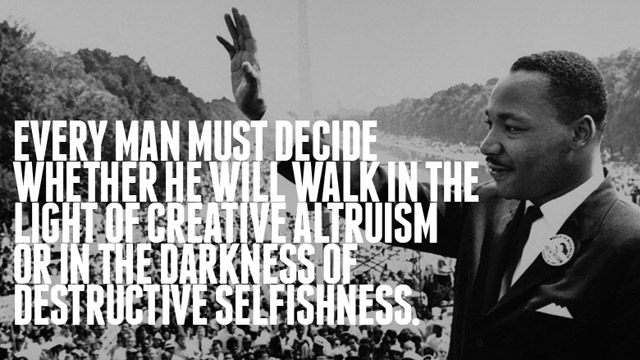
My son is “furry”–got a problem with that?

mexnyman

So far my blog has been pretty inoffensive. Well, I like to think so anyway. But I knew the time would come where I’d have to post about something controversial and now is that time.

My son is a furry. And not only do I not have a problem with it, I’m damned proud of him. Yes, I really did just say that.

I know what some of you are probably thinking.

“What kind of a ‘parent” are you?”
“Furries are a bunch of perverts! How can you accept your own CHILD being one?”
“You are depraved to be writing bragging about that.”
“Ewwwwwwwww!!!”
“You are going to hell and so is he.”
“You are SICK!!!ELEVENTY!!111!!
*puking sounds*
“MAKE HIM STOP!!!”

Let me explain. My son, now almost 23, was, along with me, his father’s scapegoat during most of his childhood and teen years. Like me, he’s a HSP (highly sensitive person) and HSPs and psychopaths as parents do NOT mix.

His father, Michael (not his real name), nearly destroyed my son’s self esteem. As a child, he was easily hurt, withdrawn to the point I thought he was autistic (he isn’t though your truly is), and was told (and began to believe) he couldn’t do anything right. Michael called him stupid, sissy, a wuss, and constantly told him he’d amount to nothing. Like me, my son had few friends in grade and middle school. He was bullied. I identified with him (and tried to protect him from Michael’s narcissistic rages) because well, he was so much like me.

I already told you earlier how Michael’s flying monkeys bullied him just prior to the divorce. Ethan (not his real name) was about 12 during this time and that’s a vulnerable age for even the strongest, most confident kid.

Fortunately, Ethan decided to live with me instead of his father after the divorce (my daughter chose her dad, and that’s another story I’ll get into in my next post). I don’t like to toot my own horn and I certainly wouldn’t have qualified as “Mother of the Year” but I like to think I did a pretty good job as Ethan’s mom, and some of the damage that Michael and his team of flying monkeys had done on my son was repaired. Or at least kept him from becoming one of those hardcore emo kids who writes freeverse poetry about suicide, rain and darkness and may even attempt the ultimate self destructive act. Or kept him away from drugs and early drinking. Or becoming a Narcissist himself. He never became any of those things, and in fact was always pretty straight edge. He told me (and I believe him) he never tasted alcohol until he was of legal age. He never liked pot and certainly never touched anything harder. He always did his homework. In high school he was one of those computer geeks and found he had a fascination with photography and art, something I also was involved with when I was his age.

Ethan wasn’t popular and seemed to have no interest in girls. He had a few friends he hung out with to play Age of Empires,” “Legend of Zelda” “Black and White,” and other video games. He was really good at the games and started his own forum about auto racing (something he’s still passionate about). But he was still painfully shy and lacking in confidence.

Two things helped to improve Ethan’s self esteem: Outward Bound and Kung Fu. His 8th grade graduation trip, instead of the usual “fun” trip to New York City or Washington DC, was a physically and mentally challenging 4 day Outward Bound expedition to the mountainous wildnerness right here in western North Carolina. I won’t get into detail about his trip (that’s a story he can tell), but he came back a little different, a little more mature, a bit more confident. When I asked him if he had fun, he said not really, but it was a trip he would never forget and that taught him a lot of things about himself.

When Ethan was 15, he decided to take Kung Fu classes. He was pretty good, and stuck with that for 3 years, advancing to Green Belt, which is more than halfway to Black Belt.

Ethan was keeping some secrets though, and admitted later on he was still deeply unhappy. I didn’t know this at the time, but I did know there was something he wasn’t telling me, and I could have guessed what it was. But I had to wait for him to say it.

At age 17, Ethan came out as gay. He was afraid to tell me, but I told him I had known for a long time but was waiting for him to say it. Ethan was relieved, and now that he was “out,” his confidence level went up a little more, and suddenly at school he was considered “cool,” something he had never been.

It’s so funny how kids will bully another kid they suspect of being gay but who isn’t “out” (and he was definitely bullied about that), but as soon as they’re “out,” they become accepted and cool. It’s a paradox, but it really isn’t–because it’s really not about gay vs. non-gay, it’s about self esteem. Bullied kids are kids who are too outwardly sensitive and have little self confidence. A kid with confidence, even if different from the other kids, is accepted, or at least respected. And I think that’s what happened with Ethan when he came out as gay.

After Ethan graduated from high school in 2010, he came out as “furry.” At first I didn’t even know what that meant, and Ethan didn’t want to explain it to me so I had to go online and do some research myself.

There’s been a lot of negative publicity about “furries,” especially since an infamous episode of the TV show CSI, in which a serial murderer was a furry who liked to kill wearing an animal costume. But this negativity isn’t deserved or even valid. Most of the criticism of furries is related to their alleged depravity–furry detractors insist furries engage in bestiality, or at best, have a fetish about having sex dressed up as animals.

While I won’t deny there is a subset of the furry community that may have a sexual “fursuit” fetish, it’s a small subset from what I’ve seen (and I know a lot about furries now) and the idea that they’re into bestiality is a ridiculous claim with nothing to back it up.

My intention here isn’t to give you a history of the furry fandom (there’s plenty of other places to read up on that). But a little background is required. The furry fandom grew out of the science fiction community back in the early 1980s. Most furries are geeks–comic book geeks, computer geeks, sci-fi geeks, Dragoncon geeks, art geeks, and among Millennials, animated cartoon geeks. Millennials grew up inundated with a huge array of the best made animated films and shows Disney had to offer; and because their stressed out parents were often working or busy with other things, cartoon animals like Mufasa, Timon and Pumba from “The Lion King,” CatDog, Bolt, and the Animaniacs were often left in charge as surrogate babysitters to entertain them.

Naturally a lot of Millennials developed a special affection for these cartoon critters who gave them so much laughter and comfort as children, and some of them continued this fascination into adulthood.

Enter the furries. The vast majority of them are Millennials (born from 1982 to 2000 or so) and there are a surprising number of female furries and heterosexual furries, and many of them are married. There are furry conventions that are becoming more popular every year, the most famous one being Anthrocon, which is held in Pittsburgh every year. Most furries are involved in art–either visual or performing art. I’ve talked to furries, and as a whole they’re a creative bunch. Furry isn’t a perversion; it’s a hobby, no different than someone who attends Star Trek or comic book conventions.

Being a furry has helped Ethan find his creative outlets. Ethan is naturally rather shy and reserved. Dressing up as “Mex” and his other “fursona” has allowed him to discover his outgoing and sociable side and that he has a love of performing (dancing and acting), which is something he might not have explored had it not been for the costume where he feels more comfortable experimenting with that side of himself.

He showed interest in photography and art at an early age, but has developed these abilities, and is now a fledgling filmmaker with a professional eye. He took up filmmaking in college and now has a degree. He makes his own music videos and has posted many of these on Youtube. Not all are about furries. Although none have gone “viral,” several of his films have received thousands of hits. He also is a competent artist, and draws well, although I think he’s more naturally talented at photography and filmmaking.

Here’s one of his videos from his music channel, Radio Recall.

What he’s proudest of is his dancing. He’s been training himself in street-dancing for two years. At the past two conventions he’s attended, he entered the fursuit dance competition. At the most recent one, he was one of the finalists, and he told me being accepted as a finalist was the happiest, most validating moment of his life and the high from it lasted for days. Now he’s working hard at getting even better so he can possibly win one of the Top 3 awards the conventions give out to the winners.

Here’s a video of his performance in the dance competition at a convention in Florida.

Ethan has shown me what can happen to a highly sensitive person who is able to escape from psychopathic abuse when still young, and then is given validation and encouraged to follow their own path, even if it’s not a path most of us would take. He’s shown me what I could have become had I been given such an opportunity (or taken advantage of it) when I was young. Not a furry or dancer or filmmaker, but someone who chased my dreams and never looked back. Ethan has shown me that none of us is a hopeless cause, and it really is possible to free yourself from the barbed wire prison of family psychopathy. Instead of being attacked by the flying monkeys and having your wings clipped, you can learn how to fly.

And that is why I’m proud my son is a furry.