There will be no guest post this week because I don’t have one ready, but next week I’ll post a new one.
Meet and Greet @ Dream Big: 4/30/16
Got balls?
Rita sure does. She drives trucks along the Bolivian Road, believed to be the “world’s most dangerous road.” Watch this documentary — you will be on the edge of your seat. I could never do what she does!
On being controversial.

I don’t write to people-please. I did enough people-pleasing as a scared, awkward child and a codependent wife to a sociopath. Those days, for me, are numbered. I blog to be honest about myself and the way I see the world. Being completely honest isn’t always easy, and there have been many times I haven’t posted something I really wanted to because I was afraid of how people might react. But my track record is pretty good, and usually my desire to post an opinion or viewpoint that may not be “popular” overrides my fear of angering or upsetting someone. Even if I hesitate before posting an unpopular or controversial opinion, more often than not, I’ll eventually post it anyway and worry about the fallout (if any) later.
Most of the time, I’ve been pleasantly surprised. I’ve had people actually thank me for posting a controversial or unpopular opinion, because as it turns out, there are people who feel the same way I do, but haven’t worked up the courage to admit it in public. They are grateful to know they’re not the only person in the world who feels a particular way. Other than those occasional words of gratitude, posting something controversial or unpopular has usually proved to be no more eventful than posting something that’s completely vanilla and inoffensive.
But occasionally, my posting something controversial has been met with anger and even hatred. I have my share of haters, but fortunately they are relatively few. Because I’ve always been a fairly non-confrontational person and also because I have such low self esteem and hate it when people hate me, at first the reality of having haters was hard to take. The first time I got skewered for posting something people strongly disagreed with, I was tempted to close up shop and stop blogging. My self-esteem and motivation to blog took a nosedive for weeks. I was extra careful to keep my posts as vanilla and bland as possible, so as not to offend anyone.
But being vanilla was boring to me. And I think it bored my readers too. My view count diminished, and after awhile of wondering where I went wrong, I realized that I was boring my readers because I was bored. I wanted 75% dark chocolate with chili powder and sea salt, and so did my readers, but I was giving them tapioca pudding because I was afraid of burning any tongues.
I’m not a shit-stirrer. I don’t write controversial things just to be controversial or to get attention. But I often have opinions that don’t go along with what’s popular or politically correct. Writing about these things, if I feel strongly about them, is exciting to me, because I feel like I’m sharing a point of view too often overlooked that I think deserves to be considered. I feel like I’m educating my readers, and sometimes they tell me my viewpoint was one they never considered before. That always makes me feel good. Telling them something nice and PC and popular doesn’t make anyone think. It doesn’t challenge anyone. It doesn’t rock their world. You can go on Google and find 3,654 other posts saying the exact same thing.
If you write honestly, from your heart, and you’re a thinking human being, you are going to have a few opinions that raise a few eyebrows (or even make a few hands curl into fists). And blogging, good blogging, is about honesty, even when it’s un-PC. Frankness and the courage to speak out about how you really feel is what makes a blog popular, even if the opinions stated always aren’t. As a bonus, you’ll get a lot more traffic too. And while you’ll get a few critics and even a few trolls, most of that boost in traffic will be from people who agree with you.
Do we give “the narcs” more power than they deserve?

In my last post, I ranted about a few bloggers that targeted me when I began to move on from my righteous anger at what my narcissistic parents and ex did to me. About a year ago, I reached a point where my rage at “the narcs” was no longer serving me well. I began to see things in a new way–that my narcissists were victims themselves and that’s why they became so abusive. These bloggers didn’t like that. As far as they were concerned, I was a traitor to the narc-abuse community as well as a narc-sympathizer. They told me I was evil and going to hell.
But that’s also when I began to see myself a lot more clearly and realized what I needed to do to begin to heal. Why? Because while righteous anger is good and healthy when you’re trying to go No Contact or get away from abusers, once it no longer serves that purpose and you have gone No Contact, all that rage has nowhere to go. At that point it becomes hatred and begins to poison your soul. And there isn’t anything more toxic to healing than hatred. These bloggers have become so trapped in their rage it has poisoned their souls and they have become what they hate. Unfortunately for them, they are utterly blind to it.
When I began this blog, I was a lot more angry at my narcissists, and narcissists in general. If you read some of my early posts (within the first year or so), you will notice a lot more rage and even hatred toward narcissists than in my later posts. As long as I remained in that anger, I was A-OK with these bloggers. And at the time, that anger was healthy. It was how I processed the whole experience of being an abuse victim, and it validated my decision to go No Contact. It wasn’t a bad thing and I don’t regret it. But at some point, I began to chafe at the constant narc-bashing I saw, and wondered if perhaps “the narcs” were being given more power than they actually deserve.
I’m going to make an analogy here, because it ties right into this idea. I can’t embrace fundamentalist religion for a number of reasons, but here is one of them: some fundamentalists (not just Christians, but Muslims too, and really, fundamentalist anything) gives the entity commonly known as the devil or Satan a lot more power than he/it deserves. They seem to equate his power with that of God. They tell us the world is under Satan’s dominion and we must repent and believe exactly as they do or we’re going to hell. They tell us Satan planted scientific evidence that indicates evolution exists (which means he somehow got bones into the ground that looked half-human, half-ape.) They tell us he brought every bad thing that exists to the world–disease, famine, death, war, you name it. They tell us God has allowed this because of “free will.” They quote the Bible (or Q’uran, or whatever–to back their claims). But if Satan exists at all, he’s merely a fallen angel–with about the same amount of power as Michael, the archangel–he doesn’t even come close to God’s level of might. Would Michael be able to do what God does? Would he be able to create life and rule the universe? Of course not–the idea of it is laughable. To give the devil that much power is an insult to God, in my opinion. In fact, God himself created Satan!
The power some religious people give Satan causes a lot of people to fear God because God seems to exist solely to punish humanity (who “disappointed” him by sinning) for giving in to or being fooled by “the adversary.” The whole God vs. Devil argument seems like an enormous cosmic opera, with God continuously waging war with this all-powerful entity who represents evil to God’s goodness–but in the end, God’s behavior is just as “evil” as Satan’s–judgmental, authoritarian, punishing, jealous, and controlling. In fact, I would say that God acts quite a lot like a…malignant narcissist. People have turned away from religion or are put off by it because of this punishing, negative view of God as Holy Avenger. And among those who embrace it, how many are doing so out of fear, and not out of genuine love for God? If your father was an authoritarian, punishing parent, you may “love” him but you will never be able to have a healthy relationship with him. You probably did what he said because you HAD to, not because you wanted to. You feared his wrath if you did not. You find it difficult to be happy or grow into a loving, joyful person with a satisfying life and relationships because your father’s wrath and judgment became internalized. It continues its live on inside you, as an inner critic that continues the abuse in the form of self-abuse. I think that’s often the case with fundamentalist religion too. It’s nothing more than brain-washing and negative programming whose intent is to frighten and control. What sort of God would even WANT his creations (who he holds in contempt for even questioning that might) to quake in terror at his presence? A narcissistic God who craves power and control, that’s who.
The point of this isn’t to make a point about religion, though (that’s a whole other post I will probably never write). Many narcissistic abuse survivors talk about narcissists as if they were actual demons. They talk about them having almost supernatural powers over the rest of us. Yes, it’s true, their behavior is dangerous and can destroy the souls of those they abuse. But they don’t have any more real power than anyone else. They are broken people, not devils. Their brokenness is what causes them to abuse others. In their own minds, I don’t think (in most cases) they actually know what they’re doing. In their own minds, they may even think what they do is the right thing–or they don’t think about it at all. They are incapable of seeing their own narcissism and how it destroys.
Some narcissists are sociopathic and actually take pleasure in hurting others. But I think that only applies to those at the top of the spectrum–the ones who have turned malignant. Most narcs are simply unaware of the way their behavior impacts others. It was programmed into them just as surely as many victims were programmed to remain victimized throughout their lives.

Narcissists are emotionally retarded, so much so they are incapable of having enough empathy to be able to stop playing out the elaborate (and mostly useless) defense mechanisms they constructed to protect themselves. They aren’t devils and don’t have any real supernatural powers; they are merely blind and stupid. Dangerous? No doubt they are, and it’s always best to go No Contact. An angry rhinocerous charging toward you isn’t evil; it’s just doing what nature has programmed it to do. It defends itself by attacking even though you mean it no harm, because that’s in its nature and it assumes you will attack first. While the rhino isn’t evil and doesn’t get its thrills from watching you bleed to death, it does what it does and it’s best to get as far away as you can. Same thing with a narc, who (unless they have become malignant or sociopathic) isn’t evil; he or she is reacting to internal programming that was probably instilled when they were very young and defenseless. In their emotional stupidity and blindness, they think you are going to attack them (or think you are already attacking them), so they instinctively jump on the offense and launch “pre-emptive” counterattacks on you. They lie to themselves about your intentions AND their own (and I think most of them actually convince themselves these lies are the truth). They may even even think what they do is “for your own good.” Just like that authoritarian, punishing father or that judgmental, angry, jealous God.
So what’s so wrong about thinking narcissists are evil and have supernatural powers or are possessed by demons? After all, they do act pretty evil. They nearly destroyed us with their abuse. They made us incapable of living happy, normal lives or developing any self esteem. Thinking of narcissists as these powerful evil entities from the depths of hell is natural when you realize what you’ve been up against and what their actions did to you. The righteous anger you feel also helps you get away from them. I think at first, thinking of narcissists as having that much power is a healthy thing because it gives you the motivation to remove them from your life. Here’s the problem with it though. Righteous anger isn’t meant to be permanent. It’s a fight-flight response that ensures survival, but when the danger has passed (and you know your going No Contact was justified), it becomes bad for both body and soul. Besides building up unhealthy levels of cortisol (the fight-flight hormone) in the blood that can lead to physical illness, never-ending rage in the absence of an enemy has nowhere to go but inward–or turn itself on innocent people. It becomes hatred and hatred will eventually destroy its bearer. You begin to see “the enemy” everywhere and are constantly on the offense/defense against real or not-so-real monsters. You begin to see narcissism everywhere, even in normal human behavior. You live in paranoia and terror and the world seems like a hostile, evil place. Your fear of supernatural and uncontrollable forces beyond anyone’s control (even God’s) can even cause you to become a narcissist yourself, in self defense.

You can’t heal until you can let go of that rage. That doesn’t mean enabling a narcissist or staying in contact with them. But it means moving on and letting go of hatred. At some point in my healing journey, I was no longer able to hang onto my rage. I began to see them as victims too. Of course, this was heresy to some of the narc-abuse bloggers. But by thinking of them this way, they held a lot less power over me. I became less afraid. You can’t feel terrified of something that is pitiful and broken, and by seeing them as pathetic, toothless victims who were crippled emotionally, they seemed sort of…powerless. It wasn’t until I was able to do this that I began to turn my attention in toward myself–and what I could do to change me. If you’re constantly slaying dragons, you can’t have self-awareness because there’s no room for it. In your mind, if you stop fighting, you will be killed. What people don’t realize is that if you never put down that sword, even after the dragons have disappeared, you turn that sword on yourself.
Narcissistic abusers want you to be afraid. They want unlimited power. They want to control your mind even when they’re not there. So, to hold onto hatred (which is fueled by fear, so there is always terror present wherever hatred exists) is really just giving them what they want–control over your mind and soul. Ironically, thinking of them as broken people is the opposite of enabling them. What would a narcissist hate the most? Being seen as pitiful, impotent, powerless, broken, emotionally retarded people. It’s really the only way you can begin to undo the negative programming that keeps you trapped in fear and keeps you from growing into a whole person. It’s also the best revenge, because then you can thrive in spite of their efforts to keep you down.
Beware who you befriend on the Internet.

Not all ACON blogs or bloggers are “safe.” On another blog, which I will not name, my character is being ripped apart and an article I posted which was one of my most honest and vulnerable ones is being used as fodder for the attack. In this abusive post, my character is being cruelly compared with golem (a type of demon). There was no instigation for this attack, since I have made no references at all to this other blogger, their blog, or their friends’ blogs in in over a year. The attack just came out of the blue. Interesting that a post was chosen where I was at my most vulnerable. Isn’t this what narcissists do? The hypocrisy is staggering.
Someone also tried to send me a virus in my email yesterday. I wonder if there is any connection? Hmmmm.
Here’s a little background. About a year ago, I was mobbed and my character ripped to shreds on a few blogs (not WordPress blogs, fortunately) because of a disagreement with a blogger who I had thought was a friend. Boy, was I wrong. This person is part of a tight clique of bloggers who may well have suffered horrendous childhood abuse (no one could make up the stories they tell), but if you have the slightest disagreement with any of them, you will be added to their shit list. You will be called names, vicious lies will be told about you, and you will be accused of doing things they themselves are doing (projection). They are so angry and bitter they can only see in black and white, never any shades of grey. Their rage has turned them into the very thing they hate the most and they are incapable of seeing their own narcissism and abusive behavior. Or they just don’t care. They are wolves in sheeps’ clothing, but claim to be anything but.
I was thinking about just ignoring the post and saying nothing, but why should I? Why should I let this dangerous person intimidate me? Why should I not warn others? I only wish I had paid attention to the red flags early on (or seen them). I know better now. I won’t name these blogs or this particular blogger here, but here are some things to watch out for. If you see a blog that does any of the following, do not comment or get involved with that blog. If you must read that blog, read it as a lurker.
I am setting my other blog to private for now because that’s the source of the article that fueled this sneak attack.
Does the blog you read belong to a narcissist or abuser?
1. Black and white thinking: they preach hatred and demonize a certain group of people (in this case narcissists) as being ALL bad or ALL evil ALL the time. Sure, some narcs may be *close* to 100% bad, but the seething black hatred that never seems to end is not merely a red flag, it’s a flashing neon sign.
2. Cultishness: no tolerance for disagreement; they launch ad hominem and personal attacks on commenters who have the audacity to disagree with them; dismiss the writers of critical (not abusive) comments as “trolls”
3. Religion is used to shame, intimidate, and threaten (if you don’t believe *whatever* you are going to burn in Hell, etc.)
4. If applicable, dwell on how they were abused and how they continue to suffer, without seeming to ever grow or change or learn anything about themselves from the experience.
5. Paranoid and hypervigilant, suspecting everyone who disagrees with them or displeases them in some way as being narcissists or even sociopaths. (Yes, I have been called a sociopath by this group).
6. Quick to project their own abusiveness onto others
7. Never seem to take responsibility or admit when they’ve been wrong.
8. Continue their vicious attacks even after the “danger” has passed (I haven’t had any dealings or made any mention of this blogger or their minions in over a year). This is just plain bullying.
9. They use information you have given them (or that they have found out) against you or twist it around into a lie. If you have posted something where you admit vulnerability, expect that to be used against you later on.
10. Usually have allies (flying monkeys) who appear out of nowhere to assist in the abuse when you have offended one member of the group and they have decided you’re an Enemy. May be part of a tight clique of other bloggers or hangers on.
11. You just feel uncomfortable commenting or being honest on that blog or you feel somehow intimidated or judged — listen to your intuition: it’s telling you something.
Here’s a very good article about these types of online bullies:
22 Signs of Online Destructive Narcissists in Forums and Online Communities
I think my brain just exploded.
This is just all kinds of wrong. A mother KNITTED a replica of her golden child son, because he doesn’t want to cuddle with her anymore (he’s a teenager). The replica requires a human wearer to bring it to “life” though. The mother’s younger son (who I bet is the scapegoat) has the “honor” of wearing the replica and pretending he’s the older son.
Scroll to the bottom of the article to view the video.
Your cheetah heart.
My son went to the zoo the other day and took some incredible photos, including this one of a sleepy cheetah.

Click to enlarge.
Here are a few others. Click photos to enlarge.

Giraffe.

Gorilla.

Mom and baby elephants.

Ringtailed lemurs.
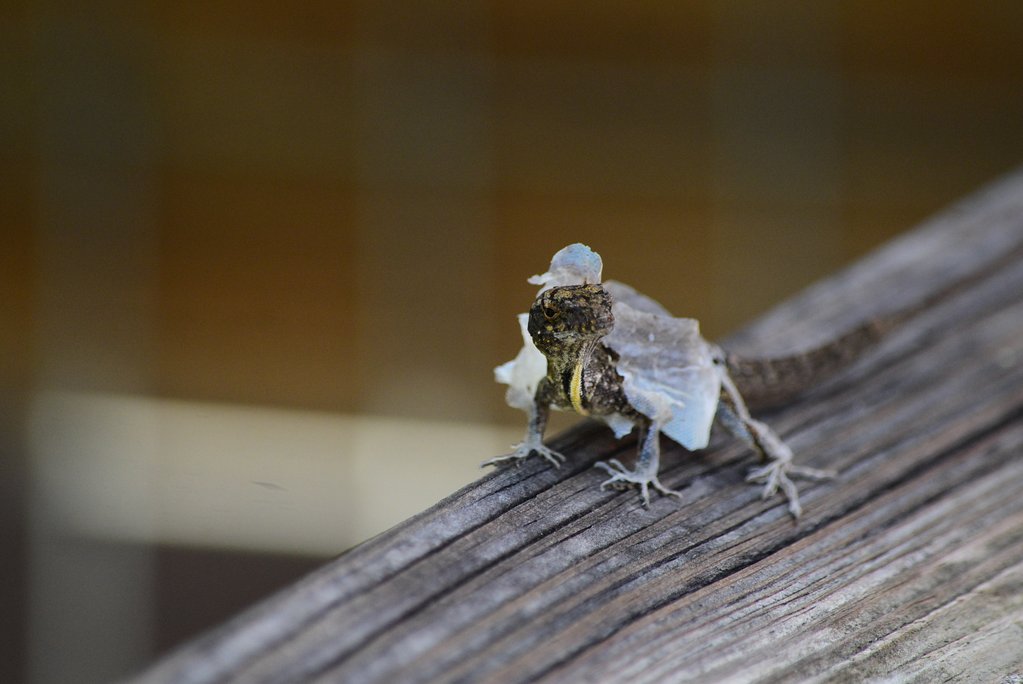
A lizard shedding its skin.
Freefall.
Credit: Dude Falling, albinoblacksheep.com
Although I don’t write this blog to be popular, I like it when my stats are rising and I’m getting lots of views. It’s great when an older post suddenly takes off, too. I always feel motivated to post more when this blog is doing well.
This week my views have been in the toilet. In fact, they’re plummeting. I know this shouldn’t bother me too much because I don’t blog for that reason and it’s probably just a temporary slump anyway, but it’s still alarming. It’s also discouraging and saps my motivation. I tell myself: why bother posting since no one comes here anymore anyway? I know that’s patently, laughably ridiculous. I have lots of great friends who I know are reading and who comment every day. I still get plenty of views, even if they’re not what they were a couple of weeks ago. But sometimes my rational mind is in another galaxy from my emotions. It’s an example of my all-or-nothing thinking. I’ve always gotten discouraged and given up too easily. I don’t seem to tolerate setbacks very well.
If you blog, how do you react when you have setbacks? Do you get discouraged or give up easily? What do you do to combat those feelings?
Book Review: Complex PTSD: From Surviving to Thriving (by Pete Walker)

I finally finished reading a most wonderful book sent to me by my friend and fellow blogger, Linda Lee. It’s called Complex PTSD: From Surviving to Thriving, written by Pete Walker, himself a sufferer of C-PTSD and narcissistic abuse survivor. He is also a therapist who works with others with C-PTSD.
Walker’s book is incredibly readable and tells you everything you need or want to know about C-PTSD, a subcategory of PTSD that isn’t (but should be) included in the Diagnostic and Statistical Manual of Mental Disorders (DSM), the bible of the mental health profession. Complex PTSD is similar to PTSD but there are several important differences. The recognized diagnostic category of PTSD describes a disorder that is caused by one traumatic event, such as a rape or combat in a war. PTSD itself wasn’t recognized until psychologists noticed that many Vietnam war veterans were suffering from a group of similar symptoms including, but not limited to, loss of memory, dissociative episodes, panic attacks, general but severe anxiety or depression, inability to cope with day to day challenges, impaired ability to regulate emotions including anger, impaired ability to relate to others in a healthy way, nightmares, flashbacks, and physical pain with no medical causes. C-PTSD has a similar set of symptoms, but is “complex” because of its cause–instead of being precipitated by a single traumatic event, it’s caused by an ongoing series of traumatic incidents and also usually (though not always) begins during childhood. Very often it’s a result of being “cared for” by narcissistic or sociopathic parents, who are actively abusive or neglect their child. Unlike most self-help books, Walker covers the nature of narcissistic abuse and its soul-murdering effect on a child, and how this can lead to C-PTSD and its various manifestations.
Walker breaks down C-PTSD into four “types,” each one corresponding to a different type of defense mechanism, which he calls “The Four F’s”–Fight (the narcissistic defense); Flight (the obsessive compulsive or “workaholic” defense); Freeze (the dissociative defense); and Fawn (the Codependent defense). Most people will have a combination of these, but usually one will be dominant over the others. I find it intriguing that Walker describes the narcissistic and borderline personalities as manifestations of C-PTSD (BPD is a Fight-Codependent hybrid), because I also think that’s exactly what they are.
Walker doesn’t think that any form of C-PTSD is untreatable or necessarily permanent, although some forms are more difficult to eradicate than others. People with severe C-PTSD may spend most of their time in a “flashback” without even knowing that it’s a flashback. For example, if you are continually depressed and anxious without being able to pinpoint why, you may be in a flashback to a time when you were made to feel shame as a young child. Any sort of invalidation or reminder of the shame, no matter how small, could have set off the flashback.
Also discussed is the importance of nurturing your Inner Child, and Walker shows you how you can begin to do this on your own. He also explains why people with C-PTSD have such a harsh Inner Critic (which is the internalized “voice” of the abusive parent that relentlessly continues to shame the Inner Child) and how how re-training your Inner Critic to be less, well, critical and more supportive of the Inner Child can do wonders for your self esteem and help you begin to heal. One of the most important things that must happen in order to heal from C-PTSD is to be able to grieve the lost or wounded inner child and also to be able to feel and express righteous anger toward the abuser (while being No Contact with the actual guilty party, of course).
While Walker encourages therapy (and states that in severe cases says it may be the only way to heal from C-PTSD), he recognizes that it may not always be appropriate or possible for everyone. For example, some C-PTSD sufferers (usually the Freeze/dissociative type) are so hypervigilant and uncomfortable relating to others that they can’t begin to trust a therapist enough to make any progress that way. Such people may do better on their own, at least to begin with. He points out early on that even if you skip around in the book (because not everything in it may apply to everyone) that you can still be helped. He gives the reader helpful things they can do on their own, such as positive affirmations, self-mothering, self-fathering and the “Time Machine Rescue Operation,” mindfulness skills, thought-stopping the Critic, thought substitution, recognizing signs of being in a flashback, how to grieve, and finding “good enough” relational help, among many other tools.
At the core of C-PTSD is the “abandonment depression,” a feeling of terrible emptiness that the Four F’s have been used to avoid confronting. Walker explains how to cope with the abandonment depression without denying that it exists or using the Four F’s as defense mechanisms against it.
Finally, Walker includes a list of books–which he calls “Bibliotherapy”–that he and his patients and visitors to his website have found useful. He wraps things up with six easily referenced “toolboxes” the C-PTSD sufferer can use as adjuncts to their recovery.
Complex PTSD: From Surviving to Thriving is intelligently and empathetically written, and easy to read without being condescending or dumbed down. Its chapters are organized in an understandable and logical way, and subheaders are used throughout to make it possible to read the book in easy to digest chunks. This book has helped me immensely so far, and takes the complexity out of this “complex” disorder.
You can visit Pete Walker’s website here:
http://pete-walker.com/

