Deconstructing Cluster B stereotypes.

clusterb

This is a cute drawing circulating Facebook depicting the “typical” person with each of the four Cluster B personality disorders (I cannot give credit for it since I have no idea who drew it or where it originated).   While I understand it’s meant to streamline the overall feel of each of these disorders, they’re still stereotypes. Stereotypes certainly may have a grain of truth behind them, but it’s important to realize they are convenient shortcuts at best, and quite negative and damaging at worst.

Obviously, not everyone with these disorders is going to act the way they’re depicted in the cartoon.  Human beings, even those with personality disorders, are complicated creatures, and just as there are many variations in the general population, so there are many variations among any group of people with one of these disorders.

Here’s another cartoon (which I have used in several posts) that also depicts these disorders in much the same way as the above drawing.

cluster_b

ASPD:

I think it’s interesting that in both of these cartoons, the person with Antisocial Personality Disorder is a criminal type of individual making threats, either with a weapon or he is already in jail.   Both wear a sadistic expression.  Both are also male figures.    The reality is, not all people with ASPD are criminals or in prison.   They aren’t all serial killers.  Some have never committed a crime (or at least have never been caught).  In fact, the other group of people statistically most likely to have ASPD (or psychopathy) are the very high functioning CEOs of big corporations.   Many people with ASPD are in high profile careers like politics or entertainment.  Their lack of conscience and guilt feelings, coupled with a nearly non-existent lack of empathy (even narcissists have more empathy than a person with ASPD), make it easy for them to rise high in their fields and have no compunctions about firing people or “downsizing.”  Other people’s feelings are much less important than the “bottom line.”  Many high ranking people with psychopathy or ASPD are actually women.

It’s fascinating to me that the two groups of people most likely to have ASPD/psychopathy appear at each extreme of modern society: the low functioning ones locked up in prison and/or running from the law, and the high functioning ones running everything from giant companies to powerful countries.

NPD:

The person pictured with NPD is also a male in both cases, and both guys are dressed up in business suits.   One is holding a wad of cash, and the other is just arrogant, with a PhD (of bullshit!) on his wall.   Both are wearing arrogant expressions.  The reality is, many women also have NPD–females may constitute as much as half of all people with NPD, and I think it’s becoming more common (why else would there be so many narcissistic mothers and websites about them??)

Also, not all narcissists are of this grandiose, arrogant, showoffy stereotype.   Many narcissists are the fragile, vulnerable or covert type, and use their “altruism” or “niceness” to get supply (or put others on a guilt trip).  Or they present themselves as pathetic, put-upon victims who never take any responsibility for themselves and blame others for their miserable lives and failing relationships.    Granted, the vulnerable or covert type of narcissist is probably more likely to be a woman, but this isn’t always the case.   My mother was quite grandiose and arrogant, and so are many women you meet in business.

HPD:

Histrionic Personality Disorder (HPD) and BPD are both depicted by women in these cartoons.  In both cases, the woman with HPD is a femme fatale, exuding sexuality and demanding attention using her body and come hither expression.    Some histrionics are men though, and just act dramatic and over the top for attention.  It’s not always sexual attention they’re after.   I’ve seen many men with what appears to be HPD in the gay community (this is in no way meant to disrespect gay men, it’s just something I’ve noticed).   HPDs do tend to be more extroverted than the average person.

BPD:

The BPD women in the cartoons vary the most.  In the first drawing she is crying; in the second, she is split between devaluation and idealization.   The emotional instability of a borderline is a fact; but not all borderlines are female.   Males with BPD can act a lot like men with ASPD, due to their tendency to act on impulse and have hair-trigger tempers and fly into violent rages.  Borderline males are more likely to be imprisoned or have a criminal record than men with NPD, who prefer to keep their hands and reputations clean.  BPD women with this disorder can also be abusive toward others or even criminally-minded.  Or they can be codependent, or primarily self-destructive (this is probably the more common type in females).    There are so many manifestations of BPD that it’s a hard disorder to diagnose, probably harder than the other three.   Many people with BPD have addiction issues or eating disorders and hurt themselves more than they hurt others.  .

Would you like to become a Lucky Otter Partner?

happy_woman_at_computer

I borrowed this idea from Danny at Dream Big (I don’t think he’d mind but I did just DM him to make sure).   I would like to help promote other blogs (the type of blog you have does not matter, unless its content is offensive).  I’m especially interested in recruiting bloggers who write about mental health but this isn’t a requirement.

I feel like I’m in a position now to help others get seen and help boost their Google rankings.

If you become a Lucky Otter Partner, I will display your logo in my sidebar (you can email it to me and I will resize it so it will fit) linking to your site, which will bring you more hits to your blog.   If you have no logo, no worries.  I can design one for you and of course, will make sure it’s acceptable to you before I post it.

As a partner, I will also promote your blog in various ways — sharing posts on Twitter, Facebook, Linkedin, and StumbleUpon, and reblogging selected articles of yours that I think would be appropriate for this blog.

I’ll also write an introductory “welcome” post about your blog when you become a partner.   I might even ask you to write a guest post (you are always welcome to say no).

I haven’t decided yet how many partners I can accommodate, but the slots would be limited.  So act now!

Send me an email (otterlover58@gmail.com) if you are interested in this opportunity to grow your blog and I will send you the details. 

I’m looking forward to hearing from you and hope you decide take this opportunity to grow your blog and gain greater visibility!

If you’d like to help spread the word, please reblog this post or share it on your social media.  Thanks so much!

My cats stole my bed!

Here are my two cats, the half-Maine Coon, BabyCat (actually my daughter’s cat), and in the bottom photo is Sheldon, my tuxedo cat.   (The lumpy part you see in the second photo is actually me!)   Bed thiefs!

babycat_120916

sheldon_120916


When is narcissism a good thing?

preening

Originally published on November 23, 2014

Narcissism has become a dirty word. But the kind of narcissism that’s such a hot topic all over the media and the Internet right now is the the type we call malignant narcissism–or at the very least, NPD. Narcissism isn’t a bad thing itself, but like most good things, it becomes bad when it becomes extreme or there is too much of it.

Why do we always hear about “malignant” narcissists, but never “benign” ones? Do they exist? This was a topic that was brought up in the comments section of one of my posts a few days ago.

Of course they do. Not everyone with narcissism is malignant. Narcissism, like autism, runs on a spectrum from practically non-existent to mild to moderate to severe. Most of us have some degree of narcissism, especially those of us with blogs! Studies have shown that people who post lots of photos on Facebook or Twitter or are very active on social media, who take a lot of selfies, or keep online journals or blogs where they talk about themselves are narcissistic, or at the very least, vain. Well, vanity is one aspect of narcissism.

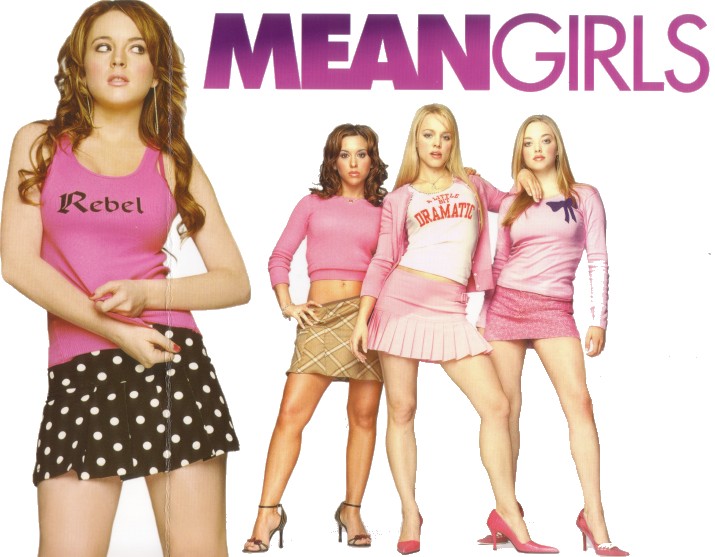
Benign narcissists are lower on the spectrum than malignant narcissists. Some in the middle of the spectrum or close to the middle may be self-centered, can act like jerks, talk about themselves a lot, and may be overly concerned with their appearance, likeability, athletic prowess, or some other quality. Think of the popular kids you knew in high school, the cheerleaders and the overconfident jocks on the football team. (Of course, some of the “mean girls” and boys are probably malignant narcissists). Even farther below the annoying jerks on the spectrum, a benign narcissist is just a normal person with high self esteem.

meangirls

Benign narcissists don’t normally use or manipulate others to get what they want, they have a conscience, and they can feel remorse, guilt or empathy. They can feel genuine love or care for someone else. They can be moved by beauty or truth. They can be happy for you. They can weep tears that aren’t of the crocodile variety. They may be annoying at times and seem full of themselves, but they are not generally dangerous to others. A malignant thing, whether it’s a tumor or a narcissist, is a threat. Something benign will generally not hurt or kill you.

Benign narcissists do not have NPD. Not all people with NPD are malignant narcissists, but they are still above the midpoint on the spectrum and can be manipulative and make other people suffer. They are more malignant than benign narcissists, who populate the entire lower half of the spectrum. In fact, most bloggers probably “suffer” from benign narcissism, at the very least.

Benign narcissism has evolutionary advantages. A woman wanting to look beautiful and who preens in the mirror or takes time choosing an attractive outfit is more likely to attract a mate than one who is slovenly and doesn’t take care of her appearance. A man who works out at the gym and takes pride in his appearance is likewise more likely to attract a beautiful woman than a flabby man who sits in a La-Z-Boy all day munching on hot wings and drinking beer. On the evolutionary level, attractiveness and beauty signify fertility and good health. Even if we don’t want children, we are unconsciously more attracted to people who appear fertile and healthy–which means a good looking person. Wanting to feel good about ourselves is healthy–and narcissistic. So reasonable levels of narcissism are healthy and have advantages in propagating the human species. A person without narcissism at all is a person who thinks they’re worthless and deserve nothing. That can be just as “malignant” as a dangerous narcissist, the difference being that person is more likely to hurt themselves instead of others–and are likely to suffer instead of making those around them suffer. Benign narcissism is good. It’s only when it overtakes other qualities necessary for survival that it becomes malignant and dangerous.

There’s even an increasingly popular theory stating that malignant narcissism (psychopathy) is an evolutionary strategy that was adaptive before we became sentient and civilized. Malignant narcissists and psychopaths normally fear commitment but have high sexual desire and like to have many sexual partners. They may be “serial monogamists” (keeping one lover at a time, but will callously leave one lover for the next) or they may be promiscuous, having several lovers at the same time.

manwithlovers

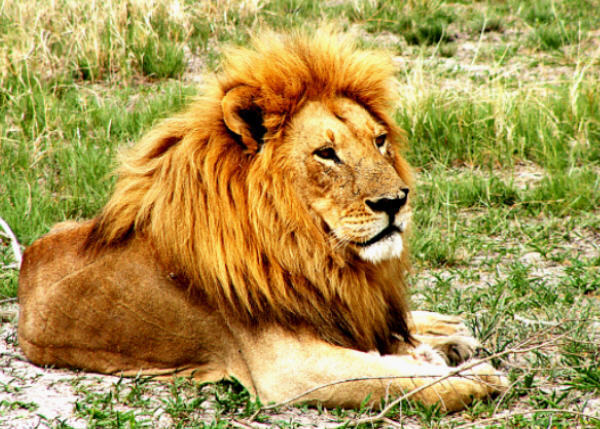
For a man, being promiscuous or bedding many women can result in having many children (even if having children is not consciously desired). There are many male mammals that use this strategy–they don’t stay with the female or care for the young. They will mate with the female, impregnate her, and move on to the next. This strategy results in more offspring, which helps propagate the species. Of course, many of the young will die, but overall, the strategy works. Think of male lions: they are terrible fathers and “husbands.” Male lions are lazy and spend most of their days sleeping and lounging around while the female does all the hunting, caring for the cubs, and defending the pride. Male lions insist on being the first to eat a kill, even though the female was the one who did all the work and brought the kill back to the pride. A hungry male lion will aggressively cuff an upstart cub or a female who dares to eat before him (the male lions in the movie “The Lion King” are anthropomorphized and are atypical of real lions). Male lions are also known for killing unrelated cubs of a female he wants to mate with. This is to ensure she can only devote herself to his cubs, once she gives birth to a new litter. This isn’t far off from the psychopathic stepfathers we hear about in the news who abuse or even kill babies and young children that don’t belong to them.

malelion

It’s harder to see how this strategy would work for females, but think of reptiles or fish–or spiders. Non-mammalian females (except for birds, which are very nearly mammals) do not have the capacity to feel love for their young, and evolution has ensured they give birth to many young at a time to ensure that some survive. It’s to their advantage to drop their load of young and abandon them, moving on to finding another mate. In the case of the spider, the female will even eat the male after she mates with him. That’s pretty psychopathic, but the strategy works if you’re a spider.

spider

A person with psychopathy seems to lack the higher, mammalian part of the limbic system of the brain that enables them to feel love or provide care for their young after they are born. They are acting on the reptilian (or in the case of males, the lower mammalian) brain instead, which all of us still possess. The problem is that as humans have become civilized, these reptilian, callous strategies that many animals use to propagate themselves have become maladaptive to civilization. That’s why we’ve developed laws that keep psychopathic behaviors that were once advantageous under control.

But a little narcissism is adaptive, because it helps us attract and keep a mate.

My Philosophy Is…

Wise words from the great actor (not Hannibal Lecter!)

Paying it forward.

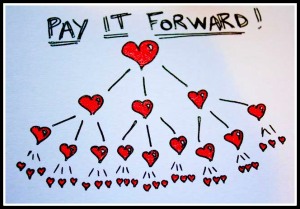
pay-it-forward

One of the things I love most about blogging is the “paying it forward” aspect of it.   Once upon a time, I was a brand new blogger who knew nothing about blogging and had zero followers.  There was a whole learning curve to learning WordPress and making my blog look exactly the way I wanted it to look.  But one of the biggest challenges I faced in those days was obtaining a following.   I remember how frustrated I was when I’d been blogging for 2 weeks and had a paltry 12 followers.   But other bloggers who were more experienced and had large followings helped me along the way. They shared my posts, either by reblogging them or linking to them, or sharing them on their social media.    They were happy to help out,  expecting nothing in return, and I feel indebted to them for that, because without that early help, this blog would never have gotten the head start that it did.

Now, two years later, I’m in a position to help newbies, at least a little, by doing the same thing for them as was done for me. I’ve had several opportunities to do that, and I am as happy to help them as more established bloggers were to help me when I was new.

It will be exciting to see these new bloggers grow, and maybe in a year or two, I will be able to watch them as they help a new “generation” of bloggers get started on their writing journeys.  It’s a little like being a parent watching your kids grow up.

Meet and Greet: 12/3/16

Family estrangement.


scapegoating

Psychology Today has an interesting article about why family members become estranged.  In most cases, it’s an adult child between the ages of 25 and 35 who initiates the severing of the parent-child relationship.

https://www.psychologytoday.com/blog/domestic-intelligence/201512/the-persistent-pain-family-estrangement.

“A difficult parent is that which the daughter or son experiences as being at the cusp of rejecting the child, or casting them out as a result of disapproval, disgust, or disappointment. When a daughter or son made the difficult decision to sever the relationship, it was usually because they felt that maintaining it was too emotionally costly, that they had to distort their soul into shapes that did not feel right to them in order to please or pacify a parent.”

In other words, No Contact.   I think most cases of an adult child severing their relationship with their parent(s) are due to feeling as if they have already been rejected or emotionally abandoned by the parent, so there isn’t as much guilt over severing contact as there might otherwise be.   But there is still sadness and grief involved, especially during holidays and possibly on birthdays.  The grief isn’t over what was lost so much as what never was or what could have been.

Tragically and unfairly, there is stigma against adults who lack family support or relationships.  Most people don’t really sympathize with you if you are estranged from your family, because they don’t understand it.  Most people think family will always be there for you through thick and thin, and in an ideal world, that is how it should be.  We are tribal creatures, wired for attachment, even as adults.

So when things go wrong and your family has cast you out of their midst, either because you became the scapegoat, or your values or lifestyle are disapproved of by the rest of the family, people from normal, loving families think the problem must be with YOU.  They can’t imagine that any family would cast out or reject one of their own, so you must be the one at fault.    If you have gone No Contact, they think that is a cruel and unusual thing for any adult child to do to the people who gave them life.   But because they weren’t the children of narcissistic parents, and have no clue what being the family scapegoat is like, they cannot understand the pain of staying involved with people who cannot love you unconditionally and are rejecting and abusive toward you even if they haven’t outright cast you out.

Many estranged ACONs are financially vulnerable due to having dismally low self esteem that kept them from acquiring the confidence and drive to be successful in a career or the self esteem to build satisfying, healthy relationships.  Many ACONs are divorced (often from other cold and rejecting abusive or narcissistic types much like their parents), unmarried, impoverished, and lonely.  Many also find it difficult if not impossible to build a surrogate family of close friends, because of their difficulties making friends for the same reasons their other close relationships don’t last.  They simply don’t have the self esteem or social skills needed for that.   A rejecting family who then turns around and blames you for your “failures” (due to not having given you the tools that most children got from their families to do well in life)  is like salt rubbed in an already gaping and infected wound.   It’s beyond unfair.  Add to that the sad fact that scapegoated adult children are usually left out of any will, if there is one.

Social service agencies and charities don’t help much.  They are temporary measures at best, and have limited resources.  They don’t love you unconditionally like a family would; in fact, they don’t really care.   So scapegoated and marginalized adult children often have no resources to which they can turn when things are rough (and they usually are).  They are vulnerable in every way it is possible to be vulnerable, due to poor mental and often physical health and without the means or the tools or the friends and family to give them support when they most need it.   Then, much like their own families did, society blames them for their failures and poverty, telling them it’s their own fault they have so few resources and insults them by calling them worthless drains on society.  It wouldn’t surprise me if it turned out that most homeless people were the scapegoated children of narcissistic families.  Having been dealt such a lousy hand in life’s lottery, you’d think there’d be more suicides among estranged adult children.   But the survival instinct is strong with us.   It had to be, or we wouldn’t still be here.

The price of being the most emotionally honest member in a narcissistic family is a high one.

Sh*t haters say.

love_my_haters

I have haters. I’m cool with that. As a person who was bullied a lot during my life I wasn’t always cool with it. I will never like being hated, but now I regard it as a hazard of the trade. If you blog, even if you blog about unicorns and rainbows, someone is going to hate you. I guess I’ve grown used to it. At one point I almost took my blog down because of the haters, but I’m so glad I didn’t. Continuing to write exactly what’s on my mind in spite of people sometimes disapproving of what I say or even hating me for it is good practice for worrying less about what people think of me overall. It just doesn’t matter.

Criticism isn’t the same as hate. I’ve had critical comments too, and some of them were perfectly justified (and where appropriate, I’ve apologized or admitted when I was wrong). Even where I had to defend my viewpoint and saw no need for apology or backpeddling, I realize people are going to disagree with you sometimes. They are entitled to their opinions and the right to express them. That doesn’t mean they’re bullies, trolls, or haters.

But some comments run into the trollish category. Comments become trollish when they become personal attacks or are based on lies. Here are some of gems I’ve run across during my two-year tenure as a blogger.   All are lies, or at least exaggerations. But now such comments are actually funny to me because of how clueless they are.

Enjoy!

“Yeah, she has a fuckton of followers, but none of them are friends. She doesn’t have friends, she has fans. She’s just collecting fans for the supply. They will drop her like a hot potato when they realize how phony everything she says is.”

I don’t care about having fans. I’m very close to my blogging friends and consider them to be as real as real-life friends. I care about them very much and feel like they care about me. Maybe you’re just jealous because my blog is more popular than yours.

“I think she is being paid off by people like Sam Vaknin because she quotes him so much. I bet she is giving him some favors on the side.”

Now this is funny. Sam stumbled on my blog and commented here about 5 times shortly after I started this blog and that lasted for about a month before he blocked me. As far as the second thing, are you serious and do you realize how stupid you sound?

“Lucky Otter is a sociopath.”

Smear campaign much?

“She was never abused. She was probably the abuser. She just tells that story to get more fans.”

Bullshit. And the “fans” again.

“There’s something seriously fucked up about someone whose son is a gay furry. She must have been a terrible mother.”

I’m proud of my son. In spite of having broken people as parents, he knows exactly who he is and is a lovely, intelligent person with a ton of empathy for others.  Do you even have children?   

“I’ve seen photos of stuff in her house, and she’s not poor like she says. She’s got a house full of antiques and is always going on vacation.”

Those “antiques” are things I picked up at Goodwill and yard sales for about three to six dollars each. I probably make less than you do, my income being at the official poverty level. I suppose driving on the Parkway (which is two miles from my house) a few times a year and taking pictures is a “vacation.” Alrighty, then.

“Her blog is monetized. She’s only in it for the money.”

I had the opportunity to make a little pocket change from the ads, which comes to about $40 a month. But I’d be doing this even if I had to pay to do it. If I can earn some money from it, I don’t see why I shouldn’t.

“She plagiarized my post!”

That is a lie. I LINKED to your post and quoted from it. And I promptly removed the offending post after you lost your shit over it. Most people would have LIKED the extra views that link would have brought them.

God, I love my haters.  They keep me entertained.

The Truth In The Lie Of Narcissistic Love

This brilliant post ponders on the question all of us who have ever been in a narcissistic relationship (or had narcissistic parents) have asked: can a narcissist feel love? This deeply personal post says yes, they can. But they have no idea how to express their love in appropriate ways because everything, especially loving someone, hurts too much. So they hurt the one they love instead so they don’t have to feel all that pain.

You can’t reason with them or plead with them to stop doing what they do, though. Attacking you isn’t something they can control — it’s an automatic reaction, almost like a reflex. Whether or not a narcissist is capable of FEELING love, they don’t know how to EXPRESS it in a loving way, so you’re better off not wasting your own love trying to make a relationship with one work. If you must love a narcissist, do it from a safe distance.