
The incredible shrinking world of the narcissist’s victim.

lonely_room

When I was still with my ex, I became a recluse, holed up in my small room when I wasn’t at work, never venturing out even into the living room or kitchen. This was because he had taken over the whole house to the point I dreaded leaving the safety of my room, because of how obnoxious, loud, abusive and demanding he was.

He was sleeping on the living room couch (I was “nice” enough to let the parasitic loser crash there for almost 7 years–but that’s a whole ‘nother story) and he was extremely messy, loud and dirty–overflowing ashtrays, trash all over the table, plates left crusted with food or day old coffee, crumbs on the furniture and floor, and he never, ever cleaned anything. His idea of washing the dishes was letting them soak in soapy water and they’d sit there until they began to stink or someone else (usually me) washed them. He also talked loud, discussed inappropriate things with my daughter’s young friends (she was living here too at that time), and blasted his death metal and riot girl music (which he knew I couldn’t stand) just because he knew it would piss me off. Whenever I complained or even politely asked him to stop or turn the music down, he told me (in front of his friends and my daughter and her friends) that I was “crazy.” He’d announce to everyone things like, “oh, well you know Lauren’s a BORDERLINE, so that’s why she acts that way.” He also was deliberately loud when I needed to sleep. I was the only one working at the time, and had to be up early. You think he cared? Ha! Not when he yelled at me for being “emotionally unstable” or “selfish” because I wanted quiet at night when I was trying to sleep.

I couldn’t stand leaving my room because he seemed to be everywhere in that small house. I was too depressed to go out, and didn’t have anyplace to go anyway. See, another thing that happens when you live with a narcissist is that you may not have any money. Some narcissists hide all the money from you, keeping it tucked away in their bank accounts where you don’t have access to it. If you work, they may demand you hand over most or all of your paycheck. Or they simply grind down your confidence in your abilities to the point where you only take jobs that are far beneath your actual ability. Or, in some cases, the narcissist simply refuses to work, while racking up the bills and then expects others to pay. This last type was what my ex was.

For seven years he didn’t work, but freeloaded off my good will and codependency. He was the worst kind of parasite. Yes, I enabled him so that was my fault. But in me, he saw an easy “mark,” someone who was a people-pleaser who could be easily taken advantage of. In the winter, he’d turned the heat register to the highest temperature, so the living room felt like an oven. If I tried to call him on that and remind him that I couldn’t afford to pay a high electric bill, he’d deny it was him. He’d blame his daughter, or even say I was turning the heat up myself and didn’t remember (this was gaslighting of course). I knew he was lying but couldn’t prove he was, because he’d crank up the heat when I wasn’t around. Another thing he did was order movies, sometimes porn, without my knowing and these charges sometimes almost doubled the cable bill. Of course I wound up having to scrape together the money to pay it. When I confronted him about the movies he’d ordered, he denied responsibility, saying it must have been our daughter (she was never home and barely watched TV at all so I knew he was lying).

He did get food stamps, but that was the only way he contributed, and the amount he was getting wasn’t very much. He’d complain about the groceries I bought because they didn’t include expensive steaks, legs of lamb, and condiments that he needed “for his diabetes.” I was trying to stretch the budget, and that meant buying inexpensive foods. These were not to his high standards though. You get the idea.

My job was low paying (and still is). So of course after taking care of all his needs and paying gigantic electric bills thanks to him, and never having anything to eat because he’d eat all the food himself, there was never any money. So I couldn’t go anywhere. Hell, I couldn’t even afford a movie or the $3.00 fee for the community pool, never mind ever being able to get away for the weekend to the beach.

give-up-power

I also had no friends. He’d convinced me I was so unlikeable and socially inept that I had stopped even trying to make friends. People who approached me in friendship I kept at arms’ length and never accepted their invitations or phone calls. I was afraid if they got to know me, they wouldn’t like me. Being avoidant and terribly shy anyway, socializing was never something that came naturally to me. So any fun activities or getaways I might have gotten involved with through a friend just didn’t happen, because I didn’t allow myself to have friends. I was also too embarrassed to let anyone come to the house because of its filthy and disheveled condition (thanks to him) and the fact there was never any food to eat, not to mention the certainty that this parasitic loser would say something embarrassing or inappropriate in front of any friend I might have brought over. Also, never having enough money to do anything fun, made getting together with friends difficult. I certainly couldn’t expect them to always pay my way!

Some narcissists won’t let their victims have friends. They either forbid it, or manage to turn the victims’ friends against them with their charming triangulating. Mine never actually forbade it, but just made it so uncomfortable and impossible for me to have friends that I gave up on having any.

At age 45, i noticed I was living like an 80 year old, pretty much confined to the house, and dutifully going to my job (which I hated) every day. I had no life at all, no interests, no hobbies, no money, no friends. All I had was TV, my computer and books. So I holed myself up in my little room and read and slept a lot. I didn’t even have the motivation to do something creative, like start a blog. I just vegetated in there, pigging out on junk food and snacks and growing fatter every day. I slept a lot during the day. Not long ago I posted a photo of what I used to look like. I can’t believe the difference–I don’t look like the same person.

That’s what living with a narcissist will do to you: destroy your looks, your motivation, your self esteem, your interest in anything, your pride in your own body and mind, eventually your sanity. I actually thought I had lost all my creativity and intelligence. I thought I had nothing left to offer to anyone, and my sole purpose in life was having to put up with the narc in the house who was sucking me dry like a vampire. He reminded me every day it was his right, and that I had no choice because if I tried to make him leave, he would kill himself and possibly take me with him. I was terrified of that possibility, but I now know he was full of doggy doodoo and just said that to manipulate me because he knew I’d fall for it. That man would never kill himself. That I know. If he was going to, he already would have.

Oh, there was more, so much more, but I’ll stop here before this turns into a book.

Don’t let a narcissist shrink your world and reduce you to living in a self-imposed prison. You deserve better than that. I know if I hadn’t gone No Contact with him last year, I would very likely be dead or very ill by now. They may not kill bodies, but they kill souls, and you die a slow and painful death which could eventually destroy your body too.
What I believe about No Contact.

no_contact1

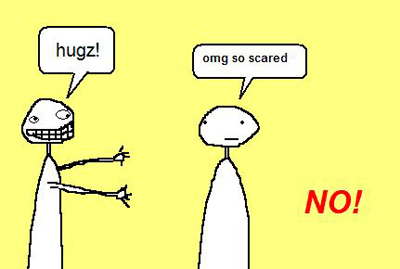
Apparently a few people are under the mistaken impression that I don’t believe in No Contact because they believe I am a “narc hugger.”

I may never have been clear about where I stand about No Contact, so now is the time to clear up any misunderstandings.

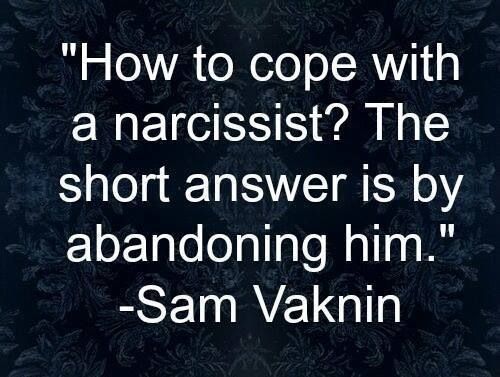
I definitely believe No Contact is the ONLY viable way to “handle” a narcissist. I don’t hate narcissists per se, but I hate what they do. Even if you sympathize with the “lost true self” living deep inside every narcissist, that doesn’t take way from the fact they are extremely dangerous people and will use everything in their power to destroy your reputation, your self confidence, your sanity, and even your life if you allow one to get too close to you. Going No Contact is not an act of hate or retribution; it’s an act of survival for yourself and your children if you have any.

no_contact2

While there are some situations where going completely No Contact may not be possible (for example, if you have children with a narcissist), then go for the next best thing–Very Low Contact. That’s the kind of relationship I have with my ex. I only have dealings with him when I must–when information about our two adult children needs to be communicated. Other than that, I refuse to deal with him at all.

But I think in most situations, No Contact is not only possible, but is necessary for your recovery and happiness. It doesn’t matter if it’s your mother or other close relative. Don’t feel guilty. Hell, they never did when they abused you!

So that’s where I stand on the matter, in case there were ever any doubts.

No Contact is always best.

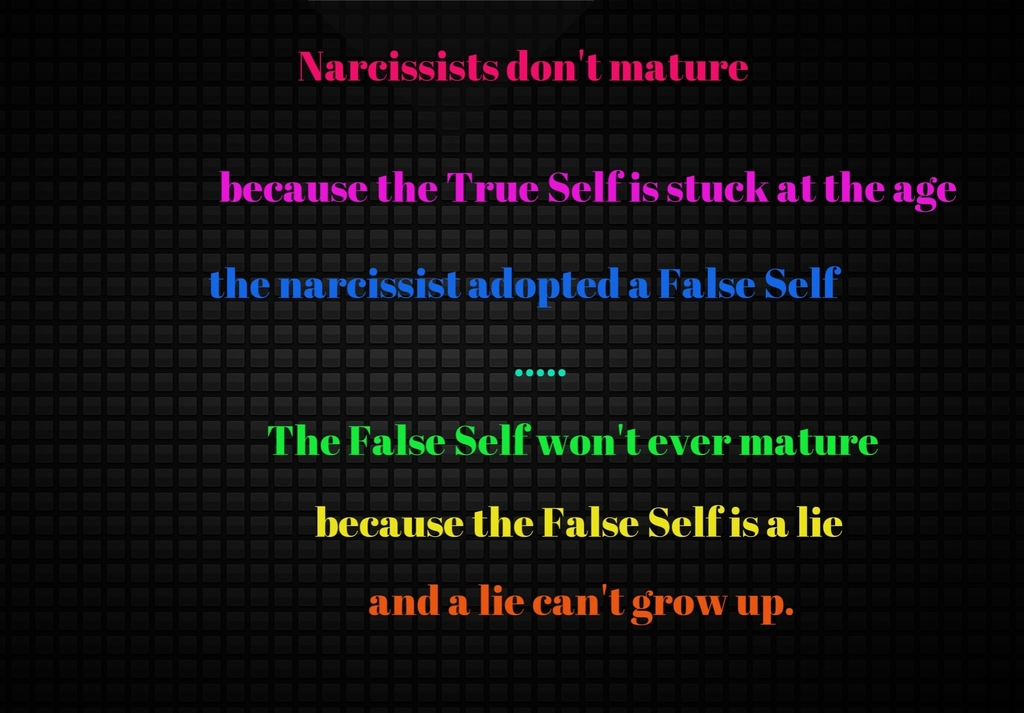
Why narcissists will never grow up.

I just created this meme. Feel free to use it, but please credit me.

narcs_dont_mature
Click to enlarge.

“Splitting” and idealization/devaluation.

splitting1

Splitting–more commonly known as black and white or all or nothing thinking–is a primitive defense mechanism used by both narcissists and borderlines when they observe a threat–that someone doesn’t agree with them or is challenging them in some way, or when they fear abandonment (borderlines) or exposure/loss of supply (narcissists). In narcissism, splitting is usually referred to as idealization/devaluation, but other than the unconscious motive (fear of abandonment for borderlines, fear of losing a source of supply for narcissists), the phenomenon is really the same thing.

Splitting is normal in a very young child. When Mommy is present and hugging the child, Mommy is perceived as “good.” When she denies the child another cookie or she goes to work, the child throws a tantrum, and Mommy is now “bad.” Because the child still doesn’t see himself as a completely separate person from Mommy, when Mommy does something that makes the child unhappy or fearful, the child rejects her and thinks of HER as all-bad. The child is not yet capable of the concept that Mommy is an individual who can be both good and bad at different times and to different degrees depending on the situation.

The fairy tales we read to young children engage them at a level they can understand: fairy tale characters are all-good or all-bad, heroes or villains, with no in between. Only an older child can fully understand that people come in varying shades of grey, and pure black or pure white in one person is exceedingly rare. Realizing that most people are both evil and good at the same time is a sign of maturity and indicates the child has come to see himself as a completely separate person with his or her own identity who can afford to see others as individuals too, rather than one-dimensional cardboard cartoon characters.

Narcissists and borderlines never make that transition. Due to early attachment issues arising from neglect, abuse, or sometimes maternal smothering, they continue to see others as extensions of themselves, not separate people with their own identities, interest and opinions. If someone is an extension of yourself, of course the other person must be seen as “all good.” If the other person fails to provide adequate supply (for the narcissist) or disagrees with them or has differing opinions, they are perceived as a threat and must be rejected, devalued, and demonized as “other.” The only way a narcissist or borderline can see another person as a separate entity is when they have become “other” and are demonized and seen as “all bad.”

splitting

Splitting is common in today’s political landscape. Candidate A believes in health care reform, the legalization of marijuana, the cessation of the outsourcing of jobs, raising taxes on the wealthy–and that a woman has the right to choose whether or not to terminate a pregnancy. Candidate B believes in health care reform, the legalization of marijuana, the cessation of outsourcing of jobs, raising taxes on the wealthy–and that abortion should be outlawed. Candidates A and B, rather than focusing on what they have in common and using that to help improve people’s lives, instead go on smear campaigns against each other focusing on the only thing they don’t agree on: abortion. Candidate A accuses Candidate B of being a throwback to the “unenlightened” 1950s, while Candidate B accuses Candidate A of wanting to legalize murder. Neither acknowledges the many things they agree on–all either can see is that the other is a “murderer” or a “throwback troglodyte.” (Notice too how the accusing labels have become exaggerated and more abusive). That many politicians are narcissistic by nature makes splitting come second nature to most of them. Unfortunately, splitting has become standard in political campaigning and is intended to garner more votes (narcissistic supply) for the accuser while taking them away from the opposing party.

Robin and Tim are madly in love with each other. Robin idealizes Tim–she thinks he is the most perfect man she ever met, and she can’t imagine a life without him. He is the most handsome, smart, funny, sexy, and interesting man in the world, and she can’t believe her luck in having met him. Recently they have started talking about getting engaged. Tim thinks Robin’s wild mood swings are rather charming–but he hasn’t been the target of them yet.

On Tim’s birthday, Robin cooks him a lavish dinner and has a bottle of champagne ready to pop open and enjoy. He is supposed to be home by seven. Eight o’clock comes, and he isn’t home yet. At eight-fifteen, Tim calls and says he got held up. He is in the door by nine, apologizing profusely about his lateness–he was called into an emergency meeting by his boss and couldn’t get out of it. Rather than accepting his apology at face value and proceed to have a nice dinner together, Robin goes on a rampage. She accuses Tim of having a lover and never having loved her. The champagne bottle gets smashed against the wall and the dinner thrown in the trash. After fighting for hours, Robin tells Tim to leave and that she never wants to see him again and that he’d make a terrible husband to any woman who would have him anyway.

In the course of two hours, Robin has turned Tim, a normal man who really did love her but couldn’t get out of a meeting, from “the most perfect man in the world” into an unfeeling monster who is cheating on her and would “make any woman miserable.” Because he disappointed her and she couldn’t handle it or see him as a separate person with his own life and his own needs, she must demonize him and make wild accusations against him, accusing him of doing things he never did and saying things he never said. She has turned the good into the evil, and rejected Tim because he is “all bad” now. Both the “angelic” Tim and the “evil” Tim are creations of Robin’s all-or-nothing, black or white, thinking. Both are fiction.

Splitting is really a kind of blindness–the failure to be able to see any shades of grey in an individual, situation, religion, ideology, belief system, or really, anything at all. It destroys relationships, creates hate and discord, kills community spirit, leads to war and killing, and ruins lives.

5 reasons why you should never tell a narcissist they’re a narcissist.

narcissus

In my dealings with narcissists, it’s sometimes been tempting to tell them to their face that they’re narcissists, thinking maybe it could be the wake up call they need. It’s a nice fantasy to think they might take a look at their obnoxious, abusive, insufferable selves and try to make some changes, but unfortunately that’s just a fantasy. It won’t work, because narcissists cannot feel remorse for their actions or empathy for hurting you. In fact, they may take pleasure from it.

The following reactions are far more likely if you “out” a narcissist to their face:

1. They might rage. Or give you the silent treatment. Or laugh at you. Or deny it. Or abuse you. Or call you names. Or tell you you’re crazy or deluded. Narcissists hate the truth, and if they know you have their number, they feel threatened and will attack like a cornered rattlesnake. It’s in their nature.

2. It might give them twisted narcissistic supply. Some narcissists may actually take a perverse pride in being called narcissistic. Rather than making them feel shame and remorse, telling a narcissist they’re a narcissist may flatter them and inflate their ego even more, which could lead to them becoming even more narcissistic and abusive than they already are.

3. They might project it back onto you. This is surprisingly common. Projection (attributing their own bad behaviors to their victims) is one of the more common red flags of a narcissist, so if you call a narc a narc, don’t be too surprised if they start telling everyone YOU are the narcissist.

4. They might learn more to hone their weapon. Taking #2 a step further, some bright narcissists may actually decide to learn more about their disorder–but not to learn how to control it or improve the way they treat people, but rather to educate themselves about abusive narcissistic mindgames they haven’t already tried in order to use them against you. I actually know someone this happened to when she called her ex a narcissist. He started reading every book he could get his hands on about NPD and narcissistic abuse, and systematically started using the information to “prove” his girlfriend had NPD and that he was the real victim (see #3).

5. They might not be a narcissist. There is always a possibility (even if small) that the person you think is a narcissist really isn’t. If you’re not a mental health professional qualified to make a diagnosis based on standardized testing and interviews, your own bias, lack of knowledge, or just plain dislike of a person could be influencing your judgment of them. Perhaps they are having a bad day (or a bad life), or suffer from some other disorder that can mimic narcissism. Even non-disordered people can act like narcissists at times. All of us can. So if you’re certain someone is a narcissist, you may be right, but it’s still best to keep that information to yourself–or only tell your close friends.

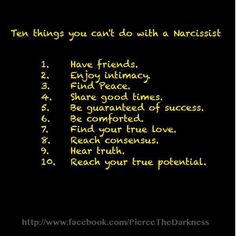
10 things you can’t do with a narcissist.

Image

10_things

I’m feeling a little conflicted.

Concept image of a lost and confused signpost against a blue cloudy sky.

A few days ago I received a birthday card from my mother. The message inside was warmer and more loving than most of the cards she has sent me in recent years. Inside the card was a check.

I’ll be perfectly honest. I wasn’t expecting to get anything at all from her this year, because I know she found this blog and the things I’ve written about her haven’t been all that nice.

I haven’t actually spoken to my mother in three years. Though I never officially went “No Contact” with her, I just stopped calling her (or accepting her calls) because talking to her is very triggering for me. I always feel like a stupid little child in her presence–even on the phone (and I hate phones anyway). I always hang up feeling diminished as a human being. Her verbal abuse of me has always been somewhat subtle but it’s definitely there. I do still have contact with her via email and mail though. We send each other birthday and Christmas cards, but that’s about it. I don’t see any reason to stop doing those things.

I started this blog primarily to come to terms with and deal with my feelings about my psychopathic malignant narcissist ex after I finally got the courage to make him leave. But I couldn’t write about narcissism without thinking of the patterns in my life–especially my pattern of always being drawn to narcissists (and having them drawn to me) due to having been raised by a narcissistic mother and an enabling dad.

I haven’t posted much about my mother lately, partly because I know she probably reads this blog, but also because I’m having doubts about how malignant she actually was. She certainly was nowhere near as bad as my ex. A malignant narcissist or psychopath likes to see others suffer and deliberately hurts others for their own pleasure. My mother isn’t like that. There’s no doubt she’s very narcissistic and self involved–but she isn’t vindictive and doesn’t necessarily punish or deliberately hurt people who have crossed her. She usually just ignores them and acts like they no longer exist. I suppose that in itself could be a form of punishment though.

You may think she sent me the birthday card and gift as a form of Hoovering me back into the family or as a last ditch attempt to get narcissistic supply from me. I don’t think either is the case. I actually think my mother wants little to do with me at all. Of course that hurts, but I’ve grown used to it. I think things were like that long before I started this blog.

A few years ago, she might have tried to coerce me into providing her with more narcissistic supply through love bombing, because I would actually provide it. But I haven’t given her any supply in three years, and she has other resources now (other family members). So I doubt she is actually trying to get anything from me.

It could be a way of keeping me off balance too, but something tells me that isn’t it. It just doesn’t seem like something she would do. She isn’t that smart or cunning.

So here is what I think. I think that she does have some rudimentary maternal love for me. Garden variety NPDs aren’t entirely incapable of love. It’s also possible she may have had her eyes opened in reading this blog, and knows she is narcissistic. She may realize she wasn’t a good parent, but as a narc, she isn’t going to be caught dead admitting it, especially to me. Maybe her gift to me and its warm birthday message was a sort of indirect admission of culpability. If so, she will most likely take that knowledge to the grave with her and I will never know.

Narcs are everywhere!

narcissists_everywhere

According to the largest study ever conducted on personality disorders (PD) by the U.S. National Institutes of Health (NIH), 5.9% of the U.S. population has BPD (Grant et al. 2008) and 6.2% has NPD (Stinson et al. 2008). As some people fit both diagnoses [BPD or NPD], about 10 percent of the U.S. population has BPD and/or NPD.

(From BPD Central: https://www.bpdcentral.com/faq/personality-disorders)

I’ve read elsewhere that this “rare” disorder (NPD) affects between 1 and 4% of the American population.

But narcs just seem to be everywhere. My boss is a narc, at least half of my family are narcs, every man I’ve ever been in a relationship with has been a narc, my roommate is a narc (low spectrum), my next door neighbor is a narc, and even random people I meet in places like the grocery store show a lot of narcissistic behaviors.

They’re all over TV, all over the news, hosting that obnoxious morning radio show as you battle traffic with more raging narcs on the road. They run for office and run corporations, they run churches and schools, and and they’re all over the Internet.

They’re lurking behind everyday people too. The nice lady serving you your morning coffee at the local Waffle House could be one. The guy who comes to mow your lawn could be one. So could the UPS guy, or God forbid, the woman you leave your kids with when you go out.

If I type “narcissists are…” in my browser, “narcissists are everywhere” comes up second. So evidently I’m not the only one who’s noticed this.

Since the planet does seem to be crawling with them like a bad case of lice, how do they make up such a tiny percentage of the population? ?

The Early Warning Sign Of A Toxic Person You Never Hear About

A very important (but rarely talked about) early warning sign you are dealing with a narcissist.

Bree Bonchay, LCSW's avatarFree From Toxic

imageThe Department of Homeland Security has a color-coded terrorism alert system. Red, the highest level, means severe risk of terrorist attacks. The lowest level, green, means low risk of terrorist attacks. Between those are Blue (guarded risk), yellow (significant) and then there is orange (high). There is a lesser known and very subtleearly warning sign you may be dating a toxic personthat you never hear about. It’s not quite the level of a red alert, but it is definitely in the orange to red range andit should put you on high alert that you are in danger ofbeing at the very least, emotionally abused, bya toxic person, narcissist or sociopath. It’s a tacticcalled Subtle Ignoring. It is generally a precursor to full-blown narcissistic abuse and the frequent use of the silent treatment.

View original post 555 more words

Glass half empty.

half_empty

I’m the type of person who, if I walk into a room and everyone is glad to see me, I’ll focus on the one person who’s scowling at me, and spend the rest of the night fretting about that one grumpy person, instead of being happy everyone else wants me there. I’m a natural pessimist, a glass-half empty kind of person.

It just happened now. I got one comment telling me my blog has been really helpful, and another one that all but called me a narcissist. Instead of being happy about what the first person said, I’m worrying about the second…

I don’t always react well to criticism, but if truth be told, I thought this person might have a point, at least about the way I wrote something I now have set to private. I honestly can’t be objective about my own writing sometimes.