I’ve talked about several of my own family members and how narcissism has infected other family members with NPD and/or made them victims, but I haven’t focused too much on how my ex husband Michael, as malignant as they come, got that way.
So I am doing that now.
Michael, like most narcissists, wasn’t born that way. He was the only child of a machinist who was rarely home and when he was, stayed in the background, believing raising a child was “woman’s work.” The household was blue collar but back in the early ’60s, blue collar didn’t mean poor. A working class man could adequately support his family, buy a home, have two cars, and his wife didn’t have to work to help make ends meet.
From all accounts, Michael’s father loved him in his rough-around-the-edges macho way, but he spent hours every day in bars or at the pool hall after work to avoid his nagging, manipulating, self-centered, never-satisfied wife, Helen, who was a dangerous malignant narcissist and probably psychopathic.
Michael was a sweet, obedient child and a good student. He always tried to please his mother, making her things at school, picking flowers to bring home to her, and always, always trying to hug her. He was very physically affectionate, desperately trying to elicit love from a woman who didn’t have any to give. He told me his childish hugs were met with an unyielding stiffness and sometimes she would even push him away.

I remember during our engagement, during a dinner following a wedding rehearsal, Helen was almost bragging at the dinner table about how she never would have gotten pregnant at all if “Neil hadn’t got me drunk.” The woman swears she never had sex during their marriage and the only time she did was because her husband got her drunk. (She did have sex once in 1965, got pregnant and miscarried, or so she says). She liked to show off Michael’s baby pictures as if he was some kind of doll, but I don’t think she ever had any real love for him. He was her toy and her possession. She dressed him up like Little Lord Fontleroy and made him wear a Safari Suit to his 8th grade graduation.
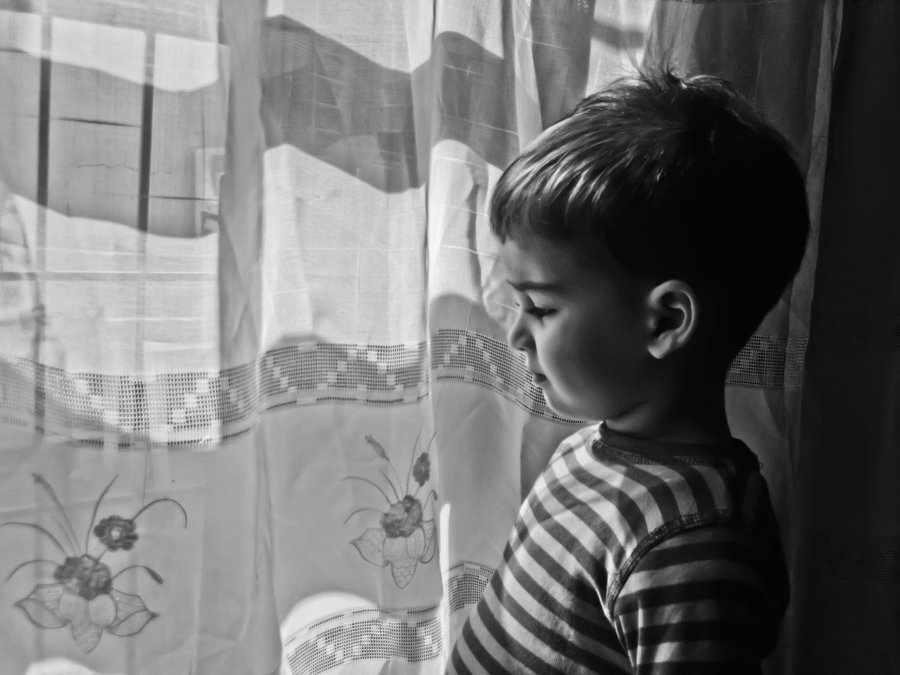
Michael’s early photos show a child with a sad expression, although he was always smiling. But there was sadness and fear there. I was reminded of a picture of my mother taken when she was two–and she was wearing a similar sad and dejected expression, looking close to tears. She had been sitting on an oversized chair, her little feet in brown high top shoes, and clutching a teddy bear. Narcissists are sad little children before they turn to narcissism as a defense mechanism. They are never born this way. It is something that is done to them (although they have some part in having made the choice to become narcissists).
When Michael was five years old, his father brought him home a small white puppy, who was named Buster. Michael loved that dog, and spent all his time playing with him when he wasn’t at school. Buster would sit on the floor next to Michael while he played with his toys or drew in his coloring books with crayons.
One summer day, Michael and Buster were sitting in the middle of the hardwood floor in the living room, in a patch of sun that came in through the picture window. Michael got up to go do something else, maybe go to the bathroom, and left his crayons on the floor in the patch of sunlight. Some purple and red crayons melted in the sun and the dog Buster somehow got some red wax on his white fur. There was also a pair of child’s plastic scissors nearby.
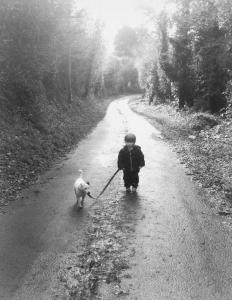
While Michael was gone, Helen came into the room and saw the waxy mess and the red crayon on the dog. She marched off to find Michael and dragged him into the room.
“See what you did, you stupid child. That dog is bleeding.” She pointed to the plastic scissors.
“See, you cut him. Well, that does it. Buster must be put to sleep.”
Michael started to cry. “But he’s not tired.”
Helen flew into a rage. “I don’t mean it that way. We are taking him to the pound where he will be destroyed. You are not capable of caring for a dog. Look what you did to him.”
Michael tried to appeal to his father, but his father, tired from work, and an enabler to Helen, just said, “I’m sorry, son, but we have to do what your mother says.”
Michael never forgot this and was never able to forgive his mother for this. He thinks this was the point at which he started to hate her and stopped trying to appeal to her love. He stopped making her things and bringing her gifts.
Helen never allowed Michael to stay home from school, not matter how sick he was. Once he had scarlet fever and was sent to school anyway. The school nurses, concerned, called Helen and asked her why she would send a child sick enough to be in the hospital to class.
Instead of apologizing and getting Michael the medical care he needed, she attacked him, blaming him for “getting her into trouble with the school.”
Any time anything went wrong, it was always Michael’s fault.
When Michael was about 11 or 12, there was a huge custody dispute over an older daughter from his father’s first marriage. The father went to court to try to win custody and lost. During this time, Michael was sent to live with neighbors, to “keep him out of the way.” He felt rejected by his own parents in favor of his father’s daughter from an earlier marriage.
Helen was a pious churchgoer, involved in every activity, but was not well liked by the other women. She was known as a troublemaker and had no real friends. But she loved to tell everyone how “everyone loves me” and “they all listen to me.” In actuality she was doing nothing but spreading gossip and lies about the other women in her church groups. The old Saturday Night Live character “The Church Lady” could have been Michael’s mother. She even looked like that character.

Dana Carvey as “The Church Lady.”
She also got involved in Michael’s school, and got the same reputation there as a troublemaker. This reflected badly on Michael, who was embarrassed by his mother’s antics and his friends’ dislike of her. She was always interfering in things that were none of her business and stirring up drama, playing divide and conquer games between other women and breaking up their friendships through her malicious lies and triangulation.
Michael hated his mother by now and tried to avoid her, but did not become a narcissist until he was almost 13.
It happened in January 1973. His father had not been in good health for some time, and suffered from atheriosclerosis, hardening of the arteries. He was only 57 when he suffered a massive stroke and died suddenly at home.
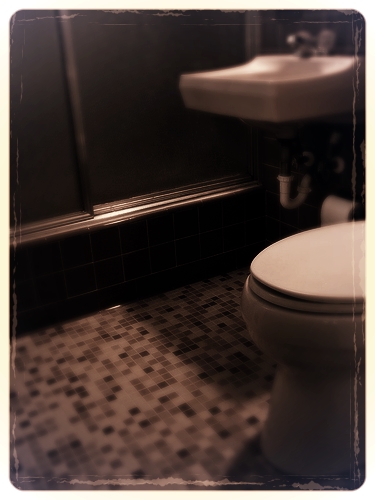
Michael went into the bathroom to get ready for school and found his father’s dead body lying on the cold ceramic tiles of the bathroom floor. He screamed and tried to revive him, but the man was already cold and wouldn’t wake up. He had been dead for several hours already.
Crying hysterically, he found his mother in her bedroom, fast asleep. He started shaking her and yelling at her to wake up.
She finally did, and was annoyed to find Michael crying at her bedside and pointing to the hallway toward the bathroom.
“Mom, I think Dad’s dead.” he sobbed.
“Don’t be ridiculous.” She marched off to follow him into the bathroom.
She stood at the doorway and looked at her dead husband on the floor, grimaced, and then turned on her heel and said to her son, “Well, I have no idea what to do about this. You take care of it.” Not one shred of empathy, grief or compassion was shown. This was her own husband, and she acted as if he was a bag of trash that needed to be taken outside.

Michael changed after that. He went through the motions of doing what is done when a family member dies, calling all the relatives himself, arranging the funeral, and all that goes with that, but inside he wasn’t the same.
After his father was buried (and his mother put on a huge show at the funeral of crying louder and more hysterically than anyone else present), Michael began to drink and get into trouble. His grades remained acceptable, but he began to show a lot of narcissistic behaviors and started to use people for his own advantage. He went into the city on the weekends and sold his body to older men for money. He thinks he killed a guy once by pushing him into a glass table, but if he did kill him he was never caught.
The malignant behavior soon became ingrained and for Michael, there was no turning back. He’d given up on life and turned to narcissism to protect himself against further injury from those who were supposed to love him. As the years progressed he became a skilled manipulator and con artist, expert at gaslighting, lying, projection of his own defects onto others, and triangulating. This was exacerbated by intermittent drug abuse and alcoholism. The rest of his progression into full-blown malignant narcissism is described in my posts about our marriage under “My Story,” which appear in the header.
Michael had turned into his enemy: his mother. At the same time, he projected his hatred of his mother onto all women he became close to. In the process, this once-brilliant man eventually burned all his bridges, both romantically and professionally. Today he is a burned out shell of a human being, now living at the Salvation Army subsisting on handouts and disability payments. He’s a “needy” narcissist, mooching and freeloading off others, and taking, taking, taking in a pathetic effort to procure the maternal love he never received as a child. He still blames “society” and other people for “making him homeless and unemployable.”
Even his children want little to do with him. He has lost everything. But he made his own choices so I can’t feel too badly for him.








 Lucky Otters Haven