In the late ’70’s, for about one year, I lived in a group residence for troubled teenagers or teenagers who could not live at home for a variety of reasons. The building it was housed in was an architectural standout even if it didn’t date very well, and won a couple of awards for architecture in its time. (I’d post a photo because there is one on Google images, but I don’t want to give away too much information so I won’t do it).
One of my weird geeky hobbies is taking “virtual road trips” using Google maps. I decided to “visit” the old ‘hood, and the address typed in took me to a building I have never seen before. I thought I made a mistake, but nope, the address was the right one. I did some further sleuthing and found out the building was demolished in 2003 because the enterprise that bought out the address didn’t think the building suited their needs. The residence center closed shortly before the demolition. I had no idea this happened until about an hour ago. I was gobsmacked by how grief stricken I felt–over a building I lived in for one year in the late 1970’s that has been gone for 13 years. I actually had some great memories of that place and felt that it helped me. I had a great counselor there. I fell head over heels in love with a boy who lived there the same time I did. We were both kicked out and sent back home because of “PC” (physical contact) on the premises. I found out several years back that he died sometime in the late ’90s. Life marches on, things change, or even disappear, and then they are forgotten. Life is full of fleeting moments like that. Someday in the not too distant future, even my memories will be lost.
Remember when you were a kid and had a loose tooth, how good it felt to wiggle it with your tongue, even though it bled and hurt like the dickens? Yet you HAD to keep doing it, because it felt GOOD.
Or remember that scab you just had to pick even though you knew it would bleed and hurt?
Happy feelings can be like that for some of us. Have you ever been so moved by something, or so touched, or so filled with joy it actually hurt and made you want to cry?
Having been so shut off from my emotions for so many years, I wasn’t used to feeling anything other than dreary, numb despair, an unnamed dread that something terrible was about to befall me, occasionally relieved by a sudden, irrational rage.
Lately I’ve been experiencing brief moments of sublime, positive emotions. Flickers of joy (not glee, but real joy), feeling moved or incredibly touched, especially when I’m in therapy. My therapist helps bring out these feelings in me, and I’m enjoying exploring these unfamiliar but wonderful emotions. But sometimes they are just so intense and that intensity hurts. Sometimes even the beauty of them…hurts.
Why would something so human and life-affirming make me feel almost sad? Is it because I don’t trust these feelings, or don’t trust being vulnerable to feeling them? Or is it because I know how fleeting such feelings are, and will only be replaced with the unpleasant feelings I’ve grown used to? Or do they hurt because my soul is unfolding, and in so doing, is breaking down the walls that bound it for so long? Are these just growing pains? Will I ever be able to experience these sublime emotions without sadness and pain?
One of the things my therapist and I have been working on is getting me to cry in session. I’ve talked before about how hard it is for me to cry, except in private, and even then it isn’t always easy. As a child I cried all the time. Because I was usually shamed for my tears, sometime during my teens or early 20s, I pretty much stopped being able to cry and outbursts of anger, seething resentment, or “freaking out” seemed to replace the tears. Rage and anger, while they have their place, is often destructive to others and yourself, and if used as an outlet where tears would be more appropriate, isn’t really very healing. Freaking out is never adaptive because it just makes you appear crazy. Before I learned mindfulness in DBT, I’d act out against others or freak out without thinking about the consequences, and usually feel regret, embarrassment, and shame later, much more so than if I had just cried instead.
Sure, tears can be manipulative. Narcissists cry to get attention or to manipulate others into pitying them or giving them what they want. Babies and young children do this too. That’s the kind of crying that has given tears such a bad reputation. But if a child is crying for other reasons–because they are hurt, because they are sad or overwhelmed with any other emotion (ANY strong emotion, not just sadness, can cause tears)–parents should never tell them “big boys (or girls) don’t cry” because that just teaches them to stifle their emotions, and stifling emotions is bad for you and can even affect your physical health. If a child is shamed out of crying often enough, they may learn to turn off the tears and become unable to cry as adults. This is especially common for boys in a culture that has traditionally frowned on men and boys crying because it’s a sissy or “weak” thing to do. But this no-crying policy applies to women as well, especially in the business and professional world, where showing softer emotions is a big no-no.
People cry for many reasons, but I think there are four basic reasons for genuine emotional (not manipulative) tears: (1) need for help or care; (2) connection, empathy and love; (3) awe, gratitude and joy; and (4) stress relief. I’ll go through each of these and explain why each one is awesome.
1. Need for help or care.
When a baby cries, it’s usually because they need something. They may be wet, in pain, hungry, tired, or just lonely. A baby’s cry brings mom running to give the baby what it needs, after which the baby stops crying. We are born into the world crying; tears are a pre-verbal language and the first language we ever learn. When we are born, we cry to communicate our distress or other needs, and get what we need to survive. If healthy attachment is achieved, a baby learns more sophisticated ways to get their needs fulfilled later on, but there are still times when needy tears are appropriate and NOT manipulative, even for grownups.
It’s always healthy and appropriate to grieve after a devastating loss, such as the death of a friend, family member or beloved pet. It’s appropriate to cry when hearing very bad news or when in great emotional or physical pain. There are survival reasons for this. A crying person usually draws people near them and attracts sympathy. If we have normal levels of empathy, we have an instinctive urge to touch or physically comfort a crying person. A person who has just found out their best friend has cancer or Fluffy died needs the comfort of others. They need to be held and hugged and have their back stroked and their hand held. They need physical contact. They need to be able to pour their story out to another person. It would be cruel to deny someone in great physical or emotional pain that kind of succor. Some societies understand this need, and that is why there are public rituals such sacramental wailing in some cultures, or sitting shiva in the Jewish faith after a loved one dies. Only when it becomes excessive or is done to attract attention to yourself does this type of crying become annoying to others.
2. Attachment, empathy, and love.
This is closely related to the above, but a bit different because the tears shed aren’t intended to draw help or comfort, but to connect with others or with the world. Many new mothers find that they become very emotional during pregnancy and for a few months after their babies are born. Even though as an adult I’ve always found crying difficult, an exception was made when I was pregnant or lactating. My emotions went into overdrive! I remember when I nursed my babies, sometimes I became overwhelmed with pure emotion I couldn’t name or explain, and silent tears began to run. It wasn’t unpleasant at all. It just felt natural and real. I think those tears connected me more deeply with my children. Tears are words an infant can understand instinctively, and when a young infant sees his or her mother’s tears, they understand this means attachment and love with her has been achieved, and a good mother responds to and feels her baby’s emotions too.
Grownups, even men, sometimes just feel overwhelmed with emotion, sometimes very positive emotion. People who are deeply in love sometimes find as they gaze into their lover’s eyes, their own well up. It can happen at any moment when the love they feel seems bigger than they are. This is why sudden tears are common in lovemaking that isn’t merely for sexual release, but to more deeply connect with the lover.
Tears of attachment and connection indicate high levels of empathy. A person who is able to feel the emotions of a friend who is sad can sometimes actually cry with their friend, and this serves to connect them on a deeper level. A world in which we can’t share the emotions of those around us–either negative or positive–is a world where no one cares and everyone is out for themselves. Any society that regards empathy as a weakness is a sick and dangerous one. If the human race is doomed to self destruction, I’m pretty sure the growing lack of empathy and care for others we see around us today would be the primary culprit.
3. Awe, joy, and gratitude.
Kelly Clarkson learns she won American Idol, 2002.
Tears of awe are the kind you shed when you are blown away by an incredible sunset or magnificent landscape. Some people get very emotional in church or when hearing a certain piece of music or reading a certain poem. I think these are the kind of tears we shed when moved by something we perceive as being greater than ourselves. They are humbling and remind us of our insignificance, but not in a bad way, because at those times, though we feel humbled, we also feel more connected to the universe or to God. Tears of awe connect us with the divine.
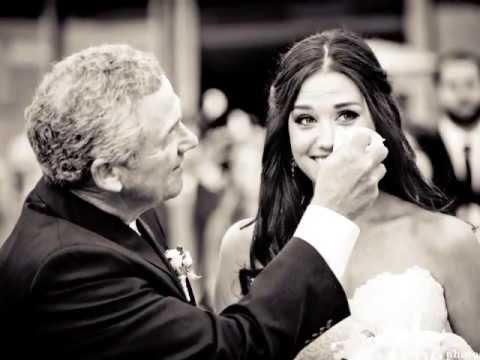
People shed tears of joy when something wonderful happens to them, usually a great surprise. Winning the lottery, winning a contest, your team winning the Superbowl, walking into your house to a surprise birthday party, hearing your baby’s cry for the first time…all these things make people cry. They’re anything but sad or manipulative! Tears of joy may also be a form of stress relief, as in some cases, there’s often an element of relief, which I’ll explain more in the next section about stress relief. For example, contestants in singing or dance competition shows or in pageants almost always cry when they win. For many months, they’ve been under enormous stress. The moment of winning not only validates all the hard work they’ve done, it’s also a sudden release of months of the built up stress of heavy competition. It’s okay to let go!
Related to tears of joy are tears of laughter–those times we laugh so hard we begin to cry. Crying and laughter are physiologically very similar and serve a similar purpose of relieving stress, so it’s not too surprising that sometimes our bodies get laughter confused with tears!
Finally, there are tears of gratitude. Sometimes we are taken by surprise when someone does something nice for us. Especially when it’s unexpected, kind words or deeds can bring on tears. Colloquially, this is known as being touched, which differs from being moved because it’s more human and less spiritual/humbling than being moved. Tears of gratitude connect us with each other.
4. Stress relief.
Some unpleasant emotions aren’t normally expressed through tears. For example, people don’t usually cry when they’re afraid or anxious or angry. To do so wouldn’t be in our best interests survival-wise. When we’re in danger or there’s some kind of threat facing us, showing vulnerability might get us killed. So when we’re angry, we want to attack. When we’re afraid, it’s fight-or-flight. When we’re worried, we want to remove the source of worry or solve the problem. But once the danger or stressor has passed, and we feel a measure of relief, it’s common for people to break down in tears. A child who has become lost doesn’t usually cry while they’re looking for their caregiver, because that’s too dangerous. They cry the minute they see Mom or Dad’s arms reaching out to them (and very often Mom or Dad cries right along with them!)
Sometimes people cry even when the danger hasn’t passed, when they just feel overwhelmed and have given up trying to fight or escape or trying to solve their problem. In those cases, crying is a last-ditch effort to solve the problem. If all else has failed, then crying may bring help or comfort from others. It’s not necessarily manipulative if everything else has been tried first and nothing has worked.
Sometimes even when the threat is gone or the issue resolved, or the horrible outcome we expected didn’t come to pass, we still cry, because it’s finally safe to do so. The tears shed at those times are really tears of relief because they help release all the emotion that was pent up while we were in danger. When thought of this way, it makes no sense to tell someone not to cry, because it doesn’t mean they’re upset, it means they’re relieved and finally feel safe enough to release all that bottled-up stress through tears.
And then there are those times when you just need to have a good cry, and you don’t even know why. After a few minutes or hours of sobbing, pouring out snot and tears, you come away feeling like a million dollars. So if you want to cry, go ahead and let it out. It’s good for your body, mind and soul.
A friend sent me this video. Have the tissues ready. 😥
Lyrics:
There’s no place for a sensitive soul
In a space where your ego freely roams
And you’re a little bit narcissistic
And I’m a little too understanding, sadly
So you held me like your rose
Only to watch me whither slowly
But there’s no hope for the weaker minds
This, I know
You can’t take me down
For my fragile heart
I’ll start over now
With my fragile heart
I’ve been feeling quite strange the past week. It’s the worst I’ve felt in about a year. It started with feelings of anxiety and panic, racing and morbid thoughts and a feeling of unnamed dread. I’d try to nap and my heart would start racing so I’d give up. DBT skills didn’t work and some of my BPD (or PTSD) behaviors returned–negativistic behavior, feeling offended easily, sulking, fits of anger (not directed at anyone but expressed in imaginary conversations with myself in the car or at home), low frustration tolerance, paranoia. I’ve been less motivated to write. I’ve been neglecting housekeeping and eating right. Getting up in the morning is excruciating.
It was all I could do to make it through work. I was feeling sorry for myself all day and at the same time felt guilty for feeling that way. The anxiety has lessened but it’s been replaced by despair and some kind of deep sadness.
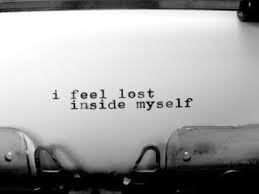
I don’t cry easily, but I started crying a few hours ago and couldn’t stop. It feels good to cry, but the feelings are so painful. I feel unworthy. I feel impotent. I feel angry at my parents for training me to be such a good little victim. I hate my ex. I hate myself. I suck at everything. I can’t relate to people. I hate people. I want to connect but I just can’t. I think people will hate me if I let them get too close. My world is so small and constrained and unsatisfying because of my fear of relating to others and reaching out, and because I never have enough money to do anything or go anywhere anyway. The summer’s slipping away and it reminds me of all the lost opportunities and all the doors that have slammed shut, never to reopen. That’s where my head is at. It’s a bad place to be. I feel like I’m losing control. It’s like a war inside my head. I hate all this wallowing in self pity but maybe it’s an opportunity to nurture myself.
I need to find a therapist. This blog is a wonderful tool for healing and it’s something I won’t let go of. It’s brought me a lot of joy. A lot of frustration too, but mostly joy. So I’ll keep blogging. I’d still rather do this than anything else.
But something, I don’t know what, has been triggered–by what I don’t know–and I’ve reached a point where just writing isn’t enough. I need someone to talk to who can help me sort out whatever’s going on in my head right now. I think journaling every day may have brought me to this point.
I’m not giving up. The good thing is that my emotions, while not really under my control at the moment, are there for me to feel. I’m not depressed in the apathetic, almost zombie-like way I used to get depressed when I was living with my narcissist ex. This is an active depression where my emotions are accessible to me and I can sort of name them and I just have to let myself feel them. I’m grateful for that at least. This is what I wanted. But what do I do with them? Can they make me a better, kinder, happier, more empathetic person? That’s what I really want. I need to find someone who can show me what to do with all these emotions.
I guess this means the honeymoon is over, and now the real work begins.
Last weekend I went to see the Pixar animated movie, “Inside Out,” and reviewed it in this article. In researching the article about positive thinking I just posted before this one, I saw an interesting New York Times article describing the science behind the five emotions in the movie, especially the important role that Sadness played in 11 year old Riley’s mind. The article states that our emotions, when working together in harmony, fuel rational thinking, rather than interfering with it. I think I agree. Rational thinking isn’t the absence of emotion. It’s when one or more of the emotions is sleeping on the job or overpowering the others that we become irrational.
FIVE years ago, the writer and director Pete Docter of Pixar reached out to us to talk over an idea for a film, one that would portray how emotions work inside a person’s head and at the same time shape a person’s outer life with other people. He wanted to do this all in the mind of an 11-year-old girl as she navigated a few difficult days in her life.
As scientists who have studied emotion for decades, we were delighted to be asked. We ended up serving as scientific consultants for the movie, “Inside Out,” which was recently released.
Our conversations with Mr. Docter and his team were generally about the science related to questions at the heart of the film: How do emotions govern the stream of consciousness? How do emotions color our memories of the past? What is the emotional life of an 11-year-old girl like? (Studies find that the experience of positive emotions begins to drop precipitously in frequency and intensity at that age.)
“Inside Out” is about how five emotions — personified as the characters Anger, Disgust, Fear, Sadness and Joy — grapple for control of the mind of an 11-year-old girl named Riley during the tumult of a move from Minnesota to San Francisco. (One of us suggested that the film include the full array of emotions now studied in science, but Mr. Docter rejected this idea for the simple reason that the story could handle only five or six characters.)
Riley’s personality is principally defined by Joy, and this is fitting with what we know scientifically. Studies find that our identities are defined by specific emotions, which shape how we perceive the world, how we express ourselves and the responses we evoke in others.
But the real star of the film is Sadness, for “Inside Out” is a film about loss and what people gain when guided by feelings of sadness. Riley loses friends and her home in her move from Minnesota. Even more poignantly, she has entered the preteen years, which entails a loss of childhood.
We do have some quibbles with the portrayal of sadness in “Inside Out.” Sadness is seen as a drag, a sluggish character that Joy literally has to drag around through Riley’s mind. In fact, studies find that sadness is associated with elevated physiological arousal, activating the body to respond to loss. And in the film, Sadness is frumpy and off-putting. More often in real life, one person’s sadness pulls other people in to comfort and help.
Those quibbles aside, however, the movie’s portrayal of sadness successfully dramatizes two central insights from the science of emotion.
First, emotions organize — rather than disrupt — rational thinking. Traditionally, in the history of Western thought, the prevailing view has been that emotions are enemies of rationality and disruptive of cooperative social relations.
But the truth is that emotions guide our perceptions of the world, our memories of the past and even our moral judgments of right and wrong, most typically in ways that enable effective responses to the current situation. For example, studies find that when we are angry we are acutely attuned to what is unfair, which helps animate actions that remedy injustice.
We see this in “Inside Out.” Sadness gradually takes control of Riley’s thought processes about the changes she is going through. This is most evident when Sadness adds blue hues to the images of Riley’s memories of her life in Minnesota. Scientific studies find that our current emotions shape what we remember of the past. This is a vital function of Sadness in the film: It guides Riley to recognize the changes she is going through and what she has lost, which sets the stage for her to develop new facets of her identity.
Second, emotions organize — rather than disrupt — our social lives. Studies have found, for example, that emotions structure (not just color) such disparate social interactions as attachment between parents and children, sibling conflicts, flirtations between young courters and negotiations between rivals.
Other studies find that it is anger (more so than a sense of political identity) that moves social collectives to protest and remedy injustice. Research that one of us has conducted has found that expressions of embarrassment trigger others to forgive when we’ve acted in ways that momentarily violate social norms.
This insight, too, is dramatized in the movie. You might be inclined to think of sadness as a state defined by inaction and passivity — the absence of any purposeful action. But in “Inside Out,” as in real life, sadness prompts people to unite in response to loss. We see this first in an angry outburst at the dinner table that causes Riley to storm upstairs to lie alone in a dark room, leaving her dad to wonder what to do.
And toward the end of the film, it is Sadness that leads Riley to reunite with her parents, involving forms of touch and emotional sounds called “vocal bursts” — which one of us has studied in the lab — that convey the profound delights of reunion.
“Inside Out” offers a new approach to sadness. Its central insight: Embrace sadness, let it unfold, engage patiently with a preteen’s emotional struggles. Sadness will clarify what has been lost (childhood) and move the family toward what is to be gained: the foundations of new identities, for children and parents alike.
Yesterday I decided to take myself to the movies for a change, and chose to see “Inside Out,” the Disney Pixar animated summer fantasy blockbuster.
Seeing “Inside Out” was a serendipitous choice, because I just happened to have enough money to afford a ticket (which is a rarity for me), and also because, although I didn’t know it right away, this movie has a beautiful message about the way Sadness and Joy, though seemingly polar opposites, when working together make human connection and unconditional love possible. Just as the light can’t exist without darkness, or good without evil, joy cannot exist without sadness. When working in sync with each other, these two emotions create a beautiful life affirming thing called Empathy, and that’s what connects us to each other and keeps the human race from becoming extinct.
Official Trailer
Sneak Preview–Teaser Clips
Riley Andersen is a young girl of 11 who becomes severely depressed after her parents’ decision to move from Minnesota to San Francisco. The movie begins at the moment of Riley’s birth in Minnesota, shown from Riley’s point of view. Her first Emotions (depicted as loveable anthropomorphized characters) are Joy (feeling secure in her parent’s love) and Sadness (when she needs something or feels ignored or in pain). As Riley grows into early toddlerhood, sometimes her needs and desires are thwarted and Anger takes over and she throws a tantrum. Around the same time she is also capable of feeling Fear or Disgust (both necessary for her survival), and it’s at those times those characters become dominant in Riley’s growing mind.
When the five Emotions work together in harmony, not overstepping each other’s boundaries and only doing the jobs assigned to them, this teamwork manifests in Riley as a well-adjusted little girl able to feel all her emotions at the appropriate times.
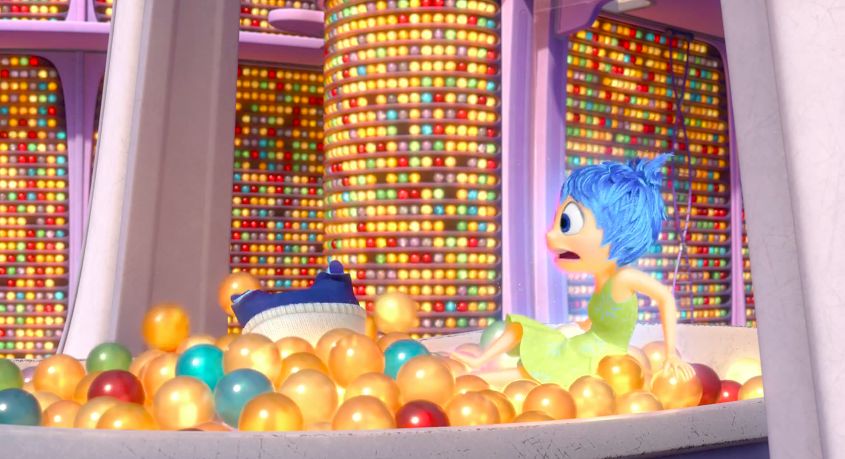
The five Emotions work in Headquarters, which is the conscious part of Riley’s young mind. Joy is responsible for making sure Riley’s short term memories are sent to Long Term Memory deep in Riley’s subconscious. Her memories are depicted as glowing colored orbs containing a ghostly image of the actual memory. The color of the orbs represent the dominant Emotion Riley felt at the time of the event. Transporting Short Term memories into Long Term Memory happens during Dream Production as Riley sleeps, and sometimes the other Emotions are needed to help Joy do her job getting the memories there (and sometimes discarding certain irrelevant or painful ones.) Occasionally the other Emotions (as well as Riley’s imaginary childhood friend, Bing Bong, who is a jokester) like to play little jokes–and certain irrelevant memories like an annoying gum commercial jingle are sent to Long Term Memory along with the important memories, which causes Riley to occasionally hear the gum jingle in her head at random times years later.
At the center of Headquarters is the vault which contains Riley’s Core Memories–important but happy long term memories that are responsible for Riley’s happy go lucky personality. The orbs that represent these are colored gold (Joy’s color) and for Riley’s continued mental health, these core memories must not be contaminated by the other Emotions, which is why they are kept locked in a vault. Each of the Core Memories has a long glowing tube that leads to one of Riley’s Five Islands of Personality: Family, Goofiness, Hockey (which she loves to play), Friendship, and Honesty. Maintaining these islands is necessary for Riley’s continued normal psychological development.
The crisis in Riley’s mind is set off when her family moves from her beloved Minnesota to San Francisco. Moving away is always a traumatic event for even the most loved child. Feeling isolated from her old friends and lonely in a place she doesn’t know, Riley’s Emotions begin to make mistakes and not work in sync. Joy and the other Emotions have never been sure of Sadness’s purpose because she just seems to be a Debbie Downer who is always in the way and always making mistakes. It’s Joy’s job to keep Riley’s happiness intact, but one day shortly after the traumatic move, Sadness goes around touching Riley’s happy memories, turning them blue (sad). Joy frantically tries to undo the damage but the memories already touched cannot be repaired. Desperate, Joy tries to isolate Sadness to prevent her from doing any more damage.
On Riley’s first day at her new school, Sadness takes over and Riley begins to cry in class, which creates a new but painful core memory. Joy frantically tries to keep this new core memory from reaching the central vault, but in her struggle with Sadness, who seems to keep contaminating more memories, she accidentally knocks out some of Riley’s untouched happy core memories, which fall off into the abyss. These memories are almost impossible to retrieve once lost to Riley’s Unconscious. Worse yet, both Joy and Sadness are sucked through the Long Term Memory Tube themselves, and are both lost deep in Riley’s vast and labyrinthine Unconscious.
During Joy and Sadness’s absence, Anger, Fear and Disgust attempt to run Headquarters in their place and make a holy mess of things. They attempt to provide “joy” but of course it’s faked now, rather than genuine. Sadness too is absent, so Riley can no longer longer cry or even feel grief over her loss. Anger, Fear and Disgust manifest in Riley’s new insolent and angry attitude toward her parents and loss of interest in the things she used to love. With the core memories now missing or contaminated, one by one the Five Islands of Personality crumble and fall into the abyss of the Memory Dump, a place deep in Riley’s mind where old memories are forgotten. The first Island to crumble into oblivion is Goofiness (Riley’s sense of humor), followed by Hockey (which she quits), and then Friendship (she no longer has any desire to make new friends).
Joy and Sadness find themselves adrift after falling through the Long Term Memory tube deep into Riley’s unconscious mind.
Desperate, Anger decides to insert in Riley’s mind the idea to run back to Minnesota. He plugs this into the Control Console, in the belief this can produce new happy memories. This requires Riley to steal money from her mother’s purse in order to fund her trip back to Minnesota, and then she lies about the theft. As a result, the second to last Island left, Honesty, falls away in ruins into the Memory Dump.
Back in the abyss of Riley’s deep Unconscious, Joy and Sadness run into Bing Bong, Riley’s long forgotten childhood imaginary friend. Bing Bong wants to reconnect with Riley, so he tells Joy and Sadness they can all get back to Headquarters by riding the Train of Thought. After a series of failed attempts, they eventually catch the train, but it becomes derailed when the last personality island, Family, falls into the Dump.
At this point, giving any more away would be spoiling the plot, but gradually Joy and Sadness, who have always been at odds with each other, realize that in order for Riley to return to her normal happy state of mind, they must work together as a team and Sadness has the biggest job of all. Riley must be able to experience–and receive–empathy and love (which comprise both joy and sadness) to heal from her near-catatonic depression.
As a blogger about narcissism and personality disorders, I see Riley at this point in grave danger of suicide or developing a personality disorder, even NPD or BPD. Her trauma-induced depression has caused her to become apathetic and unable to feel anything at all. What happens next is so magical and touched me so deeply I sat there in the darkened theater with tears running unchecked down my face and my nose running. I wasn’t alone–I heard sniffles and nose blowing all over the theater, and there’s a safety and sense of connection with total strangers that comes from that, and that’s why going to see a good movie never gets old. There’s something wonderfully liberating about being able to cry in a public place yet unseen by others and unjudged for it because everyone else is crying too. I think that’s why “heartstring tugging” movies are so popular. But the emotions elicited in “Inside Out” feel real–there’s no sappiness or fake sentimentality in this film that make you feel manipulated by the producers.
The five Islands of Personality.
But for all its poignancy, “Inside Out” has plenty of humor too, and all the jokes are clever and well timed. At times during the movie I was both laughing and crying at the same time. The Five Emotions are all funny characters with their own unique charm. Even Anger is loveable and hilarious in his own irascible way, and the Tinker-Bell like Joy, who could have been incredibly annoying for all her upbeat perkiness, has a depth you don’t expect and over time you realize she is the only Emotion who can feel all the other Emotions. I pictured Joy and Sadness as really being the same person–the two sides of Riley’s True Self–and when they were lost in Riley’s memory dump, Riley’s behavior became quite narcissistic. It wasn’t lost on me that both Joy’s hair color and her “aura” are colored blue–Sadness’ color.
Pete Doctor, the film’s director and screenwriter, was inspired to develop “Inside Out” while trying to come to terms with his own daughter’s psychological changes and mood swings as she approached adolescence. To give the complex psychological concepts presented credibility, well-known developmental psychologists were consulted during pre-production. It’s obvious that a deep knowledge of the way the human mind works fueled both the story and the landscape of Riley’s mind. Kids will adore “Inside Out” because of its lovable characters, fantastic animation, humor, its engaging story about a regular girl, and impressive special effects. In the theater I saw it in, there were plenty of children there, and all of them were rapt in the story.
But adults will love it just as much because of the movie’s deep message of Empathy being born from pain and loss, and the necessity of “negative” emotions to exist in a healthy person’s psyche, working in tandem with “positive” ones. Understanding the movie at this level requires an ability to think in an abstract way about the mechanisms behind personality development and psychological disorders. “Inside Out” is a rare movie that celebrates the human ability to feel, and to love, cry, connect, and laugh. It tells kids that all their emotions are okay, and experiencing them is normal and just part of growing up.
Parents, if you have children ages 4 to early teens, please take them to see “Inside Out.” Both you and they will leave the theater feeling great, and the ideas presented in the story can open up honest discussion about emotions between parents and their children. I’d even go so far as to suggest teachers show this movie to their students, and engage them in discussion afterwards.
I find it encouraging and heartening that such an honest and touching movie with a positive message about genuine emotions and empathy has become the hit of the summer, instead of the usual mindless dreck that passes for summer blockbusters.
“Inside Out” is rated PG. I would not recommend it for children age 3 and younger, due to several quite scary moments that could give a young child nightmares.
Riley with her concerned parents at the dinner table.
“Inside Out” is a 2015 American 3D computer-animated comedy-drama film produced by Pixar Animation Studios and released by Walt Disney Pictures. Directed and co-written by Pete Docter, the film is set in the mind of a young girl, Riley Andersen (Kaitlyn Dias), where five personified emotions—Joy (Amy Poehler), Anger (Lewis Black), Disgust (Mindy Kaling), Fear (Bill Hader), and Sadness (Phyllis Smith)—try to lead her through life as she moves with her parents (Diane Lane and Kyle MacLachlan) to a new city. The film was co-directed and co-written by Ronnie del Carmen and produced by Jonas Rivera, with music composed by Michael Giacchino.
Docter first began developing Inside Out in 2009 after noticing changes in his daughter’s personality as she grew older. The film’s producers consulted numerous psychologists, including Dacher Keltner[6] from the University of California, Berkeley, who helped revise the story emphasizing the neuropsychological findings that human emotions are mirrored in interpersonal relationships and can be significantly moderated by them.
After premiering at the 68th Cannes Film Festival in May, Inside Out was released on June 19, 2015. It received universal critical acclaim, with many film critics praising the voice performances (particularly for Poehler, Smith, and Richard Kind), its concept and poignant subject matter. The film grossed $90.4 million in its first weekend—the highest opening for an original title, besting Avatar ’s previous record.











 Lucky Otters Haven