A thank you to all my international readers.

worldmap_wp

One thing that still excites me is seeing how much reach this blog has had.  Two years ago, my thoughts were read by no one.   They didn’t even leave the confines of my own brain.  That sure has changed!  Pictured above is a map showing my visitors since January 1, 2016. It still shocks me (in a very good way) that people in almost every country have visited my little corner of the Internet. So I want to take this opportunity to thank all of you for taking the time to visit and read this blog. It’s very much appreciated.

Narcissistic abuse: who is the real victim?

adult-workplace-bullying

Narcissistic abusers are great at charming people they want to impress, or those people they want to get on their side. When they have targeted an individual for abuse, they will stop at nothing to turn their friends, colleagues, even their families against them–and it’s not at all uncommon for them to claim that THEY are the ones being abused.   The process of using malicious gossip and lies to turn people against the victim is called triangulation and is well known in the narcissistic abuse community. Most of us who have been targeted by narcissistic abusers know all too well about triangulation and its close cousin, gaslighting. Both will be used in conjunction with each other to turn the victim’s potential allies against them, effectively isolating them and ripping away any support systems they could use later.

Those who have been turned against the victim by the narcissist are called flying monkeys. They may or may not be narcissists themselves, but they are duped and misled by the narcissist’s convincing lies and charm into believing the narcissist is the real victim and that the victim is the abuser. You can’t really blame them for siding with the abuser, since the abuser can be so convincing and often has a glibness that the real victim lacks. Complicating the situation further is the likelihood that the real victim indeed acts “crazier” or more irrationally than the abuser, usually because they have been driven half-mad by the abuse, which can be so easily hidden, even from those who are witnesses to it.

The good news is, there is a way the real victim can be discerned in an abuse situation, even if the narcissist complains loudly about how THEY are being abused. This isn’t something I thought of myself; it’s been described already by other writers and bloggers. Still, I think it’s something that isn’t given a lot of attention, so I want to describe in detail how this works because it may be the only way you can extract the truth in the evil mental clusterf*ck set up by a narcissistic abuser.

Isolating the victim.

In any abuse situation, there is almost always more than just two people involved. At the core are the victim and the abuser, of course, but chances are good the abuser has convinced other people–including friends and family members of the victim–that the victim is the real abuser, and recruited others as flying monkeys that collectively condemn and mob the victim. The abuser may have even convinced a mental health professional or pastor (or anyone else who works closely with a family) that the real victim is the real abuser, effectively turning everyone against the victim, so only the narcissist appears to have allies and the victim has no one.

This happened to me, when I was still married to my sociopathic MN ex. My ex was always more socially adept than me. He was always better at making friends and giving a good first impression than I was. He was very glib and could spread the lies on as thick and convincingly as a trial lawyer. In fact, I used to joke that he should have been a lawyer (no offense to any lawyers who may be reading this!)

verbal_abuse

It wasn’t a joke anymore when he decided I was an easy target for abuse. We had several friends–mostly other couples–who suddenly seemed to want nothing to do with me, but still talked to him and seemed to like him. When I questioned my ex about why all our friends had cooled toward me, he said things like, “So-and-so doesn’t like you; I really don’t know why!” or “The Joneses told me they think you act kind of crazy and they don’t feel comfortable around you.”  I was even told our friends were “afraid of me.”  Even our children–who were middle schoolers at the time–had turned chilly toward me, as had several other family members. (It turned out later he was telling the kids I didn’t love them and wished they’d go away–of course, this was an utter lie). Meanwhile he had convinced our friends I was insane. If I questioned him about his treatment or if I seemed to be getting at the truth, suddenly I was called paranoid or too sensitive or even crazy. Or I’d get a non-answer like, “No wonder no one likes you. You’re so selfish. Everything is always about YOU.” He was projecting his own narcissism onto me, but I didn’t know it back then. I began to think there must be something very wrong with me that everyone else could see but I couldn’t.

The real abuser may act more sane.

It didn’t help any that my behavior around this time did in fact appear more insane than his did. I always seemed to be the one to act out or lose my cool, while he always appeared completely rational, cool and collected. Of course our kids were more likely to take his side–they looked at their dad and saw a calm, rational person who wasn’t raising his voice and who was telling them their mom was both insane and didn’t love them. They looked at me and saw a frazzled, half-mad, emotionally unstable woman who was always yelling, crying or locking herself in her room–and on two occasions had to be hospitalized. Why wouldn’t they believe him? What they–and everyone else–didn’t know was that his crazymaking behavior was driving me insane and I was already suffering PTSD due to the mental and emotional abuse. He always treated me well whenever anyone else was present, so no one would suspect what he was actually doing. If I tried to call him out on his abuse, I was gaslighted: “stop making things up,” or “that just proves how insane and self centered you are.” Everyone we knew believed him and I found myself all alone, with no one I could trust or confide in. He was able to use confirmation bias to his advantage–thereafter, anything I did became “proof” of my “craziness” or “unfitness” or “selfishness” and the more abused I was, the “crazier” I got.

At one point we began to see a marriage counselor at my insistence. My behavior in counseling was more volatile than his, and my ex also began to see the counselor in private. He was able to convince this therapist that I was the problem in the marriage and the less fit parent. Here was one more person who could have been a potential ally, but due to her ignorance of narcissistic abuse (and his attorney-like glibness and charm), became another flying monkey he could use in his smear campaign against me.

isolation
Click chart to enlarge.

I have read and heard about many similar situations described by numerous narc-abuse survivors, whether the narcissist was a parent who turned all their siblings and other relatives against them, or a spouse who turned all their mutual friends against them. It happens in the work world too, and online, and in schools, and anywhere where bullying can take place. In any bullying or abuse situation, there is one ringleader (or main narcissist) who has successfully used triangulation, gaslighting and projection to turn others against the abused person. The real abuse victim, who may lack the charm and glibness and manipulativeness of the abuser, has usually been isolated by the narcissist from anyone who could have been of support.

Identifying the real victim.

It doesn’t matter if the real victim seems “crazier” or more emotionally unstable or even more “abusive” than the abuser; they have become that way due to the abuse.   They may have a history of previous victimization which rendered them vulnerable to becoming an abuser’s prey and they may have pre-existing PTSD.   The real clue here is which person seems to have no one on their side? Which one has no friends or allies?  Who seems to be fighting a losing battle?  Who seems to have more “mental problems?” That person is almost always going to be the actual victim, no matter how much “evidence” the alleged “victim” claims to have.

If you are currently being victimized by an abuser, this knowledge may be the only way to be able to tell that you are actually the abuse victim and not the perpetrator, since chances are, your abuser has convinced everyone (including you!) that you are the one at fault. Hold onto this knowledge and remind yourself of it as you begin to disengage. Hopefully, knowing that you are NOT at fault and the narcissist is just a convincing liar will give you the motivation you need to get away. Or, if you are a bystander witnessing abuse, you may be able to help the real victim by keeping in mind that the one who seems to have no one on their side is the one you should be helping. Don’t let the narcissist’s convincing lies sway you over to their side.

Monday Melody: Smells Like Teen Spirit (Nirvana)

monday_melody

I was going to post a different (more recent) song for this week, but my DS, who will be 25 this year, just reminded me that this iconic song is as old as he is. It still sounds as great as it did in 1991. Sorry about this being a day late.

Oops!

I meant to write two posts last night, but when I came home from work I laid down for a nap and never woke back up. All is well though. I’ll put them up tonight.

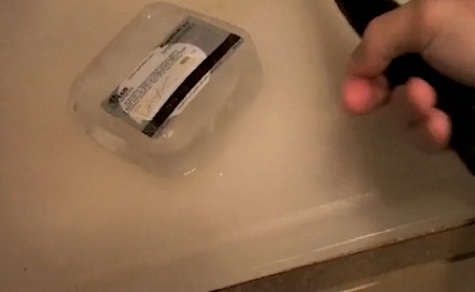
Frozen account.

ice-credit-card

From an actual conversation:

My son (to his roommate):
Why is there a debit card in the freezer?

Roommate:
The account’s frozen.

Sheldon enjoys his new little bed.

On a whim, I picked up a small cat bed yesterday at Dollar General. I sprinkled a little catnip in it and waited. I didn’t think either of my cats would be interested, but today I found Sheldon curled up in it sleeping. He looked up just in time for me to get this photo.

sheldon_bed

Happy Pentecost!

pentecost_1

Pentecost is a Christian holy day and is always celebrated exactly seven weeks after Easter Sunday. It commemorates the descent of the Holy Spirit on the Apostles and other followers of Jesus Christ before He ascended back into Heaven (Acts of the Apostles 2:1-31). The descent of the Holy Spirit ensured that his followers would continue to spread his Word and convert others to Christianity. In the Catholic Church, Pentecost marks the end of the Lent (Easter) season. The Holy Spirit’s descent is often symbolized by a dove and a flame.

The Holy Spirit isn’t limited to Christians. Anyone can feel the presence of the Holy Spirit. You simply have to be in the right frame of mind and be open to its presence. You can ask God (or a Higher Power if you prefer) to fill you with the Holy Spirit. For me, music, nature and writing are three things that open me to its presence. Today’s a gorgeous, sunny day, not too hot, so after church (Mass is going to be held outside this year), I think I am going to take a drive and just enjoy the beauty of nature during this beautiful time of year.

Spend some time with nature, or if the weather is inclement, listen to some music that inspires you while engaging in a creative activity. It could be anything that inspires you–writing, painting, singing, cooking, even doing a spring cleaning. Spend some time in prayer. Don’t dwell on the negative. Give your worries a break. If you can’t take your mind off your cares, ask God to help you focus on the positive and on his presence.

Here is a website that lists some prayers you can say today:

http://www.faithandworship.com/prayers_Pentecost.htm

Do narcissists cry?

crocodiletears

This is a revision of the Jan. 1, 2015 article.  It’s one of my most popular posts, so I figured I’d post it again, with a few changes.

Do narcissists cry?  Sure, they do. Of course they do. And the histrionic, somatic types will cry conspicuously and loudly and convulsively and make sure everyone notices.  Think of Joan Crawford’s over the top histrionics in he movie Mommie Dearest.  The attention they get from this show of dramatics (which you cannot ignore) elicits lots of narcissistic supply for them and gets them the sympathy they crave.  Remember, positive attention isn’t necessary to serve as supply to a narcissist.  Any sort of attention–even disgust and anger–will do.

Self-serving crying and fake empathy.
Narcissists cry for themselves, never for you. They *might*cry when they see a sad movie, if they experience themselves through that character. Movies are a safe way to shed tears, even for those who don’t cry easily (and that includes non-narcs too). But narcissists aren’t really crying for the characters in the movie. They are really crying for themselves.

Some narcissists who are good actors can pretend to cry for others–these are dangerous narcissists able to feign empathy but show their true colors after they’ve charmed you and duped you into thinking they’re the nicest, most sympathetic person in the world. But it’s all fake. Those “empathetic tears” are crocodile tears. A narcissist can never cry for anyone but themselves.

Narcissists are just big babies.
Kim Saeed, a writer who has an excellent and extremely popular blog here at WordPress about narcissistic abuse, wrote an insightful article about what makes a narcissist cry (basically, self pity and attention getting). It’s a good read. Narcissists cry the way an infant cries–to have their immediate needs met. Whether they admit it or not, they need a mother–and most likely never got adequate mothering, so they’re still trying to get it. Like an infant, they are incapable of separating themselves from others and can feel no empathy for anyone else.

babycrying
Here’s who your narcissist really is.

While some narcissists take pride in their appearance, professional accomplishments, athletic prowess, or outstanding intelligence, there are some narcissists (the covert type) who take a perverse pride in being as pitiful and pathetic as it’s possible to be. These are what I call “needy narcissists” (Kim Saeed refers to them as “extreme narcissists”).  Many of our mothers (not mine–my mother was overt and aggressive) fall into this category.  They guilt-trip you and constantly whine about how badly you’ve treated them.  They remind you of all the wonderful things they’ve done for you.   They are emotional, financial and spiritual vampires who will suck you dry if given half a chance. They tend to attract empaths and HSPs and codependent types of people who are willing to give them the pity and sympathy they crave. And they use tears to elicit those things. Tears are powerful and contagious and get babies what they want–why not narcissists? Hey, if it works, use it.

Can a narcissist ever cry non-self serving tears?

A narcissist crying for reasons other than self-serving ones is rare.   But if one ever enters therapy or gets to a point where they recognize their own narcissism and is able to grieve for their lost true self, it’s possible.  Don’t get your hopes up though.    That being said, I read an article by Sam Vaknin about the way he cries in his dreams, which I thought was pretty interesting.   If something like this can happen, maybe it could be used as a catalyst to healing.  Maybe.  (Sam is not cured of NPD and probably never will be.  It’s his livelihood).

Dreaming and “lucid” dreaming: a possible key to healing?
Dreams open us up to the subconscious mind, so remembering dreams is useful in therapy.  For a narcissist, dreams have the potential of tapping into the atrophied and depressed true self–the self that dissociated and went into hiding during early childhood to protect itself from abuse by caregivers. Sam Vaknin writes about this phenomenon in this journal entry, in which he describes two nightmares that briefly brought him in contact with his true lost self, at least until he woke up.

He writes:

I dream of my childhood. And in my dreams we are again one big unhappy family. I sob in my dreams, I never do when I am awake. When I am awake, I am dry, I am hollow, mechanically bent upon the maximization of Narcissistic Supply. When asleep, I am sad. The all-pervasive, engulfing melancholy of somnolence. I wake up sinking, converging on a black hole of screams and pain. I withdraw in horror. I don’t want to go there. I cannot go there.

One’s narcissism stands in direct relation to the seething abyss and the devouring vacuum that one harbors in one’s True Self.

I know it’s there . I catch glimpses of it when I am tired, when I hear music, when reminded of an old friend, a scene, a sight, a smell. I know it is awake when I am asleep. I know that it subsists of pain – diffuse and inescapable. I know my sadness. I have lived with it and I have encountered it full force.

Perhaps I choose narcissism, as I have been “accused”. And if I do, it is a rational choice of self-preservation and survival. The paradox is that being a self-loathing narcissist may be the only act of self-love I have ever committed.

cryingofthestoneangel
Crying of the Stone Angel by Eternal Dream Art at Deviantart.com

Can a narcissist’s true self ever see the light of day?

The true self is there in hiding, sometimes peeking out in dreams.  A narcissist without insight (which is almost all of them) would not be able to write the post quoted above.   Even if they were aware of having such a vulnerable inner self, they would never admit it.   They’re so walled off from their true feelings they can’t access it even in dreams.   Instead, they shore up a fake self that takes the place of the true one–but it’s not sustainable and will fall apart without a constant source of narcissistic supply that keeps it inflated like a balloon.  The constant inflation keeps their false self alive and as long as it’s there, they never have to face the black emptiness inside where the atrophied child-self exists.  If they fall into such a depression, they may go insane.  Suicide is not unheard of.

Sadness and tears that could arise from being able to encounter one’s true self, even if only briefly in a dream, could be the key to healing.  If only anyone really could figure out how to harness this and keep it accessible long enough for the narcissist to start doing some difficult internal work before they slap that mask back on.   Harnessing any brief moments of emotional nakedness is like trying to hold onto a dream while awake–most of the time, it dissolves and fragments like soap bubbles before being  swept away in the the river of day to day reality.   It’s still there, buried in the narcissist’s unconscious the way a clam buries itself deep in the wet sand near the shore after the waves recede.  But in all likelihood, the narcissist will die a narcissist, and no one (including themselves) will ever know what could have been.   I think most of them choose to remain living in the darkness because it’s a whole lot “safer.”  Maybe “lucid dreaming” (a skill that can be learned) could be one way to capture the true self when it emerges in a dream, and keep it there long enough to work with.

Most people don’t believe narcissists can be cured (and in most cases, they can’t be and are perfectly fine with being the way they are).  That being said,   I like to remain optimistic.   I can’t believe there are people walking on this earth who have completely lost their souls.  Unless a person has consciously chosen evil and has become sociopathic, I don’t think most narcissists are that far gone. The challenge is catching them when their guard is down, which is almost never.  I don’t recommend you try  doing this yourself.  Leave it to the professionals or to God.   You cannot fix a narcissist.   All you can really do is stop giving them supply, so stay (or go) No Contact.

Narcissists and Sex.

narcissists_and_sex

I can’t believe I’ve never written a post before about narcissists and sex, but sex is one of the biggest ways they manipulate and control the rest of us.

Many people mistakenly believe narcissists love sex. Actually, that isn’t true. They’re not even especially promiscuous. In fact, many narcissists are downright prudish. People with Borderline or Histrionic Personality Disorder are much more likely to be promiscuous, because in their minds, sexual attention is equated with love and acceptance.

Narcissists don’t love sex. Sex is merely a tool they can use to get what they want or to control or manipulate their victim. There are two kinds of narcissists: cerebral and somatic. While very different on the surface, at heart they really aren’t very different at all. Neither has any empathy and neither has any desire to emotionally connect to another person and will go to great lengths to avoid it. This means neither a cerebral or somatic narcissist is capable of making love to another person because making love implies an emotional connection to someone else.

Cerebral narcissists.

prude

Cerebral narcissists are the pretentious, insufferable intellectuals and achievers of the world. They think they’re smarter or more successful than everyone else and go to great lengths to be adulated and admired for their “intellectual superiority” or “successful lifestyle.” Cerebral narcissists often hate sex and avoid it. They may even be prudish, especially if religiously-bent (many of them are, because religion gives them “permission” to be hateful and judgmental toward others).

Cerebral narcissists suffer the deepest narcissistic injury when their intellectual prowess or success in the material world is threatened, someone else is deemed smarter or more successful than they are, or they are exposed as being of only average intelligence or ability. Because they aren’t normally promiscuous, they may be either asexual, or (to maintain the image of normality which benefits their lifestyle, or to fend off loneliness), they may desire to attract a spouse, which means sex is used to draw a potential mate to them and/or maintain a loveless marriage. Sex is never an expression of love or emotional connection, because love and genuine emotional connection are things all narcissists avoid like the plague and are incapable of anyway.

Sex with a cerebral narcissist is likely to be cold, machine-like, and lacking in spontaneity and emotional expression. The other partner is bound to feel frustrated and unfulfilled–and of course the narcissist could care less. A cerebral narcissist may also withhold sex as “punishment” or to control their partner. While not usually promiscuous, some male cerebral narcissists may go outside their marriage (such as to a prostitute) to fulfill their physical needs, since to them, sex with someone they don’t know or have a responsibility to is preferable because there’s no risk of emotional complications or demands from the sex partner.

Somatic narcissists.

slutty_woman

Somatic narcissists are concerned with their body image, health, or physical appearance. They believe themselves to be the most handsome, beautiful, or sexiest person in any given room. They go to great lengths to maintain and embellish their most prized possessions–their own bodies. They may use sex as a way to woo potential partners because they know they can. But they don’t genuinely enjoy sex; it’s merely a tool to get them the attention and praise they want. As with the cerebral narcissist, they’re incapable of making love–that is, feeling emotionally connected to another human being through the sex act.

Some somatic narcissists may be promiscuous, but unlike a Borderline, sex isn’t a “replacement” for love. It’s a tool that is used to control and manipulate a potential victim. A woman with somatic narcissism who has maintained an attractive body and style knows her sexual attributes are most likely to win her a potential mate. She knows she can bewitch a man with her body and doesn’t hesitate to use it for that purpose. But once she has won him over, she’s likely to begin to devalue and eventually discard him. If he has attributes she thinks she needs (money or success), she may even marry him because it benefits her lifestyle. But she’s likely to get bored and be unfaithful. It’s a game to her; sex is just the advantage she knows she has to win the game. Lest anyone think I’m being sexist here, there are plenty of somatic narcissist men who act the exact same way, and the women they attract mean nothing to them except a means to an end.

A few narcissists who have become sociopathic may even use sex as a means to control and terrorize their victims. In their minds, it has become equated with violence and rage. Some serial killers like Ted Bundy (diagnosed with NPD) use sex this way, to dehumanize and destroy their victims. Even some who aren’t murderers may use sex this way, like the abusive husband who mercilessly rapes his wife while he beats her.

What is good sex really? And why aren’t narcissists capable of it?

in_love

Good sex is fun. It can be an incredible physical release. But without genuine emotional connection, it’s really no better than a drug–a temporary “fix” that might make you feel good for a little while, but doesn’t last and is ultimately unsatisfying.

Although being emotionally committed to another person isn’t all fun and games, and can be hard and sometimes painful work, sex between two people who genuinely love and care for each other transcends its physical boundaries and becomes a spiritual thing that only human beings are capable of. It leaves the realm of the animalistic and physical and becomes something that transforms both partners and connects them to the divine. Lovemaking requires complete vulnerability–it’s one of the only times in life (outside of childbirth and breast-feeding) that a person is both physically and emotionally naked with another person, leaving nothing hidden.

Such utter vulnerability makes lovemaking scary to many people. And it’s more scary to a narcissist than to anyone, because they’re so terrified of ever appearing vulnerable to someone else. It requires a level of trust they simply aren’t capable of. Even non-narcissists often find it difficult to connect with another person on such a profound level, and I think that’s what’s behind the shame and embarrassment people have when the “S” word is mentioned. It’s also what’s behind the almost universal corruption of a God-given act of love into something sordid, base, and shallow–almost the polar opposite of what it was intended to be.

A word about limerence.

narcissism-mirror_gal

Most narcissists are entirely capable of limerence, a feeling of strong infatuation that is often mistaken for love.   It’s not a bad thing in itself.  Indeed, many long lasting relationships and marriages begin with limerence or “falling in love.” To make the transition to a healthy long term relationship, limerence must become replaced or be transformed into genuine attachment and feelings of deep caring about the other person. Limerence isn’t love and it doesn’t last. You can become limerent about a celebrity but you certainly don’t “love” them since you don’t know them at all. It probably evolved as a way humans could attach to someone else long enough to bear a child and see it through the first year of life, when an infant is at its most vulnerable and needs two parents. Research suggests that intelligent mammals, such as dogs, cats and monkeys, may feel the entire range of “human” emotions, and this includes feelings akin to limerence as well.

Limerence is actually very narcissistic. It’s common for two people who have just met and are “falling in love” to say things like, “I can see myself in your eyes,” or “I feel like we’re one person.”  Popular music is filled with such sentiments.  The person you’re limerent about becomes a kind of mirror. You aren’t seeing them as they actually are; you are projecting your own needs onto them and imbuing them with qualities you desire but they don’t necessarily actually have (if they do, it’s a happy coincidence-and that could become the basis for genuine love).  A narcissist in limerence can SEEM vulnerable and loving, and in the beginning of a relationship with one, no one can act more romantic.  You’ll be wined and dined and woo’d with flowers and candy until you develop diabetes. But all these gifts and promises of undying love aren’t about you at all–it’s all about them and what they think they see in you that can give them what they want and need. Once you reveal that you’re only human and can never be all things to them, the D&D will begin and they will think nothing of tossing you in the trash like an old broken mirror, as if they never knew you at all.

Me and dogs.

dogs

I’m acquainted with a woman who loves children. She loves them so much she’s chosen a career as a first-grade teacher. She gets together with her nieces and nephews on the weekends and takes them on outings–to parties, to movies, to the zoo. Sometimes she just hangs out with them, and listens to them regale her with their childish tales. She’s available for babysitting on many evenings–and is more than happy to do it too. But my friend is also childless. What surprises many, including me, is that she’s childless by choice. As she told me, she loves kids but was just never interested in taking on the responsibility of raising one. As she puts it, “I enjoy kids immensely, but I can always hand them back to their parents when they get cranky or I’ve had enough. I’m afraid if I had children of my own, I’d stop liking them as much as I do.” Child-free women have the reputation of being child-haters, but this isn’t always (or even usually) the case. Some, like my friend, are even huge fans of kids.

I’m the same way about dogs. I adore dogs. I think they’re cute, hilarious, sweet, loyal, and interesting. I always stop to pet dogs (if they are friendly), I watch videos of dogs, I read stories about dogs, and I have a job where I frequently encounter dogs and my interactions with them are one of the job’s high points. But I don’t have a dog and don’t want one either.

Although dogs are awesome, they are also a lot of work–work I don’t have the time or inclination to take on. They require attention–lots more than a cat, and they are expensive. If you acquire a puppy, you must have the time to train it. You can’t just leave it alone all day while you go to work or do other things. You have to take it out when you’d rather be sleeping or watching TV, and you have to devote time to socializing it. Even if you acquire an older dog who’s already housetrained and socialized, you have to give it attention and play with it so it doesn’t develop behavior problems. You have to walk it and take it to the vet. Like a child, you are stuck with that dog for life.

dog_quote

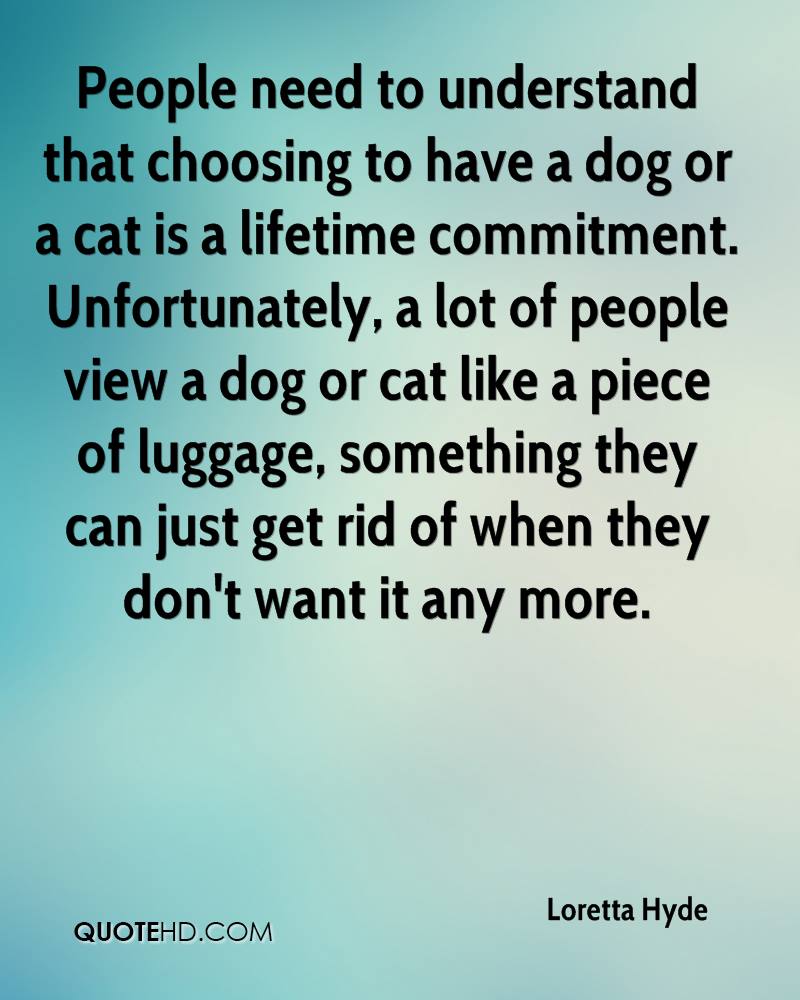
Some people get a puppy and then callously drop it off at the pound when they realize how much work it’s going to be. I think that’s plain wrong. Like children, dogs need to feel securely attached to their people, and dogs that are abandoned or rejected often find it difficult to become attached to a new set of owners (if they aren’t euthanized first). I think if you agree to adopt a dog, it’s a lifetime commitment. Sure, there may be some situations where you can’t keep a dog (a particular dog may turn out to be a “bad fit” for a particular owner, or the dog has unforeseen behavioral problems that cannot be resolved), but in most cases, I think the decision to get a dog just wasn’t thought through ahead of time. Puppies are irresistible. People see a puppy and think, “I must have it!” without considering that puppy won’t always be a puppy and that they are making a 10+ year commitment to another living thing.

I’ve had several dogs in my life and I’ve loved them all. My last dog was a handsome lab mix named Dexter and he was as sweet and good and loyal as they come. Like most dogs, Dexter was very social. He required a lot of attention and would whine and whimper when he wasn’t getting it. When my daughter moved out last year, she wanted to take Dexter with her. I was a little sad to see him go, but I also knew she would pay more attention to him than I ever had, so I agreed to part with him. I can still see Dexter whenever I want, just by taking a short car ride. But I’m not responsible for him anymore and that’s fine with me.

Sometimes, especially after playing with or interacting with a particularly adorable dog, I’m tempted to go to the shelter and pick out a dog for myself. But I know I wouldn’t want the commitment. I love dogs but also like to be able to “hand them back to their person” when I’ve had my fill. I’ll stick with my cats for now. They’re all the “dog” I need.

Unless…someone gives me a Corgi puppy.   Then all bets are off.  OMG.  I would NOT be able to say “no” to a Corgi puppy.