Operation Subjugation

If there’s one ten dollar word that sums up everything the narcissist aims to do to you, it’s subjugation. It may not be conscious, but that’s what their abuse boils down to. Your head–and your heart–is a trophy they can mount on their wall to prove THEY WON. Don’t fall for their tricks.

Dara's avatarFlowers from a Psychopath

221316972_ead0036691_z.jpg

Here’s the definition of subjugation:  

“theact,fact,orprocessof subjugating, orbringingundercontrol; enslavement”

This word just popped into my head this morning and I realized:  “That’s it!”  That’s the entire goal of the NPS (Narcissist, Psychopath, Sociopath).  And for what purpose?  To feed their fat little egos?  Entertainment?  To fill the unfillable void?

The aim of the NPS is to subjugate every person who might have more personal power than they do.  That’s why they try to chose good people.  Sometimes they choose weak people to add to their conquests (hey, they are into numbers) but often, they really like to take the strong ones down.

Think of it as a sport.  

What hunter does not want the prized animal’s head on his/her wall.  The thing is- when you pit two beings against each other, and they both play by different rules and with…

View original post 304 more words

“Narcissist Apocalypse”

roman_warriors
Photo credit: unknown.

I want to share this fascinating article about societal narcissism from The Telluride Daily Planet I found via Sam Vaknin’s Malignant Self-Love Facebook page.

Narcissist Apocalypse
http://www.telluridenews.com/opinion/columnists/article_34238512-9e09-11e5-9aad-e33827f8673e.html
By David Brankley, Being There

Lately I’ve been intrigued with the topic of narcissism. Maybe it’s the current election cycle with its clash of giant egos, the sparring of would-be megalomaniacs. Maybe it’s the book I’m reading, “Narcissistic Supply: The Narcissist’s Drug” by Sam Vaknin.
Turns out its author is no psychologist, but his leading credential is that he is himself a narcissist, twice diagnosed by experts. Nevertheless, this book seems rich with insight into the condition, containing plenty of food for thought.
Narcissism is not a single phenomenon. There is the clinical form, recognized generally as a personality disorder referred to as Narcissistic Personality Disorder. Even that takes many forms. I wish I had the space here to describe them. They are all fascinating.
Instead, let me offer a simple definition. NPD is extreme self-centeredness. It’s characterized by an inflated sense of self-importance and a deep and overwhelming need for admiration. Lack of empathy is also present. The confident exterior of the narcissist is a false mask. Underlying it is a very fragile sense of self worth that is vulnerable to the slightest criticism. There is also a more general, less extreme form of narcissism that some call “societal narcissism.”

Read the rest of the article here.

The narcissistic spectrum according to Lucky Otter

Man looking at reflection in mirror

A friend and I were talking about where exactly different levels of narcissism would fall on the N-spectrum. Of course narcissism (or any psychological topic) isn’t an exact science so giving the different levels numerical values seems a little silly, but in my mind this is how I view the different levels on the spectrum, starting with a Baseline of O (on most narcissism spectrums, “healthy” narcissism is at baseline) and the transition to NPD at around 5, which is smack dab in the middle. Narcissism becomes pathological (causing the person or others problems) at around 4.
Please note these are just my own subjective ideas.  I’m a geek who likes to classify things.

The Narcissistic Spectrum according to Lucky Otter

9-10:
Sociopathy:
A person at this level is almost indistinguishable from someone with ASPD (antisocial personality disorder), but an NPD sociopath is more concerned about image or obtaining supply than a pure ASPDer. Most cult leaders fall here. (Psychopathy appears similar to sociopathy in behaviors, but describes a condition that a person is born with instead of one that was acquired; many psychopaths were never abused and were always like that, but sociopaths were made).

8-9:
Malignant Narcissism:
A person at this level has severe NPD with antisocial traits. A person at this level will show more emotion (usually rage) than a narcissistic sociopath. Usually fits all the DSM criteria or most of them.

7-8:
Severe NPD:
Not malignant because there is no sadism present, but person is still highly dangerous and manipulative. Fits most or all of the 9 criteria and symptoms are severe.

narcissist-bird

6-7:
Moderate NPD:
A person at this level may be barely tolerable, if contact with them is casual or seldom. Fits more than 5 of the 9 criteria.

5-6:
Mild NPD:
A person at this level fits 5 of the 9 DSM criteria for NPD but symptoms are not too severe and they may have moments of acting like a decent human being. NPDers at this level may occasionally respond well to therapy or seek it out.

—Pathological—

4-5:
Narcissistic Personality (Destructive Narcissistic Pattern disorder or DNP):
  A person here fits fewer than 5 of the 9 NPD criteria in the DSM but has at least three.  Symptoms may not be that severe and the person at this level is more in touch with their true self and may seek therapy.  They usually have the capacity to feel empathy but it’s limited.

3-4:
Non-Pathological Narcissistic Personality:
Your garden variety self-centered jerk but may genuinely care about those they love.  Not particularly dangerous. Has moments of insight into themselves or empathy for others, especially their loved ones.

0-3:
“Healthy” narcissism.
Most normal people can be found here.

O (Baseline) and lower:
People down in the negative digits might as well be wearing a “KICK ME” sign. They are almost always victims of narcissists and sometimes even normal people give them a hard time or take advantage of them.

npd_spectrum
The simplified spectrum. Psychopathy does not belong here at all.

Covert (“fragile”) narcissists may be found anywhere on the spectrum, but because their narcissism is more hidden and arrogance and grandiosity may be absent, a covert narcissist at any level is harder to identify. They may appear to have BPD, Avoidant PD, or Aspergers Syndrome instead (these are the three disorders most often confused with Covert Narcissism).

High-functioning (successful) narcissists are more likely to be found high on the spectrum, and sociopaths are often extremely high-functioning. There are many sociopaths (and psychopaths, who were generally born with a different brain structure and may not have been abused) in politics, religion, and heading huge corporations. Sociopathic traits and most NPD traits are generally sought after in the higher echelons of business, politics and entertainment. A person with just the “right” combination of antisocial behavior and arrogance, entitlement, grandiosity, and fake confidence can be a devastating adversary or competitor, and they will have no scruples about crushing you into the ground to achieve their goals.

Most high-functioning narcissists tend to be the Grandiose (classic, or overt) type that best fits the DSM criteria.

Covert and overt narcissists all have the same disorder, but for most, one form or the other is dominant. That said, they can and do switch back and forth in the same person. I think temperament is partly to do with whether someone is overt or covert (the more timid or fearful types leaning toward covert narcissism), but I also think circumstances (such as a sudden loss or gain of supply) can cause a switch from overt to covert or vice versa.

Low-functioning narcissists are much more likely to be covert.  They tend to receive less supply than overt narcissists, so their false self is weaker (the “deflated” false self, according to Masterson). Because of their discontent with their lives and general lack of success, covert narcissists are more likely than overt ones to seek help. If a covert narcissist suddenly begins to receive a lot of supply, they can become much more overt-acting (grandiose, entitled and arrogant). If an overt/grandiose narcissist suffers a huge loss of supply, they can sink into depression and become covert (at which point they are more likely to seek help).
The Persistent Myth of the Narcissistic Millennial

mirror_graphic

The popular media just doesn’t understand anything about narcissism–or Millennials. It continues to trot out the “Millennials are narcissists” stereotype because they’re more likely than other generations to take selfies and are more likely to be living with their parents into their late 20s and even early 30s (even though the lack of good jobs and disastrous economy has a lot to do with this and has nothing to do with their being entitled or spoiled). If Millennials take more selfies than older people, that really doesn’t have anything to do with narcissism. It may have to do with vanity (which isn’t narcissism per se) or the fact “everyone else is doing it” and the technology happens to be available. Someone on another blog even pointed out that taking a selfie is actually a vulnerable act and a real narcissist won’t be taking selfies because they’ll want you to believe they are someone other than who they really are and a selfie shows you as you really are.

This article’s about a year old but is still relevant because the “all Millennials are selfie-taking narcissists” meme hasn’t gone away. It’s time to set the record straight. We also have short memories–every generation since the Boomers (and maybe earlier than that) has been similarly vilified during their late teen and young adult years.

The Persistent Myth of the Narcissistic Millennial
By Brooke Lea Foster for TheAtlantic.com, November 19 2014

People are still lobbing the same accusations at Millennials, even though evidence shows they’re not any more self-absorbed than their predecessors.

A few months ago, the news went viral that the American Psychiatric Association had classified “taking selfies” as a sign of a mental disorder. It lit up Facebook and Twitter until it was revealed that the article was a hoax.

But still, I doubt I’m the only one that has felt at least a tiny sense of self-loathing after, say, posting a photo of myself on Facebook. Deep down, taking a “selfie” doesn’t just feel like capturing a moment—it also feels like capturing myself at my most vain.

In his pop-psychology book “The Narcissist Next Door: Understanding the Monster in Your Family, in Your Office, in Your Bed—in Your World”, published in September, author and Time editor at large Jeffrey Kluger argues that the popularity of the “selfie” is just one way that our culture is becoming more narcissistic. In fact, he says, narcissistic behaviors today aren’t just more accepted; they’re celebrated. “We’ve become accustomed to preeners and posers who don’t have anything to offer except themselves and their need to be on the public stage,” he says. The egocentric antics of figures like Donald Trump or Kim Kardashian, for example, make our own narcissistic proclivities seem more palatable by comparison, and social media only instigates the desire for attention. Facebook, to a narcissist, can be like an open bar to a drunk.

millennialquote

But Kluger also devotes a chunk of his book to what’s become a tired argument: The idea that Millennials—the generation that came of age with selfies and Facebook and the Kardashians—are the most self-absorbed generation of all. “Plenty of people are narcissistic in our society,” Kluger says, “but Millennials are doing these things on a pandemic level.”

Of course they are. They’re young and full of themselves, like every other generation that’s come before them was at some point. But are Millennials any more narcissistic than, say, the Baby Boomers, who were once considered the most self-obsessed cohort of their time? Consider the 1976 cover story of New York Magazine, in which Tom Wolfe declared the ‘70s “The Me Decade.” One could argue that every generation seems a little more narcissistic than the last, puffing out its chest and going out into the world with an overabundance of self-confidence, swagger, even a bit of arrogance. These traits are simply hallmarks of early adulthood—it’s often the first time people are putting themselves out there, applying for first jobs and meeting potential life partners. Overconfidence is how people muscle through the big changes.

Read the rest of this article here.

Further reading: Are Millennials Really the Most Narcissistic Generation Ever?


Gaston from Beauty and the Beast: Textbook NPD

A discussion of narcissism and Beauty and the Beast wouldn’t be complete without making mention of Belle’s suitor Gaston, who she understandably rejects. Gaston is Textbook NPD and seems to possess all 9 criteria. Unlike the Beast, there is no room in him for redemption. He’s way too far gone.

Check this out:

Beauty and The Beast: a metaphor for NPD.

beauty_beast

A few days ago, I was thinking about the wonderful 1991 Disney animated movie, “Beauty and The Beast.” I was always moved by the Transformation scene at the end when the evil spell on the Beast and his castle is finally lifted after he nearly dies and Belle finally declares her love for him. In my opinion, it’s one of the best moments in animated movie history. That scene has haunted me for a long, long time and the other day, I felt inspired to watch it again, and was as–or even more moved by it–than the first time I saw it. And this time I knew why–the entire story of the Beast in this movie is a metaphor for a man suffering from NPD–who healed from it.

As the movie opens, we are shown a series of stained-glass images telling the story of how the Beast became that way. He wasn’t always a Beast. His real name was Adam and he had been a handsome young prince, but extremely arrogant, entitled, and lacking in empathy (sound familiar?). One cold and snowy night, a beggar woman came to the castle begging for a place to sleep for the night to escape from the bitter cold. In exchange she offered him a single rose. Adam sneered at the rose and refused her a warm bed and coldly sent her on her way, but not before the beggar woman suddenly transformed into a beautiful enchantress, who in her righteous anger at the callous young prince’s heartless actions, put a spell on him, turning him into the physical manifestation of the Beast he had become inside, and at the same time transforming the trappings of his former grandiosity and entitlement (a well-appointed and beautiful castle and loyal servants) into a dark and frightening prison and common household objects. The rose she had left him–which I believe represents Adam’s True Self (and he had sneered at it because it represented the vulnerability he had rejected)–would continue to bloom for a decade. If Adam failed to learn to love another (and earn her love) in that decade, the woman had warned him the rose would die and he would be forever doomed to his fate (unable to heal from his narcissism, he would become malignant). Adam’s only window to the outside world was the magic mirror the woman had left him, but all Adam can see in it is his own hideous reflection.

The Making of a Beast:
https://www.youtube.com/watch?v=__x8CYAVMbk

No longer receiving any narcissistic supply, Adam falls into depression, despair, and self hatred. He attacks his own image in a painting and refuses to look at himself in the mirror anymore. He is consumed by anger and self-pity until the day a beautiful young woman (Belle) comes by the castle to rescue her father, who The Beast has imprisoned for trespassing.

Belle is the opposite of The Beast in every way. Not only is she physically beautiful, but she is poor, the daughter of the town eccentric who is a laughing stock and considered crazy, even though he is actually a brilliant inventor. Belle is kind and loving and has a high level of empathy. The first thing she does is offer to take her father’s place in the castle’s dungeon if The Beast will only free him.

The Beast takes her up on her offer on the condition she stay there in the castle with him forever. Belle reluctantly agrees, even though she is at the mercy of The Beast’s terrible temper and frequent narcissistic rages. Her father is freed, and Belle dutifully obeys whatever the Beast tells her to do, but because she is an empath, she can see through his frightening facade to the broken young man he really is.   Early during her stay, she is wandering around the Castle and comes across the enchanted rose under its glass dome.  The Beast catches her and quickly covers the rose (evidence of his vulnerability) and rages, bellowing “Do you realize what you could have DONE?? Get out!” But as the months pass, the Beast begins to look forward to their time together, and slowly learns some manners and social graces. Belle works on humanizing Adam and finds she is slowly falling in love with him, and as he begins to accept her love (mirroring), he reluctantly begins to reveal his true self to her.

Meanwhile, Belle is being pursued by a very arrogant and probably malignantly narcissistic young man from her town named Gaston. Belle can’t stand Gaston, and refuses his proposal of marriage in which she would be nothing but an object and slave to him. Consumed by rage over her rejection of him, one night Gaston and his buddies plan an attack on the The castle to kidnap Belle. In the ensuing battle, The Beast is falls to the ground from a high elevation and is left for dead. A grieving Belle finally proclaims her love for the Beast, just as the last rose petal falls.

The spell is broken and The Beast is transformed back into Adam, the handsome Prince he used to be–only with a difference–he is no longer entitled or arrogant and he is now capable of being able to love, thanks to Belle’s empathic kindness. The castle (which I think represents the quality of Adam’s life) is also transformed to its former glory and the household objects turn back into loyal servants (who can now be his friends too).   Note that a narcissist regards other people as mere objects and not human.

The Transformation:

When I talked to some friends about writing an article about this movie being a metaphor for healing from NPD, it was mentioned to me the dangers of making such a comparison. First of all, this is a fairy tale and in real life, things don’t normally work out this way. A woman who falls in love with a narcissistic man is far more likely to be abused and exploited than loved in return–and she almost certainly isn’t going to be able to “fix” the narcissist. Just as problematic is the idea that in order for a narcissistic man to change, he must earn the love of a woman. It was pointed out that this could be construed as sexist.

But because this is a fairy tale, the underlying moral is of course more compelling (and entertaining) if there’s a romance involved. I think of this romance as a metaphor for the relationship between a self-aware and willing narcissistic patient and his or her therapist. Belle’s looks don’t actually matter–her beauty is a metaphor for her pure soul and empathetic nature. She is giving the Beast the reparenting he probably never got from his own family. The Beast’s ugliness is a metaphor for his narcissistic personality, but in this case, it’s not so deeply ingrained in him for it to have become malignant–which is why the enchanted rose is still alive until the spell is broken. The rose represents The Beast’s true self, which is integrated back into the Beast’s psyche during the Transformation.

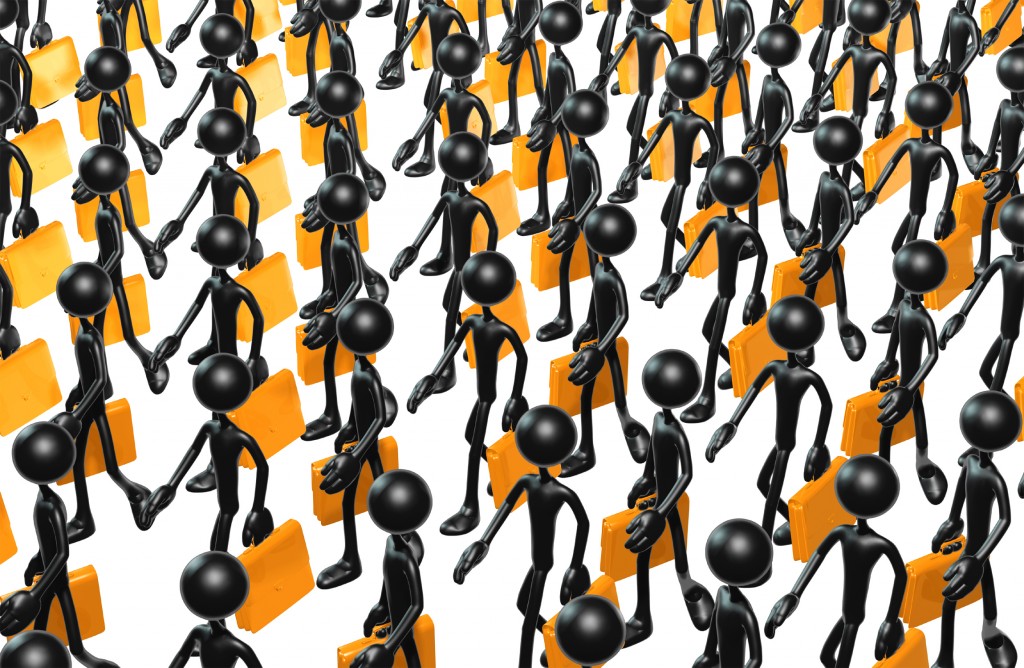
Narcissists are all conformists.

conformists

Because narcissists don’t know who they really are and don’t have any thoughts of their own, they are all obsessed with their image, which means conforming to whatever is considered most socially acceptable in a given society (or sometimes, what isn’t). Most of them are obsessed with social class, and “put on airs” of being part of a higher social class than they actually are. This may manifest in the way they dress, the way they speak (and accounts for how affected a lot of them sound), or how intelligent or educated they want you to think they are. They are extremely snobbish and look down on anyone who doesn’t adhere to their lofty standards or fit into their chosen social group. If you dare to confront a narcissist about their actual social class, educational level, or otherwise bring them down to size, they fly into a narcissistic rage or decide to punish you by giving you the silent treatment or worse.

Even the ones who try to appear “different” or “unconventional” are actually extremely conventional. I know some hipsters, which are a common sight among young people where I live. There’s this one guy, an acqaintance of my daughter’s, who refuses to listen to any Top 40 music because to him, since it’s played on commercial radio, it must be trash. The more obscure the music, art, movie (oops–I meant film), or even food, the better it is. Having such “obscure” tastes makes him feel superior to the unwashed masses who eat McDonalds (or Olive Garden for those with more cash), shop at J.C. Penney or Belks, attend summer “blockbusters,” and listen to Adele or Florida Georgia Line.

He wears nerd glasses, a beanie, and drives a Jeep. He has tattoos and wears an earring and only eats “locally grown” foods. But so do all his friends. There isn’t an original thought in his head, but he’s quick to put down everyone else’s “plebian” tastes because the more obscure it is, the more cutting edge and cool it is, and if you like something “popular” then you’ve been brainwashed by the Military-Industrial Complex. He’s just conforming to another standard though–that of his “unconventional” friends. Now I have nothing against hipsters (and I like a lot of their music), but there are narcissists among them who only care about their “cool” image and have no original ideas of their own–they’re just trying to conform and are really no different in that regard from my mother, who always had upper class WASP pretentions and woe be to anyone who reminded her of her working class, Irish-Catholic, Southern roots.

Whether they’re hipsters, company presidents, debutantes, or hip hop wannabes, they are all fake and insincere, and they are snobs too.

HSPs and codependency.

einstein_quote

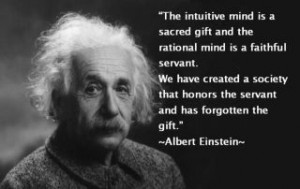
There’s a lot of discussion on the web about codependency as well as empathy, especially in the narcissistic abuse community. While it’s true people who are codependent to a narcissist also tend to be high in empathy and very sensitive, there seems to be a lot of confusion–people who aren’t too familiar with either term tend to believe empathic people are also always codependent. While codependent people are almost always highly sensitive (which is the quality that attracts their abuser to them and keeps them trapped in a toxic relationship because they believe they can “fix” their narcissist), the reverse is not always the case.

A healthy HSP (highly sensitive person) is simply an emotionally healthy person. They are confident and secure enough with themselves that they can resist the “charms” of an abuser. If a healthy person with high empathy does find themselves being drawn into an abusive relationship with a narcissist, they have the courage and presence of mind to pull themselves out of it and even go No Contact before they fall under the thrall of the abuser and before any damage is done. In fact, having high empathy makes it more likely a person will be able to “see” the red flags before anyone else, giving them a chance to escape and/or avoid the person.

A healthy HSP does not waste time trying to “fix” a narcissist. They know the chance of that happening is about the same as the likelihood they will sprout wings and fly to the moon. If a narcissist is going to change (I’m not one of those people who believes it’s not possible), it must be the desire of the narcissist and they have to work very hard at it, but no one else can “save” them except themselves, and it’s going to be a long, hard road if they decide that’s what they want. A healthy HSP will not allow themselves to fall into a love-bombing trap or be “hoovered” by a narc. Once they realize what they are dealing with, they will cut off any further communication. They know they can’t be nice about it, but must be firm. They may care, but they know they are not going to be the ones doing the fixing, and will be able to move on to a healthier relationship with someone they can actually grow with and who will be able to return their love.

codependency_love

Our society today is also quick to judge those who have high levels of empathy and want to give back to others as being “enablers.” This happens even in the public realm, with the massive cuts in spending to programs that help the most vulnerable people of society and the blanket dismissal by the Powers That Be of those who want to help as “suckers” who are “enabling” the most vulnerable people. I don’t wish to get on a political soapbox but there’s something very wrong with any society that only values how “powerful” you are or how much money you earn. There’s something sick about a society that dismisses its most vulnerable members as “lazy and stupid” or “deserving” of their sad lot. Empathy is a virtue that has become increasingly dismissed as a weakness, but is actually the one thing–maybe the only thing–that could rescue modern society from completely self-destructing. Empathy isn’t a weakness at all–it’s a strength. If you’re a HSP you have this quality and should be proud of it and use it, not hide it away like a shameful thing. The narcissists who run things in the world would like us all to think it’s a shameful thing, but that’s just another lie they tell. It’s needed now more than ever. So, you are not an “enabler” if you want to help others; just be careful who you are helping!

Unfortunately, HSPs have often been abused themselves or have other disorders such as complex PTSD, and they often find themselves targeted by narcissists for abuse. Narcissists are usually attracted to people with high empathy because they know they can get the “understanding” and love they crave and will proceed to feed on the HSP’s emotions much like a vampire feeds on blood. They know it’s hard for such a person to say “no” because they can’t stand to hurt anyone’s feelings, so an HSP person is more likely to stick around and tolerate abuse than someone who is less sensitive.

If you are such a person; if you are very sensitive, cut your losses now! Staying around a narcissist who is actively abusing you is just not worth it, and there’s also a very real danger of being drawn so far into the narcissist’s web of deception and abuse that you could develop Stockholm Syndrome and begin to identify with your abuser. Once this happens, you could even find yourself taking on traits of narcissism yourself and colluding with your abuser. It’s an insidious process but it can and does happen; and it happened to me. Be careful. Your soul is a precious thing and you should not give it freely to anyone until you know that person can be trusted with it. That doesn’t mean you have to become hypervigilant and start seeing demons around every corner, but if your intuition is throwing up a lot of red flags about a particular individual, don’t dismiss them. They could save your life.

We Are All Narcissists

An interesting and slightly scary walk along the narcissistic continuum, from “healthy” (adaptive) narcissism up to sociopathic or malignant narcissism…

Song about narcissistic abuse: It’s In Your Head (introspectrum)

narcissisic_mary

My friend who is in recovery from narcissistic abuse has started an indie rock band and has a great new song about her experience.

Here is what she has to say:

Hello everyone!!
I put a band together as a way to heal from Narcissistic abuse, after the Narc I knew told me I needed to give him my Gibson Les Paul and that I’d never play music in a band called, NarCissistic Mary. Here is the Sound Cloud link to my first studio recorded song called, “Its In Your Head” (Introspectrum). I will be releasing more songs shortly with my band. Please join me and will all journey together artistically and musically on my Facebook band page called: NarCissistic Mary (the capital C is intentional!)
Thanks 🙂

Here is the song on Soundcloud–enjoy! And please share.