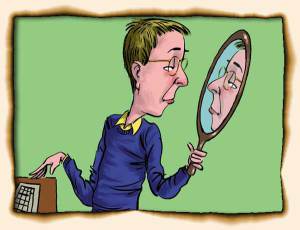
The day Sam Vaknin knew he was a narcissist

Vector illustration of a man lock up in prison

I’m going to go ahead and confess part of the big secret that I alluded to in an earlier post. I’m writing a book about Sam. I can’t say too much else about it right now because the book’s focus hasn’t completely gelled in my mind yet. Right now I intend for it to be a biography, focusing on NPD from the inside–that is, what the disorder FEELS like. Sam is a controversial figure, and has enemies within the narcissistic abuse community and even more so among professionals who specialize in NPD (mainly because in their minds he lacks the proper qualifications), but there are also a great many people he has helped–even if helping wasn’t his intention, which it most likely wasn’t if he really is the malignant narcissist he says he is.

I took on this project because I need to come to my own conclusions without being influenced by others, either positive or negative. I do feel like Sam’s been more maligned that he deserves over the brouhaha over his “paper mill” degree, among other things. He’s an interesting character, and to my way of thinking, deserves to have a book written about him. I realize it will probably be a small market, but that’s okay–his story needs to be told. I also realize this will most likely be a feast of narcissistic supply for Sam, but I can live with that. Of course, I’m not going to sugar coat anything–but narcissists even consider negative attention to be satisfactory supply. In fact, some even prefer it. I think my book will be balanced, and there are good reasons to defend him from his haters but there are many things I don’t know about him yet either. If he’s really that malignant, I could wind up hating him myself when I’m done with this project. Or maybe not. Whatever happens, I know it will be very educational and mind-expanding and I feel that one way or another, writing this book will change me in some profound (and good) ways.

So anyway…Sam gave me the go ahead for this project after I emailed him wanting to do it. I’m trying to figure out how to go about getting an interview with him (I would have to go to Macedonia), but for the time being, I emailed a woman who did interview him who has some tapes and who may be able to share those with me. I’m waiting for a reply. Sam also sent me a long list of links to his writings, most which I have never seen before but which are publicly available here. These are his personal journals, poetry and short stories. I have a lot of reading to do!

Sam’s disordered mind fascinates me because he has two qualities in spades that both fly in the face of the typical narcissist (and he insists he is a malignant narcissist; of that I still have my doubts but that’s another thing I need to find out on my own): he is completely and brutally honest, and he has incredible insight into his disorder.

I’ve rambled on long enough about why I want to write this book. In reading Sam’s journal entries, I came across this one that left me gutted, breathless and nearly crying. It’s hard to wrap my mind around how a narcissist–a machine-like being with the inability to feel–can write about themselves with so much raw and searing emotion. There’s something else going on there. He’s a wicked good writer, but I believe with the certainty that the sun will rise tomorrow that there’s not one shred of fiction in this journal entry. I can smell bullshit from a mile away by now, and there’s no bullshit here. For the record, Sam’s poetry is just as gut-wrenching as his prose.

It’s about the day he became aware he was a narcissist. Until that day he had no insight into his disorder; he gained all his insight after the incidents leading up to that day. In some ways, the way he describes it, NPD seems much like a dissociative disorder, like MPD (multiple personality disorder). I have written before about how taking away a narcissist’s supply would send them into a “narcissistic crisis” of severe depression, forcing them to confront their own emptiness, which in turn results in emotional catharsis; this is exactly how it happened here for Sam.

Unfortunately, he got to that point, but was either unable or unwilling to seek further treatment to attempt to rewire his brain to have empathy or a conscience. A cure may not be possible. Maybe you can’t retrain the adult brain to have a conscience the way it was done for a child like Beth Thomas; I just don’t know. That’s one more thing I need to find out more about. I sure have my work cut out for me.

How I “Became” a Narcissist

prisonman2

I remember the day I died. Almost did. We were in a tour of Jerusalem. Our guide was the Deputy Chief Warden. We wore our Sunday best suits – stained dark blue, abrasive jeans shirts tucked in tattered trousers. I could think of nothing but Nomi. She left me two months after my incarceration. She said that my brain did not excite her as it used to. We were sitting on what passed as a grassy knoll in prison and she was marble cold and firm. This is why, during the trip to Jerusalem, I planned to grab the Warden’s gun and kill myself.

Death has an asphyxiating, all-pervasive presence and I could hardly breathe. It passed and I knew that I had to find out real quick what was wrong with me – or else.

How I obtained access to psychology books and to Internet from the inside of one of Israel’s more notorious jails, is a story unto itself. In this film noire, this search of my dark self, I had very little to go on, no clues and no Della Street by my side. I had to let go – yet I never did and did not know how.

I forced myself to remember, threatened by the immanent presence of the Grim Reaper. I fluctuated between shattering flashbacks and despair. I wrote cathartic short fiction. I published it. I remember holding myself, white knuckles clasping an aluminum sink, about to throw up as I am flooded with images of violence between my parents, images that I repressed to oblivion. I cried a lot, uncontrollably, convulsively, gazing through tearful veils at the monochrome screen.

The exact moment I found a description of the Narcissistic Personality Disorder is etched in my mind. I felt engulfed in word-amber, encapsulated and frozen. It was suddenly very quiet and very still. I met myself. I saw the enemy and it was I.

The article was long winded and full of references to scholars I never heard of before: Kernberg, Kohut, Klein. It was a foreign language that resounded, like a forgotten childhood memory. It was I to the last repellent details, described in uncanny accuracy: grandiose fantasies of brilliance and perfection, sense of entitlement without commensurate achievements, rage, exploitation of others, lack of empathy.

I had to learn more. I knew I had the answer. All I had to do was find the right questions.

That day was miraculous. Many strange and wonderful things happened. I saw people – I SAW them. And I had a glimmer of understanding regarding my self – this disturbed, sad, neglected, insecure and ludicrous things that passed for me.

It was the first important realization – there were two of us. I was not alone inside my body.

dualman

One was an extrovert, facile, gregarious, attention-consuming, adulation-dependent, charming, ruthless and manic-depressive being. The other was schizoid, shy, dependent, phobic, suspicious, pessimistic, dysphoric and helpless creature – a kid, really.

I began to observe these two alternating. The first (whom I called Ninko Leumas – an anagram of the Hebrew spelling of my name) would invariably appear to interact with people. It didn’t feel like putting a mask on or like I had another personality. It was just like I am MORE me. It was a caricature of the TRUE me, of Shmuel.

Shmuel hated people. He felt inferior, physically repulsive and socially incompetent. Ninko also hated people. He held them in contempt. THEY were inferior to his superior qualities and skills. He needed their admiration but he resented this fact and he accepted their offerings condescendingly.

As I pieced my fragmented and immature self together I began to see that Shmuel and Ninko were flip sides of the SAME coin. Ninko seemed to be trying to compensate Shmuel, to protect him, to isolate him from hurt and to exact revenge whenever he failed. At this stage I was not sure who was manipulating who and I did not have the most rudimentary acquaintance with this vastly rich continent I discovered inside me.

But that was only the beginning.

Sam Vaknin’s birthday poem to his wife (Lidija).

samlidija
Sam and Lidija in the documentary, “I Psychopath.”

Found a link to this on Twitter. I have little to add–I know next to nothing about poetry, so I’ll just let his words speak for themselves.

One thing that does stand out to me, is that Sam’s words show a man who suffers greatly from his disorder and at least a part of him wants desperately to be free from it. Lidija is his comfort and strength and he yearns to break free of the prison of narcissism to be able to return the love she gives to him. Such passionate words from a man who insists he has no ability to feel love.

I really hope he is a good husband to his wife, who seems very sweet and empathetic from what I saw of her in “I, Psychopath.”

http://samvak.tripod.com/herbirthday.html

Her Birthday
I. Apology …

My Wife:

Sometimes I watch you from behind:

your shoulders, avian, aflutter.

Your ruby hands;

the feet that carry you to me

and then away.

I know I wrong You.

Your eyes black pools; your skin eruptions of what is

and could have been.

I vow to make you happy, but

my Hunchbacked Self

just tolls the bells

and guards you from afar.

II. … And Thanks

In the wasteland that is Me

You flower.

Your eyes black petals strewn

across the tumbling masonry.

Your stem resists my winds.

Your roots, deep in my soil,

toil in murk to feed both you and me,

to nurture Us.

And every day a spring,

and every morn a sunshine:

you’re in my garden,

you blossom day and night.

Your sculpted daint feels

in my hands like oneness.

III. In Toronto

So much is left unsaid between us.

Your crests of silence

fallen on my shores of pain.

IV. Dedication (9th Edition of “Malignant Self-love”)

My Wife:

You are in every carefully measured space,

In every broken word

That we had mended with

The healing hyphens of our together-

-ness.

This book, the memory of us,

A record of survival

Against all odds.

Malignant Self- gives way to love, two points, we are:

Revisited.

V. Happy 2014 (dedication on the book “Macedonian Woodcarving”)

Carved in the wood of our togetherness, entwined,

the chiseled hurt of us:

sprawled in your arms, my wounds

and your iconic smile,

Madonna of leaves and angels.

Only one unicorn we are,

sheltered behind the royal doors

to our love. And you?

My own Iconostasis.

The mystery: solved

mystery

I came home today to find another huge increase in my view count, but couldn’t immediately figure out why. The last time this happened was when Sam Vaknin visited my blog and linked one of my earlier articles about him all over social media (Twitter and Facebook). There were no new comments from him today, so I thought maybe there was some other reason for the abnormally high view count (like maybe being Freshly Pressed! Yeah, right.)

I checked my stats and did see there were 3 views from Macedonia, which is where Sam lives. So it had to be him–after all, how many people from Macedonia are visiting my blog? I checked “referrers” and saw some ridiculously high number of Facebook shares. Still, when I clicked on the Facebook link, it only took me to my own FB page. I had to find out where all those views were coming from!

Finally, I went to Twitter and looked at Sam’s profile–and sure enough, he’d linked to this article today, just as he promised a few days ago in his last comment. Because of this, I also have 12 new followers. Narcissist or not, the man does keep his promises. Thanks, Sam!

I’m sorry I keep bringing this up, but this is driving me crazy!

I just read a comment on this post, which really got me questioning things again.

owl says:
December 1, 2014 at 7:25 am (Edit)
I watched one of his videos tonight and learned that if the narcissist doesn’t involve himself with the public in some ways, it will lead to a much bigger psychosis; it will increase his psychopathy, he will become even worse. So my thought is that he is using his own desire to talk about himself as a way to involve himself in the world, a way to force himself to interact with people, thus setting up a stopgap and preventing a further slide into psychosis. He has already admitted that he has very few sadistic tendencies and in that way he has lucked out bc it could be worse.

I haven’t seen the video Owl has, but I have read the first 100 or so pages of Mr. Vaknin’s book, and must say I’m amazed by this man’s insight into NPD as well as his insight into its victims! After seeing how many pages of testimonials/qualifications are included in the book when I received it the other day, I decided once and for all he was a narcissist (and wrote a post saying so). But now I’m once again not so sure. I just can’t figure it out. He is such an enigma. I don’t know why it even matters but the mystery is driving me nuts.

Owl brings up the fact that Vaknin believes engaging with the public is a way to lessen psychopathic tendencies, and does so to avoid becoming psychopathic or more psychopathic. Which means there must be goodness in him, and possibly even empathy? I still can’t wrap my mind around his motives for writing a self help book for the victims of narcissists–does he have ulterior, dishonest motives, like greed, glory, fame, or just because he wants to show what an expert he is–or maybe it’s possible that he really does want to help survivors heal–which can only indicate the man has empathy! And if he has empathy, then how can he be a narcissist? Unless he’s a very low spectrum one.

Good Lord, I’m just so confused. I wish I could decide if he is or isn’t. I’ll tell you this much though: if Mr. Vaknin IS a narcissist, he must be getting so much narcissistic supply if he’s still reading everything I’ve written about him–and how many comments there have been about him–that I should probably stop this before his head explodes!

I’m a little embarrassed I’m obsessing so much about this thing which really doesn’t matter in the grand scheme of things, but as someone with Aspergers, we tend to do that!

Could “reparenting” actually cure a narcissist?

depression

Almost all professionals who deal with narcissists and psychopaths insist they cannot be cured, but say that Cognitive-Behavioral therapy can help “train” them to act in more prosocial ways. Of course, this isn’t going to work unless there’s something to be gained for the narcissist in doing so. Most won’t even enter therapy. Cognitive-behavioral therapy isn’t a cure though and does nothing to address the underlying problem or access the “true self” which even the narcissist has obscured from their consciousness with their elaborate series of masks.

I was thinking about a much more intense form of therapy, that would be costly and difficult, and takes into account several different methods of treatment, that may actually be able to cure narcissism. This therapy would take place in several stages:

Stage One: The Narcissistic Crisis/Narcissistic Injury
I was skimming through Vaknin’s book and toward the end he has a chapter about curing a narcissist. He believes these incorrigible people can actually be cured (which of course begs the question, why isn’t he cured? Or is he?) However, in order to be open to being cured they must have undergone a “narcissistic crisis” or “narcissistic injury”–that is, his or her sources of narcissistic supply must have been removed (such as after a divorce or the death of their primary source of narcissistic supply, loss of a career, financial ruin, incarceration, what have you).

In a state like this, without anything to prop them up or continually affirm their “greatness,” a narcissist will usually sink into a deep depression, and will do ANYTHING to make themselves feel better, even voluntarily entering therapy.

The tricky part would be identifying the depressed patient as a narcissist, but there should be enough signs in the way they talk about the glory of their “former life” and they will still lack remorse and empathy and blame others for their sorry condition rather than themselves. So identifying a severely depressed narcissist shouldn’t be too difficult for a trained professional.

The therapist cannot, under any circumstances, give the narcissist any sources of narcissistic supply or affirm them in any way, or give them any sympathy, at least not at first. In other words, they cannot mirror them. That will just make the narcissist feel good enough that their masks will go back up and they may think they’re “cured” and leave.

Stage Two: “Cold Therapy:” Deny the narcissist any narcissistic supply!
In order to force the narcissist to face what’s inside, it’s important the therapist does not affirm or mirror the narcissist. Instead, the therapist should stay nearly silent at first and make sure the narcissist is forced to confront his own emptiness. This will be extremely painful to them. They may leave, but if the narcissist is desperate enough he will probably stay. However, he will likely become angry at the therapist (transference) and rage. Still, the therapist must not show any reaction. When even their rage fails to elicit a response, the narcissist has no choice but to regress to the infant he really is.

Stage Three: Catharsis/”Remothering”
This would be a breakthrough point, and the point at which some real therapy could possibly be done. Becoming an infant will turn the narcissist into a blubbering, sobbing, needy, vulnerable mess. And this is where I can begin to see why in “People of the Lie,” M. Scott Peck, in his chapter about “Charlene” (a narcissist who entered therapy voluntarily because of her inability to maintain a relationship), wanted her to become vulnerable and baby-like so he could become her surrogate “mother” and give her the maternal nurturing she never had as a child. This might have worked too, had Charlene been ripped of all her sources of narcissistic supply and been undergoing a narcissistic crisis. Dr. Peck’s mistake was affirming her too much in the beginning of therapy and engaging her fantasies. By the time he realized his mistake, it was too late.

At the time I read Dr. Peck’s thoughts about how he should have “mothered” Charlene and held her in his arms (in a nonsexual way), I thought it sounded very odd and even unethical. But knowing more about narcissism than I did when I read that book, and more about why they’re the way they are, I can understand why Dr. Peck’s wish to “mother” Charlene may have worked. But not only did Peck start out all wrong, Charlene was not depressed enough to be open to such a technique.

So a vulnerable narcissist stripped of all their elaborate defense mechanisms, reduced to a dependent infant, is going to be going through an emotional catharsis as the true self (which was arrested in infancy and is still an infant) begins to emerge. They are going to be in unbearable terror and pain. A good (and very strong) therapist can offer maternal support through holding the patient during catharsis, stroking them in a nonsexual manner, but still must not tell them anything they want to hear, such as how they’re not a bad person, how they don’t deserve their pain, and the like. The therapist must remain quiet and let the patient go through the catharsis and only offer support by their mere presence.

smashingmirror

Stage Four: Retraining and Internalizing the Conscience
I’ve elaborated a lot on what Vaknin says about curing a narcissist in this post, and I’m going to elaborate even further. Because the narcissist, while rendered virtually harmless at this point in therapy, still doesn’t have a conscience. They would still go right back to their old ways if they stop therapy now or their circumstances suddenly improve. Psychologically, they are infants and an infant has no conscience: they must be taught by their parents and caregivers the difference between right and wrong.

So after a few sessions of this cathartic crisis (however long it lasts–by its nature it will eventually exhaust itself), I would propose something like the sort of treatment that was given to 6 year old Beth Thomas in the documentary “Child of Rage,” who at first wanted to kill her parents and brother and who tortured animals, but was cured of incipient psychopathy early enough that she was still able to develop a conscience and become an adult with normal levels of empathy and no desire to hurt anyone.

The narcissistic patient, if at all possible, should be in a setting, such as a hospital or residential treatment setting, where they are closely monitored and supervised by trained professionals. Any good behavior is to be rewarded, any bad behavior punished. Any privileges at all would have to be earned. Just like a small child, reward and punishment will train their brain to develop a conscience. This is basically the same thing as the cognitive-behavioral therapy currently used on narcissists, but it cannot cure a narcissist who hasn’t first been broken down by a narcissistic crisis and catharsis, because all their masks are still on. A narcissist who has been through the process of crisis and catharsis has lost their masks, and therefore cognitive-behavioral retraining would become internalized rather than just a “positive” mask they can wear to make them more bearable to others.

Disclaimer:
I am in no way a professional (though I did major in psychology in college). I’m certainly not qualified to propose new methods of treatment, but this process I’ve described isn’t one I made up: it’s basically a combination of Vaknin’s proposed method of breaking down all the narcissist’s defenses so they become infantile (with a little M. Scott Peck thrown in), followed up with cognitive-behavioral techniques for retraining the patient’s conscience in a highly supervised setting.

It would be a difficult and expensive therapy at the very least, but I really think it could work. Of course, it also requires the narcissist to voluntarily enter therapy, which means they would have to have suffered a grave loss that threw them into deep depression in the first place (the narcissistic injury or crisis).

I’d be interested to hear your thoughts.

Oh hell yeah, Sam Vaknin is a narc!

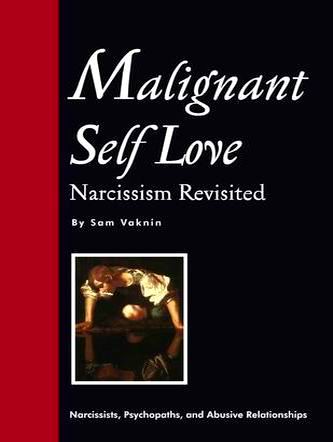
malignantselflove

I got the three books I ordered from Amazon in the mail yesterday and started to read Sam’s book first because I really need to know about narcissism from the perspective of a narcissist. I said it before and I’ll say it again–it’s huge (but I like huge books).

So far (I finished the first chapter) I can tell he’s a very good writer (in a verbose, almost old fashioned way) and I think it’s going to be a fascinating read. He also gives credit where credit is due, and cites experts in the field and the DSM-IV-TR as sources.

But something stood out to me right away that screamed narcissist. At the back of the book, there are SIX PAGES of Vaknin’s accomplishments and qualifications (“Curriculum Vitae” he calls it–he is very pedantic too). SIX PAGES. I kid you not.

Not only that, there are four pages of testimonials. That’s right, FOUR PAGES. Who includes four pages of testimonials and six pages listing their qualifications? A narcissist, that’s who!

I have no problem reading a book about narcissism by a narcissist. The way I see it, it’s coming directly from the source, not from some detached expert with 8-10 years of higher education who doesn’t know what the disorder feels like. Sam KNOWS what it feels like, and it sounds like hell. Narcs are not happy people, I can assure you of that. They may SEEM happy, but they are not. They live their lives in sheer terror of their masks being stripped off.

That doesn’t mean we should feel sorry for them though. Miserable or not, they aren’t nice people, and don’t deserve our pity.

Here is an excerpt of what Paul Shirley, MSW, has to say about Sam’s book in the Prologue:

Sam’s writing on the subject pulsated with heat, it ran red with blood, it crackled with flames of passion, it cried out in agony. Sam KNEW narcissism like the fish knows the water and the eagle knows the air, because he had lived it. He described its small insignificant currents, he knew what it does when the weather changes, he knew exactly what happened to little frogs, snakes and crickets whenever they fall into the stream. Most psychologists only KNOW about narcissism. Sam UNDERSTANDS it.

After I finish his book, I’ll write up an in depth review. So far, a good read though.
You can also order his book here.

What Sam Vaknin thinks about Jesus.

He replied to my last article about what he says about Jesus Christ–twice.   Once again he had to clarify a few things by providing links. One of the links provided talks about religion being a perfect way that narcissists can make themselves feel superior to nonbeliever (even though they must “submit” to a higher entity than themselves). They hold their nose and submit to a God or messiah because of the narcissistic thrill of self righteously being able to claim their piety makes them better than everyone else. I’ve seen this sort of thing going on in 12 step programs like AA too. In fact, my mother uses the AA program exactly like a religion and loves to use its slogans and dogma (and yes, it does have a dogma) to prove how righteous and sinless she is compared to non-teetolalers and everyone else, especially me.

I agree with what Vaknin writes in his post. I’ve seen way too many fundamentalist or evangelical Christians use their religion to intimidate (“you are going to hell”), make themselves feel special (“I know I’m going to heaven”), make threats (“unless you do X…you will go to hell”), not take responsibility for their actions (“God told me to do this” or “the devil made me do it”), and show a lack of empathy (“It’s God’s will”) and not acknowledge your concerns or questions (“It’s right here in the Bible or other holy text). This is especially prevalent in religious leaders, but is quite common in other people too.

god

Let me add that not all Christians are like this, and narcissistic behavior definitely applies to followers and leaders of other belief systems too, even atheism! (Self righteous, intolerant atheists are commoner than you would think).

Here is what he writes:

For the Love of God

“1 But know this, that in the last days perilous times will come: 2 For men will be lovers of themselves, lovers of money, boasters, proud, blasphemers, disobedient to parents, unthankful, unholy, 3 unloving, unforgiving, slanderers, without self-control, brutal, despisers of good, 4 traitors, headstrong, haughty, lovers of pleasure rather than lovers of God, 5 having a form of godliness but denying its power. And from such people turn away! 6 For of this sort are those who creep into households and make captives of gullible women loaded down with sins, led away by various lusts, 7 always learning and never able to come to the knowledge of the truth. 8 Now as Jan’nes and Jam’bres resisted Moses, so do these also resist the truth: men of corrupt minds, disapproved concerning the faith; 9 but they will progress no further, for their folly will be manifest to all, as theirs also was.”

(The Second Epistle of Paul the Apostle to Timothy 3:1-9)

God is everything the narcissist ever wants to be: omnipotent, omniscient, omnipresent, admired, much discussed, and awe inspiring. God is the narcissist’s wet dream, his ultimate grandiose fantasy. But God comes handy in other ways as well.

The narcissist alternately idealizes and devalues figures of authority.

In the idealization phase, he strives to emulate them, he admires them, imitate them (often ludicrously), and defends them. They cannot go wrong, or be wrong. The narcissist regards them as bigger than life, infallible, perfect, whole, and brilliant. But as the narcissist’s unrealistic and inflated expectations are inevitably frustrated, he begins to devalue his former idols.

Now they are “human” (to the narcissist, a derogatory term). They are small, fragile, error-prone, pusillanimous, mean, dumb, and mediocre. The narcissist goes through the same cycle in his relationship with God, the quintessential authority figure.

But often, even when disillusionment and iconoclastic despair have set in – the narcissist continues to pretend to love God and follow Him. The narcissist maintains this deception because his continued proximity to God confers on him authority. Priests, leaders of the congregation, preachers, evangelists, cultists, politicians, intellectuals – all derive authority from their allegedly privileged relationship with God.

Religious authority allows the narcissist to indulge his sadistic urges and to exercise his misogynism freely and openly. Such a narcissist is likely to taunt and torment his followers, hector and chastise them, humiliate and berate them, abuse them spiritually, or even sexually. The narcissist whose source of authority is religious is looking for obedient and unquestioning slaves upon whom to exercise his capricious and wicked mastery. The narcissist transforms even the most innocuous and pure religious sentiments into a cultish ritual and a virulent hierarchy. He preys on the gullible. His flock become his hostages.

Religious authority also secures the narcissist’s Narcissistic Supply. His coreligionists, members of his congregation, his parish, his constituency, his audience – are transformed into loyal and stable Sources of Narcissistic Supply. They obey his commands, heed his admonitions, follow his creed, admire his personality, applaud his personal traits, satisfy his needs (sometimes even his carnal desires), revere and idolize him.

Moreover, being a part of a “bigger thing” is very gratifying narcissistically. Being a particle of God, being immersed in His grandeur, experiencing His power and blessings first hand, communing with him – are all Sources of unending Narcissistic Supply. The narcissist becomes God by observing His commandments, following His instructions, loving Him, obeying Him, succumbing to Him, merging with Him, communicating with Him – or even by defying him (the bigger the narcissist’s enemy – the more grandiosely important the narcissist feels).

Like everything else in the narcissist’s life, he mutates God into a kind of inverted narcissist. God becomes his dominant Source of Supply. He forms a personal relationship with this overwhelming and overpowering entity – in order to overwhelm and overpower others. He becomes God vicariously, by the proxy of his relationship with Him. He idealizes God, then devalues Him, then abuses Him. This is the classic narcissistic pattern and even God himself cannot escape it.


Sam Vaknin thinks Jesus was a narcissist.

cultdefinition
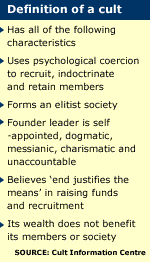
A true cult’s agenda and operation is definitely psychopathic. (click to enlarge).

Sam Vaknin has a lot to say about religion and cults and how they relate to psychopathy.
On his website, he addresses the problems of religious cults and describes the way they are almost always run by malignant narcissists who use their usual bag of psychopathic tricks to brainwash people into converting and once converted, keeping them in thrall to the cult. The article is here.

Vaknin’s description of cults sounds exactly the way a cult such as Scientology is run (I dabbled in it back in the late 1970s for about 2 years but was fortunate enough to be able to escape before I was completely taken in). I have no doubt Scientology’s founder, L. Ron Hubbard, a hack science fiction writer, was a malignant narcissist (his official bio is full of lies and “accomplishments” that are complete fabrications). Scientology doctrine uses every trick in the psychopath’s book of coercion: brainwashing techniques disguised as “auditing” or “training routines (TR’s), threats to members who threaten to leave the cult (“fair game”), attempts to separate members from their non-Scientologist families and friends, exhorbitant and extortionist prices to move up the “bridge,”
insane doctrine passed off as “truth,” and definitely lots of paranoia and secrecy.

Lronhubbard
L. Ron Hubbard, malignant narcissist

Scientology is the enemy of any legitimate psychotherapy–psychology and psychiatry are held to be the utmost evil, members are required to use underhanded means to attack and even attempt to destroy the careers of professionals in those fields (I have a personal story about this I’ll describe at a later time), and of course Scientology has had numerous problems with the IRS and other government agencies. Anyone who criticizes Scientology is labeled a “Suppressive Person” and is either excommunicated from Scientology or punished by a form of shunning. Members who are influenced by someone who is against Scientology are labeled “Potential Trouble Sources” (PTS) and ordered to cut the “SP” out of their lives, even if it’s a spouse or another close family member.

There’s an excellent and fascinating website about the insane mindgames this “religion” plays and includes case histories of people whose lives were totally ruined by this dangerous and psychopathic cult. The “secrets” of the upper OT (operating thetan) levels used to be unobtainable to anyone who had not “gone clear” and had the money to pay for further “processing” to the OT levels, but those jealously guarded secrets are now available to anyone who has Internet access and is curious enough to Google them. Well, naturally I was curious and the “secrets” are indeed pretty crazy, obviously the ravings of L. Ron Hubbard’s disordered and paranoid mind.

It used to be said that the secrets could not be revealed to members at lower levels because such knowledge would shock them to the point of actually killing them. I remember reading about one ex-Scientologist who suggested that the real reason the upper level secrets were so carefully guarded was not to “protect” anyone from the shock of the “truth” but rather, because the things revealed at the upper levels were so insane that only someone who had spent thousands of dollars and been thoroughly brainwashed could possibly take them seriously (in fact, there are cases of those who did reach those levels and when the secrets were finally revealed to them, they left the Church because they felt their entire journey had been a colossal waste of time and money). Anyone who hadn’t made such a huge mental and financial investment and read about the OT revelations online would die alright: they would die of laughter. And yes, they are that crazy. I read the “revelations” of the OT levels with my jaw glued to the table in disbelief that any sane person would believe such a load of crap.

Vaknin should have used the example of Scientology, a perfect example of a “religion” with a psychopathic agenda and a malignant narcissist “god.” There are many other examples he could have used too–the Branch Davidians, Heaven’s Gate, the Unificiation Church (Sun Myung Moon’s cult), a few “New Age” cults, and many others.

But no, instead Vaknin attacks Christianity. He actually says Jesus Christ was a narcissist. I don’t know what Vaknin’s religious beliefs are, or even if he has any, and I certainly have my own issues with organized religion and fundamentalist Christianity in particular (the God of the Old Testament does come off as quite psychopathic at times), but I think Vaknin is missing the mark by describing Jesus Christ this way (or Christianity in general as a cult). He uses Bible quotes to “prove” that Jesus was a narcissist. Rather than try to paraphrase what he says, I’ll just post it here:

Jesus Christ, narcissist
http://samvak.tripod.com/journal79.html

Note:
Though most of the quotes in this essay are from the Gospel of Saint Matthew, I was careful to compare them with the texts of the other three canonical gospels. Where the gospels disagree, I avoided using the quote altogether.

Illegitimate and adopted children, especially of humble origins, often develop narcissistic defenses to fend off persistent feelings of inadequacy and inferiority. Admittedly, it is highly unlikely that Jesus was an illegitimate child. Adulteresses in ancient Judea were stoned to death. But, equally, there is little doubt that the circumstances of Jesus’s birth were shrouded in mystery. His mother, Mary, got herself pregnant but not by having sexual intercourse with her lawfully-wedded husband, Joseph.

Early on, Jesus developed magical thinking, compensatory grandiose delusions, and fantasies of omnipotence and omniscience. A firstborn, he was much pampered by his doting mother. He was a prodigy, a Wunderkind: highly intelligent and inquisitive and more comfortable in the company of adults than with his peers.

When he was a mere 12 years old:

“(T)hey found him in the temple, sitting in the midst of the doctors, both hearing them, and asking them questions.” (Luke 2:46)

Even at this tender age, he showed a marked lack of empathy and a full-fledged case of pathological grandiosity:

“His mother said unto him, Son, why hast thou thus dealt with us? behold, thy father and I have sought thee sorrowing. And he said unto them, How is it that ye sought me? wist ye not that I must be about my Father’s business?” (“My Father” being God – SV). (Luke 2:48-49)

Gurus at the center of emergent cults are inevitably narcissistic, if not outright narcissists. The self-imputation of superiority, epiphanic knowledge, and infallibility and the assumption that others need and crave the guru’s message are at the heart of an elaborate construct which often borders on the psychotic:

“… (T)he people were astonished at his doctrine: For he taught them as one having authority, and not as the scribes.” (Matthew 7:28-29)

Referring to his 12 disciples, Jesus made clear that: “The disciple is not above his master, nor the servant above his lord.” (Matthew 10:24)

“He that loveth father or mother more than me is not worthy of me: and he that loveth son or daughter more than me is not worthy of me. And he that taketh not his cross, and followeth after me, is not worthy of me. He that findeth his life shall lose it: and he that loseth his life for my sake shall find it.” (Matthew 10:37-39)

Here is how Jesus, the lowly, unmarried, and itinerant son of a carpenter – an abysmal failure by the standards of his society – viewed himself:

“When the Son of man shall come in his glory, and all the holy angels with him, then shall he sit upon the throne of his glory: And before him shall be gathered all nations: and he shall separate them one from another, as a shepherd divideth his sheep from the goats … And these shall go away into everlasting punishment: but the righteous into life eternal.” (Matthew 25:31-32 and 25:46)

“Thinkest thou that I cannot now pray to my Father, and he shall presently give me more than twelve legions of angels?” (Matthew 26:53)

Contrary to his much-cultivated image, Jesus, like the vast majority of cult leaders, lacked empathy and was a heartless and irresponsible manipulator whose magical thinking ruined the lives of many. He instructed his followers to commit acts that must have had harshly adverse impacts on their hitherto nearest and dearest. Jesus monopolized the lives of his disciples to the exclusion of all else and all others:

“For I am come to set a man at variance against his father, and the daughter against her mother, and the daughter in law against her mother in law. And a man’s foes shall be they of his own household.” (Matthew 10:35-36)

“Then one said unto him, Behold, thy mother and thy brethren stand without, desiring to speak with thee. But he answered and said unto him that told him, Who is my mother? and who are my brethren? And he stretched forth his hand toward his disciples, and said, Behold my mother and my brethren!” (Matthew 12:47-48)

“And Jesus, walking by the sea of Galilee, saw two brethren, Simon called Peter, and Andrew his brother, casting a net into the sea: for they were fishers. And he saith unto them, Follow me, and I will make you fishers of men. And they straightway left their nets, and followed him. And going on from thence, he saw other two brethren, James the son of Zebedee, and John his brother, in a ship with Zebedee their father, mending their nets; and he called them. And they immediately left the ship and their father, and followed him.” (Matthew 4:18-22)
Consider the disastrous effects their actions had had on their fathers and their families, now left to starve. To Jesus, evidently, these were irrelevant considerations.

Jesus healed only those who visibly, volubly, clearly, publicly and repeatedly worshipped him. In other words, he extended his gift only to his sources of narcissistic supply. There are numerous instances in the four canonical gospels where Jesus actually bargains with the afflicted and demands – sometimes in anger – their unconditional adoration. He is happiest when acknowledged and affirmed as Christ, the Son of Man (son of God). Those who do not recognize his splendid grandeur, unbounded might, and implied divinity are “dogs” and “swine” (Matthew 7:6)

His much-touted love of the poor was not a match for his malignant self-love. When his disciples upbraided a woman for anointing Jesus with expensive ointment because the money could have been better used to help the poor, the great humanist, Jesus, had this to say:

“Why trouble ye the woman? for she hath wrought a good work upon me. For ye have the poor always with you; but me ye have not always.” (Matthew 26:10-11)

The principles espoused by Jesus were malleable and easily bent. He professed to minister only to the Hebrews (Sons of Israel) and steadfastly refused to heal the Gentiles whom he called “dogs”. When a woman of Canaan beseeched him to cast the devil out of her daughter (“Have mercy on me!”), he retorted, shockingly:

“I am not sent but unto the lost sheep of the house of Israel … It is not meet to take the children’s bread, and to cast it to dogs.” (Matthew 15:24-26)

But he soon forgot and retracted this lofty “principle” when she adulated him:

“Then Jesus answered and said unto her, O woman, great is thy faith: be it unto thee even as thou wilt. And her daughter was made whole from that very hour.” (Matthew 15:28)

Similarly, he cured the servant of a Roman centurion after his master catered to Jesus’s by-now rampant megalomania:

“When Jesus heard it, he marvelled, and said to them that followed, Verily I say unto you, I have not found so great faith, no, not in Israel. And Jesus said unto the centurion, Go thy way; and as thou hast believed, so be it done unto thee. And his servant was healed in the selfsame hour.” (Matthew 8:10 and 8:13)

Jesus’s initial false modesty soon gave way to bragging and outlandish, often confabulatory claims.

Whenever he affected a miracle – such as restoring eyesight to the blind, cleansing lepers, reviving the crippled, and raising the ostensibly dead – Jesus beseeched them to keep mum about the events. One of many examples:

“And their eyes were opened; and Jesus straitly charged them, saying, See that no man know it.” (Matthew 9:30)

But Jesus was not averse to blatant self-promotion when his false modesty failed to elicit narcissistic supply:

“Go and shew John again those things which ye do hear and see: The blind receive their sight, and the lame walk, the lepers are cleansed, and the deaf hear, the dead are raised up, and the poor have the gospel preached to them.” (Matthew 11:2)

“I say unto you, That in this place is one greater than the temple … For the Son of man is Lord even of the sabbath day … behold, a greater than (the prophet) Jonas is here … behold, a greater than (King) Solomon is here.” (Matthew 12)

As a true narcissist, Jesus reprimanded others for his own brand of behavior. This psychological defense mechanism is called “projection”.

This is how he described the Pharisees, the scribes, and the Sadducees (and, inadvertently, himself and his own conduct):

“(T)hey say, and do not. For they bind heavy burdens and grievous to be borne, and lay them on men’s shoulders; but they themselves will not move them with one of their fingers. But all their works they do for to be seen of men: they make broad their phylacteries, and enlarge the borders of their garments, And love the uppermost rooms at feasts, and the chief seats in the synagogues, And greetings in the markets, and to be called of men, Rabbi, Rabbi.” (Matthew 23:1-6)
Narcissists are disruptive, counter-dependent, combative, and resent authority (rebellious and contumacious). They feel that they are above the law, or, rather, that they are a law unto themselves. They hold themselves to be immune to the consequences of their actions:

“Think not that I am come to send peace on earth: I came not to send peace, but a sword.” (Matthew 10:34)

“And Jesus went into the temple of God, and cast out all them that sold and bought in the temple, and overthrew the tables of the moneychangers, and the seats of them that sold doves, And said unto them, It is written, My house shall be called the house of prayer; but ye have made it a den of thieves.” (Matthew 21:12-13)

Narcissists are ill-disposed towards disagreement and criticism. They react to the slightest hint of either with narcissistic rage and fury that knows no bounds and no mercy:

“And thou, Capernaum, which art exalted unto heaven, shalt be brought down to hell: for if the mighty works, which have been done in thee, had been done in Sodom, it would have remained until this day. But I say unto you, That it shall be more tolerable for the land of Sodom in the day of judgment, than for thee.” (Matthew 11:23-24)

“He that is not with me is against me” (Matthew 12:30)

“For I say unto you, Ye shall not see me henceforth, till ye shall say, Blessed is he that cometh in the name of the Lord.” (Matthew 23:39)

Narcissists react particularly badly when their concocted personal myth, their False Self, is directly and effectively challenged and they are consequently discredited and humiliated in public:

“And when he was come into his own country, he taught them in their synagogue, insomuch that they were astonished, and said, Whence hath this man this wisdom, and these mighty works? Is not this the carpenter’s son? is not his mother called Mary? and his brethren, James, and Joses, and Simon, and Judas? And his sisters, are they not all with us? Whence then hath this man all these things? And they were offended in him. But Jesus said unto them, A prophet is not without honour, save in his own country, and in his own house. And he did not many mighty works there because of their unbelief.” (Matthew 13:54-58)

Ultimately, the narcissist pays the price for years of ill-treating others and sucking their energies dry with constant demands for attention, adulation, and affirmation. People get tired of the overbearing and overweening presence of the narcissist in their lives, of his disruptive and destabilizing influence, and of the pernicious effects he has on their nearest, dearest, and communities. Invariably, they seek to banish him and extricate themselves from his cult. The authorities usually are forced to intervene and lock the narcissist up or, worse, crucify him.

Even his closest followers, supporters, and disciples give up on the narcissist:

“Then all the disciples forsook him, and fled.” (Matthew 26:56)

“Then did they spit in his face, and buffeted him; and others smote him with the palms of their hands, Saying, Prophesy unto us, thou Christ, Who is he that smote thee?” (Matthew 26:67-68)

“Peter remembered the word of Jesus, which said unto him, Before the cock crow, thou shalt deny me thrice.” (Peter, indeed, denying knowing Jesus thrice – SV) (Matthew 26:75)

And the fickle “multitude” (the common folk), who were supposed to be the mainstay of Jesus’s power and popularity, betrayed him gleefully and with a clear sense of relief and good riddance:

“Whether of the twain will ye that I release unto you? They said, Barabbas … They all say unto him, Let him be crucified … they cried out the more, saying, Let him be crucified … Then answered all the people, and said, His blood be on us, and on our children … And they that passed by reviled him, wagging their heads, And saying, Thou that destroyest the temple, and buildest it in three days, save thyself. If thou be the Son of God, come down from the cross. Likewise also the chief priests mocking him, with the scribes and elders, said, He saved others; himself he cannot save. The thieves also, which were crucified with him, cast the same in his teeth.” (Matthew 27)

Jesus_with_a_child
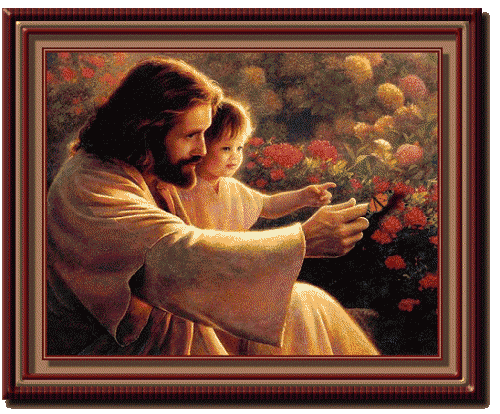
Jesus doesn’t look like a narcissist to me.

Vaknin is using the words and deeds described in the Gospels to spin Jesus into a malignant narcissist. I don’t buy it. I have been attending RCIA classes (the classes one takes to become Catholic), and am still on the fence as to whether Jesus was actually the Son of God or just a very good man and prophet, but have lately been leaning more toward him being divine.

If Jesus was actually who he said he was–the Son of God–then he was being truthful and not narcissistic or grandiose in any manner. Jesus was compassionate and empathetic toward the unfortunate and the poor and healed the sick and disabled, and while he does appear to have had a temper, it was a righteous anger toward those who refused to believe who He was. He didn’t reject or disrespect his mother either. He had a great love for Mary as his earthly mother, but if Jesus was the son of God, then God’s desires would naturally have to come first.

In Vaknin’s defense, if he doesn’t believe Jesus was divine (and many people don’t), then I suppose it could be argued Jesus acted in narcissistic and grandiose ways (it could actually more easily be argued he was a paranoid schizophrenic–insisting he was God Himself when he really wasn’t), but I still wouldn’t call him a narcissist. Vaknin is probably not a Christian due to his nationality (he’s from Israel and his mother was Turkish) so it’s understandable that he wouldn’t believe Jesus was the Son of God, but to make such a sweeping accusation against a religious entity whose words have changed the lives of many millions of people for the better is pretty narcissistic on Vaknin’s part (which of course is no surprise).

Some of the more extreme evangelistic and fundamentalist Christian churches (especially those that believe in such unpleasant and elitist doctrines as predestination–a Calvinistic belief that certain “chosen” people have been predestined for heaven even before they were born, making the concept of “free will” and works null and void) are not too far removed from cults and they commonly have psychopathic leaders and use cult-like brainwashing tactics. There are also unfortunately many religious leaders of mainstream churches who are very narcissistic and even psychopathic, but this doesn’t mean Christianity itself is a cult of narcissism or that Jesus was a narcissist.

I still defend most of Vaknin’s writings from his critics, given that as a narcissist who is honest about himself, he is more than qualified to call himself an expert on the disorder and write as much as he wants to about it. Whether intentional or not, he has helped a great number of sufferers and victims of psychopathy. But in this particular discussion about cults, using Christianity as an example of a cult and Jesus as a malignant narcissist not only misses the mark, but to many people would be considered blasphemous. In spite of my own misgivings about Christian doctrine, I just couldn’t let this pass.

Three people who deserve my thanks

thanks

Three vastly different people have turned out to be the best things to happen to this blog, and in the spirit of Thanksgiving, they deserve credit and thanks for their positive influence, so here goes.

1. Opinionated Man.

OM’s blog (Harsh Reality), as most of us know, is a godsend to new bloggers hoping to get more visibility and learn the ropes of blogging. He follows new blogs and offers encouragement, advice (that actually works!), and support to newbies and veteran bloggers alike. He also answers all questions posed to him on his blog, no small feat for someone who is so prolific and has so many followers. He also answers them quickly.

In my case (as I’m sure in many others), OM reblogged an early post of mine, which gave my blog a huge boost in visibility and gained me a smallish but loyal following. That in itself was encouraging and made me feel welcome. I also love the fact he regularly offers bloggers the opportunity to link to his blog and showcase their stuff. He has used his huge popularity to help others get more popular. I don’t know too many bloggers who do that, or would have the confidence to do that.

Personally I find it hard to believe he has a lot of haters (he insists he does), because of all the good stuff he does. I also like reading his non-blogging posts and his poetry is good too (even though I’m not much of a poetry fan). I have a feeling OM’s haters are just jealous because he is so popular and has tens of thousands of followers and a level of Internet fame that most other bloggers would give their eyeteeth for.

2. 500 Pound Peep.

500 Pound Peep has an incredible blog over at Blogger (Aspie in a Narcissist Jungle). Like me, she is a survivor of narcissistic abuse and an ACON (adult child of narcissists). Her story is eerily reminiscent of mine. And also like me, she suffers from Aspergers syndrome. Her blog is honest, heartfelt, funny, sometimes irreverent, and always fascinating to read. There are many wonderful blogs written by survivors of narcissists, but hers is one of my favorites and one of the first ones I ever started to read. 500 Pound Peep deserves special thanks because it was she and her blog that inspired me to start my own back in September. For several months prior to starting this blog, I had been reading blogs by others, but hers was the one that made me say to myself, “That’s it. I am doing this.” And that decision is changing my life.

I have trouble posting on her site because since Blogger is connected to Google, it keeps wanting to put my real name under any comments, so I have to choose the “Anonymous” option if I comment. No matter. About a month ago, she found my own blog, and added mine to her blogroll. Since hers is a popular blog, every day my stats show more viewers have been referred to my blog from hers. She has also been supportive and made comments on many of my posts here. I’m very grateful to 500PoundPeep for her support and encouragement, and for her blog which I always find inspirational and eye-opening, even when I don’t comment.

3. Sam Vaknin.

This is a weird one. In what upside down world would I, a victim of narcissists, ever be in a position to thank a malignant narcissist and one who may even be psychopathic? And yet, Sam Vaknin has probably helped the visibility and popularity of this blog more than anyone else. Of course, I undoubtedly helped him too, by writing two articles about him that increased hits to his own site, and most likely got more people to order his books. Of course there’s something in it for him, but that’s alright. It’s even understandable. All bloggers want more hits and visibility and just because he’s a narcissist, doesn’t mean he shouldn’t want more validation too.

I’m utterly gobsmacked by the number of views and hits I got yesterday due to these two articles (541 hits on November 21, becoming my Best Day Ever). Both articles have been shared multiple times on social media, especially Twitter and Facebook, as well as on other sites that saw my article and reposted or linked to it. My stats show 63 Twitter shares (and still rising), and even more Facebook shares over the past three days between both articles. Reddit has recommended my article, it’s appeared on Tumblr, Pinterest,and LinkedIn, it’s now on a few ACON blogrolls. Mr. Vaknin himself commented a couple of times on my posts and even approved of them (for the most part). His presence undoubtedly increased views to my blog because people were curious to see what he had to say. Vaknin has many fans in the narcissistic abuse community, a topic which is pretty huge these days, and evidently a lot of his fans and followers have come to my blog or linked to it. Here is his website.

So, Sam, I do appreciate your input here and attracting your followers along with you to this blog. Sure, maybe I’m just narcissistic supply to you, but you have inadvertently also done me a huge favor, probably a bigger favor than I have done for you. I offer you my sincere thanks for that.

And to the rest of you.

Just because I’ve called out three individuals for special thanks, doesn’t mean I don’t appreciate the support and encouragement the rest of you have offered me and my blog. I value all my followers and readers, and welcome and appreciate all your comments. I also appreciate all the reblogs by several of you.

All these things help this blog get more visibility and will help it make its mark in the blogging world and the community of survivors of narcissistic abuse. And to all my fellow ACONs and survivors, I am as helped by your comments and your blogs as you may be by mine. We are all a community and are here to support and help one another in any way we can.

Namaste!

Narcissism on the Internet: what Vaknin has to say

Narcissistic? Me?

Oh, hell. I’m going to milk this thing for all it’s worth at the moment. I admit it, I want this upward momentum to keep going for a little bit longer.

Let me start by confessing I’m just a wee bit star-struck because a somewhat famous person who writes about narcissism gave me validation and in doing so helped my blog become more visible, even though he’s a narcissist and we victims are all too aware what no-good gaslighting, manipulating, triangulating mind-fuckers narcissists are. I must remember that he IS a narc and is NOT my friend. I must not allow a few crumbs of flattery to somehow suck me into becoming some kind of online narcissistic supply to this man. I gotta keep it real.

But no worries: in a day or so (if not my next post), I’ll return to my regular scheduled programming and write a fluff post about something like kittens or a rant about fracking or toenail fungus.

In my second blog article about Sam Vaknin, he commented (when asked) that he did, in fact, Google himself (hey, don’t we all?) and that’s how he finds out which bloggers are writing about him. He provided an explanation as to why he looks himself up on Google and linked to his website. I decided to repost his journal entry because there’s a whole Pandora’s box of truth here, and whether we like it or not, there’s a little or even a lot of Narcissist in all of us who blog and find ourselves giddy with excitement when our blogs get views, likes, comments, or suddenly take off like 4th of July firecrackers.

WARNING: In typical Vaknin fashion, this post is extremely long winded. That said, it’s definitely worth your time to read the whole thing. There’s some great insights here that still apply today even though it appears to have been written some years ago.

Cyber (Internet) Narcissists and Psychopaths

To the narcissist, the Internet is an alluring and irresistible combination of playground and hunting grounds, the gathering place of numerous potential Sources of Narcissistic Supply, a world where false identities are the norm and mind games the bon ton. And it is beyond the reach of the law, the pale of social norms, the strictures of civilized conduct.

Indeed, many of the innovators who gave us the Internet and social networks can easily be described as narcissistic. Technology did not invent or even foster narcissism – rather, it was driven by it: an increasingly narcissistic populace demanded empowerment, self-expression, self-gratification, and self-aggrandisement via gadgets and software applications that catered to its pathology.

The somatic finds cyber-sex and cyber-relationships aplenty. The cerebral claims false accomplishments, fake skills, erudition and talents. Both, if minimally communicative, end up at the instantly gratifying epicenter of a cult of fans, followers, stalkers, erotomaniacs, denigrators, and plain nuts. The constant attention and attendant quasi-celebrity feed and sustain their grandiose fantasies and inflated self-image.

The Internet is an extension of the real-life Narcissistic Pathological Space but without its risks, injuries, and disappointments. It allows the narcissist to enact and act out his grandiose fantasies of omnipotence and omnipotence, brilliance and perfection, self-righteousness and superiority with impunity.
Many moderators and owners of discussion groups and support forums, for instance, are tyrannical narcissistic bullies with little or no impulse control and the tendency to form cult-like settings where the wayward are sadistically penalized and publicly humiliated by peers for speaking out of turn and in contravention of the “party line.”

In the virtual universe of the Web, the narcissist vanishes and reappears with ease, often adopting a myriad aliases and nicknames. He (or she) can thus fend off criticism, abuse, disagreement, and disapproval effectively and in real time – and, simultaneously, preserve the precarious balance of his infantile personality. Narcissists are, therefore, prone to Internet addiction.

The positive characteristics of the Net are largely lost on the narcissist. He is not keen on expanding his horizons, fostering true relationships, or getting in real contact with other people. The narcissist is forever the provincial because he filters everything through the narrow lens of his addiction. He measures others – and idealizes or devalues them – according to one criterion only: how useful they might be as Sources of Narcissistic Supply.

The Internet is an egalitarian medium where people are judged by the consistency and quality of their contributions rather than by the content or bombast of their claims. But the narcissist is driven to distracting discomfiture by a lack of clear and commonly accepted hierarchy (with himself at the pinnacle). He fervently and aggressively tries to impose the “natural order” – either by monopolizing the interaction or, if that fails, by becoming a major disruptive influence.

But the Internet may also be the closest many narcissists get to psychodynamic therapy. Because it is still largely text-based, the Web is populated by disembodied entities. By interacting with these intermittent, unpredictable, ultimately unknowable, ephemeral, and ethereal voices – the narcissist is compelled to project unto them his own experiences, fears, hopes, and prejudices.

Transference (and counter-transference) are quite common on the Net and the narcissist’s defence mechanisms – notably projection and Projective Identification – are frequently aroused. The therapeutic process is set in motion by the – unbridled, uncensored, and brutally honest – reactions to the narcissist’s repertory of antics, pretensions, delusions, and fantasies.

The narcissist – ever the intimidating bully – is not accustomed to such resistance. Initially, it may heighten and sharpen his paranoia and lead him to compensate by extending and deepening his grandiosity. Some narcissists withdraw altogether, reverting to the schizoid posture. Others become openly antisocial and seek to subvert, sabotage, and destroy the online sources of their frustration. A few retreat and confine themselves to the company of adoring sycophants and unquestioning groupies.

But a long exposure to the culture of the Net – irreverent, skeptical, and populist – usually exerts a beneficial effect even on the staunchest and most rigid narcissist. Far less convinced of his own superiority and infallibility, the online narcissist mellows and begins – hesitantly – to listen to others and to collaborate with them.

Ultimately, most narcissists – those who are not schizoid and shun social contact – tire of the virtual reality that is cyberspace. The typical narcissist needs “tangible” narcissistic supply. He craves attention from real, live, people, flesh and blood. He strives to see in their eyes their admiration and adulation, the awe and fear that he inspires, the approval and affirmation that he elicits.

There is no substitute to human contact, even for the narcissist. Many narcissists try to carry online relationships they nurtured into their logical extension and conclusion offline. Other burst upon the cyber scene intermittently, vanishing for long months, only to dive back in and reappear, reinvigorated. Reality beckons and few narcissists resist its siren call.

Narcissists, Social Media, and Porn

Social media, such as Tumblr.com, have become the playground of narcissists, psychopaths, and sadists who post extreme and, at times, illegal porn and revel in the reactions to it, thus garnering vicarious narcissistic supply. Via such postings, they express their rabid misogyny by objectifying women and subjecting them to humiliating subjugation and to aggression bordering on outright violence.

Yahoo and Tumblr’s protestations to the contrary notwithstanding, some of the content is illegal and can land even an accidental viewer in hot waters. Relatively innocuous search terms such as “family”, “wife”, “sister”, or “daddy” often yield sleazy and actionable photo and video results, displayed automatically on the user’s screen and saved to his or her browser cache without any warning or consent. Tumblr is not alone in this. Twitter and Facebook, although to a lesser degree, also host porn on a massive scale.

Porn addiction ties well with the narcissist’s fantasy sex life. Social media enable and legitimize a host of sexual fetishes and paraphilias, including pedophilia. Via these platforms, the narcissist finds an eager audience and a sense of empowerment and immunity, aided and abetted by his anonymity.

Interview granted to Misty Harris of CanWest on February 23, 2005

Q. How might technology be enabling narcissism, particularly for the Internet generation?

A. To believe that the Internet is an unprecedented phenomenon with unique social implications is, in itself, narcissistic. The Internet is only the latest in a long series of networking-related technological developments. By definition, technology is narcissistic. It seeks to render us omnipotent, omniscient, and omnipresent – in other words, Godlike.

The Internet allows us to replicate ourselves and our words (through vanity desktop publishing, blogs, and posting online content on Web sites), to playact our favorite roles, to communicate instantly with thousands (narrowcasting), to influence others, and, in general, to realize some of our narcissistic dreams and tendencies.

Q. Why is it a bad thing to have a high opinion of yourself?

A. It is not a bad thing if it is supported by commensurate achievements. If the gap between fantasy and reality is too big, a dysfunction that we call “pathological narcissism” sets in.

Q. What does it say about our culture that we encourage narcissistic characteristics in people? (example: Paris Hilton – we made her a star for loving herself)

A. Celebrity culture is not a new thing. It is not a culture-dependent phenomenon. Celebrities fulfil two emotional functions for their fans: they provide a mythical narrative (a story that the fan can follow and identify with) and they function as blank screens onto which the fans project their dreams, hopes, fears, plans, values, and desires (wish fulfilment).

Western culture emphasizes ambition, competitiveness, materialism, and individualism. These admittedly are narcissistic traits and give the narcissist in our society an opening advantage.

But narcissism exists in a different form in collectivist societies as well. As Theodore Millon and Roger Davis state in their seminal tome, “Personality Disorders in Modern Life”:

“In an individualistic culture, the narcissist is ‘God’s gift to the world’. In a collectivist society, the narcissist is ‘God’s gift to the collective'”.

Twitter: Narcissism or Age-old Communication?

It has become fashionable to castigate Twitter – the microblogging service – as an expression of rampant narcissism. Yet, narcissists are verbose and they do not take kindly to limitations imposed on them by third parties. They feel entitled to special treatment and are rebellious. They are enamored with their own voice. Thus, rather than gratify the average narcissist and provide him or her with narcissistic supply (attention, adulation, affirmation), Twitter is actually liable to cause narcissistic injury.

From the dawn of civilization, when writing was the province of the few and esoteric, people have been memorizing information and communicating it using truncated, mnemonic bursts. Sizable swathes of the Bible resemble Twitter-like prose. Poetry, especially blank verse one, is Twitterish. To this very day, newspaper headlines seek to convey information in digestible, resounding bits and bites. By comparison, the novel – an avalanche of text – is a newfangled phenomenon.

Twitter is telegraphic, but this need not impinge on the language skills of its users. On the contrary, coerced into its Procrustean dialog box, many interlocutors become inventive and creativity reigns as bloggers go atwitter.

Indeed, Twitter is the digital reincarnation of the telegraph, the telegram, the telex, the text message (SMS, as we Europeans call it), and other forms of business-like, data-rich, direct communication. Like them, it forces its recipients to use their own imagination and creativity to decipher the code and flesh it out with rich and vivid details. It is unlikely to vanish, though it may well be supplanted by even more pecuniary modes of online discourse.

Interview granted to Agencia Efe, Spain, April 2008

1. Does the Internet make a special amplification of narcissism or is just the reflection of reality? How, despite of the fact that many people is disturbed by the anonymous characters that you can adopt in the Internet, the exhibitionism is, maybe, more usual. I mean, in terms of narcissism? Can a person be addicted to the web because is own narcissism?

A. The narcissist likes to appear to be mysterious. It enhances his self-perceived sense of omnipotence, it renders him “unique” and “interesting”. The right moniker (Internet alias or handle) imbues the narcissist with a sense of immunity and superiority and permits him to commit the most daring or heinous acts.

2. What kind of lacks or necessities there are behind this behaviour? What are we expecting when we search our name on Google? Can we construct our image with the pieces of us in the internet?

A. The Internet is the hi-tech equivalent of a giant mirror. Like the mythical Narcissus, it allows us to fall in love with our reflection every day anew. We gaze into the depths of the Internet to reassure ourselves of our continuity and very existence. It is our modern photo album; a repository of snippets of our lives; and our external memory.

In psychoanalytic terms, the Internet replaces some of our ego functions: it regulates our sense of self-worth; puts us in touch with reality and with others; and structures our interactions (via its much vaunted peer-pressure of the Netiquette and the existence of editors and moderators).

We crave attention and feedback: proof positive that we matter, that someone cares about us, that we are not mere atoms in a disjointed and anomic Universe. In this sense, the Internet substitutes for God and many social functions by reassuring us that we fit into a World that, though amorphous and protean, is sustaining, predictable, constant, and nurturing. The Internet replaces our parents as a source of nourishment, support, caring, discipline, and omniscience.

3. In the case of the blogs, what’s the point in common in the idea of doing a private diary and be available for everybody?

A. I am not sure what you mean. Blogs are anything but private. They are explicitly meant for public consumption, thrive on public attention, and encourage interaction with the public (through the comments area). One can set one’s blog or online journal to “private”, though, as the hi-tech equivalent of a personal diary.

4. Internet, with their blogs, Facebook, Myspace or YouTube, has create the possibility of make yourself famous without promotion, just with the progressive diffusion of your material. Examples like the singers Mika and Lilly Allen or many bloggers, can it make a new way of realizing the “American dream” for the users of the Internet?

A. Being famous encompasses a few important functions: it endows us with power, provides us with a constant Source of Narcissistic Supply (admiration, adoration, approval, awe), and fulfils important Ego functions.

The Internet caters to our narcissistic traits and propensities and allows us to become “celebrities-by-replication”. The image that the blogger or artist projects is hurled back at him, reflected by those exposed to his instant celebrity or fame. By generating multiple copies of himself and his work, he feels alive, his very existence is affirmed and he acquires a sensation of clear boundaries (where he ends and the world begins).

There is a set of narcissistic behaviours typical to the pursuit of celebrity. There is almost nothing that the Net celebrity refrains from doing, almost no borders that he hesitates to cross to achieve renown. To him (or, increasingly, her), there is no such thing as “bad publicity”: what matters is to be in the public eye at any price.

Because narcissistic individuals equally enjoy all types of attention and like as much to be feared as to be loved, for instance – they don’t mind if what is published about them is wrong (“as long as they spell my name correctly”). The celebrity blogger or artist experiences bad emotional stretches only when he lacks attention, or publicity.

It is then that some bloggers, artists, and Webmasters plot, contrive, plan, conspire, think, analyse, synthesise and do whatever it takes to regain the lost exposure in the public eye. The more they fail to secure the attention of the target group (preferably, the entire Internet community), the more daring, eccentric and outlandish they become. A firm decision to become known is transformed into resolute action and then to a panicky pattern of attention seeking behaviours.

It is important to understand that the blogger/artist/Webmaster are not really interested in publicity per se. They appear to be interested in becoming a celebrity, but, in reality, they are concerned with the REACTIONS to their newly-acquired fame: people watch them, notice them, talk about them, debate their actions – therefore they exist.

5. There are many new applications to feed human narcissism on the net: Googlefight, Egosurf.org, the blogs themselves… Could be used narcissism as a business?

A. Every good business is founded on the mass psychology of its clientele. In a narcissistic civilization, business is bound to adapt and become increasingly more narcissistic. The Internet started off as an information exchange. The surge of (mainly American) users transformed it in profound ways. User-generated “content” is a thin veneer beneath which lurks the seething and pathological narcissism of the masses. Narcissism is our main business organizing principle outside the Internet as well: cosmetics, fashion, health, publishing, show business, the media, and the financial industries all rest on firm narcissistic foundations. The management class itself is highly narcissistic!

6. Can be satisfied the true and pathologic narcissism just with the feed-back on the Internet or it needs, finally, to put in “real” his power of attraction.

A. What’s not real about the Internet? This dichotomy between virtual and real is false. The Internet is as real as it gets and, for many of its users, it is the only reality and the only frame of reference. It is “reality” as we used to know it that is gradually vanishing and being replaced by “virtual” substitutes: print media are dying and giving way to blogs and online news aggregators; iTunes and Napster and BitTorrent and eMule are ruining the very physical music CD; there is more published on the Internet than is available in many brick and mortar libraries, and so on.

7. Could presence or non-presence in Internet create a new kind of social class?

A. Like every other social phenomenon, the Internet gave rise to a stratified society with hackers, crackers, nerds, geeks, Wikipedians, bloggers, etc. occupying various niches. Not using the Internet – a kind of Internet Luddism – may yet become a badge of honor. Internet addicts may become either outcasts or the new elite. Who knows? Everything digital is still in its formative years and still in flux.

8. How dangerous is narcissism, inside or outside the web?

A. Very dangerous. Just read the list of diagnostic criteria for the Narcissistic Personality Disorder (NPD): the narcissist lacks empathy, is arrogant, exploits people, is envious, has a strong and unjustified sense of entitlement, and is obsessive and delusional. Many narcissists are also psychopaths. Pathological narcissism is often diagnosed with other mental health disorders (a phenomenon called “co-morbidity”). Narcissists are over-represented among criminals, gamblers, and people with reckless and inconsiderate behaviors.

Interview granted to About.com about Online Dating

1. In your opinion, why does the Internet seem to be an easy forum to fall in love?

A. Frequently, in online dating, the partners are treated as “blank screens” onto which the online dater projects her dreams, wishes, and unfulfilled needs and yearnings. The Internet allows the two sides to maintain an emotionally riskless intercourse by fully controlling the interaction with their interlocutors or correspondents. While thoroughly gratified, they are less likely to get hurt and feel less vulnerable because they invest – emotionally and otherwise – far less than in a full-fledged, “real” life liaison. Of course, they are usually disappointed when they try to flesh out their online fantasy by moving the relationship offline, “down to earth” and into “brick-and-mortar” venues.

2. Despite an online relationship being made up of text messages and pictures, why does it seem people more easily get into Internet relationships than they do in real life?

A. “Internet relationship” is an oxymoron. A relationship entails the existence of a physical dimension, time spent together, friction and conflict, the satisfaction of all the senses, and experiences shared. IM, chat, webcams, and the like can seemingly bring people closer and create the illusion of intimacy, but actually it is a narcissistic sham, an echo chamber, a simulacrum. People “fall in love” with their own reflections and with idealized partners, not with the real items. Their counterparty is merely a peg on which they hang their desire for closeness, a sounding board. It is like watching a film: one can be moved to tears by what is happening on the screen, but very few confuse the flickering lights with reality itself.

3. What dangers are there in falling in love online?

A. Online “love” is not love at all and, therefore, it is less prone to heartbreak and disappointment. The parties fully control their side of the interaction and limit it at will. The information exchanged is doctored and there is no way of verifying it (for instance, by paying attention to body language and social cues). Online “love” is more akin to infatuation, comprised of equal measures fantasy and narcissism. The parties fall in love with the idea of falling in love: the actual online partner is rather incidental. The extant technology dictates the solipsistic and self-centered nature of these exchanges.
Online dating is inherently unsafe as it affords no way to ascertain the identity of your interlocutor or correspondent. When you date online, you are missing out on critical information such as your potential partner’s body language; the pattern of his social interactions; his behavior in unexpected settings and circumstances; his non-scripted reactions; even his smell and how he truly looks, dresses, and conducts himself in public and in private. The dangers, like in real life, is when one comes across a predator: a psychopath, a stalker, or a bully. Click on this link to learn how to avoid these people: How to Recognize a Narcissist or Psychopath Before It is Too Late?

4. What tips can you share with readers who have fallen in love online and have been burnt by the rejection of a breakup online who might do it again?

A. The Internet is merely a sophisticated, multimedia communication channel, a glorified videophone. “Distance relationships” don’t work. Real, lasting, emotionally-rewarding relationships that lead to happiness and personal growth require propinquity, familiarity, intimacy, and sacrifices. Don’t make the Internet your exclusive dating venue and don’t use it to shield you from life itself . Deploy it merely to find information and reach out and, on the first opportunity, log off and go out there to confront multidimensional reality with all its complexity and ambiguities. Do not use the Internet to fend off potential hurt: there is no growth without pain and no progress without experience.

5. Despite some problems, do you think the Internet should be sworn off as a means of finding love?
A. Online dating is a great tool for people who, for various reasons, have limited access to other dating options or venues where you can date “real” people face-to-face, instead of mere avatars.