My narcissist mother’s hate-crush on Martha Stewart.

martha-hate

I hesitated about posting this because earlier this year I found out my mother has read this blog and ever since,  I’ve felt inhibited about posting anything bad about her.

But why? What’s she gonna do? Not talk to me? We don’t talk anyway. Say bad things about me behind my back?  She does that too.  Why am I still so worried she might “disapprove?” She’s never approved of me and never will, so fuck it, I’m posting this because it’s funny.

My mother was consumed with Martha Stewart-envy, but would rather have laid on a bed of nails than ever admit it.

She was a woman who perceived herself to be the perfect housewife, perfect corporate hostess, perfect chef, perfect decorator, and perfect party-giver.  She held herself up as a paragon of upper-middle class feminine virtue.    When she was married to my father, she prided herself on her flawless and memorable cocktail parties (no matter that both she and my father spent the entire time drunk and arguing loudly at these events in front of their guests).  She crowed to anyone who would listen that she could whip up a gourmet meal worthy of Julia Child’s praise (to be fair, she actually was a good cook but she wasn’t THAT good).  She also thought of herself as a world-class interior decorator even though the kitchen in the house we lived in was outdated by about 40 years and never had any modernizations or improvements done to it (the fixtures were all white enameled metal, the floor was cracked multicolor-speckled brown linoleum, and counter space was nonexistent), the ancient floral wallpaper in most of the bedrooms was dingy and yellow with age (this was the original wallpaper in our 1920s Dutch colonial revival house), and every room in the public areas were carpeted with the same boring beige wall-to-wall because the hardwood floors looked like shit.

She did, in fact, have a short lived career as an interior decorator, and to be fair, she was probably reasonably skilled, but you’d never know it looking at our house. Our Christmas tree was always boring too–every year the same white lights and red and silver ornaments went on the tree (no other colors allowed) because anything more colorful was deemed “tacky” even though there was a child in the house.

After my parents divorced, my mother went into public relations and bragged constantly about how successful she was in her field and how everyone wanted to be her client because of her flawless skills, sparkling charisma, and her ability to sell ice to an Eskimo. Although she never achieved fame and riches, she liked to live as if she had both, and looked down on people who had “regular jobs.” But one thing my mother never had much of was creativity, although she liked to brag that she did.

Martha Stewart was everything my mother wished she was: a woman who had parlayed her creative homemaking, decorating, and cooking skills into a huge empire; a woman who appeared on TV talk shows, wrote books, published a glossy magazine, and had countless articles written about her in national publications. My mother hated Martha Stewart. She never passed up an opportunity to rail on about Martha’s terrible taste in decor and table presentations, her weight (to my mother, Martha was “fat”), her “tentlike” clothes, her irritating personality, her flat “peasant-like” facial features, her obsession with fattening desserts rather than healthy salads and lean meats, and her overuse of tacky primary colors and insipid pastels (my mother was the Queen of Beige, an evil color if I ever saw one–is it even a color?). For a normal woman with my mother’s range of interests, someone like Martha Stewart could have been an inspiration, but to a narcissist like my mother, she presented a huge threat; she was someone who had the potential to make my mother’s domestic and entertaining skills look uninspired and pedestrian in comparison.
likeigiveafuck

When the story broke on the news that Martha Stewart got arrested for tax fraud, my mother actually rubbed her hands together with glee and her eyes glittered in a Mean Girls sort of way. She literally squealed in delight when Martha was shown being taken off in handcuffs to the minimum security womens’ prison where she would live for the next five months, to be followed by another five months of house arrest. “Common criminal,” my mother sniffed contemptuously. “She had it coming. What’s she going to do? Sew tacky curtains for the barred windows?”

I’ve never been a big fan of Martha Stewart either but I thought her attitude in prison was classy, refreshing, and even touching. She treated her cellmates–mostly women of far lower social class than she was–with respect and dignity, and from everything I heard, all the women there adored her and they all cried when she was released. One of the girls knit Martha a clunky homemade shawl, which Martha proudly wore in front of the cameras as she was escorted away. I thought Martha handled what could have been an incredibly embarrassing situation with class and good humor. I pointed how nice Martha’s attitude was.
“I think it’s so cool the way she treats all those girls like human beings, and makes them feel valued.”
Always the wet blanket, my mother hissed, “well, you don’t know what she’s like when the camera isn’t on her.”*

That’s what narcissists do. They’re wet blankets. Maybe Martha Stewart can do something creative with those too.

***

* Martha Stewart’s daughter reports that her mother was anything but ideal, and was probably a narcissist.  That may be true but I still thought her attitude toward her cellmates was admirable, even if it was only to make a good impression to the public.

Empathy in an NPD person: is this possible?

Recently I met a woman who seems to be a narcissist, but who insists she is an empath. She is quite grandiose about her high empathy too, always pointing out how sensitive she is to the moods of others. From my own observations, this woman does actually seem to know how other people are feeling and is upset if the feelings are negative, even if they aren’t directly related to her. At the same time she is very full of herself, arrogant, exaggerates her achievements, and entitled-acting. She’s also someone I wouldn’t want to get very close to because she seems like a manipulator and game-player. Yet the other day when someone talked about their grief over a dying relative, she cried with them. She didn’t appear to be attempting to gain something for herself, though I could be wrong. I wondered about this–is she just a very good actor, or was her behavior sincere? Or is she not really a narcissist at all?

The DSM-V cites that a person must have 5 out of 9 criteria to qualify for the NPD diagnosis. Lack of empathy is one of the most well-known and common of these criteria, but nowhere does it say this trait MUST be present. So the way I understand it, a person can still have five of the 9 criteria but not lack of empathy. But other than this person I described above (who may be faking empathy or not really be a narcissist) I’ve never met a narcissist who has much if any empathy, at least not for other people, although they are usually extremely sensitive when it comes to themselves.

If anyone has experience with this or can shed some light on this question, or has known a high-empathy narc, please speak up.

Cluster B disorders are not cool.

uncool

Although Cluster B disorders (the dramatic, emotional, erratic group of personality disorders), are largely demonized on the Internet by narcissistic abuse survivors, there’s another growing attitude online that’s pretty much the opposite–that having a Cluster B disorder somehow makes you an uber-cool badass.

This is a dangerous delusion.  Take it from me, having a Cluster B disorder like BPD (in my case) is NOT fun. Nor is it cool. In fact, it really really sucks. 😦 Both for yourself and everyone else.

This growing attitude of “Cluster B coolness” I’ve been seeing more of goes something like this:

NPD:

bad_sport
This is what your narcissist is really all about.

The Myth:  If you have Narcissistic Personality Disorder (NPD), you’re a self-confident, go-out-and-knock-em-all-dead, ambitious, and highly intelligent badass who Gets. Things. Done. Psychopaths are similarly glorified, but they’re basically the reason why everything’s wrong with the world and empathy is seen as a “weakness.” The narcissistic woman is regarded as a diabolical yet seductive Jezebel who turns strong men into whimpering slaves at the snap of her pretty fingers and who every other woman strives to be. The narcissistic man is regarded as a buff, handsome, masculine, virile, successful go-getter who all women melt for (and that’s how they regard themselves, of course).

The Reality:  In actuality, if you have NPD, you’re a negative, selfish, deluded, demanding, envious, entitled, whining crybaby with no real sense of self who everyone hates (and who hates everyone) but are afraid to say so because it might set off one of your infamous rages or you giving them the even more crazymaking “silent treatment.” People are always walking on eggshells around you because you’re really so unstable, hypersensitive to criticism,  and deluded by and drunk  with your own “greatness.”  You’re a sore loser too and can’t stand to see anyone else do well or get any attention.   No one really likes you and you’re probably right that people are talking about you behind your back, but frankly you deserve it. Also, many narcissists are just plain stupid and have no emotional intelligence.  As for their reputed skillfulness in bed,  many narcs (especially the cerebral types) hate sex and can’t or won’t perform.  Or, as with everything else, they only care about their own needs and to hell with yours.

BPD:

mommie_dearest2
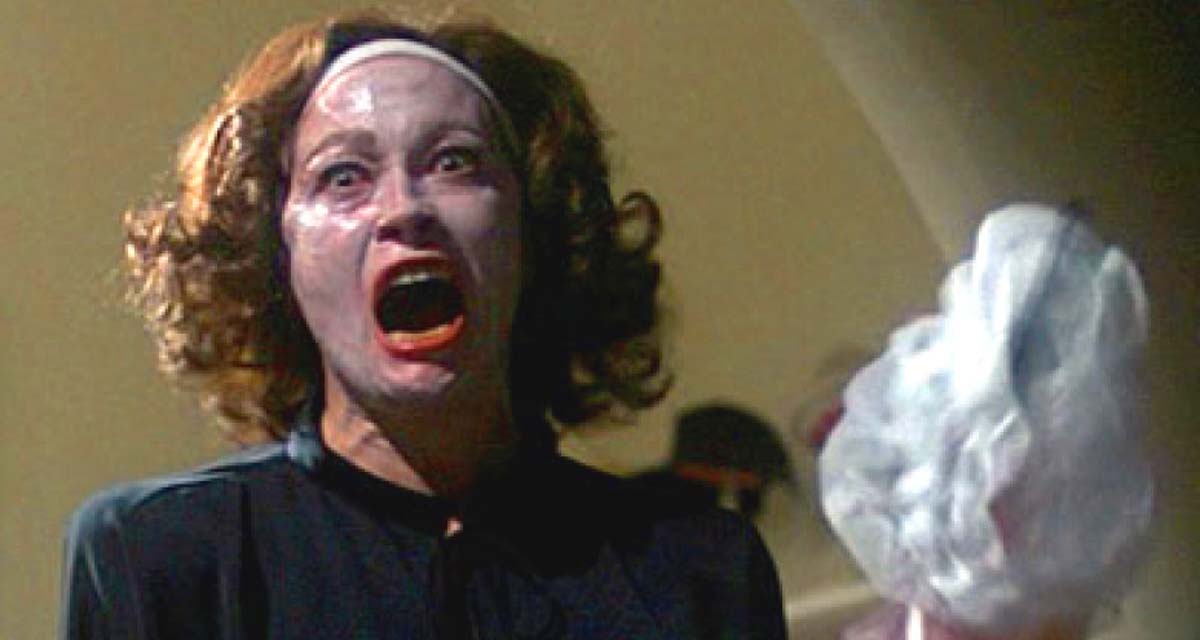
Joan Crawford had a BPD diagnosis. Is this sexy, alluring, and “quirky” to you?

The Myth: If you have Borderline Personality Disorder, some people think this means you’re a sexy beast or babe who’s alluring, unpredictable, passionate, always charming and “quirky”, and never boring. Your chameleon-like abilities to match the attitudes of those around you is seen as evidence of potential Oscar-winning ability. It’s always pointed out how many actors and musicians suffer from BPD.

The Reality:  Let’s be honest.   If you have BPD you’re emotionally unstable, volatile, almost crazy (the original term “borderline” referred to the disorder being on the border between neurosis and psychosis), out of touch with reality, unable to take a firm stance on anything (or conversely, switching back and forth between two extremes, which just makes you look insane) due to your terror of being rejected or abandoned, prone to be an addict, (drugs, booze, gambling, shopping, cutting, eating and/or dieting, other people), clingy,  codependent, insecure, high-maintenance,  and fickle. The borderline doesn’t really have a false self per se like the narcissist, but they can’t access their true self either, so they wind up “taking on” the attitudes and emotions of those who happen to be around them like some kind of emotional bodysnatcher (in contrast with true empathy, their feelings overwhelm them and are out of control), and they just plain overreact to every damn thing so you feel like you’re always walking on eggshells.

HPD:

clown_makeup
You think you look seductive. Everyone else thinks you look like a clown.

The Myth: Although Histrionic Personality Disorder (HPD) isn’t widely talked about, its reputation is similar to that of BPD (but is really the stereotypically feminine form of Overt NPD): usually female, a sexy, seductive siren, dramatic, highly social, loves parties and being the center of attention, and is never, ever boring. You’ll fall madly in love with this bewitching seductress due to their many charms and their great looks.

The Reality: The real truth about people with HPD is that they’re insincere, emotionally labile to the point of being embarrassing (but their over-the-top “emotional displays” are largely an act), shallow, materialistic, and emotionally retarded. They often overdress (or underdress!) or are overly made up for an occasion, are sexually promiscuous, and are inappropriate in social situations, but they don’t care if you’re cringing in embarrassment for them because even negative attention is still attention and that’s what they crave more than the air itself.

ASPD:

aspd
Nuff said.

The Myth:  So here we are at the juggernaut of the Cluster Bs, the baddest badass of them all, Antisocial Personality Disorder (ASPD). Often confused with Psychopathy (and often overlapping with it), the antisocial or psychopathic badass is a sexy and fearless rogue, unconcerned with how others feel about them, possessed of an arresting and penetrating gaze (actually a predatory, creepy stare) that makes you feel like they are really listening to you, determined to get what they want (whether it’s their latest kill or their latest corporate takeover) and never giving up or allowing themselves to be intimidated, by anything. They’re the Rebels Without a Cause, the self-confident Ferris Buellers, the Coolest of the Cool, the celebrated anti-heroes of novels and films socially sanctioned to serve as a receptacle for the Shadow Self that resides within us all. The ASPD badass gives us permission to mentally “act out” our darker impulses, without actually hurting anyone, and that’s why we all love serial killers so much, and why the Ted Bundys and Charlie Mansons of the world get more marriage proposals than any football or film star.

The Reality:  The antisocial badass is really just a heartless and criminally minded horse’s ass, who has no capacity for empathy, isn’t even socially constrained by their need to impress others to garner narcissistic supply (because they don’t require any), and is frequently in prison or has a rap sheet the size of War and Peace. This is a guy (or gal) who will make your life a living hell, beat you to a pulp any chance they get and leave you in a heartbeat and not even remember your name.

If they’re high functioning, they’re the people who are responsible for everything that’s wrong in the world today and the reason why you work 3 jobs and can’t afford a vacation or health insurance.

If they’re low-functioning, if they’re not straight up criminals, they’re flabby, pasty Basement Dwellers who dishonestly leech off the system or their family members so they never have to work and spend all their time trolling Internet forums to get a rise out of random strangers.   Just like my ex.


basement_dweller

Ah, what a studly, irresistably dangerous heartbreaker you are.

If you’re a psychopath or sociopath, you operate more like a machine than a human. Is that something we should be aspiring to?

So there you have it. Cluster B disorders are not cool. They are serious mental (and some believe, spiritual) illnesses, and they are pathetic.   And let’s not forget that people suffering from Cluster B disorders are not happy people.  In fact, most of them are pretty miserable.  They are to be pitied (and avoided) rather than emulated.

A rebuttal in defense of Cluster B. 

“Narcissism–Living without Feelings”

narcissus1_caravaggio

I just read one of the most detailed and comprehensive articles about NPD I’ve ever come across, and also one of the scariest. It’s very long so you’ll need to set aside an hour or so to read all of it, but it’s definitely worth your time.

Some (but not all) of the issues discussed are the difference between healthy and unhealthy narcissism; how the borderline differs from the narcissist; childhood origins; the dynamics of narcissistic families (scapegoats, golden children, and bystanders); the 23 characteristics of narcissism (which take into account the less obvious Covert Narcissist); the development of the false self;  the physical characteristics of narcissists (this is new to me); and narcissism in modern society.

Narcissism by Richard Boyd, Perth WA – Energetics Institute, Copyright 2010
Narcissism – Living Without Feelings
http://energeticsinstitute.com.au/narcissism/

The word narcissism is one that has in recent years has been increasingly used in popular press to describe personalities and lifestyles. One form of Narcissism is however a little understood personality disorder which is increasingly showing up in our leaders across political, business, sporting, psychological and spiritual institutions(Behary:2008).

Indeed narcissism and narcissistic is increasingly being used to describe the mass cultural shift to a “self” obsessed culture where there is rampant consumerism, the pursuit of power, excesses, and the abuse of others in the pursuit of these ends, notes Martinez-Lewi(2008).

The word narcissism comes from the Greek mythological figure, Narcissus, who upon seeing his own reflection in a pond, fell obsessively in love with himself and his own image. As you will see in this article, the true unhealthy narcissist we see today, while maintaining a false self or “mask” of achievement, perfection, and the attainment of all the symbols of success and power, hides underneath a self hating, insecure, fragile real self, which fears being uncovered and exposed at any moment.

The key point here is we all need a healthy dose of Narcissism, as else we would not back ourselves in life, nor have a healthy sense of self. There are healthy forms of narcissism. However unhealthy narcissists do not have a healthy sense of self but instead have learnt to live life from a false self.

narcissus2_andecho

Unhealthy Narcissists are not in touch with their true self, instead becoming a chameleon type of personality who seek to project an idealised image to others, and then seduce and control all others that have some value or utility for them, until that persons utility value is exhausted, and then they are dumped and abandoned without remorse by the narcissist.
In some ways unhealthy Narcissism is seen by some schools of thought as a form of depressive disorder as the narcissist underneath the false mask, moves between depression and aggression. The aggression is most prevalent where there is a threat to being uncovered or exposed as being false, wrong, corrupt, or exploitative(Ransky:1998).

The narcissistic person may be male or female, and is obsessive in their primary pursuit of satisfaction, whether that be power, money and other resources to prop up the false self. Another common term for the narcissist in the business context is the Corporate Psychopath, notes Paul Babiak(2006), a noted specialist on the corporate version of this pathological individual.
According to body-mind researcher and M.D, Alexander Lowen, in his book, Narcissism – Denial of the True Self, narcissists share many common traits with bullies, but due to their ability to project a compelling false, idealised self image, and high intelligence, are more likely to “get away with it”, and escape accountability.

Some narcissistic people are “healthy” in their approach to life and achievement, but they are not of the type to be discussed throughout this article. A healthy and productive narcissistic person goes about their lives in a passionate way, achieve their goals, but retain empathy, consideration for others, and often a mindset of contributing to their community. Healthy Narcissism has more of the following characteristics according to Lewi-Martinez(2008) and Meir(2009):
Life is not all about them;
They are able to have stable and enduring marriages, relationships and business careers;
They are often are involved in charity and community service;
These people make and keep promises to others and to themselves;
They can give and take from a grounded place;
They are usually empathic and engaging;
A determined leader who seeks recognition where due and earnt;
Confrontational and accountable to self and others;
Wisely fearful and knows limits;
Self possessed but not selfish;
Very competitive and likes a challenge;
Vain in their achievements but the achievements are real and earnt;
In contact with own inner needs and wants and the difference of each.

cslewis_quote

This article concerns itself with the unhealthy forms of narcissism. Narcissists are found in all walks of life. After reading this article you may identify your spouse, co-worker, friend, relative, parent, boss, therapist, spiritual mentor, favourite athlete, or local or international political figures as potential unhealthy versions of narcissists. They key aspect of these individuals is their grandiosity, and their overstated sense of self entitlement in life often despite often not working hard to earn any such rewards.

Some unhealthy narcissists will be seen to be hard working and have their own achievements to own. Normally these types of Narcissist will also overstate their own achievements and minimise others and their achievements(Lowen:1986). There is often an arrogance in their personality.
Achieving Narcissistic personalities normally have a strong rigid-perfectionistic streak which gives them the discipline to set goals, focus and achieve, but there is a clinical coldness or unfeeling aspect to their natures(Lowen:1986). Many unhealthy Narcissists appear to achieve but in fact are predators who feed off victims they encounter in life, using their victims’ efforts, skills, and hard work, which get assumed and taken by the narcissist as their own, without remorse, recognition or meaningful reward for those around them(Babiak:2006).

In a narcissist’s world, It’s all about them, as Narcissists possess no real empathy, they feign or act empathic, while they delude themself that they are entitled to special treatment, and to not having to bother with detail or drudgery(Babiak:2006). These narcissists often gather a following of helpers or “sidekicks” to manipulate into doing any effort based work for them. Instead they spent their time managing their “image”, being a “visionary”, being “strategic”, establishing key “contacts”, that they argue only they are able to successfully do(Lewi-Martinez:2008).

gaslighting2

Some narcissistic personalities have an obsessive base in the personality where they micro-manage their own life, from work tasks to how they groom and dress, as they do not trust others or their standards of work. Other less rigid types are more focussed on positioning themself as indispensable, yet at the same time try to be unaccountable, being hard to track down, hard to get them to put things in writing, and they will avoid team roles where they are not the leader(Meier:2009).

Where possible they will delegate the work to a co-worker or “sidekick”. Narcissists hate mundane jobs and tasks that are “beneath them” and avoid them by manipulating others where possible to do such jobs on their behalf(Babiak:2006). Narcissists necessarily include others in their life so as to get the other person to do what they are unable to do, do not want to do, or what they feel is beneath them to do.

Read the rest of this article here.

The narcissistic spectrum according to Lucky Otter

Man looking at reflection in mirror

A friend and I were talking about where exactly different levels of narcissism would fall on the N-spectrum. Of course narcissism (or any psychological topic) isn’t an exact science so giving the different levels numerical values seems a little silly, but in my mind this is how I view the different levels on the spectrum, starting with a Baseline of O (on most narcissism spectrums, “healthy” narcissism is at baseline) and the transition to NPD at around 5, which is smack dab in the middle. Narcissism becomes pathological (causing the person or others problems) at around 4.
Please note these are just my own subjective ideas.  I’m a geek who likes to classify things.

The Narcissistic Spectrum according to Lucky Otter

9-10:
Sociopathy:
A person at this level is almost indistinguishable from someone with ASPD (antisocial personality disorder), but an NPD sociopath is more concerned about image or obtaining supply than a pure ASPDer. Most cult leaders fall here. (Psychopathy appears similar to sociopathy in behaviors, but describes a condition that a person is born with instead of one that was acquired; many psychopaths were never abused and were always like that, but sociopaths were made).

8-9:
Malignant Narcissism:
A person at this level has severe NPD with antisocial traits. A person at this level will show more emotion (usually rage) than a narcissistic sociopath. Usually fits all the DSM criteria or most of them.

7-8:
Severe NPD:
Not malignant because there is no sadism present, but person is still highly dangerous and manipulative. Fits most or all of the 9 criteria and symptoms are severe.

narcissist-bird

6-7:
Moderate NPD:
A person at this level may be barely tolerable, if contact with them is casual or seldom. Fits more than 5 of the 9 criteria.

5-6:
Mild NPD:
A person at this level fits 5 of the 9 DSM criteria for NPD but symptoms are not too severe and they may have moments of acting like a decent human being. NPDers at this level may occasionally respond well to therapy or seek it out.

—Pathological—

4-5:
Narcissistic Personality (Destructive Narcissistic Pattern disorder or DNP):
  A person here fits fewer than 5 of the 9 NPD criteria in the DSM but has at least three.  Symptoms may not be that severe and the person at this level is more in touch with their true self and may seek therapy.  They usually have the capacity to feel empathy but it’s limited.

3-4:
Non-Pathological Narcissistic Personality:
Your garden variety self-centered jerk but may genuinely care about those they love.  Not particularly dangerous. Has moments of insight into themselves or empathy for others, especially their loved ones.

0-3:
“Healthy” narcissism.
Most normal people can be found here.

O (Baseline) and lower:
People down in the negative digits might as well be wearing a “KICK ME” sign. They are almost always victims of narcissists and sometimes even normal people give them a hard time or take advantage of them.

npd_spectrum
The simplified spectrum. Psychopathy does not belong here at all.

Covert (“fragile”) narcissists may be found anywhere on the spectrum, but because their narcissism is more hidden and arrogance and grandiosity may be absent, a covert narcissist at any level is harder to identify. They may appear to have BPD, Avoidant PD, or Aspergers Syndrome instead (these are the three disorders most often confused with Covert Narcissism).

High-functioning (successful) narcissists are more likely to be found high on the spectrum, and sociopaths are often extremely high-functioning. There are many sociopaths (and psychopaths, who were generally born with a different brain structure and may not have been abused) in politics, religion, and heading huge corporations. Sociopathic traits and most NPD traits are generally sought after in the higher echelons of business, politics and entertainment. A person with just the “right” combination of antisocial behavior and arrogance, entitlement, grandiosity, and fake confidence can be a devastating adversary or competitor, and they will have no scruples about crushing you into the ground to achieve their goals.

Most high-functioning narcissists tend to be the Grandiose (classic, or overt) type that best fits the DSM criteria.

Covert and overt narcissists all have the same disorder, but for most, one form or the other is dominant. That said, they can and do switch back and forth in the same person. I think temperament is partly to do with whether someone is overt or covert (the more timid or fearful types leaning toward covert narcissism), but I also think circumstances (such as a sudden loss or gain of supply) can cause a switch from overt to covert or vice versa.

Low-functioning narcissists are much more likely to be covert.  They tend to receive less supply than overt narcissists, so their false self is weaker (the “deflated” false self, according to Masterson). Because of their discontent with their lives and general lack of success, covert narcissists are more likely than overt ones to seek help. If a covert narcissist suddenly begins to receive a lot of supply, they can become much more overt-acting (grandiose, entitled and arrogant). If an overt/grandiose narcissist suffers a huge loss of supply, they can sink into depression and become covert (at which point they are more likely to seek help).

Gaston from Beauty and the Beast: Textbook NPD

A discussion of narcissism and Beauty and the Beast wouldn’t be complete without making mention of Belle’s suitor Gaston, who she understandably rejects. Gaston is Textbook NPD and seems to possess all 9 criteria. Unlike the Beast, there is no room in him for redemption. He’s way too far gone.

Check this out:

Beauty and The Beast: a metaphor for NPD.

beauty_beast

A few days ago, I was thinking about the wonderful 1991 Disney animated movie, “Beauty and The Beast.” I was always moved by the Transformation scene at the end when the evil spell on the Beast and his castle is finally lifted after he nearly dies and Belle finally declares her love for him. In my opinion, it’s one of the best moments in animated movie history. That scene has haunted me for a long, long time and the other day, I felt inspired to watch it again, and was as–or even more moved by it–than the first time I saw it. And this time I knew why–the entire story of the Beast in this movie is a metaphor for a man suffering from NPD–who healed from it.

As the movie opens, we are shown a series of stained-glass images telling the story of how the Beast became that way. He wasn’t always a Beast. His real name was Adam and he had been a handsome young prince, but extremely arrogant, entitled, and lacking in empathy (sound familiar?). One cold and snowy night, a beggar woman came to the castle begging for a place to sleep for the night to escape from the bitter cold. In exchange she offered him a single rose. Adam sneered at the rose and refused her a warm bed and coldly sent her on her way, but not before the beggar woman suddenly transformed into a beautiful enchantress, who in her righteous anger at the callous young prince’s heartless actions, put a spell on him, turning him into the physical manifestation of the Beast he had become inside, and at the same time transforming the trappings of his former grandiosity and entitlement (a well-appointed and beautiful castle and loyal servants) into a dark and frightening prison and common household objects. The rose she had left him–which I believe represents Adam’s True Self (and he had sneered at it because it represented the vulnerability he had rejected)–would continue to bloom for a decade. If Adam failed to learn to love another (and earn her love) in that decade, the woman had warned him the rose would die and he would be forever doomed to his fate (unable to heal from his narcissism, he would become malignant). Adam’s only window to the outside world was the magic mirror the woman had left him, but all Adam can see in it is his own hideous reflection.

The Making of a Beast:
https://www.youtube.com/watch?v=__x8CYAVMbk

No longer receiving any narcissistic supply, Adam falls into depression, despair, and self hatred. He attacks his own image in a painting and refuses to look at himself in the mirror anymore. He is consumed by anger and self-pity until the day a beautiful young woman (Belle) comes by the castle to rescue her father, who The Beast has imprisoned for trespassing.

Belle is the opposite of The Beast in every way. Not only is she physically beautiful, but she is poor, the daughter of the town eccentric who is a laughing stock and considered crazy, even though he is actually a brilliant inventor. Belle is kind and loving and has a high level of empathy. The first thing she does is offer to take her father’s place in the castle’s dungeon if The Beast will only free him.

The Beast takes her up on her offer on the condition she stay there in the castle with him forever. Belle reluctantly agrees, even though she is at the mercy of The Beast’s terrible temper and frequent narcissistic rages. Her father is freed, and Belle dutifully obeys whatever the Beast tells her to do, but because she is an empath, she can see through his frightening facade to the broken young man he really is.   Early during her stay, she is wandering around the Castle and comes across the enchanted rose under its glass dome.  The Beast catches her and quickly covers the rose (evidence of his vulnerability) and rages, bellowing “Do you realize what you could have DONE?? Get out!” But as the months pass, the Beast begins to look forward to their time together, and slowly learns some manners and social graces. Belle works on humanizing Adam and finds she is slowly falling in love with him, and as he begins to accept her love (mirroring), he reluctantly begins to reveal his true self to her.

Meanwhile, Belle is being pursued by a very arrogant and probably malignantly narcissistic young man from her town named Gaston. Belle can’t stand Gaston, and refuses his proposal of marriage in which she would be nothing but an object and slave to him. Consumed by rage over her rejection of him, one night Gaston and his buddies plan an attack on the The castle to kidnap Belle. In the ensuing battle, The Beast is falls to the ground from a high elevation and is left for dead. A grieving Belle finally proclaims her love for the Beast, just as the last rose petal falls.

The spell is broken and The Beast is transformed back into Adam, the handsome Prince he used to be–only with a difference–he is no longer entitled or arrogant and he is now capable of being able to love, thanks to Belle’s empathic kindness. The castle (which I think represents the quality of Adam’s life) is also transformed to its former glory and the household objects turn back into loyal servants (who can now be his friends too).   Note that a narcissist regards other people as mere objects and not human.

The Transformation:

When I talked to some friends about writing an article about this movie being a metaphor for healing from NPD, it was mentioned to me the dangers of making such a comparison. First of all, this is a fairy tale and in real life, things don’t normally work out this way. A woman who falls in love with a narcissistic man is far more likely to be abused and exploited than loved in return–and she almost certainly isn’t going to be able to “fix” the narcissist. Just as problematic is the idea that in order for a narcissistic man to change, he must earn the love of a woman. It was pointed out that this could be construed as sexist.

But because this is a fairy tale, the underlying moral is of course more compelling (and entertaining) if there’s a romance involved. I think of this romance as a metaphor for the relationship between a self-aware and willing narcissistic patient and his or her therapist. Belle’s looks don’t actually matter–her beauty is a metaphor for her pure soul and empathetic nature. She is giving the Beast the reparenting he probably never got from his own family. The Beast’s ugliness is a metaphor for his narcissistic personality, but in this case, it’s not so deeply ingrained in him for it to have become malignant–which is why the enchanted rose is still alive until the spell is broken. The rose represents The Beast’s true self, which is integrated back into the Beast’s psyche during the Transformation.

Is Donald Trump actually a narcissist? Therapists weigh in.

donald-trump-therapists-mental-evaluation
Photo-Illustration by Ben Park; By Noam Galai/WireImage/Getty Images (Trump).

Is Donald Trump really a narcissist?

Is the sky blue? Does a bear relieve himself in the woods? Is the Pope Catholic?

I think he is, and a ridiculous one with weird orange skin at that. If the Oompa Loompas were electing a President, he’d fit right in. He’d be a huge embarrassment to this country, and we already have enough to be embarrassed about.

Seriously though, Donald Trump really is a narcissist. Actual therapists have pegged him as a textbook case of NPD. Here’s an article from Vanity Fair that talks about what they have to say:

Is Donald Trump Actually a Narcissist? Therapists Weigh In
By Henry Alford
Published in Vanity Fair on November 11, 2015

trump_quote

For mental-health professionals, Donald Trump is at once easily diagnosed but slightly confounding. “Remarkably narcissistic,” said developmental psychologist Howard Gardner, a professor at Harvard Graduate School of Education. “Textbook narcissistic personality disorder,” echoed clinical psychologist Ben Michaelis. “He’s so classic that I’m archiving video clips of him to use in workshops because there’s no better example of his characteristics,” said clinical psychologist George Simon, who conducts lectures and seminars on manipulative behavior. “Otherwise, I would have had to hire actors and write vignettes. He’s like a dream come true.”

That mental-health professionals are even willing to talk about Trump in the first place may attest to their deep concern about a Trump presidency. As Dr. Robert Klitzman, a professor of psychiatry and the director of the master’s of bioethics program at Columbia University, pointed out, the American Psychiatric Association declares it unethical for psychiatrists to comment on an individual’s mental state without examining him personally and having the patient’s consent to make such comments. This so-called Goldwater rule arose after the publication of a 1964 Fact magazine article in which psychiatrists were polled about Senator Barry Goldwater’s fitness to be president. Senator Goldwater brought a $2 million suit against the magazine and its publisher; the Supreme Court awarded him $1 in compensatory damages and $75,000 in punitive damages.

But you don’t need to have met Donald Trump to feel like you know him; even the smallest exposure can make you feel like you’ve just crossed a large body of water in a small boat with him. Indeed, though narcissistic personality disorder was removed from the most recent issue of the Diagnostic and Statistical Manual of Mental Disorders, for somewhat arcane reasons*, the traits that have defined the disorder in the past—grandiosity; an expectation that others will recognize one’s superiority; a lack of empathy—are writ large in Mr. Trump’s behavior.

Read the rest of this article here.

Is this the man we really want as President? Not me.  For the record, I don’t really disagree with his politics (he’s not that conservative), but he’s nothing but a blowhard and there’s probably no substance under all that hot air.

* My understanding is Narcissistic Personality Disorder (DSM 301.81) was kept in the DSM-V; does anyone have any recent information about this? How ghastly if it were no longer considered a mental illness.

Bonus: here’s a complilation of Trump’s funniest moments.

We Are All Narcissists

An interesting and slightly scary walk along the narcissistic continuum, from “healthy” (adaptive) narcissism up to sociopathic or malignant narcissism…

Narcissists are just highly trained monkeys.

organ_grinder_monkey

It seems some people think narcissists are smarter than other people, because their mental and emotional abuse and manipulations appear so calculated and complex, and they seem to always be able to anticipate your actions and reactions. People also think you can’t outsmart a narcissist for the same reason.

While it’s true that outsmarting a narcissist means you always have to anticipate their actions ahead of time (which is difficult for a victim to do), it can be done, especially if the narcissist isn’t very smart. In fact, some of them are pretty stupid. The stupid ones are probably less dangerous, but even the highly manipulative and cunning ones who are experts at gaslighting and other mind games aren’t necessarily all that smart.

They’re more like highly trained monkeys. Some monkeys can perform very complex tasks that make it appear as if they’re incredibly smart. But this is an illusion. The monkey was trained over a long period of time by being taught one simple task at a time, and when one task was mastered, they were taught the next task. String all those simple tasks together, and the monkey looks like they’re performing a complex operation. Another analogy is a child of average intelligence who is multilingual. If the child grew up hearing several languages spoken, they will pick up all the languages and become fluent in them. Of course, language is harder to learn as an adult, so knowing several languages makes you appear highly intelligent, but if the languages were learned in childhood, this isn’t a given.

An even more dramatic example is the bower bird. A male bower bird builds a rather complex structure (the bower) resembling a thatched hut and a surrounding decorative display to attract a female, choosing objects that are all the same color, and arranging them in attractive patterns to impress the opposite sex. It would appear these birds must be creative and intelligent to be able to build a complex bower and a beautiful, color coordinated display, but in actuality they aren’t any more intelligent than other birds. Their behavior is mostly instinctual, although some elements may have been learned. They are probably not really thinking when they build their mating habitat, at least not the same way an architect does when he draws up a blueprint for a new house. Still, most of us probably wouldn’t know how to build a hut as structurally sound as the bower bird’s.

bower_bird
Male bower bird shows off his display of blue objects.

A narcissist can be of quite average intelligence but still seem to be able to anticipate your every move and every word and know exactly what moment to manipulate or gaslight you. This makes them appear cunning and calculating. Most of us associate those traits with high intelligence. But in actuality, all of it’s an elaborate defense mechanism learned when they were very young. Like the highly trained monkey performing a complex task, the narcissist learned all these behaviors over a long period of time, without even being aware of what they were learning. They just did whatever worked (or whatever was rewarded). They don’t think about what they’re doing; they just do it. Like the bower bird’s impressive display, their machinations are instinctual.