I think my brain just exploded.

This is just all kinds of wrong. A mother KNITTED a replica of her golden child son, because he doesn’t want to cuddle with her anymore (he’s a teenager). The replica requires a human wearer to bring it to “life” though. The mother’s younger son (who I bet is the scapegoat) has the “honor” of wearing the replica and pretending he’s the older son.

http://americanoverlook.com/when-her-teenage-son-didnt-want-to-cuddle-with-her-anymore-she-did-this-i-cant-stop-laughing/79203

Scroll to the bottom of the article to view the video.

Book Review: Complex PTSD: From Surviving to Thriving (by Pete Walker)

pete_walker

I finally finished reading a most wonderful book sent to me by my friend and fellow blogger, Linda Lee. It’s called Complex PTSD: From Surviving to Thriving, written by Pete Walker, himself a sufferer of C-PTSD and narcissistic abuse survivor. He is also a therapist who works with others with C-PTSD.

Walker’s book is incredibly readable and tells you everything you need or want to know about C-PTSD, a subcategory of PTSD that isn’t (but should be) included in the Diagnostic and Statistical Manual of Mental Disorders (DSM), the bible of the mental health profession. Complex PTSD is similar to PTSD but there are several important differences. The recognized diagnostic category of PTSD describes a disorder that is caused by one traumatic event, such as a rape or combat in a war. PTSD itself wasn’t recognized until psychologists noticed that many Vietnam war veterans were suffering from a group of similar symptoms including, but not limited to, loss of memory, dissociative episodes, panic attacks, general but severe anxiety or depression, inability to cope with day to day challenges, impaired ability to regulate emotions including anger, impaired ability to relate to others in a healthy way, nightmares, flashbacks, and physical pain with no medical causes. C-PTSD has a similar set of symptoms, but is “complex” because of its cause–instead of being precipitated by a single traumatic event, it’s caused by an ongoing series of traumatic incidents and also usually (though not always) begins during childhood. Very often it’s a result of being “cared for” by narcissistic or sociopathic parents, who are actively abusive or neglect their child. Unlike most self-help books, Walker covers the nature of narcissistic abuse and its soul-murdering effect on a child, and how this can lead to C-PTSD and its various manifestations.

Walker breaks down C-PTSD into four “types,” each one corresponding to a different type of defense mechanism, which he calls “The Four F’s”–Fight (the narcissistic defense); Flight (the obsessive compulsive or “workaholic” defense); Freeze (the dissociative defense); and Fawn (the Codependent defense). Most people will have a combination of these, but usually one will be dominant over the others. I find it intriguing that Walker describes the narcissistic and borderline personalities as manifestations of C-PTSD (BPD is a Fight-Codependent hybrid), because I also think that’s exactly what they are.

Walker doesn’t think that any form of C-PTSD is untreatable or necessarily permanent, although some forms are more difficult to eradicate than others. People with severe C-PTSD may spend most of their time in a “flashback” without even knowing that it’s a flashback. For example, if you are continually depressed and anxious without being able to pinpoint why, you may be in a flashback to a time when you were made to feel shame as a young child. Any sort of invalidation or reminder of the shame, no matter how small, could have set off the flashback.

Also discussed is the importance of nurturing your Inner Child, and Walker shows you how you can begin to do this on your own. He also explains why people with C-PTSD have such a harsh Inner Critic (which is the internalized “voice” of the abusive parent that relentlessly continues to shame the Inner Child) and how how re-training your Inner Critic to be less, well, critical and more supportive of the Inner Child can do wonders for your self esteem and help you begin to heal. One of the most important things that must happen in order to heal from C-PTSD is to be able to grieve the lost or wounded inner child and also to be able to feel and express righteous anger toward the abuser (while being No Contact with the actual guilty party, of course).

While Walker encourages therapy (and states that in severe cases says it may be the only way to heal from C-PTSD), he recognizes that it may not always be appropriate or possible for everyone. For example, some C-PTSD sufferers (usually the Freeze/dissociative type) are so hypervigilant and uncomfortable relating to others that they can’t begin to trust a therapist enough to make any progress that way. Such people may do better on their own, at least to begin with. He points out early on that even if you skip around in the book (because not everything in it may apply to everyone) that you can still be helped. He gives the reader helpful things they can do on their own, such as positive affirmations, self-mothering, self-fathering and the “Time Machine Rescue Operation,” mindfulness skills, thought-stopping the Critic, thought substitution, recognizing signs of being in a flashback, how to grieve, and finding “good enough” relational help, among many other tools.

At the core of C-PTSD is the “abandonment depression,” a feeling of terrible emptiness that the Four F’s have been used to avoid confronting. Walker explains how to cope with the abandonment depression without denying that it exists or using the Four F’s as defense mechanisms against it.

Finally, Walker includes a list of books–which he calls “Bibliotherapy”–that he and his patients and visitors to his website have found useful. He wraps things up with six easily referenced “toolboxes” the C-PTSD sufferer can use as adjuncts to their recovery.

Complex PTSD: From Surviving to Thriving is intelligently and empathetically written, and easy to read without being condescending or dumbed down. Its chapters are organized in an understandable and logical way, and subheaders are used throughout to make it possible to read the book in easy to digest chunks. This book has helped me immensely so far, and takes the complexity out of this “complex” disorder.

You can visit Pete Walker’s website here:
http://pete-walker.com/

Think Outside the Box

LOL!

Death, Prince, “the void,” and loss of control.

Update on my death phobia.

Better late than never.

42316
Relaxing in the kava bar.

Today was fun.  You may remember, my daughter’s birthday was last Tuesday and we were supposed to meet, but she was sick and the day was a total bust.    Last weekend she was working, so we made her “birthday” today.   I had planned to drive up the Blue Ridge Parkway and take her for lunch at a restaurant I know up there, but the weather looked iffy, so I took her to the same little inexpensive eatery I went to with my son early this month (appropriately named The Lucky Otter–yes, this blog is named after it) and we sat outside and enjoyed watching the people walking along Haywood Road.

We were stuffed, so we decided to walk to a nearby kava bar.  My daughter goes there a lot; I have never been to one before, or had kava before.    For those of you who aren’t familiar with kava, it’s a very bad tasting herbal drink that has a relaxing effect (it doesn’t make you high though and it’s perfectly legal).   Their information sheet called it “the anti-coffee.”   Here is more information about it:

https://en.wikipedia.org/wiki/Kava

The kava, which is gray-green and viscous-looking, was ladled out of a somewhat unsanitary looking punch bowl into a plastic cup.   It was served with another plastic cup of orange juice as a chaser, to cleanse the palate because it tastes nasty.   I was a little afraid to try it because it looked so gross and was supposed to taste terrible, but it actually wasn’t too bad.  It’s definitely strange tasting, but not really gross.   I can’t quite explain the taste but if dirt came as a liquid, that’s what it would come close to.   It leaves your mouth feeling slightly numb, but soon you feel relaxed.

kava2
Kava on the right; orange juice chaser on the left. 

The kava bar was interesting too.  Very rustic, lots of hippies and hipsters sat around on laptops, writing, or playing on their phones.   Rock music played at a low volume in the background.  Local art hung on the walls and sofas and recliners lined the room.   We sat for awhile, drinking our kavas and just watching the sights.    Afterwards, we just walked around and stopped by a small yard sale, where they were trying to give away stuff because they were closing up shop for the day.  I got a new purse and pullover sweater–for free!

kava
Inside the kava bar.

purse
I got this for nothing!

My daughter had to get to work, so we walked back to the car and called it a day.   I’m glad we got to spend some time together.

Finding meaning in life after narc abuse and in poverty

Katie’s life trajectory has been so much like my own it’s downright spooky, but I think God brought this woman’s spiritual wisdom into my life as part of my journey in recovery. Her blog has become one of my favorites.

This article was so triggering and upsetting to me I almost stopped reading it (because it was like reading about myself) but something (God, maybe?) told me to keep reading anyway, and I’m glad I did because by the end (as with all Katie’s articles), my soul was lifted up.

Comments have been disabled; please leave comments on the original post.

Prince is dead….what?

I’m in shock.  I just now found out Prince was found dead today.    He died of complications of the flu.    I can’t believe it.  He always seemed like a paragon of good health to me.

There have been way too many great artists passing on way too soon.

RIP Prince.  You will be missed.


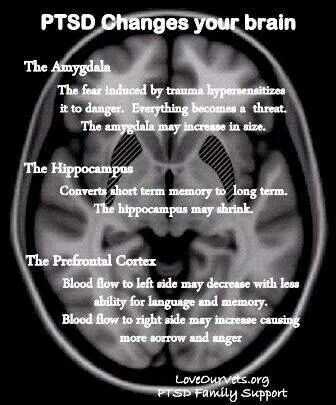
PTSD is a real physical injury.

ptsd_info_1

ptsd_info_2

Accepting limits, part 2

Remember BoxingandBallet’s guest post, “Accepting Limits?” Well, here is her Part 2, written for her own blog, but I will reblog it here too for my readers.
Thanks, BoxingandBallet!

Comments have been disabled; please leave comments under the original post.

I feel the earth move under my feet.

grass_feet

These aren’t my feet. 

Carole King had it right.   Sometimes feeling different textures under your feet can not only feel great, but also is spiritually grounding.

If you’re prone to dissociation and anxiety, like I am (I’m a “Freeze” 4F C-PTSD type–which means my primary defensive reaction is dissociation (the “freeze” subtype) and that keeps me alone and isolated from others (dissociative types tend to be shy hermits).    When dissociated,  sometimes we feel disconnected from our bodies, our emotions, from other people, from the whole world.   Dissociation in its various forms (derealization and depersonalization) can feel so weird, disorienting and surreal (like a bad drug high) that it can throw me into a panic attack if there’s nothing around to ground me or bring me “back to earth.”   The intense anxiety these episodes cause only seems to make the dissociation even worse, which leads to more panic and anxiety. It’s a positive feedback loop, but it’s anything but positive!

I wasn’t exactly looking forward to mowing the grass today, but it was a beautiful day and the grass needed a haircut.   My usual impulse would be to procrastinate–another way I avoid having to make decisions or do something I don’t want.

So I got out there and cranked up the old mower, and soon I was falling into the rhythm and exertion of this necessary task.   After a while, as usually begins to happen, my thoughts slowed and sped up at the same time.   That just means when I get into this state, my mind begins to think quickly and creatively.  These are the times when I usually get an inspiration for a new blog post, the kind I just itch to write.  These have been some of my best posts.   At the same time, the pace of my thoughts is slowed down.  Random snippets of thoughts aren’t racing all over the place, smashing into and bouncing off of each other and causing my head to hurt and my heart to race.  Instead,  I’ll mosy down a creative or philosophical tangent and then think deeply about it, looking at all its facets and hidden crevices.   Then I can draw all kinds of inferences and hidden meanings–both insane and profound–that wouldn’t have been there when I was in my normal hypervigilant, anxious, scattered state, when I can barely think at all.

This slowed down but more profound way of thinking has an awesome grounding effect, but it’s also at these times I become hyper-aware of my body (a type of mindfulness) — what it’s doing and any sensations it’s taking in from the world around it. When mowing, the repetition and exertion of it combine with the sharp, sweet smell of fresh-cut grass, and this stewpot of sensations combine to send me into a Zen-like state.

After mowing, I like to kick off my Crocs (I hate Crocs but they make good mowing and gardening shoes), stretch my feet and toes out  as far as they will go, and wiggle them.   My feet have always been one of the most sensitive parts of my body (This is not an invitation to any foot fetishists lurking around!).  This is good because my feet are what grounds me to the earth and staying grounded has always been one of my biggest problems.  It’s why my most basic “survival skills” are so poor (I live inside my head most of the time).  Focusing on my feet on the ground and the feelings of the different textures under them have a way of kicking dissociation’s butt like a kung fu master.

The freshly cut grass still had its spring softness, but it is dry like alfalfa, which makes it soft and scratchy at the same, and it felt unbelievably good!  Then I stepped onto the front porch and walked around on the smooth, worn cement and felt its coolness and smoothness under my feet, a wonderful contrast to the soft but dry grass.    Then I walked on the grass again. Then on the cement again, which was warmer this time from the sun.      A sense of well being and groundedness came over me, and the residual anxiety I had been feeling before mowing the grass was gone.

Going a step further, you can step on pinecones.  No, I’m not joking.