My day in Aspie hell

workweek

Aspies sometimes have problems getting ahead in life. We may be intelligent and creative, but because we don’t really play well with others and are easily stressed and overwhelmed by social situations on the job and most of us aren’t good at schmoozing with higher-ups and playing the political games that are required to move up in an organization, many of us overlooked for promotions or just treated badly, as if we are mentally deficient. Many Aspies are underemployed, especially those of us who have an exceedingly low self image due to having been badly damaged by our psychopaths. If we were cursed with psychopathic parents, we were never given the tools other children were blessed with to succeed in life. Someone with Aspergers entering the workforce without life skills and survival tools is severely handicapped. It seems like some sort of cosmic joke that Aspies and malignant narcissists seem to be thrown together so often. It happens often enough that there has to be something more there than sheer coincidence, but I’ll save that thought for another time.

I read a study recently (I will find the link later) that found that people who are quiet and don’t talk very much are seen as less intelligent than gregarious, outgoing people. Many people with Aspergers are painfully shy and don’t make small talk easily. When forced to socialize, our attempts can be awkward and sound stilted or just weird. Unfortunately that probably makes us seem kind of slow. Socializing and engaging in small talk are extremely draining for someone with Aspergers, because it’s hard work. It just doesn’t come naturally.

In a way Aspies are like narcissists in that we have to “rehearse” how to act. The difference is a matter of conscience and emotion. The narcissist has no problem assessing a social situation and the appropriate way to behave, but for them it’s all cognitive. They are chameleons. When it comes to empathy and emotion, however, they are at a total loss. Since they can’t feel anything, they have to first decide which emotion is appropriate and then “act” like they feel that emotion. Aspies have the opposite problem. We can feel empathy and compassion, but have trouble expressing it. We are not good at putting on masks. We might seem cold and aloof but we are not. That’s why so many of us prefer solitude, where we don’t have to be “on” all the time.

Currently I work part time in a company where we are sent out in teams (or sometimes alone) to clean houses. It is a low level, grueling job, but I chose this over other service jobs because it seemed to require less social interaction than most of the others. I could just go to a house, clean it, and leave. I wouldn’t have to deal with customers in my face all day, or with office politics. It’s a good set up if I’m working alone (which I prefer) but most of the time I’m sent as part of a two person “team.” My regular partner is great, and respects my odd personality and knows I do a good job. I still get to work independently and she never has to check up on me.

Today I had the worst day an Aspie can have. My regular partner was off, and I was assigned a “special” (first time cleaning) that requires a lot more than a regular spiffing up. These specials can take all day. I don’t mind the extra work (and they do pay quite a bit more), but I was partnered with someone I knew I was going to have a problem with. She’s a very loud, extremely outgoing, rather aggressive personality and she is only 19 so she isn’t very mature either. Just being in her presence was triggering and causing mental overload. She just kept talking, and talking, and talking. I really didn’t know what to say, so I made polite noises and felt very triggered and overwhelmed. My stress levels were reaching dangerous levels–when I become sufficiently stressed, not only do I get pounding headaches, but sometimes my natural passivity and agreeableness breaks down and I snap and say something I regret. I wanted to jump out of the car and run away. By the time we got to our assignment, I was almost ready to quit my job. It didn’t help that I hadn’t been able to smoke in her car, and was having a major nicotine fit.

stress

When we got inside the house, I started with the master bathroom, attempting to stay out of her way while she did the dusting. I let my mind wander to other things as I cleaned, such as what I might blog about tonight, and what I could cook for dinner. But my partner kept coming in and asking questions, or worse, telling me I was doing my job wrong. She is not my boss, but I’ve noticed some of these young girls act like they know everything even when they don’t, and try to tell people what to do when they have no business doing so.

Like most Aspies, I dislike confrontations, so I let this pass the first few times. But by the 3rd or 4th time, I had enough and snarkily told her I knew how to do my job and she wasn’t my boss. She didn’t seem to like that, and whined that she was “just trying to help.” That made me wonder if she is a narc.

She kept talking and talking and talking. I wasn’t even listening to what she was saying. I had a pounding migraine and I felt like a raw nerve. The car ride back to the office was painful. She seemed like someone with ADHD, with all the fast talking and jarring topic changes in mid-sentence. But even worse was that she was constantly checking her phone WHILE SHE WAS DRIVING. She kept asking if her driving scared me. When I told her no (which was a lie), she started talking about how she likes to deliberately scare this other girl when she drives because she acts so afraid. Yep, I think this girl is definitely a narc.

I was so stressed and keyed up on the ride home that all the muscles in my face and back of my neck hurt and I thought I was going to throw up. For an Aspie, having to deal with a person like that all day feels like a day on the battlefield. It’s very debilitating.

Reflecting on Narcissism: much less than just a pretty face

narcissus

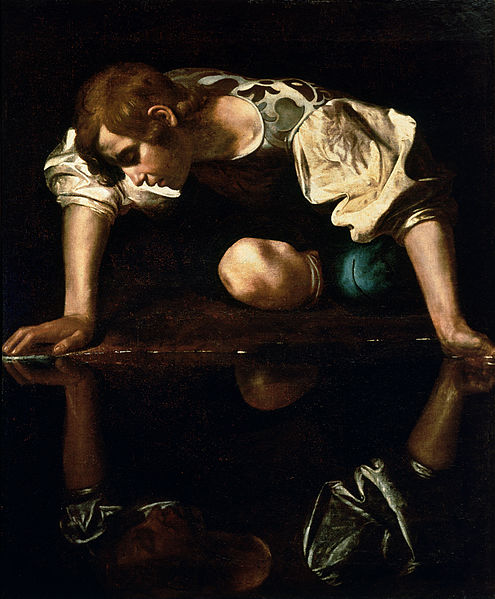
Narcissism is a disorder named after Narcissus, a young hunter who, according to Greek mythology, fell so much in love with his own reflection staring back at him in a pool of water, that he fell in the pool and drowned.

In actuality, while some narcissists are as vain as our Greek god, most would not necessarily fit the stereotype of a physically vain person. My narcissistic mother is vain, but my ex-husband is anything but. In fact, he cares very little about his physical appearance. Narcissists look like anyone else–it’s their actions and behavior that give them away.

Another misunderstanding about narcissists is that they love themselves. They don’t. People who love themselves are people who know who they are, and are a pleasure to be around. But narcissists don’t hate themselves either, at least not in the same way a neurotic individual with a poor self image hates himself. Narcissists don’t think they’re disturbed enough to seek therapy. They’re not suffering; you are. It’s everyone else who is nuts, not them. The reason they are so self-centered is because they have lost their true self and deep down, they know it.

While a few narcissists may have been born that way (there is some evidence narcissism has a genetic component), for the most part I don’t think there are “bad seeds.” Usually (though not always), at a very young age, their true self was lost, possibly by a parent failing to “mirror” them during the language learning stage when they were infants and toddlers. It’s my opinion that maternal neglect during early childhood can lead to NPD–as well as possibly autism (which is intriguing since autism and NPD are so vastly different from each other–and yet both share a failure to become sufficiently socialized or relate to others). So narcissists can’t love or hate themselves because they can’t access their true self, which is unknown to them. Their self centeredness stems from a need to be mirrored–something all babies need but their own parents may have failed or were unable to do. It would be interesting to find out if foster children are more likely to develop narcissism than children from loving families. It would also be interesting to find out if people with NPD and autism are more likely than others to have narcissistic parents, especially narcissistic mothers, who would be unable to “mirror” them adequately as infants. I would bet there’s a correlation.

Narcissists can’t experience genuine emotion because there is no true self there (or is greatly diminished)–so everything they say and do is an act. They are chameleons who can change their behavior or image at the drop of a hat because all they are doing is reflecting back what they see in the people they are dealing with. If you abandon them or wrong them, or even disagree with them, it devastates them because you are taking away their false acquired “self,” which means they are then forced to acknowledge their emptiness. In fact, that’s the only real pain they feel–the pain of their own emptiness. That’s why they must constantly fill the void. Like the vampires they are, they will suck you dry in an attempt to fill the black hole that has replaced their real self. Unlike Narcissus (but like vampires), when they look into the mirror, they don’t see a beautiful reflection. What they see is nothing, and that is so terrifying to them they must constantly seek to fill the void with whatever they can suck out of others.

In fact, that’s the only time a narcissist may contemplate suicide–when, for whatever reason, they are unable to attain “narcissistic supply,” they are forced to behold their own empty reflection in the mirror. Farther along the psychopathy spectrum, narcissists are more likely to retaliate against the person who abandoned or wronged them than to inflict self-harm, and this is where you’ll find murders and murder-suicides.

Narcissists both hate and envy vulnerability in others, and act out through both attaching themselves to and bullying such people. They desperately want that innate ability to feel and intuit things that a sensitive person has, but they also envy and are terrified of it because it’s the one thing that can expose them for the fakes they really are. I remember my mother raged at me often during my teen years, but her worst rages were the times when I called her out on her shallowness and lack of empathy. At those times there was always a look of utter fear in her eyes as she raged on, as if some truth had been exposed. I wasn’t even aware of this at the time, but in fact I nailed it and it scared her to death.

They would rather break the mirror than confront what isn’t there.

The spectrums of autism and narcissism

einsteintedbundy
Einstein is known to have been autistic, and Ted Bundy was a malignant narcissist of the worst kind.

Most people today are aware that autism runs on a spectrum, but many people do not know that narcissism (psychopathy) also can be found on a spectrum, running from mild to the most severe just like autism.

In autism, the spectrum looks like this:

Severe autism: The patient seems profoundly retarded–may not even be able to dress themselves, eat, or go to the bathroom without assistance–but may have a special ability, such as having a photographic memory of dates, or baseball scores, or a talent for art or music. Here you will find the “idiot savant” phenomenon, which I think is really just that the autistic person has focused ALL their intelligence into one or two narrow interests. As is true of all people with autism, they do not “connect” with caregivers the way neurotypicals do, and avoid physical touch or interpersonal contact, even from infancy.

Moderate autism: The patient can function and may be attracted to repetitive tasks and routines, and becomes easily upset if their routine is disrupted. They may engage in repetitive actions such as headbanging or echolalia, but is able to learn if given special instruction to suit their unique learning needs and can possibly be mainstreamed into regular education later. They may focus all their energy and intelligence on the things that interest them to the expense of anything else, but they can be very knowledgeable about the things they like. Keep in mind, people with moderate or severe autism are NOT retarded, but for whatever reason have shut themselves off from the world and from social interaction.

Mild (high functioning) autism; sometimes known as Aspergers Syndrome: Aspies function more or less normally in most things, and don’t usually need to be placed in special education programs, but they are likely to be very awkward socially. This can range from completely avoiding contact with others, to odd behaviors like one-sided conversation where there is no awareness the other person may have lost interest, interrupting the other person, or just having an odd, formal or pedantic way of speaking. The reason for this is Aspies cannot read social cues the way neurotypicals can, and as a result are likely to be shunned by their peers and bullied. Most Aspies however, are very intelligent, and many of not most “nerds” are actually high functioning autistics. They can be successful if they are encouraged to develop skills and knowledge in whatever interests them and can find a career that doesn’t require a lot of social contact. Cognitive behavioral therapy can help them improve their social skills even though being able to read social cues will always elude them. Albert Einstein was an extremely high functioning person with autism, but he didn’t learn to speak until he was three years old and his teachers and parents thought he was retarded.

In Narcissism, the spectrum looks like this:

Mild narcissism: People who are mildly narcissistic should probably not be considered psychopaths. They may not even fit the criteria for NPD. Many people with Cluster B personality disorders such as Borderline personality disorder, can be quite narcissistic but because they have the capacity to feel some remorse and empathy, they’re not true Narcissists, but they have enough N traits to belong on the low end of the spectrum. In some cases, however, they can become psychopathic.

Moderate narcissism (NPD): People with moderate NPD can be psychopathic. They are dangerous lovers, friends, and family members who care very little about others, although there may be occasional times they can feel remorse (usually this “remorse” is more because they got in trouble, not true concern about the person they have hurt). Unlike those with Antisocial Personality Disorder (sociopathy), Narcissists are unlikely to engage in criminal behavior, or at least not the sort of heinous crimes that will land them in prison. However, they are immoral and their actions may border on the illegal or they may commit a crime if they think they can get away with it. But because they want to maintain a squeaky clean image and gain others’ trust, they may avoid committing crimes altogether.

Malignant Narcissism (psychopathy): These are the true psychopaths, who think nothing of using, abusing, and hurting those close to them. They are expert liars and manipulators, and not only do not feel shame and remorse, they may also have sadistic impulses and actually enjoy watching their victims suffer (moderate narcissists just don’t care). These are extremely dangerous people but because they are also attractive and charming (at first) they are good at getting others to do their bidding before completely destroying them. Victims of the MN can suffer all sorts of severe mental disorders such as major depression, C-PTSD and may even attempt or commit suicide. My ex-husband falls into this category.

Psychopath or Sociopath?
There is some confusion (and it confused me for awhile too) as to what the difference between a sociopath and a psychopath is. They are very similar, but a sociopath is basically someone with Antisocial Personality Disorder rather than narcissism. APDs can be very narcissistic, and they are similar to Narcs in other ways too, especially in their lack of a conscience. Like narcissists, they show little to no remorse.

The person with APD is much more impulsive and not as skilled or savvy in planning out their actions. They do not think before they act. Hence they are far more likely to break the law and be in prison than a person with NPD.
You will find NPDs in the top echelons of business, government, and religious organizations and they all too often weild great power, which further boosts their already inflated self-image. APDs will rarely if ever reach the top of these “respectable” professions because they are too impulsive and lack the self-discipline to attain those levels. Many if not most people with APD are in prison or have at least had some trouble with the law. There has been some speculation that while the person with NPD knows the difference between right and wrong but just doesn’t care, the person with APD may have trouble distinguishing right from wrong. Does that mean if they could learn the difference, they would become narcissists instead?

Serial Killers.
Serial killers may be either sociopathic (APD) or psychopathic (Malignant Narcissists). Narcissistic killers are far less likely to be caught than sociopathic killers.

Ted Bundy presented a very good impression to his victims (even working in a rape crisis center) and was good looking and well educated. He had a law degree and a charming, trustworthy demeanor. He also planned his crimes in a manner where it was difficult for him to be caught for a long time, and even after he was caught and sentenced, passed himself off as an expert in serial murder, and before his death, his theories were actually used by police and forensic specialists to help identify and profile other killers of this type. Ted Bundy was a narcissist and a psychopath.

Ed Gein was a sicko who didn’t take care of his appearance, didn’t make a good impression, lived in a filthy hovel filled with body parts, and did not plan his crimes in a very organized manner. He basically acted on impulse. When he was overwhelmed by the urge to kill and cannibalize again, he would just go out and do it. Of course, like Bundy, he didn’t feel remorse and even took pleasure from the torment and horror he caused in his victims, but his actions were impulsive and strictly done to fulfill an immediate need. Ed Gein was a sociopath who probably had APD.

Survivor hypervigilance and the danger of false labeling

labelkit

Earlier today I wrote that I thought my daughter may have NPD because she had taken my phone when she lost hers, and seemed uncaring that I had no way of contacting her or anyone else. About an hour ago, she returned with my phone, and seemed very apologetic and remorseful.

Granted, my daughter does have some narcissistic traits, but she is also Borderline, and most Borderlines do have some narcissistic behaviors–after all, they’re still in the Cluster B group of personality disorders (Cluster B disorders are those characterized by excessive dramatic behavior and/or lack empathy). But she’s not a Narcissist. She does have a conscience and can show empathy, and she’s also self-critical, something true Narcs are not.

My point here is this. I think we survivors have a problem with lack of trust. Having been hurt too often by those with malevolent character, sometimes even by our own parents, we tend to be hypervigilant and quick to label people as NPD if they show even the slightest self-centered behaviors. Since we all can be self-centered and narcissistic at times, then we can falsely pin the NPD label on almost anyone.

Hypervigilance and paranoia is a huge problem for survivors. We have learned not to trust anyone, or even trust our own instincts (since all too often we seem to be attracted to those who are narcissists). Many if not most of us suffer from C-PTSD (PTSD resulting from having been the victim in an abusive relationship). We are quick to jump to conclusions and overreact to behaviors that trigger us, even if no malevolent intent is involved, and even imagining narcissistic behavior where none actually exists. This can cause misunderstandings and result in an inability to become close to anyone and sometimes even make it impossible for us to allow anyone to be our friend. We don’t believe anyone has our best interests at heart.

Here I am going to attempt to describe some behaviors that really are narcissistic, and also differentiate other disorders that may be mistaken for NPD. This list is not exhaustive; there are many other symptoms of NPD I may have neglected to list, but here are the ones I am most familiar with from my own relationships with narcissists. For convenience, I am using the masculine pronoun, but of course all of these could apply to females as well.

How to Spot a Narcissist.

1. Does he come on strong in the beginning, love-bombing you with gifts and words, giving you his undivided attention, but does he also try to rush the relationship toward commitment? If he does, he wants the “courtship” phase over with quickly, because once he knows you’re his, he can revert to his true narcissistic self and you become his narcissistic supply. A huge red flag is if he talks about past relationships in a way where he paints himself as blameless and the ex as a blackhearted villain.

2. Is his “teasing” sadistic and cruel? Does he keep doing it after you’ve told him to stop, and even after you’re no longer laughing?

3. Does he like to put you down in front of others, and then call you “too sensitive” or “lacking a sense of humor” if you rightfully object?

4. Does he play mind games? These can include any of the following: gaslighting (trying to make you believe you are crazy or are losing your memory by denying actual incidents you have called to his attention); triangulating (creating drama between two other people by telling each person lies about the other one–example: he tells a friend of yours you were saying bad things about them even though you were not, and then tells you your friend said they really don’t like you). This is crazymaking stuff.

5. Does he lie even when there’s no reason to lie? Does he deny any wrongdoing even when the evidence is in his face?

6. If he cannot deny the wrongdoing, does he make excuses as to why it wasn’t wrong? True narcissists can never apologize.

7. Does he have one or more “flying monkeys” (people he has won over to his side in his campaign against you)? If he can get other people to side with him (sometimes other family members) and ALL of them are saying YOU’RE the crazy one, that’s the cruelest form of bullying and gaslighting imaginable. RUN! Narcs are very glib and have a lot of charm, and it’s easy for them to make others believe YOU are the one with the problem, and they are just blameless victims. If they’ve read up on narcissism, they may even say YOU are the narcissist.

8. He has a black and white view of the world. If you’re the least bit critical, he concludes you’re against him. If you’re not 100% in agreement, that’s reason to attack.

9. Is he condescending, sarcastic, talks down to you, or otherwise make you feel belittled and diminished, especially when others are present?

10. Does he bring up your most personal matters in front of others, in an effort to embarrass you?

11. Does he trash you behind your back, and then deny he ever said anything (perhaps “gaslighting”–telling you you are imagining things?)

12. Does he steal from you, and then deny it?

13. Does he make you engage in behaviors that are illegal or go against your morals?

14. Does he seem to never have anything nice to say about anything or anyone? Narcissists are excessively negative, unless they are in the “love bombing” phase (when they’re trying to woo you, or when they feel there’s a threat you may leave and they may be deprived of their “narcissistic supply”)

15. Not all, but many narcissists have co-existing addictions to alcohol, drugs, or gambling. This can be a red flag, but not all Narcs have substance abuse problems (and certainly not all those with addictions are Narcs).

16. Does he act entitled, expecting to be given things and treated in a special way, without doing anything to deserve the special treatment, and never giving anything back in return?

17. Does he lack empathy or become upset or enraged of he believes someone else is getting more (attention, material goods, love, etc.) than he is?

18. Does he seem to be nice to everyone but you? Narcs are chamelions who can change masks at the drop of a hat.

19. Do you ever get the odd feeling there is “nothing there” or even get a sense of evil from the person? I saw this black void in both my mother and my ex husband, and it scared the daylights out of me both times. If you get this sense, or see the solid black eyes, RUN as fast as you can. People who are HSPs or empaths are more likely to “see through” a psychopath this way, and HSPs are also most at danger of becoming their victims, not just because of their vulnerability, but also because the narcissist envies and hates the quality of high sensitivity because of the potential it has to “out” them for what they really are, and that terrifies them.*

20. Does he blame-shift, that is, projecting things that go wrong onto you? For example, if he loses his wallet, he finds a way to blame you for it. If your kid becomes sick, it’s because you were “careless” in allowing them to be exposed to others who were sick.

21. Does he project his own character flaws onto you? For example, telling you (and anyone else he wants on his side) that YOU are selfish and lack empathy? My ex actually did this to me, making ME the narcissist. It’s enough to make you batshit crazy.

22. They overreact and are hypersensitive to insults. The poor things are so easily hurt *bring out the tiny violins* Actually, for them it’s just hurt pride. Insult their pride and they’re likely to fly into a narcissistic rage.

23. They have no respect for boundaries. They’ll rummage through your personal belongings, invade your space, blast their music (and get mad at YOU if you ask them to turn it down), talk loudly when you are trying to sleep, and generally just be in your face all the time.

24. Finally, is your psychopath attracted to “dark” or “evil” things? I noticed my NPD ex-husband liked a lot of things that gave me the heebie jeebies: images of demons, zombies, vampires, slasher movies, and he was also attracted to the occult. His taste in music was also very dark: he listened to a lot of death metal. I’m not judgmental about music and can appreciate all genres (even if it’s not something I would listen to), but much of the music he listened to just gave me bad vibes. Granted, some narcissists are “paragons of virtue” and they can often be found in churches, schools, and unfortunately, government. Our current government and the top echelons of large corporations are filled with narcissists, and this is why the United States is in such sorry shape today. Be that as it may, many people with NPD are attracted to the dark underbelly of things.

There are other behaviors typical of NPDs and psychopaths, but the ones I listed are the ones my psychopaths used most frequently in my victimization. After being subjected to these crazymaking behaviors for so long, it’s not surprising survivors can become hypervigilant and automatically label any triggering behavior from anyone as being psychopathic. We have to be careful not to jump to conclusions.

Look for Patterns.

It helps to look for a pattern–if the behavior happens over and over again, and is combined with other narcissistic behaviors I have listed, that’s a red flag. If it’s an isolated incident, and it isn’t part of a regular pattern, chances are that person is not narcissistic. It’s hard for a survivor of abuse to give anyone the benefit of the doubt, but observation before judging is important to avoid the problem of false labeling and possibly rejecting a person who may actually be good for us.

Other disorders that can mimic Narcissism and Psychopathy.

Antisocial Personality Disorder (sociopathy): This is similar to NPD/psychopathy, except the person with APD is far more likely to engage in criminal behavior (narcissists like to maintain their blameless image, although they may break the law too in more subtle ways), and although they too show no remorse or empathy, their behavior tends to be more impulsive and there is some evidence that people with APD have difficulty telling the difference between right and wrong.

Borderline Personality Disorder: These are people whose personalities have never “come together.” Like the narcissist they can be very charming and attractive at first, but they tend to be emotionally intense and overreact to everything, especially slights. Borderlines are the true “drama queens.” Their relationships are unstable and stormy, and they are high-maintenance and very demanding. Many people with BPD have issues with addiction. They are likely to have narcissistic traits, but unlike someone with NPD, they are capable of empathy and remorse. They act impulsively, think later.

Obsessive Compulsive Disorder (OCD): Some people with OCD are very controlling and get very upset if their routines or rituals are disrupted. People with severe OCD can seem unempathic and self centered, but they act the way they do because of the overwhelming anxiety that underlies their control freak appearance.

Schizoid Personality Disorder: People with this disorder are not narcissistic or psychopathic, but are asocial and live very much inside their own heads. Their behavior may be odd or eccentric. They seem to lack empathy, but are really just not very aware of what other people may be feeling or how their odd or aloof behavior may upset those close to them.

Aspergers/autism: People on the autism spectrum, like the schizoid personity type, are likely to be asocial and keep to themselves–or when forced to socialize, their behavior can seem awkward. Because they cannot read social cues, they may say or do hurtful or inappropriate things, which can make them seem narcissistic. But if their hurtful behavior is called out to them, most of these people do feel shame and remorse.

* My next article will be about HSPs and why they’re so often targeted and bullied by psychopaths,

Don’t judge me because I’m poor.

impoverished
The topic that’s on my mind right now is potentially volatile and can open a huge, rotten, festering can of political worms, so that’s why I’ve been hesitant to write this. But heck, it’s on my mind, and I promised myself and my readers I would hide NOTHING, and I NEED to rant about it because it hits so close to home, so here goes.

Recently, there’s been an increasing number of conservatives (the loudest and most extreme are in the Republican Party) who have abandoned all pretense of caring about those who have less than they do–in fact, they are openly (even proudly) hostile toward the poor, blame-shifting the lousy economy, lack of jobs, and basically all of America’s problems onto the most vulnerable people in our society. American society in particular has become narcissistic, worshiping and rewarding those who have the most money and the most toys, while punishing those who have nothing more than ever before, rubbing salt into their wounds. Their contempt used to be limited to the poor who didn’t work (and those who were milking the system and might have deserved their wrath), but lately it’s extended even to the working poor–men and women who hold up to 2 or 3 jobs and work full-time (and many supporting young children), but due to the low wages they earn that haven’t kept up with an economy rife with inflation and where good jobs are scarce, still can’t lift themselves out of poverty. Empathy is seen as a liability rather than a virtue, and those who have empathy for others are seen as weak. Ayn Rand’s “Atlas Shrugged” has become the bible of the greedy and self-centered, and no one bats an eyelash, even though Rand herself was a narcissist whose role model was a serial killer.
The verdict is, if you don’t have money, you don’t deserve to live. There are no extenuating circumstances. If you’re poor, it’s your own fault.

Hatred of the poor isn’t anything new (and has been going on throughout human history, but enjoys spurts of popularity from time to time), but lately there hasn’t even been any effort to mask the hatred–it’s in your face constantly. Just watch FOX News, which I don’t. There’s no civility any more, and even less empathy.

It’s really a form of prejudice, no different really than a person of color ostracized and shamed because of the color of their skin. As a person who is currently under severe financial stress and trying to survive on an income barely above minimum wage (and having no outside help or assistance) as well as being a Highly Sensitive Person, I feel these insults keenly and feel diminished and enraged every time I read another article or watch another news show where some self-righteous cretin blathers on about how “the poor choose to be poor,” or that we are lazy, entitled, “welfare queens” with no morals and even less intelligence–and worse yet, dare to hide their ugly and mean-spirited self-righteousness under a cloak of piousness: many (not all) of these small-minded people call themselves Christians. I actually remember hearing some politician (I can’t remember who) who said Jesus wouldn’t give handouts to the poor, and cutting Food Stamps would be the most Christian thing one could do. What I’d like to know is, what God does he worship and what Bible is he reading? How dare he presume to put words like that into Jesus’ mouth, when Jesus himself was all about acceptance and love of the downtrodden and oppressed of his society.

The reason why this open hostility toward the poor is such a huge trigger for me is because that attitude assumes something about me that isn’t true. People who embrace the “you chose to be poor” mindset haven’t walked in my shoes, and they don’t know me or what led to my circumstances. They are presuming something about me based on an ugly stereotype. How is saying all poor people are lazy, stupid and entitled any different from saying all blacks are criminals, or all Jews are dishonest and greedy, or all Italians are dirty and don’t bathe? Now I’m not saying I didn’t make some bad choices because I have. I’m not saying I bear no responsibility for my own circumstances, because I do. I’m not saying it’s my government’s responsibility to lift me into the middle class, because it is not.

But you don’t know me. You have no idea who I am or why I am poor. You can’t, since you probably either never were poor, or if you had to “pull yourself up by your bootstraps,” you probably didn’t really–you probably had a grandpa, a mom and dad, or a long-lost uncle who helped you through college and graduate school, or helped you get the job you have today, or a loving mother who gave you a place to stay when you were down on your luck. Don’t tell me this does not apply to you. Hillary Clinton said “it takes a village” to raise a child, and she was right: it’s a fact that kids who were not given the opportunities–either in the form of college tuition or some other type of tangible or even just emotional support, are far less likely to become successful.

As an only child of narcissist parents (mostly my mother, but my father was an enabler and N-apologist), I had no financial, physical, or emotional support once I reached the age of 18. I had to pay for my own college education with student loans, while working full time. When I hit rough spots later in life, I never had the option to return home while I got back on my feet. On top of this I was suffering from depression, PTSD, autism, and avoidant personality disorder–and every one of these disorders causes people to become withdrawn, isolated and introverted. I think it’s a legacy a lot of us children of narcissists have been saddled with–there does seem to be some sort of correlation between narcissistic parents and autism (as well as the obvious PTSD and avoidant personality). Back in the 1960s and 1970s, it was believed autism was caused by “refrigerator mothers” but this theory was later rejected–however I do think there is something to it and should be studied further. Autistic adults (and non-autistics who have nevertheless turned inward due to their abuse) have a real handicap in today’s fast paced, competitive society where aggression, brashness and great social skills are a huge plus. Those of us who are intelligent but who don’t do well in a social setting are likely to become lost in the world because we lack the ability to connect and make friends with successful people who could help us. If an autistic adult (or just a painfully shy adult) doesn’t have family support and also lacks a specialized degree or talent (that may or may not be “discovered”), it’s not likely they’ll get very far in life, regardless of their native intelligence. It has nothing to do with how hard they work: I’ve worked my butt off most of my life, at times holding 2-3 jobs AND attending college, so I don’t think my poverty is due to my being “lazy and entitled.” I do not get any “welfare” or even food stamps. Everything I have, I pay from my own pocket, so shut the hell up.

So that’s why I hate it when people make assumptions about why I’m poor, and tell me what I’m doing wrong when they know diddly squat about what makes me tick or what motivates me. I don’t think poverty is a lifestyle “choice”–no one in their right mind would choose a life of struggle, want and heartache. For most of us, it was foisted upon us. And the more you have to worry about basic things like food and shelter, the less energy and time you have to “improve yourself.” But I don’t expect outside assistance or a “government handout” and haven’t asked for any. I try to take the steps necessary to pull myself out of the mire, but I REALLY resent being blamed for my situation when I lacked the advantages most other kids had, then had to somehow find my place in an unempathic, narcissistic, materialistic society where people who are introverted or highly sensitive or who live inside their heads are considered weak, stupid and incompetent because we don’t “schmooze” well with others.

I’m jealous of your tears.

cry

Crying is underrated.

In America (and probably most of the western world), shedding tears is seen as weak, even if you’re a woman. Example: if you’re female and you cry in the office, management will think you can’t handle more responsibility (or even the job you have). Things have improved a bit for men, but the reason for the tears and the way in which they’re shed matters. “Manly” crying means weeping silently, shedding just a few tears and wiping them away quickly–and it should be because (a) your team just won the Super Bowl; (b) your dog just died; or (c) you just won the lottery. It’s okay to sob openly if a close relative or friend dies, but only in with other close friends or relatives. Otherwise (if you’re a guy), you’re expected to keep a poker face even if everyone around you is falling to pieces.

So anyway. I used to be a huge cryer when I was a little kid, because I was “oversensitive.” Later on, I was bullied in school because as an Aspie and a highly sensitive person (and I think most Aspies are also HSP’s though not necessarily the other way around) it was hard for me to hide my emotions the way the other kids could. At home, my narcissistic mother shamed me for my tears, and my father pulled out the old yardstick.

Sometime during high school, I finally toughened up–but there was only one problem. The lacrymal faucet had been turned to “Off” so tightly it got stuck. From that time on, the most I could hope for was a leaky faucet. When I did cry, it was usually from anger or frustration–and didn’t feel that cleansing. When I was sad I just became stony faced and sulked.

jdeppquote

I didn’t mind seeing others cry, but I couldn’t do it myself anymore. I was too scared. Things haven’t changed much. The only time I feel like it’s “safe” to cry is vicariously, through other people’s tragedies or tender moments. I can go through an entire box of Kleenex at a sad or touching movie, and I tear up when I read a sad or tragic news story, especially if it involves an animal or a child. But if something happens to me? I get all depressed and quiet, and sometimes rage, but my eyes remain as dry as the Sahara.

Sometimes music can turn on the tears, but if I try to transfer the emotions stimulated by the music to my current situation, whatever it may be, I dry up and can’t do it.

Is it because I still fear ridicule or punishment, even though there’s no logical basis in reality to think that would happen anymore? Is it because I’m afraid if I start crying I might never stop? I really don’t know. Maybe it’s my PTSD. I’ve read people with PTSD become numb emotionally. And that’s where I’m at a lot of the time (though lately it’s getting better).

There’ve been a few isolated instances that always catch me by surprise where I went the whole nine yards–chest heaving with sobs, swollen eyes, snot running down my chin. But I could probably count those times on one hand, two at the most. Usually they happen in an inconvenient place, and by the time I get somewhere private the desire to bawl my eyes out is gone.

But I will tell you that when this has happened, I felt a lot better afterwards. Crying is Klonopin for the soul–it relaxes you and later it’s easier to think more clearly about the situation that brought on the tears.

I know a few people (mostly women) who say they cry every day–and I’m not talking about depressed people. These are people who laugh five times as much as they cry, and they’re usually a joy to be around. And their crying isn’t always brought on by sadness either. Sometimes they just cry because they’re so damned happy.

If you’re one of those people, you’re lucky. .
Me? I’ll probably get cancer and die prematurely from holding all that poison inside.

At least I know how to laugh–but I could use more of that in my life too.

Raised by a narcissist: my story of psychopathic abuse (childhood and adolescence)

lonelygirl

Welp, I’ve been putting this off (and frankly sort of dreading it), but decided to dive right in and start writing my story about how I came to be the kind of person I am and the way I came upon my present circumstances.

Over the past month or so, I’ve been reading everything I can get my hands on about malignant narcissism and psychopathy, and realized that rather than me being at fault for my “bad choices,” as both my parents love to remind me (and had convinced me was the truth), I’m not really the one with the personality issue that got me into so much trouble throughout my adult life (not that I don’t have personality flaws because I certainly do–as do we all). I realized I entered adulthood without the tool kit most people are given during childhood and I also realized that this was intentional on their part (especially my mother) and I was never a loved child–in fact, my mother, being the psychopathic narcissist she is, hated me and still does. It’s been really hard to face this fact — no one wants to believe their own mother didn’t love them and it’s all too easy to listen to people who say, “oh, she must have loved you in her own way” but I now know that’s bullshit. Strangely, being able to face this has given me a sense of freedom and lessens some of the guilt I had over not being a “good enough” daughter. Her dislike of me is not my fault!

So let me get started. My conception itself wasn’t under ideal circumstances. I was “wanted,” but for all the wrong reasons. Two years prior to my entry into this world, my father had lost his 3 year old son he’d had with his first wife. He had been hit by a train. The car stalled on the tracks as the train was coming and his mother desperately hustled the baby and 6 year old daughter out of the car to safety first. Billy, strapped into his seat, had to wait for her to come back to get him after removing the first two children, but it was too late and the little boy died immediately.

My father (let’s call him Harry), in his vulnerable, grieving state (I don’t think he is a MN, although he definitely has always colluded with and been attracted to narcissistic women and has some narcissistic tendencies himself–more on that later) was never the same. Almost immediately he took to heavy drinking, and he and his wife grew further apart as he tried to drown his grief in booze. This was the late 1950s and divorce wasn’t acceptable especially when young children were involved, but she could no longer put up with his drinking and filed for divorce.

Before the divorce was granted, my father (who was a Navy academy teacher at the time) met a beautiful redhaired woman named Ginny at a dance at the naval academy in Annapolis. It was love at first sight. Ginny listened to him talk about his lost son, and cried with him and held him as he talked and grieved. She seemed sympathetic in a way his first wife never was (and probably couldn’t have been as she was grieving in her own way). Ginny was married to a minister, and had two young daughters, but that didn’t stop her from seeing my father romantically, and for no reason other than infatuation (her husband treated her and the girls well from what I understand), she divorced him and left her daughters to be raised by their father so that she could marry my father. Remember, this was the late 1950s and a mother leaving her own children just wasn’t done. But she did it without a second thought. Her oldest daughter (age 7 at the time) was greatly damaged by the abandonment, and to this day has issues related to that and has been in therapy her entire adult life (today she’s one of my mother’s flying monkeys but more on that later). The younger daughter (age 2) was too young to remember anything but I’m sure she was damaged too. Their father remarried a lovely woman who loved the two girls as if they were her own. They were raised with two other children and went on to have a normal childhood with parents who loved them and supported them. They got lucky. It was actually a very good thing that my two half sisters got out of having to be raised by Ginny. I was not that lucky.

So Harry and Ginny married, and almost immediately she became pregnant with me. The pregnancy was a wanted one, though why a woman who abandoned her own two children a year before to have another baby with another man is kind of beyond my comprehension (but she’s a narcissist so it’s not too surprising). She smoked during the pregnancy, though at the time, doctors actually recommended pregnant women smoke to keep their weight down, and my mother was always obsessed with her weight. She always brags how she never gained any weight during her pregnancy with me (or her other two children). Miraculously, I was born healthy if a little on the small side.

From the get go, I was a difficult baby, or at least that’s what I’ve been told. I cried all the time, and had health problems–I suffered from horrific ear infections that left me 80% deaf in my left ear. I was allergic to many foods and to just about everything else. By the time I was a toddler it was apparent I was an incredibly sensitive child, one who reacted to everything in a very emotional way. I was high strung, threw a lot of tantrums, and was easily hurt. From reading about other people’s experiences, especially this one by a wonderful survivor whose story is remarkably similar to mine, it seems that very sensitive children (empaths) are often born to and raised by narcissists and psychopaths, and that’s just about the worst parent/child combo possible. Whether they become overly sensitive due to their treatment, or whether the sensitivity is innate and just a cosmic joke that these kind of kids and parents wind up together so often is something I can’t explain, but unfortunately it all too often seems to be the case.

As I grew a little older, I’d go into these sort of trances where I’d tune out the environment and enter my dream world. I had an active imagination and imaginary friends, and this was my form of escape from the tension in my home. When I was about 3-4 I also engaged in banging my head against the wall. I don’t know why I did this, but at the time it felt good to me. Go figure. Today I believe I actually have high functioning autism (Aspergers) even though I’m self diagnosed (confirmed by a psychiatrist later). I seem to fit all the criteria for it, as well as for C-PTSD and Avoidant personality disorder, but more on that later. My mother hated it when I went inside myself, and always used to chide me for acting “spooky” and would tell me to snap out of it. I couldn’t. I didn’t know how. But if I continued to act “spooky” I’d be punished, usually with a beating or slap in the face.

I used to have terrible nightmares. Some were about Ginny, and I remember one where I dreamed she was standing over me, and I realized her eyes were nothing but black holes, like the demonic people you see in movies whose eyes are completely black. And she was wearing that self-satisfied sneer. I woke up screaming, but the nightmare continued in waking life as she rushed into the room demanding why I was screaming and then laughed at me for getting so upset about a “little dream.” But to this day I think what I saw was actually who she was inside. I think she hated me because she knew that I had the ability to see what she really was.

mommiedearest

Both my parents were big on corporal punishment and a yardstick was kept in the kitchen hanging next to the refrigerator as a constant reminded to me that punishment was always close at hand. I was never allowed to express my opinions on anything and God forbid, never, EVER show any anger. Showing my emotions was a huge no no, although my mother was allowed to rant, scream and cry whenever she felt like it. My father usually colluded with her on these punishments, and dinner was always eaten at the table in near silence. Occasionally though the attention would be focused on me, usually to make fun of me in some way. Both parents used to laugh about how “literal” I was. When I was 6 and starting first grade, they found it hilarious when they asked me if I was looking forward to school, and I became frustrated because I couldn’t “see the school.” They weren’t laughing with me, but at me. Of course I was taking things literally. I was just 6 and not capable of abstract thinking yet, and it’s also a fact that autistics think literally, especially as children.

My parents never had another child, and my mother began to chafe at her role as housewife/mother. She was bored and would leave for long periods of time to see her friends, shop or just to get away from me and my father, and left me with a lot of babysitters. When she was home, more and more of her criticism of me focused on my weight and appearance. She treated me like a doll she could dress up and she loved to play with my baby fine hair to the point it tangled and hurt, and I would scream in pain and she would get mad and slam the brush down. She was also obsessed with my bowel functions and if I went a day without a BM, she would give me an adult sized enema. This was pretty traumatic. She also used to sit and watch me go to the bathroom to make sure I produced something. Naturally this led to me having even worse constipation as a result to “hold it in.”

As such a sensitive child, I was bullied in school. I didn’t know how to joke back, how to roll with the punches, how to appear invulnerable like the other kids. I always felt different. It was always difficult for me to make friends, though I usually managed to make one or two. Third grade was the worst, as I not only was targeted by a group of bullies who used to follow me home from school and fed on my reaction (I always cried) but was targeted by my psychopathic teacher as well. Mrs. Morse scared the daylights out of me. She was an overweight woman in her 50s whose upper arm always shook like Jello when she wrote on the board. She regularly liked to call me up to the front of the class to answer a question (and she ALWAYS called on me because I was always daydreaming) and when I couldn’t answer the question (which was often the case as I went into freeze mode at these times and couldn’t think straight) she’d demand why I couldn’t until I cried. At this point she’d call out the crying to the entire class, and all of them would have a good laugh at my expense as I stood there wanting to sink through the floor in shame.

Oddly, I was always told how pretty and intelligent I was (especially by my father, who I think really did love me in his flawed way). But the compliments stopped there. Any praise was almost always limited to innate qualities rather than my achievements or things I could do well. I was also was told constantly I was “too sensitive.” (This is another thing psychopaths like to say to keep their marks in their place). I WAS too sensitive, but this was always used against me and used to embarrass me. When company came over, my mother loved to “brag” to her friends and relatives about how sensitive I was and how everything made me cry. I became very self conscious as a result and started to hide my emotions more so it wouldn’t be called out to shame me. Of course she just found other things to use against me and undermine any little self confidence I had.

Ironically, though they hated my sensitivity, both my parents almost seemed to encourage it. They always wanted me to look frail and helpless and as I entered my teens; Ginny in particular became critical if I looked or acted too “tough”– a demeanor I sometimes used as a way to protect myself and hide my vulnerabilities (though it didn’t usually work too well). All teenagers are sarcastic (and most parents don’t really care for it), but when I used sarcasm or humor to protect myself, she’d tell me I was acting “low class.” Oh, and that’s another thing. Ginny was obsessed with social class and always described us as “upper middle class,” never the more humble “middle class,” even though in actuality that’s what we were. She always put on airs as if she was of higher social status than she actually was and to this day, has a very affected and fake way of speaking, not to mention extremely condescending.

Ginny never let me do anything on my own when I was a child. I remember wanting to help her wash the dishes one night after dinner, and she said I wouldn’t be able to do it because I might break something. When I was 11 and wanted to join the swim team at the pool and tennis club we belonged to, she didn’t say no, but pointed out that maybe I shouldn’t because “you don’t like competition–you’re too sensitive and you’ll get bullied.” I joined anyway and had no problems with my sensitivity or bullying even though I usually finished in third place and never first and rarely second.

I was a good student expected to make straight A’s (and was beaten with the yardstick if a failed to make an A) but always had problems with math. I had a low frustration tolerance for it and was lucky if I got a B. This was never acceptable to my parents, but I was doing the best I could.

When I was about 12, Ginny’s focus on my weight became an obsession. She was always a thin and vain woman herself, and expected me to be her mini-me, even far into adolescence. Even though I was far from overweight (in fact I was a little on the thin side) she liked to point out how big my ass was, and used to do this when other people were present, embarrassing me so much I wanted to die. Probably as a form of rebellion, I actually tried to gain weight and developed a love of junk food. Anytime I wanted dessert, or seconds at dinner, she’d remind me how “overweight” I was and that I needed to watch my calories. She even threatened to send me away to weight loss camp. With all this obsession over my non-existent weight issue, it’s a miracle I didn’t develop an eating disorder.

weight-loss

My half sister came to live with us when I was 12 for a short time, and we got along great. Debbie was far more self confident than I was, very outdoorsy and adventurous, and took me around to meet her friends and do things with them. They all seemed to like me. For the first time I felt liked and was developing a little confidence in my social skills, which were never that good (I’m painfully shy even to this day). After a couple of months of this, my parents decided to send Debbie back to her father and stepmother (even though this was her own daughter!) because she was having a “bad influence” on me. I was heartbroken.

My parents divorced when I was 13. My father’s drinking had become much worse, and both parents were having affairs (this was the 1970s). It was around this time my mother decided she was a feminist, and started spending more and more time away from home, and landed a job public relations. After my father moved out, my mother and I moved to New York City to a one bedroom apartment. At first, I hated the city, but I was never asked my opinion about the move, or given any sympathy that I’d be leaving all my old friends behind. My mother’s new PR career became her primary focus (what a perfect job for someone so image-conscious: public relations is ALL about image!) and she always talked about how much more rewarding this was than being a mother. She left me alone overnight often so I learned how to fend for myself and cook my own dinners. I actually didn’t mind this because it meant time away from her (by this time I decided I couldn’t stand her) But this was New York City in the 1970s (the city was rampant with violent crime then) and I was just 14 and 15 years old.

Ginny began to drink a lot and bring her boyfriends home. To leave my bedroom for any reason, I’d have to walk through the living room where more often than not, they were in bed together or even having sex. I never said anything about it but it really bothered me. She had a string of boyfriends, most who she’d recruit as her flying monkeys to join her in her belittlement of me and constant gaslighting.

One night we had a huge argument (I don’t remember what it was about–I was drunk myself but she was so wasted she didn’t even notice) and in a drunken, narcissistic rage she started throwing bags and all my belongings out the door and told me to go live with my dad (who was already living with the woman who would become his third wife) who really didn’t want me around much. I told her he didn’t want me and didn’t have room for me in his apartment and she told me she didn’t care. At that point I grabbed a kitchen knife and started to come at her with it. I wasn’t actually intending to use it, but I was very emotional and wanted to scare her. I guess it worked because she got on the phone and begged Harry to come pick me up, telling him I was “disturbed” and “insane.” So he did, and I spent three months living in his studio apartment where I was pretty much ignored (they were never home).

Within a few months, I was placed in a girls’ residence in Queens, New York, and was bullied by the girls there too. I didn’t seem to fit in anywhere in the world. I felt so alone.

High school was a nightmare. I was attending a Catholic all girls high school, and I was completely out of my element. I was bullied by the popular girls, and even the not so popular ones ganged up against me. I became the school pariah. I had no friends at all. I regularly went to visit the guidance counselor in tears. She seemed the only person in the entire school who took any sympathy on me but soon she disappeared and I was informed she found another job. My grades suffered, and one day my mother received a letter from the school that “perhaps Suzanne would be happier in another school.” My mother went ballistic and raged on about how much the school was costing my father (who she usually berated and trashed) and what an ungrateful little shit I was.

I finished high school at the local public school, with its mostly black and Hispanic student population. I found out I got along well with the blacks in particular, and felt more accepted by them than I had by the snobby white girls in the Catholic school. I made a few friends, mostly black. The school didn’t have high standards, and I’d get A’s just by showing up in class, so I didn’t learn much. In my spare time I’d bury myself in books and writing–this was the adolescent version of my childhood daydreams and “trances”–but got criticized by Betty for “reading too much” and not being social enough.

depressedteen

As I entered my late teens, I became a little boy crazy. My first serious boyfriend at age 18 was a narcissist and an abuser. This set the pattern for what was to come.

The next part of my story will be about my early adulthood years culminating in meeting my narcissitic ex husband.

This is my first post in my first blog. Allow me to introduce myself.

Hello world. This is my very first blog. I’m not sure what the hell I’m doing yet or how the heck this thing (WordPress) works. I’m learning so please be patient with me. Continue reading