The Silent Treatment: weapon of control.

silent_treatment2

The silent treatment is a psychological weapon all narcissists use, even those lacking the cunning or Machiavellianism to successfully use more complex weapons like triangulation or gaslighting (I’m not sure they really require intelligence since it’s probably programmed into them and I’ve known plenty of dumb narcissists who are great at controlling and manipulating others in these ways–they are like trained monkeys).

We’ve all been victims of the silent treatment.  We might have even used it ourselves on occasion.  It’s not exclusive to narcissists so is probably not a good red flag, but all narcissists use it–and they use it a lot more frequently than other people do.

If you’ve been a victim of the silent treatment (also known as “stonewalling”) you won’t forget it.  You know the drill. It’s when they just stop speaking to you or even acknowledging your existence.   Usually, it’s in response to an insult of some kind.   You tell a narcissist their new haircut looks nice, and they get mad at you because you didn’t say it makes them look like a runway model (that’s how sensitive some of them are).   But they don’t tell you what made them mad.  No, you’re supposed to be a mind reader!  Instead, they don’t talk to you.   No matter how many times you ask them to tell you what upset them, their tongue is locked up like Fort Knox.   You beg and plead and soon find yourself apologizing even though you don’t even know what you’re apologizing for.   Anything to get them to talk to you!  It’s torture.   But it’s supposed to be–you are under their control and just where they want you to be.  It’s a brilliant psychological weapon and requires nothing from the narcissist other than a refusal to speak.

words_may_sting

While the silent treatment is most often used in response to an insult of some kind, this isn’t always the case.  Sometimes a narcissist will use the silent treatment for seemingly no reason at all.   I remember a man I dated for a short time before he devalued and discarded me and moved onto a new victim.  We were driving around New York City in his car, and having what I thought was a good time. The radio was playing and we were laughing about something or other.   Suddenly, for absolutely no reason, he went silent.  No matter how many times I begged him to tell me what was wrong, he wouldn’t.  In fact, my questioning seemed to piss him off.   It was weird. One minute he was laughing and had his arm around me, the next he was silent and stony faced.  I didn’t get it.    But he wasn’t done with me yet.  Suddenly, he pulled the car over, and told me to get out.  It was nighttime and we were in a terrible neighborhood.  I reminded him how dangerous this area was at night, and asked him for money for a taxi. “No,” he said coldly. “Take the subway to your bus stop,” he said callously, practically pushing me out of the car.  I managed to get home without being raped, robbed, or killed, and the next day this jerk called me and wanted to see me again.  He acted like nothing had happened.   I didn’t dare ask why (I didn’t accept his invitation though).   In retrospect, I think he did what he did because he could.  It was fun for him, and while he was doing it, he felt big and powerful and in control.

And that’s what the silent treatment is all about.  Control.  You are completely at their mercy, bewildered and confused–and they love that.    It makes them feel powerful.  If they’ve suffered narcissistic injury, giving you the silent treatment restores their equilibrium.   It’s also a handy way to punish you.  But sometimes they do it just because they can and there’s no way you can fight back.   If a non-narcissist uses the silent treatment, it’s a reaction to legitimate anger or hurt.   They are so upset they don’t want to speak to you for the time being.  But it isn’t being used to manipulate or control you.  They will talk to you about it later.  With a narcissist though, you will probably never know what upset them–if anything at all did.

“My” narcissist?

my

I’ve noticed how common it is among ACONs to refer to a narcissistic spouse, friend, partner, parent or other close relative as “my” narcissist. It’s almost part of the narc-abuse lingo. Hell, I do it myself. I never thought too much about it before, but how odd it is so many of us use that terminology to refer to someone we are or wish we were not in contact with.

I’m not sure it’s a good idea to refer to a narcissist in the possessive this way. I know we probably say “my” narcissist as a matter of convenience. Maybe it really refers to the psychological hold they have over us even after we’re No Contact, or maybe we still feel some attachment on a subconscious, codependent level. Still, I’m not sure it’s really a good idea to refer to them as “my” because it sounds almost affectionate, like the way you might talk about a pet.

That out of the way, I’ll probably still say “my narcissist” because it’s just, well, convenient sometimes.

The Crying Game – Part One

I found this post both beautiful and heartbreaking. This blog’s author has Narcissistic Personality Disorder and really struggles to feel any kind of genuine emotion…

HG Tudor's avatarHG Tudor - Knowing The Narcissist - The World's No.1 Resource About Narcissism

Tears. One might consider them the ultimate embodiment of emotion. Tears appear when you have experienced some kind of extreme emotion. I know because I have watched on so many occasions as I have sought to understand the circumstances in which somebody cries and why it is that they do so. I understand that when tears appear, whether it is a welling-up in the eyes, the single full teardrop which slides down a cheek or the cascading waterfall which leaves the eyes red-rimmed and blurry, it is as a consequence of you experiencing emotion in a huge dosage. What I had to learn was which emotions were associated with the emission of water from the eyes. The first emotion that presented itself for my understanding as to how it caused tears was pain. I remembered as a child that my younger brother was somewhat accident prone. If there was tree…

View original post 1,138 more words

Tuesday thought.

Image

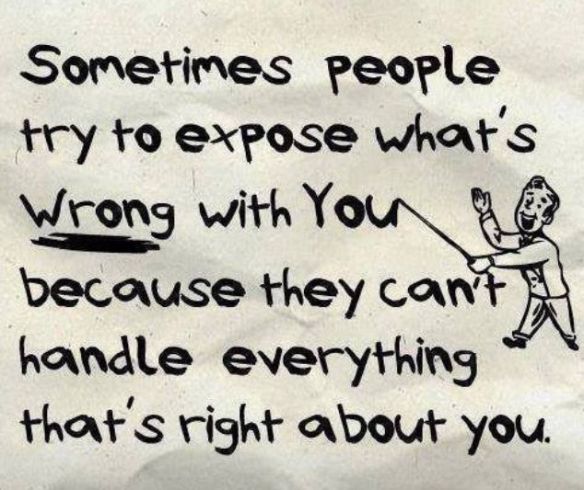
sometimes_people

Narcissists are rude to servicepeople.

rude_people

I want to talk about a little-mentioned red flag, but one of the easiest ones to spot early in a relationship. Most narcissists are rude to servicepeople and others they see as beneath them. My ex was notoriously rude to servicepeople, always screaming at customer service people, even if the problem wasn’t their fault. He was also rude to wait staff in restaurants, to the point it was embarrassing going out to dinner with him. He was unreasonably demanding, condescending, and treated wait staff as if they were mentally deficient. With attractive female wait staff, his rudeness was of a sexual character–he openly flirted with young waitresses, even though I was watching. I think he did this because he knew it would bother me.  He also did it because he knew his target was a sitting duck and might be fired or reprimanded if she objected to the flirtatious behavior (which wasn’t so over the top if could be called sexual harassment).

My parents were always rude to servicepeople too. My mother embarrassed me constantly with her relentless, unreasonable demands in restaurants and loud criticism and insults toward anyone she thought was beneath her, which was almost everyone. I remember the time we went to Charleston, SC in the early ’90s. We took a tour bus through the downtown area. The bus driver gave us information about historical homes in the area as we passed them. My mother was bored, so to relieve her boredom (and to get attention), she began to loudly argue with the bus driver, telling him why he was wrong and to get his facts straight. People stared at her, horrified at how rude she was being. The bus driver looked like he wanted to cry. I wanted to sink through the bus floor. I tried to make myself as inconspicuous as possible to avoid being associated with such a rude, arrogant, person.

Another time, I went to visit her in a motel when she had come to visit. My mother isn’t wealthy (although she always had upper-class pretentions), and could only afford a fairly inexpensive chain motel near the Interstate. A Mexican family was staying next door to her room and as we made our way to the motel pool, the Mexican family came out with their 3 kids. A little boy, probably three or four, started talking to my mother in Spanish, and she shooed him away as if he was a bug. The little boy looked hurt, and I felt sorry for him. I gave the boy’s mother a sheepish, apologetic look. The kids ran past. The little girl accidentally brushed past my mother, and she started making “ugh” sounds and wiping her skirt as if it was contaminated. She didn’t like this family for two reasons: 1. she regarded them as being of low social status, and 2. They were Mexican.

actions

This brings me to racism, which is related, because racists regard “those other people” as being of a lower social status, and sometimes not even quite human. Seeing others as beneath them or even as like animals absolves them of any guilt they might otherwise have in treating another person like dirt.

Racism is common in narcissists. I think most people who are racist probably are narcissistic if not straight up narcissists. Of course, some people are racists because they were raised to be that way, and it is more common in older generations than younger ones. But I think it’s a lot more prevalent in people with a lot of narcissistic traits.

These same people are likely to fawn all over those they see as being “worthy” or of a higher social status (even though they might secretly hate them). Narcissists are snobs, but they are only snobs because they secretly hate themselves and must put other people down to feel better about themselves.

It’s also my opinion that most people who demean the poor and blame them for their poverty, calling them “lazy” or “stupid” or insisting they “chose to be poor” are probably narcissists or at least have a lot of those traits.

racist

If you see any of the following behaviors after meeting someone, run! These are all red flags.

1. Rude, condescending or unnecessarily critical of wait staff or servicepeople. I am not including anger at a serviceperson because they legitimately screwed up or were rude themselves.
2. Calling attention to oneself by loudly arguing with servicepeople, making sure everyone hears.
3. Does not care if they embarrass you. If you tell them to chill or keep things toned down, they are likely to turn their anger on you.
4. Unwarranted personal insults toward servicepeople, including customer service representatives and technical support people.
5. Threatening a serviceperson even though the problem was not their fault. For example, threatening to sue a store clerk for demanding to see ID (which is a required part of their job).
6. Acting like a serviceperson or person of another race or nationality is beneath them and not worthy of respectful, polite behavior.
7. Racist, sexist, or ethnic jokes meant to insult their targets (or call attention to themselves).
8. Insulting someone of lower social status, coexisting with fawning behavior toward someone of higher social status. If an encounter with a higher status person immediately follows one with a lower status person (or vice versa), they will appear to have a Jekyll-Hyde personality. This is common in the workplace. Beware of narcissistic bosses who look down on you because of your lower position in the company. Of course, they will do anything they can to keep you from getting ahead.
9. Openly flirtatious behavior toward servicepeople or wait staff in front of a date or spouse.  This is a double whammy, intended to upset the partner(the behavior is usually subtle enough it can be denied later and the partner told they are being paranoid or imagining things), and intimidate or humiliate the service person (again, it’s likely to be subtle enough that it doesn’t qualify as sexual harassment.)

Why I don’t think it’s wrong to pray for narcissists.

st_paul

Because I have readers of many religions (or none at all), I always hesitate before posting anything too religious or too Christian, but I’m making an exception here because I’ve noticed some ACONs believe it’s sinful to pray for narcissists. But I don’t think that’s true and I always pray for mine.

Whenever anyone tells me I’m wrong to pray for the souls of narcissists, I just use the example of the Apostle Paul. Saul was much worse than just a sinner; the Bible describes a man who seemed to be a high-spectrum, unrepentant malignant narcissist.

Following is an article from CBN.com called “How Saul Became the Apostle Paul.” It’s the fascinating story of a man–an arrogant, narcissistic, murderous Pharisee, who hated Jesus and his followers–whose heart was changed. If someone as malignantly narcissistic, even sociopathic, as Saul/Paul was, could change, why not others too?  We don’t know what God’s intentions are or whose heart he may be working on. No, chances are your narcissist won’t change and you shouldn’t wait around for them to do so or try to “fix” them, but I don’t see any harm in praying for them if you’re so inclined. We are not the judge and jury; only God is.

I still see narcissism and arrogance in Paul even after his miraculous conversion–I have to admit I never cared much for Paul’s personality, which I find abrasive. After all, he was still human and still a sinner. But at least he wasn’t harming others anymore, and had renounced his former life as a Pharisee and devoted himself to spreading the word of God.

How Saul Became The Apostle Paul
By Craig Von Busick, for CBN.com
http://www1.cbn.com/biblestudy/how-saul-became-the-apostle-paul

saul

“The best and the brightest.” It was a phrase used by some journalist to describe the administration of President John F. Kennedy. The same phrase could have been used to describe Saul of Tarsus; a child of the best upbringing; a student of the vaunted teacher, Gamaliel; a Roman citizen; trained in the best Jewish schools; groomed, perhaps, to even become chief priest.

And this pious man was bent on the destruction of the believers in Jesus.

In order to understand Saul of Tarsus it is important that we put him into historical context. Only a few short years had passed from the crucifixion and resurrection of Jesus when a self-righteous religious zealot assisted in the systematic murder of one of Christianity’s earliest messengers, a godly man named Stephen. Luke punctuates Saul’s involvement in this murder with the chilling comment:

“Now Saul was consenting to his death.” (Acts 8:1)

But even before that fateful day when young Saul the Pharisee gloated over the brutal death of the innocent disciple Stephen, the Spirit of Jesus Christ was pricking his heart. God had designs for this bright young man, and in His sovereignty He was prepared to knock Saul off His high horse.

There can be little doubt that Saul was familiar with the Galilean man who was known as Jesus. Though Saul may have been consumed by his study of the Torah and Talmud – the Jewish holy books, there was talk of this back woods preacher and the stir He was creating throughout Israel. Numerous reports were made of so-called messiahs emerging from every corner of the land, so Saul and his classmates undoubtedly debated the authenticity of the reports of Jesus’ miracles.

He may have been one of the unnamed lawyers who confronted Jesus with questions in the Gospel accounts? Saul may have gathered with the other scribes and Pharisees at the river Jordan when John the Baptist declared, “Behold, the Lamb of God who takes away the sin of the world.” Was he outraged to learn that Jesus had cleared the moneychangers and vendors of religious trinkets from the temple while snapping a whip?

It is conceivable that Saul was one of the pious Pharisees trying to console a weeping Mary and Martha at the death of their brother Lazarus. Whether he was physically present when Jesus raised the 3-day dead Lazarus from his rotting rest, it is sure that Saul heard of and pondered this indisputable miracle. This shocking development created such a sensation that the panicked religious leaders ramped up their efforts to arrest and execute the backwater mystic before he brought down the wrath of Rome on their heads.

Saul could have been in attendance at the infamous midnight trial of Jesus before the Sanhedrin. Perhaps he was outside in the courtyard of Caiaphas warming himself next to the fire. Maybe he heard the servant girl accusing a gruff-looking Galilean of being a follower of this Jesus. He may have been amused at the unrefined manner in which this fisherman cursed and raved the third time he was accused.

Though he approved of the barbarous stoning of Stephen, it is entirely possible that Saul’s heart was pricked when he heard him say, “Lord, do not charge them with this sin.”

We don’t know how long the Lord was at work in the heart of Saul, but we know the Holy Spirit was goading him – and Saul was kicking back hard, primarily against the disciples of Jesus. After the death of Stephen, Saul was fanatical about destroying this new sect. Saul launched a holy war against the Church, scattering the believers. He made havoc, entering homes, sending many to prison – even putting some to death. He was beginning to attain the notoriety that he had always craved. If he was going to rise to the level of prestige and power that he believed was his destiny, he would have to prove himself worthy.

When word came that these followers of Jesus had spread into Syria, Saul requested permission to go to Damascus. With great delight the High Priest granted him letters to take to the synagogues of Syria.

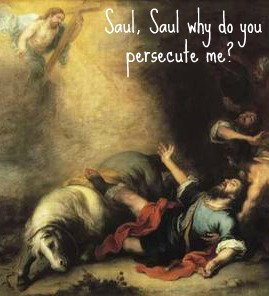
As Saul and his colleagues came near Damascus, suddenly they were flooded with glorious light. It was like looking into the sun from only a yard away. Saul fell to the ground and suddenly a voice emanated from within the light. The voice was both terrifying and soothing at the same time. “Saul, Saul, why are you persecuting me? It is hard for you to kick against the goads.”

Was this an angel? Or worse, could it be a messenger from Satan, trying to distract him from his holy quest? No, if it were the devil he wouldn’t feel this mix of peace and awe. Humbly Saul inquired, “Who are you, Lord?”

“I am Jesus, whom you are persecuting.”

conversion-of-paul

No. It couldn’t be Jesus, the carpenter from Nazareth, the backwoods preacher, the so-called messiah who was put to death by Pontius Pilate? If this was Jesus, that would mean that nearly every great leader in Israel was wrong … so very wrong. How could they have misjudged him? Unless those confusing passages of Scripture concerning a suffering savior could somehow speak of the Messiah?

Saul began to tremble.

How could he have been so wrong? But then he remembered watching the life ebbing from Stephen, and hearing those haunting words, “Lord Jesus, receive my spirit.”

This was the same Jesus that Stephen saw as he peered into heaven. This is the same Jesus that gave strength to so many of Saul’s victims. Saul began shaking uncontrollably. No longer able to bear the intensity of the light, he closed his eyes as tightly as he could.

“This must be the One – the glorious Messiah, promised from ages past.” Saul slowly lifted his head and asked, “Lord, what do you want me to do?”

Jesus replied, “Arise and go into the city…”

Saul obeyed, and in the blindness that resulted from the intense light, he was led into the city. There he was met by a disciple named Ananias, who was sent by Jesus to prophesy, “he is a chosen vessel of Mine to bear My name before Gentiles….” (Acts 9:15, NKJV)

Years later, in obedience to this heavenly vision, and living out his own teaching – “I try to find common ground with everyone, doing everything I can to save some.” (1 Cor. 9:22b, NLT) – this former Pharisee so embraced his calling to minister the Gospel to the Gentiles that he forsook his Jewish name, Saul, and forever adopted the Greek name for which he is remembered … Paul.

Guest post #13: Panic and Narcissism

roller-coaster-2

Don Shelby, who writes the blog Living With Narcissism, and suffers from depression and panic disorder, had a surprise for me today.  I opened up my email and there was his guest post!    He’s been busy and had some personal issues so was unable to send it earlier, and I’d completely forgotten about it, but after I read it I was very glad he remembered to send it because I could relate to it and I think a lot of you will be able to also. Most of us who had narcissistic parents learn to be afraid of everything. It’s why we take so few risks.

From Don’s About page:

I’ve lived with narcissists for most of my life and only recently understood the phenomenon of Narcissistic Personality Disorder and Co Dependency in relationships.  From my humble beginnings being raised by a single Narc mother to several long term relationships with Narc women I have been fully and completely indoctrinated to be a good little obedient co dependent with very low self esteem.  I personally suffer from depression and anxiety/panic disorder.  I currently still live with my narcissistic partner of nearly 20 years and for now intend to continue in this relationship.  This blog is my safe space to openly discuss what goes on in my world around this dynamic and to explore coping mechanisms and ways to heal the co dependency in me.  I am not a mental health professional.  I’m just a victim of narcissistic childhood abuse who’s on a mission to heal my soul and gain back my life once and for all.

Panic and Narcissism 
By Don Shelby, Living With Narcissism

scared-child-2

I had my first full blown panic attack in my mid 20s. Since then, my life has become a quest to understand why I felt so anxious and panicky over situations that I used to not have any fear about whatsoever in my younger years. For a long time, I thought that the panic attacks started then, but now I believe they started at a much younger age and only manifested fully in my 20s when life got too overwhelming.

My mother was a narcissist and she terrorized me and my brother throughout our lives until her death in 1997 in order to manipulate us and get us to do what she wanted. My brother and I flip flopped between being the golden child and the scapegoat depending on which of us was on her good side at the moment. I grew up with uncertainty, no boundaries, and rules that changed with my mother’s moods. I was taught to distrust my own feelings, thoughts and desires and especially of anyone outside of our family unit. I was taught to only trust my mother and to believe everything she told me as if it was written in stone. Whenever I would want to do something that she didn’t want me to do she would try to scare me into not doing it by telling me that I’d end up dead or worse if I did the thing I wanted to do. She’d paint a pretty scary picture for me and then I had to choose whether to take the “risk” and go for it or to take her word for it and not do the thing. I’m not talking about risky behaviors like skydiving or rock climbing here. I’m talking about going to college out of state or going on an amusement ride she didn’t want me to ride or swimming in the ocean. Normal stuff a lot of kids do. Every day stuff. Her justification was always that we’re not like other people and it’s okay for them but not us. Why were we so different? Because my mother said so.

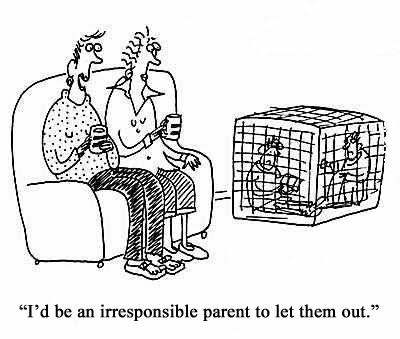
overprotective.parent

So I was raised to be fearful and to only trust my mother. Still, today, when I’m about to embark on something that I perceive as scary or challenging I can hear her voice telling me how crazy I am to try something that foolish and that I’m going to end up dead because of it. I was a fearful kid and I grew into a fearful adult. The real crazy part is that, despite my fear, I still went ahead and did most of the things that my mother warned would kill me. I rode that roller coaster. I swam in that ocean. I went to college out of state. There was a big part of me that didn’t believe her lies. I pushed my luck often and did what I wanted to despite her warnings. But it cost me too. This pushed me into the Scapegoat role constantly with her while she admonished me for disobeying and looked for any sign of failure as a chance to show me how right she was after all. It forced me into a corner where I could never fail because failure would usher in an unwelcome torrent of “I told you so’s”. I could not let her win. And I didn’t. For years I put a ton of pressure on myself to show my mother that she couldn’t keep me from living my life. Zero failure was my mantra. Never show weakness. Always tell her only the positive things going on and hide my vulnerabilities from her.

So all those years of being strong actually broke me down until my nervous system couldn’t handle it anymore and I started experiencing panic attacks over the slightest little thing. I guess there were triggers but I wasn’t aware of them. My own mind became my new battle ground and I didn’t feel safe anywhere. I changed career paths because of it. I stayed in lousy relationships because of it. I lived in places I hated because of it. I didn’t have the confidence in myself to take care of my own needs like I once had. Still, I struggle to lead a happy, normal life. There are a lot of things I simply don’t feel strong enough to do anymore. My nervous system is so sensitive to fear triggers that I can’t handle much stress at all in my life. I’m a shell of the person I used to be and I feel like an old warrior, battered but not broken from my experiences in life. My mother waged mental warfare in my youth and other women have continued her battles as I’ve been attracted to a lot of narcissistic type people over the years.

The silver lining is that with understanding narcissism and the effects of C-PTSD I now know what caused my panic attacks to start and why my life has been challenging in ways that most of my friends were not. I can’t go back and change the past but I can take what I’ve learned into my future and make it better. Sure, I still struggle with anxiety and panic, but with understanding has come some tools to help me persevere through my triggers and symptoms. I know the value of setting boundaries and having self respect and listening to my inner voice above others. I remind myself daily what I knew when I was five. My mother was wrong. I’m not crazy and I’m not going to die on that roller coaster.

Weekends.

Image

It-is-the-weekend-meme

Gone forever.

wrecking_ball

In the late ’70’s, for about one year, I lived in a group residence for troubled teenagers or teenagers who could not live at home for a variety of reasons.  The building it was housed in was an architectural standout even if it didn’t date very well, and won a couple of awards for architecture in its time.  (I’d post a photo because there is one on Google images, but I don’t want to give away too much information so I won’t do it).

One of my weird geeky hobbies is taking “virtual road trips” using Google maps.  I decided to “visit” the old ‘hood, and the address  typed in took me to a building I have never seen before.   I thought I made a mistake, but nope, the address was the right one.  I did some further sleuthing and found out the building was demolished in 2003 because the enterprise that bought out the address didn’t think the building suited their needs.   The residence center closed shortly before the demolition.  I had no idea this happened until about an hour ago.    I was gobsmacked by how grief stricken I felt–over a building I lived in for one year in the late 1970’s that has been gone for 13 years.   I actually had some great memories of that place and felt that it helped me.  I had a great counselor there.  I fell head over heels in love with a boy who lived there the same time I did.   We were both kicked out and sent back home because of “PC” (physical contact) on the premises.  I found out several years back that he died sometime in the late ’90s.  Life marches on, things change, or even disappear, and then they are forgotten.     Life is full of fleeting moments like that.  Someday in the not too distant future, even my memories will be lost.

New share buttons.

whatsapp-telegram-skype-icons

I noticed WordPress has made three new share buttons available: Skype, Telegram, and WhatsApp (which I have never heard of).   I added the Skype and Telegram buttons.  I wonder why there isn’t an option for Instagram, with it being as popular as it is right now.