Will I ever stop blogging about narcissism?

end_of_the_road

So far, I’ve been blogging about narcissism for 5 months, and I haven’t run out of things to say about it. I’m still writing and reading as much as I can about it, because doing so helps me to deal with my past and the MNs who tried to destroy me. I feel like this topic still has many more nooks and crannies for me to explore before I say enough’s enough.

But there will probably come a time when I either feel ready to move on in my life and focus on other things besides a devastating mental disorder, or simply can’t think of anything new to say about it. At that point I will need to make a decision: do I keep this blog going and move the focus from narcissism onto something else, or do I rehash old ideas I haven’t brought up in a while because of the continuing need for our voices to be heard and for our presence to be felt on the web?

Fivehundredpoundpeep wrote a post talking about the disappearance of blogs by ACONs. Many of the most well known blogs by ACONs went inactive years ago. She says that, according to Mother Jones, blogs in general are losing popularity due to social media (especially Facebook) taking over everything. I certainly hope she is wrong about that! Social media mainly sucks, in my humble opinion. I won’t get into my rant about THAT right now. My anti-Facebook listicle came close enough.

Peep speculates that after a while, survivors of narcissistic abuse simply run out of steam or new ideas, and also that as they get stronger, they may not have a need to blog about narcissism anymore. One of the most well-known and beloved narc bloggers, Anna Valerious of Narcissists Suck, hadn’t posted anything since 2012, but reappeared and wrote a post on December 30th explaining that she abandoned her blog because it was time to start focusing on the positive instead of spending so much time exploring such a negative, dark thing as NPD. She had also run out of things to say about it.

That’s why I post about other topics as well as narcissism. I have many followers who aren’t ACONs and don’t care that much about narcissism–they are following this blog for other reasons. My posts are somewhat eclectic; I’m estimating only about 75%-80% of them are related to narcissism. That’s still a lot, but leaves my options open if I decide at some point to shift my focus to another topic.

If I blogged 100% about narcissism, my followers wouldn’t like it if I suddenly decided to start blogging about music or backyard chickening or antique salt and pepper shakers. But because I already post about just about anything that concerns me or interests me, I could switch focus without too much of an upheaval, especially if this becomes a general purpose blog (that has no focus other than being a running commentary on whatever topic is on my mind at the moment).

But for now, my focus is still on narcissism (and to a lesser extent, being Aspie). I feel like it’s a necessary service. We need a voice, and other victims need to know they are not alone, that there is a whole community of us out there on the web, boldly and bravely speaking out and gaining courage and self esteem as we do so.

So while things may eventually change, I think it will still be quite a while before I abandon narcissism as this blog’s primary focus.

I don’t wanna join your circus.

Image

monkeys

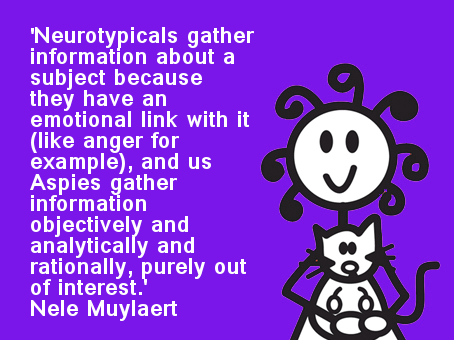
Aspies rule the Internet!

aspie_quote

My fellow ACON blogger Fivehundredpoundpeep, posted this the other day.

From the girl with curly hair…
Aspies are knowledge junkies. We can become Internet addicts because the Internet is like crack for us. I study many things for the fun of it. You all see what I write on this blog but this week, I read about True Crimes in my state, Indian nations in America and Outsider Art.

There was never anything truer than this. In my many years of prowling and posting on the Internet, Aspies do seem more numerous than they do IRL. On a forum I used to be active on, Aspies seemed almost proud to say they were Aspie, as if it’s an advantage on the Internet instead of a liability. But guess what. It just may be!

We do tend to become obsessed with one or two topics at a time and focus intensely on them to the point others sometimes think we are weird (the extreme form of this is the idiot savant phenomenon seen in low functioning people with autism). That’s why I blog! Because if I just talked about the stuff I talk about here IRL as much as I do on my blog, people would be backing away slowly and locking their doors and windows against the crazy woman on the loose.

We read a lot and gain a very deep knowledge of what interests us. We read anything we can about our obsessions until we’re sated or the next obsession takes over. We have good memories and retain new information well. These traits can give us some credibility in whatever topic we focus on in our blogs. I think that’s a good thing. Our obsessing over topics and spending so much time researching and reading about the minutiae of that focused interest may seem strange to neurotypicals, but it’s hurting no one, so why is it a problem?

The Internet is the perfect modality for most people with Aspergers. It allows us to have a platform to talk about our obsessions instead of having to engage in shallow conversation or small talk (which I hate and am very bad at). It even allows us to start a conversation about our pet topic and the metaphysical, meaningful aspects of that topic. People can think we are weird or insane, but we don’t have to deal with those judgmental NT’s face to face. There are plenty more people online who actually like what we have to say and listen to us.

We also have time to think about and refine what we want to say. We’re not required to “think on our feet,” something which is very difficult for Aspies. We don’t have to have a witty comeback for a joke or know exactly the right or appropriate thing to say when confronted by something.

Because our problem isn’t really that we lack social skills. I think for most of us, the problem is that we need time to process an interaction, and you can’t do that in real life social situations. Writing is just as valid a form of social interaction as speaking, and it’s a modality most of us are much better at and even find we can excell at.

The Internet can make us feel more confident. It’s the one thing Aspies have going in their favor that we never had prior to the late 1990s. There’s also more general knowledge about Aspergers and it’s now acknowledged even adults can suffer from it. In the past, Aspergers wasn’t even recognized as a high functioning form of autism. We were just the geeks and dorks and socially awkward outcasts and obsessive crazies of the world. When people used to think of autism, they thought of people so impaired and disconnected from the world they had to live in institutions and have all their needs met by caregivers. They didn’t think of socially awkward geeks and obsessives like me.

Now they do, and it’s because the Internet has given us Aspies a place to talk, to meet others like ourselves, to make friends, to vent and rant, and to protest against the prejudices neurotypicals have against us. We are really more a minority group like LGBT than we are “mentally ill.” (Homosexuality used to be considered a mental illness too–it was finally removed from the DSM in 1973).

The Aspie rights movement thinks of Aspieness as a variation rather than a disorder. We’re only “disabled” because our society isn’t set up to be adaptive to our needs. We are forced to adapt to theirs, and it ain’t easy! The Internet gives us a voice.

Grandiose and “vulnerable” narcissists: how do they differ?

beggar_king
Both the beggar and the king could be narcissists with a different M.O.

An interesting article in Psychology Today explains the difference between grandiose (invulnerable) narcissists, and “vulnerable” narcissists. Either can be somatic or cerebral, and either can also be malignant or non-malignant.

The two kinds of narcissists can seem very different on the surface:

Grandiose narcissists can seem emotionally cold, convinced of their achievements or success, and rarely if ever talk about their fears or their problems. They can be very quick to judge others though. On the surface they seem strong and tough. You won’t see them show emotions other than rage or pride, and if they are ever sad or fearful, you will never see that side of them. Like all narcissists, they are never happy,but they can “act” happy if they need to. And like all narcissists, they are incapable of love but may be able to put on a show of “falling in love” to obtain a new source of narcissistic supply.

Grandiose narcissists are the CEOs, politicians, narcissistic celebrities and others who have achieved a high level of success. Those who haven’t achieved success will stop at nothing to rise to the top, even if it means destroying their competition in the process. They are ruthless predators. Our current society glorifies the traits of the grandiose narcissist and doesn’t seem to bemoan what they don’t have: the ability to show emotion and feel love or empathy. Grandiose narcissists don’t care what others think of them.

Vulnerable narcissists, rather than brag about their achievements and never showing their feelings, are given to bouts of self pity, and use emotions (like crying, whining, demanding, or sulking) to manipulate others into giving them what they want. They are less likely to be materially successful, and may be dependent on others for their survival. In fact, they may seem to take a kind of perverse pride in their failures and hard luck. Vulnerable narcissists are the emotional and financial vampires who will suck your funds dry and constantly demand attention and comfort for their many problems. They are high-maintenance “drama queens.” They seem to have no self esteem. They will wear down their sources of supply with their constant demands and mind games. Both types of narcissists will shamelessly manipulate others to have their way.

…narcissists feel emotions like vulnerability, sadness, empathy and compassion in a shallow way, if at all, and cover them up with rage, blame, manipulation and disdain for others. This coping mechanism has a heavy price: they don’t feel secure enough to relax and really feel happiness and joy, although they may have fleeting moments of those emotions.

Vulnerable narcissists tend to swing back and forth between acting superior and feeling hurt; may become self-destructive when their vulnerabilities are pointed out; they may accuse their spouse or significant other of having affairs and being unfaithful, and may resort to spying on their partner or constantly asking for reassurance. They also have a pattern of looking for the “perfect mate” and then demand constant reassurance they are loved and valued.

Grandiose narcissists have much in common with people with Antisocial Personality Disorder; while vulnerable narcissists have more in common with people who have Borderline Personality Disorder. Both of these disorders, along with NPD and Histrionic Personality Disorder, comprise the Cluster B (dramatic) personality disorders in the Diagnostic and Statistical Manual of Mental Disorders (DSM). It can be very difficult to distinguish those who have NPD from those suffering from one of the other two disorders.

Grandiose narcissists were more likely to have been spoiled as children and treated like a little king or queen by their families; vulnerable narcissists are much more likely to have been abused or neglected as children.

But both types are still narcissists, so they still have many things in common under the surface, especially their sense of entitlement, lack of empathy and inability to feel joy.

According to the Psychology Today article, the main difference between vulnerable narcissists and and invulnerable narcissists is in the way they feel:

With their fragile self-esteem, vulnerable narcissists experience helplessness, anxiety, and depression when people don’t treat them as they desire.

They feel shamed and humiliated by negative feedback or when others challenge their superior self-image. They also experience anxiousness, bitterness, dissatisfaction, and disempowerment.

They suffer from many BPD-like emotions, like feelings of emptiness and inadequacy. Others find them sensitive and emotional; preoccupied with fears of rejection and abandonment. They are touchy, quick to be offended, and easily provoked.

A vulnerable narcissist may seem “nice” at first, but their constant demands will wear you out and they will never ask you how your day was or how you feel. They don’t care. Vulnerable narcissists may seem sensitive but they are only sensitive about themselves and how others feel about them; they are oblivious (or just don’t care) if you are suffering or have been hurt or need to talk. They are unable to give love in return for the love they demand. They cannot feel joy or ever appreciate anything. They are vampires who will keep taking until you have nothing left to give–or leave.

Earlier I said both types of narcissists can be somatic or cerebral. My guess is that women, who are more likely to be somatic narcissists, are also more likely to be the “vulnerable” type of narcissist. Acting needy and helpless are traits that are still found more socially acceptable in females than in males. That being said, I’ve known several males of the vulnerable type and some of them are cerebrals. My ex-husband is a great example of a “vulnerable” cerebral narcissist.

I also think it’s possible to be both types at once, swinging back and forth between acting invulnerable/grandiose and vulnerable/helpless. Their dramatic mood swings would probably make this hybrid type of narcissist easily misdiagnosed as suffering from the manic-depressive form of Bipolar Disorder.

A narcissist can also be vulnerable in one area of their life and grandiose in another. The high achieving company president who never seems ruffled and terrifies his underlings may go home to his wife and demand attention and sympathy from her, and sulk or whine if he doesn’t get it. The snobbish, perfectly groomed and physically fit trophy wife may fall apart and act helpless and needy if forced to look for a job.

Research study on parental narcissism needs participants!

narcissistic-mothers-sm

IMPORTANT OPPORTUNITY FOR ACONS/POSSIBLE CASH PRIZE!

Dr. Jennifer Monahan and Ph.D Candidate Valerie Berenice Coles of The University of Georgia’s Department of Communication Studies is conducting a survey about parental narcissism. All ACONs (Adult Children of Narcissists) are eligible to participate in the survey.

If you participate, you will partake in questionnaire that asks about your parent’s communication style and some items that measure personality characteristics of your parent or legal guardian that they identify as a narcissist and themselves. The aim is to examine how parental communication impacts individuals once they become adults. There is presently no published scale that measures parental narcissism behaviors from the perspective of the adult child, and very little research in general.

Anyone over the age of 18 who identifies as an ACON is eligible for this study, it does not matter where you live in the world, your gender, or whether English is your first-language.

Here’s what’s in it for you (besides helping in an important and needed study).
You may enter a drawing for one of ten $100 gift cards for participating. You will only be asked for about 30 minutes of your time, possibly only 20 minutes. I have been assured that all information will be confidential, names and other identifying markers (e.g., IP addresses) will not be linked to the questionnaire you complete.

Participants who are interested in the drawing should enter an email address into the drawing. Only those who win the drawing will be asked to provide their name and address so the gift card can be mailed to them. Drawings for a $100 gift card will occur one week after the last enrolled participant has had the opportunity to complete the survey.

The survey link is here: https://ugeorgia.qualtrics.com/jfe/form/SV_bpUcPJ3CkaLjOPb

Poetry by Sam Vaknin #2

dark_night_soul
I can’t get enough of Sam’s poetry. It takes me to a dark and desolate place, but it also draws me in. I can’t read too much of it at a time. When it comes to Vaknin, tiny nibbles are better for you than large gulps.

Cutting to Existence

In the Concentration Camp called Home

Prowling

When You Wake the Morning

Selfdream

A Hundred Children

Snowflake Haiku

Getting Old

There’s more of his poetry here: http://samvak.tripod.com/contents.html

4 music videos my son made

Time for a little shameless bragging.

My 23 year old son is an aspiring filmmaker (he also has a music review channel, Radio Recall) and has quite a few music videos on his channel, iBolt07 at Youtube.com. I meant to post these earlier, but never got around to it.

In the first one (his most recent, made in December) there’s footage of his 2nd place (novice) performance in the fursuit dance competition at Midwest Furfest in Chicago, Illinois. (Here is my post about that). He says it’s much easier to dance without a fursuit. I wonder why that doesn’t surprise me. Since his second place finish, he’s been asked to join a dance troupe that travels in the Florida area, and they dance out of costume.

There was also a gas leak at the Hyatt where they were staying outside Chicago that forced attendees to evacuate for hours and 17 people were hospitalized. It may have been a hate crime. Fortunately there were no casualties.

I don’t have any problems with my son being a furry. I’ve done a lot of research on this, and there are a lot of unfortunate misunderstandings surrounding the fur fandom. It’s really more akin to someone who attends Star Trek conventions than a sexual perversion and there are more geeks at these things than at a science fair. A lot of furries seem to have professions in one of the sciences or are computer nerds. There are also lots of female furries, which surprised me. I wrote an article back in September (which is still one of my most popular) about why it doesn’t bother me that my son is a furry.

I just Googled “my son is furry,” and that article is so popular it’s now at the top of Page 1 on Google! That wasn’t always the case. When I wrote it it was on page 8 or 9, and a month ago it was at the top of the 3rd page or bottom of the second. It’s continuing to get a lot of views so it’s moved to the top. (For some reason my Merrimints article is picking up some momentum too. I think a food site found it. It’s also getting a lot of shares on Pinterest.)

Here are two of his fur convention music videos.


He can be seen dancing out of costume at 2:20 and part of his performance is at about 2:40.

He also makes non-furry music videos. Here are two of them:


He acts in this video too, and does the lipsynching. This is a few years old, from 2010 or 2011.


I love this!

Happy otter

I love watching otter videos (hence my name). You can’t watch one without smiling. This one (an Asian small clawed otter named Oscar) is one of the cutest I’ve ever seen.

Tragically, this pet otter (the owner lives in Bali, where it’s legal to keep them as pets) was deliberately poisoned by a neighbor shortly after this video was made. I just can’t understand how some people can be so cruel to a helpless animal.

It looks like Oscar had a good life though.

I love the song too.

Pinecones.

pine-cones

I am seeing pinecones everywhere. I love stepping on them and hearing that satisfying crunch under my feet. Stepping on pinecones is a great stress reliever, and at the same time it helps them release their seeds.

If that sounds crazy, try it. You’ll instantly feel better. I’m serious. It’s almost as good as bubble wrap.

Movies that portray NPD

I found this on Out of the Fog, an excellent resource that covers every personality disorder recognized by the DSM and several other mental disorders as well.

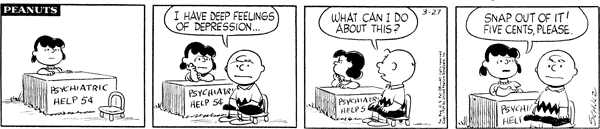
It never occurred to me Lucy from Peanuts is a narcissist but now that I think of it, she displays every trait of NPD, and Charlie Brown is her biggest victim.

Movies Portraying Narcissistic Personality Disorder Traits

A Streetcar Named Desire – A Streetcar Named Desire is a is a 1947 play written by Tennessee Williams, later adapted for film, which tells the story of a woman who displays histrionic and borderline traits, who goes to live with her codependent sister and her narcissistic husband.

Streetcar_original

Black Swan – Black Swan is a 2010 psychological thriller about a ballet dancer, played by Natalie Portman, who discovers a dark side to herself as she struggles to please her overbearing narcissitic mother, played by Barbara Hershey.

black_swan

Charlie Brown – Charlie Brown is the lead character in Charles M. Schulz’s classic “Peanuts” cartoons who is generally portrayed as feeling insecure and seeking acceptance. Charlie Brown’s character contrasts with the somewhat narcissistic character of Lucy and their relationship is sometimes used to illustrate the relationship between personality-disordered and non-personality-disordered people.

lucy_peanuts
Click to enlarge.

lucy_football
Click to enlarge.

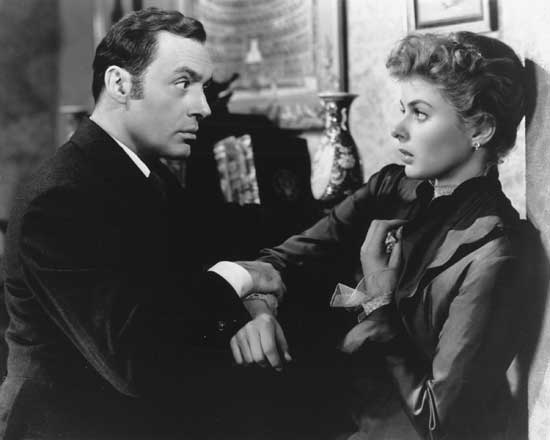
Gaslight – Gaslight is a 1944 MGM suspense thriller set in 19th Century London in which the villain, Gregory Anton (Charles Boyer), in an attempt to cover up his crimes, actively tries to convince his new wife, Paula (Ingrid Bergman) that she is losing her mind. Gaslight gave it’s name to the practice known as Gaslighting.

Gaslight-2

Mommie Dearest – Mommie Dearest is a 1981 biography of Hollywood Actress Joan Crawford, played by Faye Dunaway, who, according to the account in the movie, exhibited Obsessive Compulsive, Borderline and Narcissistic Traits.

mommie_dearest

Schindler’s List – Schindler’s List is a 1993 drama which chronicles the suffering of Jews in Nazi-occupied Poland during World War II and Oskar Schindler, a German businessman who rescued over a thousand of them by employing them in his factories. The movie includes a striking portrayal of Amon Göth, a narcissistic SS officer and camp director, played by Ralph Fiennes.

schindlers_list

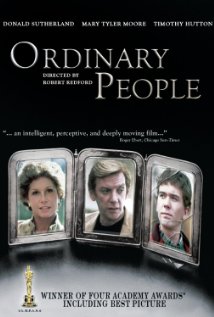
These are just a few examples. There are many others. One that comes immediately to mind is the movie Ordinary People portrays a malignant narcissist in Mary Tyler Moore’s chillingly cold mother, Beth Jarrett. Her son Conrad suffers from severe PTSD and his mother’s coldness and thinly veiled hatred just serves to make things even worse for him.

ordinary_people