So apparently God accepted my deal… (Part Two of Two)

stainedglass

As far as Catholic mysticism goes, I never had a problem with it and don’t now. In fact, I always liked the idea of Mary and the saints, not for any theological reason, but simply because sometimes the saints and Mary are just easier for the average person to relate to. According to Catholic theology, in no way does Mary or the saints replace Jesus and God. They are venerated and honored, not worshipped. They act as intercessors and do not answer prayers themselves, but pray on behalf of the person who is addressing them and those prayers are offered to God. Of course, belief in Mary and the saints is not a requirement for Catholics, but is encouraged. Mary is particularly venerated because, as the woman chosen by God to give birth to the human incarnation of Himself (Jesus), she is held in high esteem by God and deserves such honor. I happen to agree with this. I always thought Mary was sort of cool, actually. As far as her physical assumption into Heaven, I have some problems with that, but it’s a minor point and I’m willing to let it go. Again, this doctrine is not a requirement to be a Catholic.

Although unscientific, I really like the idea of transubstantiation (the literal transformation of the bread and wine into the body and blood of Jesus Christ during Communion). Suspending scientific disbelief at the climax of the Catholic mass, Communion (which is considered a sacrament, not merely a symbolic ritual) becomes something very special and mysterious and seems an appropriate way to end such a solemn event as the Mass. I also like the “Peace be with you” ritual, where just before communion, parishioners turn to one another and offer this sentiment. If only this sentiment were more often followed in daily life! Throughout my life, I always felt a sense of great peace during this and the Communion rituals, something I never felt at any Protestant service.

In the Catholic faith, while we are saved by grace and Christ’s sacrifice for us on the cross, grace ALONE is not enough. Protestantism in part arose from Martin Luther’s idea that grace alone was enough to satisfy God, and works were not important. But works are very important. While works won’t give you salvation, they are important as a means to practice and use the grace Jesus gave us when he died on the cross. In evangelical Protestantism, you can be a murderer or a selfish, immoral person in life but will still get to heaven if you accept Jesus as your personal savior. There’s something wrong with that picture and it just seems very lazy to me. They get to have their cake and eat it too: say a few words in the “sinner’s prayer,” but not be required to show anything for it (although according to most evangelicals, accepting Jesus will change your heart so you won’t want to do bad things–of course this doesn’t always seem to play out in reality!).

I also found out that Catholics do NOT condemn other Christians (or even non-Christians who do good works in life) to eternal torment. (This is a sea change from what I understood the Vatican taught when I was in grammar school.) It seems the Vatican has changed their stance on this issue, and they now accept that ALL Christians who accept Jesus as their divine Savior will go to Heaven, regardless of denomination. (It’s okay to be Protestant!) Denomination is regarded as personal preference. It’s tragic how much bloodshed and misery has resulted between groups of Christians who couldn’t agree on the extraneous details of their religion, Catholics in the past having been one of the biggest perpretators (which the Church readily admits). Even if you’re not a Christian but are a good and moral person, you will not necessarily go to hell (although the greatest glories of Heaven may be barred to you). Hell itself is something Catholics can’t seem to agree on, and while some interpret it as a literal lake of fire, others do not (hell being merely a spiritual state of separation from God). However, there does seem to be a consensus that if you are a terrible person who spends most of your life deliberately hurting others, you will probably go to hell. And of course, there is also Purgatory, which is kind of a way station on the way to Heaven, for those who have been saved, but whose works don’t measure up. Purgatory has been one of the biggest bones of contention between Catholics and Protestants, but it makes sense to me, and it’s purpose has been misunderstood by many as one of temporary punishment rather than spiritual cleansing. According to fundamentalist Protestants, you are going to heaven or hell, with nothing in between. I just could never get on board with that because people aren’t all good or all bad. There are many shades of gray in between. In a nutshell, all that’s required to get to heaven is a belief that Jesus was born, lived and died on the cross to save us from our sins–something that evangelical Protestants also believe. All the other stuff (belief in the Bible as a literal document rather than allegory, evolution [divinely inspired] vs. creationism, veneration of Mary and the saints, participation in the sacraments, etc.) is basically window dressing that helps Catholics in their faith and their journey with God.

mary

Getting back to my own journey these past few days, the thing that happened that made me realize that maybe God had seen my post and was taking me up on my challenge to Him, was that suddenly I understood the concept of the Trinity in a personal way. In the past, I never could wrap my mind around how God could be three persons in one, no matter how hard I tried or how many Bible verses born-agains tried to make me read. Out of the blue, it all made perfect sense. There is God the Father (the one who created the universe), God the Son (God presented himself in human form because that was the only way we could truly understand each other and because only God in human form could deliver us from sin) and the Holy Spirit (which is basically what you feel when a hymn, sermon or religious work of art makes you teary eyed or overcome with awe–I also think the holy spirit can get through via ANY transformative experience, be it a work of art or piece of music, nature, encounter, etc.). I know I’m not explaining my revelation very well, but I could see how this concept does not negate science or logic. It was also very comforting. After reading the personal stories of conversion on WhyImCatholic.com and explanation of Catholic theology on Catholic.com, I realized that perhaps I could be “saved” after all–as a Roman Catholic.

Why Catholic? After all, there are a few mainstream Protestant faiths that don’t preach about hell and Satan, and are more “liberal” than Catholicism and may be in keeping with a progressive worldview like mine, but honestly I always found those churches to be kind of wishy-washy, as if they were cherry-picking what they liked from traditional Christianity and chucking the rest. Their theology seems like a sort of copout, a man-made compromise that has nothing to do with God. I don’t get that feeling about the Catholic church, even though they have updated many of their traditional doctrines for modern times.

It also holds a great deal of weight for me that the Catholic church was the first organized Christian religion, and all other Christian faiths emerged or split off from that. In spite of their bloody history and many transgressions, I felt Catholicism as it stands today could be something I could accept with both my mind and heart. That being said, I do need to point out that I don’t agree with all Catholic doctrine and there are several problems I have with the Catholic church:

–Their highly heirarchical structure. While I realize this is due to tradition and is perhaps the only way to organize and administer such a huge worldwide religion, I need to find out if talking to God directly is really not a possibility, and a priest must always be a mediator between myself and the Divine.

–Their stance on abortion and contraception. While neither affects me directly (I’m no longer of childbearing age) and as I already said, their rationale does make a type of sense, it’s hard for a liberal, politically progressive woman to accept such strictures on women’s reproductive rights.

–I need to find out more about their stance on homosexuality. While the current Pope (who is pretty cool) does not condemn homosexuality and thinks too much emphasis has been put on the entire issue by evangelical Christians, it’s my understanding it’s still not acceptable according to the tenets of the Church. As a mother of a gay son, this is important for me to find out.

–Celibacy of the clergy. While on a theoretical level this actually makes a type of sense (clergy who are not married or don’t have the option to be involved in a sexual relationship are less likely to be distracted by those things and can turn their energies into a closer relationship to God), on a practical level it doesn’t seem to work: witness the recent publicization of sexual abuse cases perpetrated by Catholic clergy–it may be unrealistic to expect a human being, regardless of how pious they are, to completely divorce himself from his sexual urges and the Church’s refusal to acknowledge these physical needs may result in inappropriate sexual behavior to “whatever or whoever” is available.

–Women in the priesthood. A no brainer. Women should be allowed in the priesthood, period.

There are other problems as well, but these are the ones that bother me the most. All that being said, overall I feel that I may have finally found a spiritual “home” that works best for me–one that’s been staring me in the face my entire life but I always dismissed for one reason or another. There are a lot of negative stereotypes about Roman Catholicism and some of them are deserved, but to my surprise I realized that most are not. There are a lot of misconceptions. The Catholic church may be one of the most misunderstood religions, but it says something that it’s been around so long and continues to have so many adherents all over the world. I’ll have to dig a little deeper and make sure this is really something I’m willing and ready to embrace. Tomorrow I plan to attend Mass and talk to a priest about upcoming RCIA classes.

worldisabook

I’m completely blown away by everything that’s happened since I made that deal with God, and feel like he really is trying to get through to me. I haven’t accepted Christ yet, but I think maybe I could. One thing I have no doubt about is that God really does work in strange and mysterious ways. I’m on the quest of my life.

So apparently God accepted my deal…(Part One of Two)

outofthedarkness

For the past couple of days, I haven’t posted anything, mostly because something has happened I’ve been burning to write about, but am reluctant to because I’m afraid of what my atheist and agnostic followers will think (my feelings get hurt easily LOL). I know that’s silly, but if I don’t write about this I feel like I might explode. And I want to keep this blog active. I dearly hope my atheist and agnostic followers can keep an open mind and realize that this is something personal that has happened to ME, and in no way affects anyone else or my views about other faiths including agnosticism and atheism. I have a deep respect for all belief systems (including the right not to have one at all) and atheists and agnostics do make a lot of rational sense and I can understand why they feel the way they do about God and religion. Hell, I more or less felt that way myself until just a couple of days ago, and I don’t see myself as a person who would ever shut my mind off from their all too often very valid viewpoints.

But still. I have to blog about this, so here goes.

When I wrote my post, “I made a little deal with God,” I really didn’t expect anything to come out of it, other than a lively discussion about God and religion, which is what happened and I am grateful to all those who participated, no matter whether they’re Christians, pagans, atheists, or anything else. So after I wrote that post, I put it in the back of my mind and moved on to other things. After a couple of days, I concluded that because nothing dramatic had happened and there was no Saul-to-Paul-like “miracle” or sudden, earth-shattering change of heart, that perhaps the atheists were right and there was no God at all, that He was just a comforting construct invented by humans to deal with the stresses and injustices in our lives. Perhaps Napoleon was onto something when he said, “religion is what keeps the poor from murdering the rich.”

But in spite of all that, I’ve always been a spiritual seeker and was never satisfied with the atheistic idea that we are just a random bunch of cells that happened to glom together and gradually shape-shift into our current form. I’ve always believed there was something more, much more, but never found a religion I was happy with. Apparently God saw my post and decided to take me up on my challenge. Because two days ago while browsing the web, I came across a Catholic website, called WhyImCatholic, which is basically a bunch of testimonials from people who converted to Catholicism from other faiths, ranging from born-again (Protestant) Christianity to hardcore atheism. I have no idea how I found this website or what I was looking for, but the subject matter was interesting so I started reading some of the testimonials. Why would anyone become a Catholic, of all things? So I started to read and I couldn’t stop reading. I found that, unlike the many born-again Christians who had tried and tried without avail to explain their faith to me, these stories ACTUALLY MADE SENSE! Imagine that.

More about that later, but let me give you a little background on my relationship with Catholicism. While I’m not Catholic myself, I was raised in northern New Jersey, where Catholics were as common as toadstools after a rainstorm. Almost all my neighbors were Catholic (with a sprinkling of Jews and atheists) and I was sent to Catholic schools (the one thing I’m really grateful to my parents for, due to the superior education Catholic schools usually provide) for most of my childhood. As a child, I remember envying my Catholic friends, because of all the cool stuff and rituals their Church had–such as rosary beads, incense, a new name they got at their confirmation, and statues and painting of Mary and the saints. The Methodist church my family sometimes went to (we were really an agnostic family, and while I was sent to Sunday school and was baptized by my paternal grandfather, who was a Methodist minister, my parents were never churchgoers) didn’t have any of those awesome tangibles and there was no “mystery” to Methodism (or any other Protestant church I ever attended) like there was at the Catholic masses I had the privilege to attend with my friends or at school. As I got older, and learned more about what Catholics actually believed, I found I didn’t agree with their doctrine and also had a number of problems with their stance on abortion, homosexuality, women in the clergy, the celibacy of the priesthood, etc. But despite my issues with their beliefs, and even with my ambivalence about God and Jesus, my attraction to the Catholic mass did not wane. From time to time throughout my adulthood, I’ve attended Catholic services, just because I like the ritual and the formality of the liturgy, the chanting and the hymns. There’s a lot to be said on an aesthetic level about Catholicism, but I never really embraced what they believed and in fact now realize I had closed my mind off to a lot and had developed a lot of preconceived notions (some which are simply not true).

In 2003 I attended a 5-day retreat sponsored by a local Catholic church that also happened to be extremely progressive on many issues. It was an amazing experience (and a lot of fun), and I was surprised that one of its leaders, a Cherokee Indian named Owl, was not even a Catholic. He taught us about Cherokee symbology and mysticism and we spent one golden August afternoon making stone carvings of a “totem animal” we had chosen to represent ourselves. This was Catholicism? It was all so New Age, even Pagan. Of course this was all balanced by a morning Mass, Bible readings and very personal and deep group discussions about spirituality and God. There were other non-Catholics attending the retreat, including another agnostic, two Protestants and a Jew. There was nothing about that retreat to offend the sensibilities of an agnostic like myself, and so I decided to take their RCIA classes (the classes you are required to take to become a Catholic). But in my current spiritual state and embroiled in an impending divorce, I quickly lost interest once the discussions in the classes became too Biblical and religious. I explained to Father Bill (the priest running the classes) that I’d learned a lot but I didn’t think I was ready. He was very understanding and told me he understood and to take my time finding my path. And so I moved on, chalking up this experience to one more thing I’d undertaken but eventually abandoned (my track record for sticking with anything to the end is embarrassing). Other than attending one Midnight Mass about 5 years ago, I never thought about Catholicism again until a few days ago.

So anyway. I was reading the above-mentioned website, and was riveted by the stories of people, many much like myself–intelligent, thoughtful, educated, forward-thinking people who were ambivalent or even opposed to the idea of religion and submission to God and Jesus–who had decided through various means that the Catholic Church was right for them. I found a link on that site to another website that explained Catholic theology in exhausting detail and is set up in encyclopedic form, so that you can type in anything you want to know about in the search bar, and get all the information you need about the Catholic stance on that topic. Sometimes there was just too much to read! But what surprised and shocked me more than anything is all the misunderstandings and preconceived notions I had about the Catholic church. It came as quite a shock to find I agreed with most of their views, or at least wasn’t particularly offended by them when I didn’t agree. For example, while abortion and artificial contraception is still unacceptable, unlike fundamentalists, who preach about sin and what the Bible says/doesn’t say on these issues, the Catholic stance on these things actually made rational sense! Imagine that. I won’t get into their stance on those things here, as it’s not my desire to convert anyone, but suffice to say that there is nothing about their reasoning that offends my rational mind. I’m not saying I agree with them on these things (I don’t), but simply that their stance does not offend me. Nor does it judge opposing viewpoints in the harsh way that fundamentalist Christianity does. Granted, there are a few Catholics who are also very harsh and judgmental (and a few in politics), but they are almost always evangelical Catholics, who are not really any different from other evangelical Christians. There are extremes in any religion. It also holds a great deal of weight for me that Catholics are opposed to killing in general (in spite of their bloody past, which they have publicly apologized for), and while against abortion (for sound reasons to my way of thinking), they are also against the death penalty.

Some of the explanations the site offered seemed to be a perfect reconcilation between spirituality and science. They spoke to ME. For example, their stance on evolution is one that I’ve held myself for a very long time: that evolution is most likely a fact, proved by science (as well as the 3.5 billion year timeframe for the age of the earth), but was divinely inspired by a higher intelligence we call God. Now, they don’t actually take an official stance on this, and there are some Catholics who do buy the Creation story in the Bible, but Catholic theology doesn’t dispute evolution and it is acceptable to believe in it, as long as God is given credit for being behind it all. As for Adam and Eve, you have the choice to think of them as a literal couple in the Bible, or a figurative story about early civilized humans falling from grace. They acknowledge that while humans have probably been around for several million years, and evolved from ape-like ancestors, that shortly after we became sentient, and developed the capacity for self-awareness and the idea there was something greater overseeing things (which happened about 10,000 years ago), we fell from grace (which I won’t get into here as that’s not my aim in this article and it would take too long). Adam and Eve represent tribes of ancient peoples in the near East, not actual persons. I won’t get into all the theology behind that now, but that’s the gist of it, and it actually made sense to my skeptical, science-loving brain. Taken this way, it was possible to read the Bible as truth but realize at the same time that the details in the stories were allegorical, not a literal account of historical events. I always wondered how so many of the world’s greatest scientists could also be devout Catholics, and this explained how that could be possible. The Church’s support of science and encouragement of scientific thought is cetainly impressive: a very high emphasis is put on education and this is shown by how many Catholic-run colleges and universities there are today.

This article is getting too long and unwieldy to contain in one post, so Part Two will be posted later today. I have to run a few errands first.

Next up: Catholic mysticism, the concepts of grace vs. works, the Trinity, Jesus as Savior, and more.

Note to my atheist and agnostic readers: I certainly you continue to read and follow my blog! I value your contributions, and am in no way attempting to convert anyone, just relating what has happened to me in the past few days. I hope you keep reading!

“We Need to Talk about Kevin”: are psychopaths born or made?

Eva Khatchadourian (played brilliantly by Tilda Swinton) is a former travel writer who’s ambivalent about her first pregnancy, and doesn’t seem to be able to connect with her newborn son Kevin, an infant who cries constantly and squirms away whenever she tries to hold him. Eva also suffers from postpartum depression and lack of sleep, which doesn’t make it any easier to connect with her ornery child. Eva as a new mother has the look of a concentration camp survivor. She is utterly tormented by her son–and her inability to feel maternal love for him.

As Kevin grows older, it’s apparent there’s something not quite right about him. Even as a very young boy of three or four, he has an unnerving, soul-piercing stare and never smiles or laughs. Though obviously very intelligent, Kevin isn’t out of diapers until he is 6 or 7, and refuses to engage with others, especially with Eva. He becomes disruptive at home and at school, and is always in trouble. Besides seeming to do things deliberately to upset Eva, Kevin bullies other kids at school, and encourages one girl, who has a severe skin disorder, to pick at her scabs. He’s sneaky and devious and shows no remorse for his bad behaviors. He seems to have only two facial expressions: sullen, or self-satisfied sneer when he’s gotten away with something.

There’s one poignant scene when Kevin becomes very sick and this is the only time he shows any vulnerability and allows himself to be mothered like a normal child. Here, while Kevin’s defenses are down and his mask of impending psychopathy is temporarily disabled, we can catch a fleeting glimpse of little-boy innocence and neediness and some emotion that may even resemble love. This scene makes you begin to question whether Kevin was born evil, or if his psychopathy may have been caused by Eva’s failure to bond with him as an infant.

The rest of the time, there’s an disturbing lack of innocence in Kevin. There’s an unsettling scene when Kevin, about age 3, is sitting on the floor while Eva rolls a ball to him. Not only does he fail to roll the ball back, but he fixes her with his unnerving hateful stare, a look you wouldn’t believe such a young child could be capable of.

As Kevin grows into adolescence (adolescent Kevin is played with subtle and chilling power by Ezra Miller), his misdeeds become more serious, and start to endanger not only his fellow students and teachers, but other members of his own family. At one point he does something unspeakable to his younger sister, Celia (a child his mother wanted and who is temperamentally Kevin’s polar opposite–a sweet and empathetic child), and then smoothly lies about it without showing a shred of empathy or remorse. The strain of raising this difficult child eventually destroys Eva’s marriage to Kevin’s father, Franklin (played by John C. Reilly), who disagrees with his wife’s belief that Kevin is disturbed and naively continues to insist he is a normal, loving child but that Eva’s attitude toward him is cold and unmotherly. Eva herself is torn–she seems to try her best to do and say the right things to Kevin, but it’s clear nothing is getting through to him and the strain is destroying her.

Things come to a head when Kevin commits a shocking crime at age 15 followed by another that is even more heinous. The entire film is told in flashbacks, in the form of Eva’s letters to her husband Franklin (who has left Eva and whose whereabouts are a mystery until the end of the film) and conversations between Kevin and Eva while he is in prison.

Eva tries to come to term with what has happened, to deal with the aftermath and ostracization by everyone the family knew, and most of all, what part she may have played in her son’s crimes. One question that runs throughout the film: was Eva a bad mother who caused her child to become bad, or was Kevin just born bad?

In the final scenes between Eva and Kevin while he’s in prison, it’s possible to see how sophisticated and subtle Kevin’s manipulations of Eva have become. Theirs is a complicated relationship: while he obviously hates her, it also becomes evident he has more respect for her than for his father, who always showered him with unconditional love and for whom Kevin has nothing but dismissive, snarling contempt.

“We Need to Talk About Kevin” (based on the 2003 book by Lionel Shriver) is one of the most chilling and thought provoking movies about psychopathy I’ve ever seen, and like other great psychological thrillers, it asks more questions about human nature than it answers.

Reflecting on Narcissism: much less than just a pretty face

narcissus

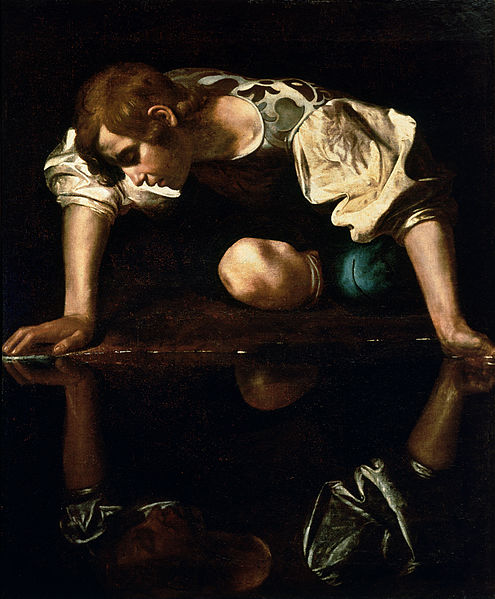
Narcissism is a disorder named after Narcissus, a young hunter who, according to Greek mythology, fell so much in love with his own reflection staring back at him in a pool of water, that he fell in the pool and drowned.

In actuality, while some narcissists are as vain as our Greek god, most would not necessarily fit the stereotype of a physically vain person. My narcissistic mother is vain, but my ex-husband is anything but. In fact, he cares very little about his physical appearance. Narcissists look like anyone else–it’s their actions and behavior that give them away.

Another misunderstanding about narcissists is that they love themselves. They don’t. People who love themselves are people who know who they are, and are a pleasure to be around. But narcissists don’t hate themselves either, at least not in the same way a neurotic individual with a poor self image hates himself. Narcissists don’t think they’re disturbed enough to seek therapy. They’re not suffering; you are. It’s everyone else who is nuts, not them. The reason they are so self-centered is because they have lost their true self and deep down, they know it.

While a few narcissists may have been born that way (there is some evidence narcissism has a genetic component), for the most part I don’t think there are “bad seeds.” Usually (though not always), at a very young age, their true self was lost, possibly by a parent failing to “mirror” them during the language learning stage when they were infants and toddlers. It’s my opinion that maternal neglect during early childhood can lead to NPD–as well as possibly autism (which is intriguing since autism and NPD are so vastly different from each other–and yet both share a failure to become sufficiently socialized or relate to others). So narcissists can’t love or hate themselves because they can’t access their true self, which is unknown to them. Their self centeredness stems from a need to be mirrored–something all babies need but their own parents may have failed or were unable to do. It would be interesting to find out if foster children are more likely to develop narcissism than children from loving families. It would also be interesting to find out if people with NPD and autism are more likely than others to have narcissistic parents, especially narcissistic mothers, who would be unable to “mirror” them adequately as infants. I would bet there’s a correlation.

Narcissists can’t experience genuine emotion because there is no true self there (or is greatly diminished)–so everything they say and do is an act. They are chameleons who can change their behavior or image at the drop of a hat because all they are doing is reflecting back what they see in the people they are dealing with. If you abandon them or wrong them, or even disagree with them, it devastates them because you are taking away their false acquired “self,” which means they are then forced to acknowledge their emptiness. In fact, that’s the only real pain they feel–the pain of their own emptiness. That’s why they must constantly fill the void. Like the vampires they are, they will suck you dry in an attempt to fill the black hole that has replaced their real self. Unlike Narcissus (but like vampires), when they look into the mirror, they don’t see a beautiful reflection. What they see is nothing, and that is so terrifying to them they must constantly seek to fill the void with whatever they can suck out of others.

In fact, that’s the only time a narcissist may contemplate suicide–when, for whatever reason, they are unable to attain “narcissistic supply,” they are forced to behold their own empty reflection in the mirror. Farther along the psychopathy spectrum, narcissists are more likely to retaliate against the person who abandoned or wronged them than to inflict self-harm, and this is where you’ll find murders and murder-suicides.

Narcissists both hate and envy vulnerability in others, and act out through both attaching themselves to and bullying such people. They desperately want that innate ability to feel and intuit things that a sensitive person has, but they also envy and are terrified of it because it’s the one thing that can expose them for the fakes they really are. I remember my mother raged at me often during my teen years, but her worst rages were the times when I called her out on her shallowness and lack of empathy. At those times there was always a look of utter fear in her eyes as she raged on, as if some truth had been exposed. I wasn’t even aware of this at the time, but in fact I nailed it and it scared her to death.

They would rather break the mirror than confront what isn’t there.

10 things that piss me off

angry

In no particular order (I hate them all about the same!)

1. Tailgaters. Really, you’re in THAT much of a hurry?

2. People who text while driving. It should be illegal in ALL states. When you text and drive, you’re as impaired as someone just over the legal alcohol limit. If I’m your passenger I will get REALLY pissed–it’s my life you’re risking (not to mention yours).

3. People who can’t stop talking about their kids/grandkids. I don’t mind this sometimes (we’re all proud of our young’uns), but ALL the time gets boring. Don’t you have SOMETHING else to talk about?

4. FOX News. Nuff said.

5. People who act like know-it-alls, when they know nothing.

6. People who think they’re superior because they have more money than you.

7. McMansions. I wrote a whole post about how much I hate them.

8. People who block the aisle at Wal-Mart (and other big box stores and supermarkets). Usually, they’re in groups of 3-5, walking abreast and will not move if you want to pass them. Arrggh.

9. Office politics. It’s why I don’t work in an office anymore.

10. Stale Reese’s peanut butter cups. Blech. They’re awful. I love them when they’re fresh, but you can tell they’re stale when the chocolate’s soft and the peanut butter’s all dried out. The trouble is, you can’t tell until you open one if it’s fresh or stale.

Fluff piece

I try to balance my blog without losing its focus on narcissism and related personality disorders, because that’s the whole reason I started this blog–to help myself and others enmeshed in psychopathic relationships and/or recovering from the wounds they inflicted on us. So if I notice too many posts in a row unrelated to narcissism, I’ll deliberately post a few about narcissism. But even people interested in a topic can grow bored, so if I think I’ve blogged too much about narcissism, or if I notice they’re not getting as many hits or likes, I figure people need a break and I’ll post about something else.

I also try to include a fluff piece here and there to keep things light–something humorous or silly, or a nice photo with just a few words. Today was going to be my day to do that, since I haven’t posted one in a while. My post “Saying goodbye to a friend” qualifies I suppose, but its subject matter is so sad I have to post a real fluff piece today. So here it is.

fluffpiece
Fluff balls!

Saying goodbye to a friend

ozzie

My son had to put his pet ferret, Ozzie, to sleep today. Ozzie was suffering from cancer and was having seizures, so having him put down was the humane and compassionate thing to do. This photo captured their last moment together at the vet’s office. It made me cry, and I don’t cry easily. There’s just something about the human-animal bond. Ozzie must have known he was loved.

RIP Ozzie. You’re over the rainbow bridge now.

I made a little deal with God today

rainbow

In my post from a few days ago about my problems with Christianity, I discussed how lately, I’ve been thinking a lot about God and religion and how it all fits into my worldview.

I have a sort of dilemma though. I believe in God, and I want to be on his/her/its good side when I die, just in case there really is a hell, which I don’t think there is. But there’s still that niggling little voice in the back of my mind just the same: what if hell is real? What if the born again Christians are right and I am going there, no matter how moral a life I try to lead, because I have not accepted Jesus as my personal savior? I can’t accept their dogma (my brain and heart just can’t get on board with it). I have serious issues with biblical literalism and the divinity of Jesus, but…what if hell is real? I don’t want to go there!

Now, I’ve heard of Pascal’s wager, which basically means going ahead and getting “saved,” even if you have doubts, just in case they’re right. The logic goes like this: if they’re wrong, nothing’s lost but if they’re right then you’re safe from eternal torment. But my problem with Pascal’s wager is that I simply don’t believe in evangelical Christian doctrine. If my brain and heart don’t buy what they’re selling, then taking Pascal’s wager means I’d be living a lie, something I think is much worse (and probably more offensive to God) than being honest about my true feelings about evangelical Christianity. If God really is omnicient and knows what’s in my heart and mind, then he’d know I was being dishonest. It makes me wonder how many born-again Christians actually really believe the doctrine they’ve embraced–and how many of them converted only because they were afraid of what might happen if they didn’t. That alone is a huge problem for me. Religious fear tactics just seem so…wrong.

So I made a little deal with God. Not to challenge or test God or anything, but to help me out of this conundrum. Since I actually believe in God, this part wasn’t too hard. I told God I didn’t believe what fundamentalist Christians were selling, and that “praying for faith” in the past hadn’t worked. I told him that if in order to escape the fiery pit I had to embrace dogma I simply didn’t believe, then could he please give me some sort of concrete sign that would show me this was actually the truth. If I could believe it was real, maybe then I could accept it. I reminded him that conversions like this were performed all the time in the Bible–heathen Saul’s miraculous vision and subsequent conversion to Paul, for example–so if things like that happened so often back then, why couldn’t it happen today? I reminded him that sending me yet another person trying to save my soul or coming across some Bible tract in a laundromat or gas station would not work. It hasn’t worked before and it wouldn’t work now. I would need something more dramatic, much more dramatic than that. I would need an actual miracle, something like, oh, maybe Jesus himself talking to me (hey, some Christians say that’s happened to them). I told God that I was open to it, if it was his will for that to happen, but if nothing happened, I wouldn’t have any other choice than to go on assuming Jesus was just a man, heaven and hell are probably mythical places, and the Bible is nothing more than a collection of ancient fairy tales.

So far nothing’s happened. Maybe tomorrow.

20 random facts about me

randomfacts

In no particular order:

1. My favorite movie of all time is “The Shining.”

2. I make suncatchers and earrings out of bits of glass, mirrors, stones and other found objects.

3. As a child I wanted to be an artist and I drew pretty well. I don’t draw that well anymore.

4. I have a dog (Dexter) and 5 cats: Mr.Biggles, Sheldon, Cleo, Babycat and Chunks.

5. In the past year I have lost over 30 lbs. (It’s due to my job which is very physically strenuous)

6. I actually have a stuffed otter named “Lucky Otter.”

7. My username is actually the name of a restaurant here in town.

8. This year’s “American Idol” winner lives in my town.

9. I am originally from northern New Jersey and used to work in New York.

10. I have never been west of New Mexico.

11. I keep my nails very short.

12. I’m addicted to Friendly’s Butter Crunch ice cream.

13. I don’t like milk chocolate (only dark for me, thank you!)

14. People think I’m 10-15 years younger than I am. Sometimes even 20!

15. My hair frizzes terribly in high humidity.

16. One of my favorite TV shows is “Forensic Files.” (I don’t have TV right now though)

17. I have 3 tattoos: my son and daughter’s names and birthdates (one on each ankle) and a dragonfly on my right upper back.

18. I used to read 2-4 books a week (until I got addicted to the web–now I hardly read at all, a shame!)

19. The last movie I saw in a theater was “Inception.”

20. I have an unhealthy fascination with TLC’s reality shows.

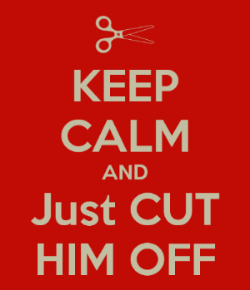
The only way to handle a narcissist if you must deal with one.

cuthimoff

Cut them off when they start to get nasty. And they will get nasty. Narcissists may love bomb you for a short time and try to gain (or in my case, regain) your trust, but make no mistake: they ARE out to get you. You can NOT trust them. They will NOT change. Ever. No amount of reasoning with them or logic will change the way they are or the way they will try to use you and put you down. YOU are ALWAYS wrong. They are ALWAYS right. No exceptions. They’re not stupid: they actually DO know you ARE right, but knowing you are right makes them VERY ANGRY. They will start hurling insults at you and making your life miserable.

There is only one solution at that point: CUT THEM OFF. It may not be possible to go No Contact in certain situations (particularly if a child is involved), but if you can’t, you can cut them off or refuse to speak anymore to them until they are CIVIL and treat you with RESPECT. Eventually they will have to stop insulting you and at least pretend they respect you if they want something from you, otherwise IGNORE THEM and their demands. If they want something from you badly enough, they can ask for it RESPECTFULLY. If they can’t or won’t, they will just have to LIVE WITHOUT IT.

And of course, you can always just say NO. Saying NO won’t kill you. If it pisses off your narcissist, they will just need to deal with it. Do NOT let him (or her) manipulate you into giving them something you don’t want to give them.

In reading back over the two text conversations with my ex, these are the things I have learned. My narcissist won’t ever change. Your narcissist won’t either. Do NOT let them fool you. They’ve been trying to make a fool of you all along.