How I decide what to post on my blogs.

choices

Most of you probably know I have two blogs.  This is my primary one, and the first one I started.  It’s now a year and half old.    It’s been through a lot of changes.  It started as a blog for journaling my feelings after going No Contact with my NPD/ASPD ex, and although I still post a lot about  narcissism and narcissistic abuse, I’ve expanded the scope quite a bit to include my own disorders (Borderline Personality Disorder, Avoidant Personality Disorder, Seasonal Affective Disorder, Complex PTSD) as well as the issues of mental illness stigma and mental illness in general.   After mental illness I probably write the most about blogging.  But these days I post about pretty much  anything that interests me, and that includes reblogged posts of others.  On this blog, I post primarily about the following subjects, in roughly this order:

  • Narcissism and narcissistic abuse — both informative and experiential
  • Borderline Personality Disorder / complex PTSD — informative and experiential
  • Personality Disorders in general
  • Mental illness and mental health (including the Sunday guest posts)
  • Mental illness stigma
  • Blogging and writing
  • Inspiration/spirituality
  • Social and cultural issues
  • Photography
  • Music
  • Humor
  • Anecdotal essays and general musings
  • Book and movie reviews (related to narcissism and narcissistic abuse)
  • Everything else


My other blog, Down The Rabbit Hole, is now 7 months old.     The articles on LOH and DTRH overlap quite a bit, and I do a lot of double posting.   Down The Rabbit Hole has a much narrower focus (and a much smaller audience), and has now become primarily a blog to document and journal about my journey in therapy, which seems less appropriate on a blog with as wide a focus as LOH (even though I do cross-post to both blogs).

Unlike LOH, on which I generally add new content at least once a day if not more, I may only add new content to DTRH once a week or so, though lately it’s been more often than that.   While anyone is welcome to read its content (please follow if you want!), DTRH is more personal and I write it primarily for myself.     For that reason it’s written more like a journal or diary.  Some articles which are too personal or which I feel are too controversial for this blog get posted on DTRH instead.     Like LOH, DTRH has also shifted its focus since I started it, moving from my experience with various types of self-healing following some upsetting self-discoveries to actual psychodynamic therapy.

These are the topics DTRH posts about in roughly this order:

  • Experiential and personal essays about my therapy sessions
  • Articles about treatments and therapy techniques for Complex PTSD and Cluster B disorders, mainly BPD and NPD
  • Subjective observations and essays about BPD and other cluster B disorders
  • Mental illness stigma, especially BPD stigma
  • New research about BPD, NPD, and personality disorders in general
  • Mindfulness and inspiration
  • Poetry about the therapy experience/living with BPD


Why I blog.

blog_thinker1

I read a very interesting article today called Pimping for Likes (thanks again to Opinionated Man, I found another great new blog to follow).  The post addresses the all too common frustrations we bloggers experience when our Likes, views or followers aren’t growing as fast as we’d all like them to and asks the question, would you give up blogging if no one read your blog?  

If you’re only blogging to be popular or attain a web presence, I think people can tell.  Your heart won’t be in it.  It won’t be honest and it won’t be engaging.   People are smart.  They will pick up on your lack of passion for your chosen topics and go elsewhere if all you care about is gaining a web presence without actually caring about what you blog about.

There are lots of wonderful bloggers who don’t have many followers or views.   That’s not because their blogs are bad.  It’s because either they haven’t been blogging long enough to attain a web presence, or because the blogger is mostly writing for themselves and isn’t actively trying to promote their blog.  Some people don’t care about popularity.   And there’s nothing wrong with that.  They’re blogging for the best of reasons–because they love to write and blogging gives them a voice and a way to express themselves. .

It’s the reason I blog.   I really can’t think of anything I love doing more.   It’s also been very healing for me.  I’d keep writing and blogging even if I was the only person in the world reading my posts.  But I’m only human and it can be very discouraging when you feel like your online voice is falling on deaf ears.  At first, it was frustrating when I’d spend a couple of hours perfecting a post, choosing the perfect picture for it, editing it and re-editing it, and then post it, only to get no likes and only a few views.

Here is a post I wrote when this blog was less than two weeks old, when I had a whopping 12 followers and hardly any views. It makes me laugh to read this now, but I’m sure most new bloggers can relate to these feelings of frustation:

I’m frustrated.

It was the first time Opinionated Man reblogged a post of mine.  With his 50K plus followers (at the time; now he has nearly 60K), he seemed like a blogging God to me. Because of his generous nature and willingness to help new bloggers succeed, this post (which sounds very whiny to me now) wound up getting a ton of views, Likes, and comments, and I got my first sizeable batch of new followers.  What a great way to start your blogging career!

Although being popular isn’t my primary reason for blogging, I have to admit I’ve come to care about this blog’s growth too.    There’s nothing wrong with that, as long as it doesn’t become your main reason for blogging.  I’ve been blogging for a year and a half now.    During that time, my stats have grown steadily, to the point where I’m averaging 50K views a month.  A year ago I never would have believed it.

Source: http://luckyottershaven.com.webstatsdomain.org/

I’ve been fortunate enough to have had a little help along the way,  thanks to other, more popular and established bloggers reblogging or linking to my posts.   I learned about sharing to social media (something I was reluctant to do at first) and linking to other blogs.   I’ve made a lot of friends among other bloggers and we’re like a big community who help each other get seen.  Yes, of course there is envy among bloggers, but fortunately I haven’t seen too much of it and for the most part, there’s more of a desire to see your fellow bloggers do well than to see them fail.

There are blogs far more popular and successful than mine.   This blog is really pretty small potatoes, but watching it grow is still incredibly encouraging and exciting, like watching your baby grow up.    It’s a heady feeling when you type a few words into Google and see your own blog come up at or near the top.    Although I would still blog even if I only had 10 views a month, these incremental rewards have a way of motivating you to keep writing even more.  It’s also very cool being in a position now where I can begin to help other bloggers the way I was helped when I was new.   It’s wonderful to be able to pay it forward and help others get more of a web presence.

I’ve been accused of caring too much about my stats.    Maybe it’s true.  Watching my stats has become one of my favorite hobbies, but maybe that’s because I’ve always been a numbers junkie.   The growth of this blog didn’t just happen on its own though. I had to work hard at it, and the hardest part for me was getting over my fear of sharing posts to social media.  I don’t have enough of a Google presence to just sit back and let things take off on their own.   I have to keep working at it, keep sharing, keep connecting.   It’s almost a full time job.   Even so, while watching my views  and web presence increase is a nice side benefit of blogging, it’s not the reason I blog.

If you only blog to see your stats grow, and care nothing about what you write, not only will people be able to tell your heart isn’t in it, but chances are you’ll get discouraged and give up the minute your stats take a downturn.  I’ve had slow months and a few with no growth at all. It hasn’t all been a smooth ride uphill.    Some of my posts that are personal favorites just don’t seem to resonate with others that well, while other posts that I could care less about, seem to take on a life of their own. It’s always a surprise seeing what others like and what they don’t.  You can certainly try to concentrate on writing more of the types of posts that seem to resonate more with others, if being popular is your thing.

My other blog, which documents my journey in therapy, is nowhere near as popular as this one. It hasn’t really grown at all since I started it in August, and that’s okay.     I don’t share most of the posts on that blog to my social media and I don’t promote it at all.  I only write about 1 – 2 posts a week for it, while I write every day on this blog.    It also has a much narrower topic focus, while this one covers a much wider range of topics.  I figure, if people want to read the posts on my other blog, they will find them, but I don’t worry about it too much or try to call attention to it.   I mostly write it for myself.

In summary, I blog for four reasons, in the following order.

  1.  Enjoyment, love of writing/blogging
  2.  Self-therapy and healing; giving myself a voice.
  3.  Community with my readers and other bloggers; helping others
  4.  The thrill of increasing web presence.

So.  Why do you blog?

How to deal with haters and critics.

haterade

I want to reblog this excellent article about how to deal with haters and critics.  Every blogger has them, especially if they write anything besides recipes or decorating ideas (and those bloggers probably have haters too).

I’m a people pleaser.  I hate being hated.   When I’m criticized, I clam up and shrink into the walls.  As a person who writes about sensitive topics,  I’ve occasionally had run ins with people who did not like what I had to say.   At one point I nearly stopped blogging because of my hurt feelings.  But why should I do that?  Why should I let one or two judgmental people intimidate me and silence me?  I’ve been silenced and intimidated all my life.  Writing about my feelings and making them public has been one of the most healing things I’ve ever done for myself.   How insane would I have to be to allow a few malcontents I’ve never met and know nothing about to silence me?  Pretty insane.  The only person who can silence me is me.

This quote in particular really stood out to me and from now on I’m going to think about this whenever I hesitate to post something I really want to post, just because someone out there might not like it:

Criticism and negativity from other people is like a wall. And if you focus on it, then you’ll run right into it. You’ll get blocked by negative emotions, anger, and self-doubt. Your mind will go where your attention is focused. Criticism and negativity don’t prevent you from reaching the finish line, but they can certainly distract you from it.

However, if you focus on the road in front of you and on moving forward, then you can safely speed past the walls and barriers that are nearby.

Haters and Critics: How to Deal with People Judging You and Your Work

By James Clear

It doesn’t matter how you choose to live your life — whether you build a business or work a corporate job; have children or choose not to have children; travel the world or live in the same town all of your life; go to the gym 5 times a week or sit on the couch every night — whatever you do, someone will judge you for it.

For one reason or another, someone will find a reason to project their insecurities, their negativity, and their fears onto you and your life, and you’ll have to deal with it.

With that in mind, let’s talk about being judged and criticized. And just for fun, I’ll share some of the most hateful comments I’ve received on my articles. And more importantly, the strategies I use to deal with them.

Here’s what I’ve learned about dealing with the people who judge you, your work, and your goals.

The Biggest Critic in Your Life

It’s easier to complain about the outside critics, but the biggest critic in your life usually lives between your own two ears. Working up the courage to move past your own vulnerability and uncertainty is often the greatest challenge you’ll face on the way to achieving your goals.

When I started my first business, it wasn’t the criticism from outsiders that held me back. It was my own mind worrying that people would think I was a loser because I skipped getting a “real job” to “start some website.” I didn’t tell most of my friends about what I was doing for almost a year because I was so worried about what they would think about it.

When I started writing, it wasn’t the hurtful comments from readers that prevented me from getting started. It was my own fears about what they would think if I wrote about the things I cared about. I wrote my ideas in a private document for a year before I worked up the courage to start sharing them publicly.

Those are just two examples of the types of internal fears and criticism that so often prevent us from getting started on our goals. It can take a lifetime to learn that just because people criticize you doesn’t mean they really care about your choice to do something different. Usually, the haters simply criticize and move on. And that means that you can safely ignore them and continue doing your thing.

But that is easier said than done because we all like to be validated. Some people like it more than others, but everyone wants to be respected and appreciated to some degree. I certainly do. I know that whenever I choose to take a risk and share my work with the world, I wonder about what my friends will think, what my family will think, and how the people around me will see me because of that choice. Will this help my reputation? Will this hurt my reputation? Should I even be worrying about my reputation?

Especially with writing, these questions created an internal struggle for me.

On one hand, I believed in myself and I knew that I wanted to contribute something to the world around me. But on the other hand, I was scared that people wouldn’t approve of my work and would criticize me when I started sharing the things I cared about or believed.

I’ve written previously about the challenge of putting yourself out there by saying, “You can either be judged because you created something or ignored because you left your greatness inside of you.”

Eventually, I decided that it was more important to contribute something to the world than it was to protect myself from criticism.

Read the rest of this article here.

34 rules for kick-ass writing.

karate

I didn’t make these rules; they come from this post. But they got a laugh from me and I hope you enjoy them too.

34 Rules For Kick ass Writing

1. Verbs HAS to agree with their subjects.
2. Prepositions are not words to end sentences with.
3. And don’t start a sentence with a conjunction.
4. It is wrong to ever split an infinitive.
5. Avoid cliches like the plague. (They’re old hat.)
6. Also, always avoid annoying alliteration.
7. Be more or less specific.
8. Parenthetical remarks (however relevant) are (usually)
unnecessary.
9. Also too, never, ever use repetitive redundancies.
10. No sentence fragments.
11. Contractions aren’t necessary and shouldn’t be used unless you don’t want to seem too formal.
12. Foreign words and phrases are not always apropos.
13. Do not use more words, phrases, sentences, or other linguistic elements than you, yourself, actually really and definitely need to use or employ when expressing yourself or otherwise giving voice to what you may or may not be thinking when you are trying to say how many words you should use or not use when using words.
14. One should NEVER generalize.
15. Comparisons are as bad as cliches.
16. Don’t use no double negatives.
17. Eschew ampersands & abbreviations, i.e. etc.
18. One-word sentences? Eliminate.
19. Analogies in writing are like feathers on a snake.
20. The passive voice is to be ignored.
21. Eliminate commas, that are, not necessary. Parenthetical words however should be enclosed in commas.
22. Never use a big word when a diminutive one would suffice.
23. Kill excessive exclamation points!!!
24. Use words correctly, irregardless of how others elude to them.
25. Understatement is always the absolute best way to put forth earth shaking ideas.
26. Use the apostrophe in it’s proper place and omit it when its not needed.
27. Eliminate distracting quotations. As Ralph Waldo Emerson is said to have once remarked, “I hate quotations. Tell me what you know.”
28. If you’ve heard it once, you’ve heard it a thousand times: Resist hyperbole; not one writer in a million can use it correctly.
29. Puns are for children, not groan readers.
30. Go around the barn at high noon to avoid colloquialisms.
31. Even IF a mixed metaphor sings, it should be derailed.
32. Who needs rhetorical questions?
33. Exaggeration is a billion times worse than understatement.
And finally…
34. Proofread carefully to see if you any words out.

20 ways to lose followers.

Tired woman are sleeping and holding cup. Laptop is situated on the table.

As a blogger, I admit I’m guilty of doing some of these things myself.  So I’m writing this  post as a reminder to myself to stop doing these things, and hope other bloggers can take away something from this list too.

1. Don’t allow comments.

Some blogs, especially those dealing with mental illness or abuse, don’t allow comments because negative comments can be very triggering to people struggling with these things, and you are going to get negative comments.   It can’t be avoided.  But as a general rule, it’s good to allow comments because it makes your blog more interactive.  Real conversations get started that way and build a feeling of community, which can make your followers stick around and your blog more engaging.

2. Be a comment nazi. 

Some bloggers don’t want anyone to disagree with them and will not approve or delete comments that question the blogger’s point of view.   While it’s certainly fine to block or delete abusive comments, only allowing comments that agree with your point of view doesn’t allow for healthy debate, which always make a conversation more interesting. It also makes you look like an intolerant, narcissistic jerk.

3.  Be too lenient with comments.

If you allow abusive comments on your blog,  you run the risk that people might be run off by the trollish remarks or fear speaking up themselves because they might be attacked.

4.  Don’t tolerate any disagreement. 

Related to #2, some bloggers like to attack anyone who disagrees with them.  Debate is fine, but engaging in personal attacks and the Internet version of a fistfight on a regular basis will just run off your regular followers.   It’s always best to not feed the trolls.

Close-Up Of Stray Dog Snarling

5. Fail to acknowledge comments.

I see this a lot.   Sometimes you won’t know what to say to a comment or have nothing new to add to their point, and that’s fine.   If you reply to only 50% of your comments, that’s good.  Obviously, the higher the percentage the better.     Use the “Like” button on comments you don’t reply to, so the commenter knows you at least saw it.  Not replying or using the Like button makes your readers feel like you didn’t read their comment or don’t care.

6. Write boring content.

Some blogs document the blogger’s day, and while the activities described may be mundane, if presented in an interesting or humorous way, or if they use pictures or graphics, such otherwise dull posts can actually be engaging.   But if all you do is write a long wall of text about your dog throwing up on the rug and what cereal you ate for breakfast and your writing style or presentation isn’t creative or engaging, you will just put your readers to sleep and they’ll go elsewhere.

7. Don’t check your spelling, grammar, punctuation, etc. 

No one wants to try to pick through a badly written, misspelled post full of run on sentences, horrible grammar, and wonky punctuation. Spellcheck is your friend, and if you can’t put a proper English sentence together, then maybe you shouldn’t be blogging.   Publishing a post full of errors and typos is also is disrespectful to your readers.

8. Be dishonest.

Those of us who write creatively can and do embellish a few details to make our posts come alive but outright lying can never be disguised.  A post that’s dishonest comes off as insincere and your readers will be able to tell.  If you want to write fiction, then write fiction, but call it fiction  and  don’t disguise it as the truth when it’s not.

lying

9. Don’t break up your text.

I’ve ranted about walls of words many times before so I won’t belabor this again.  It’s a pet peeve of mine.   People don’t like reading walls of text.  It hurts their eyes and gives them a migraine.   Use paragraph breaks, subheaders, pictures or graphics to break up a long post into bite size pieces.   Or compile your content into a list.   Your readers are civilized human beings who like to eat their steak in small pieces, not chomp it down whole like a wolf or a caveman.

10. Use garish colors and graphics.

Fortunately, the themes WordPress makes available are tasteful and very hard to make look bad.  In the early days of the web, there seemed to be a lot more websites that were the cyber equivalent of a bad acid trip and used garish, flashing graphics, blingies, and ugly fonts in neon colors that clashed with their neon backgrounds.  MySpace was infamous for this and that was part of its downfall.  Your blog shouldn’t look like The Strip in Vegas or an explosion at The Fun Factory.   It should look more like a pastoral landscape, Park Avenue in New York, or Main Street in a pretty small town.  Don’t be tacky.  It’s also not nice to cause your readers to have epileptic seizures.

ugly_website

11. Pass yourself off as an expert when you are not.

If you write about a highly specialized topic such as mental health, science, or medical issues, and you are not an expert yourself, please use a disclaimer stating that you are not a degreed professional or at least use phrases such as “in my opinion…” or “I think…”.   Otherwise you not only come across as a know it all, but you could also get in legal trouble.

12. Don’t comment on other blogs.

We know, taking care of your own blog is time consuming and it’s just hard to find time to comment on other blogs.   You don’t have to do this every day, but if you never comment on your followers’ blogs, they may unfollow yours.  No one likes to feel like they’re doing all the work in a friendship.  By commenting on other blogs, you not only show goodwill and build community, but you also increase the likelihood they may link to yours or add you to their blogroll, which increases your hits.  If you don’t have time to comment, at least “Like” their posts.  Let them know you at least acknowledge their existence.

13. Write troll posts.

Writing a controversial post just to be controversial may get you attention for the short term, but it’s likely to be negative attention.  Do you really want that?  Also, the attention you get won’t last.  People will come to gawk, and then move on to more worthwhile things.   While it’s fine (and courageous!) to write something controversial if you feel passionate about it,  deliberately writing incendiary posts is like walking around in public slapping random people in the face.   You’ll get attention alright, but it won’t be the kind you want.  Most people will run like hell.

14. SCREAM AT PEOPLE.

NEVER USE ALL CAPS.  NO ONE WANTS TO BE SCREAMED AT.

man-screaming-at-computer

15. Use too much profanity.

While a well placed expletive can give your post more impact, peppering every sentence with four letter words has the opposite effect and distracts attention away from the point you’re trying to make.    It just makes you sound immature, stupid, and obnoxious.

16.  Publicly whine about other blogs having more hits, likes or followers than yours.

Envy is rife in the blogging world.    I’ve seen more posts than I care to from bloggers ranting about how few followers, likes or hits they have, or even worse, kvetching about how much better other blogs are doing than theirs.   While one or two such posts are fine, especially for a newbie whose activity is likely to be low (during my second week blogging, I wrote a post called “I’m Frustrated,” which Opinionated Man reblogged and helped me get new followers), if you continue to do this or make a habit of it, you just come off like a crybaby or a spoilsport, and you’ll wind up losing followers who don’t want to deal with your hysterics.

17.  Brag about how many hits, likes, and followers you have. 

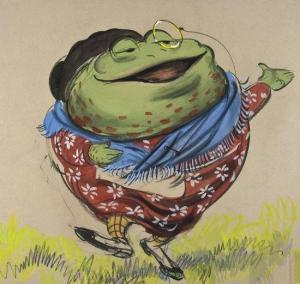
I admit I’ve been guilty of this, but you should avoid it.   It will make people hate you, especially other bloggers.   If you must crow about how well your blog is doing, disguise it by hiding it within a helpful context (for example, you can write a post about how to gain followers,  in which you can use your blog as an example but be careful not to overdo it–people can smell that shit like a drug dog smells cocaine).

prideful_toad
Credit: John Worsley: “Toad”

18.  Be a pointless blog.

I’m not talking here about blogs that don’t have a certain topic as their focus.  There are many great general purpose blogs with posts about anything and everything. I’m talking here about blogs that have no original content.   There are blogs that seem to exist solely to post links to other people’s blogs or regurgitate other’s material.  I always wonder why these blogs exist at all.  Why not just go to the original blogger’s site instead? “Bloggers” who never post original content seem more like secretaries than bloggers, and less useful than a secretary because they won’t even make you coffee.  For some reason, blogs like that also seem to contain viruses.  It’s like having a secretary with typhoid.

19.  Plagiarize and don’t credit others.

Not only will not crediting or plagiarizing others make people angry at you, it will get you in trouble too.  Don’t do it.  If you can’t find the source for something, don’t use it.

20.  Try too hard to be cool.

Some blogs seem to exist just to be cool or edgy.   If you don’t believe in what you’re posting about, and are just doing it to impress others or appear cool, people will be able to tell and will press the backspace key faster than you can put on your groovy sunglasses. People who try too hard to be cool are annoying and pathetic, and that’s not cool.

My blogging mojo is back!

girl_computer

This is my 10th post today. I don’t think I’ve ever made 10 posts in one day before. Yes, I realize they’re all either pretty short or reblogs, but still! I’m very proud of myself. Maybe I should give Jonas the credit though, since he trapped me inside my house all day today.

In general though, my interest in blogging has returned after a couple of months of feeling like it was becoming a chore. I think bloggers go through the doldrums every so often and you just have to keep on writing and wait for them to pass. I think my Seasonal Affective Disorder had something to do with it too. In the fall, I lose interest in pretty much everything. Once the days start getting longer, my mood improves and my interest in things and my creativity returns.

What should I write about today?

confused_gorilla

Please cast your vote!  I can’t make up my mind.

Stream of consciousness blogging.


stream_of_consciousness

Credit: Paulinasaurus

You might think you have nothing interesting to say, but that’s a big fat lie you tell yourself.

Ever have those random weird thoughts that just come out of nowhere? Write about them. Even if you think they’re silly or embarrassing or insignificant or would make no sense to anyone else, blog about them anyway. You never know who might be able to relate or might have been thinking the same thing. Sometimes some damned good conversations can get started that way.  At the very least, you might make someone think, and getting people to think is always good.

Sometimes your random thought could take the form of a question. If you’ve always wanted to know why you never see baby squirrels or why socks always disappear in the wash (and wire hangers tend to breed), write it down. You may get some answers.

If you don’t think you have a topic to write about, you do. Start where your mind is at right now, this very second, and go from there.  I don’t care how boring you think your life is. Write about the chair you’re sitting in, or the bed you’re lounging on, what you’re eating (if anything), what time you got up, what your plans for the day are, how unpleasant that flu you have is, what the temperature in the room is like, the view outside your window (even if it’s a dark trash-filled alley), what the wall next to you looks like and what’s on it (include photos of it maybe?), or the people and animals sharing the room with you right now. If Grandpa cracking his pistachios all night in front of the TV is the equivalent of being waterboarded, by all means write about it. If you can’t stand the way your husband mouth-breathes and picks his nose in front of the mirror, write about that too. Things that irritate you always make entertaining posts. Or write about how much you love something. How about compiling a bucket list? Lists of any kind are good, and they’re easy to write too. Everyone loves lists. Listicles are a thing.

Pick any one of the things above or something you came up with on your own and elaborate on it. If you feel like being goofy, be goofy. If you feel like ranting, then go ahead and rant. Blogging gets it all out of your system. Sometimes my best posts came along when I thought I had nothing to say. You never know–you may wind up saying something someone else wants or needs to hear.

Stories from the broom closet: adventures in housekeeping.

french_maid

I don’t write a whole lot about my job working as a part time housecleaner because of the stigma attached to a job like this. As a college educated person with a very high IQ, who used to make a living as an editor/columnist for a long-defunct medical journal and moonlight writer of book reviews for publications like Publishers Weekly and Library Journal, sometimes it’s hard to reconcile just how low I’ve fallen on the social status ladder. I’ll spare you the details of how that came to be, because it’s not very interesting and has a lot to do with self-sabotage and being trained to be a victim by my abusers (and has a lot to do with the economy and the geographic region I live in as well). I’ve written about all that before anyway.  This isn’t about that.

This isn’t supposed to be a depressing post though. Framed the right way, I actually have a very interesting and even fun job, albeit one that doesn’t pay much and fluctuates depending on time of year.

12 Reasons Why Cleaning Houses for a Living May Be Underrated. 

1. It sure beats sitting in a call center all day getting screamed at for things totally outside your control and where you are required to put up with and “handle” the abuse thrown at you. (I did that too and had enough after 4 years of it)

2. You’re constantly busy, and the scenery is ever-changing, so you never get bored. No interminably long afternoons spent watching a never-moving clock.

3. You’re constantly moving and it’s a great way to keep in shape. I was able to cancel my gym membership.

4. Sometimes you get tips, especially around the holidays. Some of the tips can be good.

5. You sometimes get really nice stuff other people want to get rid of: I’ve taken home small furniture, a crystal vase, books, an antique mirror, original paintings, clothing, leather bags, and shoes, various homemade baked goodies, and a homemade quilt (which got eaten by my dog, well I hope he enjoyed it).

6. I work alone most of the time, and as a socially awkward, introverted person who never could decipher office politics and the kiss-up games most offices require you to play to move ahead, this works well for me.

7. Once you start having your own clients who request you only, you begin to establish a kind of relationship with them. They look forward to seeing you and it feels good that your giving them a clean house (and sometimes providing them with company) makes them happy.

8. I’m not required to work evenings or weekends, and sometimes I’m off as early as 1 or 2 o’clock. Sure you don’t make as much on slow days like that, but it’s nice to be home early, as long as it doesn’t happen too often.

9. Although the novelty of this has worn off, it can be interesting seeing the types of homes people have and the way they have decorated them. Some of the houses are impressive indeed!

10. The work is mentally easy and I can let my mind wander while working. It is physically hard work though, and sometimes at the end of the day, I’m very sore! A hot bath with epsom salts usually helps though.

11. The pets are awesome, and are the best part of the job (even though they shed and make messes). I could write other stories just about the different pets I meet. Maybe I’ll do that sometime.

12.  It’s also a great job for an aspiring writer because you meet so many different kinds of people (they’re not all snobby rich people living in gated communities, though we have those too). You have a front row seat to a lot of family drama and eccentric types and other things sometimes that make you go hmmmm or WTF!   It’s a great opportunity to study and observe human nature and that hones your skills as a writer.  You also learn a lot about people.

Some of the things I hear and see make pretty good stories, so here are  five of them.

The humorist and memoir writer David Sedaris used to work as a housecleaner in New York City, and used some of the things he experienced during that stint as fodder for his uproariously funny essays.

1. The Lonely Lady and the Surprise Birthday Lunch.

tea_party

A well to do older lady living alone, whose husband died last year, seems to want company more than having her house cleaned. Although she talks way too much for my taste, she’s a sweet lady and last year threw me a surprise birthday party just for the two of us! She said she needed an extra hour and I thought, oh no, she’s going to want me to clean out her refrigerator or organize her closet or something (trust me, you do NOT want to see this woman’s closet–she’s almost a hoarder and never throws away anything).

When I arrived she asked me at one point to stop what I was doing and come into the sunroom. It was a beautiful warm sunny day and the table was set beautifully, with flowers and greens everywhere. She had prepared delicious chicken salad with vinaigrette and fresh tomatoes and basil, another tossed salad, sweet ice tea, and an amazing lemon cake with lemon buttercream from an expensive bakery (with NO cream cheese icing, thank God!) To top it off, she presented me with $50 in cash! That was a good day. And even better, she didn’t ask how old I was. I really think the woman is just lonely and felt like having company and I got the honor.

2. Schizo Santa Claus and the Cup of Hair.

30counter-terror
It’s not coffee in that mug, but the words say it all.

There’s another guy, a Vietnam veteran who looks like Santa Claus who probably suffers severe PTSD or even schizophrenia. The man is very strange and his house is a disaster and it stinks too. He always wants to go back to sleep after you clean his bedroom. He collects beautiful, antique chessboards and has them all over his house. He seems to be somewhat of a hoarder too and it’s hard to move around in the tight, cluttered rooms.

The man sheds; his wiry gray hair is all over everything. The first time I went there I thought he must have a pet, maybe a wirehaired terrier, but no, the hair belongs to him.

He keeps a mug of his sheddings on the bathroom vanity. You cannot touch it, you are not allowed to throw it away. The first time I went there I didn’t know so I threw it away and he started to panic. I had to dig through the trash to find the hair and with a pair of plastic gloves, retrieved it to its rightful place in the mug on the bathroom sink. I have no idea why he needs this, and I don’t want to know either. Maybe he’s knitting himself a wig or a sweater. Who knows.

3. Contact High and the Stoner House.

stoners

The other day I went to clean a one-time house (not a regular client). The door was answered by a guy in his early 20s or maybe late teens, who was obviously stoned. He told me his mother was up in Maine having chemotherapy treatments but would be returning the next day. He showed me around the house and told me not to worry about cleaning his room, he would do it himself.

Two of his stoner buddies were there with him, and they all sat in the living room smoking out a bong and watching some anime movie.
Soon he came upstairs and told me he had spoken to his mother on the phone and she told him I had to clean his room after all (I know he had not been on the phone; obviously he decided he didn’t feel like cleaning it).

His room reeked of pot smoke and there were bongs and pipes on almost every surface and little piles of weed.   I got a contact high just from being in there.  Later I overheard a telephone conversation where his mother told him his two friends had to be gone when she arrived home the next day. I guess that was the last time he could party!

I got a $25 tip from him when I was leaving. He said the house looked great. I hope his mom agrees.

4. The Elderly Couple Who Refused to Move Downstairs.

old_couple

At another one-time job, the middle aged son from New Jersey had come to try to talk his elderly parents, one who was wheelchair bound, the other with advanced Alzheimers, into moving into a downstairs bedroom. He wanted to close off the stairs because of the danger of falling, but the father, the ambulatory one with Alzheimer’s, wouldn’t have it. The old man walked around in nothing but a diaper, and his bowed legs looked like toothpicks but he scampered up and down the stairs like a first grader jacked up on Red Bull.  He kept insisting he didn’t mind carrying his wife  (who weighed at least twice what he did!) up the stairs. Yikes!  This feisty codger had to be watched closely!

The son told us that since he was unable to move in with them (because his job and family were back in New Jersey) and they had bought and paid off the house and refused to move or go into a nursing home, that he would have to hire a full-time nurse and cook to take care of them both in their house. His concern and love for his disabled and elderly parents was touching and so was the old couple’s abiding love for each other. They were actually the kind of old people you’d call cute. In fact, I’d call them them freaking adorable.

5. The Malignant Sociopathic Bible Thumping Narcissistic Bitch from Hell.

churchlady_satan

There was one customer that couldn’t keep a regular cleaner, because of what a horrible and mean person she was. In the short time I cleaned her house, I didn’t see one redeeming quality. First of all, the lady was a control freak. She was told on a number of occasions to have the sheets ready when we got there, but she wasn’t having any of that. She’d deliberately wait until we were about to leave before taking he sheets out of the dryer. When called out on this once, she demanded to have the name of the person in the office who said that, even though she had been told again and again to have the sheets ready. Basically she was calling us liars.

She’d keep you in her house as long she could (knowing full well we had other assignments that day),  standing over you watching everything you did and making you do things over and over even when there was no need. Her washer and dryer happened to be in the master bathroom so she’d wait until you had just mopped the floor in there before retrieving the sheets for the beds, leaving her shoe marks all over the mopped floor so you’d have to mop it again. She’d also push into you on purpose on her way to the dryer, and then in a sarcasatic-sweet voice, coo “I am SO sorry!”

One time someone else cleaned her house because I was sick that day.  She said this woman waited until the moment she came in to clean the kitchen and suddenly decided she just had to start rearranging her kitchen cabinets at that moment!

I finally had enough of this nasty character the day she blamed me for her vicious dog growling at me. She had a golden retriever, and usually they are very sweet dogs, but this one was anything but. I was coming up the front porch stairs and the dog was there, not tethered to anything, growling and baring its teeth at me. The woman came out and stared at me with black malevolent reptilian eyes.
“What did you do to my Ginger? She NEVER growls at anyone! You must have done something to upset her.”
That was the last straw. I told the office I would no longer clean this woman’s house. Shortly after that, she canceled service.

Did I forget to mention the woman’s house was filled with Bibles and plaques of Christian sayings and Bible verses and ceramic angels? Oh, and her husband called her “Mom” and seemed terrified of her. Also her grown children never visited. I wonder why!

If you like these stories, there are others. I can post them in a later article, if there’s enough interest.

What should I write a book about?

If I write the memoir, think Running With Scissors by Augusten Burroughs. It was both tragic and one of the most hilarious books I ever read. I have to read it again. I just ordered a copy.  I might review it in a future post.