“How Highly Sensitive People Interact with the World Differently”

I saw this article about HSPs on Huffington Post today and wanted to share it on this blog.

How Highly Sensitive People Interact With The World Differently
The Huffington Post | By Lindsay Holmes

hsps
Photo: ballyscanlon via Getty Images

Highly sensitive people have been labeled a lot of ways in the past, like fragile, over-emotional and intense. But there’s more to a highly sensitive person than just excess crying and a whole ton of feelings.

Those with an empathetic personality are actually biologically wired to behave the way that they do. As a result, they also have an entirely different approach to to their physical environment — and that isn’t necessarily a bad thing.

Below are just a few ways highly sensitive people interact differently with the world around them than their “thick-skinned” counterparts.

They’re easily overstimulated by their surroundings.
Loud noises, big decisions and large crowds don’t bode well for HSPs without a little downtime to balance them out. This is because they have a very active emotional response, according to Elaine Aron, author of The Highly Sensitive Person and one of the original scientific researchers of the personality trait.

“The reason this happens is because they’re processing everything around them so thoroughly,” Aron told The Huffington Post. HSPs process their surroundings or life events based on emotions. In other words, the more overwhelming their circumstances get, the more deeply they feel.

They pick up on the subtleties in a room.
Did you rearrange your living room? Did your spouse make you upset at a dinner party? Sensitive folks can sense many subtle shifts, whether they’re tangible items or emotional moods, Aron says. “There’s just this intuition they have about their environment that other people generally aren’t aware of,” she explained.

That intuition also guides them in their own relationships as well. HSPs notice different attitudes that may not be picked up on by other people. So if you’re using different language or texting more abrasively than normal (think periods instead of exclamation points), chances are a HSP is going to take note.

They’re more emotional in their relationships.
HSPs crave deep connections. According to Aron’s research, sensitive people tend to get more bored in marriages than non-HSP couples, mostly due to the lack of meaningful interaction that naturally occurs as time goes on. However, this isn’t necessarily bad news. Aron says that the lack of meaning doesn’t mean an HSP is going to abandon ship — it’s only going to motivate them to have more stimulating conversations.

The key to a successful relationship for an HSP is communicating what they want out of a relationship and finding a partner that understands their emotions are part of their nature. “Sensitive people can’t help but expressing what they’re feeling,” she said. “They show their anger, they show their happiness. Appreciating that is really important.”

Sometimes they prefer to fly solo.
HSPs function best when they’re in quieter environments — particularly in the workplace, according to Aron. “Open office plans aren’t productive for them in most cases,” she says. This preference to operate alone may even go for leisure activities outside of the office. HSPs may also avoid group sports or physical activities because they feel like their every move is scrutinized, Ted Zeff, a researcher and author of several books on highly sensitive personality traits, previously told HuffPost.

They might be more sensitive to caffeine or alcohol.
This certainly isn’t always the case, but Aron says on average HSPs may have more of a sensitivity to stimulants like caffeine or substances like alcohol, based on self-tests she’s conducted for her research. HSPs are also more easily bothered by hunger, she said.

They get anxious around conflict.
Conflict is a tough road to navigate for HSPs, according to Aron. They have two approaches to dealing with it, and those ideas are often at war with each other. “Sensitive people get torn between speaking up for what they feel is right or sitting back because they don’t want a violent type of reaction [from others],” Aron said. “They’re very sensitive to environments where they’re being judged for their sensitivity or for anything else.”

On the other hand, HSPs have a way of managing disagreements in a rational way. Because of their high levels of empathy, sensitive folks can often put themselves in the other person’s position and see their side of the argument, Aron explained.

When it comes down to it, Aron says the key for sensitive people is to embrace their personality trait rather than work against it. “Highly sensitive people make excellent leaders, friends and partners,” she said. In other words? Keep on experiencing those emotions, HSPs — even if they do make you cry.

http://www.huffingtonpost.com/2015/06/09/highly-sensitive-person-behaviors_n_7543140.html?ncid=edlinkushpmg00000039

“Don’t Cry Out Loud”

If you were a survivor of a narcissistic family (or were otherwise a victim of narcissistic abuse), as I was, you were probably told your emotions were not okay. Instead you were told to stuff them and hide the way you really felt from the world. Unfortunately that’s the same philosophy modern society holds in general, and of course narcissists stuff all their feelings all the time, except rage. It can get so bad you reach a point where you tell yourself you’re bad for even having feelings or being upset when someone hurts you.

Several months back, I wrote an article about the way some proponents of positive thinking use it as a way to deny their own true feelings or use it to invalidate the emotions of others. Used this way, positive thinking can become a form of abuse or self-abuse. Of course, there’s nothing wrong with being a positive person, but there’s something very off about someone who walks around wearing a fake smile pasted on all the time and insists we must always do the same. Ironically, these “positive thinking nazis” instill a sense of guilt and shame.

Here’s an article from a Christian-oriented blog that describes how damaging stuffing our emotions is and what we can do about it.

Don’t Cry Out Loud

stuart_smalley
Stuart Smalley.

Back in the early ’90s, “Saturday Night Live” did a mock self-help show called “Daily Affirmation With Stuart Smalley.” Stuart Smalley was a spoof on individuals who were obsessed with 12-step programs and who had become addicted to the act of going to therapy. Smalley ended each show by looking into a mirror and saying, “I’m good enough, I’m smart enough, and doggone it, people like me!” The skit was hilarious because Smalley was the personification of vanity, self-indulgence and narcissism — traits often used to describe our culture.

To counteract our self-absorbed culture, many Christians have gone the opposite direction. Worm Theology is based on Psalm 22:6: “I am a worm, and not a man…” or the line in the Isaac Watts hymn “Alas! and Did My Saviour Bleed,” which says, “Would He devote that sacred head for such a worm as I?” Worm Theology is a belief within Christianity that a feeling of worthlessness and expression of low self-esteem means God is more likely to show mercy and compassion.

Instead of debating the merits of this belief system, I want to focus on what I see as a natural consequence to a low view of self in our Christian culture today: a lack of self-compassion. Sadly, I even noticed this in my own house last night with my 14-year-old daughter.

My family recently relocated from Northwest Arkansas to Colorado Springs. No cross-country move is ever easy, but it’s been especially hard on my daughter Maddy. Last night I lay on the floor of Maddy’s room as she cried about feeling like no one really understands her feelings. It broke my heart to hear how alone she feels — that no one understands what she is going through. Thus, she felt that she has no one to share how she really feels. In the end, she ultimately got tough with herself and expressed that she should be over these feelings, that her feelings were wrong and that she was stupid for getting so emotional.

I so wanted to jump in and correct her, “Your feelings are not stupid!” but I didn’t. I wanted to tell her that God cares about her emotions (which He does), but I refrained. I was tempted to recue her by telling her that I care (which I do), but I stopped myself. What an insensitive father, some might think. I didn’t jump in to rescue my daughter because I want her to learn something that most Christian adults don’t get: Their feelings matter!

Beautiful song with a destructive message.

But sadly, for so many people, their emotions usually don’t matter. I watch time and again, when counseling with people, that they constantly judge, belittle, criticize, demean, minimize and marginalize their emotions. It’s like there’s this Christian belief that we must never wallow in our emotions. It’s like people are afraid they’ll become self-indulgent or vain (like Stuart Smalley) if they have compassion around their feelings. They believe self-criticism is what keeps them in line. Most people have gotten it wrong because our culture says being hard on your self is the way to be. It’s like the ’70s song by Melissa Manchester that had the lyrics, “Don’t cry out loud. Just keep it inside and learn how to hide your feelings.” Listen to some of the messages that are out there about our emotions:

Real men don’t cry.
You’re just being a drama queen.
Play through the pain.
It’s just that time of the month.
You shouldn’t feel that way!
That’s not how you really feel!
Why do you get so emotional?

Both men and women have learned these messages well, and the tragic consequence is that most people have no idea how to validate their own emotions. Since birth, most of us have had our feelings so massively invalidated that we don’t know how to care for our emotions. Instead of valuing our feelings as a great source of information, we stuff them, ignore them or judge them away. Thus, the hope for our relationships is that we will find that perfect someone who will finally care about and validate how we feel. Although we don’t do it, the fantasy is that our friend, significant other or spouse will value our emotions. Great plan, right?

I believe one of the greatest gifts we can give our self is the gift of compassion. When we are upset, frustrated, fearful or hurting (like Maddy) we should be the first one in line to care about how we feel. Why should I expect someone else to care about my heart and emotions if I don’t do that job first and foremost? The question we should be asking ourselves is do we treat our self as well as we treat our friends and family? We are often gentle, kind, compassionate and empathic with others. However, a new research study on self-compassion found that people who find it easy to support and understand others, it turns out, often score surprisingly low on self-compassion tests, berating themselves for negative emotions and perceived failures like being overweight or not exercising. The research suggests that giving us a break and validating our feelings and imperfections may be the first step toward better health. People who score high on tests of self-compassion have less depression and anxiety, and tend to be happier and more optimistic.

The more you seal yourself from your emotions, the more isolated and disconnected you feel. While you can suppress and repress your feelings, you cannot get rid of them. You always bury emotions alive. At some point they will always come out, but then they usually come exploding out like a volcanic eruption. The only way to make peace with our emotions is to value them, face them, explore them, understand them and then take them to the Lord. “Cast all your anxiety on him because he cares for you” (1 Peter 5:7). Suppression takes an incredible amount of energy — energy which is constantly being tapped to maintain a wall of protection around your heart.

The bottom line is that your emotions are incredibly valuable. Not in a way that suggests we should all indulge in emotional bliss, holding hands while singing “Kumbaya” like Stuart Smalley. Give yourself the gift of compassion around your feelings — after all, your emotions are the voice of the heart.

What do you do when you are fearful, frustrated, upset or hurting? Are you good at self-compassion, or do you stuff, ignore and judge your feelings?

Don’t Cry Out Loud

“Back from the Edge”–video about borderline personality disorder

Here is an excellent and informative video featuring three people who suffered and were successfully treated for their BPD. Marsha Linehan, a psychologist who also had BPD and developed DBT therapy for borderline patients, is also featured, as well as Otto Kernberg, an psychologist who specializes in NPD and BPD.

BPD is best defined as a severe lack of a sense of self which has its roots in abuse and often sexual abuse during childhood and adolescence but it also has a genetic component. Brain scans of people with BPD show their brains are actually wired differently. Self destructive behaviors such as cutting serve to help the sufferer regulate their emotions for the short term. Borderlines find their inability to regulate their emotions so painful and debilitating that many resort to suicide. One shocking statistic is that 8 – 10% of borderlines will ultimately either kill themselves or die of their self destructive behaviors.

Unlike people with NPD, medications that “turn off” the parts of the brain that overreact to emotional stimuli have been successful for treating and controlling BPD symptoms. Also, while people with BPD are more impaired in being able to function than people with NPD, therapy is much more likely to be successful.

Why IQ tests of the past lacked smarts.

retro_classroom

The following is a guest post by Mary Pranzatelli about the matter of how the standard IQ tests those of us of a certain age had to endure as children only tested for one aspect of intelligence, when there are actually 6. This was damaging because kids who scored low on the standard (Iowa) IQ test in those days were often assumed to be “slow” (and sometimes put in special ed classes) when they may have actually been very bright–in aspects those tests didn’t measure. This is what happens when an IQ test for children is developed through the limited and damaging lens of cerebral narcissism.

Fortunately things are improving today. Psychologists are recognizing there are at least 6 different types of intelligence.

Mr. Smarty Pants and the Dumb IQ Test
Guest Post by Mary Pranzatelli

Does anyone remember those placement tests we took way back in the day? Those lengthy evaluations timed to measure our intellectual level in the 60s and 70s. They called them the Iowa tests. They were used to evaluate, place and devalue students in categories to tell them who they were and what they could be.

Did you ever wonder who created these nerve racking, sweat inducing tests that gave you nausea in the pit in your stomach? His name was Everett Franklin Lindquist. He was a Professor from Iowa, who created these standardized tests known as the ACT He started administering them in 1959.

I don’t know about you, but when I was a little girl I wanted to play on the swing outside and when I was a teenager I wanted to hang out with my friends, be creative and write poetry and stuff. I found these standardized tests completely boring, disturbing and even insulting. I’d start reading the first few questions and I my mind would become completely overwhelmed. I thought, “Oh..No…No…No! Its none of your business!” How dare them hand me a paper, pencil and a multiple choice test that will evaluate me and place my entire life into a category. Some placement analogy that was based on a multiple choice test made up by this Smarty Pants; A Professor from Iowa. A cerebral Narcissist that thought he was more superior then everyone else because he had a high IQ.

I’m sure I’m not the only student who became frustrated with all those little machine ready printed dots that intimidated us as they stared us in the face. A hundred or more multiple choice questions that would determine one’s future in attempt to brainwash us to believe we were either stupid or smart based on Professor Lindquist’s analogy of who we are. I use to think the man who made up the Iowa test was really a brilliant man. I thought he was a real genuine Smarty pants. I was brainwashed. I believed smarty pants was smarter then me. And this asshole had us all by the seat of our pants because he was in control of our academic direction, future and career path. This cerebral Narcissist screwed up a whole lot of people.

A portrait of ACT CoFounder E.F. Lindquist.

A portrait of ACT CoFounder E.F. Lindquist.

They ran those answers through the Iowa test machine and let us know what our IQ scores were. The measurements that actually brainwashed most of us and our thinking. He squashed our abilities to explore ourselves and enjoy our dreams our wants and what we loved to do. Mr. Smarty Pants never had the insight to know us better then we knew ourselves. No standardized machine driven test has the ability to determine who we are.

So who are we? Aren’t we all humans. And humans are love, and feelings. We have 7 major components. We think, feel (emotions, love, pain and empathy). We taste, smell, touch, see and we have instincts. So what would a Modern Hierarchy of intelligence look like? A realistic Hierarchy.

*The Modern Hierarchy of thinking

1. Remembering

2. Understanding,

3. Applying

4. Analyzing

5. Evaluating

6. Creating

IQ only measures number 1, which is the lowest order of thinking.

Unfortunately, Smarty Pants and the rest of all the know it all’s have difficulty moving on. Many of these, I am so smart assholes, never move on because they believe that they are superior and they are stuck on number 1. In many ways it is societies fault for telling them that they are so smart.

Creating, which is number 6 is the highest form of thinking. That includes music and art. So don’t let anybody tell you that you are not smart when your heart and mind is advanced in all the categories.

A final note to the late Mr. Smarty Pants who developed the Iowa test….

I’m sorry your thinking was so overwhelming, and that you lacked the ability to feel for all the children you hurt. I’m also sorry for all the children who ended up suffering from hardships and low self esteem due to your silly standardized test.

Professor Everett Franklin Lindquist, May Your Soul Rest in Peace…

Book Review: “The Sociopath Next Door” by Martha Stout

sociopath_next_door

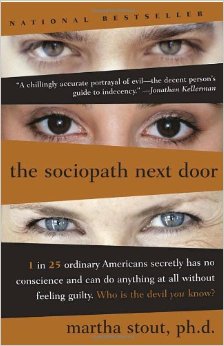
Dr. Martha Stout’s excellent “The Sociopath Next Door: The Ruthless versus The Rest of Us” is an easy to read, well researched and often entertaining study of the psychology of evil. In some ways similar to M. Scott Peck’s “People of the Lie,” but without the religious overtones, Stout chillingly describes the “ice people”–the sociopaths that walk among us.

As many as 4%–one in 25 Americans–is without a conscience or the capacity to feel empathy for others. Stout doesn’t make a distinction between sociopathy and psychopathy, and in this book she is referring to those people who meet the diagnostic criteria for Antisocial Personality Disorder (ASPD), not Narcissistic Personality Disorder. In fact, narcissism as a disorder is rarely mentioned, although she does acknowledge that all sociopaths are narcissistic.

Stout includes many case studies of how sociopathy can manifest in individuals. Contrary to popular notion, not all people with ASPD (sociopathy) are in prison or even criminals. Antisocial behavior is found as often in boardrooms as in prisons, and sometimes more so. For sociopaths who grew up in well heeled families and were able to get a good education, their antisocial traits are likely to manifest in “socially acceptable” ways. For example, a CEO who needlessly downsizes to increase his own bloated income, ruthlessly firing hundreds of employees without caring about the hardship those fired employees now face, is as conscienceless and unempathic as a cold blooded murderer.

A sociopath can be the gossipy woman next door who tells malicious lies about all the other neighbors, it can be the company president who embezzles and defrauds, or it can be the vicious serial killer who preys after college students.

Stout talks a lot about conscience, that quality that separates the antisocial from everyone else. It’s the lack of this trait that makes people evil. She offers a number of reasons why someone may lack a conscience–they may have suffered horrible abuse or neglect as young children (she discusses the sad plight of Romanian children who were adopted by American parents and many of these kids were found to have an underdeveloped conscience), they may not have been taught prosocial values, or they may be deficient in the parts of the brain where the conscience develops in normal children.

I definitely recommend “The Sociopath Next Door” to anyone who has been a victim of or had to deal with a sociopath, whether at home, work, school, or in a relationship. I’m going to extend the term “sociopath” here to include narcissists and psychopaths because they too lack empathy and a conscience. Really, this book should be read by everyone, because all of us have had to deal with ruthless “ice people” who just don’t care about anyone but themselves.

#23 – The Borderline-Narcissistic Continuum: A Different Way of Understanding “Diagnosis”

This is more the sort of thing I want to blog more about. Here’s a somewhat scholarly but interesting and thought provoking article about BPD (borderline personality disorder) being on a continuum that ranges from psychosis (being totally out of touch from reality) to normal (neurotic) behavior (the idea being that everyone is neurotic to some degree, which is what makes us human).

Borderline Personality Disorder was originally given that name because mental health experts studying this disorder in the early years believed that borderlines straddled the line between psychotic and neurotic in their thinking and behaving patterns. For a borderline undergoing healing, NPD (actually functional narcissism, which includes developing self esteem) is the first step toward mental health.

According to the experts mentioned in this article and many mental health professionals, BPD is a less functional and more ego-dystonic form of NPD.

bpdtransformation's avatarBPD Transformation

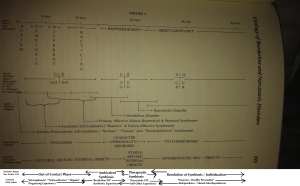
For the purpose of understanding psychiatric problems in a more nuanced and optimistic way, here is a diagram from Donald Rinsley’s book Treatment of the Severely Disturbed Adolescent:

CAM00157Update

Please click on the picture to see it larger. Each row corresponds vertically to the rows above and below in describing degrees of emotional development, and each row describes emotional growth over time from left to right. The majority of the text in brown is Rinsley’s own diagram; the bottom additions in white are mine.

Donald Rinsley was among the most respected authorities on borderline and narcissistic conditions in the second half of the 20th century. He was a psychodynamic therapist who ran a psychiatric hospital for severely troubled adolescents in Topeka, Kansas in the 1960s, 70s, and 80s. He later worked extensively with personality-disordered and psychotic adults in an outpatient psychotherapy practice.

I believe that much can be learned from studying Rinsley’s…

View original post 1,954 more words

Schema therapy/reparenting for an NPD patient.

Schema therapy was developed by Dr. Jeffrey Young for treating personality disorders, which are deeply ingrained patterns of behavior that are not receptive to traditional therapies used for depression, anxiety, neurotic disorders, etc.
(You can read more about how Schema therapy is used for NPD patients here.)

NPD is one of the most difficult of the personality disorders to treat, and it’s rare a patient will present themselves for treatment, unless they have suffered a narcissistic crisis that led to them becoming depressed.

These three videos are part of a graduate school practicum, showing schema therapy in action on a narcissistic patient (non-pathological narcissism/low spectrum NPD).* In the first video (session 1) the patient, “Sam,” has come to therapy because he is having problems relating to his wife and feels rejected by his coworkers. He is easily irritated and shows a number of narcissistic traits, including entitlement and grandiosity. He doesn’t understand or have empathy for his wife’s complaints about feeling hurt by his “brutal honesty.”

In the second video (session 8), Sam begins to talk about himself at five years old, when he broke his arm and felt rejected because his immediate physical and emotional needs were dismissed by his mother, who took him to the babysitter instead of showing the empathy and concern she should have. Then he is asked to relate how “little Sam” feels and begins to explore the emotions he shut himself off from feeling because of his mother’s rejection.

In the third video (session 16), Sam begins to show emotional discomfort as the therapist has “little Sam” (his true self) talk to “Detached Sam” (his narcissistic mask). He admits he wants to be able to show his wife how much he loves her.

Session 1:

Session 8:

Session 16:

Schema therapy is also commonly used to treat people with Borderline Personality Disorder.

* The patient is an actor but this is still an interesting look at how this method of therapy works.

Another narcissist* who wants help.

narcissus3_mythman

Occasionally I receive emails from people with NPD who have come across this blog and want to be cured. I posted about one of them in this post; yesterday I received another from a man who is considering reparenting therapy for his NPD.* He also plans to administer this therapy to himself due to the fact there are so few therapists willing or able to reparent a narcissist and because the few who do are extremely expensive. I’m not sure it’s possible to cure yourself of NPD, but if it is, I would love to find out more!

I have written about various healing methods in this article, but reparenting seems to be the most promising deep insight therapy that could work on someone with NPD, but only if the patient is both self-aware AND willing, as this man appears to be in his email. (I do not believe most malignant narcissists and psychopaths/sociopaths have any hope of being cured).

It always warms my heart to see a letter like his; I may just be one of those people Sam Vaknin calls a malignant optimist, but because I think NPD is really an elaborate defense mechanism adopted at a young age to protect a too-sensitive true self and may actually be a form of severe dissociation, I don’t think people like this man are beyond hope.

Here is the letter he sent. I love his analogy of curing NPD being akin to having a full skeleton transplant. 🙂

I’ve been reading your blogs on narcissistic personality. I first identified I have a problem with narcissism about six months ago and reading about it has been depressing, and very bleak. I’ve always known I’m self-centred and as a teen used to wonder why my empathy could more or less just switch on and off, often without my conscious control. But it is only since reading about NPD that I’ve realised what my issues actually are: I am convinced I have narcissistic personality disorder – I meet SO many of the criteria and as a method of getting by (or even ahead) in life I have trusted and enjoyed this system of habits and rules.

Narcissistic rage, while resulting in feelings of shame once an outburst had subsided, made me feel I was at least strong and able to defend myself from harm. It made me feel protected from being crushed or wounded, though in recent months I’ve realised it is simply an expression of me feeling crushed and wounded. One particular outburst directed at my lover left me reeling when I realised that if I stepped outside of my body and watched the argument happening, I’d have looked on myself with pity not fear. I’ve seen myself explode in senseless and bitter rage before and so it isn’t frightening to me anymore, it’s pathetic. There’s a line in the Annie Lennox song ‘Miracle of Love’ which I’ve been reflecting on a lot lately:
‘cool is the night that covers up your fears,
tender is the one that wipes away your tears,
there must be a bitter breeze to make you sting so viciously,
they say the greatest coward can hurt the most ferociously…’

trapped2

I realised then, and especially when I was listening to this song lately that I am a coward, and that underneath my mask there is a scared little child who felt it must have done something wrong to deserve the feelings of being unloved I experienced in my infancy.

I have found your writing so interesting because if there was one idea I prescribed to growing up it was that we are here on earth to love, and as a huge fan of all things Celine Dion (for whom every ballad is a song of true, deep, sincere and selfless love) even the very music of my life was about loving deeply and experiencing life through love to the fullest. Something strange has been going on in the last year, I think my narcissism has reached a dangerous peak (I’m a performer so being the centre of peoples’ attention and lauded by an audience has, I think exacerbated my own self-involvement). I’ve realised through my reading that if I continue using the mechanisms of narcissism to cover up my fear and feelings of smallness, I will never be able to fully receive or give the love I grew up believing in so much. I actually think if it weren’t for all that Celine crazy love song schtick and the benefit of feeling loved unconditionally by my sister that narcissism would have swallowed me completely by now. I desperately want to avoid getting worse and so much of the online data about NPD is written from a victim point of view. The outlook is so bleak, and the process of realising that I am living this way has been almost traumatic.

Particularly difficult is the frequent assertion that because I am a narcissist, I simply cannot feel empathy for others. I will agree my empathy is not allowed to flourish or be of use much of the time because of the walls I put up around myself, but I KNOW I do feel it. Just as deep beneath my masks as my fear of being hurt, or rejected is my little boy self hiding under the bed terrified. And I believe when he sees someone upset, wounded, attacked, he wants so badly to whisper to the person ‘you can hide under here with me.’ I have had moments with friends or loved ones where I know they are sad, have wanted to reach out and hold them and comfort them but these walls I have spring up like invisible fences stopping me from reaching out. It’s as if the little boy wants to go to the friend and hug them and soothe them, but he’s just too scared to come out from under the bed. I believe that deep feeling is empathy. But my fear, learned from a young age has defeated it. It makes me sick. I don’t want fear to win. It’s a bizarre loop because victim-mentality repels me, which I know is a narcissistic trait. And yet it is partly through the fear of being a ‘victim’ and allowing myself to wallow in the bad things that happened to me as a kid which drives me to reject the negative events in early childhood and be a FULL human being, not just a narcissist who passes as one. I want to experience that Celine Dion love, of which I am sure I have felt more than just glimmers and been blessed with from others.

attitudinal_healing

I believe love exists as a two-way street. I believe to receive someone’s love IS an act of love. To give love properly, we must be able to also receive and accept it. As RuPaul says ‘if you can’t love yourself, how in the hell are you gunna love anyone else.’ Well I want to learn to forgive the child inside for being so scared and angry. I want to teach him (myself) convincingly that it was not his fault he was adopted. That it was not his fault that he couldn’t protect his sister from her own demons spawned from the same young events. Or that somehow even if it possibly could have been his fault, it’s okay now. He was just a child.

I want to re-parent myself and unlearn the narcissistic coping mechanisms of devising a false self and put in place a new system. I feel like this is psychologically similar to having a full skeleton transplant, so I know it isn’t going to be easy. I am proposing to change myself in a big, lasting way. I’m choosing to become a proper adult, not ruled by the little boy anymore. It’s time for me to look after him, and I can only do that my knowing him. Knowing what it is I fear, what my true needs are, not just the needs of narcissistic supply. I must make this much clear: I reject my own narcissism. I do not want it. This system of self-aggrandisement, making myself emotionally unreachable, and of behaving so poorly to the people around me isn’t good enough. I want a better life.

narcissism_childhood

Your blog has given me hope that this might be possible. Your compassion has been vital for me today. I’ve been typing this as much to organise my thoughts as to fill you in on what’s going on. I know you will receive a lot of mail, and I know you’ll be all too used to big long emails from narcissists talking about themselves 😛 But I say all this to say that your writing has been understood by me as a shared promise of hope. It’s really a wonderful thing you’ve done and I’m so glad I found your blog. I wish others would get to read it, rather than so much of the demonising bile dominating google on the subject of NPD. I believe it’s bad to try to turn people into cartoon villains. Every behaviour has a cause.

My main goal going forward is keeping mindful at all times of this little boy. I need to become his best friend and always listen to what he’s saying. I need to tell him ‘no we don’t lash out when we feel attacked,’ and help him grow up. He is, after all, me. I’ve had mild moments of self awareness where I have tried to learn more about treatment and even let my walls down from time to time to be honest and show my naked little self to those close to me. It’s hard for them to understand this stuff and unfortunately after a few weeks pass I find the walls have been slowly slowly rising again. Then it takes a big argument or event to knock ’em down and unfortunately one such event has cost me a really important relationship. The loss of the relationship, alongwith increasingly realising my charisma isn’t enough to get me by in life could be defined as my ‘narcissistic crisis.’

As you said: ‘Harnessing these moments of emotional nakedness is like trying to hold onto a dream while awake.’ My next step is to find a method, or try to invent one to keep me mindful. I think reading works like your own frequently, perhaps daily and reminding myself of exactly what my demons are might help. To hold my inner enemies close in this way may help me defeat them. You’ve helped enormously. Thank you.

* I have no idea whether he actually has NPD or has ever been diagnosed with it. He could have some other disorder. True narcissists rarely acknowledge their disorder or desire to be helped, but I’m sure there are exceptions.

Suicide: A Mental Health Perspective

Just Plain Ol’ Vic asked me to reblog this powerful post about suicide and the judgment of others about that act of desperation. I agree with him about the importance of this serious mental health issue.Every day lives are lost due to suicide and their shocked loved ones must cope with feelings of grief, shock and bewilderment. I think comments like the quoted one about suicide being a selfish act are immensely insensitive and obtuse.

Why are some things so annoying?

This is a fascinating article in Psychology Today about what makes certain things universally annoying.

In a nutshell, the things that annoy us most are things that are both repetitive (clicking a pen over and over, for example) and unpredictable (we don’t know when it will stop).

What are the things that annoy you most? For me, the top two would have to be tailgaters and fleas.
Oh, and narcs.

Things that Annoy Us
Post published by Christopher Peterson Ph.D. on Jul 03, 2011 in The Good Life

annoyed_cat

What annoyances are more painful than those of which we cannot complain? – Marquis De Custine

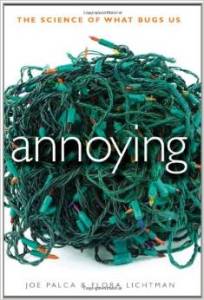
I just finished reading an interesting book titled Annoying by science writers Joe Palca and Flora Lichtman (2011). The book is a free-ranging and intelligent discussion of what is known about the things that annoy us: what, who, when, why, and how.

The authors make the point that there is no single scientific field devoted to the topic of being annoyed. But plenty of scholars and researchers have weighed in on the subject, which means that such a field – were it to exist – would be multidisciplinary. Palca and Lichtman describe lots of pertinent studies by psychologists, neuroscientists, sociologists, anthropologists, audiologists, musicologists, entomologists (because the things that bug us include bugs, especially when they buzz), and others, and they convey lots of interesting facts from research. But my favorite part of the book was by far the many great examples they use of annoyances, from terrible smells to off-key melodies to repetitive spouses and coworkers.

“Annoyance” refers to whatever bugs us (stimulus) and also to the emotional state we experience when being bugged (response). The book starts with a discussion of just what kind of emotional state annoyance might be. It is akin to anger, but not identical. It is akin to disgust, but not identical. And it is akin to frustration, but not identical. The conclusion, according to the authors, is that annoyance is its own emotional thing and deserves examination in its own right. I agree.

Palca and Lichtman observe how difficult it is to find a universal formula for what is annoying, but they take a stab. Annoyances are unpleasant but not terribly so, at least not when experienced one at a time. Rather, it is when they are repetitive and at the same unpredictable (that is, when we do not know when they will cease) that they get under our skin.
annoying_book

A one-time explosion on the street surprises and frightens us, but it is not annoying. Our neighbor’s music, played over and over, night after night, is highly annoying. Boom boom boom.

A coworker who constantly badgers us, belittles us, and bullies us is a bad person, but he is not an annoyance. He is an asshole. In contrast, a coworker who tells us the same joke hundreds of times is not a bad person, but he is an annoyance, and his laughter after each telling becomes like a fingernail on a blackboard, not life-threatening but certainly life-diminishing.

A cancer is a tragedy, and those who deal with cancer by being courageous earn our admiration. A blister is an annoyance, and those dealing courageously with blisters earn little or no regard from anyone. Indeed, if you complain about a blister, you risk becoming an annoyance yourself.

Context matters. Our own wind chimes strike us as beautiful, whereas those of our neighbors are annoying. Along these lines, the authors cite other people’s acronyms as annoying, at least when they are unfamiliar to us, whereas our own acronyms are efficient, entertaining, and even elegant*.

Culture matters, too. Apparently there are cultures – like Yap or Japan – where one simply does not express annoyance. I suspect, though, that annoyance as a private experience nevertheless occurs.

Epidemiologists have long known that major life events – like divorce or job loss – can lead to poor physical and psychological health (Holmes & Rahe, 1967). A more recent realization is that mundane hassles – like having to take care of a neighbor’s pet – also put people at risk for poor health (Kanner, Coyne, Schaefer, & Lazarus, 1981). Indeed, because hassles are usually more common than major life events, the damage they do in the aggregate may be greater. Annoyances are a version of hassles, I think, and they too may be deleterious. Maybe hassles take a toll precisely because they are annoying.

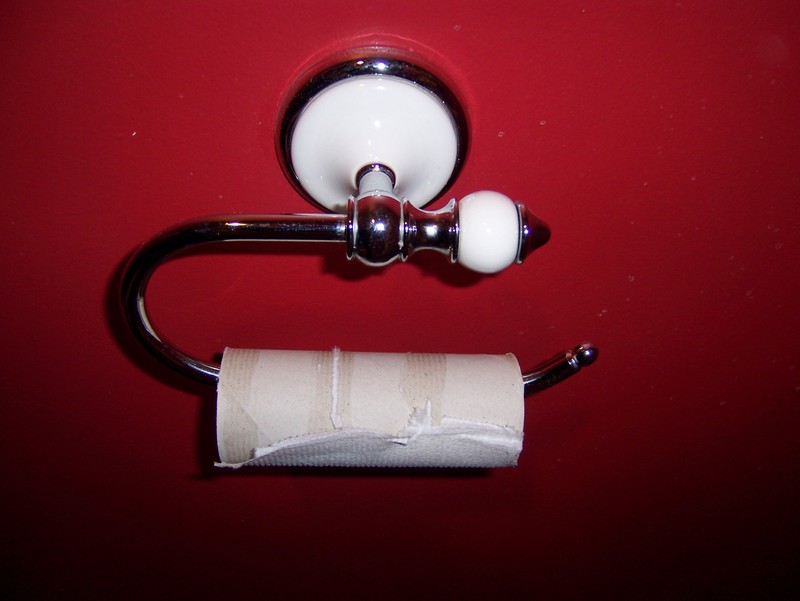
empty_toiletpaper

Things that are annoying grab our unwilling attention, and that may be the reason annoyances are so … how to say it … annoying. They prevent us from paying attention to other things. Palca and Lichtman give the all-too-familiar example of an overheard cell-phone conversation to which we are subjected on a train or bus. We don’t want to eavesdrop, but we cannot help ourselves. And the fact that we only hear one side of it (what is called a halfalogue) makes it especially distracting and thus highly annoying, as it goes on and on and on. Maybe the human tendency to make sense of the world is coopted by hearing half a conversation more than it is by hearing both sides. Is this why political talk shows where “hosts” and “guests” talk over one another can be so annoying?

Why do we have the capacity to be annoyed? Maybe there is no real purpose for this capacity. It’s like an appendix or wisdom teeth. But to extrapolate from Darwin’s proposal that negative emotions like fear and anger are warning signals that lead to appropriate actions to avoid or undo pending danger, perhaps annoyances galvanize an appropriate reaction to whatever distracts us from what paying attention to what really matters, not a bad skill for people to have in their repertoire. Along these lines, Palca and Lichtman speculate that annoyance alerts us to a violation of our expectations about the way things are supposed to be. They use the example of off-key notes for people with perfect pitch.

Is there a positive emotion that corresponds to annoyance? It would be a mildly pleasant experience that results from a repetitive yet unpredictable stimulus. Psychologists have termed these uplifts (Kanner et al., 1981). The unprompted smiles or giggles of our children would qualify. Given that the origin or the word annoyance is from an Old French verb meaning to cause problems, perhaps anything that provides a solution to a minor problem would also qualify, like parking spaces that appear when we most need them.

Is being annoyed an individual difference? Relevant research has just begun, but the answer appears to be yes. There are some people who are annoyed by lots of things and others who are annoyed by very few. Indeed, some research even links the propensity to be annoyed to particular genes, those associated as well with some forms of bipolar disorder. In any event, I bet that the frequently annoyed are less satisfied with life than those who are unflappable. Palca and Lichtman speculate those who are frequently annoyed may themselves be frequently annoying.

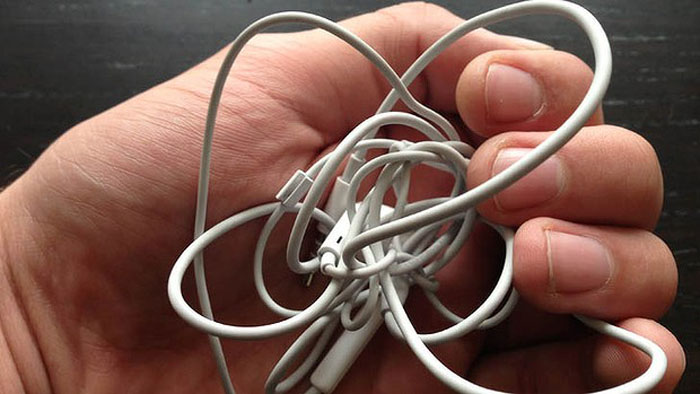
annoying-things-009

Said more positively, experiencing few annoyances contributes to the good life, for the self and others, and perhaps folks with few annoyances simply have higher thresholds. It is hard to imagine that the Dalai Lama gets annoyed very often, and maybe meditation that trains attention is a useful practice for changing one’s annoyance threshold.

If annoyance plays some useful role, though, we would not want to banish it completely. Otherwise, we would simply pay attention to anything and everything without any attempt to sort through them, which may be fine for a kitten or a puppy but not for a person.

Most of us are annoyed by some things some of the time and by other things all of the time. Whatever pushes our buttons may be as much a personal signature as the things we love or the things that we do well. Maybe personal ads should list our annoyances as well as our interests. If a shared annoyance can forge a common bond, perhaps annoyances have a silver lining. Perhaps.

Familiarity does not breed contempt, but it can breed annoyance. Maybe a sign of true love is not being annoyed by what another person does, no matter how unpleasant, repetitive, and unpredictable it might be. Rather than defining love as never having to say you’re sorry, maybe we should define love as never having to say you are annoyed.

Along these lines, several chapters of the book grapple with interpersonal annoyance, raising the intriguing point that the initially endearing traits and habits of a romantic partner may end up being highly annoying and even the source of breakups. So, we may fall in love with someone who is funny, or someone who is stolid, or someone who is attentive, only to fall out of love as time passes and the person is experienced as clownish, or unexpressive, or clinging. Nothing has changed except ourselves and the experiences that have accrued – which is to say everything has changed.

annoying-things-men-do

One of the standard bits of positive psychology advice for couples experiencing rough times is for each to remember what was initially attractive about the other. But in some cases, a displeased partner may not need any reminding at all. To quote football coach Dennis Green’s famous rant, “They’re who we thought they were!” Better advice would be to reframe what has become annoying or to find something else that is attractive. For lasting love, this may be an ongoing process. No one ever said that love is easy.

* It has been suggested that the US Army invented acronyms. I doubt that is true, but members of the military seem to revel in them. I have done some work with the Army over the past few years, and while I have the utmost respect and admiration for those who wear the uniform of the country, my good feelings come to a screeching halt when Soldiers start tossing out acronyms, as some are wont to do. My all-time least favorite is POV, an Army acronym for personally owned vehicle. That means car, for goodness sakes. When I meet with members of the military, I sometimes request that the meeting be a DAZ-meaning de-acronymed zone. Just say the words, sir or ma’am, at least if you want me to pay attention to the content of what you say and not be incredibly annoyed by how you say it.