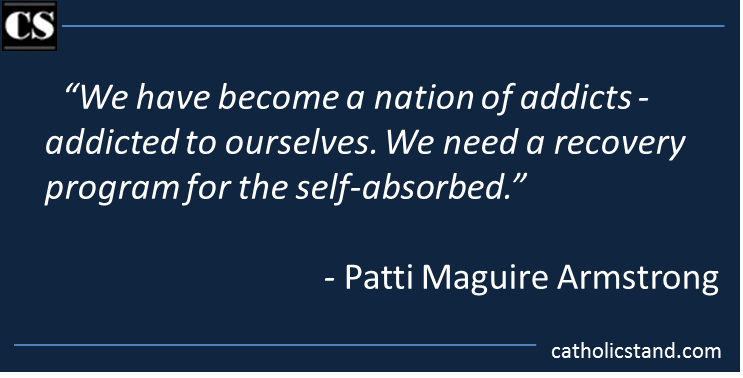
Why isn’t there a 12-step program for narcissists?

narcissistsanonymous

…and I’m not talking about this either. 😉

A commenter on this post wondered why there aren’t any 12-step programs for people with NPD, and that got me thinking — well, why aren’t there?

About a month ago, my friend Mary Pranzatelli and I were having a conversation about this very same thing on Facebook.

There’s a lot of good reasons why a 12-step program might be helpful to a narcissist. After all, narcissism and addictive disorders like alcoholism have a lot in common. This isn’t an idea I just dreamed up. Sam Vaknin also wrote about the similarities, as well as others like psychologist Tian Dayton.

narcanontshirt

Here’s a quick list of things both narcissists and people addicted to substances have in common:

1. They are often in denial about their disorder. When a narcissist or an addict realizes they have a disorder they may want to get help. (This is actually the first step of programs like AA or NA.)
2. In some ways, both addiction and narcissism is a choice, even if it was made unconsciously (although there is likely to be a genetic component too that at least gives one a predisposition toward these disorders).
3. The narcissist’s drug of choice is narcissistic supply, which gives the narcissist an adrenalin rush. When it’s lacking or in short supply, they will crash and burn. The addict will also crash and burn without their fix.
4. Once a narcissist or an alcoholic (or drug addict), always a narcissist or an addict. You can stop drinking and using (or stop acting so narcissistic), but the underlying disorder is unlikely to ever be cured.
5. Treatments like CBT (cognitive behavioral therapy) work much like the 12 steps of AA–they change behaviors but not the underlying disorder. The person must make a conscious effort to replace the old behaviors with the new ones.
6. High possibility of relapse or “slipping” back into the addictive or narcissistic behavior patterns if the program isn’t strictly followed (or even if it is).
7. An addict or narcissist without their fix (or supply) can both act in antisocial, selfish and narcissistic ways until their fix (or supply) is procured.

and finally…

8. Because narcissism (and addictive disorders) have a spiritual component, admitting that God or a Higher Power can help you is an integral part of all 12-step programs.

addicts

True, a 12-step program wouldn’t cure narcissism (just as AA doesn’t cure alcoholism), but I think such a program could help a narcissist who is self-aware and wants to change their attitudes and the way they treat others.

So why isn’t there a 12-step program for NPD?

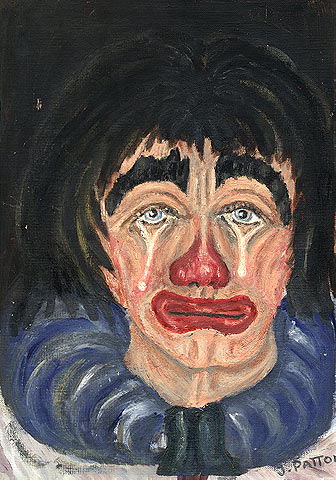
The tears of a clown.

clown1

Here was one of yesterday’s search terms:
vomiting after seeing ex.narcissist begging me back

Really now? The narc’s begging you back actually made you puke?
But yes, I can definitely understand it though.

Sometimes those over the top emotional displays when you take away a narc’s source of supply by leaving them are pretty nauseating to say the least. I don’t know if it’s “acting” or desperation or what, but I know it’s not “love.”

I remember back in my 20s, witnessing the incredible reaction of a malignant narcissist boyfriend when I finally worked up the courage to tell him I was leaving him.

This was a verbally and sometimes physically abusive man who treated me like dirt most of the time, made fun of me, tried to turn my friends against me, and cheated on me as well. I had waited far too long to disconnect from him. I honestly didn’t think he would care that much because his behavior was anything but that of a man in love. In fact I thought he’d probably be relieved I was letting him go.

But oh, I was so wrong. SO wrong about that.
When I told him I was leaving, this narcissistic jerk literally exploded into the loud, violent, gasping, wracking sobs of a very young child, torrents of tears and snot pouring and mingling together on his fire engine red face while he begged me through choking sobs not to leave him. He actually was gagging. I don’t think I have never seen an uglier crier than him at that moment. It made me feel sick to see this, and I actually did feel vaguely nauseated. I felt no empathy for him at that moment. I just sat there with my mouth hanging open, not quite believing what I was seeing.

Then to make matters even worse, he kept telling me over and over how much he loved me and couldn’t live without me (my bullshit detector was at full volume). Then he begged me to hold him too, but I just…couldn’t. Ew. I felt myself recoil in disgust. God, I felt so repelled by him. It wasn’t even because of his over the top (and rather gross) emotional display, but because I knew all those tears he was shedding “for me” were really just for himself. They were an elaborate act. Maybe not fake, because no one who wasn’t really hurt would be able to cry like that, but they were manipulative tears, meant to “win back” me as his source of supply. This love-bombing loser should have gone into the movies–he would have won an Academy Award for that incredible performance.

I knew he never loved me, and true to form, two weeks later he found a new girlfriend source of supply.

Blargh.

puke

Can narcissists feel empathy for a pet?

dyed_dog

I wonder.

Earlier today I posted Sam Vaknin’s story about his goldfish Ned. He seemed to be feeling something close to empathy for the tiny creature’s suffering when it became ill and something closely resembling grief when the end finally came. Rather than watch the fish continue to suffer, he decided to take matters into his own hands. Did he do this to end the fish’s suffering–or to end his own suffering?

But even if he only desired to end his own suffering, watching the goldfish suffer was causing him pain. So either way, he cared about the fish, even if he only did what he did because watching Ned continue to get sicker was too painful.

This made me think about other narcissists I know who own pets. Do they really care about their pets, or are their pets, like their children, just extensions of themselves?

I think the answer is both. Yes, many narcissists who own pets regard them as extensions of themselves. I think of a neighbor of mine, an insufferable, conceited malignant narcissist if I ever saw one, who has a purebred Bichon Friese. She said she would never own a “mutt” from the pound. Oh, no. Only a purebred dog who makes HER look good will do. She puts bows in Fifi’s hair and gets her toenails painted at the groomer’s. She takes her everywhere and shows her off, as if she’s showing off a new car. Narcissists treat their children the same way–as accessories to make them look good, but because a dog isn’t supposed to have a mind of its own, it’s more acceptable and far less damaging to a dog to be treated this way than it would be for a child.

Yet it’s clear she loves that dog. She spoils Fifi rotten, and the little dog seems happy enough. Again, it’s a dog, not a child, so being objectified is probably okay. I know if anything were to happen to Fifi, this woman would be devastated with grief, at least until she found a new source of canine narcissistic supply. She’s the type who would probably have a funeral for her dog and a custom made urn with Fifi’s likeness painted on it to display on her mantel.

But she would also not hesitate to have Fifi put down were she to become ill. Some may say this is the humane thing to do–that anyone with a conscience and a heart would not want to see a pet suffer needlessly, and that’s true if the pet is truly ill and has little to no chance of recovery or is in a great deal of pain. But to a narcissist, a sick pet is also an inconvenience and a burden. A sick pet is no longer an acceptable extension of themselves; it becomes a separate being who has needs of its own that do not fit the narcissist’s agenda. A sick pet no longer makes them look good.

How much will a narcissist sacrifice before having an ill pet put down? Most people won’t euthanize a pet unless everything else has been tried first. It’s a last resort, something none of us want to do, but at some point it becomes more selfish to try to keep a sick pet alive than to put an end to its suffering. I remember years ago a narcissistic woman I knew had her cat put down because it had worms. The cat was suffering severe diarrhea and was losing weight. The worms could have been easily treated, but she didn’t want to be bothered. Cleaning up the cat’s messes was too much of a chore, and apparently so was taking the cat to the vet to be treated. So she had her cat put to sleep. It’s pretty obvious this woman didn’t have the cat euthanized out of humane compassion, but because it was more convenient than trying to keep him alive. To her, the cat was not a living creature, but a toy to be tossed away the minute it was no longer so much fun to play with or required maintenance.

golden_retriever

It can work the other way too. I knew a narcissistic man who also had a dog, a beautiful Golden Retriever named Bruno. When Bruno was about 12, he developed cancer. The man was very attached to Bruno, and used to tell everyone he was the only friend he had. Even when Bruno got to the point where he stopped eating and slept most of the time, the man refused to have him euthanized. The animal was clearly suffering, and everyone told him it was the only humane thing to do, but the man still refused. Bruno finally died at home in an emaciated state. Clearly, this man cared nothing about Bruno’s suffering even though he appeared to love the dog. He obviously was attached to his pet, but if he truly loved him, he would have put the animal’s needs first, even if it hurt to do so. Real love–whether for a pet or another human being–requires sacrifice and putting the other’s needs first. This man may have “loved” his dog, but he was putting his own needs first.

Most narcissists claim to be attached to their pets, and most of the ones I know truly are. But is attachment love? Or does attachment to a pet just mean the animal is another source of narcissistic supply–a creature who is never going to judge them, disagree with them, insult them, or abandon them?

Sam’s grief over his goldfish appears to have been real, and I think he did the right thing because that fish was most likely suffering (as much as a goldfish can suffer) and wasn’t going to make it. Would he have been the same way with a cat or a dog–or a child? We can’t answer that. Maybe it’s easier for a narcissist to feel empathy and act in unselfish ways for a simple creature–a reptile, fish or invertebrate–who is very unlike a human (unlike a cat or dog, who resemble human children in many ways) and therefore make fewer emotional demands on them. Maybe narcissists just can’t empathize with other humans or highly evolved animals who resemble them too closely or make too many emotional demands.

NPD is like a drug addiction.

narcsupply

It’s been said that people on hard drugs like cocaine, heroin, or methamphetamine can act like narcissists, even if they do not have NPD. That’s because as the addict’s body begins to crave the substance, they will do ANYTHING to get it, because to not get it will cause them unbearable agony. Even if they know it’s better for them to go through withdrawals than continue their addiction, they will still beg, steal, hurt others and even kill to get their fix. Empathy, remorse, and consideration for other’s boundaries and rights flies out the window. The only important thing is getting that drug. It doesn’t matter if the addict is the most compassionate and loving person in the world when they’re clean; when they’re jonesing for a fix to ward off the agony, they become psychopaths.

When a person becomes a narcissist (usually early in childhood due to abuse but sometimes later, even in adulthood), they become an addict too–their drug of choice is narcissistic supply, which feeds their sense of entitlement and specialness. It mirrors and validates the false self they have erected for themselves, a self they need because if it was ever lost or shattered, they would be forced to face their own emptiness.

Maintaining the mask takes enormous effort and causes stress. Narcissists live in constant fear of the mask being revealed as the fake self it really is and they live in mortal terror of the mask being destroyed or harmed (either through loss of supply or perceived insults or threats) because if that happens their protective armor would be damaged or lost. So if they perceive any attack on themselves, no matter how minor, they will react badly. That’s why narcissists are so paranoid and so quick to anger and so easily offended. It’s why they overreact to slights. There’s simply no room for a sense of humor or self-deprecation.

unmasked

What some narcissists (probably most) may not realize consciously is they really erected this elaborate defense mechanism as a way to protect and hide the scared and hurt child that was lost to themselves through abuse or neglect. Most can only see the emptiness if they “get clean” (lose their sources of narcissistic supply) and like a person suffering from drug withdrawal, if a narcissist loses their “drug” they undergo a narcissistic crisis (something they avoid avoid at all costs) and will suffer as badly as anyone withdrawing from hard drugs.

Narcissists with no insight (probably most of them) can’t recognize the hurt, lost true self hiding in terror behind the protective but always pissed-off-at-the-world mask of NPD. But for those who can, meeting that lost self (if they can see through the empty blackness that hides him or her) is agonizing because of the regret of knowing what they have done to their true self when their minds erected the defensive mask that was ironically meant to protect the true self. Then they suffer unbearable guilt and shame. This is the reason why most people with NPD cannot be cured. Like a drug addict, maintaining a mask to hide the emptiness (which itself hides the hurt child they once were who was never allowed to grow into a person) becomes the most important thing, even if it means they must beg, steal, hurt or even kill someone to obtain their fix of narcissistic supply or defend their protective walls of barriers.

Some insightful narcissists actually don’t want their disorder but they still can’t escape from its clutches because their desire for a fix becomes too strong. These are the most tortured narcissists and the ones most prone to black depressions and other serious mental disorders. They can undergo a psychotic break. Constant war is being waged within them, between the person’s desire to be a real person and react in normal, human ways, and their overpowering desire for narcissistic supply and having to harm others to get it and/or defend themselves from narcissistic injury.

This is why a few insightful narcissists may be nice at first. It could be a mask but it could also be a real effort to try to act more human. But sooner or later, if someone they’ve been nice to insults them (or they perceive an insult due to their own paranoia), their desire to repair the damage they feel was done to their false self (which is important because it’s all they have to hide behind) becomes overpowering and they will turn mean and strike you out of the blue like a rattlesnake. Some might even feel guilt after the fact, but they just can’t stop doing it. It’s an overpowering addiction, like a drug so powerful you can never free yourself from it.

A drug addict will do almost anything to get his drug of choice, even if he wants to be clean. A narcissist will do almost anything to keep his masks intact, even if he wants to be human.

They key to a cure then, would be to find a way to wean a narcissist off his need for a fix of supply and somehow make him willing to to work through the ensuing narcissistic crisis (withdrawals) and confront the emptiness that hides his or her hidden, neglected true self that lives in darkness and silence inside the vacuum.

***
Due to a comment I received on another thread this morning, from now on I am putting a link to my Disclaimer after every post where I write about mental conditions and disorders outside of personal anecdotes, obvious opinion pieces, and journals.
Disclaimer: https://luckyottershaven.com/disclaimer/

Are narcissists ever abuse victims?

blackwedgeoflove
Black Wedge of Love / rawcandor.com

Here I’m not going to talk about the popular theory that most narcissists were probably neglected or abused as children. In this article, I’m focusing on the question of whether someone who is already a narcissist can become a victim of narcissistic abuse.

Yes, they can–and more often than you might think.

Of course, not all narcissists are abuse victims, and the more malignant they are, the more likely they are to cause suffering rather than suffer themselves. Psychopaths and malignant narcissists wield Svengali-like power over their subjects and are often found in the highest echelons of business, politics, religious organizations, and other positions of great power and influence. They do not allow themselves to be in a position of subservience to someone else, and take great pride in the fact most people fear them. In fact, they would much rather be feared than liked. The smartest ones are cunning enough to be invulnerable to a total loss of narcissistic supply, which would send them crashing into a deep depression (and opens a window to healing, as I’ve discussed in previous posts). They know how to get others to trust them, which is part of their charm and one of the ways they climb to the top and stay there.

But other narcissists (not “benign” narcissists, because they do have a conscience and even some empathy)–those who still have NPD but are not as high on the spectrum as a malignant psychopath, can and do become victims to “stronger” narcissists.

An unholy alliance.
These relationships actually work in their twisted, sick kind of way, with the weaker narcissist falling under the thrall of the stronger, malignant narcissist. Because they are both still narcissists and the weaker one basically identifies with their abuser (known as Stockholm Syndrome, which is also a defense mechanism seen in victimized people with PTSD), they form a symbiotic relationship, with the weaker person willingly taking on a masochistic role and the stronger one the sadistic role. Their sexual relationship may indeed include elements of S&M, but the sadomasochistic relationship isn’t limited to just sex.

The stronger narcissist will treat the weaker one badly and abusively, but because the weaker partner identifies with their abuser, they actually “enjoy” the abuse they get. It validates them and gives them the narcissistic supply they need (and way deep inside, maybe they feel like they deserve punishment).

Unlike normal people, a narcissist prefers negative attention over no attention, and their abuser is seen as their savior–the one person in the world who can give them the attention they so crave. M. Scott Peck, in his book “People of the Lie,” described such a relationship. Harley was a weak man in thrall to his evil, mean wife Sarah, who constantly berated and belittled him and ordered him around, while Harley just whined pitifully about how badly Sarah treated him but seemed to do nothing about it or have any real desire to stop her abuse. He had no intention of leaving her. He told Dr. Peck he “needed” Sarah. Of course he did–Sarah was his sole source of narcissistic supply (because she had made sure he was cut off from anyone else). Dr. Peck speculated that Harley, although complaining incessantly about his wife’s abuse, actually seemed to want it, and he wondered if he might have been a little “evil” himself, which was what might have attracted him to someone like Sarah in the first place.

I see this same situation in my father, who has always been codependent on MN women, and allows these women to make all his decisions for him. He has always been weaker and more codependent than the domineering, controlling women he married.

Needy narcissists.
A friend of mine, a survivor of narcissistic abuse who also has a blog, tells the story of an aunt of hers, living in abject poverty, who was scapegoated and belittled by every other family member, most of them highly malignant narcissists. She was tolerated at family events but outside of that, no one would have anything to do with her. You feel sorry for this impoverished, lonely, maltreated aunt–until you keep reading and find out that she is a malignant narcissist herself–of the “needy” variety.

Businessman begging with cardboard sign

Most people think of narcissists as cagey, cunning, selfish sociopaths who get everything they want by ruthlessly stomping all over others to reach the pinnacles of financial and professional success, even if that involves a life of crime. But there are many narcissists who are not successful, and in fact are dirt poor. These are what I call “needy narcissists”–people who mooch off of others, using others’ goodwill and generosity without ever giving anything back in return. They whine to anyone who will listen about how their sorry circumstances are everyone’s fault but their own. They demand pity and constant attention. They act entitled. They cry and try to elicit your guilt. They might steal from you. They’ll start a smear campaign against you if you don’t give in to their demands. Sometimes they find ways to get government assistance–such as disability–by faking or exaggerating a disorder so they don’t have to take responsibility for themselves.

They are financial and emotional vampires, feeding off others’ altruism until their providers are sucked dry emotionally, spiritually, mentally and sometimes financially. My ex-husband falls into this category. These narcissists are only less dangerous because they lack power and money, but make no mistake: they are just as dangerous on a personal level as materially “successful” narcissists, and they play all the same evil mindgames to get their way. They take pride in how pathetic they are rather than in what a perfect specimen of beauty, intelligence, success, or charm they are. They still think they’re entitled to be treated as if they’re gods.

“Covert” and “inverted” narcissism isn’t narcissism at all.
There is also something I’ve read about called “covert narcissism” or “inverted narcissism,” which actually has been used to describe people with low self esteem, avoidant traits, hypervigilance, and high sensitivity. Which means that according to that definition, I am a narcissist.

I don’t buy it though, because people with these traits are usually very empathic and if anything, their conscience is too well developed for their own good. They not only worry they won’t be liked, they worry that they may have hurt someone or have done something wrong. They struggle with guilt and shame. They may self-sabotage, but they never set out to hurt other people, and when they do they feel terrible. Real narcissists may be hypersensitive (about themselves) and paranoid, but they never worry about hurting others; at best they just don’t care.

Of course an “inverted” or “covert” narcissist is likely to be abused, because they fit all the traits of someone likely to be bullied and victimized. They are us!

The weak narcissist in thrall to an MN is not an “inverted” narcissist–they are true blue narcissists who just lack the cunning, intelligence, charm or Svengali-like traits their abuser possesses. Or they’re just not as evil as the MN. Within the relationship, they are just abuse victims, but outside of it, they treat others as badly as any other narcissist. Just because they’re abuse victims doesn’t mean they’re nice people. (It doesn’t mean they don’t deserve help either). Obviously, the best thing for a narcissist in an abusive relationship to do would be to go No Contact, but due to their craving of (negative) narcissistic supply, they are not likely to ever leave the relationship.

narcissist

Can a malignant narcissist become an abuse victim?
Other than in childhood (before they became narcissists), I would say no. Because two high-spectrum, completely malignant narcissists are likely to hate each other. One MN won’t give up their power to the other and sees another MN as a huge threat.

Think of two predatory animals like wildcats, encountering each other in a forest. Both are alpha males of their own group so neither is a weak animal. Would these two cats become allies? No. They will fix their gaze at each other, never taking their eyes away, and slowly start to circle around each other, sizing up the other animal. At some point, one of the cats will launch a surprise attack, or one will flee before that happens.

knifefight

In a similar manner, two predatory humans in the same room will be very cautious around each other, sizing each other up, but will almost always intensely dislike each other. They may fight, or they may never speak to each other, but they will not become friends. They are of no use to each other whatsoever. A malignant narcissist will always choose a weaker victim he can use and manipulate, and sometimes that victim will be another narcissist who identifies with their abuser but is no match for them.

Joel Osteen worships himself.

joelosteen

I found this intriguing article at Salon.com about the famous megachurch leader, Joel Osteen, a proponent of the peculiarly American “prosperity gospel,” a belief that God will reward you with material wealth if you are a True Believer. The article is a bit old, but is still relevant and I never saw it before, so, well, it gets added to the Museum of Narcissism.

If Mr. Osteen makes people feel better about themselves, fine, but Mr. Osteen is like a heroin addict getting his fix of narcissistic supply from his many followers, who worship him as if he were God himself. Frighteningly, Big Religion is full of such people who really only care about their own glorification.
What would God think?

Here is the article (written by Chris Lehmann at Salon.com):

If history is told by the winners, then Joel Osteen — the relentlessly upbeat spiritual caretaker of the national attitude — is history’s designated chaplain. In a marathon Sunday faith rally in the heart of the nation’s capital, Osteen, who presides over America’s largest megachurch congregation, the nondenominational Lakewood Church in Houston, exhorted the tens of thousands of believers amassed in Nationals Stadium to “live in victory,” to seize their “destiny moments,” and to fulfill God’s plan for their personal, financial and emotional success.

The Washington rally — billed as “America’s Night of Hope” — had gone a bit afoul of its own victory plan, however. It had originally been scheduled the night before, but as a persistent afternoon drizzle gave way to some spirited cloudbursts, the event’s organizers rescheduled it for the following afternoon. As I approached the centerfield box office outside Nationals Park on Saturday, the marquee overhead bore what had to be the glummest rainout announcement of the young 2012 baseball season: “Night of Hope postponed until 4 p.m. Sunday.” And since the Osteen message involves a lot of merchandising, the imposing tables hawking T-shirts and other commemorative swag seemed suddenly off-kilter. One prominent Night of Hope T-shirt was emblazoned with the inspirational divine message “I can do all things” — all things, that is, but summon the faithful to stand out in the rain.

But the Osteens were not about to let the intervention of the elements become any sort of setback. As the megachurch pastor — turned out in a blue suit and a beatific grin, looking for all the world like a fitter Tim Allen, fresh out of rehab — took his spot at the second-base perimeter of the infield, before the bank of TV cameras set up on the pitchers mound, he called out, “Isn’t it great to be here? It’s another great day the Lord has made!” He paused to note that, yes, “we had some rain last night,” but that the event’s reshuffled schedule could well mean that some people who couldn’t have made the evening version of the prayer gathering might well have turned up serendipitously today. In any event, Osteen declared his certitude that “God put the right people here right now.”

That confident assertion of — and indeed, identification with — the divine will is one of the calling cards of the Osteen faith. Amid all the spirited self-affirmations and folksy homilies that stud an Osteen sermon, it’s easy to miss the oddly deterministic invocations of divine prerogative summoned up by the preacher, who belongs to the “Word Faith” tradition of Pentecostal belief. Osteen’s serene depictions of God’s eternally uptending designs for the fates of individual believers are a sort of inverted Calvinism. Where the Puritan forebears of today’s Protestant scene beheld a terrible, impersonal Creator whose rigid system of eternal reward and punishment dispatched many an infant and solemn believer to the pit of damnation, Osteen’s God is an intensely personal presence, guiding believers out of pitfalls into inevitable glory and joy — not so much a raging Patriarch as a genial cruise director. “God’s dream for our own life is so much bigger than our own,” went one frequent refrain at the D.C. rally. “Let’s not put any limits on God.” Osteen characterized the Deity as a “running-over” and “abundant” God. “Have you ever been to a fast-food restaurant, and they ask you if you want to supersize this? Well, God is a supersizing God,” who is determined, Osteen assured the crowd, to “supersize your joy.”

It stands to reason, in this arrangement of cosmic fate, that the stubborn human weakness for anxious introspection and downbeat self-doubt is something of an affront to the author of being. “When you are criticizing yourself,” Osteen announced, “you are criticizing God’s creation. The next time you think something negative, turn that around, and say, ‘I am God’s masterpiece.’”

The talismanic faith in positive utterance is another key article of belief in the Word Faith tradition. Some Word Faith devotees are devout believers in faith-healing, and one of the key episodes Osteen cites in his own account of his faith journey is the miraculous recovery of his mother from an apparently terminal case of liver cancer in 1981. Faced with the prospect of losing his mother, the young Osteen — then a communications student at Oral Roberts University with no ministerial ambitions — turned to prayer, saying to God, as he now recounts, “I know you can do what doctors can’t do, what medical science can’t do.” Sure enough, Osteen’s mother, Dodie, went on to be cancer-free, and took to the podium on Sunday after her son’s testimonial. She reprised the story of how she fought off the specter of death by seeking out the “most healing” passages of scripture, which she assembled into a digest she still consults regularly: “Like American Express, I don’t leave home without it,” she said. Then she issued a disclaimer for her listeners contending with severe illness: “I don’t advise you not to seek treatment — get treatment any way you can.” Such cautions sounded a bit rushed and legalistic next to her own account of her recovery: When she and her preacher-husband both sensed the end was near, she recalled, “We lay on our faces … He said, ‘I need you, the church needs you, the children need you … And now, almost 31 years later, I won the battle and so will you!” God, after all, “delights in answering the prayers of his children,” and “loves everybody the same, but he can do for you what he did for me.”

The Word Faith image of the wonder-working, healing God is discomfiting to ponder, and not just because he might tempt desperately sick believers to go rogue beyond the dictates of medical science. The constant recitation of God’s transcendent goodness and the deference paid to his ironclad ability to lift believers magically out of suffering and woe both subtly downgrade the divine presence into a glorified lifestyle concierge. This God has no real way of accounting for the age-old paradoxes of theology, such as the tolerance of personal and historic evil, or the deeper ironies and unintended consequences of the believing life. Even less does the Osteen family’s success gospel encompass a sustained social ethic — even though the D.C. event featured an appeal on behalf of the World Vision ministries to adopt a needy child in the developing world. The believer’s chief task is to ratify the preexisting divine script of success in his or her individual life — and then to bear testimony to that joyous transformation in a community of like-minded success believers.

It’s a curiously childlike vision of faith — a point driven home in a homily offered up by Joel’s wife, Victoria, who serves as a kind of co-pastor of the separate domestic sphere at the couple’s revival meetings. When she finds herself assailed by cares, anxieties and negative thoughts, Victoria reported, “I visualize a bouquet of helium balloons in my hands, and I literally hold those balloons out and release them to the heavens … And as I release those balloons to Him, I say, ‘I may not have the power to change my circumstances, but God has that power to change our circumstances.’” In a later homily on the properties of unconditional love and forgiveness, Victoria delivered an extended gloss on what was apparently one of the few remotely traumatic moments in her suburban Texas upbringing — a time when, as a freshly licensed driver, she had taken out her dad’s car and negligently instructed a friend to roll down a passenger-side window that was malfunctioning, thereby breaking it once and for all. When she finally summoned the nerve to fess up to her dad, she found him to be disappointed but gloriously forgiving; he “didn’t judge my future from that one mistake” — and neither will the indulgent dad of the Osteen heavens. “You may not have been shown unconditional love in your life,” Victoria announced, “but God loves you unconditionally.” The problem, of course, is that even those of us who did survive unhappy childhoods are no longer 16 — and as a result, we need a God who can meet the challenges of the new responsibilities we’ve taken on as we’ve matured, not a figure of undifferentiated sentiment, handing our forgiveness and love like lottery tickets.

The other childlike quality of the Lakewood account of divine grace has to do with the past — which, together with negative thinking, represents the closest thing to evil in the Osteen’s scheme of salvation. The past is bad because it mires believers in remembered hurts and slights, and thereby obstructs God’s grander design for their lives. “When we hold on to the past, when we don’t go to God, that just puts more baggage in our suitcases,” Victoria exhorted, in a not-altogether-wieldy metaphor.

This spiritual hostility to the past was an all too frequent refrain in the event’s musical selections — a monotonous offering of anthemic, bombastic Christian rock, all composed without the benefit of a single minor chord or any discernible melody. “I’m moving forward,” went the lyrics to one of these intra-sermon studies in Journey-esque hymnody. “I’m not going back / I’m moving ahead / I’m here to declare to you that the past is over.” An American idol contestant named Danny Gokey also offered testimony about how the Osteens had helped him conquer his depression in the wake of the untimely passing of his wife. Gokey then performed a Christian rock number of his own, “My Best Days Are Ahead of Me,” which seemed to make short work of his once-debilitating grief: “I don’t get lost in the past or get stuck in some sad memories,” he sang, rather creepily; the song’s bridge announced that “Age isn’t nothing but a number,” and then resolved on a Successories-style upgrade of a well-known Army recruiting slogan: “If I keep getting better / I can be anything I want to be.”

There’s a term from the psychiatric clinics that neatly captures the outlook of someone possessed of grandiose fantasies about the imperial reach of the self, and a principled refusal to acknowledge anything poised to diminish such fantasies — such as the passage of time. That term is “narcissistic personality disorder,” and it does nothing to detract from the positive features of the Osteen gospel — the injunctions to persevere in the face of adversity, or the appeals for donations to World Vision — to note that this is a system of faith tailor-made to sustain narcissistic delusion. To grasp the overweening self-absorption of the Osteen faith, one need look no further than the frequent recourse Osteen makes to his own success story in sealing the case for God’s providential plan for the believer’s own life. Now, unlike other well-known evangelists, Osteen can’t lay much claim to a hardscrabble Horatio Alger-style life story. His 1920s forebear in Pentecostal media preaching, Aimee Semple McPherson, was a single-mother missionary before coming into fame and fortune as an evangelical celebrity in the Radio Age; Billy Graham was the son of a poor North Carolina dairy farmer. Osteen, by contrast, was a second-generation evangelical leader, who’d been working as a TV producer for his father John Osteen’s growing ministry before he succeeded to the elder Osteen’s pulpit after his father’s death. His personal biography tracks closer to fellow Pentecostal TV preacher Pat Robertson’s background: Robertson was the son of a U.S. senator before finding his own adult spiritual calling.

Nonetheless, Osteen repeatedly cites his own success presiding over the spiritual flock he inherited as the prime exhibit of God’s ready transposition of divine grace into worldly success. When he first acceded to the pulpit, he recalled from his riser above second base, he felt no special aptitude for ministering; he’d heard that Lakewood church leaders were raising doubts about his vocation, and the church needed to move into a bigger, upgraded new facility. “At one point,” Osteen preached, “it seemed like everything was coming against me. The enemy was fighting me not from where I was coming, but from where I was going … He didn’t want Lakewood to be in the Compaq Center” — the former home arena for the Houston Rockets, and now home to the Lakewood congregation of nearly 50,000 souls. The Compaq Center deal is a frequent touchstone in Osteen’s faith reminiscence; it occupies a good stretch of his blockbuster best-selling self-improvement tract, “Become a Better You,” which also finds evidence of divine favor in a home-flipping deal Joel and Victoria struck at the height of the housing bubble, as well as in such mundane votes of divine confidence as setting the pastor up with a premium parking space. Indeed, the steady parade of testimonials from the wider Osteen clan on the Night of Hope risers bespeaks a family-wide penchant for casting one’s commonplace personal biography as a sort of infomercial version of the Christian faith. (In addition to mother Dodie and wife Victoria, Osteen’s brother Paul, who runs a medical charity in Africa, took to the stage Sunday to relate a more responsible story of healing, in which due medical diligence properly preceded the broader appeal to faith; Joel’s two children, Alexandra and Jonathan, are respectively a vocalist and guitarist in the ministry’s Christian rock ensemble.)

Now, it may very well be that in a certain kind of conviction of grace, believers feel themselves suffused with the divine presence, and find their most quotidian activities reflect celestial favor; the 14th-century Saint Julian of Norwich recorded a vision in which she beheld the entirety of creation in an object no larger than a hazelnut, cupped in her hand. Perhaps, in this view of things, a converted sports arena or excellent parking spot is no great stretch when it comes to testifying on behalf of a God for whom all things are possible.

Still, the claustral feel of Osteen’s success gospel paradoxically works exactly the same effect that he warns believers to resist: It imposes limits on God, by largely confining his workings to the dominant American culture of success. If the Osteen-coached believer does not reap abundant and large reward in career, family life or creative pursuits, they are not necessarily going to curse their God, as Job’s comforters had counseled him to do amid his notorious personal setbacks. But neither are they going to make the key connections that earlier Protestant divines have preached, going back to Jonathan Edwards and John Calvin: that the divinity does not, in fact, have your own personal happiness occupying pride of place on his exhaustive to-do list. The universe is ultimately about a larger set of concerns, and faith concerns a much vaster striving toward justice than believers are wont to see in their personal affairs, their social conquests or their annual paychecks. This is why Edwards, for all of his better-known hell-and-brimstone sermons, urged onto believers a stoic “consent to being in general” — not a plan for individual life advancement.

This disjuncture between Protestantism’s more humbling counsel and the feel-good Word Faith gospel became most painfully evident during one of Osteen’s closing perorations. In chilling detail, he recounted the story of a young Tutsi Christian woman who’d hid out in the bathroom of her church pastor’s office at the height of the 1994 Rwandan genocide. The machete-wielding Hutu killers who pursued her returned to the pastor’s office every day for 91 days, usually calling out for her by name. At one point, Osteen said, a Hutu militia man was poised to turn the knob on the door to the tiny bathroom where the woman was quartered alongside six other Tutsi believers — but at the last moment, he became distracted and walked away. Finally, when the genocide had been contained, the woman was free, and has been traveling with ministers ever since to testify to the amazing story of her survival. “Nearly 1 million Rwandans were killed in this genocide,” Osteen said as he wound up to the story’s larger moral. “It was very sad.”

Well, no. The Rwandan genocide was something far more than sad — it was a colossal failure of moral and political agency, going back to the German and Belgian colonial partition of the country that set up artificial power conflicts between the nation’s two main tribes. This horror also most certainly came about thanks to the wretched failures of the Clinton administration and other Western powers to arrest a well-documented string of massacres, even as senior U.N. officials such as Lt. Gen Romeo Dallaire, the leader of the agency’s Rwandan peacekeeping mission, implored them to.

For Osteen, of course, the story of this woman’s survival was a divine miracle. But if this one survivor was enjoying the loving favor of an omnipotent God, what are we to conclude that this same God thought of the more than 800,000 Rwandans murdered in the genocide? Was their faith wanting? Was God planning unparalleled new successes and joys for their surviving family members? Are these the people Osteen has in mind when he exhorts his listeners not to be victims, but victors?

It’s something of an obscenity even to frame such questions. Yet they are the inevitable outcome of a theology-free success gospel, pitched exclusively to tales of individual triumph. Osteen’s sermons all begin with a self-empowering chant from believers. “This is my Bible,” it goes in part; “I am what it says I am. I have what it says I have.” But there are legions of dead — now confined by definition, it’s true, in the hated past — who come bearing the testimony that the Bible is not actually about you.


Could “reparenting” actually cure a narcissist?

depression

Almost all professionals who deal with narcissists and psychopaths insist they cannot be cured, but say that Cognitive-Behavioral therapy can help “train” them to act in more prosocial ways. Of course, this isn’t going to work unless there’s something to be gained for the narcissist in doing so. Most won’t even enter therapy. Cognitive-behavioral therapy isn’t a cure though and does nothing to address the underlying problem or access the “true self” which even the narcissist has obscured from their consciousness with their elaborate series of masks.

I was thinking about a much more intense form of therapy, that would be costly and difficult, and takes into account several different methods of treatment, that may actually be able to cure narcissism. This therapy would take place in several stages:

Stage One: The Narcissistic Crisis/Narcissistic Injury
I was skimming through Vaknin’s book and toward the end he has a chapter about curing a narcissist. He believes these incorrigible people can actually be cured (which of course begs the question, why isn’t he cured? Or is he?) However, in order to be open to being cured they must have undergone a “narcissistic crisis” or “narcissistic injury”–that is, his or her sources of narcissistic supply must have been removed (such as after a divorce or the death of their primary source of narcissistic supply, loss of a career, financial ruin, incarceration, what have you).

In a state like this, without anything to prop them up or continually affirm their “greatness,” a narcissist will usually sink into a deep depression, and will do ANYTHING to make themselves feel better, even voluntarily entering therapy.

The tricky part would be identifying the depressed patient as a narcissist, but there should be enough signs in the way they talk about the glory of their “former life” and they will still lack remorse and empathy and blame others for their sorry condition rather than themselves. So identifying a severely depressed narcissist shouldn’t be too difficult for a trained professional.

The therapist cannot, under any circumstances, give the narcissist any sources of narcissistic supply or affirm them in any way, or give them any sympathy, at least not at first. In other words, they cannot mirror them. That will just make the narcissist feel good enough that their masks will go back up and they may think they’re “cured” and leave.

Stage Two: “Cold Therapy:” Deny the narcissist any narcissistic supply!
In order to force the narcissist to face what’s inside, it’s important the therapist does not affirm or mirror the narcissist. Instead, the therapist should stay nearly silent at first and make sure the narcissist is forced to confront his own emptiness. This will be extremely painful to them. They may leave, but if the narcissist is desperate enough he will probably stay. However, he will likely become angry at the therapist (transference) and rage. Still, the therapist must not show any reaction. When even their rage fails to elicit a response, the narcissist has no choice but to regress to the infant he really is.

Stage Three: Catharsis/”Remothering”
This would be a breakthrough point, and the point at which some real therapy could possibly be done. Becoming an infant will turn the narcissist into a blubbering, sobbing, needy, vulnerable mess. And this is where I can begin to see why in “People of the Lie,” M. Scott Peck, in his chapter about “Charlene” (a narcissist who entered therapy voluntarily because of her inability to maintain a relationship), wanted her to become vulnerable and baby-like so he could become her surrogate “mother” and give her the maternal nurturing she never had as a child. This might have worked too, had Charlene been ripped of all her sources of narcissistic supply and been undergoing a narcissistic crisis. Dr. Peck’s mistake was affirming her too much in the beginning of therapy and engaging her fantasies. By the time he realized his mistake, it was too late.

At the time I read Dr. Peck’s thoughts about how he should have “mothered” Charlene and held her in his arms (in a nonsexual way), I thought it sounded very odd and even unethical. But knowing more about narcissism than I did when I read that book, and more about why they’re the way they are, I can understand why Dr. Peck’s wish to “mother” Charlene may have worked. But not only did Peck start out all wrong, Charlene was not depressed enough to be open to such a technique.

So a vulnerable narcissist stripped of all their elaborate defense mechanisms, reduced to a dependent infant, is going to be going through an emotional catharsis as the true self (which was arrested in infancy and is still an infant) begins to emerge. They are going to be in unbearable terror and pain. A good (and very strong) therapist can offer maternal support through holding the patient during catharsis, stroking them in a nonsexual manner, but still must not tell them anything they want to hear, such as how they’re not a bad person, how they don’t deserve their pain, and the like. The therapist must remain quiet and let the patient go through the catharsis and only offer support by their mere presence.

smashingmirror

Stage Four: Retraining and Internalizing the Conscience
I’ve elaborated a lot on what Vaknin says about curing a narcissist in this post, and I’m going to elaborate even further. Because the narcissist, while rendered virtually harmless at this point in therapy, still doesn’t have a conscience. They would still go right back to their old ways if they stop therapy now or their circumstances suddenly improve. Psychologically, they are infants and an infant has no conscience: they must be taught by their parents and caregivers the difference between right and wrong.

So after a few sessions of this cathartic crisis (however long it lasts–by its nature it will eventually exhaust itself), I would propose something like the sort of treatment that was given to 6 year old Beth Thomas in the documentary “Child of Rage,” who at first wanted to kill her parents and brother and who tortured animals, but was cured of incipient psychopathy early enough that she was still able to develop a conscience and become an adult with normal levels of empathy and no desire to hurt anyone.

The narcissistic patient, if at all possible, should be in a setting, such as a hospital or residential treatment setting, where they are closely monitored and supervised by trained professionals. Any good behavior is to be rewarded, any bad behavior punished. Any privileges at all would have to be earned. Just like a small child, reward and punishment will train their brain to develop a conscience. This is basically the same thing as the cognitive-behavioral therapy currently used on narcissists, but it cannot cure a narcissist who hasn’t first been broken down by a narcissistic crisis and catharsis, because all their masks are still on. A narcissist who has been through the process of crisis and catharsis has lost their masks, and therefore cognitive-behavioral retraining would become internalized rather than just a “positive” mask they can wear to make them more bearable to others.

Disclaimer:
I am in no way a professional (though I did major in psychology in college). I’m certainly not qualified to propose new methods of treatment, but this process I’ve described isn’t one I made up: it’s basically a combination of Vaknin’s proposed method of breaking down all the narcissist’s defenses so they become infantile (with a little M. Scott Peck thrown in), followed up with cognitive-behavioral techniques for retraining the patient’s conscience in a highly supervised setting.

It would be a difficult and expensive therapy at the very least, but I really think it could work. Of course, it also requires the narcissist to voluntarily enter therapy, which means they would have to have suffered a grave loss that threw them into deep depression in the first place (the narcissistic injury or crisis).

I’d be interested to hear your thoughts.