NPD “alter” in a DID patient.

dissociative_identity_disorder

I have to admit I know next to nothing about this, but I found this fascinating and wonder if anyone else ever heard of anything like it or knows anything about it. Someone who comments on this blog described a woman they know who has Dissociative Identity Disorder (DID). Like C-PTSD and the personality disorders, DID is caused by abuse during childhood. If you’re not familiar with DID, it’s one of the Dissociative disorders. It used to be known as Multiple Personality Disorder (MPD). DID is when a person has one or more “alters” in addition to their base personality, and switches from one alter to another, usually in response to a trigger. The core self usually has amnesia for the the time spent as an alter (many people with DID present because of frequent “blackouts”–gaps in memory where the person can’t remember anything they did as an alter), but there may be some awareness among the various alters of each other’s existence.  Each alter may have their own name, set of interests, likes and dislikes, etc.  They may even have opinions about the other alters as if they were actual people. Adopting different alters is how the DID person copes with trauma-related stress. DID usually first presents during childhood.  It’s a fascinating disorder in its own right.

Like almost everyone with DID, the woman this commenter described had been horrifically abused. One of her alters had Narcissistic Personality Disorder, maybe more than one. I don’t know how many alters the woman had, and I don’t know whether or not she was NPD at her core (usually the core personality is a rather passive and victimized character, and I would think that adopting NPD as a dominant coping mechanism would negate the “need” to develop DID). I found it fascinating that one of her alters had NPD and she was able to switch it off whenever she left that alter. The human mind is an amazing and mysterious thing.

My “crazy” dream.

wishes

No, not a dream of the sleeping kind, but I have this crazy pipe dream, a strong but probably a little out-there wish.   It isn’t very realistic on several levels, but my life would be complete if I could…help someone heal from NPD.    If I could be a therapist to an NPD patient and help them find their true self within–if it’s still reachable.  To  watch a hardened, manipulative, cold, almost soulless narc reclaim their emotions and vulnerability; to help them be able to love, really love, someone else–not for the supply they can bring, but for themselves.  To help them come to terms with their own  past, to help them discover why narcissism was the only path they believed was available to them.

Going back to school at my age is a daunting and probably not realistic goal, and even if I were to go get an advanced Psychology degree, NPD is one of the most difficult, if not THE most difficult, disorder to heal anyone of.   Even getting one to cooperate with therapy and stay long enough for any progress to be made  is like making a cat love the water.  Even so,  it’s a powerful desire of mine.  I think about it a lot.  Sometimes I even wonder if ultimately this is what God wants me to do.  Yeah, I know.  Crazy.

Other bloggers and some of my readers have taken issue with the fact I care about narcs who want to change themselves.*  I see them as abuse victims too.  I don’t think they are all hopeless.  Narcissism is a spectrum disorder, and those who aren’t very high on the spectrum haven’t completely jettisoned their humanity.

Not everyone agrees.  I have lost followers and gotten hate because I don’t hate narcs.  I hate the things they DO.  Make no mistake, I don’t believe in enabling or having contact with them.   The best way to help a narc (and of course, yourself),  is to withdraw supply, which means making yourself unavailable.

I’ve been called a narc-hugger.  I’ve actually been called evil because of my unconventional views.  I’ve  been mobbed for having these views.   But I don’t care.   I feel strongly about this and I don’t think I’m evil or crazy.  As someone who had BPD and no longer does, I know from personal experience that healing from a Cluster B disorder is not impossible.  It’s  hard, frustrating, scary, excruciating work, and you’re left with residual PTSD that must be worked through (the basis, in my opinion, of all PD’s), but for many, Cluster B doesn’t have to be a life sentence.

If this dream ever came true, if I could help someone heal from NPD, I think it would change me profoundly.   As for the question of why any of us who were narcissistic abuse victims, didn’t turn to narcissism ourselves, all I can say is (much as I dislike this expression because of how condescending it sounds): “There but for the grace of God go I.”  We were the lucky ones.

Here’s an article written today by a friend of mine, a Christian, who is thinking along the same lines as me.   I agree with her post.

Why Hating a Narc Harms Their Victim: https://dreamsofabetterworldblog.wordpress.com/2016/04/17/why-hating-a-narc-harms-their-victim/

* I don’t think a cure is possible for narcissists who have become malignant/sociopathic or for those on the psychopathy spectrum.

Further Reading:

Paper Tigers: Why I Choose Understanding over Rage


Divorcing The Donald: Cutting Ties with The Narcissist.

Allison Patton, family lawyer, wrote an eye opening article for The Huffington Post that goes beyond simply describing Donald Trump as an NPD poster boy, which many have already done.

In family law, individuals with NPD are known a HCPs-high-conflict persons. Here, Ms. Patton describes the way Trump’s blatant narcissism has not only alienated him from the Republican Party, but how he could potentially serve as a public example of a serious disorder that family lawyers, judges, and the courts are surprisingly ignorant about–and often unwittingly reward the narcissistic spouse and punish the real victim, due to the narcissist’s glibness and ability to lie convincingly.

Unfortunately, Trump has succeeded in pulling the wool over the eyes of millions of Americans who continue to support him–even though it’s no secret he has been publicly diagnosed with Narcissistic Personality Disorder. Many of these Americans tell themselves, “well aren’t all politicians narcissists anyway?”
Well, most probably have some narcissistic traits, but most are not full-blown NPD like Donald Trump either.

Divorcing The Donald: Cutting Ties With The Narcissist
By Allison Patton, for The Huffington Post
http://www.huffingtonpost.com/alison-patton/divorcing-the-donald_b_9633460.html

Republican presidential candidate Donald Trump speaks during a campaign rally, Wednesday, April 6, 2016, in Bethpage, N.Y. (AP Photo/Julie Jacobson)

Republican presidential candidate Donald Trump speaks during a campaign rally, Wednesday, April 6, 2016, in Bethpage, N.Y. (AP Photo/Julie Jacobson)

Narcissistic Personality Disorder
A “Cluster B” personality disorder in which a person is excessively preoccupied with personal adequacy, power, prestige and vanity, mentally unable to see the damage they are causing to themselves and often others.

While the Republican Party is desperately trying to cut ties with Donald Trump, the world watches in disbelief. All, that is, but a particular group of women and men with one thing in common: each of them has divorced a narcissist, and some still share child custody with one.

They know the story and could write the script. The successful, gregarious person who swept them off their feet. The promises that followed. Gradually the realization that it was all a façade. There could never be a “we” because narcissists care only about themselves. Then the real nightmare began, the battle to remove this toxic person from their lives. . . . and for those with children, the misery of trying to co-parent with an ex who acts and thinks like The Donald.

As a divorce lawyer, these cases are the most difficult and disturbing. In my family law circle, we refer to someone with a narcissistic personality disorder as “an NPD” (or the more general term “HCP” — which stands for “high conflict person”). The legal battle is always the same: the unaffected spouse tries to explain to the attorneys, judge and appointed psychological expert (if there is one) the narcissist’s behavioral pattern: control, emotional abuse, manipulation, duplicity and the damaging impact on the children. The NPD denies it all and mounts a legal response that consists of blame laying, factual distortions, outright lies and a character assassination of the other spouse.

The experts and the judge are sometimes able to weed through the chaos and confusion, identify the personality disorder at play and make decisions that protect the children and unaffected spouse. Often, however, the legal system gets it wrong. Just as we’ve seen with Donald Trump, the NPD can be very convincing and manipulative. And the court system – like the general public – either gets conned by the NPD or isn’t equipped to manage the level of conflict created by a Donald. Often the court assumes both parties are equally to blame for creating and maintaining a high conflict case, so the innocent parent who is fighting to protect the kids is treated as skeptically as the narcissistic parent.

For decades, there has been little understanding of how to spot and handle personality disorders in family law. As recently as 2011, when I blogged on Huffington Post about high conflict people in divorce court, I received emails from out-of-state divorce professionals indicating the information was new to them and they hadn’t heard the term “high conflict people” used in their family court.

Thanks to Donald Trump and his campaign, the entire world now gets daily lessons on NPD behavior. As disturbed as I am by what the Donald has pulled off, the divorce lawyer in me sees the opportunity here. The Donald is our new high conflict poster child. Those of us who want change in the family law system couldn’t hope for a better example. The common traits and behaviors of this personality disorder are being revealed, in their full horrific glory.

Read the rest of this article here.

Bonus article: Donald Trump’s Amazing Answer to “Do You Cry?”  (Washington Post)
https://www.washingtonpost.com/news/the-fix/wp/2016/01/19/donald-trumps-amazing-answer-on-do-you-cry/
Hilarious.
Where did BPD stigma come from?

stigma_truth

In recent years, BPD has earned a very disagreeable stigma, so disagreeable that people who have a BPD diagnosis are refused treatment, being told they cannot get better or feared by professionals who might treat them. NPD too, hasn’t always been as demonized as it is right now. NPD and BPD have become almost interchangeable in the narc-abuse community. I don’t recall it being that way in 1996 when I got my BPD diagnosis, and I don’t remember ever being told I was hopeless or unredeemable or evil or anything like that. I was treated pretty much like any other psychiatric patient, and was given therapy and put on antidepressants. I was obliged to take a DBT class, which at the time I blew off. (DBT is like CBT but exclusive to Borderlines–and it does work. The fact it worked for me makes me think maybe I *did* have BPD but no longer do!)

BPD was always classified as a Cluster B disorder, ever since its introduction into the DSM in 1980 (it was recognized, however, for much longer than that, and popularized as a disorder in the 1960s because of the research of Otto Kernberg, a German psychologist who studied “the narcissistic and borderline personalities,” and other “disorders of the self.”).* All “Cluster B” means really is the person has a weak, fragmented or nonexistent sense of self. Not being able to access a “true self” means they become either cut off from or cannot regulate their emotions. One of the results of this is a lack of empathy (but BPDs are the most empathetic of all the B’s, and some have normal levels of empathy). In NPD, a strong false self takes the place of the true one, which is a very dissociative symptom. In BPD, there’s not a strong false self like with NPD, but there is a weak and unstable one, and the person isn’t ALWAYS showing that false self. Some BPDs act quite a bit like over-emotional or unstable narcissists (or narcissists in the midst of a breakdown due to loss of supply). Others act like covert narcissists or just act neurotic and insecure but are otherwise nice people. Some feel their emotions too much, including empathy. A few are antisocial. I’m not sure why BPD (and maybe NPD) isn’t classified as a dissociative disorder, because essentially the person is cut off from their “self” in some form or another and that is what dissociation means. I’m not sure what the mechanics are in ASPD (antisocial personality disorder) but they are very different from either Borderlines or narcissists because they aren’t dependent on others to boost their weak egos. They are psychopathic and just do what they want.

bpd_stigma_quote

So the Cluster B’s, including BPD, were already around, but until the mid-1990s, no one thought of them as anything but mental illnesses or for ASPD, a kind of “adult conduct disorder.” They were psychiatric labels and nothing more. The narc abuse community started in 1995 or so, and Sam Vaknin was pretty much the first one online who wrote about it. Of course, he has NPD but even so, he first called attention to the “evil”-ness of NPD/narcissism (actually it was M. Scott Peck but at the time he wrote “People of the Lie” in 1983, the term “malignant narcissism” wasn’t in vogue yet and there was no connection of “evil people” to people with NPD. There was also no Internet to spread Peck’s concepts like wildfire the way they could have been in 1995 and later. But over time, M. Scott Peck’s book has become one of the most popular in the narc-abuse community) After Vaknin established his online narcissistic abuse community and wrote his popular book “Malignant Self-Love,” more narc-abuse sites got established (many or most of them started by victims, who were understandably angry at the narcissists who had abused them). Soon “narcs are evil” became a sort of meme, and by association, so did all the Cluster B disorders earn a “evil” reputation.

There are benefits to this, of course. Victims are being more heard than ever before. People are paying attention and avoiding narcissistic abusers. But some people who carry a Cluster B label are being hurt too, especially Borderlines (or people–usually women–who were erroneously diagnosed with it). Some experts want to get rid of BPD and just re-label BPD as Complex PTSD (probably not a bad idea). There are MANY similarities. The vast majority of BPDs are not anything like malignant narcissists and are not sociopathic at all. Most just act extremely insecure, needy, and maybe “high maintenance.” They can be manipulative or act out to avoid rejection. They may collude with people with NPD, however. But it’s possible to find these same types of behaviors in many people with Complex PTSD. Are they actually the same thing?

Another reason for the BPD stigma could be the tendency for narcissists and borderlines to form partnerships or be attracted to each other. In such a pairing, the Borderline is almost always the abused or codependent partner. In several “couple killings,” one of the criminal partners, usually the female, has had a BPD diagnosis. But they may have been so brainwashed by their abusers they were coerced into colluding with them against others (a form of Stockholm Syndrome).

Finally, a number of high profile criminals and serial killers have labels of NPD or BPD. But they almost always also have a comorbid ASPD diagnosis. Media icons like Joan Crawford who were known to scapegoat their children also had a BPD diagnosis. In Crawford’s case, she was also diagnosed with HPD (Histrionic Personality Disorder). It wouldn’t surprise me at all if she had NPD (malignant) or ASPD as well, as her behavior was very sociopathic behind closed doors.

Why am I “defending” people with BPD if I don’t have it?  Several reasons:

  1.  I was diagnosed with it and carried that diagnosis for two decades.   I have personally experienced being rejected by therapists once they saw my “red letter” on paper.
  2. Just because my current therapist thinks I don’t have it doesn’t mean I don’t.  Or maybe I did have it and no longer do.  If I no longer have it, that means BPDs are not “hopeless.”
  3. Maybe BPD isn’t a valid diagnosis.
  4. Many people I have cared about who were slapped with “BPD” have been hurt by it.

These are just my rambling thoughts about this matter; I’d be interested in hearing your opinions.

* Timeline of BPD

More narcissist word salad.

blah-blah1

I found this rambling diatribe on a forum for bereaved parents. I understand there is always anger during the grieving process, even toward the deceased, but the entire manner and tone of this post, as well as the whiney, self-pitying, blaming attitude and total lack of empathy for her deceased child’s emotional needs, screams NPD. I didn’t see any other posts by this author on the forum. Note the contradictions and inconsistencies, the irrelevant interjections, and the total disregard for her child’s emotional (as opposed to material) needs.

I’m suspecting the deceased daughter was the family scapegoat, who she seems to regard unfavorably. It doesn’t surprise me too much she would have been suicidal.

Hello, I hope you can all help me figure out what I’m supposed to do. I can’t stop crying the tears are always right on the surface, I had to quit my job because of what an emotional wreck I am. You can’t have someone running a busy, productive office if they’re always mopping up their eyes with mascara streaks everywhere and blowing their nose, can you. I never used to be like that. I could always hold my composure, which is why I always make a good impression on interviews and why I always get promoted. Well, not anymore, so I had to quit. I couldn’t concentrate. It was quit or be fired! What has made me such an emotional basket case is this. My beautiful, perfect daughter killed herself in January. She was 18. She swallowed a bottle of pills and downed them with liquor. I always told her she should go to AA because of her drinking but she never listened. She never did what I or her father advised. Oh, she was a rebel. Always a spitfire. After she did this she did not call anyone and she didn’t leave a note. Of course this shattered me, her father, and her brothers and sister, who all of us only tried to help her. We didn’t deserve to have her do this to us. She always got everything she always wanted. She wanted to be in pageants when she was a little girl, so we spent thousands of dollars on dresses, tiaras, fees, hotels, etc. and we never pushed her, she wanted to do this. But she changed her mind when she was 12 and decided she didn’t like it anymore. All that money we spent for no reason. She got everything–the new car, the computer, the new big screen TV, the gadgets, all the clothes, makeup, jewelry, everything she wanted! She had no reason to be depressed! Last Christmas we took her on an expensive Ski trip to Colorado and she spent the entire time watching TV instead of out on the slopes. We tried to talk to her but she wouldn’t budge, just sit there sullenly sulking and making things very unpleasant for the rest of us. She was never an easy child, no sirree! She was a fussy baby who cried all night and all day, a tantrum throwing toddler, an unruly child, a rebellious teenager. Even when I was pregnant she gave me trouble. I developed gestational diabetes when I was pregnant with her (not with my first two children, she was my third) and I threw up almost every day for the entire nine months! Maybe we gave her too many things, but we always tried everything to make her happy. I just don’t understand how a child who is given everything–all the expensive and beautiful clothes, good food and plenty of it, good schools, a nice room with her own bathroom and sitting area, how a child like that can be so unhappy. She acted like she hated me! I never did anything to her, I was always giving her what she wanted and trying to make her happy! I was a good mom, even my other children always tells me what a good mother I am and my friends think so too! They are jealous because I am such a good mother and they have so much to learn. I don’t know what I did to deserve a child who acted like she hated me and then had to go and make things even worse by killing herself. The ultimate slap in the face! I just don’t know what to do, where did I go wrong? This should never have happened! If she had not been so hard headed and done the things we told her to do (like go into real estate–her father is a successful Realtor) [My note: You said your daughter was 18 so that makes no sense!] instead of pursuing all these wild pipe dreams then she would have been happy and would not have done this horrible thing to her family. And not even have the decency to leave a note? Please tell me what I can do to cope with this mess. Oh god, I’m crying again. Please help me.

Inside the Mind of the Malignant Narcissist

Narcissist word salad–want oil and vinegar with that?

Comments have been disabled; please comment on the original post.

The Mockery of Mimicry

Narcissists are bar none at mimicry. That’s why they can seem so good at so many things, and also why they seem so “understanding” when you’ve fallen under their spell.  They have been watching you, cataloging your ideals, values, loves and hates in their minds as if they share them with you.  During the love-bombing phase, they seem to be the soulmate you’ve been searching for…and you believe them because they are such good actors.

But there’s a dark, very dark side, to their ability to mimic, when they begin to devalue you….my MN ex was a master at this sort of mimicry, so this post was quite triggering.

I’m reminded of the brilliant song Liar by Henry Rollins.

https://www.youtube.com/watch?v=awY1MRlMKMc

Comments have been disabled for this post; please comment on the original post.

HG Tudor's avatarHG Tudor - Knowing The Narcissist - The World's No.1 Resource About Narcissism

I love to copy. I have to copy. It is all I have known for as long as I can remember. It is my natural setting to mimic those around me. I have to fit in, I have to belong and the most effective way for me to achieve this is to replicate everything that I come into contact with. If I interact with an esteemed academic I will listen to his or her achievements and then pass those off as my own as I peel away their glittering accolades and apply them to myself. Should I spend time with an exceptional sporting individual then their record-breaking endeavours will be purloined for my benefit and sported as my own in furtherance of my own belief in my exceptional ability. Author? Yes I have written books too. Model? Yes I do some modelling from time to time. Chef? You should try…

View original post 858 more words

The Making of a Psychopathic Narcissist

Linda Lee makes a very important distinction here, one I’ve always believed. I agree with her that, like her mother, many narcissists switch back and forth between the covert and overt subtypes. When supply is abundant, they tend to become more aggressive and grandiose (this is why my ex was harder for me to deal with when things were going well for him) but when supply is low, they switch to the more covert form. Whether or not someone is “covert” or “overt” might have more to do with their life circumstances than a real difference in the type of NPD they have. NPD is NPD and it’s all pretty much the same at it’s core.

Comments have been disabled, please leave comments under the original post.

Where does this silly idea that covert narcissism is the most malignant come from?

evil_queen

I used to believe malignant narcissism was at the top of the narcissistic spectrum, but after learning and reading more,  I’ve changed my opinion somewhat.  I think malignant narcissism is actually a hybrid of NPD + ASPD (antisocial personality disorder) or NPD with sociopathic traits. So it’s not really “higher” on the spectrum than “normal” NPD, it’s NPD that crosses over into the psychopathy or sociopathy spectrum.    They are narcissists that possess all three of the “Dark Triad” traits–narcissism, psychopathy, and Machiavellianism.   I wrote about the Dark Triad in this post.

For some stupid reason, the web is filled with declarations of covert narcissism being the “most malignant” form of NPD. I call BS on that! Covert narcs are the most likely to be self aware and their NPD is less ego syntonic than the overt type.  They are far more likely than overt narcs to feel guilt and shame and want to change their behaviors and even present for therapy.    I used to frequent a forum where a number of diagnosed and self-avowed narcissists posted about their disorder, and the vast majority were the covert, fragile type and were definitely not happy being narcissists (if that’s what they were at all).  Covert narcissists, being non-aggressive, are (much like borderlines, who they resemble in many ways) likely to become codependent to an overt or malignant narcissist.    They are often victimized themselves (a malignant narcissist would never become a victim!).   I’m not defending covert narcissists.  They are still narcs and are still dangerous.   They should be avoided whenever possible. But it’s time to set the record straight.   The only reason covert narcissism might be more “malignant” is because their disorder is harder to see. Covert narcissists don’t wear a neon sign announcing they are narcissists.

Due to their sociopathic/psychopathic traits, malignant narcissism is ego-syntonic and the afflicted person will almost never think they are the ones with a problem. Even if they become self aware, they will still be “happy” with their disorder and tend to blame everyone else when things go wrong–and enjoy doing so.

Because of this, malignant narcissists will never present for therapy (unless they are forced to) and if they do, they can never get better, because the willingness to isn’t there. Non-malignant NPD, while difficult to treat, may be curable IF the patient is self-aware and willing and their disorder is ego-dystonic (which it often is in the covert subtype) .

There is a cruelty and sadism to malignant narcissists that’s missing in garden variety narcissists. Most narcissists don’t set out to deliberately hurt others, but malignant narcissists do. While they’re getting their supply, they also get a thrill from making others suffer.  Like vultures, they feed off your pain.   In contrast, some “benign” narcissists might even feel guilt when it’s called to their attention they hurt someone, even though they still keep doing it because they can’t help themselves and like a drug addict, getting their fix of supply is more important than the feelings of their victims. But malignant narcissists actually want to see their victims suffer, or at the very least, don’t care.   Malignant narcissists are almost always the overt, grandiose type.   It’s virtually impossible for a covert narcissist to become malignant, because they are generally not happy with themselves, even if they aren’t aware of their own narcissism.

There’s another difference too.    The malignant narcs I have known have a cold deadness to their eyes that’s not as evident in people with garden variety NPD.   Their eyes can also be very predatory, seeming to bore right through to your soul. That’s their one saving grace: their eyes warn you of how dangerous they are.

NPD mother.

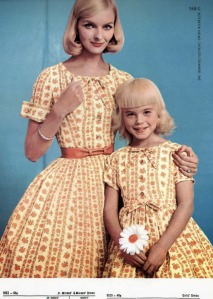
matchingoutfits

I read this post on City-Data.com tonight,  and this sounds so much like my mother it’s not even funny.    Even the time frame seems to be the same.

There is a difference though. My mother wasn’t above taking me to Sears, J.C Penny’s etc. to buy MY clothes, while she always shopped at Lord and Taylor’s for her own. Later, when we moved to New York, she bought her clothing at Bloomingdale’s but mine always came from Alexander’s (closed in 1992).    Not that I minded (I didn’t care), but it’s interesting that I always got the “low rent” stuff.

As for the hairbands mentioned in this post, my mother always bought me elastic ones.     At least they came in different colors.  I doubt she would have bought me a glittery plastic hairband either if I had asked for one, although she probably would have let me wear one and griped about it endlessly.   I remember she went nuts when I bought some pale blue nail polish and little decals to stick on my nails because of how “unnatural” and “tacky” it was, but she didn’t make me take it off.  When I was around 5 or 6, she  was also into those “mother and daughter” matching outfits that were so popular in the mid-196os.  Perfect for creating a mini-me to perfectly mirror the narc mother’s impeccable taste.


glitter_hairband

I was an extension of my mother. And I reflected her beauty and taste.
I grew up in the 1960s and 1970s and attended public schools. But my sisters and I looked as though we were “high society” – but you wouldn’t know it.

While my friend’s parents bought their clothes at Sears, Penny’s or even Macy’s; my mother pronounced those stores as “common” – pretty much her absolute worst word for anything.

She took us to Lord and Taylor, B. Altman, and Bonwit Teller. Frequently, the suburban branches were not deemed “good enough”, so we were made to drive an hour into NYC to buy triplicate Scottish wool kilts or velvet portrait collar dresses for Christmas day.

Same with the dentist! She didn’t like the shape of my lateral incisors, and they were capped in 6th grade!

As with everything though, there was a dark side to all of this.

I really wanted to wear a plastic hair band in the summer. Some were pearly and others were glittery. I thought they were “beautiful”, I was seven and I liked things that sparkled! Everyone in my neighborhood and my day camp had them in many different colors!

She wouldn’t let me get one. Not one. I mean it was a hair band and not a tattoo! It was a fad one Summer forty years ago.

She did relent about hair bands towards the middle of the Summer and bought me a tortoise shell one. It was drab. It was tasteless. It didn’t stand out on my head the way the wonderful glittery ones and lavender pearl ones did.

Worse, for a seven year old, no props from my friends. They thought it was ugly.

I took it into the woods and snapped it in half.

One afternoon she asked what happened to “that thing that you forced me to buy for your hair”.

I told her that I’d lost it. Her reply “thank God”, followed by a snicker that confirmed that she was lacking in any empathy at all.