
I took these photos at around 9:15 PM, so it was darker outside than it appears here. I think the light after sunset (or before sunrise) is more interesting than daylight.

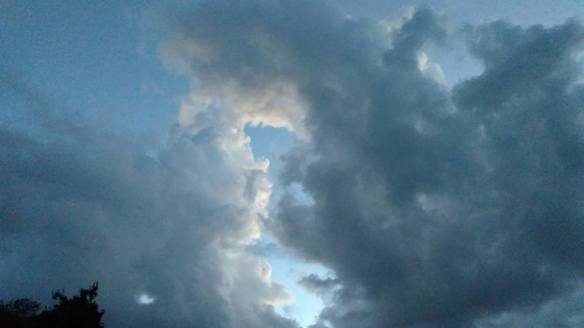
9:25 PM:

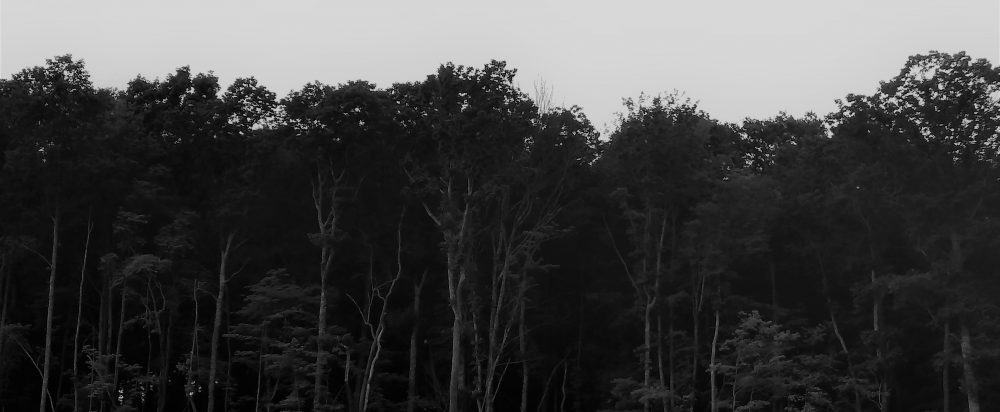
I took these photos at around 9:15 PM, so it was darker outside than it appears here. I think the light after sunset (or before sunrise) is more interesting than daylight.
9:25 PM:

Time Magazine published several articles citing studies showing that the wealthy are more narcissistic and less ethical than average folks.
Wealthy Selfies: How Being Rich Increases Narcissism
Why The Rich Are Less Ethical: They See Greed as Good
The Rich are Different: More Money, Less Empathy
Contrary to popular belief, the rich give less of their income to charity than even poor people, by percentage of income. The poor are more, not less, likely to be grateful and less, not more, likely to feel entitled than the rich.
I think these articles explain a lot about our current government, which is full of narcissistic, unethical, even criminal billionaires, their wealthy donors (The Koch Brothers, the Mercers, Russian oligarchs, and others) and the apparently unlimited power they wield. Great wealth, insatiable greed and a sense of entitlement is what has allowed these people to take control of all three branches of government and gerrymander state elections. Sure, both parties are corrupt and there are rich donors on the left too (the alt-right loves to scream about George Soros), but they haven’t had nearly the influence the donors on the GOP side have had, and at least their donations are transparent — they don’t hide behind front organizations the way the Kochs or the Mercers do. We must get the money out of politics now.

Why am I bringing this up in July?
Because HE did.
This infuriating article appeared in today’s Huffington Post:
Trump Launches the War on Christmas in July
Trump has railed on about the non-existent “war on Christmas” for the past several years, riling up his base of zealous far right religious supporters. You may remember the drama over the Starbucks coffee cups two years ago. Plastic throwaway takeout cups failing to have Christmas decorations printed on them (Heaven help us! They’re SOLID COLORED!) is apparently a more pressing issue than the Russia investigation, developing problems with North Korea, making sure every American has affordable healthcare, and keeping the planet from turning into Venus 2.0.
But Trump’s issue with people allegedly waging a war on Christmas is totally bogus and here are ten reasons why.
1. Trump is not a Christian, so a war on Christmas should be of no concern to him.
I’m not here to judge the state of another person’s soul, but it’s pretty clear to me and to many others that if Trump was truly a Christian, it would show in his actions and general behavior toward others. He is still a lying, gaslighting, cowardly, projecting, wrathful, spiteful, egotistic, name-calling, bullying, blame-shifting malignant narcissist who has surrounded himself with a cabinet of greedy sociopaths, and that’s about as far away from Jesus as you can get. He shows no empathy and seems to think he’s above the law. He denies reality. If Trump was really a Christian, he would be repenting over his past actions both in business and in his personal life. He has shown no remorse and in fact bragged that he doesn’t need God’s forgiveness. He doesn’t seem at all sorry about anything he’s ever done and I have never heard him take any responsibility for anything, ever. I have never heard him say he’s sorry or admit when he’s been wrong.
It makes no difference whether or not Trump attends church or SAYS he’s a Christian or allows a group of evangelicals to pray over him. Anyone could do those things; it’s all window dressing intended to impress his religious base and please his wealthy Christian financial backers. “By their fruits you shall know them,” said Jesus in Matthew 7: 15-20, and so far, Trump has produced nothing but bad fruit. A Christian doesn’t brag about grabbing women by the pussy or make sexual references about his own daughter, not to mention the many things he is doing to endanger people’s lives and happiness, and the health of the planet itself. So no, from everything I can tell, Trump is not a Christian and I feel perfectly justified in saying so. It doesn’t matter that I can’t see the state of his soul, but I can see and hear from his deeds and words that there is no Christ in his heart. So I don’t want to hear Trump whine about a fictional war on Christmas, since from everything I can see, he’s a Christian in name only, if even that.
2. Christmas is based on a pagan feast. Early Christians did not celebrate Christmas.
Nowhere in the Bible does it say we must celebrate Jesus’ birthday. According to Google.com,
The first recorded date of Christmas being celebrated on December 25th was in 336, during the time of the Roman Emperor Constantine (he was the first Christian Roman Emperor). A few years later, Pope Julius I officially declared that the birth of Jesus would be celebrated on the 25th December.
History.com explains why December 25th was selected:
Was Jesus really born on December 25 in the first place? Probably not. The Bible doesn’t mention his exact birthday, and the Nativity story contains conflicting clues. For instance, the presence of shepherds and their sheep suggest a spring birth. When church officials settled on December 25 at the end of the third century, they likely wanted the date to coincide with existing pagan festivals honoring Saturn (the Roman god of agriculture) and Mithra (the Persian god of light). That way, it became easier to convince Rome’s pagan subjects to accept Christianity as the empire’s official religion
The celebration of Christmas spread throughout the Western world over the next several centuries, but many Christians continued to view Epiphany and Easter as more important. Some, including the Puritans of colonial New England, even banned its observance because they viewed its traditions—the offering of gifts and decorating trees, for example—as linked to paganism. In the early days of the United States, celebrating Christmas was considered a British custom and fell out of style following the American Revolution. It wasn’t until 1870 that Christmas became a federal holiday.
3. Trump isn’t whining about the secular commercialism of Christmas.
Christmas in America has become much more about gift giving (and big business raking in lots of money every year) than it is about the birth of Jesus. What do snowflakes on coffee cups, Christmas wreaths, coniferous trees, prettily wrapped gifts, Black Friday, and sparkly cards that say “Merry Christmas” have to do with actual Christianity? Nothing, that’s what. In fact, these traditions are engaged in by many Jews, atheists, and people of religions other than Christianity. I’m not saying there’s anything wrong with these things and they can be a lot of fun, but let’s not pretend these things are remotely religious because they aren’t. Christmas, especially in America, is much more about celebrating capitalism (and the togetherness of family and friends) than it is to any Biblical event. And, while the gift giving, decorations, and activities can be a lot of fun, they can also cause a lot of stress, especially for people who lack the money to buy gifts or don’t have close relationships with family or friends. There’s a reason why so many people become so depressed during the holiday season. But I don’t see Trump complaining about how commercialized Christmas has become; I only see him whining about people and groups who refuse to embrace its commercialism.
4. People have been saying “Happy Holidays” for DECADES. Why is it suddenly an issue?
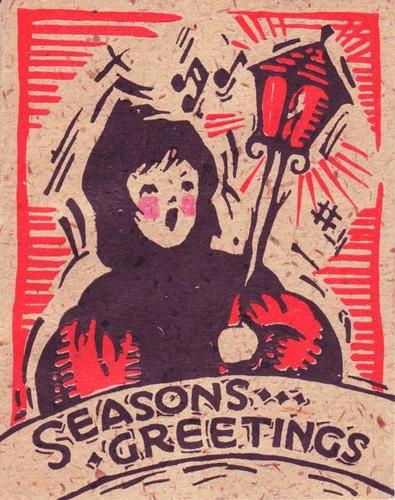
Trump acts like people saying “Happy Holidays” is a new development, but it’s actually very old. I remember during the 1960s and 70s, my parents always sent out cards that said “Happy Holidays” or “Seasons Greetings” because so many of the people they knew were Jewish. No one took offense. It wasn’t an issue for anyone, Christian or not. I even remember some of the old Christmas songs said “Happy Holidays.” Again, never an issue. I’m sure the trend is a lot older even than I am. Here’s a very old Christmas card, I’m not sure what year, but it looks to date from the early 20th century or even the late 19th:
5. It’s even harder to enjoy Christmas now that it’s become political.
It’s bad enough that we have to deal with the financial and emotional stresses of the Christmas season, but now we have to worry that we might offend someone by using the wrong holiday Christmas seasonal? greeting. Maybe it’s just better to say nothing at all and not give out cards either because they also might offend somebody. It sucks we can’t even enjoy the holidays anymore without it being a potential politically divisive issue. Again, it was never like this before. It’s been MADE a political issue. #6 may be the reason why.
6. Trump is actually waging a war on non-Christians.
Okay, I can’t prove it, but it seems to me that Trump’s phony ‘war on Christmas’ is intended to anger his far right Christian base, who are not likely to think too critically and just take it on faith that whatever Trump says is the truth. So if he says there’s a war on Christmas, then by God, there’s a war on Christmas and on Christianity itself. This is intentional, as Trump and his fundamentalist/dominionist Christian backers and cabinet members have every intention of turning America into a theocracy, instead of a nation that has always prided itself on religious freedom and diversity. To some of these extreme right-wing Christians, “religious freedom” means the freedom to force their beliefs on others, not the freedom to worship (or not worship) the way you choose.
According to today’s HuffPo, at the “Celebrate Freedom” event at the Kennedy Center on Saturday night, Trump said,
“I remind you that we’re going to start staying ‘Merry Christmas’ again.”
Is he actually attempting to legislate the words we use? It sure seems like it from his choice of words. The intent here is to bring us farther away from democracy than we already are and closer to theocratic rule. A free country does not tell people what they can and cannot say, at Christmas or at any other time or for any other reason.

7. Would Jesus actually care if people said “Happy Holidays” instead of “Merry Christmas”?
I highly doubt it. I doubt Jesus was narcissistic enough to insist we use his name when celebrating his non-birthday. As mentioned before, nowhere in the Bible are we told we must celebrate Christmas or use a particular greeting. In fact, I bet Jesus would be ashamed of us for attaching his name to a holiday that has become mostly secular and fun at best, and a crass celebration of greed and materialism at worst. Again, Christmas wasn’t celebrated by anyone until the 300’s when a Pope decided it was a holy day.
8. The “war on Christmas” is most likely a distraction from the real issues.
Trump seems to like to stir up drama whenever the heat is on and he’s being criticized for much more serious issues. This is classic Cluster B behavior and Trump displays it every. single. day. In deflecting attention from himself and pointing fingers at others (primarily the media, but individuals too), he is really trying to take the light of truth off his own shady, amoral, and possibly illegal activities.
9. It’s things like this that make people despise Christians.
When Christians (or any other group) whine incessantly about how persecuted they are (when they really aren’t) and fixate on minor issues (like the fictional war on Christmas) they believe prove they are being persecuted, it makes people hate them, and for good reason. As a Christian myself, I’m embarrassed to be associated with phony “Christians” like Trump who try to restrict our freedoms and obsess over trivia in their efforts to alienate people with different beliefs and divide a nation.
10. He’s yapping about this in JULY.
Yes, fellow Americans, Trump is whining about his bogus war on Christmas the day before we celebrate America’s independence. Does that historical event mean nothing to him? It’s an insult to all those who have fought and died for our country. But what else can we expect from a man who does nothing but insult others?
Man, does this take me back. This reggae influenced 1983 is 34 years old, if you can believe it (I can’t).
Someone posted this very useful flowchart on Twitter today.


Political correctness can definitely be taken to ridiculous extremes, as these cartoons show.
In previous posts, I’ve sometimes criticized political correctness. It’s true that in recent years, political correctness (PC-ness) has gone too far, and people are afraid to say what they mean because it might offend someone. PC-ness can be taken to ridiculous extremes. For example, a child today can get in a world of trouble — up to and including arrest — for something as innocent as drawing a picture of a gun. Companies are afraid to hire a white person who may be a better fit for a job if a black candidate is also qualified. People are afraid to say “Merry Christmas” because it might offend non-Christians, but they’re also afraid to say “Happy Holidays” because it might offend Christians (so what are you supposed to say??) Parents are afraid to discipline their children because someone might call the authorities and their children could be taken away. Of course, there are limits to what constitutes proper discipline of a child. Obviously, if you see a parent beating their child or hurling insults at them, this is abuse, not just discipline, and there should be consequences. But is it proper to report a parent for lightly slapping a toddler’s hand because she’s reaching for something that could hurt her or break? Yet such actions are regularly reported as “abuse.” Parents are afraid to be parents. We can’t say what we mean because someone might be offended, even if no insult is intended. During the holiday season, it might be better to just say nothing at all.
In spite of the problem of political correctness being taken to extremes, there is a place for it. Political correctness is really nothing more sinister than showing respect for others. It means practicing the Golden Rule, which we all learned in kindergarten and would behoove us to keep practicing as adults because it makes everyone’s lives so much easier and more pleasant, including our own. Political correctness is about being a good neighbor and a good citizen. It’s caring about the way others feel. When it’s not taken to extremes, political correctness makes our relationships with others and within our communities a heck of a lot easier. But people get all up in arms over the term itself. Why is that? I think the term “political correctness” irritates people more than the actual practice of it, because of its its associations with the “liberal elite,” a group that many conservatives distrust, dislike, and simply cannot relate to. But showing respect and empathy for others, even if they’re different than we are, is not about partisan politics. The Golden Rule applies to everyone and benefits everyone, regardless of political party, economic status, race, religion, or creed.

We have a president who takes pride in his lack of political correctness. He insults people and calls them names and calls this behavior honesty. Many of his followers think of Trump’s antipathy toward PC-ness as one of his greatest strengths, but the truth is, Trump’s version of “honesty” (something he definitely is not) is nothing more than schoolyard bullying, and most of what he says is not true anyway. His language and bullying manner not only hurts people who have done nothing wrong (other than being critical of Trump or his policies), it also encourages hatred and intolerance among his followers. Since Trump’s election, suddenly it’s okay for people to bully others who are not like them, since Trump does the same thing. It’s okay to demean and insult Muslims, Mexicans, women, gays, Democrats, the liberal media, and other groups Trump looks down on because Trump does it and seems to think it’s okay. It’s become okay to dehumanize and target people who aren’t the same as we are or who don’t agree with us.
Recently, I read there’s even been an uptick in school bullying since Trump got elected. Bullies everywhere and of all ages feel empowered because the president does it and seems to think there’s nothing wrong with it. Some critics of political correctness think it means stuffing your feelings and wearing a fake smile all the time, but that is just not true. We don’t have to go around grinning like idiots (was it un-PC to use that term?) and pretending to like people we don’t or be happy with situations that make us miserable, but that doesn’t give us the right to go around insulting and demeaning others for no reason other than that we find their differences offensive.

Sadly, this attitude about political correctness is very widespread today.
Trump is giving the world the wrong idea of what strength is all about. In his strongman world, dictators and authoritarian leaders are admirable because they rule with an iron hand and victimize and punish those who oppose them. Civilized discourse, peaceful negotiation, and compromise is seen as weakness. This is why he’s the only president in living memory who has not included the opposing political party in his decision making. In fact, all he does is insult Democrats (even though he used to be one himself), sabotages their efforts (as he is by refusing the pay Obamacare subsidies), and then blame them when things inevitably go wrong (“Obamacare is DEAD!”). This is a divide-and-conquer strategy narcissists and sociopaths like Trump are infamous for.
Real strength means showing respect and compassion for others. It means refraining from calling people insulting names when someone says something critical of you (as long as the criticism isn’t abusive), and maybe even learning something from it. It means lifting others up instead of working to oppress them and keep them down. It means encouraging people instead of trying to sabotage or insult them. It means being inclusive instead of exclusive. It means working to find common ground instead of encouraging divisiveness. And it means being PC sometimes too, if by political correctness we mean showing respect for our fellow human beings, regardless of how different from us they might be. Granted, political correctness is sometimes taken too far, but Trump’s dangerous lack of it is off the rails, and is a threat to our democracy and to the world. Civility is in short supply these days. If we really want to “make America great again,” we need to return to a culture of civility, common courtesy, and neighborliness.
Originally posted on April 1, 2015

Don’t be a pussy.
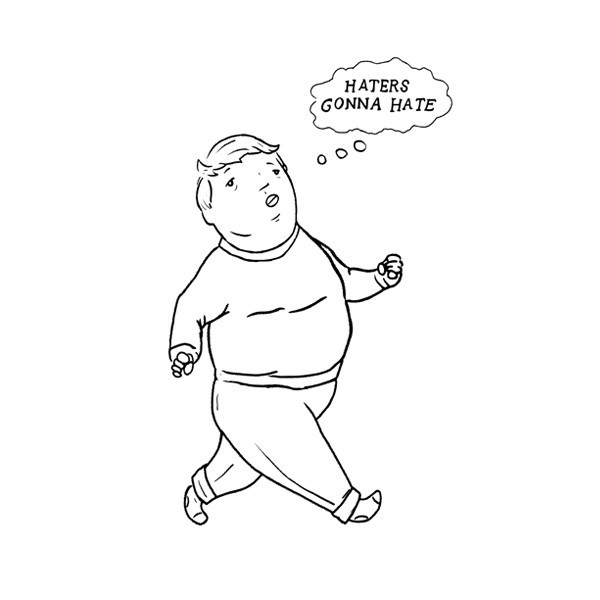
Anyone who blogs about a sensitive topic, especially one that focuses on mental health issues (religion and politics would be up there too), is bound to run into haters and detractors at some point. If you blog about a controversial topic, such as narcissism and narcissistic abuse (which is my #1 topic), religion, politics, or the ethical ramifications of breeding pit bulls, by default you make yourself vulnerable to online narcissists, trolls, bullies, and psychopaths. You are going to attract people who do not wish you well. It’s a built-in hazard of the trade.
Even if your blog isn’t particularly controversial or doesn’t focus on a sensitive issue, you are going to have haters and maybe even bullies. OM (Opinionated Man) is a perfect example of this (he insists he has a LOT of haters), and his blog is one of the most popular on WordPress. He doesn’t let the haters get him down, and neither should I and neither should you.
I’ve wasted a lot of time beating myself up for things beyond my control. Over people who do not wish me or my blog well. Way too often I allow other people’s negative opinions of me, my blog, or my articles to get me down and even make me want to change my blog’s focus or remove posts that I thought might have offended them.
You cannot please everyone. It’s not possible. If by some fluke you somehow do please everyone, then you probably have the most boring blog in the universe, one that’s all sweetness and light 24/7, and never approaches anything the slightest bit triggering or controversial.

Someone is going to be offended.
Even if you blog about something as benign as cake decorating or flower arranging, you are probably going to offend someone. Maybe someone doesn’t like the fact you write recipes using cream cheese icing instead of buttercream, or vice versa. Maybe they are diabetics who take offense to the fact you don’t include sugarless cake decorations in your recipes. They might even assume you are prejudiced against people with diabetes. Maybe someone doesn’t like the color yellow in your floral arrangements because they have bad associations with that color. Maybe they are angry at you because the flowers are dead and they are are morally opposed to killing plant life for ornamental purposes. They could be offended by your fonts or your layout. Maybe they hate your avatar because your picture reminds them of their rude neighbor who lets their dog bark all night and revs their engine every morning at 5 AM. You have no control over these things. My point is that no matter what you blog about, someone is going to take offense.
If you can’t stand having bullies and haters, you probably shouldn’t be blogging at all. If you blog about a sensitive or controversial issue, as I do, you are going to attract even more of them than you would if you only blogged about cake decorating or flower arranging or baby koalas.
The Green-Eyed Monster.
Some people are also going to be jealous of you. If your blog becomes successful, expect to have haters. That’s probably why OM has so many haters. His blog is one of the most popular and well-known on the Internet. I’m not tooting my own horn here, but I’ve noticed as my blog has grown, I also have acquired more haters and critics. As a self-identified HSP (highly sensitive person), this realization has been hard for me to accept. I need to grow a thicker skin and just write about what I want and not worry about what the haters think.
On Political Correctness.
I don’t like political correctness. I don’t like feeling like I have to censor my own thoughts and feelings, because openness and honesty has made my blog what it is. If my words offend someone, they just need to deal with it. If they hate me or my blog, sucks for them. There are other blogs they can read instead. No one is holding a gun to their head telling them they have to read this blog. I even have an Escape button that will take them to the Huffington Post (it’s not lost on me that some may be offended by THAT). It’s not like I’m the only voice on the Internet that addresses the issues I write the most about. There are hundreds of others.

I’m a natural pessimist. If I enter a room and everyone is friendly and welcoming except for one person who scowls at me, I’m the type who will fret and ruminate about that one grumpy person rather than feel blessed and grateful that everyone else is happy to see me. Focusing on that one negative person keeps me from enjoying the party.
It’s the same thing with blogging. I have a lot of supporters and friends in the blogging community. There are lots of people who enjoy my blog posts and visit every day. I shouldn’t worry about the few people who are critical of me or my blog, because they don’t matter. They are probably not the sort of people I would want to have as friends anyway.
So, if you blog, don’t be a wuss. Grow a tougher skin and accept the fact you are going to have haters. You don’t have to approve their comments. You don’t have to search Google to see what your detractors may be saying about you. You don’t have to let their vitriol ruin your day. They don’t matter.
Don’t censor yourself. Most people will be able to tell if you are trying to hard to be “politically correct,” and your blog will become boring and insincere and no one will want to read it. People aren’t stupid and can tell if you’re not being honest or are censoring yourself because of your fear of criticism or offending someone.
Blog from your heart and soul. Be courageous. Write about what you want, no matter how controversial. Don’t be afraid to stir the pot and stand by your heartfelt opinions, even if they are unpopular ones.
Tell the haters to take a hike. You are going to have them. They don’t matter.
I need to take my own advice! But it’s too hot to nap!

Take a nap. It works for me about 90% of the time. Usually I wake up with at least one great idea for a blog post.
When I got home from work tonight, I had no idea what to write about. I was tired so I took a nap and now I have two ideas–this post and the one I’m about to write, which will be a lot longer.
Your brain is like a computer. While you sleep, your brain performs maintenance tasks–the biological equivalents of defragmenting and disc clean-up. More space is allotted in your conscious mind for ideas to bubble up from your unconscious mind that were trapped there before and you couldn’t access.
It always surprises me how often I’ll wake up from a nap with some idea I’m just itching to write about, but before I went to sleep it just wasn’t there.
So next time…
View original post 21 more words
An old article, but important because so many of us are over-eager to label anyone we dislike a narcissist. Don’t be too quick to throw the N label around!
Further reading:

Earlier today I wrote that I thought my daughter may have NPD because she had taken my phone when she lost hers, and seemed uncaring that I had no way of contacting her or anyone else. About an hour ago, she returned with my phone, and seemed very apologetic and remorseful.
Granted, my daughter does have some narcissistic traits, but she is also Borderline, and most Borderlines do have some narcissistic behaviors–after all, they’re still in the Cluster B group of personality disorders (Cluster B disorders are those characterized by excessive dramatic behavior and/or lack empathy). But she’s not a Narcissist. She does have a conscience and can show empathy, and she’s also self-critical, something true Narcs are not.
My point here is this. I think we survivors have a problem with lack of trust. Having been hurt too often by those with malevolent character, sometimes even by our own…
View original post 1,910 more words

 Lucky Otters Haven