“Soulmates in Hell: Religious Narcissists–Evil in Disguise. “

jesus_cares

I stumbled on a new blog and just read this article. Every word the author says is true. I’ve known so many religious types who use religion as a tool to abuse. These are truly the wolves in sheep’s clothing. Unfortunately, such people’s children are often turned off my the whole idea of God and religion because it becomes so triggering.

Soulmates in Hell: Religious Narcissists–Evil in Disguise
By Larry Giddens

If you have had the unfortunate experience of being in a relationship with a narcissist with religious pretensions, you know how difficult and confusing it can be. The narc spouts scripture and postures as “holy”, and they use religion to create a veneer of “godliness”.

Now, I’ve read various articles on the topic that seem to miss the point, which is, that a religious narcissist will just drive you crazy with their constantly letting you know how much better they are than you, or anyone else, for that matter. There is no situation for which they won’t butt in with some scripture quote, and no conversation that won’t soon turn into a sermon, just to let you know that while you have mundane, everyday concerns like whether you need to buy milk, their mind is on “the things of God”.

The rest of this article can be read here.
http://soulmateinhell.blogspot.com/2015/10/religious-narcissists-evil-in-disguise.html

I almost deleted my hard drive!

fried_computer

Boy, did I just have a scare.
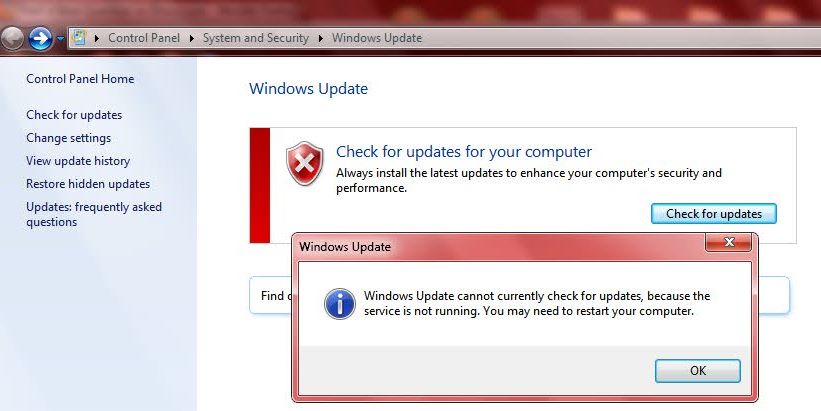
For the past couple of weeks my system has been freezing and crashing a lot. I noticed I hadn’t received any Windows updates in a while, and got worried. I manually checked for updates because I thought they weren’t updating automatically, but the green “checking for updates” bar kept scrolling as if looking but never found anything.

Meanwhile I kept getting messages to download Windows 10 (I currently use 8). I didn’t want Windows 10, and kept trying to get Windows 8 updates but nothing was happening.
I finally ran the Troubleshooter but it wasn’t able to run.

I rebooted the system and tried to run the Troubleshooter again, to no avail. Pages were still freezing and crashing. I thought it had something to do with updates not being installed. I finally went on a Windows help page, and decided to try to restore my whole system.

Windows-Update-Error-Screen

But I didn’t see the part about needing to reinstall everything. I would need to have the Windows 8 disc for that, but I never had one because I installed it online, not from a disc. But I didn’t see that part until after I hit the “system restore” button. Then I saw the information about needing to reinstall all these programs, some of which I’d never heard of.

I tried to think of what to do. I had no idea how to abort the whole process, but I tried shutting down the system by pressing the on/off button. At first I thought it wasn’t going to work, because when it came back on, I got a message that said, “working on system restore.” Just as I was going to hit the button again, the screen went black. It stayed that way for a few minutes and I was sure I’d fried my computer.

Finally, a new message appeared: “undoing changes.” I waited a few more minutes and finally all my screens came back on. I was very relieved. On a whim I tried to retrieve the updates again. It kept scrolling so I tried the troubleshooter again, and this time it worked! It told me a registry was corrupted and said the problem was fixed. I tried to install the updates again, and it worked. There was only one update though–installing Windows 10. I never wanted Windows 10, but now I have it. I guess that’s how Windows gets you to upgrade–by making your life hell until you do. How sneaky of them!
But at least my computer is running smoothly now and not crashing and freezing anymore.

Forever alone, revisited.

keep_calm_forever_alone

This is going to be another “running naked” post.

I have mixed feelings about being in a relationship. On the one hand, I long for it because I can’t deny that my inability to connect with anyone on a deep emotional level has caused me a lot of sadness and pain.

At the same time I need my solitude, and it’s almost always my preferred state, due to my avoidant personality. I’d much rather do things alone than do them with others. I’m simply too selfish and don’t want to give of myself to anyone else. I think the selfishness stems from fear though. I’m too afraid: I struggle with fears of rejection, abandonment, judgement, engulfment, being hurt, being used, being abused, etc. I have little to no interest in sex, although I can be sexually attracted. (maybe this is TMI, but I prefer my fantasies to the real thing).

So I have a sort of conundrum. I don’t want to grow old and die alone, but at the same time I don’t want to and am afraid to do what it takes to avoid being alone forever. I was married to my malignant narcissist ex for many years, but the marriage was extremely dysfunctional and I was always in the codependent role. Thinking about the marriage’s failure (which was inevitable from Day One) now makes me feel sad, although for a long time I just felt rage (which is why I started my first blog).

I would only consider a relationship with a non-narcissist now (and really, not with any Cluster B), but that’s a problem because I’m simply not attracted to non-disordered people. I never have been.

The other problem is I’m “in love with the idea of being in love.” Like most Cluster B’s, I become limerent easily (though less so than I used to) and get addicted to the whole “high” that infatuated feeling brings. But it never lasts and I know intellectually it’s not real love. It’s a type of addiction that feels as good as a drug, but the crash (and there always is one) is just as bad as coming down from a powerful drug too. I miss that drug-like high of falling in love though.

To rectify this longing, I live the limerent experience out in my mind by developing powerful crushes on people who cannot give me anything in return for a variety of reasons. Oddly enough, this lack of reciprocation is okay with me. I don’t feel like anything is “unrequited” because I deliberately and consciously get attached to a person only in my own mind and prefer not to share my feelings with the person in question. I have an active enough imagination that there is no need to play it out in reality. In fact, I’d probably run away in terror if it became obvious my feelings were returned. I’d get off on the supply that comes with that, of course–but it would send me into panic mode too. It’s very weird. I don’t know if this is just an eccentricity of mine, or if this sort of thing is experienced by others. Having an active imagination does have its benefits. It’s very narcissistic though.

I think unless I can become non-disordered (which is unlikely), that I need to accept the idea of being alone for the rest of my life. On a day to day basis, I’m okay with that, but it’s sometimes so hard when you look around and everyone else in my age group is married or in a relationship, and I have to do everything on my own. You’re treated by society as defective and if you don’t make a good living, it’s hard to even survive. I feel like a freak sometimes. I can’t look at singleness as a permanent lifestyle or I get very sad and afraid. I have to do what they do in AA, and take things one day at a time.

How everyday life has changed since 2000.

y2k_bestbuywarning

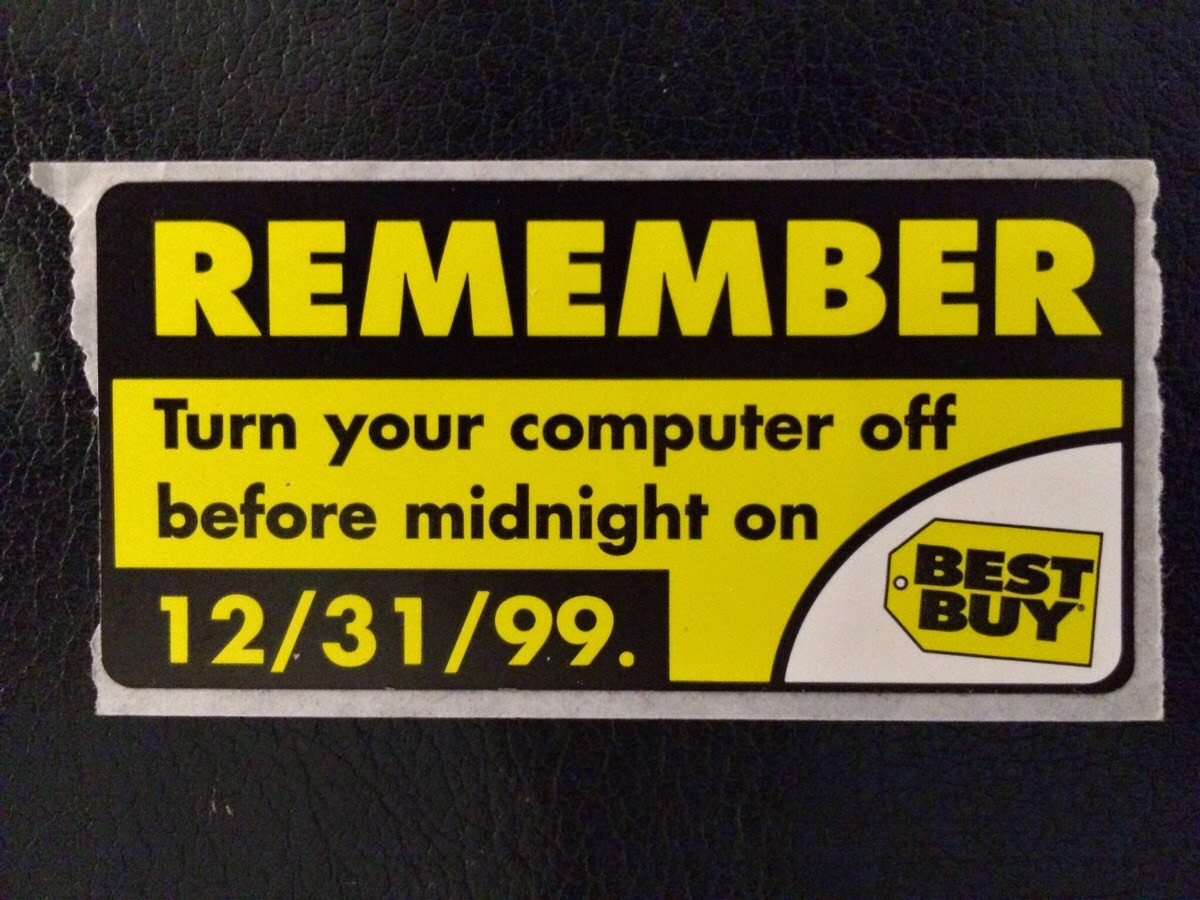
Was it really almost 16 years ago that we all feared Y2K would end life as we knew it? Well, life did change alright, although instead of being forced back into the dark ages of the pre-electronic era, we moved forward (if you can call it that) into Facebook, Twitter, smartphones, reality stars turned megacelebrities, Googling, and subjecting ourselves to frisking and possible questioning before boarding a plane. None of these things existed in the 1990s.

That’s not really moving forward to my way of thinking, but…maybe laterally?

Here’s an article listing the many ways our lives have changed since the dawn of the third millennium. Oh, and for what it’s worth, this article was written in December 2009, just 7 years ago minus 3 months. How many more things could we add that have changed since just 2009?

Things That Changed Our Lives Since 2000
By Associated Press, 12/22/2009

y2k_psg

Many things have changed our lives since the start of the millennium. Was it only a decade ago that a blackberry was a mere summer fruit? That green was, well, a color, and reality TV was that one show sandwiched between music videos on MTV?

There were, of course, huge political and social upheavals that roiled our world in the past decade. But there were also the gradual lifestyle changes that you don’t always notice when they’re happening — kind of like watching a child grow older. Here’s an alphabetical look at 50 things that changed our lives since the beginning of the millennium:

AIRPORTS: Remember when you didn’t have to take your shoes off before getting on a plane? Remember when you could bring a bottled drink on board? Terrorism changed all that.

ALTERNATIVE MEDICINE: From acupuncture to herbal supplements to alternative ways of treating cancer, alternative medicine became more mainstream than ever.

APPS: There’s an app for that! The phrase comes from Apple iPhone advertising, but could apply to the entire decade’s gadget explosion, from laptops to GPS systems (want your car to give you directions to Mom’s house in Chinese, or by a Frenchwoman named Virginie? There was an app for that.)

AARP cards … for boomers! Some prominent Americans turned 50 this decade: Madonna. Prince. Ellen DeGeneres. The Smurfs. Michael Jackson — who also died at 50. And some prominent “”early boomers” turned 60: Bruce Springsteen and Meryl Streep, for example.

AGING: Nobody seemed to look their age anymore: Clothes for 50-year-old women started looking more like clothes for 18-year-olds, tweens looked more like teens, long hair was popular for all ages, and in many ways women’s fashion seemed to morph into one single age group.

BLOG: I blog, you blog, he blogs … How did we spend our time before blogging? There are more than 100 million of these Web logs out there in cyberspace.

BLACKBERRIES: Considered essential by corporate CEOs and moms planning playdates. Introduced in 2002, the smartphone version is now used by more than 28 million people, according to its maker, Research In Motion Ltd.

Read the rest here:
http://www.nj.com/hudson/voices/index.ssf/2009/12/many_things_that_changed_our_l.html

One thing that comes to mind for me is how much computing has changed. In 2000, the Internet was still pretty primitive, and there were no social networking sites as we know them. Lots of websites still had that mid-90s skeleton look to them. Forums and email were the most popular (and probably the only) way of connecting with others online. Usenet and DOS based MUDS and MOOs were still fairly popular, though beginning to disappear as more sophisticated topic-based forums, bulletin boards, and Instant Messaging (the forerunner to texting and Tweeting) began to replace them. Comments were still made via “Guestbooks” that appeared on the forerunners to today’s blogs–personal web sites hosted by Angelfire, Tripod, and Geocities. And you needed separately purchased boxed programs like Front Page to design them if you wanted anything fancy. Many of these early websites had horrible, loud, flashing designs on black backgrounds that made your dial-up Internet connection crash. You had to tell your family to get off the Internet so you could make a phone call. AOL was the Big New Thing and they sent us all those free trial CDs in the mail that most of us threw away. Viruses weren’t ubiquitous yet, and Internet security (along with airline security) was lax. The computer monitors were ugly and boxy, the screens were convex glass things, and everything took forever to load. Windows still looked barebones, and we did our searches on Netscape Navigator and Explorer. Yahoo was new and cutting edge.

Can you think of some of your own? How has life changed for you personally since the year 2000?

Crying in therapy: how important is it?

Here are some surprising facts about crying in psychotherapy and what it really means–and about therapists who cry with their patients.

My animal hoarder ex.

cat_hoarding1

My ex, a malignant narcissist who has been diagnosed with Antisocial Personality Disorder, is an animal hoarder.

When we were married, at one point we had 15 cats. I was always too embarrassed to tell anyone how many we had because it was way too many for us to afford or care for properly, and it just sounded crazy to say you had that many cats.

I’ve always loved cats and always kept a few around whenever I could, but my ex thought it was his duty to bring home any stray kitten he found–and he always seemed to find them (or maybe they found him). I really think it was about control though, not a real love for animals. He knew I disapproved of having so many cats (and the lion’s share of their care and litter box cleanup fell on my shoulders, of course) so he’d bring them home just to annoy me. When I objected, he’d gaslight me by telling me I was an animal hater, which is far from the truth. I tried to reason with him, telling him that we weren’t helping these animals by having so many and that we were unable to give them the proper care and attention.

As much as I love cats, in the double digits (or even upper single digits), they are no longer much fun. Cats hate being overcrowded and cat fights in our house were a daily occurrence. On top of this, “Michael” wouldn’t allow them to go outside (though sometimes they escaped anyway, probably just to get some space). We kept 7 litter boxes (about 1 box per 2 cats) and they had to be cleaned daily and changed every other day. Vacuuming was constant; I had to vacuum the entire house twice a day due to the enormous amounts of cat hair and the litter tracked in from the litter box area on the screened in porch. In the summer, because the porch would get so hot, the boxes would be swarming with flies and sometimes I even found maggots in them. The cats hated that and several began to do their business outside the litter boxes, requiring a lot of poop pick up.

The cats were unhappy and several didn’t look too healthy either. We didn’t have the money to take them all to the vet, so we started reading on the Internet about how to give vaccinations and medical care ourselves. Veterinary supplies, including injections, were purchased at a local feed store that catered mainly to farmers and people who kept domestic livestock.

cat_hoarding2

The house smelled terrible, no matter how much I tried to keep on top of it. I couldn’t invite anyone to the house. Many times I tried to talk to Michael about the situation, but he always refused to listen and we always wound up fighting. Our kids were small at that time and of course since kids love animals (and Michael tried to turn them into miniature flying monkeys against me anyway), they’d cry when I threatened to give some of them away.

After our divorce in 2005, Michael moved in with his girlfriend, a pillhead who had 2 large dogs–a pitbull and a mixed breed. Soon they had 8 dogs, most of whom were kept in large cages most of the time since they both worked and the dogs were never housetrained. When you went to their house, you had to make sure you didn’t step in dog poop. It smelled like hell. On top of that, Michael had brought along the 5 remaining cats (I wasn’t allowed to have them in my apartment at the time) and then adopted several more. He also became interested in bearded dragons but had no idea how to care for them properly and most of them died.

When Michael lived with me, he adopted a Jack Russell/Beagle mix he named Barnaby. I told that story in my article, How My ASPD Ex Used a Dog to Gaslight Me. Again, I had no say over the dog even though it was the worst behaved, most destructive dog I ever met. We only got rid of him because Michael himself decided he didn’t want the dog anymore (after we were threatened with a fine for the dog disturbing the neighbors for the third time in a row).
He always had to have the last word. He’s a class A control freak.

He’s hoarding animals again. He already has 4 cats and a dog. That’s not so bad, but I’m sure there will be more as time goes on.

Patience, faith, and auto repairs.

car_repair

Patience isn’t one of my virtues and I often doubt my faith due to my trust issues. I need more of both, but I had just enough to get through my crisis. God proves to me over and over again that He does exist and He does listen to my prayers.

I’ve been praying a lot about my car/money situation and my recent depression. A few days ago, I decided to go to the church and talk to my priest about my issues, and also, on a whim, asked him if there was a car repair fund so I could get my car fixed. He said there wasn’t, but he would talk to a man who also attends my church, whose son owns a car repair place.

I called the man, named Mike, and left a message, not expecting much from this. He called back today, and said his son was going to come over to take a look at my car (I could not move it out of my driveway and haven’t driven it in almost a month). A few hours later, Mike’s son, David, arrived with a “doctors toolkit.”

First, he plugged the car up to a diagnostic computer that told him what the problem was. Actually, it was several problems, none of them severe on their own. After jumpstarting the vehicle (because it hadn’t been started in so long the battery had no charge), he was able to get to work–without ever removing my car from my driveway!

gods_patience

Three cylinders out of six weren’t working, due to bad spark plugs, a worn gasket, and a bad coil. I was worried about the price, but was told it would cost me nothing (he was informed about my lack of ability to pay). He test drove the car, brought it back and asked me to drive it for abotu 20 minutes until the battery was fully recharged.

It was a beautiful day and I drove for awhile, enjoying the music from my above-average stereo system (which is one reason I’ve held onto this car so long). It still doesn’t do great going up hills, but it can, and other than that, the car is running just fine!

I also spoke to my father, who apparently had been informed by my son about my car issues and had planned on helping!:o He wants me to set up a Skype account since his Parkinson’s makes it hard for him to have phone conversations without the visuals.

The moral of this story is prayer does work, but sometimes you just need a little patience. God doesn’t always answer right away, but he does hear you, and if you have faith, He will come through, often in unexpected ways and when you least expect it.

I feel a little less depressed now that I have a roommate again (who seems fine so far) and a running car! And a father who DOES care.

I want a Siamese cat.

Siamese-Cat

My roommate, Stacey, took her cat Isaiah to Florida with her (she never texted me to let me know she got there safely, so I hope she did), and now I’m down to just two: my little huntress Cleo, and my black and white tuxedo cat, Sheldon. Both are outdoors most of the time (that’s not really my choice, but once you let a cat go out, it’s almost impossible to make them indoor-only) and it almost feels like a cat-less house now.

A year ago I still had 5 cats AND a dog. That was too many animals in this small house, but it’s a far cry from only two cats around.

I can tell the cats miss Isaiah. When they are in the house, they walk around as if searching for someone and sit around and meow plaintively, as if asking me where he is. Of course they have short memories and will soon forget he was here, but I know they miss him (even though he and Sheldon used to occasionally get into spats over who was the “alpha male”).

My new roommate, a gay man my age named Kevin, moved in yesterday. He seems very nice. He was the only person who answered my ad that I felt comfortable talking to, and he’s introverted like me. He seems to like the room. He doesn’t have any pets but he likes cats (he isn’t a fan of dogs so I guess I won’t be getting one of those).

I’m thinking of getting a Siamese cat–not a young kitten, but an older one, or a young cat who’s already been spayed or neutered and had all its shots. There are always ads on Craigslist (a lot of people can’t deal with all the talking they do), and some of the Siamese I’ve seen are absolutely gorgeous.

I’ve wanted a Siamese for a long time, but held off because I already had too many cats. The only problem would be keeping him indoors (I prefer a male) since my other two cats always want to go outside. But with the colder weather coming, Cleo and Sheldon may want to be indoors more, and maybe an active and talkative new cat might tempt them to stay in.
I think a Siamese might help lift my mood a little too. They’re very intelligent and affectionate and you can almost have a conversation with them.

This video always makes me smile. These two Siamese are VERY upset about their person taking a shower and not paying attention to THEM. 😆

How did narcissism get so “popular”? (part two of two)

narcissist_nation

Here is the second installment, as I promised–I apologize for the delay. In part one, I covered the way narcissism has increasingly infiltrated our society and become a near-virtue to be emulated, starting in the late 1940s and 1950s in a postwar America now regarded to be a world superpower. The babies born in this mood of can-do optimism, the Baby Boomers, were indulged by their parents, who believed anything was possible and showered their children with all the new toys, space-age technology, and new permissive child-rearing techniques that were suddenly popular.

In Part One of this article, I discussed how the indulged Boomer generation influenced western society at every stage of life, and (as a generation) grew into grandiose, entitled adults who demanded (and got) special treatment every step of the way. I covered the decades from the 1950s through the 1980s, and described how narcissism became increasingly regarded as a desireable quality. By the 1980s, narcissism came out of the closet, with the election of a president (Reagan) who encouraged greed, materialism, and entitlements for the wealthy with his “trickle down economics.” At the same time, empathy, neighborliness, and general goodwill toward others seemed to become almost quaint, a naive relic of the past. The juggernaut was the new “greed is good” philosophy, made popular by a 1987 hit movie, “Wall Street,” (which was of course the place to be). Narcissism was no longer something to be hidden; now it was something to aspire to.

In this next installment, I’ll be focusing less on the Boomers and more on the continued growth of narcissism in society, as well as the backlash against it–the narcissistic abuse and ACON community–which began as an Internet phenomenon during the mid 1990s due to one self-professed narcissist named Sam Vaknin. But actually, the seeds of the backlash had been planted as far back as 1983, with M. Scott Peck’s bestselling book, “People of the Lie.”

1990s.
cast_friends

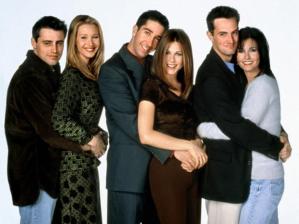
The greed worshipping culture begun in the 1980s continued during the 1990s, as Boomers rose to power and we elected our first Boomer president, Bill Clinton, in 1992. Under Clinton, the economy boomed, and a new breed of Yuppies, the Dot Com entrepreneurs (who were mostly Generation X), rode on the coattails of the newly born Internet, and they made money hand over fist until they went bust several years later. But people still went shopping and the culture at large was becoming increasingly exhibitionistic, obnoxious, and in-your-face (reality shows were born during this time), while corporations grew bigger and more unwieldy (unlimited growth, like a cancer, was encouraged, and smaller companies merged into megacorporations the size of small governments). Meanwhile, government institutions built in the more sedate and community-oriented 1950s and 1960s began to splinter and crumble. The government, especially the part of the government that tried to help its less fortunate citizens and attempted to even the playing field through fair taxation, became The Enemy.

But a backlash was beginning to silently bubble under all the glitz and bling of the ’90s. Back in 1983, a psychiatrist turned born-again Christian named M. Scott Peck published his groundbreaking book, “People of the Lie.” Here, for the first time, was a self help psychology book that focused on “evil”–specifically, people who were evil. The traits described in the book are exactly those of malignant narcissism. The book resonated with many, particularly with Gen-Xers and later born Boomers (Generation Jones), who had been raised by narcissistic parents. In some cases, especially for younger Boomers and early Gen-Xers, these kids had been betrayed by initially doting Silent generation parents who suddenly, during the 1960s or 1970s, seemed to suddenly care only about their own self-development at the expense of their confused and hurt adolescent and preteen children who they no longer seemed to even like much (this is exactly what my experience had been growing up in the 60s and 70s: my parents changed and no longer seemed to care).

But in the early 1980s, Peck’s “evil people” were not automatically equated with narcissists or people with other Cluster B disorders. Until the mid-90s, narcissism–or NPD (Narcissistic Personality Disorder)–was simply a psychiatric label given to certain patients with a certain set of traits, who may or may not have been evil. NPD wasn’t demonized yet.

Then along came Sam Vaknin in 1995. Vaknin, a former white collar criminal and self-confessed narcissist, had written a tome about narcissism called “Malignant Self-Love: Narcissism Revisited.” Written initially to obtain supply and a guru-like status for himself, Vaknin’s book actually helped many of the narcissistic abuse victims who read it and recognized their abusers in its 600+ pages. Vaknin’s idea of NPD didn’t fit that described in the DSM: he mixed in with NPD several traits of psychopathy, antisocial personality disorder (ASPD), and Borderline personality disorder (BPD), to describe a particularly dangerous type of malignant narcissist that made the toxic people described in M. Scott Peck’s book seem almost tame in comparison.

The book was successful, and soon Vaknin started his own website, and discussion groups, and abuse victims all over the world jumped on the bandwagon. Vaknin, exactly the sort of person they sought to avoid, had become their savior and guiding light out of darkness.

Until the 2000s, Vaknin’s was pretty much the only voice on the Internet about narcissistic abuse. But in the very late 90s, a few books were beginning to be published about this “new” type of abuse that didn’t necessary include physical violence (but could). Parents, particularly mothers, were the focus, and a subset of the narcissistic abuse community–one that focused on narcissistic mothers and the damage they had done to their now-adult children–formed the template for the explosive ACON (Adult Children of Narcissists) movement.

2000s.

bling

For a brief time, after the tragedy of September 11, 2001, it looked like Americans just might start to care about each other again. There was an outpouring of support for the victims of the 9/11 disasters, and solidarity shown among all Americans. For the first time, regional differences and even racial differences didn’t seem to matter, and Americans were united by their flying of the flag. No one seemed all that concerned by the curtailment of certain freedoms and and increase in xenophobia–after all, it was for the protection of the country, right?

But as a result, the economy was suffering, so George W. Bush Jr. (“Dubya”) gave us all permission to “go shopping.” And so we did. It was back to the bread and circuses and the shallow, materialistic culture of the 1980s through pre-2001.

Reality shows rose in popularity and the badder the behavior, the more popular they got. New celebrities were famous only for “being famous,” having a famous parent, or just for acting badly. People aspired to be just like Snooki and The Situation from The Jersey Shore, or Tiffany “New York” Pollard from Flavor of Love. All of these characters were narcissists, or at least acted that way for the benefit of the camera. And people loved them for it.

During the 2000s, Millennials, the rising young adult generation, born in the 1980s and 1990s, started being being accused of being narcissistic, but if they are, you can blame their parents for having taught them these values. In addition, a lot of gaslighting is going on by older generations, who blame the Millennials for their inability to find jobs that pay a living wage and provide benefits, forcing them to live at home and be dependent for longer than earlier generations–and accuse them of being “lazy,” “spoiled,” and “entitled.” But what about their mostly Boomer and Gen-X parents, who modeled this sort of behavior?

Politicians became more blatantly narcissistic and their lack of empathy sank to new lows. One politician said if you weren’t rich, you should blame yourself. Blaming the victim became increasingly popular, and was even seen by some conservative politicians as a “Christian” way to behave–for if you were favored by God, He would bless you with wealth and material comforts. Religion itself became a way for narcissists to rise to positions of great power, and use their “favored status” in God’s eyes as a way to abuse their flock of followers.

Meanwhile, the narcissistic abuse commmunity continued to grow, and blogs written by abuse survivors were beginning to pop up all over the Internet. The abuse community developed their own lingo, some of it borrowed from earlier movements such as 12-step programs (codependent, enabling, people-pleaser are examples), some from pioneers such as Sam Vaknin (narcissistic supply, confabulation), and some from mental health experts going all the way back to Freud. Some terms were taken from popular movies, such as “flying monkeys” (The Wizard of Oz), and “gaslighting” (Gaslight).

2010s.

tea-party

Being only 5 years into the 2010s, it’s hard to see any patterns yet, but it does seem that the problem of narcissism is finally being noticed by the general public. One of the Republican presidential candidates, Donald Trump, is well known for his “NPD” and called out for his grandiose antics constantly, even by people outside the narcissistic abuse community. Narcissism is a fashionable topic now–the fascination by it may only be a fad, but it’s making people pay attention. Lately I’ve noticed a number of Christians who are abandoning the fiscally conservative values held by groups such as the Tea Party, who are about as collectively entitled as you can get (they had better get their social security, but to hell with that child who needs special medical treatment but can’t get it because his parents are too poor). It’s probably too soon to tell whether the “social gospel” is making a return, but there does seem to be a greater call for an increase in empathy and caring for each other and building communities instead of just building up the Almighty Self.

It will be interesting to see what the rest of this decade holds.
The Vulnerable Dark Triad.

I wrote this article today, but it belongs on both my blogs, so I’m going to be redundant. 😛