Guest Post #6: Getting By One Day at a Time (Survivor Road)

Survivor Road is a blog written by a man who is a survival of childhood sexual abuse. I am not sure if he wants me to use his first name so I’ll err on the side of caution and not use it.

From his Welcome Page:

Researchers have found that 1 in 6 men have experienced abusive sexual experiences before age 18. And this is probably a low estimate, since it doesn’t include non-contact experiences, which can also have lasting negative effects.

If you’ve had such an experience, or think you might have, you are not alone.

If you wonder whether such an experience may be connected to some difficulties or challenges in your life now, you are not alone.

If you are a male–or female–survivor of sexual (or any other kind of) abuse, please stop by Survivor Road and say hello. You may find exactly what you’ve been looking for there and people who have been through similar trauma.

This brave man was kind enough to respond to my invitation for guest bloggers, but his post isn’t about abuse or mental illness per se. Instead, he wrote this inspirational post about how to survive as an abuse victim, the 12-step way: one day at a time. This sage advice can apply to almost any problem or situation which is tripping us up in life, not just surviving abuse.

GETTING BY ONE DAY AT A TIME
By Survivor Road

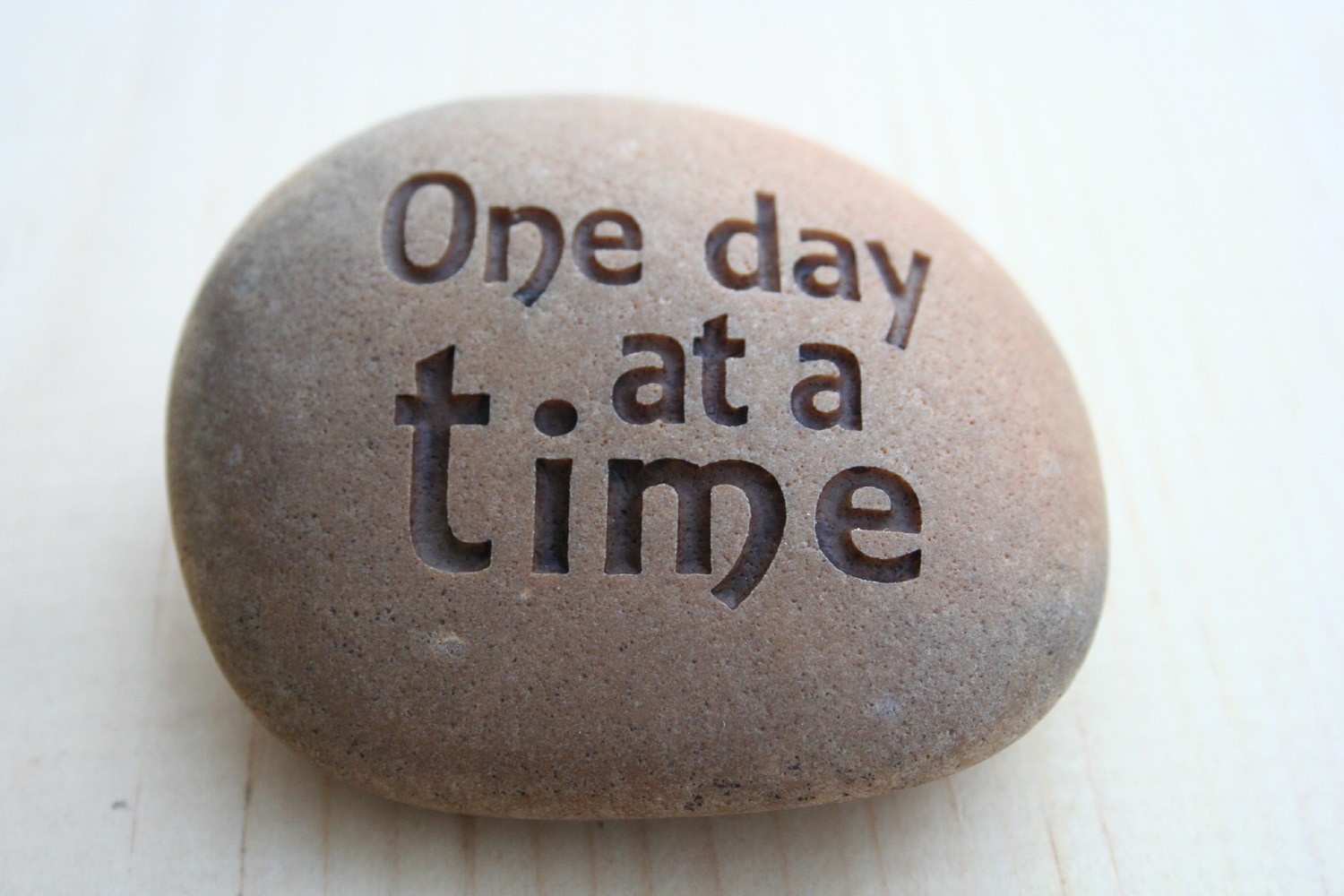
one-day-at-a-time

I’ve never liked public speaking.  When Lauren asked me to write a guest post for this blog I thought I might feel different.  I was wrong. This is so much akin to walking into a room filled with people that are all used to hearing from one person and now here am I, this new guy, a stranger, and what can he possibly say that is going to be of any importance? And I will agree what is important to me may not matter to you. (That doesn’t help the self-doubt either)…

If I could bottle up everything I’d like to say into one line, it would probably be:

You can survive each day if you live each day as just one day. No reliving the past or hiding in fear of the future. Today is more than enough for today.

I know, rather trite. But being trite doesn’t keep it from being true. I’ve found it works for myself, but so many I have talked to have expressed the same idea. You can only live in this moment, so don’t expend all your energy on any other time but the present. Don’t judge your past actions based on your present understanding. Accept your actions were acceptable for the time and place they happened.

This used to be much easier for me. For over thirty years I didn’t remember much before turning fifteen. Some good some not-so-great, but mostly my life as a kid was more mystery than memory. In my “gut” I knew there was more – there was something, but I couldn’t tell you what. I went through dozens of therapists by the age of forty, all with different ideas and philosophies. Religious, secular, it didn’t matter. I just wanted an answer to what happened so I could know who I was. The major hitch in all this – I believed who I was depended on what had happened to me.

notabadperson

Then, when the memories started returning, I wove a new ‘understanding’ – I believed I was what had happened to me. I was the abuse. Then I was the cause of the abuse. It was all my fault. And if I was so flawed I could cause those kinds of things to happen to me at nine, or five, or two… just imagine how screwed up I could make life yet to happen. So in one bucket I had my life, guilt over my past, and fear of my future all stewing together. And that sucker got real heavy in a hurry.

I’d love to say I have it all sorted out now. That I’m doing so great that I agreed to be a guest blogger. But that’s not the case. There are times I still wonder if my intense draw to other men is wrapped up in my abuse. And there are the nights I cry myself to sleep or sit up screaming in the middle of the night, reliving the pain, or worse – humiliation, of something from my past. I still deal with triggers which can be as innocuous as a word, sound, or smell.

I used to think that, if other people can manage, I can. I’ve heard/read stories so much worse than what I suffered of people who are survivors and living each day strong. But, for me anyhoo, trying to live my life because someone else manages to — that doesn’t work. I have to be because I want to be.

And, bottom line, there it is. I want to live. I want to accept all of me. That does not mean accepting what happened to me, but it does mean accepting that it did happen. Maybe a fine line, but a major difference in viewpoint. What happened was horrible. But it did happen. And that’s the other point – it did happen; but it is not happening anymore. And even when my dreams are interrupted by the terrible truth of the past, it is still of the past. Does it impact today? Sure. But does it rule today? No.

At least it doesn’t rule this day. Tomorrow is another day, but I will live that day when it gets here. My hands are still way too busy juggling to add anything future.

Life is not always sweet and wonderful. But it is life. Regardless of what I believe lies on the other side of death, there are things here and now that I am not willing to let go of. Even with the pain. Even with the memories. Even with the bouts of unfathomable depression.

You have the choice over how you live. I know it doesn’t always feel that way. And sometimes we can’t see anything but the destruction of our souls. But even when all is dark and we’re trapped within the cellar of depression, our actions are still our choice. Make the choice you are best able to make and there is no reason to regret it later.

Whether or not you can be at peace with the world around you, my hope for you is peace with the world within you.

Guest Post #5: Why Does Mental Illness Stigma Exist?

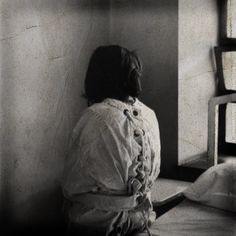
in_the_asylum
In The Asylum, Unknown artist.

Matthew Malin, owner and creator of the blog  Confessions, has written a wonderful guest post describing the history of mental illness stigma, going all the way back to Roman times.    Not only is the subject matter fascinating, but the unique historical perspective shows how the stigma is rooted in two things that seem almost diametrically opposed: mental illness as a medical problem centered in the body; and ancient superstitions, such as demonic possession.   Even today, there are those who regard mental illness as either a primarily medical problem (leading to doctors over-relying on drug therapy) or a spiritual problem. While there may be both medical and spiritual elements involved in mental illness,  both views have led to stigmatization.

If you have a chance, please visit the Confessions blog.   Matthew’s articles are all about living with depression and anxiety, all written from an intimate, Christian perspective:

In the Spring of 2015 an incredible passion for those suffering from Mental Illness was born within the heart of Matty Malin. Through his own struggles with Depression and anxiety, a fire was ignited within his heart. That desire was to create a place of honesty, transparency, and love. We, the broken, have grown far too weary of the masquerade playing out before our eyes in society. We’re tired of hiding behind “I’m fine”. Here you will find unabashed clarity into the soul of man. You will also discover the love of God despite the ugly, sometimes violent, heart of man.

We fully believe that man is sinful and in need of a Savior. Jesus, the perfect son of God, stepped into our world, lived a sinless life, and was murdered voluntarily on the cross for our sins. He took on the wrath of God for us so that we might have access to a relationship with God that will one day result in spending eternity with him. We obtain salvation through faith in His work and by the grace of His loving hand.

We firmly believe that no man can go too far for the love and hope of Christ. Mental Illness can provide some of the darkest days of life. It is here that we need hope and it is here that we can find it in Christ.

WHY DOES MENTAL ILLNESS STIGMA EXIST?
By Matthew Malin

As someone who has dealt with the debilitating effects of Depression and anxiety for a period of 4, almost 5 years, I believe that I’ve stumbled across something much more paralyzing: Mental Health Stigma. The more aware I become of my own struggles and the more honest I am with myself and others, the more I find a growing discomfort with the topic of Mental Health. Why is this? What is it about Mental Health that sends general fear and inquietude through someone who is tasked with aiding the mentally ill?

A timeline of mental illness stigma.

cutting_the_stone
Cutting the Stone by Heironymous Bosch, ca. 1494

I believe that history is ultimately to blame in this arena as well as a shallow thought process towards the issue. The Greek Era (500-100 BC) brought forth our first record of Mental Health treatment. Hippocrates was of the mind that a build up of bodily fluids was to blame. In his words, he said, “It is some kind of black bile that is making you depressed.” Their treatments revolved around the physical removal of whatever fluid was ailing the individual.

The Roman people (100BC-600 AD) did nothing to treat the issue at its core either. Instead, they were of the mind that depression/mental health issues were caused by organic malfunctions. Diet and exercise were prescribed to deal with the issue. Yet another example of a culture misunderstanding the true nature of Mental Health.

During the Middle Ages (600-1100 AD), a holy war was being waged on Satan and any form of mental issue was prescribed to be due to demonic activity. The medication for such issues became obvious: Exorcism or any other kind of holy activity. It is believed that the stigma of such illnesses became obviously prevalent and prejudiced during this time.

This recap ultimately brings us to our day and age. If you take a good hard look at the process of treating/dealing with Mental Illness today, you will see a common thread amongst diagnosis and treatment. The 1950’s brought about the thought that medical treatment was the only way to deal with the issue. This solution can be easily traced back to the Greek Era and their thought processes. Others will still claim that diet and exercise will best help those suffering from mental illnesses. There are those as well who righteously claim that mental illness is of the devil and must be rid of by God.

The meaning of mental illness.

All of these prescriptions are lazy, surface level suggestions that completely forsake the underlying notion of what it means to be mentally ill.

It is within the opinion of the author that, when it is appropriate, medicinal, organic, and religious means be used to treat mental illnesses. It is not, however, appropriate to cast off those with mental illnesses by simply telling one to deal with their issues by such means.

What is meant is this: Non-suffering individuals should not settle for surface level treatments when the real issue must be dealt with by more personal means. There is more to those who are mentally ill than meets the eye.

Medicine, religion, and organic based treatments are incredibly valuable but there is one treatment that is oft ignored: the support of a caring soul.

Our culture is neck deep in instant gratification. Social media, advancements in technology, and a general lack of education have only worsened the stigma that already existed towards those with mental illness. It is within the opinion of the author that our society has lost all care and respect for the people around them. Why? We’re far too caught up in ourselves.

What needs to be done.

It is a sad, unfortunate truth that this stigma will truly never go away. Some people will never care but all hope has not been lost. While arrogance can hardly be cured, ignorance can be educated. This kind of teaching cannot take place within a classroom. This is the kind of schooling that happens through our parenting, our social lives, and our social media ones. What I’m advocating for is change, but not from the outside world.

Change has to come from within if we ever want to make a difference. This requires those with any kind of mental illness to step up and speak out. It requires a willingness to open up about the issues, the difficulties, and the failures that come along with mental health. This change begins with us.

I recognize what I’m asking. I’ve not been very shy about my struggles but I recognize that it may come a little harder for others. Whether social stigma has silenced your voice or your own perceived stigma has, it can be an incredibly difficult thing to open up about. Let me reassure you of this: Your mental illness does not define who you are. Yes, it limits you. Yes, it makes life a little more difficult. I guarantee you though that it does not take away your worth as a human being.

You have been fearfully and wonderfully made by the God of the Universe and He loves you. You were made in His image! No person can ever take that away from you. No amount of vicious vocabulary or audacious action can strip you of your worth as a human being. Don’t allow yourself to tell you that you have no worth and therefore cannot speak out. Don’t allow other people to tell you that either. You have inherent worth, you are loved, and you are capable of standing against this.

Decide today that you will no longer stay quiet in this battle. You have a voice, let it be heard.

Be the change you wish to see in this world.

God bless you,

Matthew Malin
Author and Founder of Confessions:

https://confessions92.wordpress.com/

Guest post #4: You Are Empowered (Just Plain Ol’ Vic)

I’m happy to introduce my 4th guest blogger, Just Plain Ol’ Vic.  Vic’s blog is one of my favorites.  I’ve been following it almost from the very beginning of my blogging journey and have found it always inspiring and thoughtful.    Vic has helped me through many of my own rough moments and is a regular commenter on this blog too. Be sure to stop by his blog!

This is from his About page:

Just Plain Ol’ Vic

plainolvic

Bio: Thanks for taking a look at my blog. I am Just Plain Ol’ Vic, however Vic will do just fine. I originally started this blog as a form of writing therapy. I am happily married, with kids but my wife suffers from bi-polar disorder, clinical depression, has an eating disorder and is a recovering alcoholic. Needless to say it is quite a bit for one individual to handle, thus my blog. I started this blog to connect with others that suffer from mental health issues and/or have loved ones that have mental health challenges. This is a way for me to connect, discuss and educate myself about my wife’s condition and perhaps in turn, allow me to be a better spouse. Perhaps too, in hearing my story, others will know that they are not alone and there is help, empathy and resources out there. My blog has since developed beyond just talking about mental health (although that is still a priority). I pretty much discuss what is on my mind or happening in my life. I am not afraid to spout verbal diarrhea, give unsubstantiated opinions and generally exercise my 1st Amendment rights. Along the way I hope to provoke some thoughts, get you interactive with my blog…perhaps even make you crack a smile and belly-laugh every now and then. So if by now you are still interested and willingly join me on my journey, thanks for coming along and don’t forget to buckle up! http://justplainolvic.wordpress.com/2014/07/19/tempting-fate-taking-a-leap-of-faith/

Here is his guest post, not really about himself, but about all the wonderful things he’s learned from living with his wife, who suffers from Bipolar disorder.   Through their relationship, joys and struggles, Vic says he has developed a level of empathy and understanding for the mentally ill he might not have otherwise had.  I thought his story was very touching and inspirational and I even got a little misty-eyed reading it.

YOU ARE EMPOWERED

By Plain Ol’ Vic (http://justplainolvic.com/ )

bandaid_heart

Introduction:

Hello there, my name is Vic and first of all I would like to thank Lauren for giving me this wonderful opportunity as a guest blogger.  I don’t think my story makes me any more special than the next person, thus my moniker of “just plain ‘ol” seems very appropriate.  I am just a guy, husband and father that is trying to make sense of his world and do right by my family. There are days that this is harder than it sounds; as my wife has bi-polar disorder, has attempted suicide, has had multiple hospitalizations, is a recovering alcoholic and recovering from an eating disorder.  Guess what?  She is and will always be a wonderful woman and I am lucky to be married to her.

 Instead of telling my story and the trials and tribulations we have faced as a couple and family, instead I would like to talk about some of the positive things I have learned as I have become more educated and empathetic to the challenges my wife faces on a daily basis. As tough as the challenges have been, as daunting and insurmountable as the obstacles seem to be – we are still here, engaged in the moment and are as strong (perhaps stronger) than we ever were.

***

It is so easy, when someone suffers from a mental illness, to have it consume their lives and allow it to define who they are, how their perceive themselves and become the cornerstone of their existence.  I am here to tell you that does not have to be the case!  You ARE empowered to be who you CHOOSE to be, should EXPECT people to treat you the way you DESERVE to be treated and you should NEVER SETTLE for anything less.

YOU ARE BEAUTIFUL

I know it is hard to look in the mirror and not “see” your mental illness.  I challenge you to look beyond the physical and see your spirit within.  See the inner beauty, the inner resilience and the inner fighter that you have become.  “Normal” and “perfect” do not exist, they are made up abstractions.  Who you are, your uniqueness is what makes you beautiful.  If you can embrace that inner beauty, it is the first crucial step to learning to love yourself.

YOU ARE WORTHY OF LOVE AND AFFECTION

Having a mental illness does not make you “less deserving” than the next person. Despite the challenges you may face every day, you are deserving of a partner that will love you for who you are – not what they want you to be.  While a relationship can and will be challenging at times, you can find someone that will accept and love you the way you are.  The key to this is communication:  being open and honest from the first moment.  Making sure you have a partner that you can talk to, confide in and lean on is critical.  No relationship is ever perfect but it can work for you as long as you are willing to work for it.

YOU ARE POWERFUL, STRONG & CAPABLE

Having a mental illness does not make you less of a person, less capable than someone that is “healthy.”  Indeed you may actually be much stronger than a “healthy” individual because you have to endure so much more.  Never doubt your ability to lead a full and productive life.  You are capable of achieving whatever you set your mind to.  Now I am not going to deny that it may be tough, that there may be setbacks – however you are powerful, strong and capable – you can take back your life.  Your life and your contribution is just as important and relevant as anyone else, so shout your message from the rooftops and embrace all that makes you unique.

I would like to show you this video where I drew inspiration from for this post.  Now I have made it clear that while I am not religious I am a spiritual individual, however despite that I cannot deny the power of this message.  Please also understand that I think is message (and my message) is geared for both men and women.  Take the time to listen to some of the words that are said and understand that this IS you or CAN be you If you so choose.  There are so many things misunderstood when it comes to mental illness, so many stigmas out there.  However if you empower yourself, share and communicate your story then you too can help other see what makes you so wonderful, so unique and so human.

I wish everyone the best.  Be well.  Take care of yourself and each other.

Just Plain ‘Ol Vic.


Guest post #3: Facing Complex Post-Traumatic Stress Disorder

I’m happy to introduce my third guest blogger, Alisha, who has a blog about living with Complex PTSD (C-PTSD) and chronic pain. She was kind enough to write this powerfully written guest post for this blog. I loved reading it because it ends with a message of hope, no matter how bad things might seem. Please visit Alisha’s blog, The Invisible F.  She has another blog featuring her fantasy writing, including her novel, The Return of the Key.

From her About page:
alisha

Hi, my name is Alisha. I’m a proud alumnus of the University of Westminster where I did my MA in International Journalism. I love parrots, singing, drawing, sharing stories, fantasy movies, games and books, and people who like fantasy movies, games and books.

I live with a number of chronic health conditions including fibromyalgia, clinical depression, anxiety, & Complex Post-Traumatic Stress Disorder, and for much of my life have suffered from debilitating symptoms. I want to raise awareness to help people understand but moreso to share and engage with all those whose lives are touched by fibromyalgia and mental health problems in one way or another, so they know they’re not alone.

Facing Complex-Post-Traumatic-Stress-Disorder
By Alisha, The Invisible F.

pain

I was sitting in a small room at hospital when the psychiatrist’s voice called me away from the brilliant white walls that were pulling me in.

“You’ve had a very difficult life Alisha” she said, looking at my notes. After asking me to recount some of my ordeals, she said “From your symptoms, I would say you have Complex-Post-Traumatic-Stress-Disorder (C-PTSD).”

I had to ask her how C-PTSD differed from PTSD, which many of us associate with soldiers who have served in warzones or conflicts. She explained that C-PTSD tends to occur in people who have suffered repeated traumas for a prolonged period, with no chance of recovering from each incidence.

The more she told me about it, the more I felt like she was telling me about myself.

I had a long history of abuse starting in childhood, when I honestly believed I wouldn’t live to see the age of 18. I survived, thankfully, but I continued to endure traumas past my teenage years and into my twenties. I can’t say which incident was worse, because I felt the enormity of each one added to the already heavy weights that I carried. At 16 I was diagnosed with depression and anxiety, suffering terribly painful anxiety attacks that made my chest hurt so much I thought I would die.

I tried to ignore the feelings my past stirred up, because I lived in a society that stigmatises mental health conditions. I thought I was fine. It was only years after my stepfather and friend were brutally murdered, that I started getting glimpses of the brokenness I had masterfully hidden from the world and myself. I packed my bags and left everything and everyone I loved behind, moving to the other side of the world. Surely pain wouldn’t follow me there. But we can’t unknow things, and there was a lot of pain etched on my heart and mind. These parts of me would not let me forget.

C-PTSD manifesting

The C-PTSD diagnosis made sense but I was still surprised. Mostly because I wasn’t expecting another label. I already lived with fibromyalgia, depression and anxiety and several months before had been slapped with borderline personality disorder, which I was still struggling to come to terms with. I could say very clearly what some of my symptoms were, but I couldn’t always say which diagnosis was responsible for what I suffered on any given day.

As time passed and I connected the dots, I understood more about how deeply C-PTSD had been affecting my everyday life, unknown to me.

Days before I met the psychiatrist at hospital, I was sitting in Accident & Emergency having a meltdown, unable to cope with the avalanche of emotions tumbling through me. I wanted to give up again and almost did. I didn’t understand why the smallest upsets felt like utter catastrophes, or why I seemed to attract bullies or why getting close to people terrified me so. The doctor was most empathetic about it.

“Well you’ve had a lot of bad experiences with people so that is going to shape your outlook. It doesn’t mean your outlook is wrong. It only means your experiences have shaped your perspective” she said.

If only other people were that understanding. Not too long before I had encountered very unsympathetic people in a shared flat where I resided. Just when I thought I was recovering from the dark feelings that led to two close calls on my life, I discovered that approaching the close of my twenties, I was having night terrors. I had never even known there was such a thing until it was googled by a flatmate who constantly complained about my screaming at night. I couldn’t believe that I was screaming while asleep with no recollection of it the next morning. I didn’t believe it until my own screams woke me in the dead of the night. Frightened and panicked, I searched around my room until reason returned, and I questioned what it was that I was looking for, and so terrified of.

Nightmares

I have a long history of nightmares, which started in childhood. The kind that leave you so terrified you’d do anything to keep yourself from drifting off, anxious of what’s waiting for you in the realm of dreams. Consequently, I developed insomnia from a young age. Generally, my anxiety tends to get worse at night. It’s not uncommon to find me wide awake in the wee hours of the morning when most people are getting their best sleep. I’ve always slept better in the day, when the sun is out and it somehow feels safer. When I (reluctantly) have to go to sleep at night, I clear my room to make sure there’s no clutter that might form awkward shadows, that may frighten me when I wake in between my cat naps.

My flatmates couldn’t understand the nature of night terrors, and I was accused in person, by email and text like a perpetrator. I felt bad about it, truly. The accusations though, only distressed me more, and increased the frequency and severity of the night terrors.

Recently, I started sleeping walking, and I often wake up running towards my bedroom door terrified, with no recollection of my dreams.

Living with C-PTSD has been like sitting in a prison inert, long after the doors have been opened. I have wanted so badly to walk through, tending to avoid things and places that remind me of past traumas. I think of all the positive things I’ve managed to achieve through my beleaguered time here. I spend my waking hours keeping extremely busy so I rarely have time for stray thoughts, and it works; but everytime I go to rest, my subconscience reminds me of the many demons I’ve buried and hidden away.

In my dreams I am always running, looking for an ally, and an escape that is rarely found. I often run in different directions, only to end up right back in the place where my captors are waiting by the prison doors. When I am not shut away, I am violently murdered, again and again, like a broken cassette sticking in the same sickening place.

The things I said I’d never do

I suppose I never realised how my past traumas were affecting me until my late twenties. People would say, ‘it’s the past, just leave it behind and move on.’ Or worse ‘everyone has problems.’ If only it were that simple. I’d give these people a chance to walk in my shoes if I could, and silence any doubts. I want to forget, and I do everything possible to move forward, but the mind is such a powerful thing. All my efforts have been no match for my mind which digs up torments when I am asleep.

Owing to C-PTSD, I’ve done a lot of those things I said I would never do. You know when we watch others suffer and silently judge, telling ourselves, ‘that will never be me’? At 17 I remember watching my 30-something year old friend elaborately explain how she avoided the doctor’s questions when he asked how she accidentally cut her arm again, needing stitches. When I asked her directly, she brushed it off, and I sat there thinking I will never understand this.

I didn’t think of my friend when I first hurt myself. All I remember thinking was how good the external pain felt, taking the focus away from my internal turmoil. Months later I diverted from my healthy diet and found myself facing bulimia. The first time I felt confused, wondering why I kept eating though I was satisfied. But I craved the food badly, I ate and I ate, until I felt so physically upset I had to empty my stomach. I cried & cried every time because I wanted to badly to stop but I had no control, and that was the part that got me. I didn’t even have control over me.

It’s sad that after everything I’ve suffered I’ve also had to deal with bullies who have targeted me because they know they could. I try to build myself up, to be stronger and braver in the face of this. I do psychotherapy and I’m not sure it helps. Maybe? Doctors say I will likely need therapy for the rest of my life. I’m not sure how I feel about that.

Every day is a challenge. But I wake up and set out to do my very best. I try to practise mindfulness and celebrate my successes. Whether they are publishing a new book, managing to stay out of hospital or simply getting out of bed when I feel like shit, I celebrate them all equally, because I know what it is like to be crippled by depression and C-PTSD. I know very well what it’s like to lie in bed unable to will myself up; to want to shower or make a cup of tea and not be able to do so. I know what it’s like to feel that it’s safer to stay alone than get close to people…to stay indoors for days, unable to set a foot outside the front door. So every day I achieve something, no matter how small, I pat myself and say ‘well done, you’ve done it today so when you think you can’t do it tomorrow, just remember you did it today.’

The one dream

I’ve told you what many of my nightmares consist of. But it would be remiss of me not to mention the one dream that overshadows every nightmare that comes.

In this dream, I carry a heavy babe in my arms as I climb a tall, rickety winding staircase leading to a wall. With every step I take, the child becomes heavier. When I’m almost to the top, the staircase crumbles like dust in the wind. This part of the dream ends abruptly, like a director’s cut in a poorly edited movie, and when I open my eyes I am on the sea front, surrounded by people who cannot see me. The rippling turquoise waters beckon me and I do not resist. I walk into them and as I float farther in, the waters envelope me, washing away every heavy burden my soul bears. I embrace the waters filling me up as I begin knowing a kind of peace. It almost feels…like home, where my soul will find rest, so I let it consume me. But as my consciousness ebbs, a hand reaches through the veil of the waters, and pulls me out. And again, the scene ends abruptly. I awake as a child, amongst the laughter and play of my fair cousins.

My aunt, an interpreter of dreams says the heavy child I carry represents the burdens I bear; the seaside scene is the deception of suicide and my subconscience believing that it is there I will find rest from the pain that plagues me. She says the hand pulling me out of the waters, is the truth that I am not lost, that redemption can, and will be found…that even when I am drowning, no matter how close I come to death’s doors a power higher than any torment and death will lift me up.

I press on, finding strength in my faith and true friends who embrace me, imperfections and all. I am encouraged by sharing with others in the same boat, by bringing a good word to those who need it. Maybe doctors are right…maybe I will need therapy for the rest of my life. Maybe. All I know is I’ve managed to make it this far, when I didn’t think I could. You could have told me a thousand times that I’d make it, but I wouldn’t have known if I didn’t walk this road myself.

A million hugs & prayers for your courage & peace of mind.

Love Alisha
Guest Post #2: “Accepting Limits”

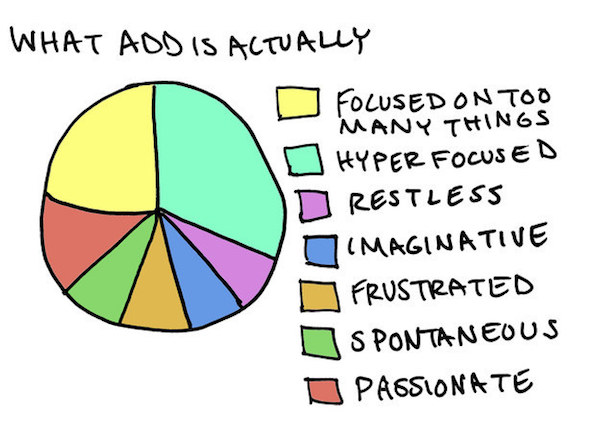
add_chart

Here is my second guest post, “Accepting Limits,” written by BoxingandBallet, who has a blog about living with Attention Deficit Disorder (ADD) and depression, Discovering Ratchet. Boxing is an accountant, and she has a deep love of both boxing and ballet, an interesting juxtaposition! She is also a great writer.

From her About page:

I am an accountant. It is surprising how big a part of my identity revolves around this fact. Many of the stereotypes associated to accountants apply to me:

–risk-averse
–conservative
–a bit nerdy (I really do love Excel)
–I look great in black, grey and navy.

But like most people, there is more than meets the eye. I have a deep love for ballet, and will try convince you it is gangsta. I enjoy boxing. The incongruity of my accountant (“vanilla”, so I have been told) lifestyle with my boxing interest is the source of many of my amusing stories. That, coupled with my attempts at both online and offline dating, will be the focus of this blog – a catalogue of funny events in my life, however small.

My catchphrase, which I am trying to bring into the mainstream is: “Let your phoenixes arise proudly.” Slips easily into everyday conversation.

Boxing’s [“Vanilla” is what she calls herself in this post] article is about the years from childhood to early adulthood and how she coped with oscillating depressions and ADD episodes, and her struggle in learning how to set limits for herself and knowing what are realistic, appropriate goals and what aren’t.

I appreciate her post because it’s about a disorder I know little about, and have never had a post about before. Here is a good informative article about ADD and ADHD if you want to learn more: http://www.add-adhd.org/ADHD_attention-deficit.html

Thank you, Boxing/Vanilla, for sharing your story. People, please stop by and visit her blog, Discovering Ratchet.

ACCEPTING LIMITS 
By BoxingandBallet/Discovering Ratchet
https://discoveringratchet.wordpress.com

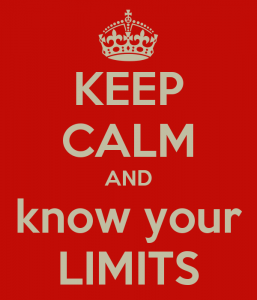
knowyourlimits

“You are not your ADD. Don’t ever use ADD as an excuse for not succeeding. You can do or be anything you want, you just might have to work harder, smarter and differently than someone who doesn’t have ADD.” – My mother, circa 1988, repeated daily until her death in 2012.

She sometimes said it encouragingly, but usually yelled it at me in frustration during our daily tutoring sessions. All through elementary school, I did 3-5 hours of extra school work a day, even on weekends. Math drills, grammar drills, geography drills, essay writing, book reports. Relentlessly, she supplemented my public school education, and we did all this without the support of Ritalin: studies showed that habits learned without medication were more likely to stick. We waged wars. The more she nagged, the more I procrastinated. I practiced escaping from my study on the 2nd floor of our home by climbing onto the roof of the house to avoid my homework. She called it stubbornness. I called it boredom and free will.

“Of course you can live your life without medication. I completed medical school without it. But taking medication when you have ADD makes life just a little bit less hard. You notice, for the first time, that the sun shines brightly. It’s a pity to live your life without seeing the everyday beauty around you, because you are so caught up in the whirlwind of your mind.” -– My pediatrician, circa 1998

At 14, I got caught shoplifting several times at my local pharmacy. My disgrace came in the form of a stern letter drafted by the store’s legal department requesting I reimburse them for all stolen goods, and a warning that if ever I shoplifted again, they would press charges. My mother was heartbroken and confused. She wanted to know why? I was bored. Shoplifting was a fun challenge. Textbook ADD. My mother marched me into my doctor’s office to get me a prescription for Ritalin. I was reluctant: I didn’t want my mind and my successes to be a product of pills. I didn’t want to be medicated into good behavior. My pediatrician convinced me to give it a try.

“I don’t believe in this ADD stuff. Everyone has inattention issues nowadays. You’re just a bit flaky.” – My ex-boyfriend, circa 2005

I’d stopped taking Ritalin, right around the same time I discovered beer and boys (I’d gone to an all-girls high school run by nuns). I’d been shocked by the level of effort required to succeed in university, and overwhelmed by it all, I’d taken a nap. By the time I’d realized how much trouble I was in, the semester was too far-gone, so I procrastinated until I failed. Several semesters in a row. I flunked out of mechanical engineering with a GPA of 1.13.

“I think Ritalin is a cop-out. An unfair advantage. A crutch. Drink coffee instead. Why did you pick a field that requires you to take Ritalin in order to succeed? If you can’t do your job without relying on medication, maybe that is a sign you shouldn’t be making that your career. I’m pretty sure you’d be an excellent high-school teacher, and then your quirky ADD wouldn’t need to be medicated away, it would make you more fun for your students. What will happen the day Ritalin gets taken off the pharma market? Your career will end? Pffft, I don’t think it’s wise.” – Same ex-boyfriend, circa 2008

2 years after dropping out of school, I decided to put myself through Uni, and pursue my professional CPA designation in accounting. I was studying part-time, while holding a full-time job as an admin in an office. Determined to not repeat the mistakes of the past, I’d gotten myself a prescription for Ritalin. On average, I studied 30 hours a week, for 2 university classes. I did practice problems at lunch, on the bus, every moment I could find, because I’d learned from my first experience in Uni that I wasn’t as smart as I’d always thought, and if I didn’t give it my everything I’d fail. But I wondered…maybe I did have an unfair advantage over all the other students? I kept my pills hidden.

“Sadness is a choice. Have your sad thoughts, acknowledge them, and then choose to be proactive and focus on the good stuff. Why do you worry so much? It is just making you unhappier. Try thinking happier thoughts. You’re a vortex of despair.” – My ex-boyfriend, circa 2009

I was in the midst of an undiagnosed depression. To be fair to him, I was excelling at school. I’d quit my job, saddled myself with a boatload of debt and was in school full time. I refused to let myself ever get less than an A-, or to have a final grade that wasn’t in the top 5 of the class. I’d also stopped using Ritalin, because I couldn’t handle feeling like a fraud – that my success at school was due to the continued ingestion of a pill. I succeeded. I graduated at the top of my glass. At great personal cost.

“Vanilla, I’m worried about you. You’ve stopped smiling at work. Every time I see you at work, you look more unhappy, and anxious. Please, let me help you. What’s wrong? ” ­– My mentor at work, one of the top 4 accounting firms in the world, circa spring 2012.

I’d gotten my professional title in December 2011. Instead of celebrating, I fell apart. My senior coworkers had told me that passing the UFE (professional exam) and getting my title would be 2 of the happiest days of my life, right up there with my wedding day or the birth of my first child. I felt empty. My career was booming, I was making my mark at the firm, I was good. Except I felt like a huge failure: my finances were in a mess, I’d been single for 2 years, some of my team members found me hard to work with. I stopped taking Ritalin, to prove to myself that my ex was wrong. I could do this job without my pills. I started having serious panic attacks on my way to, and at, work. Getting showered, and showing up at work was a herculean feat – sometimes I’d show up 2 hours late. My bosses didn’t complain much, because once at work, I delivered excellent work. I didn’t mind the late nights on the job-–it meant avoiding sleep, and therefore less time for the nightmares.

“You have to accept your limits, in order to properly address the issues at hand, and determine the best course of action. Everyone has limits. Refusing to accept your own is not a sign of ambition and drive, it is a sign of immaturity.” – my new therapist, circa August 2014

I’d sought out a therapist because 2 weeks after getting a major promotion at work, I stumbled head first into the most intense, vicious depression I’d experienced in my adult life. I’d cry uncontrollably at work, sometimes for over an hour, several times a day. I’d pray that I wouldn’t wake up in the morning. Quickly, we identified my job as a key component in my emotional instability. I’d given absolutely everything to my work in the year leading up to my promotion. I’d always put in 25%-30% more time on the job than my co-workers, to compensate for my ADD inefficiencies. “You can do or be anything you want, you just might have to work harder, smarter and differently than someone who doesn’t have ADD.” I was prepared to do just that. Except…I was already consistently putting in 60-75 hour weeks, year round, compared to my colleagues’ 45-50. The promotion required me to level-up, significantly. I had nothing left to give. My personal life was a mess, the only aspect of my life that I was proud of was my career, and I could not face the next step. Either I went back on medication to do this job, or else I had to change jobs.

“What do you mean you are depressed? You just got promoted! You’re nervous. Maybe you need to work on your time management skills. Why are you throwing away your career? Don’t be a quitter.” – my coworkers, when I resigned from my job, September 2014

“Good for you, Vanilla. I’m proud of you. It’s ok to want to be happy, you know. You’ll figure out a way to have a career that doesn’t break you: it just might be slightly different from the one you envisioned.” – my mentor, September 2014

I suppose it’s a compliment, that my coworkers reacted with disbelief, even contempt, when they found out I have depression and ADD. I suppose I am blessed to be able to manage my ADD and depression through lifestyle changes and constant therapy, without resorting to medication. But I guess I am pretty immature, because I still have trouble accepting my limits. Quitting that job feels like an admission of defeat, even though I’m much happier now. Who knows? Maybe one day, I’ll be able to reconcile myself to the idea of medication, and like my pediatrician promised me, I’ll notice the sun shining a bit brighter.

Guest Post #1: When My World Shattered

Favim.com-26101
Credit: Unknown artist, Favim.com

I’m thrilled to introduce my first guest blogger, Tessa from Advocate for Mental Illness.   Her blog is about her daily struggles with Bipolar disorder, told from a Christian perspective.  She has recently given her life to Jesus Christ.  Here is her bio from her About page:

ABOUT TESSA

Teresa (Tessa) Smeigh is over 55 and still going strong despite her disabilities affecting both physical and mental abilities. She has bipolar disorder (mental), Fibromyalgia (nerves), degenerative disc disease (spine), and arthritis (joints). Despite that she is active in Mental Health Advocating, writing for http://www.IBPF.org (volunteer for non-profit) and has 5 blog posts already published by them. She is also working on 2 fiction books (mysteries). She keeps her blog filled with useful content, daily devotionals (She is a Christian), stories and poems. Plenty to keep you busy. She has also been interviewed by blogs and had other posts published on many different blogs. She has 2 blogs so far http://www.tessacandoit.com and http://www.finallyawriter.com She is from Deptford, NJ. Her family and blogs keep her busy.
Although she doesn’t focus on it in her blog, Tessa also has Borderline Personality Disorder (BPD) and complex PTSD.  I have asked her to write a guest post about having BPD, because none of my other guest bloggers are writing about BPD but I already have several who will be writing about Bipolar and complex PTSD.
Here is her guest post.
When My World Shattered!
I am a 59 year old female who has suffered mental health conditions since birth. Since I was born in the 50’s people didn’t talk about mental health. Even with a suicide in the family it was not talked about.
As an infant I took anxiety medication in order to keep food in my stomach. I was considered to have a “nervous stomach.” My mother kept a supply of anxiety medicine at hand all through my childhood because anything could set me off into an “anxiety episode” and hysteria. This was common throughout my childhood. My self-soothing unfortunately was considered self-harm by today’s standards.
At a very young age I developed signs of bipolar disorder which at the time we did not know. I got an official diagnosis in my early 30’s after a breakdown. Also by the same procedure, a hospital stay almost 4 years ago picked up on the Borderline Personality Disorder (BPD) and I followed the symptoms back to when I was a child as well, but a little bit later than the bipolar.
Bipolar disorder and BPD are similar in symptoms and are often misdiagnosed. I have officially now been diagnosed with both. The biggest difference between the two is the length between the mood swings. Since my mood swings as a very young child were months apart it is most likely the bipolar disorder started first. Then later when the BPD developed they became rapid even changing during a single day or even hour.
It is difficult to break the symptoms down and say this belongs to bipolar disorder and this belongs to BPD. I will just go into the symptoms I suffer as one. Which is the direct cause, is not really necessary to know at this point.
How about a little history on BPD?
Symptoms usually manifest in childhood, but don’t become serious until a person becomes a young adult. This fits close to my time-line. Only I figure mine started in my teens after a traumatic experience of having been almost raped twice by the time I was 15 years old. I was then emotionally raped at 17 years old where I was told by the young man that either we had sex at that point or he was leaving me (abandonment considered to play a role in BPD) and we had just gotten back together. I couldn’t let him go. I gave in and that was also traumatic. I wasn’t ready. During that time I also suffered a miscarriage although I really didn’t know it at the time. I was totally naive even though my low self-esteem led me to wear sexy clothing and flaunt my body to every man. I didn’t know why I did it. I craved that attention though (promiscuity).
The exact cause of BPD is not know though they suspect brain chemistry plays a role, also genetics and environmental factors, along with the possibility of childhood trauma.
To add to the trauma, the 17 year old played the “I am going to kill myself if you don’t marry me” game when I tried to break up our relationship. I felt stuck, my emotions caused me to give in and marry him. I didn’t love him, but I was married at 19 years old. At 21 I had my first child, 22 I had my second and by 30 I had three children.  By then my weight was out of control due to binge eating.
My self-harm became more severe although I did resist cutting after I tried it and felt it didn’t give me the feelings I needed to soothe myself.
My anger intensified, but I kept it inside. I did not explode into rages unless you really pushed me but those rages were severe. People didn’t listen to my warnings and I flew into rages, shocking people with their intensity.
Paranoia became a constant state of my life. I am always sure people are talking about me. Even today.
Dissociation has been a constant since childhood. I always daydreamed and put myself into my books. I loved to read and my parents would force me outside. That triggered my anxiety and panic.
Severe depression for months on end would cause suicidal thoughts and several attempts and the last one landed me in the hospital for treatment and intense therapy. Luckily I didn’t succeed. The last one was the most serious.
I am currently in severe financial poverty due to low disability payments and reckless spending while I was manic.  Manic episodes are currently considered a symptom of both bipolar disorder and BPD.
I also have had a lot of unsafe sex due to my promiscuity, which is another shared trait.
BPD is difficult to treat. Usually a therapist, especially one trained in DBT (Dialectical Behavior Therapy) or CBT (Cognitive Behavior Therapy), combined with medications such as anti-psychotics, anti-depressants and mood stabilizers will help tone down the symptoms.
***
Please visit Tessa’s blog here. 
My apologies about the wonky spacing.  WP isn’t letting me change the coding and I don’t know CSS.  I hope that doesn’t affect anyone’s reading experience!