Do borderlines have a “false self”?

false_self_pic

One of the takeaways I got from my therapy session tonight, was that as someone with BPD, I do have a false self, but it’s not the same kind of false self a person with NPD has.

Actually, almost everyone has a false self. Whenever you’re polite to someone you don’t like, tell a “white lie,” put on your “best face” in a job interview, or act happy at the dreadful office Christmas party, that’s your false self in action. In the non-disordered, it’s called a social self, and is necessary to be able to function in the world. People who have no social self self at all are people who have no idea how to act in social situations, and just say whatever is on their mind. They care nothing about making a good impression or sparing someone’s feelings. There are people like this, but they’re usually living on the edges of society. Most people aren’t very comfortable having to wear this social self, but know they must in order to function in the world.

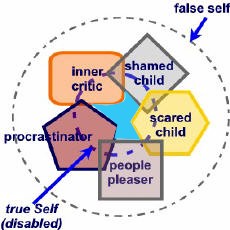
Narcissistic Personality Disorder and Borderline Personality Disorder are both Cluster B (emotional, dramatic, erratic) disorders and both involve serious disruptions in a person’s sense of self. In both disorders, the true self was compromised at an early age because the parents or caregivers failed to mirror the child’s growing sense of self. The false self is a defense mechanism and stands in for the compromised true self, which in the case of someone with NPD, can no longer be accessed.
falseself_graphic

But there are differences. In a person with NPD, the false self is an intractable, permanent structure and is stable. What this means is that a person with NPD has become someone else. The mask they wear becomes who they are, and any threat of exposure by another for the lie it really is will be viciously attacked or the perpetrator devalued. That’s why you can never criticize a narcissist.

The NPD false self is also stable, meaning it doesn’t change much.  For example, a somatic, grandiose narcissist has built an entire identity around their physical appearance and uses every opportunity to make sure everyone knows how physically perfect they are. Because so much effort has gone into building this identity, the narcissist is unlikely to have developed any other abilities or strengths. A person with NPD pretty much lives full-time as their false self, and rarely, if ever, show others any glimpses of their true self, which in the worst cases, is so inaccessible to them it may as well not exist. If the false self is ripped away (this can be done by denying a narcissist any supply), and there is no more supply to be had (this sometimes happens to elderly narcissists, who can no longer rely on looks, youth, career or financial success to boost their egos), what is revealed is a person so empty, depressed, or dissociated they may require hospitalization or may even attempt suicide. Some may voluntarily enter treatment, but if their fortunes change, they start to feel better and are likely to quit therapy. Schizophrenic symptoms in a degraded narcissist isn’t unusual.

NPD is difficult to treat because the false self is so intractable and all-emcompassing, the person has little to no insight into themselves or even realize it’s they who have the problem. Because they tend to project their unacceptable emotions onto others, they’re far more likely to blame others for things they have really brought on themselves.

In Borderlines, the false self manifests more as a series of temporary masks, adapted to suit certain situations or people. People with BPD are emotional chameleons. Their dramatic mood swings and changeability are due to constant mask-switching and the stress this causes them. The BPD false self is not well developed and it often fails them, causing them emotional distress. The BPD false self (really false selves) is unstable, permeable, and easily shattered, frequently revealing the empty, dissociated, depressed true self. Because it’s not a permanent structure, BPDs don’t require narcissistic supply to keep it “alive” (they’re more likely to become codependent to a narcissist). They can seem “crazier” than people with NPD, but they are more easily treated because they spend at least some of the time without their masks on.

Further reading:

Derealization and Depersonalization in NPD and BPD

Comparing Covert Narcissism and BPD
Borderlines are Human Chameleons

Why Narcissists and Borderlines are Drawn to Each Other

Why DBT and mindfulness is helping me get more out of therapy.

mindfulness_poster_UK

For anyone suffering from BPD who wants to undergo psychodynamic or trauma therapy, I definitely recommend taking some DBT (or CBT) classes first. This also applies to people with complex PTSD, as the symptoms of C-PTSD and BPD can be almost the same (and for Borderlines, usually co-exist together).

I’ve been in therapy many times throughout my life, but I never stuck with it before. I usually would quit, because I either gave up in frustration or things got too intense. My first instinct whenever things in life would get too uncomfortable was to run. I had zero insight into myself or why I reacted (or overreacted) to things the way I did. I always thought everything was someone else’s fault. Yet I was constantly apologizing for things that weren’t my fault. I know that’s confusing, but I was confused. I was ignorant about boundaries and then wondered why others got offended when I unwittingly invaded theirs. Either that or I put up too many boundaries, not letting anyone in or rejecting people who tried to get too close.  I had a martyr complex, always felt picked on and ganged up on, was constantly paranoid and hypervigilant, always feeling like everyone hated me and was out to get me. I was ready to go off on someone or act out at the slightest provocation, believing I was being attacked unfairly. I was much more likely to attack things than people (I was constantly breaking things; self harm was never really my thing) but my violence toward objects and verbal tirades still upset those around me and upset me too after the fact. People always told me I overreacted to everything, but I always felt like it was somehow justified. I couldn’t see the part I might have been playing in all that.

To be fair, I was horrifically abused both as a child and as an adult, so my paranoia and distrust of others wasn’t completely unfounded. I was trained to be a victim and tended to act in ways that ensured I would remain a victim, without knowing I was doing so. I still struggle with this. I still tend toward codependency.  I still find it hard to connect with people in any meaningful way.   I’m a long way from being the person I want to be or that I could have become, and I may never get there completely. But there’s a big difference between the way I am now and the way I used to be. Mindfulness.

mindfulness

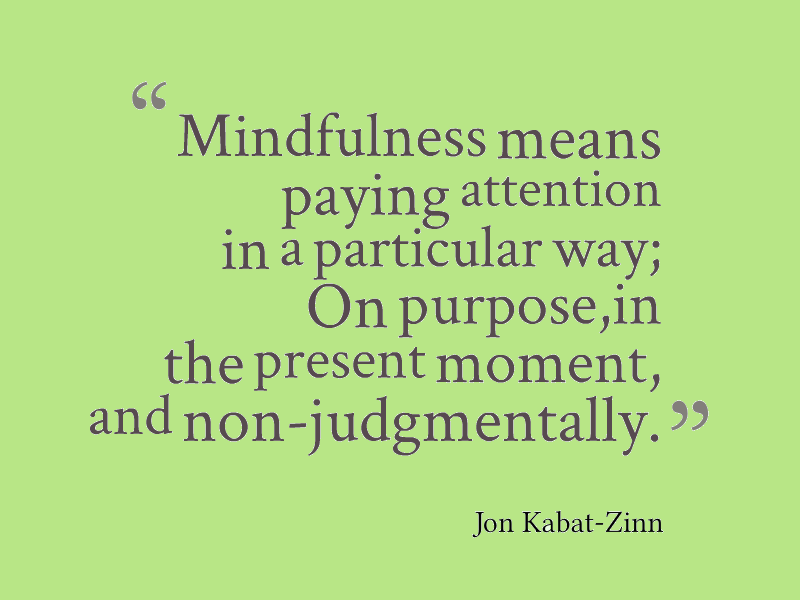
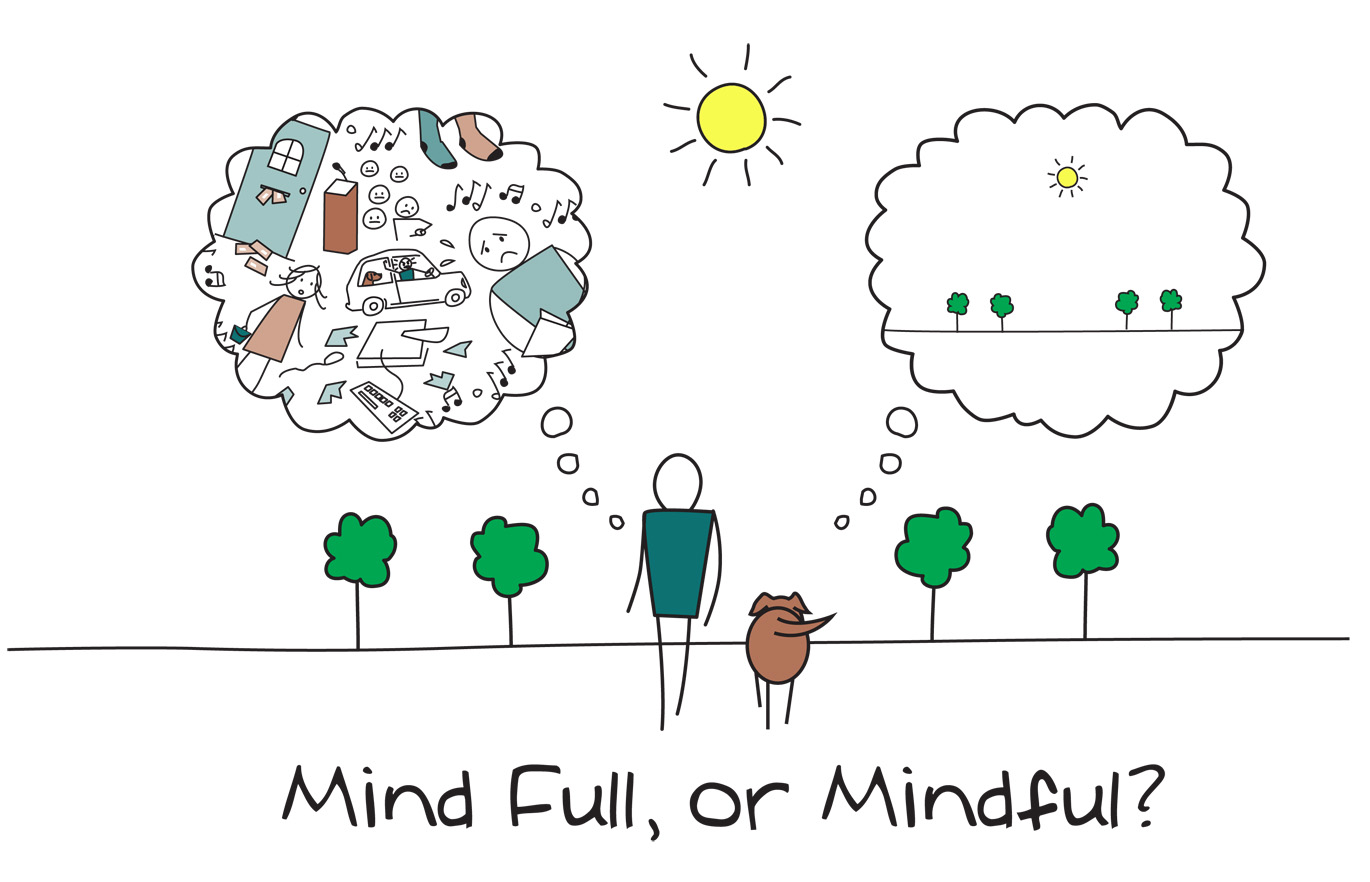
What is mindfulness? It’s the ability to think before you act, be aware of your own actions and reactions, and have insight into your own motives and why you do the things you do. It’s staying in the present, instead of fretting about the past or worrying about the future. It’s being able to step back mentally and see yourself the way others see you. Being mindful keeps you from acting out in ways you might regret later on. You’re not constantly apologizing because you acted out without knowing, because you can stop yourself before you do. Being mindful is like receiving a pair of magic glasses that allows you a view of yourself you never had before. You might think that having this “inner critic” would make you self-conscious, fearful and awkward, but ironically, it does the opposite. Because you have the ability to know how to act before you act, you have more control over yourself, and therefore more control over how others react to you. Slowly, you begin to find that people are reacting more positively to you, and you have fewer reasons to lash out at others or overreact to things. You begin to trust others more, because you trust yourself more.

Mindfulness is a wonderful tool in therapy, and is helping me get so much more out of it than I ever did before. I took DBT classes in 1996, when I was first diagnosed with BPD, and at the time I sort of blew them off. Because I was still in my abusive marriage, I was still very sick and not really ready to do the work. As long as I stayed with my narcissist, I was not going to get any better, but I didn’t know that. My ex had me convinced that I was the problem, not him. Because of his triangulation and gaslighting, he had everyone else convinced I was the crazy one too and he was just the put-upon victim. He’d systematically goad me into a BPD rage, knowing he could, and then with a smirk of satisfaction, tell everyone how insane I was. His personality and manner came off as more cool and collected than mine did, so I probably really did look crazier and more out of control than he did. But he was pulling all the strings.

Anyway, back to mindfulness. It wasn’t until early in 2014, when I finally went VLC (very low contact) with him (and kicked him out of the house), that I started to change. First I started to write and that’s why I started this blog. Writing every day helped me gain insight into myself and my narcissists. After a few more months, I began to realize I needed to make a few changes to myself. I pulled out my DBT workbook (Marsha Linehan’s Skills Training Manual for Borderline Personality Disorder) and began to do some of the exercises. I had already been doing a few of the things, but this time I took it more seriously and tried some of the things I hadn’t before. One of those things was paying attention to my internal, bodily state whenever I felt an unpleasant emotion. By doing this, I was able to begin to name what I was feeling. Emotions are very physical things. By naming an emotion, you can allow yourself to feel it, realize it’s just an emotion and not “you,” and learn to have more control over it.

mindfulness (1)

In therapy, I find I’m constantly focusing in on my bodily state, whether there’s any tightness, pain or strange sensations. There always seems to be pressure or tightness in my stomach, chest and throat that goes away when I can name the feeling and begin to express it. Being mindful this way of my internal state and naming my feelings, I’m much less likely to act out against other people or break things. I’m working now on breaking down the protective emotional wall I’ve developed that overlies softer feelings of sadness, grief, empathy, and connection with others. For many years it seemed the only emotions I ever could access were fear (sometimes straight up terror), shame, guilt, anger, and rage–and mind-numbing, zombielike depressions where all I wanted to do was sleep.

There are many ways to be mindful. Some of them are very simple, like counting to ten before acting. Others require more concentration. We need to learn how to self-soothe, something we never learned how to do as babies or young children. Being mindful allows you room to learn self soothing techniques. The insight you gain into yourself by being mindful also allows you the ability and courage to dig deep when you decide to undergo psychodynamic therapy. You’re going to experience powerful emotions when you’re searching for the root causes of your illness, and being mindful allows you to experience them without overreacting, acting out…or quitting therapy.

Guest Post #1: When My World Shattered

Favim.com-26101
Credit: Unknown artist, Favim.com

I’m thrilled to introduce my first guest blogger, Tessa from Advocate for Mental Illness.   Her blog is about her daily struggles with Bipolar disorder, told from a Christian perspective.  She has recently given her life to Jesus Christ.  Here is her bio from her About page:

ABOUT TESSA

Teresa (Tessa) Smeigh is over 55 and still going strong despite her disabilities affecting both physical and mental abilities. She has bipolar disorder (mental), Fibromyalgia (nerves), degenerative disc disease (spine), and arthritis (joints). Despite that she is active in Mental Health Advocating, writing for http://www.IBPF.org (volunteer for non-profit) and has 5 blog posts already published by them. She is also working on 2 fiction books (mysteries). She keeps her blog filled with useful content, daily devotionals (She is a Christian), stories and poems. Plenty to keep you busy. She has also been interviewed by blogs and had other posts published on many different blogs. She has 2 blogs so far http://www.tessacandoit.com and http://www.finallyawriter.com She is from Deptford, NJ. Her family and blogs keep her busy.
Although she doesn’t focus on it in her blog, Tessa also has Borderline Personality Disorder (BPD) and complex PTSD.  I have asked her to write a guest post about having BPD, because none of my other guest bloggers are writing about BPD but I already have several who will be writing about Bipolar and complex PTSD.
Here is her guest post.
When My World Shattered!
I am a 59 year old female who has suffered mental health conditions since birth. Since I was born in the 50’s people didn’t talk about mental health. Even with a suicide in the family it was not talked about.
As an infant I took anxiety medication in order to keep food in my stomach. I was considered to have a “nervous stomach.” My mother kept a supply of anxiety medicine at hand all through my childhood because anything could set me off into an “anxiety episode” and hysteria. This was common throughout my childhood. My self-soothing unfortunately was considered self-harm by today’s standards.
At a very young age I developed signs of bipolar disorder which at the time we did not know. I got an official diagnosis in my early 30’s after a breakdown. Also by the same procedure, a hospital stay almost 4 years ago picked up on the Borderline Personality Disorder (BPD) and I followed the symptoms back to when I was a child as well, but a little bit later than the bipolar.
Bipolar disorder and BPD are similar in symptoms and are often misdiagnosed. I have officially now been diagnosed with both. The biggest difference between the two is the length between the mood swings. Since my mood swings as a very young child were months apart it is most likely the bipolar disorder started first. Then later when the BPD developed they became rapid even changing during a single day or even hour.
It is difficult to break the symptoms down and say this belongs to bipolar disorder and this belongs to BPD. I will just go into the symptoms I suffer as one. Which is the direct cause, is not really necessary to know at this point.
How about a little history on BPD?
Symptoms usually manifest in childhood, but don’t become serious until a person becomes a young adult. This fits close to my time-line. Only I figure mine started in my teens after a traumatic experience of having been almost raped twice by the time I was 15 years old. I was then emotionally raped at 17 years old where I was told by the young man that either we had sex at that point or he was leaving me (abandonment considered to play a role in BPD) and we had just gotten back together. I couldn’t let him go. I gave in and that was also traumatic. I wasn’t ready. During that time I also suffered a miscarriage although I really didn’t know it at the time. I was totally naive even though my low self-esteem led me to wear sexy clothing and flaunt my body to every man. I didn’t know why I did it. I craved that attention though (promiscuity).
The exact cause of BPD is not know though they suspect brain chemistry plays a role, also genetics and environmental factors, along with the possibility of childhood trauma.
To add to the trauma, the 17 year old played the “I am going to kill myself if you don’t marry me” game when I tried to break up our relationship. I felt stuck, my emotions caused me to give in and marry him. I didn’t love him, but I was married at 19 years old. At 21 I had my first child, 22 I had my second and by 30 I had three children.  By then my weight was out of control due to binge eating.
My self-harm became more severe although I did resist cutting after I tried it and felt it didn’t give me the feelings I needed to soothe myself.
My anger intensified, but I kept it inside. I did not explode into rages unless you really pushed me but those rages were severe. People didn’t listen to my warnings and I flew into rages, shocking people with their intensity.
Paranoia became a constant state of my life. I am always sure people are talking about me. Even today.
Dissociation has been a constant since childhood. I always daydreamed and put myself into my books. I loved to read and my parents would force me outside. That triggered my anxiety and panic.
Severe depression for months on end would cause suicidal thoughts and several attempts and the last one landed me in the hospital for treatment and intense therapy. Luckily I didn’t succeed. The last one was the most serious.
I am currently in severe financial poverty due to low disability payments and reckless spending while I was manic.  Manic episodes are currently considered a symptom of both bipolar disorder and BPD.
I also have had a lot of unsafe sex due to my promiscuity, which is another shared trait.
BPD is difficult to treat. Usually a therapist, especially one trained in DBT (Dialectical Behavior Therapy) or CBT (Cognitive Behavior Therapy), combined with medications such as anti-psychotics, anti-depressants and mood stabilizers will help tone down the symptoms.
***
Please visit Tessa’s blog here. 
My apologies about the wonky spacing.  WP isn’t letting me change the coding and I don’t know CSS.  I hope that doesn’t affect anyone’s reading experience!

I’m only 6 years old.

Therapy was more productive tonight…

The One Who Got Away

Living with Narcissism is a new WordPress blog written from a man’s point of view. He suffers from C-PTSD and writes about his toxic relationships with character disordered women.

This is a highly readable account of his devastating breakup with a young woman who had Borderline Personality Disorder. While BPD is highly stigmatized, many women with active BPD behave just this way. I’m ashamed to admit I recognized some of Kerry’s behaviors in the ways I used to act in my relationships. This was an excellent post from a wonderful new blogger. Please go visit his blog and leave comments there.

donshelby's avatarLiving With Narcissism

Even after 15 years of marriage there was this one woman who I just never got over completely.  In my mind, she was my soulmate.  The one who got away.  Leaving her was like an addict giving up their drug of choice.  She was my heroine.  My soul was so enmeshed with hers that it literally felt like a tearing apart inside my heart and soul when I finally left her.  After all of those years I still pined for her and yearned for closure.  I had no idea what I’d done wrong or why we couldn’t work out.  I felt like our relationship was just an innocent baby and she killed it.  I should have hated her for that.  If it had really been a child, no doubt, I would have.  But it was a metaphorical child.  I didn’t hate her.  I missed her and still loved her even…

View original post 1,823 more words