Divorcing The Donald: Cutting Ties with The Narcissist.

Allison Patton, family lawyer, wrote an eye opening article for The Huffington Post that goes beyond simply describing Donald Trump as an NPD poster boy, which many have already done.

In family law, individuals with NPD are known a HCPs-high-conflict persons. Here, Ms. Patton describes the way Trump’s blatant narcissism has not only alienated him from the Republican Party, but how he could potentially serve as a public example of a serious disorder that family lawyers, judges, and the courts are surprisingly ignorant about–and often unwittingly reward the narcissistic spouse and punish the real victim, due to the narcissist’s glibness and ability to lie convincingly.

Unfortunately, Trump has succeeded in pulling the wool over the eyes of millions of Americans who continue to support him–even though it’s no secret he has been publicly diagnosed with Narcissistic Personality Disorder. Many of these Americans tell themselves, “well aren’t all politicians narcissists anyway?”
Well, most probably have some narcissistic traits, but most are not full-blown NPD like Donald Trump either.

Divorcing The Donald: Cutting Ties With The Narcissist
By Allison Patton, for The Huffington Post
http://www.huffingtonpost.com/alison-patton/divorcing-the-donald_b_9633460.html

Republican presidential candidate Donald Trump speaks during a campaign rally, Wednesday, April 6, 2016, in Bethpage, N.Y. (AP Photo/Julie Jacobson)

Republican presidential candidate Donald Trump speaks during a campaign rally, Wednesday, April 6, 2016, in Bethpage, N.Y. (AP Photo/Julie Jacobson)

Narcissistic Personality Disorder
A “Cluster B” personality disorder in which a person is excessively preoccupied with personal adequacy, power, prestige and vanity, mentally unable to see the damage they are causing to themselves and often others.

While the Republican Party is desperately trying to cut ties with Donald Trump, the world watches in disbelief. All, that is, but a particular group of women and men with one thing in common: each of them has divorced a narcissist, and some still share child custody with one.

They know the story and could write the script. The successful, gregarious person who swept them off their feet. The promises that followed. Gradually the realization that it was all a façade. There could never be a “we” because narcissists care only about themselves. Then the real nightmare began, the battle to remove this toxic person from their lives. . . . and for those with children, the misery of trying to co-parent with an ex who acts and thinks like The Donald.

As a divorce lawyer, these cases are the most difficult and disturbing. In my family law circle, we refer to someone with a narcissistic personality disorder as “an NPD” (or the more general term “HCP” — which stands for “high conflict person”). The legal battle is always the same: the unaffected spouse tries to explain to the attorneys, judge and appointed psychological expert (if there is one) the narcissist’s behavioral pattern: control, emotional abuse, manipulation, duplicity and the damaging impact on the children. The NPD denies it all and mounts a legal response that consists of blame laying, factual distortions, outright lies and a character assassination of the other spouse.

The experts and the judge are sometimes able to weed through the chaos and confusion, identify the personality disorder at play and make decisions that protect the children and unaffected spouse. Often, however, the legal system gets it wrong. Just as we’ve seen with Donald Trump, the NPD can be very convincing and manipulative. And the court system – like the general public – either gets conned by the NPD or isn’t equipped to manage the level of conflict created by a Donald. Often the court assumes both parties are equally to blame for creating and maintaining a high conflict case, so the innocent parent who is fighting to protect the kids is treated as skeptically as the narcissistic parent.

For decades, there has been little understanding of how to spot and handle personality disorders in family law. As recently as 2011, when I blogged on Huffington Post about high conflict people in divorce court, I received emails from out-of-state divorce professionals indicating the information was new to them and they hadn’t heard the term “high conflict people” used in their family court.

Thanks to Donald Trump and his campaign, the entire world now gets daily lessons on NPD behavior. As disturbed as I am by what the Donald has pulled off, the divorce lawyer in me sees the opportunity here. The Donald is our new high conflict poster child. Those of us who want change in the family law system couldn’t hope for a better example. The common traits and behaviors of this personality disorder are being revealed, in their full horrific glory.

Read the rest of this article here.

Bonus article: Donald Trump’s Amazing Answer to “Do You Cry?”  (Washington Post)
https://www.washingtonpost.com/news/the-fix/wp/2016/01/19/donald-trumps-amazing-answer-on-do-you-cry/
Hilarious.

Inside the Mind of the Malignant Narcissist

Narcissist word salad–want oil and vinegar with that?

Comments have been disabled; please comment on the original post.

NPD mood cycles can mimic Bipolar disorder.

comedy_tragedy

I remembered something about my NPD ex tonight. He used to have mood swings that seemed in many ways reminiscent of Bipolar disorder. It was only later I realized what they really were–cycles of of grandiose entitlement and dejected self-pity. Whenever supply was abundant–such as when he was promoted at work–he became puffed up with pride and this resulted in an attitude of entitlement and grandiosity which he lorded over his subjects, namely me. He also seemed somewhat manic when he was in one of these grandiose phases.  These were the times he was the most likely to become overtly abusive, both emotionally and physically. Instead of being happy the way a normal person might when thingsa are going well for them, my ex became hostile and prone to pick fights. I learned to dread the times in which good things happened to him, because that was when his narcissism seemed to go into overdrive.

When his supply was running low, he sank into deep depressions, in which he lost all his motivation and energy and spent most of his time staring dejectedly into space or sleeping (or pacing the house frantically at night). His “manic” behavior disappeared and he talked very little when he talked at all. When he did speak, it was to moan endlessly about how terrible his life was and how everyone had it in for him (nothing was ever his fault, and he was still assigning himself Center of the Universe status).  He acted helpless and needy, and wallowed in self pity like a pig in mud. He sometimes threatened suicide (but never attempted it–narcissists generally don’t). As annoying as his depressed moods were, I preferred him that way because he was less overtly abusive (though still abusive in a covert, manipulative way). He acted a lot “crazier” in his depressive states and suffered terrible panic attacks on a regular basis. This actually fits with an NPD diagnosis: when a narcissist isn’t getting any supply and their victims aren’t cooperating, they begin to feel like they don’t exist, and can become very depressed and dissociated. The dissociation can lead to severe panic attacks and even psychotic episodes.

The terms “covert narcissism” and “overt narcissism” aren’t mutually exclusive. A covert narcissist (the depressed, “fragile” type) will usually become more overt (grandiose) when supply is high. A grandiose (overt) type will sink to a more covert form of narcissism when supply is low. The two types of narcissism are really just two halves of the same personality disorder. Grandiose narcissists are thought of as being high achievers, but that may be because since they get more positive supply to begin with, they have more reason to act grandiose.

Before I put two and two together and realized my ex’s bizarre mood swings were in direct proportion to how much praise and recognition from others he was getting, I was sure he had Bipolar disorder. Unlike most narcissists, he did see a psychiatrist (mainly to get meds for his depressions and anxiety; there was little to no desire on his part to improve himself), who actually gave my ex a Bipolar diagnosis.

The most common type of Bipolar disorder is what used to be called Manic Depression. During a manic phase, the patient is likely to be extremely hyper, grandiose, testy, and quick to anger. They have an unrealistic sense of their own invincibility that doesn’t line up with reality. This is very similar to the grandiose phase of someone with NPD.

The covert (depressed) phase of NPD can look extremely similar to the depressive phase of Bipolar disorder. The main difference is, a narcissist will generally not follow through on suicide threats (because they are intended to manipulate and garner sympathy, a form of supply) while someone who is Bipolar is in grave danger of suicide. A bipolar patient can also be helped by medication, while there is no effective medication for NPD (although antidepressants and anti-anxiety drugs can help with some of the symptoms).

Further reading:

The Relationship Between Narcissism and Bipolar Disorder

Do borderlines have a “false self”?

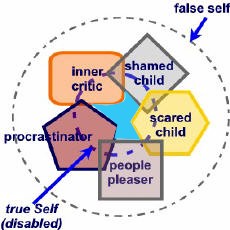
false_self_pic

One of the takeaways I got from my therapy session tonight, was that as someone with BPD, I do have a false self, but it’s not the same kind of false self a person with NPD has.

Actually, almost everyone has a false self. Whenever you’re polite to someone you don’t like, tell a “white lie,” put on your “best face” in a job interview, or act happy at the dreadful office Christmas party, that’s your false self in action. In the non-disordered, it’s called a social self, and is necessary to be able to function in the world. People who have no social self self at all are people who have no idea how to act in social situations, and just say whatever is on their mind. They care nothing about making a good impression or sparing someone’s feelings. There are people like this, but they’re usually living on the edges of society. Most people aren’t very comfortable having to wear this social self, but know they must in order to function in the world.

Narcissistic Personality Disorder and Borderline Personality Disorder are both Cluster B (emotional, dramatic, erratic) disorders and both involve serious disruptions in a person’s sense of self. In both disorders, the true self was compromised at an early age because the parents or caregivers failed to mirror the child’s growing sense of self. The false self is a defense mechanism and stands in for the compromised true self, which in the case of someone with NPD, can no longer be accessed.

falseself_graphic

But there are differences. In a person with NPD, the false self is an intractable, permanent structure and is stable. What this means is that a person with NPD has become someone else. The mask they wear becomes who they are, and any threat of exposure by another for the lie it really is will be viciously attacked or the perpetrator devalued. That’s why you can never criticize a narcissist.

The NPD false self is also stable, meaning it doesn’t change much.  For example, a somatic, grandiose narcissist has built an entire identity around their physical appearance and uses every opportunity to make sure everyone knows how physically perfect they are. Because so much effort has gone into building this identity, the narcissist is unlikely to have developed any other abilities or strengths. A person with NPD pretty much lives full-time as their false self, and rarely, if ever, show others any glimpses of their true self, which in the worst cases, is so inaccessible to them it may as well not exist. If the false self is ripped away (this can be done by denying a narcissist any supply), and there is no more supply to be had (this sometimes happens to elderly narcissists, who can no longer rely on looks, youth, career or financial success to boost their egos), what is revealed is a person so empty, depressed, or dissociated they may require hospitalization or may even attempt suicide. Some may voluntarily enter treatment, but if their fortunes change, they start to feel better and are likely to quit therapy. Schizophrenic symptoms in a degraded narcissist isn’t unusual.

NPD is difficult to treat because the false self is so intractable and all-emcompassing, the person has little to no insight into themselves or even realize it’s they who have the problem. Because they tend to project their unacceptable emotions onto others, they’re far more likely to blame others for things they have really brought on themselves.

In Borderlines, the false self manifests more as a series of temporary masks, adapted to suit certain situations or people. People with BPD are emotional chameleons. Their dramatic mood swings and changeability are due to constant mask-switching and the stress this causes them. The BPD false self is not well developed and it often fails them, causing them emotional distress. The BPD false self (really false selves) is unstable, permeable, and easily shattered, frequently revealing the empty, dissociated, depressed true self. Because it’s not a permanent structure, BPDs don’t require narcissistic supply to keep it “alive” (they’re more likely to become codependent to a narcissist). They can seem “crazier” than people with NPD, but they are more easily treated because they spend at least some of the time without their masks on.

Further reading:

Derealization and Depersonalization in NPD and BPD

Comparing Covert Narcissism and BPD

Borderlines are Human Chameleons

Why Narcissists and Borderlines are Drawn to Each Other

The Pool Guy: a story about narcissism (part 2 of 2)

Continued from Part One.

Here are the final installments of the saga of a wealthy, grandiose narcissist obliging his neighbor (who wrote these posts) to be his “pool guy”– a source of narcissistic supply and target of intermittent abuse and love bombing.

pool-man

The Pool Guy (continued)

5.

He painted the pool guy black [devalued/discarded a pool man he had previously hired]. He went on a crusade to prove how easy it is to do what that “incompetent fool” can’t do. He spent a fortune in money and time. My neighbor paid twice as much to have an employee from the pool store come by and show him how to do it.

He’s completely incapable of hiring a pool guy. When I left him with that choice, he mentally split. I knew I’d seen that look. I was braced for silence, brooding, etc. Instead, he was flip, glib, non-nonchalant. He already had that episode scripted.

His admirers (me, his source of socializing; his realtor who stands to make $20,000) will deal with it. If we don’t, he’ll have another nice chapter for his narrative. Sources of supply let him down, and even the realtor can’t live with $20k. “Taking care of the pool — which is such a simple thing to do, I know, I’ve proven it to myself. He couldn’t work a little harder for $20k. It’s his fault it took longer to sell. Yes! That’s it! It’s his fault. He thought he could just bring people through the house and it would sell it self. Typical loser. He probably voted for Obama! Yes! That’s it.”

I could actually come out on the winning end if I were more in the psychopathy spectrum. I could send him emails saying how I’m surprised that realtor didn’t let my neighbor know the pool turned green in 4 days. Or, imply the realtor is one of those guys who voted for Obama. “What’s he thinking. The pool’s green and he wonders why it’s not selling! He thinks $20k should just come to him without doing anything to earn it!”

It’s been two days. I’ll walk over there in a couple hours. I might toss a couple scoops of magic powder in the pool. But, my position is that I agreed to walk around and be his eyes and ears. Help coordinate anything that needs to be done. I’ll leave the hose on a slow flow (to top the pool off, instead of having to watch it and constantly take action).

I think the realtor is having Open House. I should walk over and broach the topic with him. That’s the most I’ll get involved. Otherwise, I’ll wait till it spins out and let my neighbor know. He’ll probably call the guy at the pool store to come and do it. It will cost him more than paying a monthly fee for regular service. But, it’s just not in his vocabulary to do that.

I’m not worried about it. I won’t “play” it to my advantage. I was being sarcastic about that. But, I do imagine he’ll hold it against the realtor. He’s already bad-mouthing the realtor for not trying hard enough.

When I consider my position in the matter: I could try to keep it up. The risk to me is that it would turn into a project. I would try to make it perfect. I’d feel responsible. (The inverted or compensatory N, self-sacrificing). Then I would get bitter for what I give and how little I receive in return. It would turn into a blow-up and me disliking him.

I can probably do a little to keep it in shape (so it’s not a green 4-day disaster) without my traits taking over. I don’t think I have to “stand my ground” against what is clearly his manipulation. My self-awareness should allow for better than that.

I’m going to walk over there right now.

6.

I just returned. The realtor seemed distant, short, unpleasant. I think I could see quickly what’s going on. My neighbor’s making the realtor earn his $20k, taking it out of his hide. Criticizing everything the realtor does, expecting perfection. He’s blaming the realtor for the house not selling at the inflated price my neighbor first picked. (My neighbor can’t look at it in the context of having bought the house for his son to go to college. It was just an expense. Now it has to be a huge return on investment. His son’s education living in relative comfort and security wasn’t the return.).

I suspect that part of that narrative is that I’m my neighbor’s trusted ears and eyes. My neighbor probably gave the realtor a verbal beating and let him know his absence won’t make a difference.  I suspect the realtor sees me as an extension of my neighbor. I’ll say something, leading to more unpleasantly.

I touched upon the topic of the pool. I think I broke through some ice and I subtly let him know we have the same concerns. I think he believed my neighbor “tainted” me and I was on the lookout to give my neighbor ammunition. A home-buyer arrived and the realtor said he would call me soon.

***

This was the last post until the end of October, when the forum member began to have problems with his narcissist neighbor again.   The neighbor’s pool was again the ammunition used to torment him.

7.

My narcissistic neighbor put the house on the market and left me to keep an eye on the place. He expected me to take care of the pool which I made clear I wasn’t comfortable with. When he left, he treated it as if would be taken care of between me and the real estate agent, and he would return in September if the house didn’t sell. “Somehow it will all work out” (expecting me to do it even though I said “no.”).

Well, we’re entering November and there have been “complications.”

While here he groused about the people who work at a retail store he owns. (The same way he groused about the property management company who rented the house for a year or two. And, the pool guy who did something not to his standards. Also, the real estate agent who wasn’t working hard enough.). He was going to go home and sell the store. Well, the first thing he did was fire everyone and ran the place himself.

That was the first clue he wasn’t coming back.

Then he was going to rent it, and maybe I could look after minor issues with tenants (pay me for my time). I asked if he would have a pool guy, and he said he would let the tenants care for the pool. (I know how that works. It turns into a mess, leading to maintenance work.). I expressed my concern about that, how usually the cost of a pool guy is rolled into the rent so there’s no surprises.

He could tell I wasn’t eager to do it, so he called some property management companies. But, he didn’t get a good feeling about them (probably jaded about them like he is about pool guys).

Then, he extended the for-sale listing (with the real estate agent he doesn’t like). He expected the pool stuff to continue as it was.

Then, something happened which required the house be taken off the market. (A repair must be made. Nothing serious, but it could stand out as poorly done if not done right.).

So, 3-4 weeks ago I became the sole pool guy (because the real estate agent stops by now).

He has contacted some people to do the repair, only one has come by to see it. But, that repair guy didn’t call the neighbor with the info. I explained to my neighbor the repair guy did mention a price, but I assumed he would call my neighbor since I’m in the middle (nothing was written, etc.).

That was a week ago. I just communicated that I hadn’t heard from anyone else, and asked if he heard from that repair guy. (I also needed to let him know the pool condition is deteriorating.). He said “no. It appears nothing will get done until I’m there.”

I think he realized it’s a little more complicated than the average Craigslist advertiser can be trusted to do. There are 3 ways to do it, and none are perfect. (Especially not to him. The only perfect way to to do it is if he does it — but he fired everyone…. and so on, and so on.).

That’s how he is. He’s probably in the middle of a huge narcissistic injury with his business. The house was a disappointment. And now it’s rolling down to me. (Exactly how I envisioned.).

This makes me realize how glad I am to be self-aware. The feeling was more novel in June/July when he was here. Now I feel more accomplished at it. For example, before awareness I would have been emotionally invested in being “the guy” taking care of things, responsible for additional profit from the sale, etc. As expectations changed I would have taken it personally (injured, taken advantage of). That would trigger him into one of his “I knew it, you’re like the rest, a bum!” I would have taken it personally (not recognizing my own reckless exposure to it).

So, I spared myself that indignity (even though he would like me to feel co-responsible, which I can understand because I would do the same thing.).

Now I guess I need to contact the repair guy and ask him to call the 4-year old (because the 4-year old won’t do it.). But, I also think my neighbor wouldn’t let him do the work because of the potential for it to come out badly. I think blaming the repair guy is merely convenient.

So, I’m probably stuck for another two months.

It irritates me because I made it clear a dozen times I don’t want to have anything to do with the pool. Even on his last day here when he bought me my dinner and then sprung it on me how he expected me to take care of the pool… and then his whole demeanor changed when I said “no,” and I knew I had seen that look before. He fast-forwarded in his narrative to how that’s going to work when he’s disappointed (forgetting how I told him “no.”).

I tie today’s snitty reply *directly* back to that affect/personality change I detected at dinner when I said “no.” He was imagining this moment. (A Pavlovian salivation at the tasty supply which awaits.). I know that look because I do it too. (“You’re not going to do these things for me after I imagined you doing them? Ok, that works too. You can be the good guy, or the bad guy.”).

It’s interesting how I knew this was how it would go. There were times I was concerned I was being too uncooperative (invulnerable). But, I was right. If I had given into my eagerness to be the shining star, I’d be having a serious (self-induced) injury/rage right now.

I was tempted to assert my “no” when he put me in this position. But, there was a real estate agent involved too. I thought I could help out. But, I’m starting to let him know it’s not working out. He knows it’s starting to deteriorate and I don’t know what to do. (He knows someone at a pool store who he thinks he can fall back on to do it. The weather is cooler so it won’t get too bad now.).

It’s strange how he has to do everything himself. I asked how the sale of the store is going, and when he think’s he’ll return. I don’t want to put him in a bind being hundreds of miles from his property. I don’t mind keeping an eye on things. But, the pool part of it is irritating me. He’s going to have to get a pool guy or be prepared for it not being perfect when he gets here.

That’s what makes me nervous is that he has huge expectations on everyone else (but never notices he doesn’t do much better).

pool-guy-1

8.

I’ve been beating around the bush about how the pool won’t be in good shape when he returns, and how it probably needs one of those weekly people. I’ve also asked when he’s coming back. All I get in reply is how it would be nice if I could do the best I could with it. (He doesn’t respond to how the sale of his business is going, or when he thinks he’s coming back.).

What really irritates me is that he spent over $2k on fake furniture to make it look nice. (It’s a common practice in the US.). But, he won’t spend $30 a week on a pool guy.

I think he imagined me to be “his buddy.” He returned home (to the drama he was planning, firing the employees, selling the business, knowing full well he wasn’t coming back in 6 weeks) and boast about how he’s got “a guy” taking care of his stuff here. It’s power! (“He’s my eyes and ears.”). To the extent I don’t perform, he can talk about how someone he thought was “his guy” disappointed him, left him with a big mess to take care of, etc. (He’s probably having a problem selling the business and saying “and on top of all this, I’ve got a guy taking care of my stuff… but he’s not working out. I must return there and take care of something. If I weren’t Superman…”).

At least it’s a learning experience. I saw it coming. I should have been firmer with the boundaries. I could probably still hire a pool guy and charge my neighbor that price for taking care of the pool. (He keeps saying he’ll pay me, as he ignores how I’m telling him…). Maybe I should do that. (“I spent 2 hours on the pool this week. At $15 per hour… Oh, you think that’s too much?” Then he’ll complain that “the guy taking care of my stuff is gouging me.”).

At least his expectations are set. And, more importantly, so were mine from the beginning. Honestly, all I hear is a plea to just do it because he needs to feel like people will do things for him. That’s *all* I hear. Money, it doesn’t matter. “I just want *you* to do it because I don’t have anyone else acting like they like me.”

I don’t recall how old he is. Almost 70. He lived his life accumulating a lot. He said he had to start “preparing” (downsizing, getting things in order). That’s probably a difficult/harsh reality he’s facing (relative to the capability/power he wielded and impressed himself with. I suspect the sale of the business is not turning out as he hoped. It’s not as valuable as it once was. He’s probably liquidating it at a loss. That’s probably an injury (raging at the parent company, the employees he “carried” and made a living for years, himself for not getting out sooner). Now the house is a tar baby. 

The weather is colder now, therefore the pool maintenance isn’t an issue like it would have been in the summer. I just drop a couple tablets in the chlorine dispenser 1-2 times a week. That’s not much more than the letting myself in 2 times a week to check on the house.

I’ve made it clear to him that it’s going downhill, he needs a weekly service person, and without that it will need work when he returns. His expectations are set. I’m sure he’s using that as part of his narrative to people he associates with where he’s at. I don’t care. (I knew how he is when I agreed to watch the place, then got suckered into co-caring for the pool with the real estate agent.).

Read Part One here: https://luckyottershaven.com/2016/02/05/the-pool-guy-a-story-about-narcissism/  

 

The Pool Guy: a story about narcissism (part 1 of 2)

pool-man

Some of you who read this blog are probably aware that from August – December, I self-identified as a covert narcissist.  I won’t get into the reason why here (that’s been explained elsewhere and I don’t wish to go there again), but I was wrong (thank God!).  But during that period of time, I posted on a self-help forum for people with NPD.  Most of the posters believed they were covert narcissists (few of them had an official diagnosis).   I’m not sure most of them were even  narcissists at all, but just thought they were (same as me).   If you’ve been “infected” by narcissists all your life, you can develop a bad case of “fleas” and display narcissistic traits, without actually developing the disorder.   It can be very confusing and it’s fairly common for people with complex PTSD or Borderline Personality Disorder to believe they have NPD. (According to most experts though, if you believe you have NPD, you do not).

That out of the way, one of the “covert narcissists” on the forum in question, who may or may not have been one (I don’t think he was) told the story of how a bigger, badder narc turned him into a source of continual supply and constantly took advantage of and abused him, using every trick in the narcissist’s playbook.   The victimized man, who tells the story, seemed like a codependent type to me.  If he really is a covert narcissist, the story makes sense because when covert and grandiose narcissists appear together, the covert one will nearly always be in the codependent, victim role.

Since the tale he tells is so entertaining and hilarious as written, and because he has an enormous amount of insight and knowledge about NPD (impressive if he actually has the disorder!), I’m just going to quote his ongoing posts about his wealthy neighbor who was feeding off him like a bloodsucking leech, turning him into his “pool guy” and making his life a living hell last summer.

Since the story was told in quite a few posts on the forum and is going to be quite long (and the man is long-winded), I’m going to put this up in at least two posts.

The Pool Guy

pool-guy-1

1.

My neighbor is here preparing his home for sale. He was here almost two years ago and we went to dinner then. He’s narcissistic. Very successful in life. Owned many businesses, bought/sold many properties. Lives on a beach. Very high standards, complains about others. He’s not disordered.

So, this is my first post-awareness experience. I’ve noticed myself catching why it’s comfortable to be with an overt/grandiose narcissist.

1. I notice I get supply from him describing his successes. There’s a definite “trickle down” feeling, like “he’s who I wanted to be, and he recognizes me as a worthy helper. I’m special because he likes me.”

2. We’ve gone to dinner a couple times. With others I would struggle to find things to talk about. It’s work to do it, and I don’t enjoy it. With him, when the awkward silence begins, all I have to do is ask him about one of his restored classic cars and he’ll start talking for 10 minutes.

And then I’m back to #1.

3. He took me to dinner last night. We stopped at a parrot store. (I love parrots. I go to this store occasionally and sit with a bird for an hour. They seem to have the same emotional maturity I do.). I found a friendly macaw and put it on his arm. I took a picture of him with the macaw. He said he would put it on his Facebook, send them to relatives, etc.

Last night I emailed the photos to him and felt kind of manic’y like I the attention he would receive belonged to me.

Summary. It’s very different now. I see what I’m doing as I do it. That halts my mental process which would typically grow to large proportions — and then butt-hurt (narcissistic injury) when reality didn’t keep up with my inner narrative.

[…]Last night I could recognize why I react the way I do (use this synergy for my benefit). I could equate it to the “inner narrative” and choose to consider more realistic thoughts about myself. Which in turn leads me to treat him more like a person than a source of supply. I end up feeling better about myself for dealing with someone realistically.

2.

After spending a fortune and countless hours making his pool a paler shade of green, he informs me today he will leave on Saturday. Furthermore, he instructs, we are going to dinner tonight and Friday night. He’s buying. Anywhere I want.

I thought that was exceptionally nice.

So, we go tonight and, after the waitress places our order, my neighbor begins “asking” if I can keep an eye on his house, nothing big, and he’ll give me a key (which gave me that giddy feeling). All I have to do is walk through every couple days.

Sure! I can do that.

Then I ask, “you’ve got a pool guy, right?” He replies, “No, I thought you could do that. It’s amazingly simple. Of course, I would pay you for your time.” I began looking over my shoulder to see if it was too late to cancel my order. I realized I’d been setup.

Buying me a meal would have worked before I was self-aware. Weeks later I would have raged against myself — while absorbing the cost so I would still be seen as the narcissist’s favorite.

This time I told him I wasn’t comfortable with it. I’m not good with pools. (He knows that’s why I had mine dynamited 20 years ago. The largest ball and chain of my life!). He was disappointed. I was really tempted to give in, thinking I was being needlessly inflexible. But, then I remembered how much blood and treasure he spilled proving he was better than the pool guy — and he expectsme to be better than the pool guy too. So, I stuck to it, repeating I’m not good with pools. I never claimed to be. I’m retarded that way. (There’s a concrete carcass buried in my backyard to prove it.).

He dropped it suddenly and it was no problem. I thought he might brood, letting me know I’m on the “outs.” But, he was fine after that. I felt really good about how I’m able to navigate my old traits. I almost got caught off guard.

Later I realized I could have actually handled it even better. His whole thing is a bitter (and failed) rivalry with the pool guy. I should have cheerfully accepted what he as going to let me do for him. I could then hire a pool guy — charging my neighbor whatever the pool guy charges me. I could have saved him the humiliation!

Today I stepped into something a little by accident. He’s on a quixotic mission to fix a pool problem (in response to the pool guy screwing him). We’re also fixing a block wall and I have a masonry saw, so I cut some blocks for him. I noticed him in his back yard, so I thought I’d take the blocks back their for him.

I saw the pool was getting a greenish tint and just blurted out “oh wow, you’re getting some algae. You didn’t have that a couple days ago when you showed me what was wrong. Is it getting worse?”

Oh no. That was a narcissistic injury to him. I didn’t recognize it immediately. But, I could tell he was strewing about something, throwing more barbs than normal. He finally said something criticizing. I started feeling a narcissistic injury (Omg! He’s borrowing all my stuff! Using my internet! It would be so easy to hold his head underwater right now.). But, only 15 seconds into that feeling I dismissed it, knowing he’s narcissistic. It’s about him, not me. But, a little later I realized I caused it by voicing my thoughts carelessly.

So, it’s been interesting being in what would normally be an inverted relationship, keeping closer tabs on myself. I feel good about it.

poolman3

3.

I had dinner with him last night (Monday night) after not seeing him since early Friday morning helping him fix his fence.

1. He wanted to drive to Mexico for the weekend because the realtor was having “Open House” both days. I gave him a lot of info as if he’d go himself.

I normally would jump on something like that to be the “tour guide.” I would live in his memory, associated with what could only be described as a documentary-quality tour of [whatever]. Why be modest? Epic.

However, more than not being eager to visit the birthplace of diarrhea, I just really needed some space from the narcissism. So, I didn’t volunteer to do anything with him either Sat. or Sun. I gave him the self-directed tour info and played it like he was going. I didn’t ask any questions.

I was reminded of _____’s  thread about feeling awkward saying no. I felt bad because I knew he didn’t go. I knew he had to be out of the house for 8 hours both days. I felt like I wasn’t being a good citizen. I assume he suffered narcissistic injury because he didn’t invite me to go with him wherever he went. I would have probably done one day with him.

But, I decided I’m not responsible for him. I’ve helped him as a neighbor, I’ll continue to go to dinner or show him around town. But, not every day. I shouldn’t have to explain that nor be embarrassed. I treated it like I’m doing the normal thing.

2. We went to dinner last night.

OMG. It was like the “inner dialog” was bottled up. It was non-stop and sounded rehearsed like he’s had the conversation with himself for 3.5 days. I literally could not get a word in edgewise. Every time I tried to say something, he’d interrupt like he knew what I was going to say (so I didn’t need to say it) and proceeded to the rehearsed conversation.

It’s really interesting to see this now with my awareness. Compared to how I would normally get drawn in, reacting to “my kind of language,” I feel detached like watching a tv show. It’s totally different. Not so much analyzing him, but knowing my own reflexive behavior and controlling it (except for last Thursday when I thought I was proving my intelligence by pointing out his pool was getting worse. Ooops.).

4.

In my previous update I described how he dropped the subject abruptly, but wasn’t injured. That threw me off. I thought something wasn’t right.

Last night we went to dinner. He asked me if I could watch the water level “since I’m going to be walking through the house every other day or so. Just top it off with my hose (which remains there).” I said “Sure. But, how often will your pool guy come around. He’ll do that too, right?” He had a puzzled look on his face, like we’d talked about this before, and proceeded to say there won’t be a pool guy. He’s only going to be gone two months and he “just added chemicals today, so it should be ok for that long.”

I’m being put in a position to “just do it.” There’s no way it’s going to be “ok” longer than 3-4 days. When he “flipped” two nights ago, he just didn’t care. I knew I knew that look. :) He already had Plan-B in his mind and that’s what happened.

So, I guess I’ll be informing him in 3-4 days that the chemicals are exhausted. I’ll probably hire a pool guy and charge him like it’s my time. He’ll never know he was affiliated with one of those guys whose entire profession he painted black.

He said he asked the realtor to throw a couple scoops of the magic powder in the pool whenever the realtor shows the house. “So, it should be ok.” I’ll talk to the realtor and see if he has any qualms about this arrangement. Maybe we can conspire together. He probably knows a pool guy. I can pass it along to my neighbor like it’s my time (which he said he’d pay me).

Continued in Part 2:  https://luckyottershaven.com/2016/02/06/the-pool-guy-a-story-about-narcissism-part-2-of-2/

This is why I can’t hate people with NPD.

what_they_dont_feel

Not too long ago, I was criticized by some other ACON bloggers for being a “narc hugger.”   First of all, let me clear that up right now.   I don’t hug the narcs, I don’t believe in enabling them in any manner, and I believe and always will believe that No Contact is the only viable way to deal with a narcissist.   They are dangerous to be around.

But do I think they’re demons who have no souls?  Well, no.   But I can understand why many  people, especially people who were unfortunate enough to be raised by them, think they are.    I think many of the things narcissists do are evil but I’m also all too aware that they are mentally ill people who do the things they do because they can’t help themselves.  If narcissism is a choice, for most that choice was made at such an early age it was never a conscious choice.

Some people think we shouldn’t feel sorry for narcissists or care about the poor little hurting inner child that went into hiding so long ago and constructed a false self in its place.   I can understand their viewpoint too.   That abused and hurting little boy or girl no longer exists and is not likely to ever emerge again, unless the narcissist is fairly low on the spectrum and becomes self aware and willing to change, and NPD by its nature means the lack of insight and empathy, which are prerequisites to make real healing possible.

However, people aren’t born narcissists.  Almost all people (unless they are psychopaths, in which case they were born with a defective brain capacity to feel much emotion) with NPD were once normal children with a normal capacity for empathy and love.   This was something that was done to them, and the “choice” to become a narcissist was usually made at an early age, from about ages 3 to 6.   These kids were so abused or so neglected that they turned to narcissism because it was the defense mechanism that was most efficient in allowing them to cope with their intolerable caregivers.    Some grandiose (not usually covert) narcissists may have been spoiled, but spoiling a child is abuse too, because it negates the presence of the child’s true self, an imperfect human being and tells them they are perfect, which is a lie they come to believe and try to live up to.

However their narcissism developed, and whether they are happy being that way or not, people who have it are prisoners to their own disorder.  They are not happy people.  They are living a lie and in many cases believe the lie they live is the truth.  They live in mortal terror of being exposed or losing supply.     This doesn’t mean we should enable them or let them get away with the things they do.  They need to be exposed.   They need to have consequences.   Just like the children they are.

I can no longer hate narcissists.    My mother is a somatic malignant narcissist but I also know she had a horrific childhood.  She’s never talked to me about it but I know of it.   It makes perfect sense to me that she would have become a narcissist, given the environment she was raised in.   She’s been this way since she was a very young girl and simply knows no better.   In her 80’s now, she won’t ever change.  She has never been a happy woman, has never known joy, has never really loved anyone.  She can’t.  And it’s sad.

narcissist-discard

I am no contact with my mother.   For most of my life, I felt like a victim, even after I became an adult.  I felt like the things she said and did she was doing to me because she was an evil, soulless witch who hated me.   Feeling so hated by my own mother, I felt defective and defenseless. Why would any mother hate her own child?   It must have been me.  I must have been unloveable.  I must have been a horrible child who brought her shame and misery.   For years, that was the only explanation that made sense to me, because mothers just don’t hate their own children!

When I first learned about NPD, I immediately recognized it as my mother’s problem, the reason why she couldn’t love me or anyone.   I read a lot about it. (This was years before I became so deeply involved in the narcissistic abuse community–that would come later, after I left my ex for good).   I read M. Scott Peck’s People of the Lie and thought to myself, well, that explains it.  My mother is evil.

But why me?  Why was I so unfortunate to be born to an evil parent?   I felt sorry for myself.  Other people had loving parents, but I got an evil one.  It wasn’t fair!  Again, I felt like a victim.

Only in the past sixteen months, as I’ve learned about narcissism on a much deeper level (including a short time where I thought I hadn’t escaped the disorder myself), have I realized that narcissists are mentally ill and became the way they are because they were abused themselves.    All of us who escaped developing NPD are extremely lucky.  We could have become that way too.   Maybe due to temperament or some slight difference in our circumstances as children, we somehow managed to escape.   Yes, we might have complex PTSD, Borderline Personality or other personality disorders, we might have a bad case of narcissistic “fleas,” we might have severe neuroses like OCD or even Dissociative Identity Disorder, or we may be prone to severe depressions, but we haven’t ever needed to hide our true selves completely behind a mask. We can still sometimes be what God intended for us to be.   Narcissists can’t.  They are imprisoned forever by their own defense mechanisms.

By coming to this awareness, I’ve been able to develop an understanding of what makes narcissists the way they are, and to me they seem like victims too.  And no matter what you may think of that, thinking of them as victims helps me, because when I think of my mother now, I don’t think of her as being some demon that I had the back luck to be born to; instead I think of her as a victim who had no idea how to raise a child and victimized me because she just didn’t know how to be any other way or even know there was another way.  It’s a lot easier for me to regard my mother with pity (not enabling!) than with hatred because feeling pity helps me be able to move on with my narcissist-free life and feel less like a born victim.   Somehow that makes me feel less afraid.    It’s God’s job to fix a narcissist if that’s his will and it’s God’s job to judge them if it isn’t.    All I can do is worry about healing myself and pray for people like my mom.

Further reading:  We Were The Lucky Ones

Cognitive dissonance and NPD.

I think people who develop NPD do so to correct cognitive dissonance. Unfortunately for them and others, once this “correction” is made, which usually (but not always) happens in early childhood, it’s very difficult, if not impossible, for them to ever be normal again.
This post first appeared on this blog in August, 2015.

luckyotter's avatarLucky Otters Haven

narcissism_childhood

I’ve been thinking a lot about the concept of cognitive dissonance and its role in creating a narcissist or turning a narcissist into a malignant one.

Cognitive dissonance is the mental stress or discomfort experienced by an individual who holds two or more contradictory beliefs, ideas, or values at the same time, or is confronted by new information that conflicts with existing beliefs, ideas, or values.

–Wikipedia

A computer will crash or stop working when given conflicting sets of instructions. Although people are not computers (because we have emotions and a soul), if we receive conflicting sets of “instructions” or information about ourselves, it causes so much mental distress that a personality disorder can develop if the conflict appears very early in life.

A child who is constantly invalidated by narcissistic parents tries to correct the cognitive dissonance by “becoming” what the parents tell them they are. If the parents…

View original post 1,418 more words

The 7 things narcissists are most afraid of.

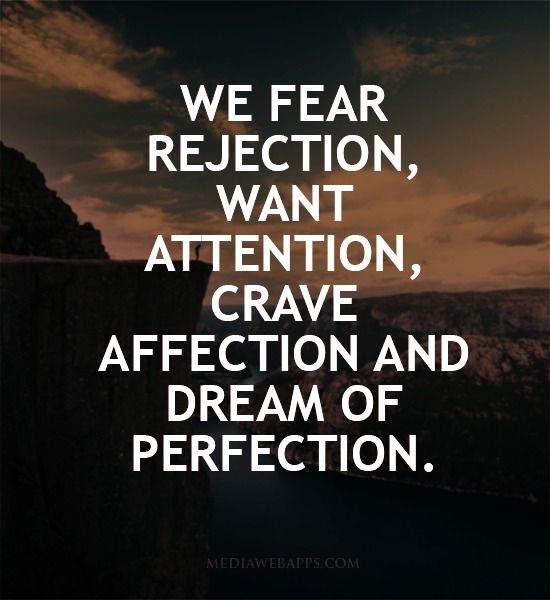
rejection-attention-affection-perfection

I was actually going to try to post funny search terms again, but alas, they were just not funny, so I nixed that idea.  However, I did find one that inspired me to write this post:

what 6 things are narcissist most scared of

It’s a good question.  Are narcissists afraid of anything? You bet they are, and there are 7 things that scare them silly, not just 6.

1. Abandonment and rejection.

love_me

Narcissists can’t stand being rejected or abandoned.   That’s why they fly into rages and punish and threaten you if you threaten to leave them, and love bomb you if you do manage to get away.  To reject a narcissist means you are rejecting the false self they have so carefully constructed to impress you.  To reject that false self negates their entire reason for existing, since whatever true self they may have left is completely inaccessible to them and the false self cannot survive on its own; it’s completely dependent on the approval and attention of others, who it feeds from like a vampire.  When you reject a narcissist they are forced to confront their own emptiness and nothing scares them more than that.  They will fight tooth and nail to avoid it, even if it means they have to destroy you in the process.

2. Being made fun of.

don__t_make_fun_of_me__by_quackedsquare

Credit: Quacksquared

Narcissists have no sense of humor.  Nada. None. Zero. Zip.  They may laugh cruelly at you when you fall and break your arm, and they may chuckle at the discomfort of someone else (since they have almost no empathy), especially if the discomfort was caused by them (because remember, to them you are not a real person but an object),  but they are completely incapable of ever laughing at themselves.

A few years ago on a forum I posted on, there was a man who became enraged when someone wrote “LOL” at a joke someone else made at his expense (the joke wasn’t very offensive), and from then on he gave both of them the silent treatment.     They take themselves very, very seriously and are very, very sensitive.  But that sensitivity doesn’t extend toward anyone but themselves.   The reason they are so bothered by jokes at their expense and can’t laugh at themselves is because the self they present to the world is a false one that must be propped up and supported at all times by everyone else.   To poke fun at a narcissist is to poke fun at a self that’s as empty inside as a puppet.  It has no substance.     It will fall to pieces and then the narcissist is forced to confront that terrifying emptiness that constantly haunts them.

3. Being disrespected.

demand_respect

No one likes to be treated with disdain or disrespect, but the narcissist is downright phobic about it.   He or she worries about it all the time and imagines slights and personal attacks even where they don’t exist.  Again, it boils down to the false self which he or she must constantly keep propped up.  It’s your job to puff it up and inflate it constantly lest it collapse into a limp pile of flimsy rubber.    Disrespecting a narcissist is like popping a hole in their balloon-self and they feel like they are going to die.    To avoid this, a narcissist uses every defense mechanism they have in their arsenal–gaslighting, rages, silent treatment, lying, projection, denial, fabricating,  and false affection–to keep you inflating their balloon-self so they don’t have to acknowledge the horror of recognizing they have lost their real one.

4. Being ignored.

dont_ignore_me

This is a no-brainer.   Ignoring a narcissist means giving them no supply at all, and without narcissistic supply, the narcissist dies a slow death.   Or believes they will.   That’s why some narcissists would even rather be hated than be ignored.  Negative attention is still attention, and at least it provides acknowledgement that they still exist.   When you ignore a narcissist, it’s as frightening to them as being killed.  They’re no longer confident they exist without your attention.

5. Exposure.

Several colorful arrow street signs with words Not Me - His, Her and Their Fault, symbolizing the twisting of the truth and shifting of blame

If you call out a narcissist on their abusive behavior, they will usually become very angry.  Their anger might be expressed in rage or in more covert means such as the silent treatment or gaslighting you. They don’t like to be held accountable for the things they do to others, because that means they have to admit they are less than perfect.   It also means they have to acknowledge the humanity of someone else, which they aren’t capable of doing.  Narcissists are all too aware of their imperfections, but only at the subconscious level, and the way they handle this is to project their own imperfections onto you.  So a narcissist might tell you that YOU are the narcissistic one, or that YOU are the abuser.  They’re also good at getting others to side against you, and those people become their flying monkeys.    They will accuse you of doing things that they themselves have done and everyone believes them and not you.

You start to feel like you’re living in a hellish world of smoke and mirrors, where you’re no longer sure what’s real and what isn’t.   The narcissist has, unconsciously or consciously, set up this elaborate lie as a massive defense mechanism against being exposed as imperfect and flawed just like everyone else, because being forced to acknowledge their shortcomings is to expose their vulnerabilities, and being vulnerable is incredibly terrifying to them.   They blame so they don’t have to feel shame.

6. Loss of the trappings of youth and success. 

grumpy_old_man

As narcissists age, they often grow even more  abusive (a very few may improve–but they probably weren’t high spectrum to begin with). That’s because aging means a loss of looks, career, health, possibly even a spouse (who provides a narcissist with supply), and in some cases even financial solvency. All these things are proof to a narcissist that they still have value and are still admired and respected.

Somatic narcissists, who are most concerned with their health or physical appearance, have never developed other aspects of themselves that could be fallen back on when those things begin to go; that’s because the false self is a flimsy one-dimensional construct and is incapable of love, true attachment, friendship, and other things that the rest of us can fall back on when we’re old and not in such great physical shape or health anymore.   If someone has spent their entire lives only concerned with their appearance, once that goes, what’s left?

Cerebral narcissists, who are concerned with their intellectual ability or business acumen, may be able to hang onto those assets a bit longer, but eventually, their minds may begin to become less sharp or they may be forced to retire or reduce their hours working.  Having to retire is a huge blow to a narcissist whose entire identity is tied up in his or her career and earning ability.  What is left?

In both cases, a narcissist experiences an almost total loss of supply and to avoid the ensuing depression, they lash out and attack others like angry dogs.  That’s why old narcissists are so often cranky and mean.   They’re also terrified of death, the last thing on the list that terrifies them.


7. Death.

fear_of_death_2

Every narcissist I’ve ever known lives in mortal terror of death.   That’s because death is the ultimate loss of narcissistic supply.  Death means complete annihilation of the ego and there’s nothing more horrifying to a narcissist than that because their ego is all they are.   Personally, I think some also fear hell.  They know on some deep level how badly they’ve treated and exploited others and think they might be held accountable for it in the afterlife.   I’ve seen a lot of narcissists who suddenly become extremely religious in their old age.  I think that’s because they think by being religious, they may be able to ward off any accountability after they die.

Test of the 3 R’s (acquired situational narcissism vs. NPD)

narcrealityshows

I just read an interesting article by Sam Vaknin (author of Malignant Self-Love) describing a condition that afflicts some celebrities and other high-profile people or people who achieved overnight success, called Acquired Situational Narcissism (ASN). It can also occur in codependents of a narcissist (what the ACON community calls “fleas”). ASN can mimic NPD, but tends to diminish over time or if the person’s fortunes change. But a more important difference is that a person with ASN isn’t lacking what he calls “The Three R’s.” These are:

1. Remorse
2. Remediation
3. Restoration

Narcissism is used as a coping strategy but doesn’t necessarily become a life sentence. I’ve done enough editorializing, so here is the article.

The Test of Three R’s
By Sam Vaknin
http://www.selfgrowth.com/articles/the-test-of-three-rs

Acquired Situational Narcissism can be induced in adulthood by celebrity, wealth, and fame. But, it may also occur in a variety of other situations. Codependents, aiming to fend off gnawing abandonment anxiety, can resort to and evolve narcissistic and even psychopathic behaviours and traits in order to cater the whims of their “loved” ones; in anomic societies and depraved cultural or religious settings, people with a conformist bend tend to adopt antisocial modes of conduct and personal style so as to “fit in” and belong.

How can we tell whether one’s narcissism is of the ephemeral, derivative variety – or an integral, immutable, and inalienable feature of his or her personality? By applying the test of “Three Rs”: Remorse, Remediation, and Restoration.

To qualify, remorse has to be expressed repeatedly and must be heartfelt. It should entail a modicum of sacrifice, embarrassment, and inconvenience. Regretting one’s misdeeds in public is more convincing than sending a private missive or whispering “sorry” anonymously. Remediation requires making amends and offering reparations, which are commensurate with the offending acts and bear some symbolic relation to them. Thus, financial abuse can be absolved only with the aid of a monetary compensation that corresponds to the damage done and suffered. Finally, restoration involves affording one’s victims the opportunity for closure, if not forgiveness, so that they can move on with their lives.

True narcissists and psychopaths fail the Three Rs test at every turn: their remorse is feigned and ostentatious; they provide little or no recompense; and they never put themselves at the victim’s disposal to allow her to achieve that she needs most: closure.

Read the rest of Sam’s article here.

Related to this, on February 22, writer/producer Nancy Fulton will be interviewing Sam Vaknin about the portrayal of narcissists in media and entertainment. More info can be found here.