It’s all about image: the skewed values of narcissistic families

monopolyguy

Last night I read a blog post by another survivor of narcissistic parents , and was astounded by how similar her parents’ values were to mine.

She writes that her father criticized her for being too idealistic. Now that would normally be a compliment, but because her family valued nothing but money, class and image, it was meant to be an insult. My father (who I don’t think is a narcissist, but has always been a huge narcissist apologist and enabler), said exactly the same thing to me.

We live in a narcissistic and materialistic society, that increasingly values traits that are narcissistic and exalt the individual over the community. In fact, studies have shown that a high percentage of CEOs, top executives, Wall Street tycoons, and others of the “One Percent” have narcissistic personality disorder. It’s a disorder that is very adaptive in modern society and whose traits are rewarded with money and material goods. Especially since the 1980s, with its “Greed is Good” ethos, we reward those who act in their own self interest over those who act in the interests of the community and want to help the less fortunate. There’s even a meme that’s become especially popular with narcissistic Baby Boomers: “I’m spending my children’s inheritance,” as though this is something to be proud of.

inheritance

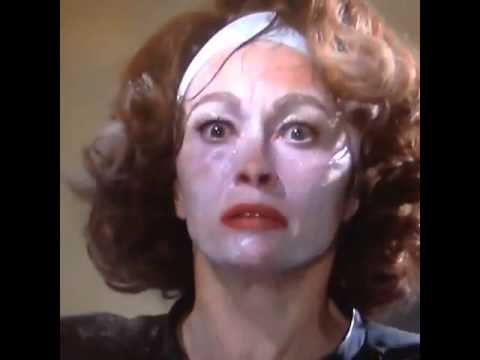
My family bought right into this ethos. Image was everything to my parents, especially my mother. My parents looked down on our blue-collar neighbors and relatives, and my mother in particular constantly made jokes at their expense and talked about how much better we were because we had nicer things and my father had a better (meaning white collar) job in the city. Appearance mattered, and our clothes had to come from the best department stores, never Sears. We had to live in the most exclusive neighborhoods. To not have a college degree was considered a mortal sin, and even then, it was far better to be successful in the cold-hearted business world than to be a successful teacher, social worker or a nurse. Such things were regarded as jobs for those who couldn’t do anything else, and of course they required a level of idealism that my parents just couldn’t relate to. When my parents split up when I was 14, my extremely image-conscious mother took up public relations as a career, which is all about image. She had so many face-lifts that today her face looks like a mask.

Whenever my parents, my mother in particular, complimented someone else, it was always on their visible, tangible qualities–things like their appearance, home decor, financial status, and taste in clothes. Table manners were of utmost importance, but being a good person was not. I can’t remember a time when my mother ever complimented anyone for qualities such as sweetness, generosity, friendliness and altruism. I do remember her putting down others for having these qualities, calling them “insipid” or accusing them of having no backbone.

My values never matched those of my immediate family, and when I became poor as an adult (because I was never given the tools and self esteem that would have led me to make better choices) I was shunned and rejected by them. I don’t think it’s any accident that when narcissistic parents choose a scapegoat, they usually choose the most sensitive child–the one most likely to be empathetic and have idealistic values. To a narcissist, idealism and empathy are weaknesses. They truly believe that the poor deserve to be poor, and they make no exception for their own child. The child with traits that cause them to become a scapegoat (and who all too often are also bullied at school) would probably become successful if they were raised in a loving, nurturing home, but in a narcissistic home, having these traits is a curse because that child is led to believe they are worthless and this leads to cowardly, “safe” choices that are more likely to lead to poverty. They are constantly told they will fail, that nothing they do is good enough, and then are usually “tossed out to the wolves” at a young age, with no family financial or emotional support to help them get a foothold in the larger world. I have read so many blogs by the scapegoated children of narcissistic families, who were forced to make their own way in the world with no family support, even if their parents could have afforded to help them, and even when other children in the family (who were not scapegoated) did receive support when they entered adulthood.

superiority

What is so ironic about all this is we scapegoats are rejected and hated for the very traits that were instilled in us as children! Scapegoated children are not encouraged to think independently or have ideas of their own. In fact, having a mind of one’s own is reason for punishment and abuse. We were trained to be deferent and obedient–and very much afraid. Deference, obedience and fear are not traits that lead to success in modern life. I think this training is deliberate, in that an evil narcissistic parent needs and wants someone they can use as the family trashcan–someone who can take and absorb all the family pathology and carry its burden. This child is then blamed for everything that goes wrong both within the family and in their own lives. When a scapegoated child becomes an adult, their low self esteem and fear almost inevitably leads to a life of material and financial lack, and this gives the narcissist parents an excuse for rejecting that child and refusing to help–for “violating” their materialistic, self-centered values. I think another reason narcissistic parents train HSP (highly sensitive) children to be scapegoats is because they know an HSP child must be silenced: this is a child who sees through their lies and can use the light of truth to blow the whistle on them. If they are encouraged to think and act independently, they might “out” the narcissistic parent and that is a prospect that terrifies them.

Of course, the best revenge for a scapegoated child is to become successful in spite of their upbringing–and of course there are those who have. Even then, narcissistic parents will find reasons to put that child’s accomplishments down as somehow not “good enough.” The few times in my adult life where I had some legitimate tangible success, I was never praised for it, but given some sort of left-handed compliment or told why it didn’t really count. I was also always compared with my more financially successful older half-siblings, who of course never had been designated the family scapegoat.

Narcissistic parents also don’t care if you have a mental disability. I’m a self-diagnosed Aspie (this was later confirmed by a psychiatrist) and suffer from intermittent major depression, but when I tried to tell my parents these were the reasons why I had so much trouble making the social connections necessary to become financially successful, these diagnoses were dismissed. I was told I was “making excuses.” Both my parents are convinced my poverty is my own fault because of the stupid choices I made. While I don’t deny having made dumb choices, these choices were based on the way I had been raised–to be afraid of taking any risks or challenging myself.

The only way to break the narcissist/scapegoat family dynamic (and it is probably the most toxic parent-child combination imaginable) is by cutting off contact with the abusive parent, because as long as you keep trying to please them, they will continue to attempt to break you down and make you feel insignificant. Nothing will ever please them, even if you dare to become more successful than they are. And if you somehow manage to do this without sacrificing your idealistic and empathetic values, that’s the biggest threat to them of all.

Make no mistake: your narcissistic parent doesn’t love you and never will, but it isn’t your fault. They hate you because they envy those qualities you have–empathy and humanity–that elude them. Be a good parent to yourself. Love yourself. You deserve it.

haters

Narcissists don’t change

snowwhite

I read a lot of blogs written by ACONs (Adult Children of Narcissists) and without exception, all these survivors yearned (or still yearn) for the parental love they were entitled to but never received.

Narcissists can’t feel love. Sure, they might pretend they love you when others are present (they’re great at wearing masks and keeping up appearances), but their true nature doesn’t even know the meaning of the word love.

For many years into adulthood, I wanted nothing more than for my narcissistic mother to approve of me. Like most narcissists, she was all about appearance and image. When I was young, she was obsessed with my weight and physical appearance, and always insisted on making me into her own image. She herself was vain, and seemed incapable of discussing deep topics or ideas. Narcissists have an uncanny ability to never show any vulnerable side of themselves, and this includes sharing any dreams with you. I’m not talking about the kind you have when you sleep, but the kind of dreams that give us hope for happiness in this life. I can’t remember one time when my mother ever shared a dream with me. She was already perfect–she didn’t need to have a dream. She also never, not once, ever shared a true emotion with me. She was incapable of being vulnerable or showing anyone (especially me) any vulnerability. And in keeping with that, she was incapable of empathy. She could never understand my feelings or hurts, and was usually more than happy to add to my hurts. I remember once, she made fun of me after she said a particularly hurtful thing, and then mocked the sad expression on my face–you know, pouting in an exaggerated way and drawing fake tears down her cheeks.

She was part of the positive thinking tyranny. (For more on how some people misuse the positive thinking movement, see this article.) Many narcissists use the positive thinking movement as a way to shame others for having feelings or to avoid taking responsibility. They’re big fans of positive thinking slogans, such as “your feelings are your own responsibility, not mine” or “you have chosen to be poor because of your negative attitude.” I remember once when I was being treated unfairly at my job (by a narcissistic boss, of course) instead of showing support and offering words of comfort, my N mother made my boss the victim, essentially telling me I probably caused him and my coworkers to dislike me because of my “negative attitude.” This is the sort of “love” you’ll get from a narcissist.

Narcissists also have an odd way of dismissing sentimentality. My mother never kept family photos around the house (because they were too “tacky”) and all the family photos were stashed into albums and boxes and packed away in the attic. A few years ago, I told my mother I would like to have some of the family photos, but she avoided the issue and changed the subject. About a year later, annoyed at being asked about them for the umpteenth time, she told me she had thrown them away. Who throws away family photos?! I was gobsmacked, but at the same time, I thought how typical that was of her. She could have sent them to me if she didn’t want them, but no, that would have made me happy, so throwing them away was better.

Back in those days, I hadn’t gone No Contact yet, and whenever in my mother’s presence, I felt small and belittled. Even when she didn’t actually say anything mean, there was always that condescending, withering look. I always felt nervous before having to see her or talk to her, without quite knowing why.

Now I know why (even though she always told me I was the crazy one who was being paranoid), and I’ve been No Contact now for almost three years. She sends me a birthday card every year, with phony mass produced Hallmark messages of love. When I get these cards, I just toss them in the trash. Coming from her, they mean nothing. She won’t ever change, because narcissists can’t. Trying to please a narcissist won’t work, so don’t waste your time. It will only wind up causing you frustration and hurt. They only want you on their side so they can use you. If they’re nice to you, it means they probably sense you pulling away from them. They can’t have that.

Of course I regret not having a loving parent or extended family. I regret not being able to see my mother (and her various flying monkeys, most of whom are also relatives) on big holidays like Christmas and Thanksgiving. I regret not ever having had the experience of a real heart to heart talk with my own mother. I can’t help feeling sad when others ask me where I’m going for holidays and have to tell them, “nowhere.” Because you see, my mother turned just about everyone in her extended family against me. Most of them barely know me, but narcissists are usually persuasive people who could sell ice to an Eskimo, and my mother’s “sold” me as a horrible, ungrateful, unsuccessful loser who doesn’t deserve happiness.

In my family, only visible evidence of success and physical attractiveness is acceptable. If you’re fat, unattractive, poor or disabled, you’re a “nothing” or a “nobody,” even if you’re a great person. My mother has actually used those words to discuss a cousin of mine, who is morbidly obese. “Laura’s a nothing.” She overlooks the fact that Laura is an accomplished artist who has won awards in several art shows, and also volunteers at her local food pantry. As for me, I am not rich or successful (because I was never given the tools and the self esteem to become successful as an adult), and so I’m a “nothing” too. She looks down on my poverty, and blames me for it.

I don’t need narcissistic people in my life, and one by one I have been weeding them out. And as I do so, I am growing, finding out what Lucky Otter is really all about. I’m finding out that I’m a pretty great person who is just blooming late in life.

Too bad my N mother won’t ever know the real me. Not that she’d care.

If you have a narcissistic parent, the most loving thing you can do for yourself is to make it impossible for them to hurt you anymore. They aren’t going to change. In fact, they get worse with age. As their looks and health begin to go, they feel extremely threatened by the reality of becoming vulnerable or needy, and rage takes over. They will no longer even pretend to be “nice.” You have to go No Contact, no matter how much it hurts. Rest assured though, you are not hurting them by doing this. They are incapable of feeling hurt. You’ll only hurt yourself if you remain in their thrall.

Why my parents disowned me.

disowned

I was going to skip over this post, but I think it’s an important thread in my entire story of psychopathic abuse. I’m going to keep it as short as possible though, just because I really don’t feel like writing too much tonight. But I’m afraid if I don’t write about it now, I might forget.

I have already explained that I’m certain my narcissistic mother never loved me, although she pretended to when it was convenient. I spent much of my childhood and adolescence in a state of “learned helplessness” as a result of their incredible mindfuck–I was expected to achieve (on their own terms) and punished if I did not, yet at the same time I was being psychologically programmed to fail. For more detail, you can read my earlier entries (click on “My Story” in the green header above) which will explain how this mindfuck worked.

To make a long story short, I think I would have been disowned regardless. If I had become a financially successful adult, I would have been a HUGE threat to my NPD mother and she would have cut me off. I have noticed the way she denigrates and says terrible things about any powerful woman she envies (she is very transparent)–my mother always dreamed of being a Martha Stewart-like success story. She always took pride in her homemaking, entertaining, and “gourmet” cooking. And she always admired and envied the rich and powerful, something Martha certainly is. My mother’s achievements don’t hold a candle to Martha’s and she knows it. I remember several years ago my mother ranting over how ugly and gauche she thought Martha Stewart was. I saw right through her hatred–for a narcissist, almost all their hatred is fueled by envy. If I had become more successful than my mother, she would have cut me out faster than a surgeon cuts off a wart. She wouldn’t be able to handle someone outshining her, even her own daughter.

But I digress. As things turned out, I never became what most people would consider successful, at least not in the financial and material sense. I had a few opportunities and false starts, but through either self-sabotage or sabotage by others (described in my earlier entries), anything I started I’d give up quickly or never follow through on. I hope that pattern has finally changed.

In her later years, my mother, dependent on her oldest daughter (the one she abandoned as a child but who has now become her flying monkey and biggest apologist) will not allow me to visit them in their home. My mother and I are No Contact now (my own choice), but a few years ago, after my mother reluctantly moved from New York to Chicago to live with my half-sister, she told me I would not be allowed to come there because “Rebecca doesn’t like you.” WTF?!? Rebecca hadn’t seen me in over 20 years! She barely knew me. I mentioned how outrageous that was but my mother just said, “Well, it’s her house. Those are her rules. You are a very difficult person to get along with, you know.” I was offered no other explanation other than my sister’s “rules” and my horrible personality.

I thought about that conversation for a long time and finally got it–my mother was embarrassed by me! Always obsessed about her social standing, I had become too “working class.” My lowered social status would certainly offend her fake upper-middle class ideals and pretentions. I actually had to laugh when I found out my mother was no longer able to find any professional-level work and was working part time as a clerk in a department store. But it took a cousin of mine on Facebook to tell me that. My mother would have died before admitting that, especially to me.

I remember a few years ago, burned out by office and retail work, I mentioned to my mother I wanted to start a housecleaning business. It was something I could do without a lot of capital, it was physical (I like to move around when I work), and I was qualified to do it. I thought it might be fun, and I would be able to work alone and set my own hours instead of having to punch a clock and sit in front of a monitor or phone all day. I even had business cards made up. My daughter was interested in getting into it with me–we were going to call it “Two Blondes and a Bucket.” (no matter that I’m not really blonde anymore–I could dye my hair). Here is what my mother said: “I don’t think anyone would want to hire you. You’re a slob and you have a police record.” (she was referring to the pot charge I got when I was married to my Narc husband.)

dontlikeme

When I showed her my novel I wrote back in 2004, she glanced through it and said, “well, you should focus on getting some articles in magazines first before writing a book–you’re not ready.” I may not have been ready to publish a novel, but my point is, she always berated me for “not improving my circumstances,” and yet any time I presented an idea that might lead to a better life, she shot it down. It was the old mind-fuck all over again. She’s good at it.

That’s why I refuse to use Facebook anymore. My mother and her flying monkeys, as well as my father and his current wife who may well be NPD or at best, someone with OCD and a lot of narcissistic traits, have found me there. My stepmother is a control freak and an ultra conservative Republican who can’t stand me “because I’m a failure” and because I allegedly subscribe to “a mindset of dependency” (even though I haven’t asked them for anything in years). My Narc ex has found me there too, and even hacked into my account. He also trashes my character all over his Facebook page (he’s not dead by the way–he was in a psychiatric facility). I might delete my FB page if I figure out how. So much hatred. My family sucks. There, I said it. I’m like fucking Cinderella.

My father is sick with Parkinson’s and my stepmother, who is also his full-time caregiver and mouthpiece, acts as a “gatekeeper” to keep me from “upsetting your father.” If I call their home, I always have to go through her first, and tell her what I want to talk to him about before I’m allowed to speak to him. Hello? It’s my FATHER, you controlling bitch. When I do get to speak to him he is usually very loving (when I can understand him) but he’s completely dominated by his wife, just as he was completely dominated by my mother–only it’s even worse now because he’s physically dependent on his wife too. He’s always been drawn to Narc women and is a huge enabler. I do believe he has love for me though, I always have, even though he was very strict. I was cut out of his will after I allowed my Narc ex to move back in with me. (My father saw his true colors early on, and detests him). I want so much to explain why I did that, to have him read my blog and maybe he would understand the reasons–but his wife would not understand and she’d have to “approve” it first. Because she’s a cold person with very little compassion, I doubt she would.

It makes me sad I can’t have a healthy or loving relationship with my aging parents, who won’t be around too much longer. But it is what it is, and I can’t focus on that or regret we don’t have that kind of loving relationship. All I can work on is me, and finally stop trying to get their approval, because it ain’t ever gonna happen. If I can feel proud of myself, and even help others along the way, I think that’s more than enough. This blog is the beginning of that, and of course my parents will never know about it, if I can help it.

Raised by a narcissist: my story of psychopathic abuse (childhood and adolescence)

lonelygirl

Welp, I’ve been putting this off (and frankly sort of dreading it), but decided to dive right in and start writing my story about how I came to be the kind of person I am and the way I came upon my present circumstances.

Over the past month or so, I’ve been reading everything I can get my hands on about malignant narcissism and psychopathy, and realized that rather than me being at fault for my “bad choices,” as both my parents love to remind me (and had convinced me was the truth), I’m not really the one with the personality issue that got me into so much trouble throughout my adult life (not that I don’t have personality flaws because I certainly do–as do we all). I realized I entered adulthood without the tool kit most people are given during childhood and I also realized that this was intentional on their part (especially my mother) and I was never a loved child–in fact, my mother, being the psychopathic narcissist she is, hated me and still does. It’s been really hard to face this fact — no one wants to believe their own mother didn’t love them and it’s all too easy to listen to people who say, “oh, she must have loved you in her own way” but I now know that’s bullshit. Strangely, being able to face this has given me a sense of freedom and lessens some of the guilt I had over not being a “good enough” daughter. Her dislike of me is not my fault!

So let me get started. My conception itself wasn’t under ideal circumstances. I was “wanted,” but for all the wrong reasons. Two years prior to my entry into this world, my father had lost his 3 year old son he’d had with his first wife. He had been hit by a train. The car stalled on the tracks as the train was coming and his mother desperately hustled the baby and 6 year old daughter out of the car to safety first. Billy, strapped into his seat, had to wait for her to come back to get him after removing the first two children, but it was too late and the little boy died immediately.

My father (let’s call him Harry), in his vulnerable, grieving state (I don’t think he is a MN, although he definitely has always colluded with and been attracted to narcissistic women and has some narcissistic tendencies himself–more on that later) was never the same. Almost immediately he took to heavy drinking, and he and his wife grew further apart as he tried to drown his grief in booze. This was the late 1950s and divorce wasn’t acceptable especially when young children were involved, but she could no longer put up with his drinking and filed for divorce.

Before the divorce was granted, my father (who was a Navy academy teacher at the time) met a beautiful redhaired woman named Ginny at a dance at the naval academy in Annapolis. It was love at first sight. Ginny listened to him talk about his lost son, and cried with him and held him as he talked and grieved. She seemed sympathetic in a way his first wife never was (and probably couldn’t have been as she was grieving in her own way). Ginny was married to a minister, and had two young daughters, but that didn’t stop her from seeing my father romantically, and for no reason other than infatuation (her husband treated her and the girls well from what I understand), she divorced him and left her daughters to be raised by their father so that she could marry my father. Remember, this was the late 1950s and a mother leaving her own children just wasn’t done. But she did it without a second thought. Her oldest daughter (age 7 at the time) was greatly damaged by the abandonment, and to this day has issues related to that and has been in therapy her entire adult life (today she’s one of my mother’s flying monkeys but more on that later). The younger daughter (age 2) was too young to remember anything but I’m sure she was damaged too. Their father remarried a lovely woman who loved the two girls as if they were her own. They were raised with two other children and went on to have a normal childhood with parents who loved them and supported them. They got lucky. It was actually a very good thing that my two half sisters got out of having to be raised by Ginny. I was not that lucky.

So Harry and Ginny married, and almost immediately she became pregnant with me. The pregnancy was a wanted one, though why a woman who abandoned her own two children a year before to have another baby with another man is kind of beyond my comprehension (but she’s a narcissist so it’s not too surprising). She smoked during the pregnancy, though at the time, doctors actually recommended pregnant women smoke to keep their weight down, and my mother was always obsessed with her weight. She always brags how she never gained any weight during her pregnancy with me (or her other two children). Miraculously, I was born healthy if a little on the small side.

From the get go, I was a difficult baby, or at least that’s what I’ve been told. I cried all the time, and had health problems–I suffered from horrific ear infections that left me 80% deaf in my left ear. I was allergic to many foods and to just about everything else. By the time I was a toddler it was apparent I was an incredibly sensitive child, one who reacted to everything in a very emotional way. I was high strung, threw a lot of tantrums, and was easily hurt. From reading about other people’s experiences, especially this one by a wonderful survivor whose story is remarkably similar to mine, it seems that very sensitive children (empaths) are often born to and raised by narcissists and psychopaths, and that’s just about the worst parent/child combo possible. Whether they become overly sensitive due to their treatment, or whether the sensitivity is innate and just a cosmic joke that these kind of kids and parents wind up together so often is something I can’t explain, but unfortunately it all too often seems to be the case.

As I grew a little older, I’d go into these sort of trances where I’d tune out the environment and enter my dream world. I had an active imagination and imaginary friends, and this was my form of escape from the tension in my home. When I was about 3-4 I also engaged in banging my head against the wall. I don’t know why I did this, but at the time it felt good to me. Go figure. Today I believe I actually have high functioning autism (Aspergers) even though I’m self diagnosed (confirmed by a psychiatrist later). I seem to fit all the criteria for it, as well as for C-PTSD and Avoidant personality disorder, but more on that later. My mother hated it when I went inside myself, and always used to chide me for acting “spooky” and would tell me to snap out of it. I couldn’t. I didn’t know how. But if I continued to act “spooky” I’d be punished, usually with a beating or slap in the face.

I used to have terrible nightmares. Some were about Ginny, and I remember one where I dreamed she was standing over me, and I realized her eyes were nothing but black holes, like the demonic people you see in movies whose eyes are completely black. And she was wearing that self-satisfied sneer. I woke up screaming, but the nightmare continued in waking life as she rushed into the room demanding why I was screaming and then laughed at me for getting so upset about a “little dream.” But to this day I think what I saw was actually who she was inside. I think she hated me because she knew that I had the ability to see what she really was.
mommiedearest

Both my parents were big on corporal punishment and a yardstick was kept in the kitchen hanging next to the refrigerator as a constant reminded to me that punishment was always close at hand. I was never allowed to express my opinions on anything and God forbid, never, EVER show any anger. Showing my emotions was a huge no no, although my mother was allowed to rant, scream and cry whenever she felt like it. My father usually colluded with her on these punishments, and dinner was always eaten at the table in near silence. Occasionally though the attention would be focused on me, usually to make fun of me in some way. Both parents used to laugh about how “literal” I was. When I was 6 and starting first grade, they found it hilarious when they asked me if I was looking forward to school, and I became frustrated because I couldn’t “see the school.” They weren’t laughing with me, but at me. Of course I was taking things literally. I was just 6 and not capable of abstract thinking yet, and it’s also a fact that autistics think literally, especially as children.

My parents never had another child, and my mother began to chafe at her role as housewife/mother. She was bored and would leave for long periods of time to see her friends, shop or just to get away from me and my father, and left me with a lot of babysitters. When she was home, more and more of her criticism of me focused on my weight and appearance. She treated me like a doll she could dress up and she loved to play with my baby fine hair to the point it tangled and hurt, and I would scream in pain and she would get mad and slam the brush down. She was also obsessed with my bowel functions and if I went a day without a BM, she would give me an adult sized enema. This was pretty traumatic. She also used to sit and watch me go to the bathroom to make sure I produced something. Naturally this led to me having even worse constipation as a result to “hold it in.”

As such a sensitive child, I was bullied in school. I didn’t know how to joke back, how to roll with the punches, how to appear invulnerable like the other kids. I always felt different. It was always difficult for me to make friends, though I usually managed to make one or two. Third grade was the worst, as I not only was targeted by a group of bullies who used to follow me home from school and fed on my reaction (I always cried) but was targeted by my psychopathic teacher as well. Mrs. Morse scared the daylights out of me. She was an overweight woman in her 50s whose upper arm always shook like Jello when she wrote on the board. She regularly liked to call me up to the front of the class to answer a question (and she ALWAYS called on me because I was always daydreaming) and when I couldn’t answer the question (which was often the case as I went into freeze mode at these times and couldn’t think straight) she’d demand why I couldn’t until I cried. At this point she’d call out the crying to the entire class, and all of them would have a good laugh at my expense as I stood there wanting to sink through the floor in shame.

Oddly, I was always told how pretty and intelligent I was (especially by my father, who I think really did love me in his flawed way). But the compliments stopped there. Any praise was almost always limited to innate qualities rather than my achievements or things I could do well. I was also was told constantly I was “too sensitive.” (This is another thing psychopaths like to say to keep their marks in their place). I WAS too sensitive, but this was always used against me and used to embarrass me. When company came over, my mother loved to “brag” to her friends and relatives about how sensitive I was and how everything made me cry. I became very self conscious as a result and started to hide my emotions more so it wouldn’t be called out to shame me. Of course she just found other things to use against me and undermine any little self confidence I had.

Ironically, though they hated my sensitivity, both my parents almost seemed to encourage it. They always wanted me to look frail and helpless and as I entered my teens; Ginny in particular became critical if I looked or acted too “tough”– a demeanor I sometimes used as a way to protect myself and hide my vulnerabilities (though it didn’t usually work too well). All teenagers are sarcastic (and most parents don’t really care for it), but when I used sarcasm or humor to protect myself, she’d tell me I was acting “low class.” Oh, and that’s another thing. Ginny was obsessed with social class and always described us as “upper middle class,” never the more humble “middle class,” even though in actuality that’s what we were. She always put on airs as if she was of higher social status than she actually was and to this day, has a very affected and fake way of speaking, not to mention extremely condescending.

Ginny never let me do anything on my own when I was a child. I remember wanting to help her wash the dishes one night after dinner, and she said I wouldn’t be able to do it because I might break something. When I was 11 and wanted to join the swim team at the pool and tennis club we belonged to, she didn’t say no, but pointed out that maybe I shouldn’t because “you don’t like competition–you’re too sensitive and you’ll get bullied.” I joined anyway and had no problems with my sensitivity or bullying even though I usually finished in third place and never first and rarely second.

I was a good student expected to make straight A’s (and was beaten with the yardstick if a failed to make an A) but always had problems with math. I had a low frustration tolerance for it and was lucky if I got a B. This was never acceptable to my parents, but I was doing the best I could.

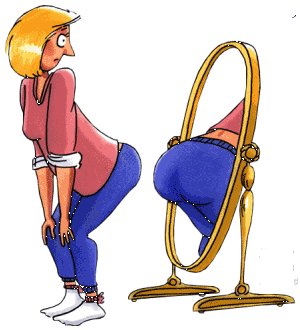
When I was about 12, Ginny’s focus on my weight became an obsession. She was always a thin and vain woman herself, and expected me to be her mini-me, even far into adolescence. Even though I was far from overweight (in fact I was a little on the thin side) she liked to point out how big my ass was, and used to do this when other people were present, embarrassing me so much I wanted to die. Probably as a form of rebellion, I actually tried to gain weight and developed a love of junk food. Anytime I wanted dessert, or seconds at dinner, she’d remind me how “overweight” I was and that I needed to watch my calories. She even threatened to send me away to weight loss camp. With all this obsession over my non-existent weight issue, it’s a miracle I didn’t develop an eating disorder.
weight-loss

My half sister came to live with us when I was 12 for a short time, and we got along great. Debbie was far more self confident than I was, very outdoorsy and adventurous, and took me around to meet her friends and do things with them. They all seemed to like me. For the first time I felt liked and was developing a little confidence in my social skills, which were never that good (I’m painfully shy even to this day). After a couple of months of this, my parents decided to send Debbie back to her father and stepmother (even though this was her own daughter!) because she was having a “bad influence” on me. I was heartbroken.

My parents divorced when I was 13. My father’s drinking had become much worse, and both parents were having affairs (this was the 1970s). It was around this time my mother decided she was a feminist, and started spending more and more time away from home, and landed a job public relations. After my father moved out, my mother and I moved to New York City to a one bedroom apartment. At first, I hated the city, but I was never asked my opinion about the move, or given any sympathy that I’d be leaving all my old friends behind. My mother’s new PR career became her primary focus (what a perfect job for someone so image-conscious: public relations is ALL about image!) and she always talked about how much more rewarding this was than being a mother. She left me alone overnight often so I learned how to fend for myself and cook my own dinners. I actually didn’t mind this because it meant time away from her (by this time I decided I couldn’t stand her) But this was New York City in the 1970s (the city was rampant with violent crime then) and I was just 14 and 15 years old.

Ginny began to drink a lot and bring her boyfriends home. To leave my bedroom for any reason, I’d have to walk through the living room where more often than not, they were in bed together or even having sex. I never said anything about it but it really bothered me. She had a string of boyfriends, most who she’d recruit as her flying monkeys to join her in her belittlement of me and constant gaslighting.

One night we had a huge argument (I don’t remember what it was about–I was drunk myself but she was so wasted she didn’t even notice) and in a drunken, narcissistic rage she started throwing bags and all my belongings out the door and told me to go live with my dad (who was already living with the woman who would become his third wife) who really didn’t want me around much. I told her he didn’t want me and didn’t have room for me in his apartment and she told me she didn’t care. At that point I grabbed a kitchen knife and started to come at her with it. I wasn’t actually intending to use it, but I was very emotional and wanted to scare her. I guess it worked because she got on the phone and begged Harry to come pick me up, telling him I was “disturbed” and “insane.” So he did, and I spent three months living in his studio apartment where I was pretty much ignored (they were never home).

Within a few months, I was placed in a girls’ residence in Queens, New York, and was bullied by the girls there too. I didn’t seem to fit in anywhere in the world. I felt so alone.

High school was a nightmare. I was attending a Catholic all girls high school, and I was completely out of my element. I was bullied by the popular girls, and even the not so popular ones ganged up against me. I became the school pariah. I had no friends at all. I regularly went to visit the guidance counselor in tears. She seemed the only person in the entire school who took any sympathy on me but soon she disappeared and I was informed she found another job. My grades suffered, and one day my mother received a letter from the school that “perhaps Suzanne would be happier in another school.” My mother went ballistic and raged on about how much the school was costing my father (who she usually berated and trashed) and what an ungrateful little shit I was.

I finished high school at the local public school, with its mostly black and Hispanic student population. I found out I got along well with the blacks in particular, and felt more accepted by them than I had by the snobby white girls in the Catholic school. I made a few friends, mostly black. The school didn’t have high standards, and I’d get A’s just by showing up in class, so I didn’t learn much. In my spare time I’d bury myself in books and writing–this was the adolescent version of my childhood daydreams and “trances”–but got criticized by Betty for “reading too much” and not being social enough.

depressedteen

As I entered my late teens, I became a little boy crazy. My first serious boyfriend at age 18 was a narcissist and an abuser. This set the pattern for what was to come.

The next part of my story will be about my early adulthood years culminating in meeting my narcissitic ex husband.