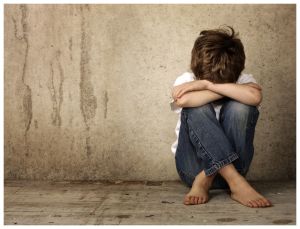
Well, this is out of the box thinking…

Brain-out-of-the-box

I just saw this comment under the Youtube comments for “I, Psychopath” (the documentary about Sam Vaknin). I don’t agree with most of it, but I think it does give us something to think about in terms of autism’s relationship to psychopathy. The writer of the comment may be onto something about autism being nature’s solution to psychopathy. There does seem to be some kind of correlation between psychopathic/narcissistic parents and children with Aspergers or autism. I don’t know if any study has ever been done on this.

I do not think Vaknin has Aspergers syndrome (which I was informed today is no longer called that–the updated DSM now identifies Aspergers as “autism spectrum disorder.” I prefer “Aspergers” so I will continue to use it) I think his schizoid traits make him seem like someone with Aspergers at times.

Vaknin is a very important figure in terms of how his introspection allows us to see what is really happening in our evolution. After a few years reading about narcissism and psychopathy, as well as Autism, and coming to the conclusion that Autism is nature’s solution for psychopathy (I am an autists born in a family that is experiencing this transition), to my eyes, Vaknin seems to embody the bridging that is occurring. One thing that seems to be a reality is that autists may be born into families where we also find psychopathy, most likely a generation or two back. The shift to the emotional awareness presenting in the burgeoning of the enteric brain, which incorporates genetic changes changing the heart itself into a motor for cognition is what informs Autism, but because many autists are so sick or dysfunctional, it is hard to get people to see that it could have any evolutionary logic behind it. Perhaps the dysfunction is nature’s way of keeping the tremendous emotional authenticity and power it brings under wraps.
. Vaknin has all the traits of Asperger’s. This is not to say that there are no vestiges of the narcissism or psychopathy that may run in his family, but his journey itself speaks of what is going on.

Can a narcissist also be on the autism spectrum?
The topic this commenter raised brings me to something I’ve been wanting to write about for awhile now: can a narcissist also be autistic or Aspie?

This is a tricky question, because the way I see it, autism (Aspergers) is like a mirror image of narcissism. Although people with Aspergers have been accused by many of lacking empathy (which I disputed in this blog post), they generally do not. The reason they may seem unempathic is because they don’t express their emotions very well, but most Aspies are very sensitive to the feelings of those around them and can be easily overwhelmed. Conversely, a narcissist can’t feel the emotions of others well, but is usually good at pretending they can. An Aspie is not capable of pretending to be something they are not. So a narcissist may seem more empathic than an Aspie, even though the opposite is the case.

So can someone be both?

I would say yes. However, an Aspie narcissist will not wear masks very well or know which ones would benefit them most since they will not be able to read social cues, which a “successful” narcissist must be able to do. So while an Aspie may be a narcissist, they will be very bad at hiding their true motives and therefore not very dangerous. A narcissistic Aspie is probably more likely to be a “needy” narcissist–the kind of narcissist who acts as pitiful as they can and feel entitled and demand to be taken care of and catered to due to their “helplessness.”

“Like poking a snake with a stick”

'Frankly, I didn't want to bite him, but he kept poking at me with a stick...'

That’s exactly what director Ian Walker said about Sam Vaknin when he was making the film “I, Psychopath.”
I do not think Sam is a psychopath but I have no doubt he is a narcissist somewhere on the top half of the spectrum, and may be malignant too.

After Sam’s over the top attack on me a couple of nights ago which had me reeling, I can see why Walker would say this. He must have experienced similar behavior from him during filming. You have to be very careful around people like Sam, or they will strike without warning, like a viper.

That being said, I received an apology from him just now. He has been reading everything posted here since this happened. I expected he would. I accept his apology but will be much more wary in the future around him. You cannot make jokes at his expense. I don’t want to get bitten again!

I will still allow him to comment here (if he wants to), because his writings are insightful and valuable to us ACONS, even if he himself is someone we should avoid. I can’t even imagine how tormented he must be and yet can still write about his disorder with so much eloquence. It’s like there’s two of him!

I’m actually shocked I received an apology from him. Does that mean he has some semblance of a conscience? I just don’t know.

Narcissistic injury.

incrediblehulk

I am keeping my promise to remain 100% honest about everything on this blog. It’s my journal, and I’m going to continue to tell the truth, the whole truth, and nothing but the truth, so help me God. If that bothers people, they need to get over it or go read someone else’s blog. This is my blog and my life, and I will censor nothing that goes on in my mind.

Last night I insulted Sam Vaknin. My insulting him was unintentional and probably clueless, but he was angry enough about it to block me on social media and tell me to fuck off. Those were his exact words. Fuck off.

It wasn’t even me that insulted him. Well, not directly anyway. One of my commenters who frequents this blog made a sort of joke, seemingly at Sam’s expense (or at least I took it as a joke, which is why I approved the remark). I wasn’t actually sure if the jab was directed at me or at Sam. See, I’ve spent my whole life being paranoid and not knowing how to take jokes or how to respond to them (being Avoidant and socially awkward has a lot to do with this, plus having been bullied as a child has made me wary of snark and jokes made at my expense).

This joke was no exception. I was unsure about how I should react to it. I spent a long time trying to decide how to respond or if I should respond. I considered not approving the comment. Sometimes it’s just hard to know what is the best course of action when it comes to things like that.

I thought it over and over in my usual obsessive way, and when I weighed things out, it seemed the best course of action would be to go ahead and approve the comment, “like” it, and respond to it with a “LOL.” I want to be seen as someone lighthearted, a person who can take a joke (because I wasn’t sure if the comment was actually directed at me). I value this member’s opinions and her friendship. She also has an amazing blog. So I reasoned that her remark, no matter who it was directed to, must be all in good fun and a simple “LOL” would be harmless and would hurt no one.

Apparently not. I had no idea Sam would react so badly to my joining in with another commenter in “making fun of him” and failing to defend him from what he felt was “abuse.” Apparently that’s what he expected of me? I can’t say about the other commenter’s feelings, but my intention wasn’t to make fun of him at all, just try to act lighthearted and hope no one would be hurt or insulted.

But you can’t please everyone. If you go out of your way to please one person you are bound to upset someone else. Running a blog sometimes can be difficult. You are required to respond to comments in a way that engages conversation but doesn’t run people off or anger them. Sometimes you have to call them out on bad behavior or issue warnings. And you are going to insult people sometimes. People are going to disagree with you. It can’t be helped.

But when you’re dealing with a narcissist, even an educated and insightful one like Sam, you have to walk on eggshells. I refuse to walk on eggshells for anyone. I’ve had enough of that crap from all my IRL narcs. I still feel guilty about insulting him by proxy though, because I just hate making anyone feel bad.

I want to apologize to Sam, but I know I shouldn’t so I won’t. Because I didn’t really do anything wrong. At worst I made an unwise decision about someone else’s comment, but any normal person would be over it by now. To any normal person it might have even been funny.

I hate making people angry. Probably because I grew up in a household filled with seething anger, open hostility and constant discord. Anger scares someone like me. Of course it’s not realistic to expect a narcissist to not be easily upset and angered. They are incredibly hypersensitive about themselves. They hate being insulted or made fun of more than anything in the world. Still, it never occurred to me something I didn’t think was a big deal would set him off and make him think I was his enemy (I’m not).

Narcissists have no sense of humor (my mother was a perfect example of a narcissist with zero tolerance for any jokes or criticism at her expense, no matter how mild they were). Narcissists cannot laugh at themselves. I have never known one narc who can. What made me think Sam was any exception?

I admit Sam’s blocking me and telling me to fuck off really bothers me, because I was enjoying his input here and he was being so nice to me. It was a shock to find his angry epithet toward me today. It was a Jekyll and Hyde moment. I was gobsmacked.

I have a phobia about making people angry because during my childhood, it seemed all I ever did was make my narcissistic mother angry, and in my marriage to a malignant narc, if I breathed the wrong way it set him off into a narcissistic rage. Like Barack Obama, I try too hard to please everyone, and wind up pleasing no one. In this case, my decision to approve the commenter’s remark and reply with an “LOL” was a bad call, I guess.

But with a narcissist, sooner or later they will show their true colors anyway, so it probably was just a matter of time before it happened.

I’m not sure what the best action to take is now. It’s probably wisest to just ignore him and no longer feed his narcissistic supply by posting any more articles about him, at least until this blows over (if it ever does–I don’t know if Sam holds grudges but most narcs do).

I don’t think I really need Sam anymore for this blog to be a success. I appreciate and am forever grateful for the jump start he gave me in gaining more visibility, but I can continue the momentum on my own now without his help. I still respect Sam’s brilliant mind and his writings, but today he showed me his true colors as the malignant narcissist he actually is. It was a wake up call. I had my doubts before about the malignancy of his narcissism (maybe because I didn’t want to believe it); now I have no doubts whatsoever.

Scientology: a cult of psychopathy

hubbard

Scientology, like most cults, uses exactly the same brainwashing techniques the narcissist does to recruit and retain its members. Here’s a video I found on the Ex-Scientologist Message Board, where Sam Vaknin talks about the “cult of the narcissist,” and even though it’s not specific to Scientology, it’s spot on in describing the mind games narcissists use to trap their prey (sorry, I was unable to embed the video). The same techniques apply to most cults. Scientology is one of the most dangerous.

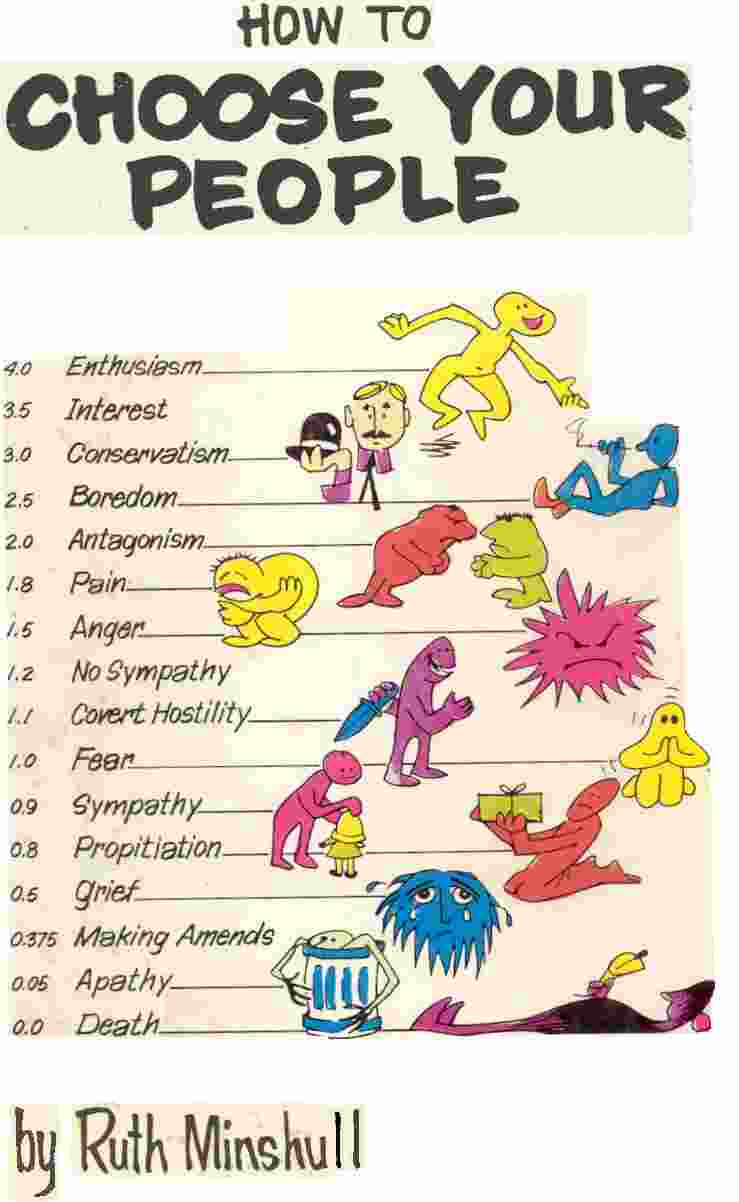
In 1978 and 1979, I flirted with Scientology. This happened when I came across one of its books (one of the only ones not written by its founder L. Ron Hubbard, who was not only a malignant narcissist of the highest order, but also a very bad writer), an easy to read and humorous “self help” book called “How to Choose your People,” by a writer named Ruth Minshull. The book was discontinued many years ago, probably because it wasn’t written by Hubbard and therefore not acceptable “scipture.” “How to Choose Your People” was entertaining and well written, and I found its idea of something called “The Tone Scale” intriguing and it seemed to make sense. I liked the idea that emotions ran on a sort of continuum, with one logically leading to the next. Every human being can be placed somewhere on this “tone scale.” Although most people move around on the scale according to their mood, everyone can be placed at a “home” tone, where they will be most of the time. The “tones” ranged from Apathy (the lowest you could go–this would be where severely depressed and suicidal people are) to Enthusiasm (very happy and contented people). Each tone was assigned an arbitrary number, although no one ever explained what those numbers meant.

There were two “emotions” around the middle of the scale, called Covert Hostility (1.1) and No Sympathy (1.2, making it slightly “better”). Although not at the bottom of the scale, while I was involved in Scientology (and the related Dianetics, the mental “technology” that is similar in some ways to psychoanalysis and serves as a tool to brainwash its members), Covert Hostility and No Sympathy were considered by most Scientologists to be the two worst places to be on the Tone Scale. No one wanted to be labeled a “1.1.” Because if you were, it meant you were a Suppressive Person–that is, a psychopathic person who could harm the Church and its members. If you were pegged a “1.1” or a “1.2” you could be excommunicated or punished by a cruel form of shunning (which I was subjected to at one point).

The traits of someone with a “tone” of Covert Hostility or No Sympathy are exactly the same of those of the malignant narcissist. Here is a picture of the tone scale as it appeared on the cover of Minshull’s 1976 book. (There is an expanded tone scale too, which has additional levels, but for our purposes this one is sufficient).

minshull1

Click image for larger view.

So I finished Minshull’s book and was intrigued enough to go to the local Scientology Center (on New York’s upper west side–I was living in Queens, NY at the time) and find out more. They gave me a “personality test,” that was supposed to identify what my issues and weak points were. There were 200 questions on the test, but when I was done, someone sat down with me and went over my results and convinced me I needed Dianetics auditing or classes in Scientology (much cheaper than Dianetics auditing) to overcome these weak points. The recruiter was very convincing and friendly, and assured me I would only be set back $15 to sign up for the HAS course (Hubbard Apprentice Scientologist aka “Communication Course”), which was really training in something called Training Routines (TR’s) which were used as brainwashing techniques.

At first the TR’s were very seductive–they were fun and actually seemed to work. They did help me be able to “confront” people better, or at least seemed to. The TR’s themselves involved things like sitting in a chair staring at someone as long as you could without reacting, laughing, or looking away. After this, the ante was upped to something called “bullbaiting,” where the person could try to get you to react and “lose your Confront” by insulting you, trying to make you laugh, or calling you names. There were higher levels of TR’s that involved walking across the room, touching things, asking if birds could fly, and reading passages from “Alice in Wonderland” of all things.

All these things were supposed to help you communicate with others better and raise your “tone,” but in actuality, these were all brainwashing techniques that would eventually result in giving you the infamous blank stare that many Scientologists seem to have while under the cult’s thrall.

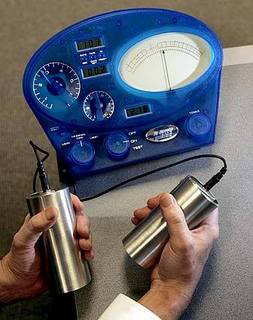
After I “passed” the Communications Course (by getting a “floating needle” on a lie-detector type of device called the E-Meter), I was convinced without too much difficulty to sign up for the next course, the HQS course (Hubbard Qualified Scientologist). That one set me back $250. (The prices are probably much higher today). By this time of course, I’d been sufficiently indoctrinated that $250 for further “processing” and “training” didn’t seem that bad. It didn’t take much to convince me to hand over the money.

In order to help pay for the course (because in those days $250 was a lot of money, especially for a 19 year old) it was suggested I work at the Center part time, answering phones and opening and distributing mail. The position paid nothing, but I got “credits” to help pay for the course. Of course, by now I was spending most of my free time at the Center, because right after “work” it was time for the classes, which ran about 4 hours a night (5 days a week).

Students were closely monitored and every class ended with a session on the E-Meter. If you were caught yawning or daydreaming you were told you had a “misunderstood word” and had to go back and re-read Hubbard’s unreadable material to try to find the word you did not understand. You were not allowed to move on until you found the word and “passed” on the E-Meter. I began to realize I wasn’t having much fun anymore, but if you criticized Scientology or its “teaching technology” in any way, you would be sent to Ethics.

e_meter
Scientology E-Meter

No one wanted to be sent to Ethics. If you were sent to Ethics, it meant there was a problem and you were considered a “Potential Trouble Source” and disciplinary action would be taken. I was sent to Ethics about three times, all for very minor transgressions such as minor criticism. The punishments ranged from having to re-read material (and be “passed” being connected to an E-Meter), to cutting off friends and family members who could be potential “Suppressive Persons” or enemies of Scientology (you would be required to write them a letter telling them you were cutting them off), to shunning, to excommunication.

I was once subjected to shunning. I was told although I would still be required to fulfill my job duties and attend classes, no one would be allowed to speak to me and I was allowed to speak to no one (unless it was directly related to my job or something I was learning). It was horrible. This torment on for several days, until I was “passed” up a level and allowed to be spoken to again. But before that could happen, I had to go up to every high level member and employee, make amends to them and “re-introduce” myself.

Toward the end of the HQS course, you are told to recruit other people into Scientology. I had to go outside, no matter what the weather, and try to talk people into coming up to the Center to take its personality test. The more advanced TR’s taught in this class became increasingly bizarre. These sessions could go on for hours, and as part of the training, I was also required to “audit” other students and conduct TR’s on them. If they proved difficult or uncooperative, I was the one who was blamed and was not allowed to stop “running the TR’s” until my student had passed on the E-Meter. If it went on all night, then so it did. You were not allowed breaks to eat or rest, and neither was your student. I remember once being so exhausted from lack of sleep and hunger that I burst into tears in the middle of running a session, and was immediately sent to Ethics and that’s how I got the “shunning” punishment. I was stunned by their total lack of empathy.

I thought about leaving, but didn’t dare–because they threatened you with something called “Fair Game.” No one ever explained exactly what that was, but in Hubbard’s indecipherable scripture, “fair game” appeared to imply the Church reserved the right to stalk you, torment or even kill you if you “blew” (left). I’d also paid so much money into it by this point and spent so much time with them that I was hesitant to toss in the towel.

Shortly before I was to graduate from HQS (which I never did finish), I was sent to talk to a recruiter about my next “step up the bridge.” I was told I should sign up for “Life Repair,” which cost $6K. I told the recruiter I did not have that kind of money. The recruiter turned to the hard sell at that point. He told me to get a bank loan or ask my parents for the money. Neither was possible. There was no way I could pay back the bank, as my other (paying) job was part time and paid only $2.75 an hour (minimum wage at that time), and my parents were not the type to hand over large sums of money, even for something legitimate.

Finally, after two hours of unsuccessfully trying to get me to sign up for this $6,000 auditing package, the recruiter gave up and was quite hostile to me after that. He not only told me that I must not really be interested in moving up the Bridge, but that I was probably a Suppressive Person and an enemy of Scientology because I would not put myself in huge debt to continue to be brainwashed.

It was at this point I left the Church. I just didn’t care anymore. I had gradually come to realize that the “emotional tone” of the organization was somewhere around Covert Hostility and No Sympathy–which was quite interesting since those were the tones that were the most hated and feared and were the realm of the dreaded Suppressive Person. In other words, Scientology was a psychopathic, narcissistic cult, founded by a psychopathic malignant narcissist (1.1 on his own Tone Scale) whose ravings (and fabrications as a “war hero” among other things) are legendary. What they were really doing was projecting their own emotional tone (malignant narcissism) onto those who disagreed with them.

I also realized how I had been gradually seduced into this psychopathic organization through misrepresentation, manipulation, threats and lies. The personality test and the inexpensive and fun HAS course that promised to help me feel happier and more confident was merely the “love bombing” phase before the abuse that would come later and increase over time. I did NOT want to become one of the upper-level Scientologists, with their blank, weird stares, creepy smiles and total lack of empathy. Just look at Tom Cruise today: does he even seem human anymore? Hell, I’d rather be a Suppressive Person any day than one of them.

I didn’t get nearly as far up the “Bridge” as many other people, and therefore did not experience some of the trauma and torture inflicted on members who are more deeply enmeshed with this psychopathic cult. Eventually they WILL take over your entire life. For anyone interested in finding out more about the evil mindgames this cult plays, its psychopathic paranoia about both government agencies like the IRS and its hatred and fear of traditional psychotherapy and psychiatry, and the horrific (and sometimes fatal) punishments inflicted on many of its members and their families, I highly recommend either of these two websites that call out Scientology for what it really is.

The Ex-Scientologist Message Board: http://www.forum.exscn.net/ (This is where I found the Sam Vaknin video posted at the beginning of this article).
Operation Clambake: The Inner Secrets of Scientology: http://www.xenu.net/

Oh, and this is my 300th post!

An interview with Everyone’s Favorite Narcissist and his wife

invertednarcissist
Gotta love the adoring look on Lidija’s face (but why is she sitting so far away from him?). Click for closer view.

Let’s face it. In reviewing my stats and my WordPress “annual report,” it’s obvious my Sam Vaknin articles get the most views and are the most popular and the most shared (“My Son is Furry-Got a Problem with That?” is still in the second place spot though, oddly enough–I wrote that back in September and it still is one of my most popular and shared articles).

So here’s another Sam Vaknin article for all you Sam Vaknin buffs out there (and to feed Sam’s narcissistic supply, of course–the strong possibility of him pimping anything I write about him on social media helps this blog too).

Being that I find Sam a rather endlessly fascinating character (as many people seem to), I don’t have a problem with posting something else about Everyone’s Favorite Narcissist. Especially when it’s an interview with The Narcissist Himself and His Wife.

This one was on DrPsychMom’s (Samantha Rodman) website. In it, she questions Sam (and Lidija) about their marriage and things such as what Sam expects from his wife and what she’s willing to give (seemingly everything), and whether or not he engages in narcissistic games like gaslighting and projection. It seems her unconditional kindness and patience (I swear, this woman is a saint) serves as a sort of monitoring device for him, keeping him from derailing into narcissistic fury, and I suppose she finds him and the life he leads exciting and his mind fascinating (even though it’s hinted that they don’t have sex). As for love, well, what Sam feels for Lidija is probably as close to love as a narcissist can ever feel, and she is clearly smitten with him. He admits the fact they were both abused by their mothers created a bond between them. Though having similar backgrounds, Lidija is anything but a narcissist, or she is what some psychologists now call an “inverted narcissist,” which is a codependent, nurturing type of person who is most attracted to narcissists who use them as a constant source of supply.

The bits posted in red are DrPsychMom’s wry and frequently funny observations and comments.

During this interview, the irascible, easily irritated Sam frequently becomes annoyed, which you might expect when a famous narcissist is questioned about his private behavior at home and how his wife reacts to it.

So here it is! It’s a fun read. Enjoy. 😀

http://www.drpsychmom.com/2014/09/08/interview-narcissist-dr-sam-vaknin-deigns-interviewed/

Interview with Sam Vaknin explains why he wrote “Malignant Self-Love”

I have not yet finished Sam’s tome about NPD (it is VERY long but so far readable enough), so I cannot write a review of it myself (but I definitely will when I finish the book).

In the meanwhile, I came across this fascinating interview that sheds some light on Sam’s motivations for writing “Malignant Self-Love,” something I’ve wondered about almost obsessively ever since I saw “I, Psychopath” on Youtube over two months ago. Hey, we Aspies tend to obsess about things!

It’s an excerpt from a longer article by Tony C. Brown I found on FriedGreenTomatoes.org, another website for survivors of narcissistic abuse. The article itself is biased from the the side of Sam’s detractors (which goes into lengthy diatribe about Sam’s ever-discussed “fake degree”), but trashing his true motives or his credentials (which I don’t care about) isn’t my desire or my point in excerpting this interview. I think Sam is being as brutally honest about himself here as he appears to always be.

samvakquote
The best insight I have found for understanding Sam’s intentions in writing “Malignant Self Love” came in an interview Bob Goodman conducted with Mr. Vaknin and was published on the Natterbox website in 2000. The following exchange helped me develop a better understanding of Mr. Vaknin’s motives and agenda.

Bob Goodman asks , “I’ve seen Malignant Self Love described in some contexts as a self-help book. Often in this genre, we see authors who have triumphed over some personal adversity and wish to help others do the same. But your approach is quite different. You write that your discovery of your own NPD “was a painful process which led nowhere. I am no different — and no healthier — today than I was when I wrote this book. My disorder is here to stay, the prognosis poor and alarming.” Do you see the book, then, as more a work of self-literacy than self-healing?”

Mr Vaknin replies, “I never described Malignant Self Love as a helpful work. It is not. It is a dark, hopeless tome. Narcissists have no horizons, they are doomed by their own history, by their successful adaptation to abnormal circumstances and by the uncompromising nature of their defense mechanisms. My book is a scientific observation of the beast, coupled with an effort to salvage its victims. Narcissists are absent-minded sadists and they victimize everyone around them. Those in contact with them need guidance and help. Malignant Self Love is a phenomenology of the predator on the one hand, and a vindication and validation of its prey on the other.”

Mr. Goodman: “You are a self-professed narcissist, and you warn your readers that narcissists are punishing, pathological, and not to be trusted. Yet hundreds of readers or customers seem to be looking to you for help and advice on how to cope with their own narcissism or their relationship with a narcissist. I’m struck by a kind of hall-of-mirrors effect here. How do you reconcile these seeming contradictions?”

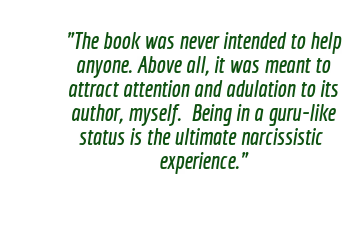
Mr. Vaknin: “Indeed, only seeming. I may have misphrased myself. By “helpful” I meant “intended to help.” The book was never intended to help anyone. Above all, it was meant to attract attention and adulation (narcissistic supply) to its author, myself. Being in a guru-like status is the ultimate narcissistic experience. Had I not also been a misanthrope and a schizoid, I might have actually enjoyed it. The book is imbued with an acerbic and vitriolic self-hatred, replete with diatribes and jeremiads and glaring warnings regarding narcissists and their despicable behavior. I refused to be “politically correct” and call the narcissist “other-challenged.” Yet, I am a narcissist and the book is, therefore, a self-directed “J’accuse.” This satisfies the enfant terrible in me, the part of me that seeks to be despised, abhorred, derided and, ultimately, punished by society at large.”

One last bit of the interview with Goodman appears toward the end of the article.

Sam lives a nomad lifestyle which he describes in the interview with Bob Goodman.

Mr. Goodman asks, “I understand you’re something of a nomad now, hopping from country to country and job to job. Do you ever long for a more settled existence?”

Sam replies, “Never. You are describing a morgue, a cemetery. My life is colorful, adventurous, impossible, cinematic. Sure, I pay a price — who doesn’t? Is there no price to be for a sedentary, predictable, numbing existence? When one is 90 years old, all that is left is memories. You are the director of the movie of your life, a 70 years-long movie. Now, sit back and begin to watch: is it a boring film? would you have watched it had it not been yours? If the answers are negative and positive, respectively, you succeeded to live well, regardless of the price you paid.”

Sam Vaknin on why narcissists and abuse victims hate the holidays

These are pretty interesting–both narcissists and their victims have problems with holidays like Christmas and birthdays. Narcissists ruin the holidays for everyone because of their envy, including themselves. Victims associate holidays with bad experiences because of their abusers.

Narcissists and holidays:

Abuse victims and holidays:

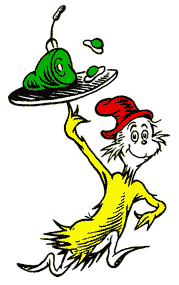
Thanks again, Sam. Would you like green eggs and ham?

samiam

The spike in my stats has not let up. My views today were almost as high as yesterday’s.

thankssam

I was informed by a commenter I’ve never seen before that Sam has been pimping my blog again (one article in particular) all over social media again (mostly Facebook–said article has been shared 84 or more times).

Honestly, I didn’t think Sam had anything to do with the rising stats this time, because it was another article I thought was getting all the views (one that probably wouldn’t be of interest to him). I thought wrong. Well, that other article was getting a lot of views too.
I checked Sam’s Twitter timeline (I don’t do Facebook), and sure enough, this “informer” was correct.

I don’t care if Sam’s a narcissist, a malignant narcissist, a wannabe, or pink and purple polka-dotted with ball bearings in his brain–I’m loving what he’s doing for this blog. I’m sure he’s got his own selfish motives for doing this because he’s a narc, but I don’t care. Sometimes the end is more important than the means.

The funny thing is, this article he seems to like so much is not all that complimentary.

Would Sam like some green eggs and ham?

greeneggsandham

We were the lucky ones.

narcissusrevoy
“Narcissus and Echo” by David Revoy

Those of us who are ACONs and didn’t become narcs ourselves really are the lucky ones.

Narcissism, as I’ve written so many times, is a family disorder and is passed on through generations, both through the genes (as a predisposition, not as a “bad seed,” which I don’t believe in) and through early childhood abuse and neglect.

I’ve read so many of Sam Vaknin’s writings from his personal journal now. He is an ACON just like us but was never able to escape from developing the disorder himself, in spite of his insight and high intellectual ability. The abuse he suffered at his mother’s hands was horrific. With loving parents he may not have developed NPD.

I am also pretty sure my MN mother was sexually abused. I wrote about her childhood in this post. She never actually said she was, but she’s never talked much about her past. Most of what I know I pieced together from bits of information others told me. But even though sexual abuse was never mentioned, I strongly suspect she was and it would explain a LOT.

My MN ex was abused by his mother too. I haven’t written a lot about it, but someday soon I will. His mother was a malignant narcissist who mas a master manipulator and gaslighter, and physically abusive too.

I thought, “that could have been me.” It could have been any of us.

There are narcissists much worse than Sam, who have no insight and no desire to help others avoid people like themselves. Sam and his wife have chosen not to have children because of the devastating effects NPD could have on them–either as its victims or inheritors of the disorder. The fact he doesn’t want to burden a potential child with that proves to me he must have some semblance of a conscience, even if he thinks he doesn’t. That doesn’t mean he doesn’t have NPD but he probably isn’t that malignant compared to some truly evil people out there. I wouldn’t call him a benign narcissist either though–his behavior in “I Psychopath” was pretty intolerable, for the most part, even if he made me laugh sometimes. Sometimes I feel sorry for his wife, who seems like a meek, codependent type and scored very high in empathy on the tests she had to take in that film. I hope he treats her well. But because he’s a narcissist, he probably doesn’t, even if he tries to.

I have complained endlessly about my disorders and the effects of narcissistic abuse on me at the hands of my family and my ex (as well as previous boyfriends before him–I’ve ALWAYS been attracted to narcissistic men, which is why I won’t enter into another romantic relationship ever again). But you know what? For all my social awkwardness, PTSD, BPD, avoidant personality, low self esteem, debilitating anxiety and hypervigilance, and intermittent major depressions, I wouldn’t trade any of that in exchange for Narcissistic Personality Disorder. I could have EASILY become a narc. So could any of you reading this who suffered similar abuse, because you may have the gene for it or it runs in your bloodline, like it does in my FOO.

Maybe we suffer more than someone with NPD (although someone like Sam definitely suffers in his own way), but we have hope. We can get better. We can heal ourselves either through traditional therapy or writing about it. We can separate ourselves from the malignants and the psychopaths who hurt us (narcs can never escape from themselves and make no mistake–they are dangerous to themselves). Our healing may take a long time, it may not be easy, but we can get well. We can become whole, happy people. Because we have the willingness.

Narcissists do not. Their true self is so damaged and atrophied it can’t be accessed and the masks have no desire to get better, because the are just masks. The more malignant the narcissist, the less hope there is for them. The are the cursed ones. They are trapped in their sickness. The really unfair thing is, in most cases this was something done to them. That doesn’t excuse the way they act, but they never had a choice.

We were the lucky ones. We have hope because we never lost our true selves. Think about that the next time you feel like you’re worthless because of the mindgames your narc plays with you.

Narcissism is a family disease

abused


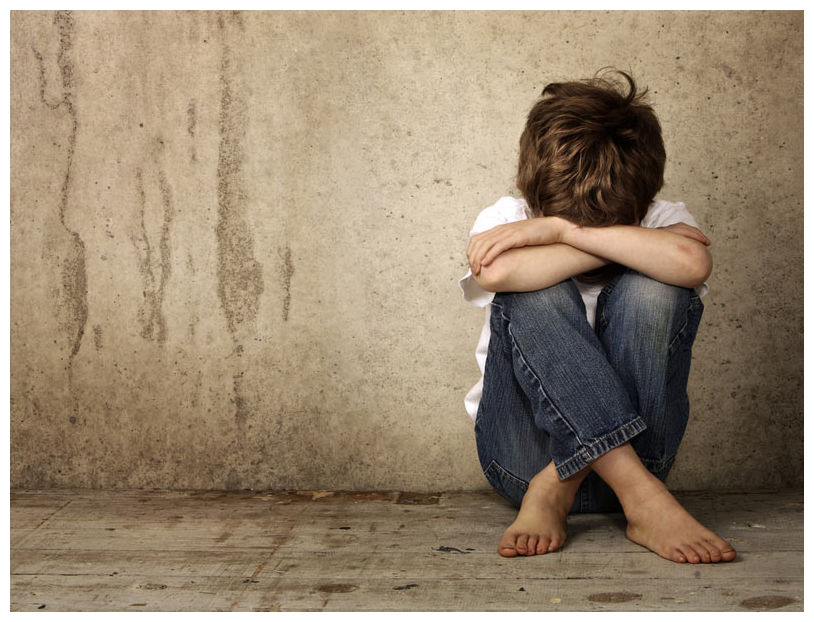
Children of narcissistic parents are always deeply damaged people. Because it’s a genetically inherited disorder (at least to some degree) but also because narcissism is a defense mechanism to protect and isolate oneself from abuse, many victims of narcissistic abuse become narcissists themselves. Those who do not become narcissists suffer from all manner of mental disorders, especially PTSD, avoidant personality disorder, schizoid and schizotypal personality disorder, depression and bipolar disorder, the whole gamut of anxiety and dissociative neuroses, and even psychoses like schizophrenia. And it’s entirely possible to be a narcissist and ALSO suffer from those other disorders. Being a child of a narcissist is the ultimate mind-fuck. There is no way to escape its effects, unless you are removed from the disordered FOO at an early age and adopted and raised by loving parents. Even then, the child will be scarred (“Child of Rage” Beth Thomas is a good example of a child who was severely abused and adopted by a loving family at age one and a half, but still needed years of therapy to overcome the damage that was done to her.)

I see signs of this happening in my daughter due to her MN father’s psychological mind games and mental abuse, but I don’t think it’s deeply entrenched in her because she also suffers from guilt and remorse and does have empathy or at least seems to, so I may be wrong. I hope I am. I still see signs of the sweet child she was, and her currently relationship seems to be bringing that out in her more and more often; she told me sincerely she wants to change her behavior and stop doing things that sabotage herself and hurt others.

Sam was an abused child, the oldest son of a malignantly narcissistic, thoroughly evil mother. He is an ACON, like we are. This is an interview he gave to a writer for Psychology Today, in which he describes what his childhood is like. It’s an excerpt from this journal entry from his website.

Interview granted to Elizabeth Svoboda of Psychology Today

Q. Could you briefly describe your relationship with your parents growing up? What were some of the high and low points?

A. My mother was by far the dominant presence in my life. She treated me as an extension of herself. Through me she sought to settle “open scores” with an indifferent world who failed to appreciate her gifts and to provide her with the opportunities that she so richly deserved. My role was to realise her unfulfilled dreams, wishes, and fantasies. I thus became a child prodigy.

But this was a vicious circle. The more successful I was, the more insidious envy I inspired in her and the more she attempted to subvert me and my accomplishments. Moreover, she resented my newfound personal autonomy. Smothering and doting turned into undisguised contempt and hatred and these fast deteriorated into life-threatening physical and psychological abuse.

Apart from savage beatings, she hit me where it hurt most: tore my poems, shredded my library books, invaded my privacy, humiliated me in front of peers and neighbours. Instead of being her prized possession, I now came to represent the much despised “establishment”. To avoid this disorienting predicament, I made myself into a juvenile delinquent, a gang member, a truant, a rebel with one cause: to regain my mother’s attention. But to no avail.

I hate the words “physical abuse”. It is such a clinical term. My mother used to burrow her fingernails into the soft, inner part of my arm, the “back” of my elbow and drag them, well inside the flesh and veins and everything. You can’t imagine the blood and the pain. She hit me with belts and buckles and sticks and heels and shoes and sandals and thrust my skull into sharp angles until it cracked. When I was four she threw a massive metal vase at me. It missed me and shattered a wall sized cupboard. To very small pieces. She did this for 14 years. Every day. Since the age of four.

She tore my books and threw them out the window of our fourth floor apartment. She shredded everything I wrote, consistently, relentlessly.

She cursed and humiliated me 10-15 times an hour, every hour, every day, every month, for 14 years. She called me “my little Eichmann” after a well known Nazi mass murderer. She convinced me that I am ugly (I am not. I am considered very good looking and attractive. Other women tell me so and I don’t believe them). She invented my personality disorder, meticulously, systematically. She tortured all my brothers as well. She hated it when I cracked jokes. She made my father do all these things to me as well. This is not clinical, this is my life. Or, rather, was. I inherited her ferocious cruelty, her lack of empathy, some of her obsessions and compulsions and her feet. Why I am mentioning the latter – in some other post.

I never felt anger. I felt fear, most of the time. A dull, pervasive, permanent sensation, like an aching tooth. And I tried to get away. I looked for other parents to adopt me. I toured the country looking for a foster home, only to come back humiliated with my dusty backpack. I volunteered to join the army a year before my time. At 17 I felt free. It is a sad “tribute” to my childhood that the happiest period in my life was in jail. The peaceful, most serene, clearest period. It has all been downhill since my release.

But, above all, I felt shame and pity. I was ashamed of my parents: primitive freaks, lost, frightened, incompetent. I could smell their inadequacy. It wasn’t like this at the beginning. I was proud of my father, a construction worker turned site manager, a self-made man who self-destructed later in his life. But this pride eroded, metamorphosed into a malignant form of awe of a depressive tyrant. Much later I understood how socially inept he was, disliked by authority figures, a morbid hypochondriac with narcissistic disdain for others. Father-hate became self-hate the more I realized how much like my father I am despite all my pretensions and grandiose illusions: schizoid-asocial, hated by authority figures, depressive, self-destructive, a defeatist.

But above all I kept asking myself:

WHY?

Why did they do it? Why for so long? Why so thoroughly?

I said to myself that I must have frightened them. A firstborn, a “genius” (IQ-wise), a freak of nature, frustrating, overly-independent, unchildlike Martian. The natural repulsion they must have felt having given birth to an alien, to a monstrosity.

Or that my birth fouled their plans somehow. My mother was just becoming a stage actress in her fertile, narcissistic, imagination (actually, she worked as a lowly salesperson in a tiny shoe shop). My father was saving money for one of an endless string of houses he built, sold and rebuilt. I was in the way. My birth was probably an accident. Not much later, my mother aborted my could-have-been-brother. The certificate describes how difficult the economic situation is with the one born child (that’s me).

Or that I deserve to be punished that way because I was naturally agitating, disruptive, bad, corrupt, vile, mean, cunning and what else.

Or that they were both mentally ill (and they were) and what was to be expected of them anyhow.

And the other question:

WAS IT REALLY ABUSE?

Isn’t “abuse” our invention, a figment of our febrile imagination when we embark upon an effort to explain that which cannot be explained (our life)?

Isn’t this a “false memory”, a “narrative”, a “fable”, a “construct”, a “tale”?

Everyone in our neighbourhood hit their children. So what? And our parents’ parents hit their children as well and most of them (our parents) came out normal. My father’s father used to wake him up and dispatch him through hostile Arab neighbourhoods in the dangerous city they lived in to buy for him his daily ration of alcohol. My mother’s mother went to bed one night and refused to get out of it until she died, 20 odd years later. I could see these behaviours replicated and handed down the generations.

So, WHERE was the abuse? The culture I grew in condoned frequent beatings.

It was a sign of stern, right, upbringing. What was different with US?

I think it was the hate in my mother’s eyes.

You can read about the daily reality in our home:
Nothing is Happening at Home
http://gorgelink.org/vaknin/wronghome-en.html

Q. Once you became an adult, how did your relationship with your parents change? What are some of the unique difficulties of being an adult child of narcissistic parents? Feel free to give examples or describe specific situations you found yourself in.

A. Adult children of narcissists adopt one of two solutions: entanglement or detachment. I chose the latter. I haven’t seen my parents since 1996 (Actually, since I left the army in 1982). I avoid the encounter because it is bound to stir up a nest of emotional hornets which I am not sure I could cope with effectively. I also refuse to subject myself to repeated abuse, however subtle, surreptitious, and ambient. Absenteeism is my way of neutralizing my parents’ weapons.

But the vast majority of grown up offspring of narcissists find themselves enmeshed in unhealthy permutations of their childhood, caught in an exhausting dance macabre, developing special semiotic vocabularies to decipher the convoluted exchanges that pass for communication in their families. They compulsively revisit unresolved conflicts and re-enact painful scenes in the forlorn hope that, this time around, the resolution would be favorable and benign.

Such entanglement only serves to exacerbate the corrosive give-and-take that constitutes the child-parent relationship in the narcissist’s family. Such recurrent friction, unwelcome but irresistible, deepens and entrenches the grudges and enmity that both parties accumulate in sort of a bookkeeping of hurt and counter-hurt.

Q. What effects do you think your parents’ personality problems had on you–as a child and as an adult?

A. I owe my multiple personality disorders – narcissistic, borderline, masochistic – and my depression to their unhealthy upbringing and to the nightmarish atmosphere that they have instilled in our home. I owe them every single self-destructive and self-defeating act I have since committed (quite a few). I inherited from them and via their flawed version of socialization my paranoid delusions, my antisocial behavior, my misanthropy, my a-sexuality.

I am fully accountable for my conduct. My parents cannot be held responsible for my choices at the age of 46. But that I react the way I do, that I am the sad vessel that I am, is their doing, no doubt.

Q. When we become adults, what are our responsibilities to parents who have personality problems? Do you think we’re obligated to put up with them as a kind of payback for everything they gave us when we were young, or are we justified in cutting them off if the situation gets too intractable?

A. Our first and foremost obligation is to ourselves and to our welfare – as well as to our loved ones. People with personality disorders are disruptive in the extreme. They pose a clear and present danger both to themselves and to others. They are an emotional liability and a time bomb. They are a riddle we, their progeny, can never hope to resolve and they constitute living proof that not only were we not loved as children but are unloveable as adults.

Why would one saddle oneself with such debilitating constraints on one’s ability to feel, to experience, to dare, and to soar to one’s fullest potential? Narcissistic parents are an albatross around their children’s necks because they are incapable of truly, fully, and unconditionally loving.

Q. Now that your parents are no longer part of your life, have you compensated by putting together your own “adopted family,” so to speak, of people you care about and that care about you? If so, could you talk a little bit about what effect doing this has had on your well-being?

A. In my late teens and early twenties I was still making the mistake of looking for a surrogate family. Soon enough, I have discovered that I cannot but import into these new relationships all the pathologies that characterized my family of origin. Ever since then I am careful not to get involved with family structures. I haven’t even created my own family. I am married (for the second time) but am repulsed by the idea of having to parent children. In general, I am trying to avoid relationships with an emotional component.

further reading: The Narcissist is Looking for a Family
http://samvak.tripod.com/narcissistnofamily.html

Q. How can we try to manage difficult parents’ behavior, if at all—or at least, minimize its impact on us? Q. What advice would you give others who find themselves in a similar situation with their parents? What were some of the strategies that worked for you?

A. At the risk of sounding repetitive: disengage to the best of your ability. Make it a point to limit your encounters with these sad reminders of your childhood to the bare minimum. Delegate obligations to third parties, to professionals, to other members of the family. Hire nurses, accountants, and lawyers if you can afford it. Place them in a senior home. Move to another state. The more distance you put between yourself and your personality disordered abuser-parents and their radioactive influence, the better you are bound to feel: liberated, decisive, empowered, calmer, in control, clear about yourself and your goals.

These points are crucial:

Do not allow your parents to manage your life any longer

Do not allow them to interfere with your new family: your wife and children

Do not allow them to turn you into a servant, instantaneously and obsequiously at their beck and call

Do not become their source of funding

Do not become their exclusive or most important source of narcissistic supply (attention, adulation, admiration)

Do not show them that they can hurt you or that you are afraid of them or that they have any kind of power over you

Be ostentatiously autonomous and independent-minded in their presence

Do not succumb to emotional blackmail or emotional incest

Punish them by disengaging every time they transgress. Condition them not to misbehave, not to abuse you.

Identify the most common strategies of fostering unhealthy (trauma) bonding and the most prevalent control mechanisms:

Guilt-driven (“I sacrificed my life for you…”)

Codependent (“I need you, I cannot cope without you…”)

Goal-driven (“We have a common goal which we can and must achieve”)

Shared psychosis or emotional incest (“You and I are united against the whole world, or at least against your monstrous, no-good father …”, “You are my one and only true love and passion”)

Explicit (“If you do not adhere to my principles, beliefs, ideology, religion, values, if you do not obey my instructions – I will punish you”).