The worst toy I ever had.

penny_the_poodle

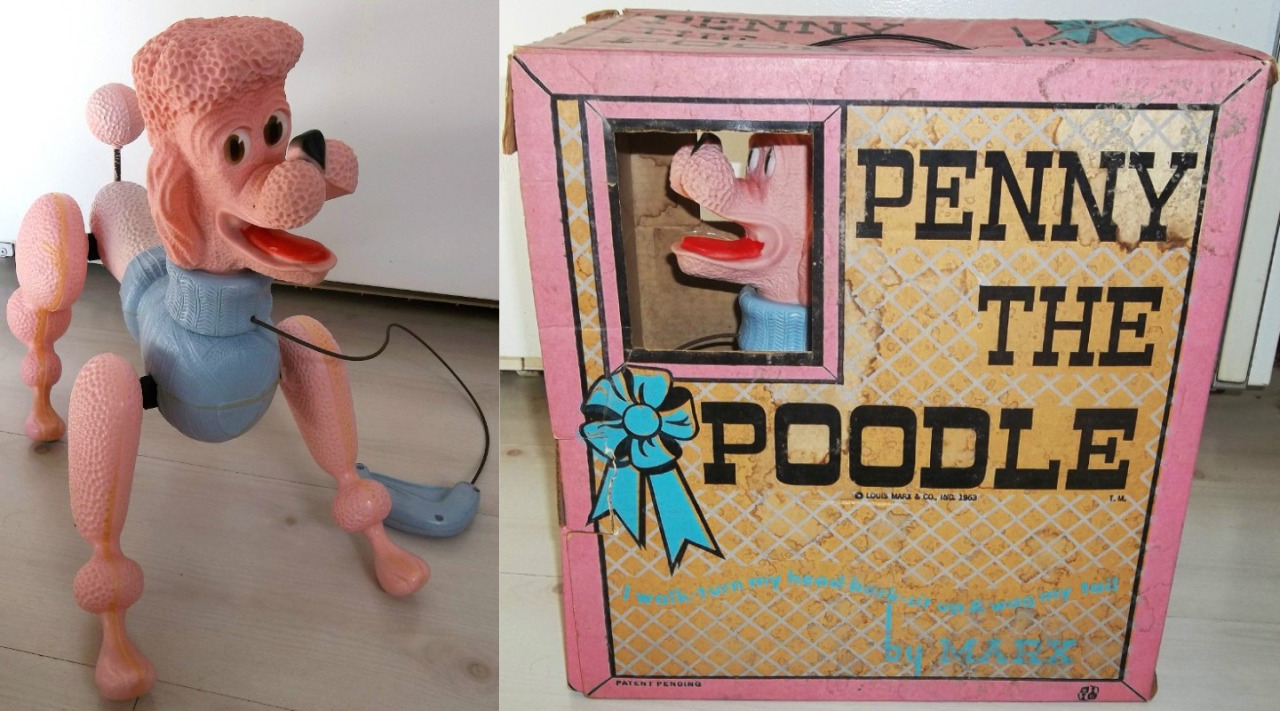
Christmas, 1966.   For months I’d been begging my parents to buy me the hottest new toy the commercials were telling me I just had to have: a walking, barking dog called Penny the Poodle.  Even if you’re old enough to remember this horrible toy, you may not, because it was quickly forgotten after the initial pre-Christmas hype.    I’m sure millions of small children spent that Christmas Day in tears of disappointment and frustration when they realized Penny the Poodle did NOT live up to the hype.

Here’s the commercial, which in retrospect, was pretty creepy, even for those days:

I remember unwrapping the large box with joyful anticipation, ripping off the green and red foil paper and bows to reveal the “Penny the Poodle” logo and the see-through window on the side of the box that revealed Penny’s Pepto-Bismol pink head.

Eagerly, I pried her out of the box with my small sweaty hands and tried to get her to work.  No batteries were necessary.  Penny was supposed to stand, walk, wag her tail, bark, and turn her head.   She was supposed to do everything a real dog does except poop and pee.

She did nothing.  Instead, she lay on her side on the floor, twitching as if she was having an epileptic seizure.    I tried to right her and squeezed the little remote control to get her to walk, wag her tail, do SOMETHING, but no dice.  She fell over again. This time she didn’t even twitch and convulse. I righted her again and manually tried to make her legs move. Her right leg fell off and lay there on the rug like a turkey drumstick covered in pink gravy. Penny was DOA.

I was heartbroken.  I opened the rest of my presents apathetically, because Penny the Poodle was the toy I had REALLY wanted for Christmas.   I cried on and off for most of the day.

My parents returned Penny to whatever store they had got her from and brought me home a replacement, this one powder blue instead of Pepto Bismol pink.   But this one wouldn’t work either.  Back to the store it went.  My parents refused to get me a third Penny, but by then, I’d given up and was happily playing with my Barbies and Wishnik troll dolls.

Penny the Poodle has curiosity value to toy collectors.   You can find a few on eBay, but none of them seem to be in working order, and probably never were.

Thanks to my readers who voted for me to post a funny true story tonight in the poll I posted earlier. I know this story’s a little sad, but there’s always humor in pathos. Or pathos in humor. Or something like that.

Okay, Tony Burgess, happy now?

steel_wool

Tony Burgess wrote a post telling me to post something new right now. I was going to take a night off, but now I’ll feel guilty if I don’t, so here’s a new post.

I was a weird, sketchy kid who had weird dreams. When I was about 5 I had a dream about something called a “clout” that looked like an oversized steel wool pad. It was sitting on the small rug in front of my bed and I was too scared to put my feet on the floor because that clout thing was evil. It just sat there on the rug, in all its black malevolence, not moving, but I knew it was alive and meant to kill me.   I knew if I put my feet on the floor the clout would suck me down into the Hell-portal it must have come from.

When I was around  the same age, one morning I woke up doubled over with laughter.   My dad asked me why I was laughing, and I remember saying, “someone was throwing mud at my door.”   I pointed to the door of my room and globs of gooey mud were sliding down its painted surface. I couldn’t stop shrieking with mirth.   I kept pointing but he couldn’t see the mud and told me to stop making things up.  “Look!  Look! There! There!” I screamed in frustration, but I was still laughing.   Then I woke up for real and was almost afraid if I looked at the door, mud would be on it. I was really awake this time, so there wasn’t. Relieved, I went downstairs for my Cap’n Crunch and orange juice.

Like I said, I was a weird kid.

A lifetime of writing (part one).

Selectric_II

Writing, as opposed to the spoken word, has always been my preferred mode of communication. While it’s true I’ve never published a book or made a real career of it, I have a deep love of words and the rhythms and drama of the English language. Writing is where I feel the most at home in myself, and when I’m at my happiest and feel the most productive. Starting this blog, in spite of some painful incidents arising from it in this past year, has been the best decision I ever made.

This blog began as one for victims of narcissistic abuse and of course, as a ranting platform for myself, but recently I’ve been moving away from that subject for several reasons, the most obvious one being that I simply can’t think of anything new to say about narcissism that hasn’t already been said. There are other reasons too. I haven’t decided what this blog’s new focus should be, or if it should have one at all. But I love to write about writing, so that seems like as good a topic as any, at least for today, so I thought I’d share what my lifelong on-again, off-again love affair with the written word has been like.

Childhood.

little_girl_writing

English was always my favorite subject in school, and my best one too. Once I learned how to form letters and put them together, I found that I loved written assignments and always did well in them. As a child I also loved to draw and often wrote little illustrated stories at home for fun. Not too long ago I wrote the sad story about the little blank books my father brought me home from a business trip, and how I used to fill them with little stories and pictures (usually drawn in marker because I liked the sharp edges of a marker or pen over crayons and you could fit in more detail). Unfortunately, that ended one day when I found out some of my creations had been stolen. After that I was hesitant to write for myself anymore, and pretty much stopped drawing at all.

But my love of writing didn’t die, and as I grew older, my stories became more detailed and longer. I also liked writing papers for school about topics that interested me and enjoyed everything that went with putting together an awesome looking project–choosing what color construction paper to use for the covers (which I liked to slide into a clear plastic cover with a color-coordinated plastic spine to hold it all together), what to draw on the cover (if anything), how to design the letters spelling out the title, organizing the pages, etc. I almost always made A’s on these projects.

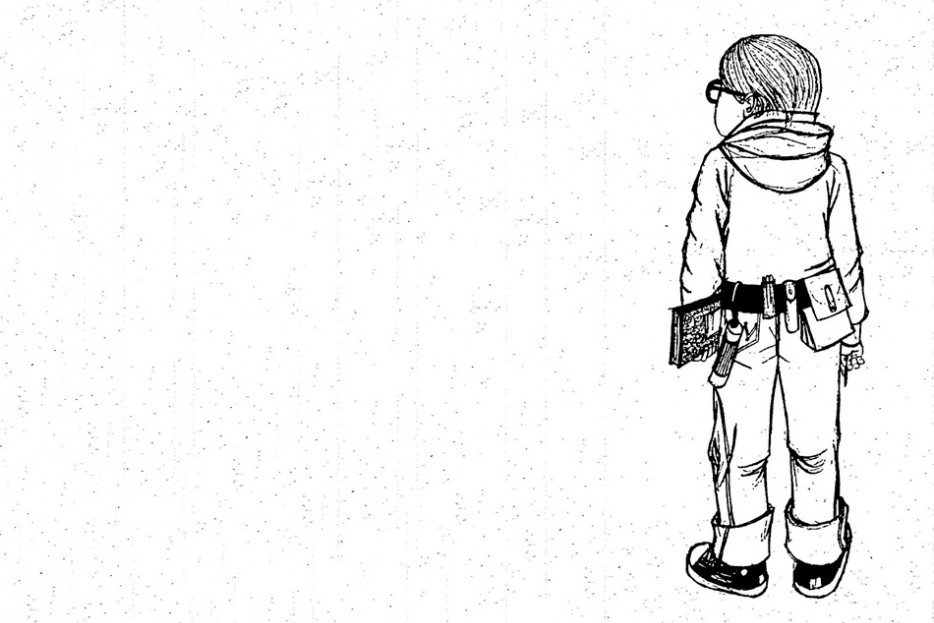
Once I learned to read fluently, I couldn’t get enough books. I remember in third grade, I read voraciously. For some reason, I was particularly enamored of the Mrs. Piggle Wiggle books. I also really liked anything by Beverly Cleary. But I’d read just about anything I could get my hands on. At about age 10, I received “Harriet the Spy” as a gift, and she became my hero. I must have read that book about 10 times, and I read Louise Fitzhugh’s other books as well (too bad she didn’t write more books). To me, Harriet was the coolest girl ever, and she loved writing as much as I did. If I couldn’t be one of the popular girls, then I wanted to be Harriet. She was relatable, but so much cooler than I was. For awhile I even carried around a notebook (a black and white cardboard speckled one just like hers) and wrote down random observations about people. I think Harriet is still relevant. I know Fitzhugh’s books are still popular because so many children who are “different” or feel out of place can relate to Harriet. I wish I still had some samples of my early writing, but unfortunately these were lost a long time ago.

harriet_the_spy
Harriet was my idol when I was about 10.

I was often the target of bullies, especially in 3rd-5th grades, and often would escape to the school library for solace. We had a very sympathetic school librarian. I loved everything about libraries, especially the smell of books. It was very comforting to me, and the only place I felt really at home. Books really were my friends. One of my favorite places to go on the weekends was (drum roll, please!) the public library. I think it’s terrible that government funds for public libraries have been cut in the past decade. I think they’re so important. The Internet is great, but nothing beats a library for nurturing your mind.

Adolescence.

girl_reading

During my teen years, writing became a back-burner activity, something I did when there was nothing else to do. I did continue to read voraciously, but was a lot less inspired to create anything of my own. What I did write tended to be what one of my teachers called “thunder and lightning” poetry–typical adolescent angst poetry about darkness, depression, despair, neverending rain, crashing storm-generated waves, and death imagery. I was Goth before there was such a thing (and liked to dress in black or dark clothes too). I also wrote long, angry screeds about my mother, who I’d decided (rightfully) was the shallowest, most un-maternal person on earth.

I also kept a diary. It was thick sky-blue leather hardcovered book with a golden lock and key. Unfortunately I couldn’t fit much in the spaces for entries, because it was a five-year diary so I only had a 5th of a page to write anything, and the lines were tiny (and my handwriting tended toward the large and florid). I finally quit writing in it after about 2 1/2 years. Like most other things from my growing-up years, I have no idea what happened to it.

Term papers became more of a chore, because now I was required to use and cite sources, etc. but once I got motivated, I did enjoy it and always got high grades. Sometimes, though, I’d wait until the night before it was due (after fretting for weeks) and stay up all night working frantically to finish the project. My teachers could never tell the difference, but I certainly don’t recommend waiting until the last minute to start a school project, if for nothing else other than the enormous stress that causes.

Early Adulthood.

term_paper

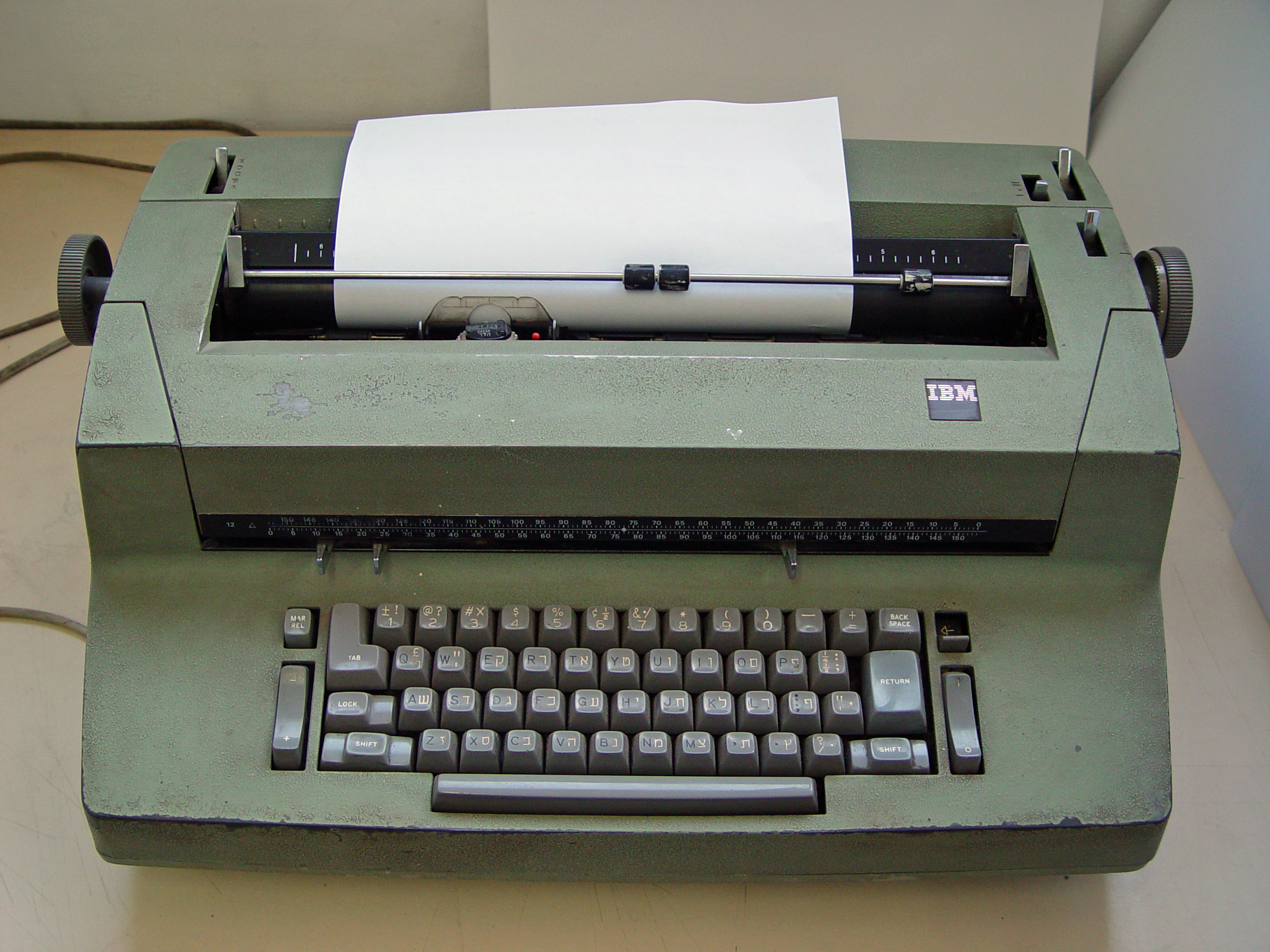
College was basically a continuation of high school as far as my engagement with writing was concerned and was limited mostly to term papers and school projects. Of course, the topics I had to write about were more in keeping with my interests (psychology and art). They were also required to be typewritten and I had recently learned how to type and really liked the “professional looking” fonts available on the school’s IBM Selectric and the futuristic looking font-balls you could snap in and out of the machine (I had a typewriter, but it was a basic Royal ribbon typewriter with standard typeface). In those days before the Internet, access to fonts that didn’t look like “typeface” was considered very cool. I also liked the fact I could backspace and actually erase mistakes, instead of having to use White-Out or erasing strips which only covered them and always looked messy. I still have a few of my psychology papers; sometime soon I’ll dig them up and read over them again.

The only project I ever did badly on in college was a verbal assignment on Narcissistic Personality Disorder (oh, the irony!) for my Abnormal Psychology class, but it wasn’t because I hadn’t done my homework or prepared for it; it was because we had to present it in verbal form, in front of the classroom, and I clammed up terribly and my mind went completely blank. I got a D in that assignment, and it took me a very long time to get over that. In written assignments though, I always got A’s or high B’s.

My love affair with electronic typewriters like the Selectric ended when I started my first office job as a receptionist and had to spend entire days typing up invoices and memos. I remember our first word processor and how cool that seemed. I even took classes in Wang, but once again, it wasn’t too long before that seemed humdrum too.

I only completed three years of college because I got engaged and had to work full time, and something had to go. If I had to do it over again, I would have waited to marry and gotten a degree in journalism or gone for a Masters. While married, I didn’t write anything more ambitious than shopping lists. I wouldn’t dabble in creative writing (for myself) again until my early 40s, although I did take jobs as a technical writer, medical editor and part-time book reviewer during my late 20s and thirties.

(To be continued in Part 2.)

A rare opportunity.

Two-Girls-are-fighting

Life doesn’t present you with many opportunities to make amends to people in your distant past, but yesterday I had just such an opportunity.

A woman I knew back in the 1970s when we were in 7th and 8th grades contacted me on Facebook. At first I didn’t understand why this woman was sending me a friend request and I didn’t recognize her name so I asked her where she knew me from. It turned out this was the girl I bullied at the Catholic school we both attended.

I wasn’t normally the kind of kid who was a bully. Usually, I was the one getting bullied. However, there were 2 exceptions–this woman, and another girl I attended a class at the Y with when I was 9 years old. In both situations, I perceived that these two girls were even more vulnerable than I was, and I liked the approval I got from the “cooler” kids for my behavior toward them. At the time, it proved that I wasn’t at the very bottom of the pecking order, even though I was close to it. Kids that age are incredibly mean.

I always felt badly about the way I treated her. The strange thing is, this isn’t the way this woman remembers things. She told me she’s sorry for bullying me! I don’t remember her bullying me, but maybe we bullied each other and she doesn’t remember. Memory is a funny thing, especially when so many years have elapsed, but the important thing is that her contacting me provided me with the opportunity to exorcise that particular demon and move on from the guilt I’ve held all these years.

Letter to my child-self

baby_picture
Me at age two.

For most of my life I wanted to pretend you didn’t exist. You embarrassed me and made me look bad. You cried too much and made scenes. You were weak, sickly, scared of everything, and easily frustrated. You didn’t know how to talk to people and usually ran them off by telling them too much too soon. You were easily overwhelmed. You were too sensitive and didn’t know how to roll with the punches. I hated you. I just wanted you to go away and stop getting me in trouble and making everyone hate me.

I am so sorry. I was wrong. I’d been brainwashed by others. I didn’t want to understand you. It was too dangerous. I might have been punished or bullied for it. I was in fact. I couldn’t let that happen anymore.

It wasn’t your fault you had problems. That was done to you. You had no say. You were a thoughtful and deep child, who loved to analyze and understand things. You were intelligent and read a lot, always wanting to learn about everything you could. You were curious about human behavior and more than anything you wanted to be loved. You felt deep in your bones that the love you needed wasn’t there for you and you tried to find it elsewhere. But you already had internalized the message that you weren’t enough. That message was a lie.

You didn’t know it but your sensitivity wasn’t a weakness, it was your greatest strength. You just hadn’t learned how to use it and you were made to believe it was bad, but that’s another lie. It’s a sophisticated gift that is lost on children but you can grow into as you age. It shouldn’t have been a shameful thing; it should have been celebrated and nurtured because it meant you could see the truth about the world and the people around you. I’m sorry I couldn’t see how strong you were. I’m sorry I couldn’t see how much I needed you.

I can see you there, peeking out and wanting so badly to come out.
You deserve better. I’m not embarrassed by you now, for I have come to realize how much I need you to teach me how to be authentic and fully engaged. Let me hold you and love you. Cry your tears and laugh your laughter and teach me how to be you again, but this time tempered with the wisdom of an adult.
Come on out.

Everything is okay. There is nothing to be ashamed of. I was wrong to be ashamed of you. You are not weak. You are strong, much stronger than you know. You should have been understood and loved for who you were, not who they wanted you to be. I understand you. I want you to be who you are. I want you to teach me everything you know that I have forgotten.

Smile and come out. There’s nothing to be afraid of.

The furnace.

pipes-front.freeimage

In 1968 our family moved to a Dutch Colonial three-story house built in the 1920s. We only lived there for five years, but the memory of that house is etched into my mind like veins of quartz in granite. Some other time I’ll write about how cool the entire house was, but right now my concern is the old oil furnace that lived in the basement.

Yes, it lived there. It wasn’t hard to imagine that furnace was alive. It had a personality.

Its squat rotund body stood in the sooty gray-concrete corner like a Russian sentinel from a lost age. Its concrete exterior had been painted what appeared to have been white in the distant past, but had turned a dirty tan with age. Rust stains snaked along it like varicose veins. Tumors of soot embedded themselves here and there and filled its crevices. The furnace was covered with guages and meters relating information about the furnace’s internal state my young mind couldn’t understand.

Snaking from the furnace were too many old iron pipes to count. Some were painted what had once been white but were now pock-marked with rust the color of old blood, others were unpainted and rusted over completely, and a few had been replaced with more modern steel pipes that looked out of place. All these pipes stuck out of the furnace like limbs, and converged along the ceiling, delivering their payload of heat to the house that was home to the inhabitants that that served it so lovingly.

The furnace chugged along in the cold months, clanking and blatting and hissing in its corner. Sometimes it leaked hot water all over the peeling painted cement floor around it. Other times it farted black smoke. There were a few times the entire basement was filled with its sooty miasma, and you couldn’t go down there. It was probably dangerous. I used to wonder sometimes if the old furnace might explode when it did that. I was assured it was safe but I never was sure.

Sometimes the furnace scared me when it did that. It also scared me when it made more hissing and clanking sounds than normal. I used to think it was angry that it had to live in the ugly damp unfinished basement and the only light it ever saw was the dim gray light that filtered through the filthy slit-like windows that dotted the white painted brick wall near the ceiling. Those windows were veiled with spider webs and caked with soot. Even my clean freak mother, who had a meltdown if she saw so much as a gum wrapper anywhere else in the house, never did anything with the basement windows. The basement was the one place she allowed to get dirty, except for the laundry room, which had been partially modernized with a carpet, fluorescent lights, and acoustic tile ceiling. The rest of the basement was lit–barely–with bare incandescent bulbs screwed in between the ceiling rafters and operated by metal pull-chains. An old rusted (but working) toilet sat in a tiny closet with only one bare bulb screwed overhead, and no sink.

I used a tiny room that at one time had been used for canning as my escape from the dysfunction that regularly went on up above. My bedroom was too close to the master bedroom, and offered little refuge from the oppressive tension and constant arguing. My basement room was outfitted with a metal desk with wood grain Formica where I did all my homework, and an old piece of salvaged carpet. The canning shelves housed my Barbie dolls and all their accoutrements. The cinder block walls were painted mint-green. A small painted shelf sat above the desk, and my favorite books made their home there. I loved my books. They opened parallel universes in which I could escape from my painful reality.

I’d stay in my little room for hours at a time, barely aware of anything except the world of my books and Barbies. Although I had a probably healthy caution of the furnace and didn’t like to get too close to it because it was so unpredictable, its clanking and hissing noises, when they weren’t too loud, were comforting to me. Its grumpiness and isolated loneliness reflected my own state of mind most of the time. I could relate to it.

Occasionally after one of its sooty temper tantrums, a serviceman would come and minister to it like a doctor on house-call, and then the furnace would be happy again. If a psychiatrist could have given the furnace a diagnosis, I bet it would be Borderline Personality Disorder.

I remember taking a picture of it shortly before my parents’ divorce. I kept that picture for years, but somewhere amidst my many moves, it was lost. I know the house is still standing and was updated at some point (my family never updated anything in that house), but I would be shocked if that old furnace is still there, and even more shocked if it still works. Sometimes I wonder what might have happened to it. I hope it was treated well.

Raised by a narcissist: my story of psychopathic abuse (childhood and adolescence)

lonelygirl

Welp, I’ve been putting this off (and frankly sort of dreading it), but decided to dive right in and start writing my story about how I came to be the kind of person I am and the way I came upon my present circumstances.

Over the past month or so, I’ve been reading everything I can get my hands on about malignant narcissism and psychopathy, and realized that rather than me being at fault for my “bad choices,” as both my parents love to remind me (and had convinced me was the truth), I’m not really the one with the personality issue that got me into so much trouble throughout my adult life (not that I don’t have personality flaws because I certainly do–as do we all). I realized I entered adulthood without the tool kit most people are given during childhood and I also realized that this was intentional on their part (especially my mother) and I was never a loved child–in fact, my mother, being the psychopathic narcissist she is, hated me and still does. It’s been really hard to face this fact — no one wants to believe their own mother didn’t love them and it’s all too easy to listen to people who say, “oh, she must have loved you in her own way” but I now know that’s bullshit. Strangely, being able to face this has given me a sense of freedom and lessens some of the guilt I had over not being a “good enough” daughter. Her dislike of me is not my fault!

So let me get started. My conception itself wasn’t under ideal circumstances. I was “wanted,” but for all the wrong reasons. Two years prior to my entry into this world, my father had lost his 3 year old son he’d had with his first wife. He had been hit by a train. The car stalled on the tracks as the train was coming and his mother desperately hustled the baby and 6 year old daughter out of the car to safety first. Billy, strapped into his seat, had to wait for her to come back to get him after removing the first two children, but it was too late and the little boy died immediately.

My father (let’s call him Harry), in his vulnerable, grieving state (I don’t think he is a MN, although he definitely has always colluded with and been attracted to narcissistic women and has some narcissistic tendencies himself–more on that later) was never the same. Almost immediately he took to heavy drinking, and he and his wife grew further apart as he tried to drown his grief in booze. This was the late 1950s and divorce wasn’t acceptable especially when young children were involved, but she could no longer put up with his drinking and filed for divorce.

Before the divorce was granted, my father (who was a Navy academy teacher at the time) met a beautiful redhaired woman named Ginny at a dance at the naval academy in Annapolis. It was love at first sight. Ginny listened to him talk about his lost son, and cried with him and held him as he talked and grieved. She seemed sympathetic in a way his first wife never was (and probably couldn’t have been as she was grieving in her own way). Ginny was married to a minister, and had two young daughters, but that didn’t stop her from seeing my father romantically, and for no reason other than infatuation (her husband treated her and the girls well from what I understand), she divorced him and left her daughters to be raised by their father so that she could marry my father. Remember, this was the late 1950s and a mother leaving her own children just wasn’t done. But she did it without a second thought. Her oldest daughter (age 7 at the time) was greatly damaged by the abandonment, and to this day has issues related to that and has been in therapy her entire adult life (today she’s one of my mother’s flying monkeys but more on that later). The younger daughter (age 2) was too young to remember anything but I’m sure she was damaged too. Their father remarried a lovely woman who loved the two girls as if they were her own. They were raised with two other children and went on to have a normal childhood with parents who loved them and supported them. They got lucky. It was actually a very good thing that my two half sisters got out of having to be raised by Ginny. I was not that lucky.

So Harry and Ginny married, and almost immediately she became pregnant with me. The pregnancy was a wanted one, though why a woman who abandoned her own two children a year before to have another baby with another man is kind of beyond my comprehension (but she’s a narcissist so it’s not too surprising). She smoked during the pregnancy, though at the time, doctors actually recommended pregnant women smoke to keep their weight down, and my mother was always obsessed with her weight. She always brags how she never gained any weight during her pregnancy with me (or her other two children). Miraculously, I was born healthy if a little on the small side.

From the get go, I was a difficult baby, or at least that’s what I’ve been told. I cried all the time, and had health problems–I suffered from horrific ear infections that left me 80% deaf in my left ear. I was allergic to many foods and to just about everything else. By the time I was a toddler it was apparent I was an incredibly sensitive child, one who reacted to everything in a very emotional way. I was high strung, threw a lot of tantrums, and was easily hurt. From reading about other people’s experiences, especially this one by a wonderful survivor whose story is remarkably similar to mine, it seems that very sensitive children (empaths) are often born to and raised by narcissists and psychopaths, and that’s just about the worst parent/child combo possible. Whether they become overly sensitive due to their treatment, or whether the sensitivity is innate and just a cosmic joke that these kind of kids and parents wind up together so often is something I can’t explain, but unfortunately it all too often seems to be the case.

As I grew a little older, I’d go into these sort of trances where I’d tune out the environment and enter my dream world. I had an active imagination and imaginary friends, and this was my form of escape from the tension in my home. When I was about 3-4 I also engaged in banging my head against the wall. I don’t know why I did this, but at the time it felt good to me. Go figure. Today I believe I actually have high functioning autism (Aspergers) even though I’m self diagnosed (confirmed by a psychiatrist later). I seem to fit all the criteria for it, as well as for C-PTSD and Avoidant personality disorder, but more on that later. My mother hated it when I went inside myself, and always used to chide me for acting “spooky” and would tell me to snap out of it. I couldn’t. I didn’t know how. But if I continued to act “spooky” I’d be punished, usually with a beating or slap in the face.

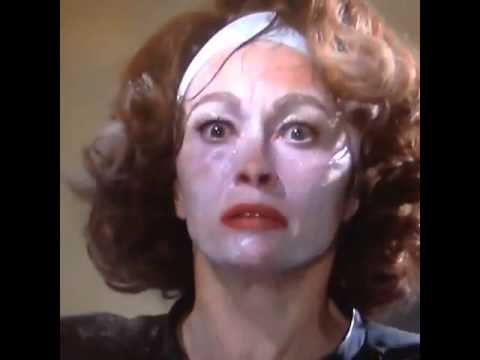
I used to have terrible nightmares. Some were about Ginny, and I remember one where I dreamed she was standing over me, and I realized her eyes were nothing but black holes, like the demonic people you see in movies whose eyes are completely black. And she was wearing that self-satisfied sneer. I woke up screaming, but the nightmare continued in waking life as she rushed into the room demanding why I was screaming and then laughed at me for getting so upset about a “little dream.” But to this day I think what I saw was actually who she was inside. I think she hated me because she knew that I had the ability to see what she really was.
mommiedearest

Both my parents were big on corporal punishment and a yardstick was kept in the kitchen hanging next to the refrigerator as a constant reminded to me that punishment was always close at hand. I was never allowed to express my opinions on anything and God forbid, never, EVER show any anger. Showing my emotions was a huge no no, although my mother was allowed to rant, scream and cry whenever she felt like it. My father usually colluded with her on these punishments, and dinner was always eaten at the table in near silence. Occasionally though the attention would be focused on me, usually to make fun of me in some way. Both parents used to laugh about how “literal” I was. When I was 6 and starting first grade, they found it hilarious when they asked me if I was looking forward to school, and I became frustrated because I couldn’t “see the school.” They weren’t laughing with me, but at me. Of course I was taking things literally. I was just 6 and not capable of abstract thinking yet, and it’s also a fact that autistics think literally, especially as children.

My parents never had another child, and my mother began to chafe at her role as housewife/mother. She was bored and would leave for long periods of time to see her friends, shop or just to get away from me and my father, and left me with a lot of babysitters. When she was home, more and more of her criticism of me focused on my weight and appearance. She treated me like a doll she could dress up and she loved to play with my baby fine hair to the point it tangled and hurt, and I would scream in pain and she would get mad and slam the brush down. She was also obsessed with my bowel functions and if I went a day without a BM, she would give me an adult sized enema. This was pretty traumatic. She also used to sit and watch me go to the bathroom to make sure I produced something. Naturally this led to me having even worse constipation as a result to “hold it in.”

As such a sensitive child, I was bullied in school. I didn’t know how to joke back, how to roll with the punches, how to appear invulnerable like the other kids. I always felt different. It was always difficult for me to make friends, though I usually managed to make one or two. Third grade was the worst, as I not only was targeted by a group of bullies who used to follow me home from school and fed on my reaction (I always cried) but was targeted by my psychopathic teacher as well. Mrs. Morse scared the daylights out of me. She was an overweight woman in her 50s whose upper arm always shook like Jello when she wrote on the board. She regularly liked to call me up to the front of the class to answer a question (and she ALWAYS called on me because I was always daydreaming) and when I couldn’t answer the question (which was often the case as I went into freeze mode at these times and couldn’t think straight) she’d demand why I couldn’t until I cried. At this point she’d call out the crying to the entire class, and all of them would have a good laugh at my expense as I stood there wanting to sink through the floor in shame.

Oddly, I was always told how pretty and intelligent I was (especially by my father, who I think really did love me in his flawed way). But the compliments stopped there. Any praise was almost always limited to innate qualities rather than my achievements or things I could do well. I was also was told constantly I was “too sensitive.” (This is another thing psychopaths like to say to keep their marks in their place). I WAS too sensitive, but this was always used against me and used to embarrass me. When company came over, my mother loved to “brag” to her friends and relatives about how sensitive I was and how everything made me cry. I became very self conscious as a result and started to hide my emotions more so it wouldn’t be called out to shame me. Of course she just found other things to use against me and undermine any little self confidence I had.

Ironically, though they hated my sensitivity, both my parents almost seemed to encourage it. They always wanted me to look frail and helpless and as I entered my teens; Ginny in particular became critical if I looked or acted too “tough”– a demeanor I sometimes used as a way to protect myself and hide my vulnerabilities (though it didn’t usually work too well). All teenagers are sarcastic (and most parents don’t really care for it), but when I used sarcasm or humor to protect myself, she’d tell me I was acting “low class.” Oh, and that’s another thing. Ginny was obsessed with social class and always described us as “upper middle class,” never the more humble “middle class,” even though in actuality that’s what we were. She always put on airs as if she was of higher social status than she actually was and to this day, has a very affected and fake way of speaking, not to mention extremely condescending.

Ginny never let me do anything on my own when I was a child. I remember wanting to help her wash the dishes one night after dinner, and she said I wouldn’t be able to do it because I might break something. When I was 11 and wanted to join the swim team at the pool and tennis club we belonged to, she didn’t say no, but pointed out that maybe I shouldn’t because “you don’t like competition–you’re too sensitive and you’ll get bullied.” I joined anyway and had no problems with my sensitivity or bullying even though I usually finished in third place and never first and rarely second.

I was a good student expected to make straight A’s (and was beaten with the yardstick if a failed to make an A) but always had problems with math. I had a low frustration tolerance for it and was lucky if I got a B. This was never acceptable to my parents, but I was doing the best I could.

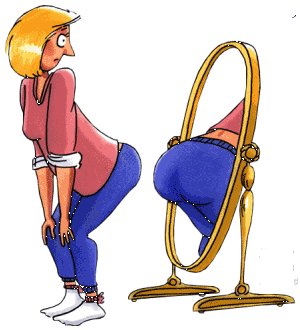
When I was about 12, Ginny’s focus on my weight became an obsession. She was always a thin and vain woman herself, and expected me to be her mini-me, even far into adolescence. Even though I was far from overweight (in fact I was a little on the thin side) she liked to point out how big my ass was, and used to do this when other people were present, embarrassing me so much I wanted to die. Probably as a form of rebellion, I actually tried to gain weight and developed a love of junk food. Anytime I wanted dessert, or seconds at dinner, she’d remind me how “overweight” I was and that I needed to watch my calories. She even threatened to send me away to weight loss camp. With all this obsession over my non-existent weight issue, it’s a miracle I didn’t develop an eating disorder.
weight-loss

My half sister came to live with us when I was 12 for a short time, and we got along great. Debbie was far more self confident than I was, very outdoorsy and adventurous, and took me around to meet her friends and do things with them. They all seemed to like me. For the first time I felt liked and was developing a little confidence in my social skills, which were never that good (I’m painfully shy even to this day). After a couple of months of this, my parents decided to send Debbie back to her father and stepmother (even though this was her own daughter!) because she was having a “bad influence” on me. I was heartbroken.

My parents divorced when I was 13. My father’s drinking had become much worse, and both parents were having affairs (this was the 1970s). It was around this time my mother decided she was a feminist, and started spending more and more time away from home, and landed a job public relations. After my father moved out, my mother and I moved to New York City to a one bedroom apartment. At first, I hated the city, but I was never asked my opinion about the move, or given any sympathy that I’d be leaving all my old friends behind. My mother’s new PR career became her primary focus (what a perfect job for someone so image-conscious: public relations is ALL about image!) and she always talked about how much more rewarding this was than being a mother. She left me alone overnight often so I learned how to fend for myself and cook my own dinners. I actually didn’t mind this because it meant time away from her (by this time I decided I couldn’t stand her) But this was New York City in the 1970s (the city was rampant with violent crime then) and I was just 14 and 15 years old.

Ginny began to drink a lot and bring her boyfriends home. To leave my bedroom for any reason, I’d have to walk through the living room where more often than not, they were in bed together or even having sex. I never said anything about it but it really bothered me. She had a string of boyfriends, most who she’d recruit as her flying monkeys to join her in her belittlement of me and constant gaslighting.

One night we had a huge argument (I don’t remember what it was about–I was drunk myself but she was so wasted she didn’t even notice) and in a drunken, narcissistic rage she started throwing bags and all my belongings out the door and told me to go live with my dad (who was already living with the woman who would become his third wife) who really didn’t want me around much. I told her he didn’t want me and didn’t have room for me in his apartment and she told me she didn’t care. At that point I grabbed a kitchen knife and started to come at her with it. I wasn’t actually intending to use it, but I was very emotional and wanted to scare her. I guess it worked because she got on the phone and begged Harry to come pick me up, telling him I was “disturbed” and “insane.” So he did, and I spent three months living in his studio apartment where I was pretty much ignored (they were never home).

Within a few months, I was placed in a girls’ residence in Queens, New York, and was bullied by the girls there too. I didn’t seem to fit in anywhere in the world. I felt so alone.

High school was a nightmare. I was attending a Catholic all girls high school, and I was completely out of my element. I was bullied by the popular girls, and even the not so popular ones ganged up against me. I became the school pariah. I had no friends at all. I regularly went to visit the guidance counselor in tears. She seemed the only person in the entire school who took any sympathy on me but soon she disappeared and I was informed she found another job. My grades suffered, and one day my mother received a letter from the school that “perhaps Suzanne would be happier in another school.” My mother went ballistic and raged on about how much the school was costing my father (who she usually berated and trashed) and what an ungrateful little shit I was.

I finished high school at the local public school, with its mostly black and Hispanic student population. I found out I got along well with the blacks in particular, and felt more accepted by them than I had by the snobby white girls in the Catholic school. I made a few friends, mostly black. The school didn’t have high standards, and I’d get A’s just by showing up in class, so I didn’t learn much. In my spare time I’d bury myself in books and writing–this was the adolescent version of my childhood daydreams and “trances”–but got criticized by Betty for “reading too much” and not being social enough.

depressedteen

As I entered my late teens, I became a little boy crazy. My first serious boyfriend at age 18 was a narcissist and an abuser. This set the pattern for what was to come.

The next part of my story will be about my early adulthood years culminating in meeting my narcissitic ex husband.