Trying to appreciate fall.

fallleaves

Appreciating fall isn’t easy for me.   It’s my worst time of year and when my SAD is at its worst.   I find fall depressing, for reasons I’ve already discussed in this post.

Most of the trees around here aren’t very pretty in the fall.   In my part of the country, we don’t get too many of the brilliant fall colors that so many people crow on endlessly about. Every year, no matter what the summer weather has been like, the trees change from green to dull brown or sometimes this ugly shade of maroon and finally to bare.   It’s a depressing sight, and I’m not a fall holiday sort of person at all so that doesn’t make up for anything.   I don’t see what the big deal is about pumpkins and why everyone gets so excited about them.   They’re just an overgrown squash and nearly inedible too.  (Gourds are a little better because they’re more interesting looking).

My dislike of fall is weird because during my teens and 20s, fall was actually my favorite season.   I don’t know when this began to change.  I also don’t remember what I liked so much about it.  Maybe I never really did, and just convinced myself I loved fall because all my friends did and liking fall was considered much cooler than liking spring.  Only old people liked spring best.  Or so it seemed at the time.  But I really am kind of old now, so I don’t have to feel guilty about liking spring best anymore.

I’m trying to like fall.   I really am.   The weather is pleasant, at least through early November (then it’s all downhill).   We do have a few colorful maples here and there.   There are actually quite a few at the shopping center where I was this morning (probably planted there on purpose for their colors).    I decided to pick up a few of the fallen leaves that are actually showing pretty colors and arranged them on a black velvet pillow for this picture.

This coming Friday, October 21, the foliage on the Blue Ridge Parkway will be at its peak, and I’ve taken the day off work anyway, so I plan to drive up there and just try to appreciate the fall scenery and spend some time in nature before the dreary November rains come and finally winter is once again upon us.

Donald Trump, narcissism and diagnosis as political sport.

There have been many articles written about Donald Trump’s alleged NPD, some written by bona fide mental health professionals, others by armchair wannabe psychologists–but this is the first one I’ve read that actually talks about Trump’s strange and painful childhood and his spotty memory of important events in his early life–and the surreal way this rather tragic figure (in spite of his billions) is now self destructing in front of the whole world.   This entire election has been like a huge reality show — and no doubt the end of the show will prove to be very bit as dramatic.

Donald Trump, Narcissism, and Diagnosis as a Political Sport

trump19lf2
Republican presidential nominee Donald Trump speaks during a rally at Southeastern Livestock Pavillion on October 12, 2016 in Ocala, Florida. (Gerardo Mora/Getty Images)

By GABOR MATÉ
Special to The Globe and Mail
Published Friday, Oct. 14, 2016

http://www.theglobeandmail.com/life/health-and-fitness/health/donald-trump-narcissism-and-diagnosis-as-political-sport/article32368690/

The consensus as to Donald Trump’s psychiatric issues is nearly unanimous. “Textbook narcissistic personality disorder,” according to clinical psychologist Ben Michaelis, quoted in Vanity Fair. He is just one of many who have reached the same conclusion. Noting his motor mouth, chronic inability to pay attention and shockingly deficient impulse control, others diagnosed Trump as a severe case of Attention Deficit Hyperactivity Disorder. Tony Schwartz, Trump’s ghostwriter for his 1987 bestseller, The Art of the Deal, reported that his client had no attention span and fidgeted “like a kindergartner who cannot sit still.”

In an election cycle where a candidate has been accused of unprecedented misconduct, including the latest allegations of sexual assault by multiple women, psychiatrists are bypassing the long-held professional standard, called the Goldwater rule, which stipulates that no psychologist should make a diagnosis of a person he or she has not examined face-to-face.

As a stressed electorate tries to make sense of a campaign unlike any other, they’re demanding to know: What is the root of Trump’s bizarre displays?

Making inferences about someone’s mental health is common sport with public figures. We don’t have the same data a psychiatrist or psychologist might have, but as candidates’ histories are revealed in biographical articles or books, and their behaviours are scrutinized in public forums, certain patterns become clear.

What we perceive as the adult personality often reflects compensations a helpless child unwittingly adopted in order to survive. Such adaptations can become wired into the brain, persisting into adulthood. Underneath all psychiatric categories, Trump manifests childhood trauma. His opponent Hillary Clinton evinces her own history of early suffering, even if milder and far more muted in its impact.

The ghostwriter Schwartz reports that Trump had no recollection of his youth. There is always a reason for such amnesia. People have poor recall of their childhoods when they found reality so painful that their minds had to push memories into the unconscious. “I don’t like to analyze myself because I might not like what I see,” Trump admitted to a biographer.

According to biographers, Trump’s father was a workaholic, a ruthless, cold and authoritarian man who believed life is a competition where the “killers” win.

Donald’s elder brother drove himself into alcoholism, a common escape from pain, and to an early death. The younger, favoured child is now self-destructing on the world stage.

Lying is such an endemic aspect of Donald Trump’s personality that he does so almost helplessly and reflexively. “Lying is second nature to him,” Tony Schwartz told The New Yorker. “More than anyone else I have ever met, Trump has the ability to convince himself that whatever he is saying at any given moment is true, or sort of true, or at least ought to be true.”

Read the rest of this article here.

Why aren’t more people doing this?

felixheader

With all the extra cat hair in the world, why aren’t we using it to make soft, colorful mohair-like sweaters and accessories, instead of letting it clog our landfills?

felix_gif

Seriously, why not?  We make wigs out of extra human hair, so why not make useful items out of extra cat hair?   It’s not like there’s a shortage of it or anything.

Actually, there are a few folks doing this.  There’s even a book about crafting with cat hair.  But most people still think it’s weird and gross.  Why?  It’s not like the cats are killed for their fur.   It’s dropping off of them constantly, so why not put it to use?

cat_hair_cats

Little cats made out of cat hair.

cat_hair_bag
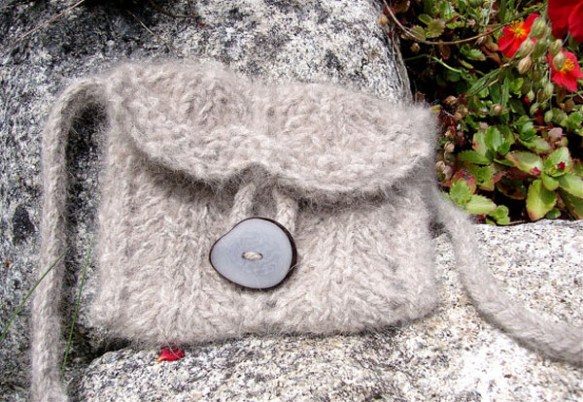
Looks like mohair or cashmere to me.

cat_purse
This is a really attractive bag. Don’t tell anyone what it’s made of and no one will ever know.

I’m a warrior.

Image

survived

But ammonia is yummy!

ammonia_bleach

Looks like my son maybe made his first viral tweet!

drink_ammonia

Social Narcissism: Safe Spaces, Collectivity, and Moral Obligation

Way back in 1979, a social critic named Christopher Lasch wrote “The Culture of Narcissism,” in which he made the case that increasing globalization, individualism over community, material success over loving relationships, nuclear families over the extended family or the tribal culture, and the “bottom line” over empathy, would lead to levels of societal narcissism previously unheard of. Of course narcissism has always been around, and used to be brushed under the rug (“nice” people didn’t talk about abuse), but there was always the community or extended family to catch you when you fell. Now, it’s each person for him- or herself, and you’re regarded as a “moral failure,” even by your own family, if you fail to impress the world with lofty achievements, the perfect body, impressive credentials, the biggest McMansion, the prettiest children, or the most glamorous career.

The problem of societal narcissism goes way beyond Millennials taking selfies (taking selfies is really not all that narcissistic anyway).  American politics has become a reality show, in which the most “colorful” or outrageous character has a better chance than the one who truly cares about the people and the future of the nation.

My friend has written an outstanding article about how narcissism has become normalized and even transformed into a virtue in today’s selfish, materialistic, empathy-challenged society.   Comments here are disabled; please comment under the original post.

Self-pity and self-compassion: there’s a huge difference!

This somewhat older post of mine is in the same spirit as the Brene Brown videos I posted yesterday, so I decided it was time to reblog it.

luckyotter's avatarLucky Otters Haven

self-compassion

I read a post yesterday on another blog that I agreed with, except there was one thing that didn’t quite sit right with me. The post said that self-pity is an important part of healing from Complex PTSD.

In his book (which I’m still reading), Complex PTSD: From Surviving to Thriving, Pete Walker says that self-compassion is an important part of healing, and I think this is what the blogger actually meant. But self-compassion isn’t the same thing as self-pity, an activity which I don’t find at all healing and in fact seems to make my problems worse. Of course we have the right to engage in self pity from time to time (and probably can’t help doing so), and no one should deny us the right to do so. But for me, it just doesn’t work. It’s an unpleasant, soul-sucking experience that seems to drive my negative programming…

View original post 945 more words

Inspiration for Wednesday.

Image

struggle_meme

Listening to Shame — Brene Brown

I have found Brene Brown’s videos incredibly helpful.  Anyone who has struggled with trauma, shame, and fear of vulnerability would do well to watch her videos.    I’ve already posted “The Power of Vulnerability,” and have watched it dozens of times.   Here’s another one I just watched called “Listening to Shame.”   Brene is one of the most inspiring people I’ve ever seen. Follow her on Youtube!

Meet and Greet: 10/8/16