Two new articles will be up today. I might put one on my other blog, but there will be two.
Category Archives: essays
Global Followers
As a blogger, knowing that a thought that’s known to no one but me can, within seconds, be read by someone in some far flung country on the other side of the globe, is pretty incredible.

I appreciate all my fellow bloggers who are following me here from around the globe. One thing I love about this thing called blogging is how we can be connected in a very unique way. We can discover more about ourselves by seeing the lives of people from different places from Australia to Zimbabwe and inbetween. My world view has been expanded by some great bloggers who have shown me the places they call home and in their communities. I wish you peace and grace my friends from far away. I hope and pray for peace and that we will have the freedom to keep on blogging no matter where we are.
New look!
I decided to completely change the header, background and blurb. I think it’s cleaner and less clunky looking, and it was time for something new. I hope everyone likes it.
Avoidant Personality Disorder
This article is a must read for anyone who isolates themselves from others and doesn’t understand why. You may not have Avoidant Personality Disorder; you may just be introverted or have a few of the traits. I just discovered this blog and the blogger is an amazing writer and I could relate to every word.
Some time away.
I’m going to be spending the next couple of weeks working on this blog, setting some articles to private or possibly removing them. It needs a facelift. I also need to spend that time working on myself. I may post here and there, but it won’t be my primary focus for a little while. I apologize to my followers. I’ll be back!
Writer’s block.

I feel like there’s a traffic jam in my brain. Or perhaps, no traffic at all. For some reason I can’t fathom, I can’t work up the motivation to write anything. I feel like my creativity has gone AWOL. I wake up feeling depressed. I go to sleep feeling depressed. It’s a numb, zombie-like depression but underneath that…there’s something coming to the surface. There’s an underlying anxiety and a feeling of impending insanity. I don’t know why. I pray for an answer, some clarity, some ability to process the stuff going on in my head right now, but there don’t seem to be any answers.
I can’t think straight. I had a bad panic attack at work yesterday; it came out of nowhere. I was out of control. I embarrassed myself and was shaken the rest of the day.
I’m using various techniques (prayer, meditation, long hot baths) to calm myself down, but it’s only a temporary fix and I still have no creative ideas for new posts. I forced myself to write this one. I’ve said many times before that writing is at least in part a discipline. You have to make yourself write, even when you don’t want to. Then it gets easier. But I’m ignoring my own advice.
I feel like my small life is growing smaller. I’m isolating myself more. I think about death a lot (not suicide, just the idea of death and it scares me). I keep asking God to intervene and lift my mood but this time he’s sleeping on the job.

I know I have to take responsibility and make myself get out of the house sometimes and make myself write. But when the time comes, I just find it so hard to get motivated. I have problems with the seasons and always get depressed this time of year. But this didn’t happen last year. I wrote like a maniac a year ago and worked through a lot of emotional stuff. I was full of ideas and writing allayed any depression I would have experienced.
I have faith though. I know this is temporary. I know God is there and is sitting back for a reason. He wants me to work through this on my own. I feel like I’m on the edge of an epiphany, something new I need to discover about myself.
I know this post won’t win any Pulitzer prizes and isn’t at all inspiring but at least it’s something. I know I need to just sit down and make myself write SOMETHING every day, even if it sounds uninspired or even stupid. I need to tell my inner critic to STFU. I’m not trying to impress anyone, just get my thoughts on “paper” so I can process them and learn from them. This is only meant to be a journal, after all. Maybe this will even open a discussion about writer’s block and I won’t feel so alone. I’m also going to look into therapy.
no internet
I havent posted because my internet decided to stop working and i have to type this on my tiny smartphone. Someone is coming over from charter tommorrow afternoon to fix whatever the problem is. I use charter and they suck. 😦
How everyday life has changed since 2000.
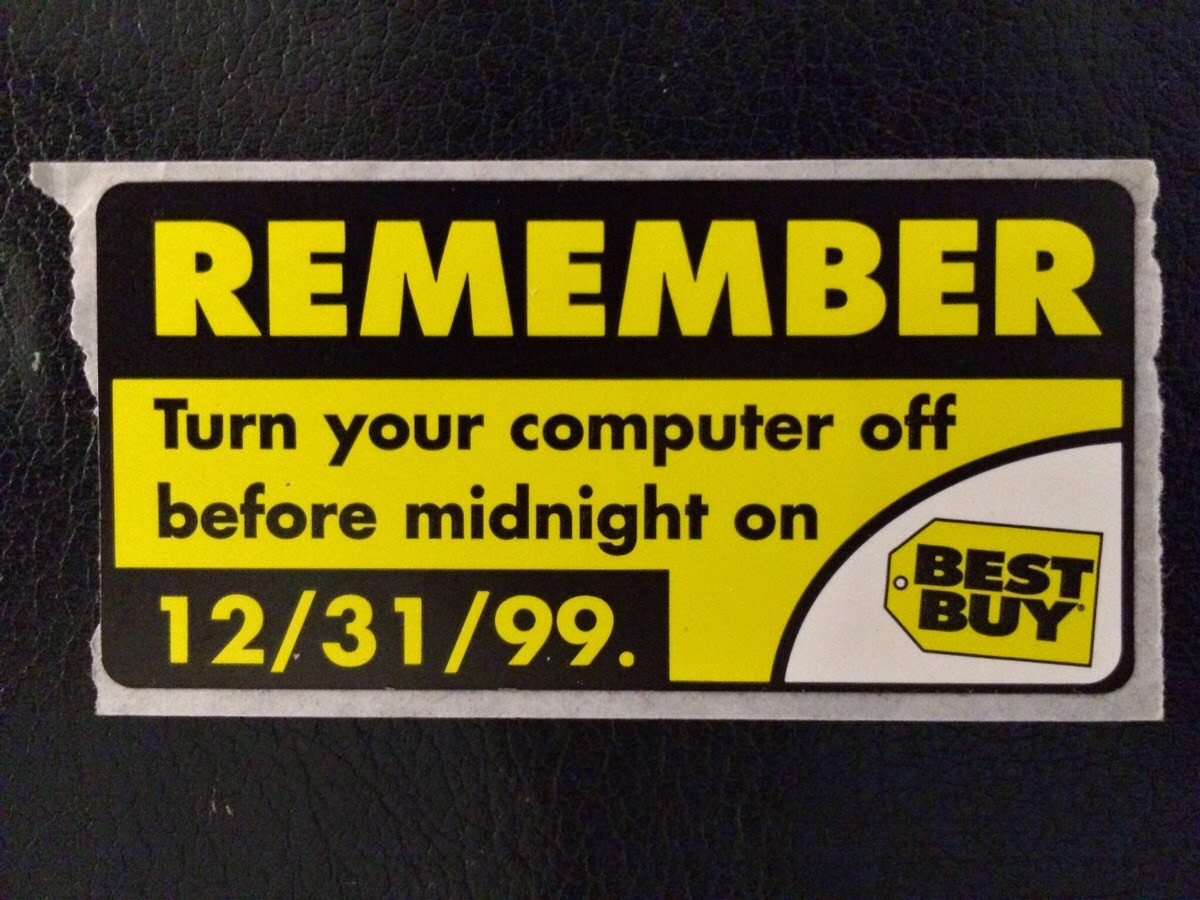
Was it really almost 16 years ago that we all feared Y2K would end life as we knew it? Well, life did change alright, although instead of being forced back into the dark ages of the pre-electronic era, we moved forward (if you can call it that) into Facebook, Twitter, smartphones, reality stars turned megacelebrities, Googling, and subjecting ourselves to frisking and possible questioning before boarding a plane. None of these things existed in the 1990s.
That’s not really moving forward to my way of thinking, but…maybe laterally?
Here’s an article listing the many ways our lives have changed since the dawn of the third millennium. Oh, and for what it’s worth, this article was written in December 2009, just 7 years ago minus 3 months. How many more things could we add that have changed since just 2009?
Things That Changed Our Lives Since 2000
By Associated Press, 12/22/2009

Many things have changed our lives since the start of the millennium. Was it only a decade ago that a blackberry was a mere summer fruit? That green was, well, a color, and reality TV was that one show sandwiched between music videos on MTV?
There were, of course, huge political and social upheavals that roiled our world in the past decade. But there were also the gradual lifestyle changes that you don’t always notice when they’re happening — kind of like watching a child grow older. Here’s an alphabetical look at 50 things that changed our lives since the beginning of the millennium:
AIRPORTS: Remember when you didn’t have to take your shoes off before getting on a plane? Remember when you could bring a bottled drink on board? Terrorism changed all that.
ALTERNATIVE MEDICINE: From acupuncture to herbal supplements to alternative ways of treating cancer, alternative medicine became more mainstream than ever.
APPS: There’s an app for that! The phrase comes from Apple iPhone advertising, but could apply to the entire decade’s gadget explosion, from laptops to GPS systems (want your car to give you directions to Mom’s house in Chinese, or by a Frenchwoman named Virginie? There was an app for that.)
AARP cards … for boomers! Some prominent Americans turned 50 this decade: Madonna. Prince. Ellen DeGeneres. The Smurfs. Michael Jackson — who also died at 50. And some prominent “”early boomers” turned 60: Bruce Springsteen and Meryl Streep, for example.
AGING: Nobody seemed to look their age anymore: Clothes for 50-year-old women started looking more like clothes for 18-year-olds, tweens looked more like teens, long hair was popular for all ages, and in many ways women’s fashion seemed to morph into one single age group.
BLOG: I blog, you blog, he blogs … How did we spend our time before blogging? There are more than 100 million of these Web logs out there in cyberspace.
BLACKBERRIES: Considered essential by corporate CEOs and moms planning playdates. Introduced in 2002, the smartphone version is now used by more than 28 million people, according to its maker, Research In Motion Ltd.
Read the rest here:
http://www.nj.com/hudson/voices/index.ssf/2009/12/many_things_that_changed_our_l.html
One thing that comes to mind for me is how much computing has changed. In 2000, the Internet was still pretty primitive, and there were no social networking sites as we know them. Lots of websites still had that mid-90s skeleton look to them. Forums and email were the most popular (and probably the only) way of connecting with others online. Usenet and DOS based MUDS and MOOs were still fairly popular, though beginning to disappear as more sophisticated topic-based forums, bulletin boards, and Instant Messaging (the forerunner to texting and Tweeting) began to replace them. Comments were still made via “Guestbooks” that appeared on the forerunners to today’s blogs–personal web sites hosted by Angelfire, Tripod, and Geocities. And you needed separately purchased boxed programs like Front Page to design them if you wanted anything fancy. Many of these early websites had horrible, loud, flashing designs on black backgrounds that made your dial-up Internet connection crash. You had to tell your family to get off the Internet so you could make a phone call. AOL was the Big New Thing and they sent us all those free trial CDs in the mail that most of us threw away. Viruses weren’t ubiquitous yet, and Internet security (along with airline security) was lax. The computer monitors were ugly and boxy, the screens were convex glass things, and everything took forever to load. Windows still looked barebones, and we did our searches on Netscape Navigator and Explorer. Yahoo was new and cutting edge.
Can you think of some of your own? How has life changed for you personally since the year 2000?
Crying in therapy: how important is it?
Here are some surprising facts about crying in psychotherapy and what it really means–and about therapists who cry with their patients.
How did narcissism get so “popular”? (part two of two)

Here is the second installment, as I promised–I apologize for the delay. In part one, I covered the way narcissism has increasingly infiltrated our society and become a near-virtue to be emulated, starting in the late 1940s and 1950s in a postwar America now regarded to be a world superpower. The babies born in this mood of can-do optimism, the Baby Boomers, were indulged by their parents, who believed anything was possible and showered their children with all the new toys, space-age technology, and new permissive child-rearing techniques that were suddenly popular.
In Part One of this article, I discussed how the indulged Boomer generation influenced western society at every stage of life, and (as a generation) grew into grandiose, entitled adults who demanded (and got) special treatment every step of the way. I covered the decades from the 1950s through the 1980s, and described how narcissism became increasingly regarded as a desireable quality. By the 1980s, narcissism came out of the closet, with the election of a president (Reagan) who encouraged greed, materialism, and entitlements for the wealthy with his “trickle down economics.” At the same time, empathy, neighborliness, and general goodwill toward others seemed to become almost quaint, a naive relic of the past. The juggernaut was the new “greed is good” philosophy, made popular by a 1987 hit movie, “Wall Street,” (which was of course the place to be). Narcissism was no longer something to be hidden; now it was something to aspire to.
In this next installment, I’ll be focusing less on the Boomers and more on the continued growth of narcissism in society, as well as the backlash against it–the narcissistic abuse and ACON community–which began as an Internet phenomenon during the mid 1990s due to one self-professed narcissist named Sam Vaknin. But actually, the seeds of the backlash had been planted as far back as 1983, with M. Scott Peck’s bestselling book, “People of the Lie.”
1990s.

The greed worshipping culture begun in the 1980s continued during the 1990s, as Boomers rose to power and we elected our first Boomer president, Bill Clinton, in 1992. Under Clinton, the economy boomed, and a new breed of Yuppies, the Dot Com entrepreneurs (who were mostly Generation X), rode on the coattails of the newly born Internet, and they made money hand over fist until they went bust several years later. But people still went shopping and the culture at large was becoming increasingly exhibitionistic, obnoxious, and in-your-face (reality shows were born during this time), while corporations grew bigger and more unwieldy (unlimited growth, like a cancer, was encouraged, and smaller companies merged into megacorporations the size of small governments). Meanwhile, government institutions built in the more sedate and community-oriented 1950s and 1960s began to splinter and crumble. The government, especially the part of the government that tried to help its less fortunate citizens and attempted to even the playing field through fair taxation, became The Enemy.
But a backlash was beginning to silently bubble under all the glitz and bling of the ’90s. Back in 1983, a psychiatrist turned born-again Christian named M. Scott Peck published his groundbreaking book, “People of the Lie.” Here, for the first time, was a self help psychology book that focused on “evil”–specifically, people who were evil. The traits described in the book are exactly those of malignant narcissism. The book resonated with many, particularly with Gen-Xers and later born Boomers (Generation Jones), who had been raised by narcissistic parents. In some cases, especially for younger Boomers and early Gen-Xers, these kids had been betrayed by initially doting Silent generation parents who suddenly, during the 1960s or 1970s, seemed to suddenly care only about their own self-development at the expense of their confused and hurt adolescent and preteen children who they no longer seemed to even like much (this is exactly what my experience had been growing up in the 60s and 70s: my parents changed and no longer seemed to care).
But in the early 1980s, Peck’s “evil people” were not automatically equated with narcissists or people with other Cluster B disorders. Until the mid-90s, narcissism–or NPD (Narcissistic Personality Disorder)–was simply a psychiatric label given to certain patients with a certain set of traits, who may or may not have been evil. NPD wasn’t demonized yet.
Then along came Sam Vaknin in 1995. Vaknin, a former white collar criminal and self-confessed narcissist, had written a tome about narcissism called “Malignant Self-Love: Narcissism Revisited.” Written initially to obtain supply and a guru-like status for himself, Vaknin’s book actually helped many of the narcissistic abuse victims who read it and recognized their abusers in its 600+ pages. Vaknin’s idea of NPD didn’t fit that described in the DSM: he mixed in with NPD several traits of psychopathy, antisocial personality disorder (ASPD), and Borderline personality disorder (BPD), to describe a particularly dangerous type of malignant narcissist that made the toxic people described in M. Scott Peck’s book seem almost tame in comparison.
The book was successful, and soon Vaknin started his own website, and discussion groups, and abuse victims all over the world jumped on the bandwagon. Vaknin, exactly the sort of person they sought to avoid, had become their savior and guiding light out of darkness.
Until the 2000s, Vaknin’s was pretty much the only voice on the Internet about narcissistic abuse. But in the very late 90s, a few books were beginning to be published about this “new” type of abuse that didn’t necessary include physical violence (but could). Parents, particularly mothers, were the focus, and a subset of the narcissistic abuse community–one that focused on narcissistic mothers and the damage they had done to their now-adult children–formed the template for the explosive ACON (Adult Children of Narcissists) movement.
2000s.

For a brief time, after the tragedy of September 11, 2001, it looked like Americans just might start to care about each other again. There was an outpouring of support for the victims of the 9/11 disasters, and solidarity shown among all Americans. For the first time, regional differences and even racial differences didn’t seem to matter, and Americans were united by their flying of the flag. No one seemed all that concerned by the curtailment of certain freedoms and and increase in xenophobia–after all, it was for the protection of the country, right?
But as a result, the economy was suffering, so George W. Bush Jr. (“Dubya”) gave us all permission to “go shopping.” And so we did. It was back to the bread and circuses and the shallow, materialistic culture of the 1980s through pre-2001.
Reality shows rose in popularity and the badder the behavior, the more popular they got. New celebrities were famous only for “being famous,” having a famous parent, or just for acting badly. People aspired to be just like Snooki and The Situation from The Jersey Shore, or Tiffany “New York” Pollard from Flavor of Love. All of these characters were narcissists, or at least acted that way for the benefit of the camera. And people loved them for it.
During the 2000s, Millennials, the rising young adult generation, born in the 1980s and 1990s, started being being accused of being narcissistic, but if they are, you can blame their parents for having taught them these values. In addition, a lot of gaslighting is going on by older generations, who blame the Millennials for their inability to find jobs that pay a living wage and provide benefits, forcing them to live at home and be dependent for longer than earlier generations–and accuse them of being “lazy,” “spoiled,” and “entitled.” But what about their mostly Boomer and Gen-X parents, who modeled this sort of behavior?
Politicians became more blatantly narcissistic and their lack of empathy sank to new lows. One politician said if you weren’t rich, you should blame yourself. Blaming the victim became increasingly popular, and was even seen by some conservative politicians as a “Christian” way to behave–for if you were favored by God, He would bless you with wealth and material comforts. Religion itself became a way for narcissists to rise to positions of great power, and use their “favored status” in God’s eyes as a way to abuse their flock of followers.
Meanwhile, the narcissistic abuse commmunity continued to grow, and blogs written by abuse survivors were beginning to pop up all over the Internet. The abuse community developed their own lingo, some of it borrowed from earlier movements such as 12-step programs (codependent, enabling, people-pleaser are examples), some from pioneers such as Sam Vaknin (narcissistic supply, confabulation), and some from mental health experts going all the way back to Freud. Some terms were taken from popular movies, such as “flying monkeys” (The Wizard of Oz), and “gaslighting” (Gaslight).
2010s.

Being only 5 years into the 2010s, it’s hard to see any patterns yet, but it does seem that the problem of narcissism is finally being noticed by the general public. One of the Republican presidential candidates, Donald Trump, is well known for his “NPD” and called out for his grandiose antics constantly, even by people outside the narcissistic abuse community. Narcissism is a fashionable topic now–the fascination by it may only be a fad, but it’s making people pay attention. Lately I’ve noticed a number of Christians who are abandoning the fiscally conservative values held by groups such as the Tea Party, who are about as collectively entitled as you can get (they had better get their social security, but to hell with that child who needs special medical treatment but can’t get it because his parents are too poor). It’s probably too soon to tell whether the “social gospel” is making a return, but there does seem to be a greater call for an increase in empathy and caring for each other and building communities instead of just building up the Almighty Self.
It will be interesting to see what the rest of this decade holds.
 Lucky Otters Haven