I still need a few more guest bloggers.

UPDATE: Comments have been disabled.  Thanks to everyone who volunteered!  

Yesterday I invited bloggers who write about mental illness or mental illness stigma to write a post for this blog.  In exchange I’ll write a post featuring all the bloggers who have chosen to participate, and share their finished posts to all my social media.

I’m doing this for two reasons: (1) I need fresh material for this blog; and (2) other people’s perspectives on mental illness and the stigma it carries can help raise awareness, much more so than I can do on my own.

So far I have six interested bloggers, but I need a few more.   This weekend I’ll be writing a post featuring the blogs of all those who chose to participate, which will help their traffic.

Here is the original post.  If you’re interested, please comment in the original post, with a link to your blog, and a short description of what you want to write about.

Mental illness writers: want to be a guest blogger and have me share your blog too?

BPD Awareness: end the stigma

bpd-pride1

Borderline Personality Disorder is a serious mental disorder with its roots in childhood abuse (usually narcissistic or sexual abuse) and as you can see in one of the memes below, it shares much in common with Complex PTSD and may in fact be a variation of the same disorder.

But BPD is terribly stigmatized, with its sufferers being called everything from evil to incurable.  Many mental health professionals refuse to work with Borderlines because of this stigma.  They’re afraid of us!  While some more aggressive borderlines can certainly do bad things to others and be manipulative, for people with BPD, their actions are caused by an inability to control or regulate their emotions, so they act out instead of thinking before they act. Many Borderlines are more destructive to themselves than to others.  They can seem self-centered and narcissistic not because they lack empathy (many borderlines, in fact have an excess of empathy) but because they get too caught up in their own emotional turmoil to be mindful of others.    Unlike people with NPD, they also don’t have a sense of entitlement.   In fact, they often feel like they deserve nothing.

BPD is much more treatable and receptive to therapy than other Cluster B disorders like NPD or Antisocial Personality Disorder.   Unlike those disorders, too, people with BPD can be helped by medication.


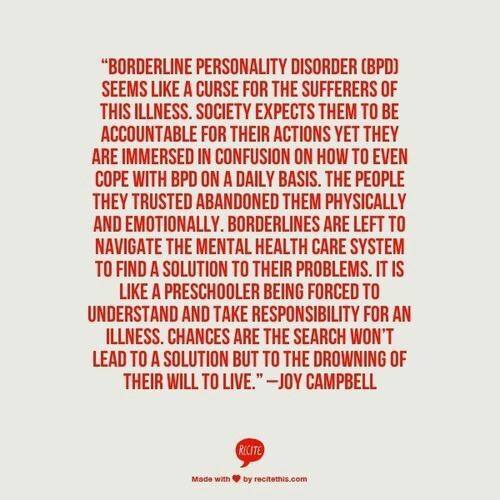
bpdpride2

bpdpride3

bpdpride4

bpdpride6

bpdpride8

bpdpride7

bpdpride9

bpdpride10

Show your pride:

pbdpridebutton

Order one here: 
http://www.zazzle.com/bpd_pride_button-145549130796752314

BPD/mental illness awareness/LGBT bracelets and jewelry: 

Awareness Jewelry Shop

“Crazy” blogs help reduce stigma against mental illness.

Through our “self indulgence” and “shameless” willingness to publicly talk about personal struggles and issues most people wouldn’t even tell their second best friend,  we forge communities where we can offer strength and comfort to others–and receive it in return.

 

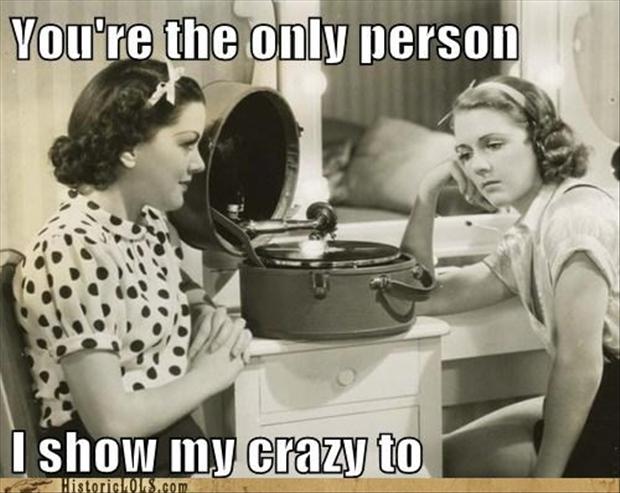
crazy-women

Do you, like me, administer a “crazy” blog?

I was thinking about how in the past few years, “crazy” blogs like mine (highly confessional blogs that document an individual’s mental illness and their journey to wellness, or an abuse victim’s struggles to find peace of mind and emotional freedom) have proliferated like mushrooms after a rain storm.

Is this a blessing or is it the Internet version of the worst kind of TV reality shows?

Those who don’t understand, many of them older people who aren’t used to such public candor on or off the web,  like to pass judgment and accuse us “crazy” bloggers pf being self-indulgent, narcissistic, exhibitionistic, shameless, or just plain, well, batshit crazy.    They can’t understand why people with such delicate and personal…issues…would want to blab about them all over the web to strangers all over the world.   They think that by us doing so,  we just prove we’re as insane as whatever mental illness we are struggling with. They think that abuse stories belong behind closed doors and the only public place where they should be discussed is in the courts.
mental_illness

Highly subjective, confessional stories of mental illness and abuse didn’t start on the web, though the web makes it possible for the average non-celebrity type of person to make their story known through blogging and forum posts, and in the process, enlighten, warn, or provide hope and support to others in the same boat.   Through our “self indulgence” and “shameless” willingness to publicly talk about personal struggles and issues most people wouldn’t even tell their second best friend,  we forge communities where we can offer strength and comfort to others–and receive it in return. Back in the days before the Internet was available, we so often had to struggle alone without any support–or never be able to use what we learned to lift up someone else.

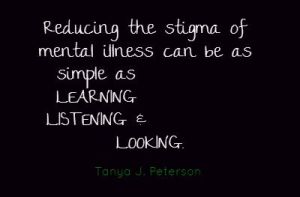
I think “crazy” blogs in particular help reduce stigma against mental illness by describing what it’s like to actually live with one, rather than just listing a bunch of criteria in a psychiatric textbook, which tends to increase stigma.  Instead of being reduced to “Exhibit A-104.3G, our stories and struggles show our humanity.


Further reading:  Why Crazy People Make Better Bloggers.