There’s nothing wrong with positive thinking. But it’s become fashionable in recent years to shame “negative thinking.” I put that phrase in quotes because sometimes “negative” just means being realistic. Too often, being positive is the same thing as denying reality: The 3 pack a day smoker with a chronic cough insists they are healthy when you suggest they see a doctor (of course, this could be fear on their part too). The abused wife tells you everything at home is fine even though she has the demeanor of a whipped dog and flinches whenever her husband speaks to her. Your “friend” tells you you’re being paranoid when you (correctly) observe that he hasn’t called you in several weeks and is always “busy” whenever you’re around. He is gaslighting you.
These are examples of toxic positivity. Empathy is not a factor when it’s directed at someone else’s concerns. Toxic positivity sounds more like criticism or gaslighting when directed at another person, or just plain lying or denial when it’s about yourself. In both cases, it helps no one.
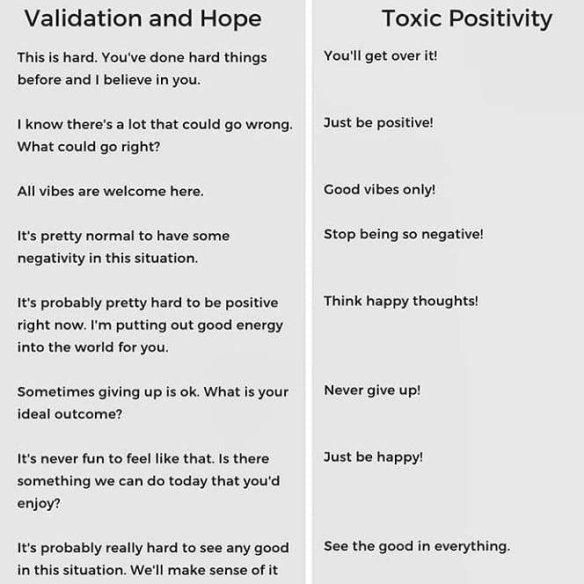
I don’t know who made this chart, but I like it because it shows the difference between toxic positivity and real positivity, which includes empathy.
I’m almost embarrassed about how unsophisticated my palate is.
Tonight I ate a strange salad consisting of raw spinach, strawberries, Teriyaki sauce, plain yogurt, and grated romano cheese. I pretended to like it, but I actually hated it. It was just…weird tasting. I would have preferred a boring ol’ tossed salad with Italian or ranch dressing.
Mind you, I liked all the individual ingredients in the salad (except the yogurt, which I have never liked), but they just didn’t go together. It was like eating a steak with chocolate sauce. I couldn’t finish it.
I know some foodies are really into exotic combinations and contrasting tastes, but I’m not a culinary daredevil. I’m not even a big fan of sushi, which is no longer considered that strange or exotic and everyone but me seems to love. I’m way too fond of things like macaroni and cheese and spaghetti and meatballs. I prefer my burgers with mimimal condiments or none at all. I prefer my BBQ on the mild side. I like my pizza without weird toppings like pineapple or balsamic strawberries. I am not a fan of most seafood, apparently a requirement to be a true foodie.
I have the culinary taste of an 8 year old. It’s kind of embarrassing.
There are a few exceptions though, especially when it comes to chocolate and sweets. I adored salted dark chocolate before it was a thing. I always put dark chocolate in my chili (it actually cuts the acidity and you don’t taste the chocolate). I really can’t stand most mass marketed candy, with the exception of Fifth Avenue bars, which are fucking delicious and almost impossible to find (I can’t stand the much more common Butterfingers, which they’re often compared to). I prefer marzipan to fondant, I like spicy brown or stoneground mustard better than the yellow kind, and I love pine nuts in almost anything.
This is the coolest thing I ever saw. They’re not for sale yet, but they will be soon. I want one, but I’m sure they’re beyond my budget. As high tech as they look, they’re really not. It’s just a cube with all six panels contructed of a one sided mirror which is a one way window on the other side, and then lined with LED light strips.
I’ve always been drawn to ruins. Something about the dark, destroyed, hopeless and desolate fascinates as much as it frightens me.
I remember the burned out apartment buildings in the South Bronx in the 1970s and 1980s. Blocks upon blocks of scorched skeletons of tall project buildings, emptied of humanity, glaring down on huge vacant lots filled with the corpses of old rusted cars, broken glass, and mountains of trash. Sometimes these lots were cordoned off behind chain link fencing, which was usually breached in some way, twisted or collapsed in places. What was the point of cordoning off so much nothing?
As tempting as it was, I never dared take the subway up to the Bronx to get a closer view, but whenever I passed through the South Bronx as a passenger in someone else’s car, I’d crane my neck as far as it would go to take in as much of the view as I could, simultaneously praying the car didn’t break down.
To get a good idea of what this landscape looked like, there’s a 1981 horror movie called Wolfen, which takes place in the South Bronx of the early 1980s. There is a certain bleak beauty in all the depressing desolation, and Wolfen captured it as perfectly as anyone ever could. Upper Manhattan and the South Bronx in the 1970s and 1980s was a howling badland: a wilderness every bit as isolated and full of danger as an desert or jungle where no human being has ever set foot.
Here are two stills from Wolfen.
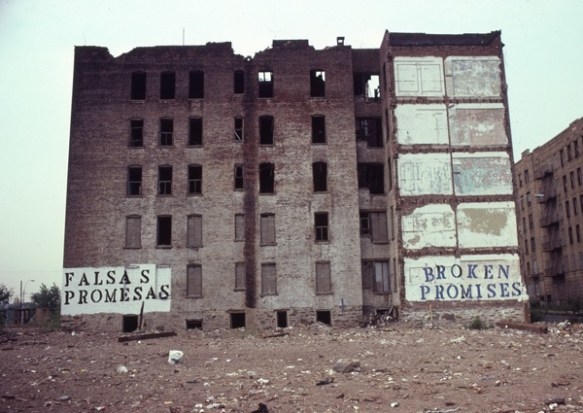
Compare to a photo of an abandoned housing project in he real life Bronx. (This photo is from the 1970s or 1980s).
I got a kick out of the “Broken Promises” sign on the right. I’m not sure if this was added to the photo later or not, but it’s still a powerful picture with or without it.
Here’s a video someone made. The editing isn’t the greatest, but I found it pretty intriguing.
The South Bronx no longer looks like this. It’s not the greatest New York City neighborhood, and probably never will be. But it’s certainly not the burned out slum it was back in the 1970s and 1980s. (It’s also surprisingly expensive. I couldn’t afford it.)
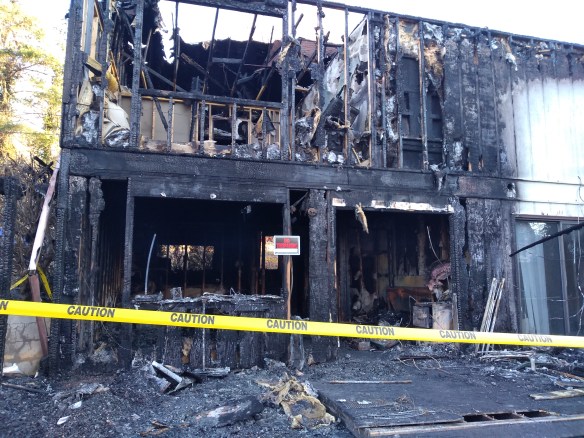
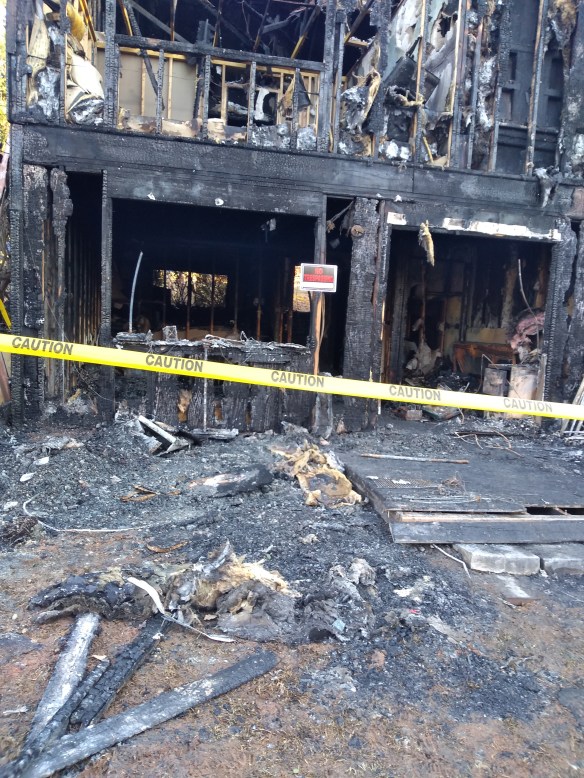
Ruins are everywhere. Today, Detroit is probably the American city best known for its ruins. Now I live next to ruins. Last Sunday there was a terrible fire in a small apartment building next door. Two of the apartments were completely destroyed. The other two apartments are in fair condition, and their tenants have moved back in (I’m not sure for how long, since the building will eventually have to be torn down).
I finally got a chance to go around the back of the building and get a good view of the destruction. You can actually see all the way through the building to the front. Before I took the two pictures below, I just stood there and stared at the destruction for awhile. As with all ruins, I was both horrified and fascinated.
Sometimes I wonder if my fascination with ruins has something to do with my rather dark inner landscape. I’ve found it to be the case that people who like ruins and scenes of urban blight or bleak landscapes tend toward pessimism and depression. It’s like we can relate to such scenes. They seem familiar to us.




 Lucky Otters Haven